How Do We Fix Motorcycle Sales?

As long-time readers of mine will know, I have…opinions…about motorcycle dealerships. I like to think that they are informed and considered opinions, based on collected facts and anecdotal observations, both my own and of others. I have interviewed dealer principles, spoken off the record with motorcycle salespeople from all over the world, looked at available data, and ultimately drawn unflattering conclusions that have upset more than a few people. This is because I believe in being honest and in challenging those who make mistakes to do better. I always hope that, in some small way, this will help the motorcycle industry learn, improve, and grow. But even so, it’s good to get an expert’s perspective once in a while.

martec training
Martec’s approach combines performance measurement with both on-site and classroom training.

Martec Europe Ltd. have been working with UK car dealers for thirty years, helping principals and team leaders to understand where, when, and how they could improve their customer satisfaction and retention. The ingrained culture of any industry can leave businesses stuck in the same rut for years, even decades. This inflexibility can – and frequently does – spell disaster for slow-moving companies unable to roll with the punches as consumer habits and expectations change. Survival is for the most adaptable, and history is littered with examples of brands and businesses that failed to move with the times. And so, I picked up the phone and called Neil Pursell, Martec Europe’s Managing Director, to get his perspective.

Martec’s business is one of two halves. The measurement side of the company downloads recordings of incoming customer calls, emails, video messages, and web chats direct from client dealership’s computer systems. They then use an army of human reviewers to carefully evaluate each customer interaction against recognised criteria. The training side of the business then puts together bespoke packages to help dealership staff address the areas in which they are weaker.

“We’re a motor industry-specific training and solution provider,” explains Neil. “We’ve got thirty years’ of UK motor-industry experience, and it would be fair to say that the vast majority of that experience has been in cars, vans, and trucks rather than motorcycles. Still, throughout that time we have also worked with a number of motorcycle dealerships and dealership groups that also have a presence in motorcycle retail.”

Neil is a keen biker and self-professed motorcycle enthusiast, having been riding since his twenties and can currently be found enjoying either his Triumph Tiger 800, Triumph Speed Triple, or Harley-Davidson Fat Bob – one, as he puts it “for each type of weather!” So was it love of bikes that made Neil pivot Martec further towards the two-wheeled world?

“The experience…that we’ve had with car dealerships over the last thirty years is relevant to lots of different industries and industry sectors,” he says. “Over the last five years in particular I’ve noticed that the motorcycle industry seems to be challenged with bringing in and accessing new types of customers, and that’s very reminiscent of our experience in the motor industry.”

I asked Neil if he could elaborate. “When a manufacturer launches a wholly new product, it automatically has an affinity with its current customer base. But to succeed, it has to attract new customers or it will only divide up its existing market share amongst its expanded model range. So, they have to work out how to attract a new type of driver. The motorcycle industry seems to have a similar challenge with a need to attract a new type of rider, while ensuring that they don’t lose their existing rider base.”

I ask Neil for an example from the car world, and he cites the challenges Land Rover faced at the Freelander’s launch back in 1997. At the time, Land Rover sales staff had plenty of experience talking to their typical, more rural customer. But the customers showing up to look at Freelanders were from a different world, and most had no experience or interest in driving through fields or down muddy lanes. What they wanted from a vehicle was completely different, and sales staff initially struggled to establish a rapport with their potential new customers. Neil explains that finding that common ground and establishing a human connection is key to “helping a customer through a sale”, as without it you miss all the cues and hints that help navigate the conversation.

It seems to me that, if Land Rover had never figured out how to talk to these customers, the brand might no longer exist today. Their inability to address new markets would have strangled their growth and allowed competitors to chip away at their traditional customer base. The parallels with motorcycling today are striking. “The bike industry is trying to get people in their 20’s into the idea of riding motorcycles, as well as bringing in more female riders, commuters, and a generally more environmentally-conscious customer than they’ve had in the past. It isn’t the standard type of prospect (customer) that motorcycle dealers will have been used [to talking] to.” Crucially, Neil points out that these new “prospects” might not already be fans of the brand, or of motorcycling at all, and that can lead to a serious breakdown in communication for a salesperson that isn’t used to finding common ground with a new type of customer.
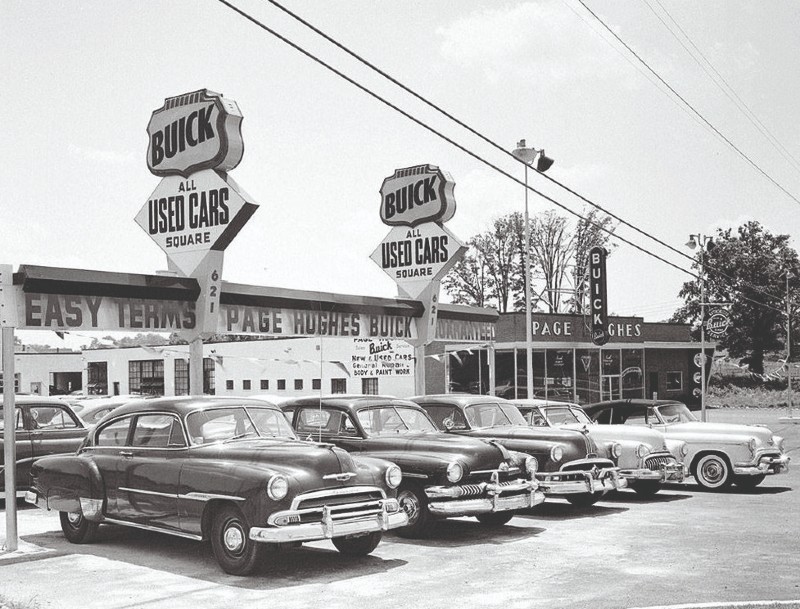
chevy showroom 1950s
The art of car sales has changed a lot in the last couple of decades, but motorcycle sales tactics seem to be stuck in the past.

“People go from a state of curiosity about a product, then move into a state of interest, before moving to a state of intention to purchase.” A traditional customer arriving at a motorcycle showroom might already be at the ‘intention’ stage – they ‘intend’ to buy a new motorcycle soon, and it’s just a question of which bike and from which dealer. “But if I’m only considering riding a motorcycle as my form of transport, perhaps to get to the station or do the shopping, then I’m going to come across as only ‘curious’ and perhaps quite ‘cold’ or not that interested. And that’s where sales people in the motorcycle industry need help – to recognise that this perceived temperature isn’t really an indicator of the likelihood of purchasing.”

“If we think of someone on a journey to buy a motorbike starting off at ‘0’, and ultimately making their purchase decision and paying their money at ’10’, you can imagine that people who are ‘curious’ are going to be a ‘0-2’, people who are ‘interested’ are going to maybe be at ‘3-6’, and people with an ‘intention’ to purchase are going to be at ‘7-9’. So if you’re a salesperson and you have only ever worked with people who are already at ‘7’, then you probably won’t…be polished at getting someone from ‘3’ to ‘5’ and beyond.” These are things that motorcycle sales staff have rarely had to do before, so it’s unrealistic to expect them to be good at them. And those are the exact skills that training can provide.

Basically, the scales that sales staff in motorcycle dealers use to gauge how likely someone is to buy a bike, and therefore how hard they should pursue that prospect, are often too narrowly focused. They require re-calibrating, so that they can treat every single person who calls up or drops by as a potential customer. “The signals, the dialogue, and the conversation that goes along with someone who is in this ‘curious’ state doesn’t sound, to a salesperson, like someone who’s interested in buying. In their head, they’re saying ‘you don’t sound like a customer at all’.”

lookers jlr colchester
4x4s are popular now, but salespeople from just 20 years ago might have struggled to communicate with today’s customers.

Sales staff in the bike industry already talk about the concept of “helping their customer to buy a motorcycle”, but a more ‘curious’ customer will need an awful lot more help than staff are used to providing. “They need a slightly more nuanced or advanced process to recognise that [these customers] have more hurdles to cross before they ultimately make their decision,” explains Neil. And speaking to these new kinds of customers requires a completely different conversational toolkit. Anyone who rides a motorcycle gains a number of shared touch points with other bikers – the rush of the acceleration, the feeling of moving your body as you control the machine, the exhilaration of leaning the bike through a set of corners. “But the person coming in to talk about riding their scooter to the station and back every day doesn’t have the same terms of reference, so the conversation topics will be very different.”
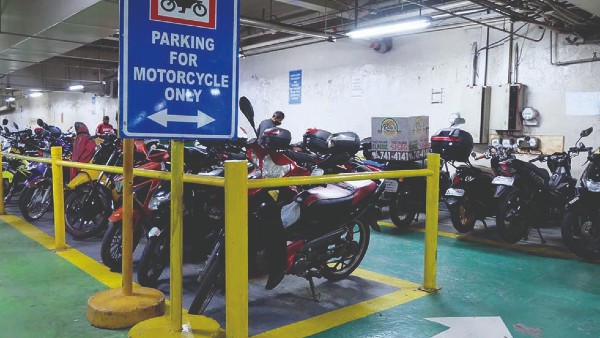
motorcycle parking only
Very few car sales are to genuine enthusiasts. Growing motorcycling means embracing customers who just need transport.

Neil recounts how, when he first started out in the automotive industry many years ago, women purchasing their own cars for themselves at a dealership wasn’t as common as it is today. This meant that salespeople at the time were ill-equipped to spot the verbal and social cues that a female buyer had any kind of intent to purchase a car from them. “It’s pretty similar, in a sense, to female bikers. If you have only dealt with female prospects twice a year, then you aren’t going to get experienced at how you might recognise their cues, what they want to hear, and what questions they need to have answered in order to help them buy.”

Similarly, if you mostly deal with existing bikers, likely in their 40’s-60’s, then you’ll never get any good at spotting the cues that the young man in a suit could ever be persuaded to swap his railway season pass for a PCP plan. It’s all about making a positive assumption, and then adjusting your conversational style to match that of the person in front of you, rather than simply sticking with a single approach. “In the motorcycle industry, this idea of flexing your approach depending on the customer you’re talking to seems like a new concept, whereas it’s not in the car world – it’s been around for a long time.”

It sounds like the onus is very much on dealerships to have their staff trained to be more flexible when handling unexpected queries and ensuring that every potential customer is treated with the same care, attention, and enthusiasm as a seasoned biker waving their credit card would be. Getting new riders to even visit or telephone a motorcycle retailer is difficult enough, and it seems like staff are letting those sales slip through their fingers.

harley pan america
The engineers have overcome their love of heavyweight air-cooled nostalgia; can the sales staff?

Neil has data that shows just 16% of telephone enquiries to bike dealerships result in the customer scheduling an appointment to come and look at a motorcycle. But of those customers who are persuaded to make appointments and visit the showroom, more than 80% end up completing a purchase. Martec’s analysis of these calls confirms that sales staff are making snap decisions to classify callers as ‘non-buyers’ and aren’t moving to capture basic information or ask basic questions. Because those callers aren’t ticking the expected boxes, they’re being dismissed, and staff aren’t even giving them the opportunity to become ‘interested’, never mind develop an ‘intent’ to purchase.

“In our analysis, we look for key moments in those interactions that we consider essential to help the customer move in the right direction. Simplistically, there wouldn’t be any contest that an interaction should start with some form of greeting…and should probably include introductions. We also know that there are certain steps that would promote success, one of which would be to capture the customer’s contact details. And it is also important that we try to promote a next step. Most dealerships would want a customer to visit, though obviously not in Covid times! But customers are showing their highest level of ‘intention’ when they are in the showroom, rather than on the telephone.”

Many, if not all of these steps are often skipped entirely if the salesperson does not immediately get the right verbal signals to suggest that a customer is already well on the way to making a purchase. This has the effect of ensuring that only the most determined shoppers end up ever buying anything, reinforcing the negative feedback loop we see today.
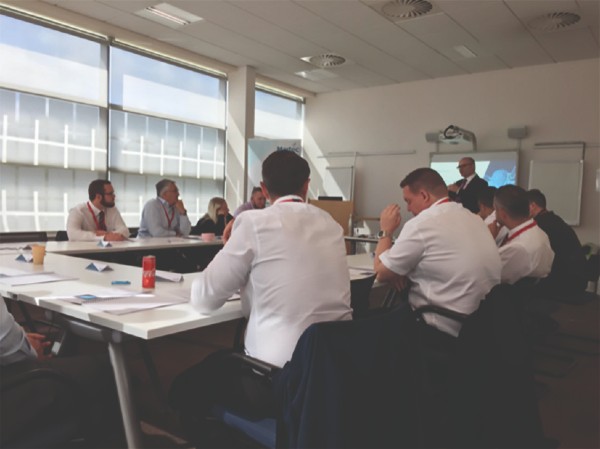
martec training
Winning new customers means breaking old habits and learning fresh skills.

All of this collated information is fed back to dealer management, where it is up to them to encourage their sales staff to change their approach, preferably through training. But Neil believes that motorcycle manufacturers have a role to play here as well, especially as brands move into new segments. Harley-Davidson, the ultimate example of traditional motorcycling, are once again facing this challenge with their new Pan America liquid-cooled adventure bike. The type of customer who might buy one of these is far more likely to show up on a dirt-caked Triumph Tiger than an air-cooled Harley. Sales staff will face a completely different set of questions from a completely different type of customer.
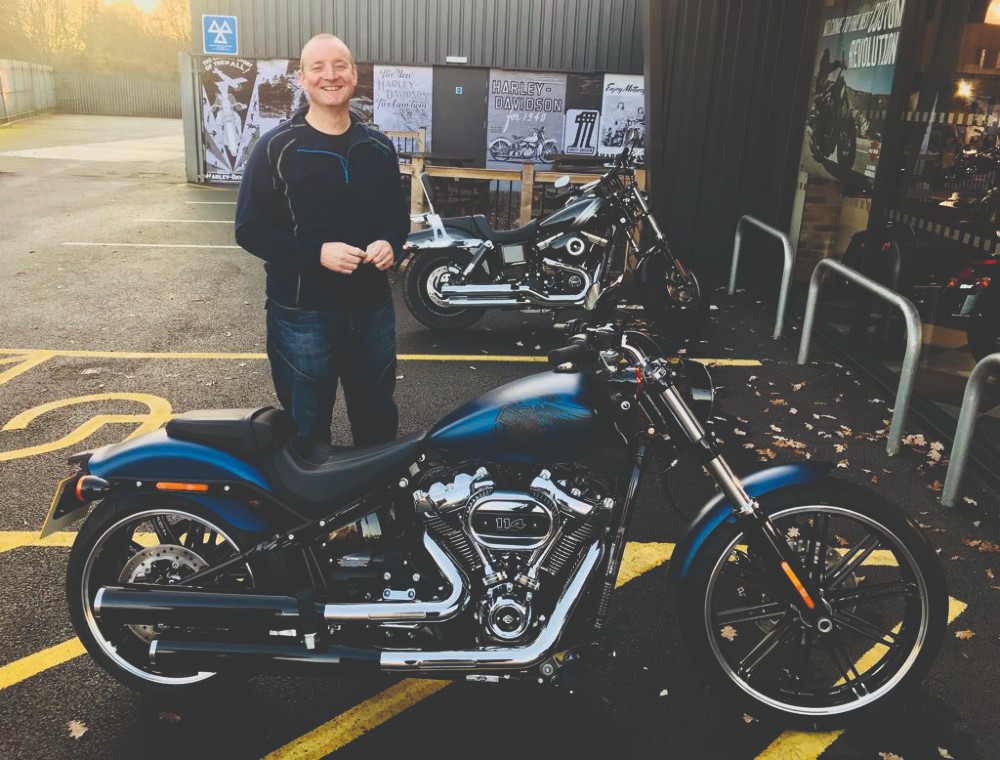
neil harley
Neil with his Harley

“Most car manufacturers have learned that, if you bring a new model in, you have to put quite a lot of resource into getting the network ready,” he says. “If Harley-Davidson have looked at what some of the car manufacturers [would] have done to prepare the network for this new style of customer…then they will be in a good position, because they will have a network of people that are ready to answer these new customers’ questions.” I comment that, in my experience, Harley’s sales staff have a history of struggling to promote products so different from what they were used to. Here’s hoping that Neil is right, and that Harley-Davidson are even now drilling their staff on how to best help potential Pan America customers sign on the dotted line!

So assuming sales staff can learn these skills, how do you measure success? “There are some milestones that sales people need to touch as they help the customer along the journey, and we measure those. Once you have a dataset that compares more than one individual, then you can see a correlation between achieving those milestones and ultimate success.”

But how can dealerships trust Martec’s numbers, given that it’s in Martec’s best interest to demonstrate the positive results of their training? “Because we work with so many different organisations, we use the organisations’ own Enquiry Management System (EMS) to measure their effectiveness before and after. In essence, we use their own ruler to measure the change. And if a dealership doesn’t have or is not using an EMS, then part of that training would be to encourage or promote the use of one. Using a client’s own ‘ruler’ to measure success makes that success that much more tangible. In a sense, it’s very simple: how many opportunities does an individual salesperson get presented with, and how many of those opportunities ultimately turn into a purchase? How many chances did you get, and how many did you take?”

Martec has also conducted research on behalf of clients using secret shopping phone calls in the guise of customers in the very early ‘curiosity’ stage, proving Neil’s point. “The dealers we called did not seem to recognise that ‘curiosity’ about a vehicle could turn into a sale…they interpreted the temperature of the enquiry to be not an enquiry, as opposed to an early enquiry.”

I ask Neil if he’s concerned that the reduced profit margins on less exotic machinery might be a factor in discouraging dealerships to take a serious interest in commuters and new riders, who tend to buy far less expensive motorcycles. He hopes not, he says, as that would be incredibly short-sighted. “Salespeople are normally rewarded on the whole transaction. So if somebody changes their Ducati Monster for a new one, they probably don’t buy new leathers, a helmet, gloves etc. all at the same time. Whereas for a commuter who has not been doing it before there’s a stronger probability that you would be able to sell them a complete kit, which would include the bike, but would also include everything else they needed. From a commercial perspective, that transaction might actually be as or more profitable than someone buying their 20th superbike.”

As ever, success or failure of motorcycle dealers and indeed the individual sales staff is going to depend on their willingness to change, to adapt. If a curious commuter phones up to ask about how a scooter could help them tackle the three-mile trip to the train station more efficiently and cheaply than their car, they need to be met with the same enthusiasm and warmth that would be shown to an excited Ducatisti wanting to put down a deposit for a new Multistrada V4S. Selling a commuter their first Honda PCX might not be the thrill that gets sales staff up and into work in the morning, but it could earn both them and their employer just as much money. What’s more, it’s vital to the future of the motorcycle industry in general. After all, to turn commuters into die-hard life-long motorcycle enthusiasts, we first have to sell them that first taste of the freedom and excitement that only two wheels and and an engine (or motor!) can offer. There’s no point in preaching to the converted.

Let’s hope motorcycle dealers learn this lesson quickly.

Thank you to Neil Pursell from Martec Europe for his time and input in researching this article.

Nick Tasker

First published in Slipstream April 2021
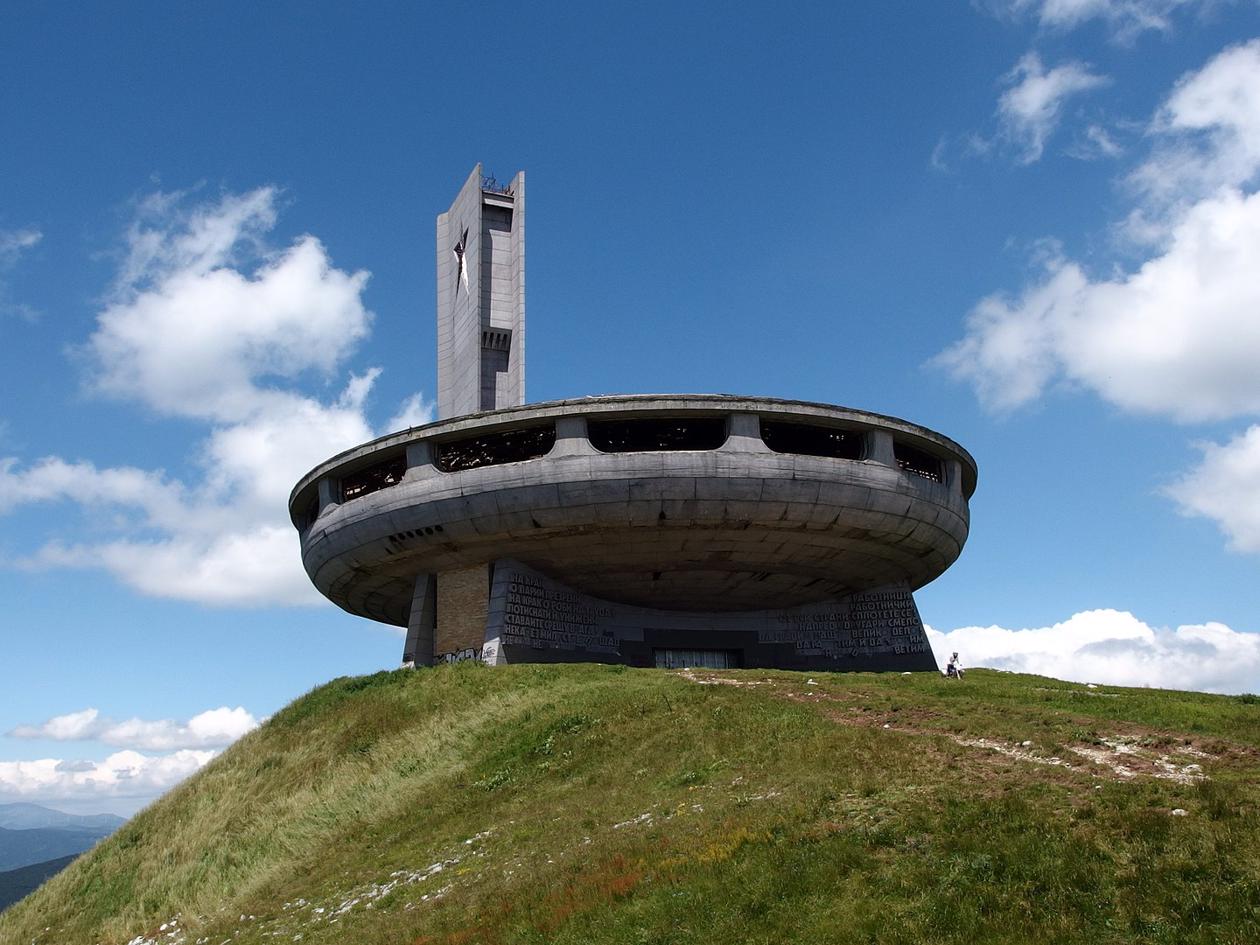
buzludzha monument bulgaria

The Balkans Tour (Part 2)

balkans tour map

What could go wrong indeed… Dave had spotted us riding through Idilevo, straight past the entrance to MotoCamp and turn up the farmers track. He expected to see us reappear moments later but after a couple of minutes decided to jump on his scrambler and check we were ok. Apparently no-one had ever ridden so far up the side of the hill as I did that evening and Ivo laughed when Dave told him where he’d found me.

As we unpacked the bikes Ivo asked if we’d eaten and we said no. There was nowhere nearby for food but they had ordered pizza which had just arrived and they gave us one of the boxes, we were very hungry and very grateful. MotoCamp has an outdoor kitchen for anyone to use and an honesty system where you can take beers or ice creams and note it in the book, settle up when you leave. Our bar tab rose steadily over the evening with no plans to ride anywhere the following day.

Over the course of the evening we met several other travellers, notably Ken and Carol Duval who have spent over twenty years riding around the world. I messaged Graham Field who inspired our visit and lived in the village, he popped down to meet us the following day. Although we only spent a couple of nights there it was extraordinary and we keep in touch with the people we met, even hosting Ken and Carol in the UK as they passed through on their now COVID curtailed journey.

 Ken and Carol had recommended visiting the town of Nis in Serbia so we finally turned westwards and said our goodbyes to Ivo and the friends we’d met at Motocamp. They all came out to wave us on our way.

The ride to Nis was around 250 miles which is a good distance to cover for one day, enough time to stop and look around without making it into a long day. Serbia is not in the EU so we had to go through a border. There was a long queue when we arrived with the border guards making it clear there would be no filtering to the front. It was slow progress but a quick passport check and we were through. It’s worth noting that some UK insurance will include cover for Serbia and some won’t but the border officials didn’t check.

The apartment we’d booked in Nis was in the town centre, next to the river and fort. As we pulled up on a side street a man came jogging over to invite us to the bar in the square behind. He must have seen the surprise on our faces at being addressed in English as he quickly told us he’d seen our GB stickers, his wife was English and he was the owner of the bar.

Dejan directed us to park on the pavement alongside a row of Vespa scooters, in front of the aptly named Vespa bar. Dejan introduced us to his friends and had drinks and snacks brought out to us. We talked about the trip and he told us about some of his adventures, the biggest being a 7500km ride he and two other members of the Vespa Club Naissus had done through Greece, Italy, France and to York in the UK to visit imperial cities. It just goes to show that the bike you love is the bike for your adventure.

bulgaria motocamp

After chatting for a while Dejan insisted on calling our apartment owner to come and  show us the way. When we went to leave he wouldn’t accept anything for the drinks and snacks, hopefully we can return the hospitality one day as we remain in contact through Facebook.

Meeting Graham Field, Ken and Carol Duval, Iva and the others at Motocamp

The apartment owners’ son had turned up and opened a garage for us to lock the bikes away. The apartment was on the fifth floor with no lift so he helped us carry our gear up, recommending that we visit the fort as it was still open for a couple of hours.

The weather had remained warm and sunny throughout the trip and the temperatures were now in the low 30’s. In truth, the Richa jackets and trousers we wore were just a bit too warm. By opening all the vents and wearing merino wool leggings and tops underneath to wick the sweat away, kept us at least comfortable.

The ride today from Nis to Gradac in Croatia would be a long one, over 350 miles, crossing into Bosnia and Herzegovina and out again. The border control was a much smaller setup but here they checked everything. Our bike insurance’s didn’t cover Bosnia and Herzegovina so we were directed to an insurance hut to buy temporary insurance while the border guard held our passports. Twenty euro’s each for third party insurance that would last 28 days. We needed just six hours!

The ride today from Nis to Gradac in Croatia would be a long one, over 350 miles, crossing into Bosnia and Herzegovina and out again. The border control was a much smaller setup but here they checked everything. Our bike insurance’s didn’t cover Bosnia and Herzegovina so we were directed to an insurance hut to buy temporary insurance while the border guard held our passports. Twenty euro’s each for third party insurance that would last 28 days. We needed just six hours!

slovenia backroads
Slovenia, coming down from the mountains the road gets wider and we can stop for pictures

The road we took through Bosnia hugged the side of a valley with a river running through it. The road surface was well maintained with pretty but not spectacular views which made for an enjoyable few hours of riding, interrupted only once by a car overtaking another around a blind bend forcing me to the side of the road. I’m surprised I didn’t get his wing mirror with my panniers he was that close. I must have been fairly relaxed as Marije only heard a calm “flippin eejit” over the intercom. We passed through Mostar with its famous bridge but didn’t stop, another one to revisit.

We stopped at a viewpoint near the coast in Croatia but rather than find accommodation online Marije was determined to find us somewhere by word of mouth. It was late in the day as we parked up in Gradac, the nearest town. I stayed with the bikes as Marije walked around but after a few minutes she was back. The very first person she had spoken to, a German lady stood on a balcony having a smoke also rented out rooms in an apartment. She showed us the room and shared kitchen and we checked in, she even moved her car from the drive so we could park the bikes then blocked them in for the night.

A moonlit walk on the beach, cold beers and dinner by the ocean made for a pleasant end to the day. Marije had been filming the trip and as we sat in the restaurant, the sea lapping the sand just a few feet away, she pointed the camera at me and asked where we were. Croatia, exactly where I don’t know but it’s great, and that’s really all I need to know.

The sun continued to shine as we headed north towards Slovenia, the coast roads of Croatia having spectacular views over the Adriatic. Our intention was to stop at Lake Bled in Slovenia but to make it interesting we put a route into the sat nav that would take in some of the small passes over the mountains on the way. Depending on your head for heights this was either genius or foolhardy. The roads are all single track with no barriers and steep drops if you come off but the scenery is spectacular. The houses and chalets are picture postcard, the livestock with cattle bells and it appeared that all the grass had been mown that day.

Lake Bled
Lake Bled

Lake Bled is a popular destination with its fairy-tale castle surrounded by water. It’s also surrounded by tourists so it’s busy even in September. We rode around it until we saw a large restaurant with outside seating and several bikes parked up. As we stopped a small group came over, they had flown into Europe from Malaysia and hired BMW bikes to tour around on despite owning Africa Twins at home. One of them described how although he loved the Africa Twin it was quite tall for him. Mine’s lowered and he tried it out, I think he planned to order the parts to lower his that evening!

Later that day we rode into Italy, the twelfth country on our trip, pausing for lunch in the Dolomites and headed for the Timmelsjoch high mountain pass, climbing 2509m on superb roads with the surrounding mountains as a backdrop. I’d highly recommend riding the pass but get to the top early so you can take advantage of a visit to the motorcycle museum. As it was late in the day we didn’t, but we still had to pay the €15 fee per bike that is used to maintain the road and gives access to the museum. Another reason for us to return!

Lunch stop in the Dolomites

Our route took us back through Western Europe where we passed through Austria and Switzerland where daily costs were five times the amount we’d spent in the eastern countries. Even using the roads had costs, with Slovenia and Austria needing vignettes, around €8 for a week even though we used them for only one day. The Swiss motorway vignette would have been around €36 per bike and if caught without one a fine of around €185 each, so we avoided the motorways, just cutting into Switzerland to get into Germany and onwards to France.

The last day of the trip started in drizzle as we left a small French town and headed towards Belgium where the heavens opened. Torrential rain followed us all day and we saw several cars that had hit standing water and spun off the road in the ditches being helped by recovery services. Our Richa gear was outstanding and kept us largely dry, letting in a bit of water around the neck and our gloves once soaking letting some water in up the wrists. At the service station for lunch we followed the trail of water to find a big group of bikers in leathers wringing out gloves and pouring out boots.

Our booked departure at the Eurotunnel was 5pm but we arrived by 3.30pm. Being cold and wet we just wanted to board the train and head back to Blighty, we asked to board an earlier train but were told no, too busy. I put the card with the letter G printed on it in my tank back and we headed towards the terminal. At the roundabout the guy in full waterproofs asked for the card and I just pointed at my tank bag, he asked “E?”, “No, G”, so he pointed us towards to terminal building. As we rode on I looked up at the board, F – delayed, G – Delayed, H – Delayed and so on. I rode around the car park and back towards the train only to be stopped by another employee – “E” I said loudly and he waved us on, at the next booth I could see the lanes to board the train, dozens of bikes lined up. “E” I said again and asked if I should join that lane and the barrier went up. Homeward bound.

In retrospect

Looking back we think that the people we met really made the trip. We still keep in touch with some of them and look forward to seeing them again once we can all get back to touring.

The trip proved the bikes, I didn’t have to touch the toolkit once even though I carried spares such as inner tubes, tyre irons, brake pads and oil as well as tools that would allow me to service the bike, all being used in the garage at home before the trip.

The costs once out of Western Europe are incredibly low, around a quarter and we weren’t going cheap either. We went too fast – fifteen countries in fifteen days – we could easily have spent two months doing this trip rather than two weeks! The internet makes travelling much easier but we really did miss it in Serbia and Bosnia where mobile data, although available, would be hugely expensive as they aren’t in the EU, so we turned off our phones.

We packed too much! Even on our next trip to Morocco in 2019 we took too much, so we’re still fine tuning our packing.

eurotunnel
Homeward bound on the Eurotunnel

Damien Murray & Marije Schillern

First published in Slipstream February 2021

Featured Image (top) by Mark Ahsmann, CC BY-SA 4.0, via Wikimedia Commons. All other images by Damien Murray & Marije Schillern

marije schillern packing
Marije packed too much!

back to biking

Back to Biking…

With the light at the end of the tunnel looking more like it is daylight, rather than something else coming the other way, the Training Team has been thinking of what we need to consider to ensure we get back to biking safely.

The end of March will have seen us in lockdown in England for at least half of the previous 12 months, with considerable restrictions placed on travel for almost all that time. This has meant that for most of the time our Club activities have been severely limited and, with the latest two lockdowns occurring over the winter months, many of us have not ventured out on the bike since last October.

We have what could arguably be described as ‘a perfect storm’ coming as we venture back onto the roads. With motorcyclists not being a common presence on the road for the last five months, other than the odd essential journey, it is unlikely that the average motorist will be looking out for them. Could we therefore see an upsurge of the SMIDSY (Sorry Mate I Didn’t See You) incidents where the motorcyclist almost always ends up coming off worst?

The problem for us ‘Advanced Motorcyclists’ is easy to see but how do we plan the safe return and try to mitigate the risks for every member of the TVAM family? This is not something that just concerns us within TVAM but IAM RoadSmart as well. Safety is our greatest concern, however we also need to consider how we re-commence training and ensure that we avoid ‘burnout’ of our Observers.

Burnout is where Observers may rush, with good intentions, to get all of our Associates back out on the road and up to the level they were at before we had to stop riding. The risk is that we have huge intensity in the first 2-3 months, which then radically drops off as Observers become fatigued. If we can come back to training in a planned and steady manner, it is likely to be far more sustainable as we progress through to the end of the riding season.

So, what can we all do to help a safe return to full Club activities? 

The Training Team wishes to share its thoughts on a possible structured approach we should all consider to enable us to get back on the road safely and reengage with Club activities, as and when we are allowed.

One of the easiest things that we can all do is to go out for a short, local, ride with another rider and spend a little time just following each other and discussing what you see with each other. This is just two ‘likeminded’ riders doing a short trip to help each other. Remember that it may take a ride or two for us to get back to the level that we were at before lockdown.

Associates – Until we’re allowed to carry out observed and social rides again, take a look at the Advanced Rider Course (ARC) materials and books again. Perhaps have a look at the online quizzes, (there are links to them in the allmembers Wiki on Groups.io), to test your knowledge.

IAM RoadSmart has introduced new e-learning modules called CHOICES that are accessible only by Associates. The link to these modules was sent out to all Associates by IAM RoadSmart in the Associate Newsletter on the 12th February. You could also get the bike out and do your Pre-Ride checks and take a look at your protective equipment to ensure it’s ready to go when you are. Contact your Observer and arrange your next ride with them, however, please do allow them time to ensure they are happy with their own riding before coming out for a ride.

Full Members – It wouldn’t be a bad idea to use the next couple of weeks to refresh yourself on the theory side, just until we can get back on the road. Consider booking the Advanced Plus. This is a half or full day, maybe with another full member, with an Observer who will do a ride to see how you compare to the IAM RoadSmart test standard. They will then assist you to identify and work on any issues that you may have throughout the session. Contact details are in the back of Slipstream.

Observers and TObs – You guessed it, take another look at those books and even the online quizzes whilst you have the time. Don’t be too proud to ask another Observer to go for a short ride and give you feedback. Perhaps then swap over so you can critique them. We can all learn from one another and you’ll probably have fun giving the advice if not receiving it! If you’re in line for an Aardvark then get it booked (arguably one of the best days riding you’ll ever have). Remember our friends at Rapid Motorcycle Training are likely to get very busy as the weather improves.

All Members – We have an abundance of courses, delivered by the Training and Green Teams, that had to be put on hold during lockdown. As soon as possible these courses will start to open up again for booking. Keep an eye on Slipstream and Groups.io for when these will happen.

Our excellent BikeCraft team is currently delivering their course online over a period of six weeks. By the time you read this they will have commenced their second online course, being delivered over three Sundays in March, and we cannot thank them enough for their efforts to redesign a classroom style course for delivery online. Well done team.

If you do use your bike currently for volunteering or work, then just take a little extra time to fully evaluate what other riders and drivers are doing around you and make sure that you’re not caught up in someone else’s incident.

For all of us getting back into riding, remember to apply The System and keep the pace to something comfortable. We can get back to the higher levels of skill in time, when the concentration levels, muscle memories and experience have been carefully built up.

For those of you that are not aware of what The System is, we refer to IPSGA (Information, Position, Speed, Gear & Acceleration) as the system at the core of Advanced Riding. The purpose of IPSGA is to promote safety and prevent collisions by encouraging riders to adopt a systematic approach to any hazard. Refer to the books again for further information.

In summary, don’t be afraid to ask for help, at any level, and take your time to settle into your riding before setting off on that full day ride you all have planned as soon as we’re allowed out to play.

Stay safe everyone.

Barrie Smith

TVAM Training Team

First published in Slipstream March 2021

Confessions of a First Time Restorer – Part 3

Part Three – The Expensive Bit

First things first – I’m still here to carry on. I was in the room when my wife read last month’s article and it was hilarious when she suddenly stopped reading, walked directly to the conservatory, immediately came back and said, ‘You’ve got my heater, you git’! I was laughing for at least a couple of hours. She then gave me ‘the look’ when she got to the part about the oven. One hundred lines – ‘I must act like a mature adult’.

When I signed off last, I’d completed the stripdown and I needed to get restoration work done before I could start reassembly. Lots needed doing – January was going to be expensive. Therefore, the rest of this article could just be two words long, but I’m hoping you’d want more information than that. Those two words? BUDGET SMUDGET.

I’d given myself a ‘finger in the air’ budget of £2k. To be fair to myself the £2k was a total guess based on zero knowledge, so I’m not surprised that it was wrong. I now think about £3k..ish. This is more than the actual value of the bike. But, as it is in memory of Peter, my Father-in-Law, I don’t really mind. When it comes to the second bike I’m going to see how good I can get it for as little as possible. I will be able to get costs down with new skills that I have learned.

bsa c15 speedo
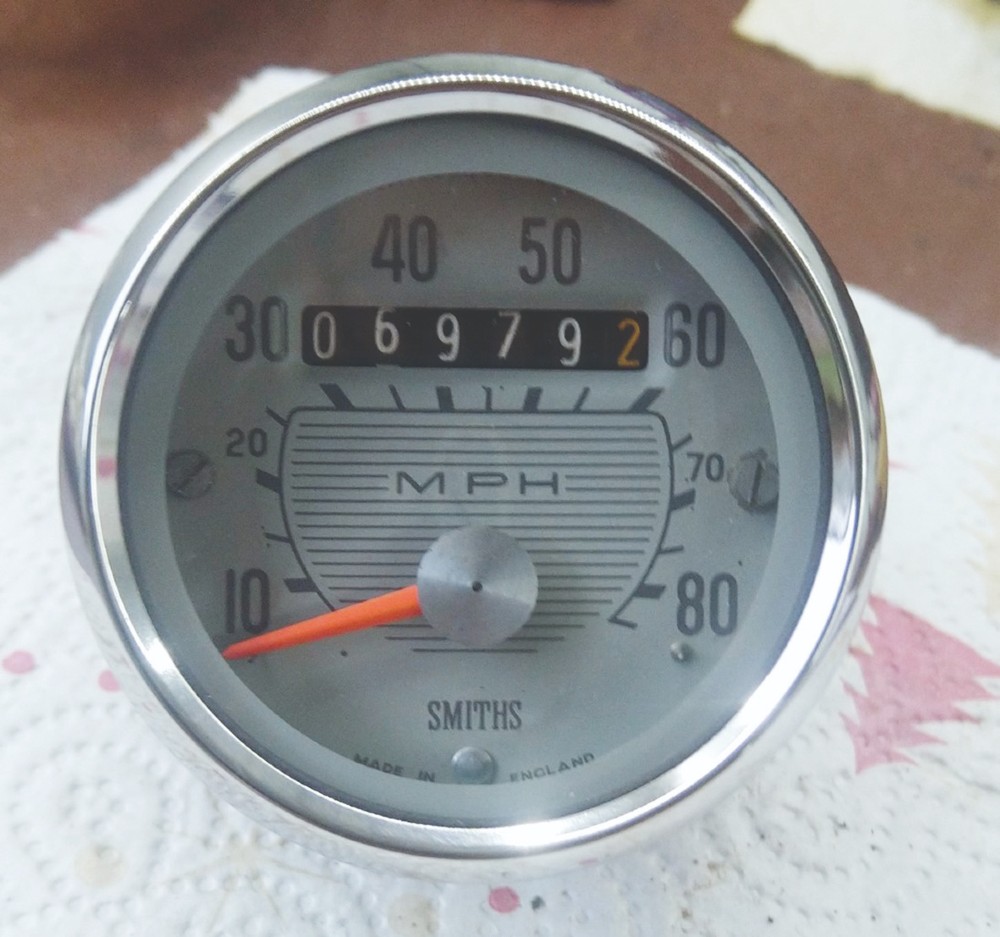
Smiths magnetic speedo
bas c15 bottom yoke
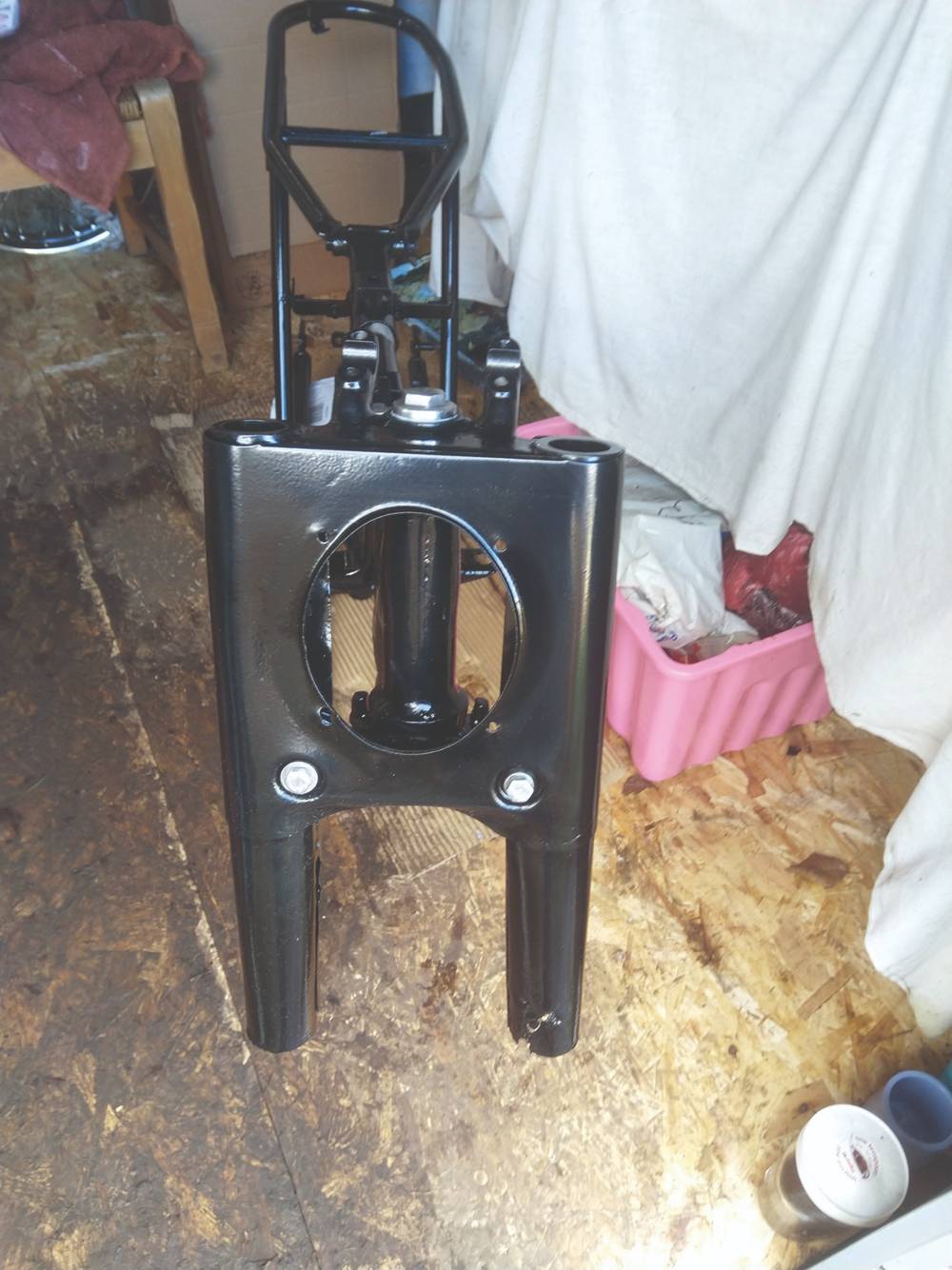
Powder coated bottom yoke

Before going any further though I should mention something I forgot to note when I started stripping down the bike in November. I wear glasses. I have been short-sighted since I was a kid up North. But now I’m becoming the ‘old git’ that my kids have always called me. I don’t need reading glasses (yet); however I do need to take off my ‘seeing’ glasses to look at things closely. So when working on the bike, I frequently take off my glasses so that I can see what I am doing. At first I’d pop them on the ground next to me whilst I did that bit of work. I’m sure everyone can guess what’s coming. Yup, one day, I’m working on the bike and take off my glasses and put them down on the ground. I then realise that the spanner I’ve got is the wrong size and get up to change spanner. Crunch! I stood on my glasses. Numerous swear words were spoken with great feeling. I had not broken a pair of glasses since I was at school over 30 years before. Fortunately, I had a spare pair so was able to carry on – until the next day when I did exactly the same thing with my spare pair! The swear words had great volume as well as great feeling this time. To use a good Northern word meaning a stupid person (also, really satisfying – just try it) that my Mother and wife regularly take great pleasure in using about me – what a wazzock! Glasses weren’t part of my budget.

Anyway, back to January. Due to Covid we had gone on to a rota system at work, so I didn’t need to be there all the time. This gave me loads of bike time. The first thing I needed to do was to get on the computer. I didn’t know where to get things restored. The BSA and TVAM Facebook pages yielded recommendations for most things, so it was just a matter of researching them and choosing one of each.

Firstly, I settled on Classic Speedometers in Mansfield to do a full service on the speedo. Not many people in the country work on Smith’s magnetic speedos and I have to say that Stuart did a wonderful job. It looks fantastic. A true craftsman.

Next, I wanted to look at the frame and tinware paint. The consensus was that this should be ‘two pack’ for greater originality. Ideally, I wanted to keep the original paintwork and having it restored rather than have everything repainted, even if some imperfections were noticeable. I had narrowed down my selection to two firms and decided to go and visit them. However, times being as they are, I wanted to be sure that this was allowed and that we could keep it safe. Government websites confirmed that visiting these businesses was legal. As these businesses could be open, customers may visit. Due to the specialised nature of these businesses, it also meant I could travel to visit them. Both also confirmed that these would be socially distanced meetings outside.

The first visit was an eye opener in a couple of respects. One – it wasn’t the original paintwork. It was the same colour, but a not-very-good-quality repaint. No point, nor a good idea, in keeping this paint. Two – two pack was flaming expensive. The quote from the first place was over £3k just for the frame and tinware. I knew from their website that this place was going to be expensive but £3k was a non-starter. That wasn’t happening. I felt disappointed about the paint not being original, however it did mean that I didn’t need to two pack and could consider methods that are modern and less expensive yet also yield great results. It also meant I could powder coat the frame and other relevant parts which was a lot cheaper.

The second person I visited was Mike at Triple C Paintwork in Burghfield. I had been recommended Mike by a couple of people in different Facebook groups (and have also since found out that he advertised in Slipstream last year). It was one of those situations where you just feel it is right. Mike was open and engaging, answering all my questions (even the dopey ones) without any hint of an agenda. He showed me examples of his work at various stages and explained my options, both traditional and modern. I came away feeling Mike wasn’t doing a hard sell, he wanted what was best for me and my bike. I decided to go with Triple C using modern methods at a much more reasonable rate. The only negatives were that it would be March before the work could be done and they don’t powder coat. However, I could see the positives in the wait. His work must be good to have to wait that long and these parts of the bike would be the last to go back on. Regarding powder coating – Mike recommended Tadley Powder Coaters. I called in on them the next day and they took most of the parts there and then. They couldn’t take the shock absorbers as I had not been able to take the chrome collets off, nor the footrests as the rubbers were still on. A week later I had the frame and parts back. They looked lovely. It was starting to get very real!

The next part was the engine casings which needed to be vapour blasted. Recommendations on BSA Facebook groups led me to RD Cox in Reading. For the petrol and oil tanks, Andy Kennett at Dynotech in Bramley (where I take my Yamaha), recommended a gentleman called Jeep in Waterlooville. Only the petrol tank needed work, the oil tank is fine – some money saved! The shiny bits have gone off to AK Moto in Goring – more on that in a sec. Small privately-owned businesses whose work is their calling card and their future business, apart from Jeep, who I assume does it as a hobby during his retirement. I am eagerly anticipating the return of all these items as I will then be able to start re-assembly.

I had another ‘spreadsheet’ moment when it came to the chrome parts. I was quite shocked when I got the quote through. It was significantly more than I expected. Some parts were excellent value, others way more than I thought. It was actually cheaper to buy new for several parts. This was disappointing as it would have been nice to use the original parts, but sense had to prevail – first time for everything.

bsa c15 rear wheel
Restored rear wheel

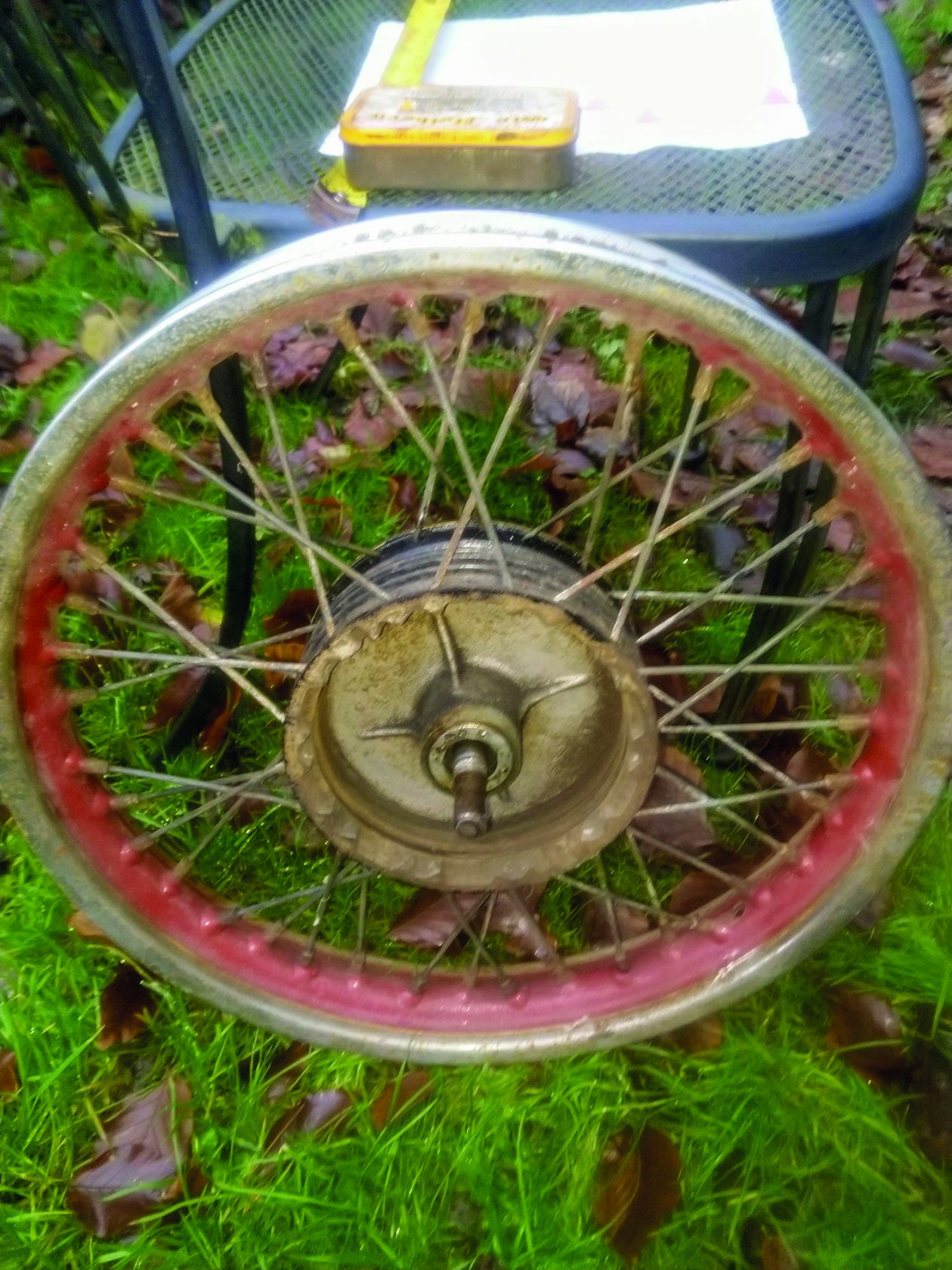
The other parts that needed looking at were the wheels. These needed a decent amount of work. I especially wanted rid of that horrible red paint on the rim that someone had used a paintbrush to throw on. I settled on Mike at Salisbury Wheel Builders. You may remember that I had broken off a bit of the rear wheel hub when I managed to get my left and right mixed up. This did turn out to cost, but fortunately not as much as first feared. Mike took one look at the rear wheel and said I needed a new hub. I managed to source an original one on Ebay and had it delivered direct to Mike. The hubs were cleaned and painted, new rims and spokes and one week later, what a result. Tyres and tubes have been ordered.

So that was all the bits in and some back. However, I could not start any re-assembly yet. I needed the engine casings back to start anything on the engine and I needed the chromed parts to be able to start putting anything of significance back on the frame or wheels. But I did have other things that needed doing. I took apart the carb and put all its bits through the ultrasonic cleaner. They have come up looking fantastic and as spotlessly clean as I believe they need to be. The forks needed properly taking apart. I’d had trouble separating the oil seal holders – a soak in petrol and the club hammer sorted that.

I was also watching a series of programmes on YouTube by a guy called Michael Waller from Britannia Motorcycles. A Yorkshireman based in upstate New York, he was restoring a C15. These programmes are great for me as I can actually see things being done. I can heartily recommend this guy to anyone interested in British bike restoration. He has made videos of many bikes and not only is he very informative but he is thoroughly entertaining. His videos, in conjunction with the Rupert Ratio books are fantastic resources for a newbie like me.

Then there were the bits that I couldn’t leave at the powder coaters as they weren’t fully taken apart, the shocks and the footrests. The shocks had chrome collets holding the spring in place and a special BSA tool was required to remove them. Of course, this tool was not to be found anywhere and is no longer manufactured. I needed the collets off to get them re-chromed and the shocks powder coated. Fortunately the beauty and generosity of those on the Facebook BSA C15 Restoration Group came to the rescue. A guy called Steve had made this tool himself and offered to loan it to me…… without knowing me from Adam – how cool is that? Steve posted it to me and off came the collets just like that. As soon as I get the re-chromed collets back I will get the shocks put back together and post it back to him. Thanks Steve.

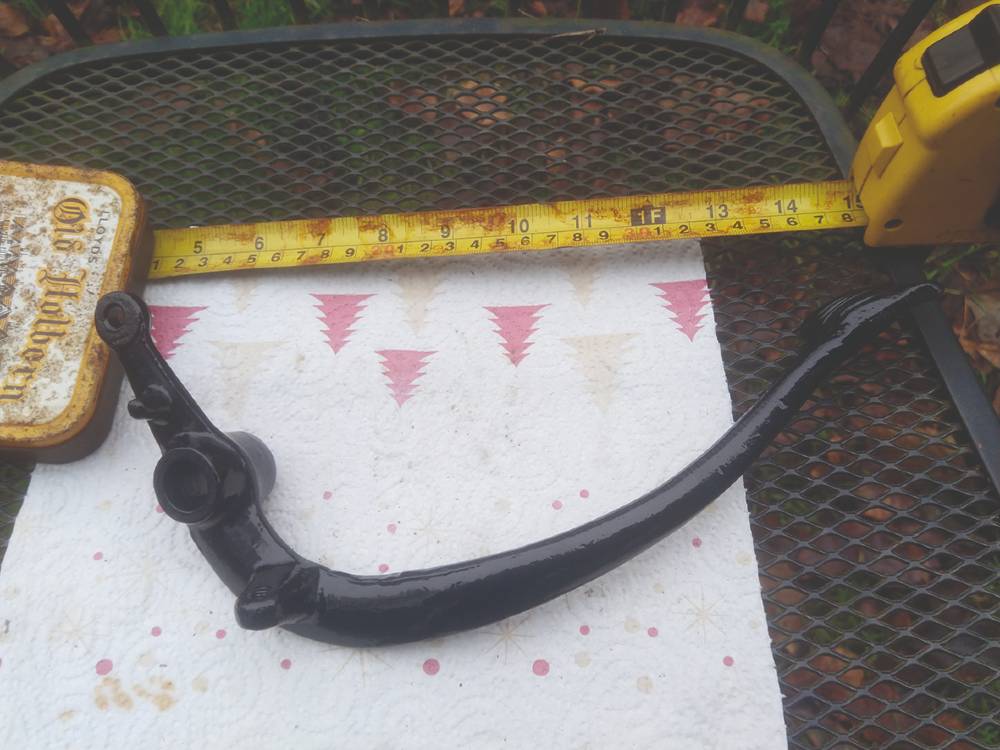
So the collets were off the shocks, the rubbers removed from the footrests and these parts needed re-painting. I considered taking them to Tadley Powder Coaters, but as there were only seven bits I decided to try re-painting them myself. Earlier I had bought a can of chrome spray to ‘chrome’ bare metal parts, but to be frank, this looked pants. I bought some new attachments for my drill so I could polish up bare metal parts, even screw heads and washers (OCD, I greet you!). I could also remove old paint back to metal, hence me getting the idea to re-paint myself. I have primed and coated all these parts, and in my personal opinion they look fantastic. The light fixture in the lounge came in really handy.

I think this looks great but my wife wasn’t overly pleased with this, especially when my son started re-spraying his car grille in the conservatory at the same time. That solvent smell wafted through the whole house.

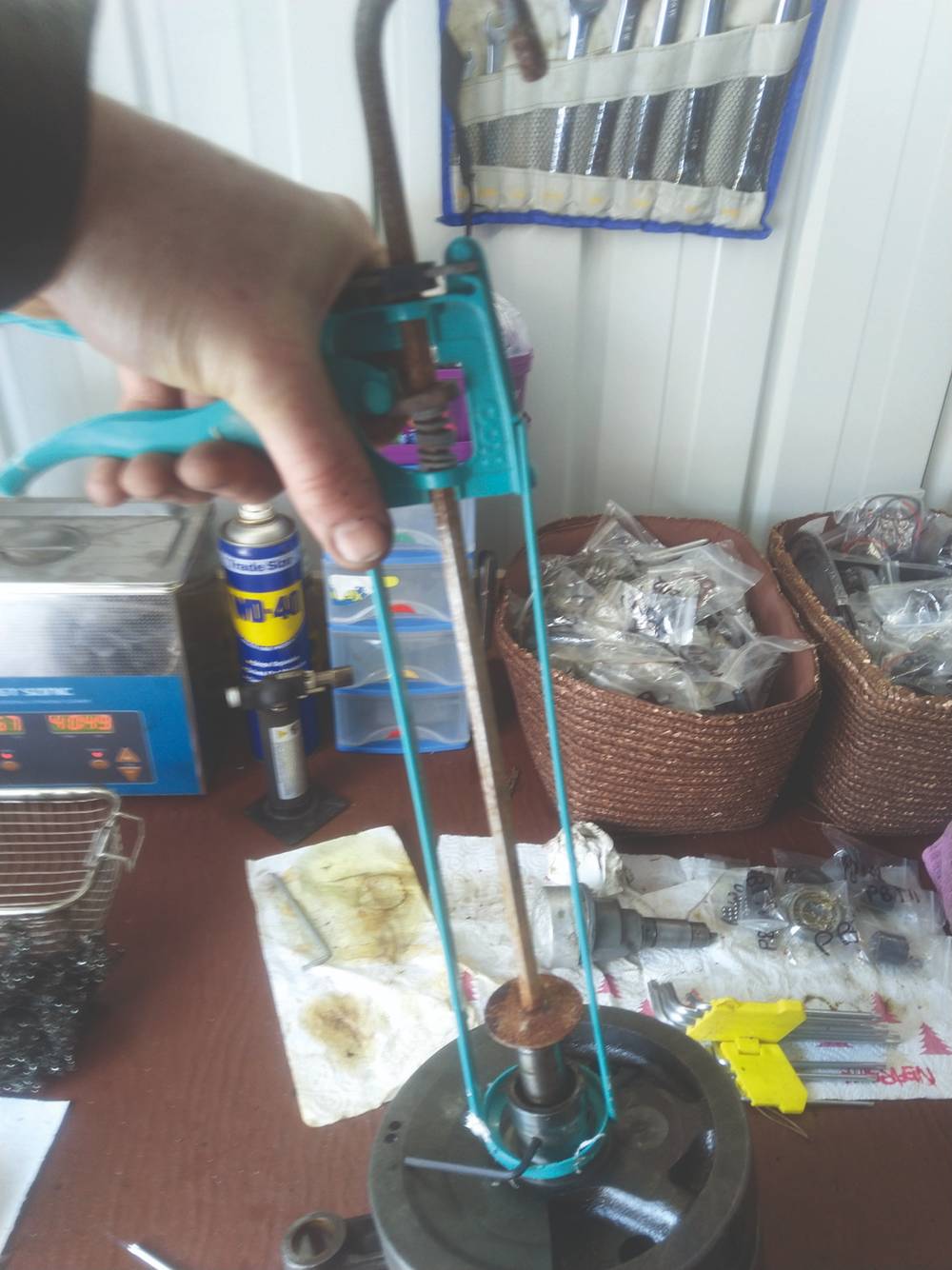
Towards the end of the month I needed to address the crank sleeve that Jim Bates had pointed out to me in December. This was firmly (as it is meant to be) stuck in place. As usual a special BSA tool that is no longer available was required to remove it. Advice varied from cutting it off, drilling holes and inserting bolts into it to pull it off or sending it to be removed by Mr Ratio himself. I ended up adapting a sealant gun with Allen keys attached to move it a bit, then got tyre spoons under it to move it a bit more, until I could get a gear puller under it. Off it came. True lateral thinking. And then I could only source the replacement from a British bike specialist in Austria.

Finally, there was a very exciting moment in the month – ‘First Assembly’. I had all the parts needed to do my first bit of assembly – the steering head and fork trousers. They all went on a treat and were promptly removed due to the chrome spray mentioned above looking rubbish. Chrome spray removed, metal polished, re-re-assembled and it looks great. A REALLY satisfying moment – look at that shiny finish!

So, where are we now? Waiting. Waiting for engine casings, chrome, petrol tank and March for re-painting. There’s going to be stuff to do in February, although I don’t think there will be that much to report as I’m back at work full time as well. We’ll see though and I’ll let you know. In the meantime, stay healthy and safe. Roll on the vaccination programme and good weather.

bsa c15 crank sleeve removal

Jon Case

First published in Slipstream March2021

buzludzha monument bulgaria

The Balkans Tour (Part 1)

It was dusk when we rode into Idilevo after a long day’s ride which had started in Romania. There were no street lights or signs so I was relying on the satnav to guide me through the small lanes. I followed the instruction to turn left up a farm track, made up mainly of stones embedded in the soil. A left then a right at the end, up another much steeper track. At the top an open gate, the satnav directing me to hug the stone wall beyond, the stones having run out leaving a muddy track. I paused thinking if my road tyres couldn’t grip I’d be stuck with 250kg of Africa Twin to turn around. A call from behind me, “That’s not the way to Motocamp.” I turned to see a man sitting on a small scrambler bike, shorts and t-shirt, no helmet. As he turned and headed back down the hill, I followed.

How it all came about

Over the last few years my fiancée Marije and I had attended the Horizons Unlimited and Overland events and listened to tales of two-wheel adventure all over the world. Two of our close friends had recently moved to New Zealand and one day when thinking about visiting them we toyed with the idea of quitting work, renting the house out and riding half way round the world to visit them… as you do.

When discussing the approach to the trip we decided it was to be an open-ended journey with no deadlines, no pre-booked accommodation or ferries to catch, with time to explore as we went. One thing kept coming up in our research, having identical bikes can be a benefit, with interchangeable parts and tools, so we went bike hunting. At the time the new Honda Africa Twin had been around for a year, so after test rides we bought a secondhand one and an ex-demonstrator and prepped them for the trip.

First though, we decided a couple of shakedown trips would be a good idea. The first in 2018, Eastern Europe and the Balkans and later in 2019, Morocco, leading up to the big one starting in 2020.

At the time I’d recently read a bike adventure travel book by Graham Field where he mentioned MotoCamp in Bulgaria, a popular stopping place for overland travellers. It sounded like a great place to aim for where we could take a mid-trip break and meet other overlanders. I emailed MotoCamp and Ivo confirmed two nights for us. The only other bookings were the Eurotunnel and a hotel on the first night in Europe to ease us in.

The trip

Rolling off the early morning train in Calais we were greeted by clear blue skies and balmy temperatures. The satnav locked onto the GPS, telling me 445 miles to go to the hotel. This would be the longest day ride of the trip, getting out of Western Europe as quickly as we could, aiming to be in Czechia the following day. Although the day proved to be a dull ride on fast roads it got us comfortable on the heavily laden bikes.

Cesky Krumlov

I’d rate my ability to speak other languages as limited to different flavours of English, whether that be American, Australian or Irish. In order to break the language barrier I had two secret weapons. The first is the Point It travellers’ book. This handy little book that lives in my tank bag has pictures of everything from a pharmacy sign to a chicken, as sometimes the need for a pharmacy can follow comsumption of a dodgy chicken. The second is Marije, fluent in five languages and passable in more, she makes up for my linguistic ineptitude. I keep the bikes running and she does the hard stuff like getting us through borders and customs and checking into hotels.

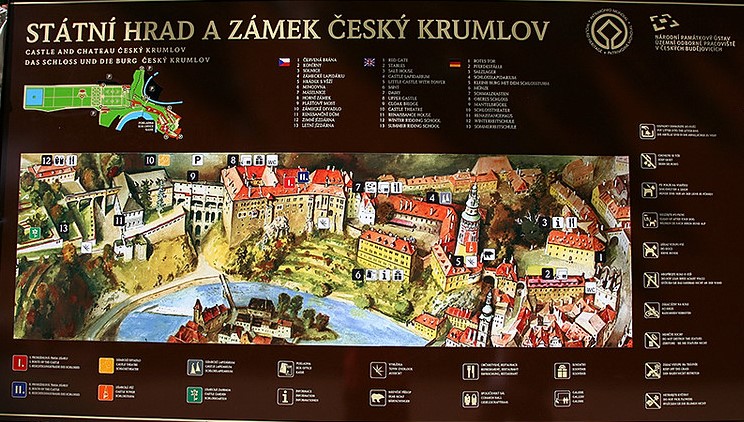
Cesky Krumlov is an historic town in the South Bohemian region of Czechia and as we arrived in late afternoon the 11th century castle dominated the skyline. We rode directly into the centre and parked up next to the river, alongside four heavily customised Harleys with German plates. The 14th century old town itself is on  a horseshoe bend of the river with bridges to cross on foot. Looking at the information panel next to the river we decided to stay and explore.

Just then the German bikers came back, looking all the part of a biker gang; large, hairy, black leathers. We chatted for a few minutes about their bikes and our trip, their English perfect. One of them started taking pictures of some blossoms on a tree while his mates jokingly chided him for ruining the biker image. They said their goodbyes and headed for a campsite south of the city, the bikes making a great roar as they headed up the narrow hill, exhausts echoing off the stone walls.

We had parked next to the Hotel Gold which looked impressive, with a small courtyard behind large wooden gates. Marije went in to find out how much it would be for the night and after several minutes came back chuckling to herself. We found in much of Eastern Europe that as well as the local language, the older generation could speak Russian and the younger generation English. Upon going into the hotel and finding the receptionist to be in her sixties, Marije had tried Russian to no avail, then German, then English, no luck. The receptionist looked at the passport Marije was holding in preparation for booking a room and broke into fluent Dutch. It turned out she had spent many years in the Netherlands as an au pair and had picked up the language, much to our benefit!

Checked in, we were then instructed to ride our bikes into the courtyard where they would be locked in overnight – for those guests having refreshments we became a great source of bemusement.

Hotel Gold
Parking in the courtyard of Hotel Gold

We had chosen to do the trip in early September when the weather was likely to still be warm and when many Europeans had finished their August break. The old town was still busy with tourists, mainly from outside Europe, taking pictures and selfies on the bridges. It wasn’t overcrowded but had a lively buzz with local entertainers and artists scattered amongst the streets.

Old Border Sign
Obligatory pictures next to the old border sign

As we sat down outside a traditional alehouse with local musicians playing we found ourselves talking to an elderly German lady and her son who had come on what was an annual break to the town. They had lived in East Germany before the fall of the wall and this was one of the regular organised holiday destinations – not too shabby at all, although some of the tales were also of hardships experienced.

Riding through the opened gates of the Hotel Gold, up the hill and out onto open roads and clear skies we headed east with no particular destination. This, to me at least, is the freedom of the open road.

The route was generally straight and flat, the weather still warm and we were both tired at the end of the day so we had an early night in Trencin, Slovakia, an historic city we’ll have to revisit one day as we didn’t have time to do it justice.

Around 4pm we stopped for a coffee and I booked an apartment via booking.com in a town not far ahead to give us time to check in and find somewhere to eat. Hajdúböszörmény is a picturesque student town and the owner of the apartment we’d booked was waiting for us on arrival. He opened the gates to the gardens for us to bring our bikes in and gave us a tour. Large lounge, kitchen diner, utilities, double room, Wi-Fi, milk, tea and coffee, all for £34.

At this point I’m started to get excited as we’re fast approaching one of the routes I’ve been looking forward to, the 56 mile long Transfagarasan in Romania. Famously featured on Top Gear, Clarkson called it better than Stelvio, the best road in the world.

Almost all the countries on our trip are in the EU so we were surprised to come across a border check when entering Romania. It was little more than a passport check for us but I later found out that although Romania and Bulgaria are in the EU they are not part of the Schengen zone so travel into the zone requires a visa or stamp.

Romania
Romania

The roads in Romania seem to be either single lane or new-build dual carriageways, funded by the EU. East to west routes are congested by trucks and it’s common to see horse and carts still used, the drivers giving a friendly wave as we pass. I put the Pensiunea Leia, Cârțișoara in the satnav, it’s a guesthouse in a small village on the road to the Transfagarasan. I always stipulate parking when looking on Booking.com and it seems to work, especially if you add a note saying parking for two motorcycles. We arrive at the village and the sat nav has a spasm, rerouting over and over again. We ride around randomly for a few minutes. Two old men sitting on a bench wave at us as we ride by, all smiles. When we turn around and ride back they wave again.

Pensiunea Leia has large wooden gates and Alin the owner stands at the smaller door in them, seemingly waiting for us. News travels fast around here. He opens the larger gates and beckons us through, indicating that we should ride straight into his garden. It seems we aren’t the only bikers as another bike is already parked up. Alin shows us our room and we settle in, stepping out onto the balcony, overlooking our bikes.

Later that evening more bikes turn up and we get talking to a couple of Polish bikers who are also heading south the next day. We’d planned to visit Bran Castle, the inspiration for Dracula, the next day but they told us it was packed with tourists and overrated. Maybe next time.

The Polish guys had a very novel way of planning their sightseeing. They would go onto Wikipedia and put in the area they were riding through and see what attractions there were to visit. The previous day they had visited Merry Cemetery which has brightly coloured tombstones with poetry and naïve paintings describing the people buried there. They showed us pictures of what has now become a major attraction.

Alin joined us around the communal tables later on and told us about how he had built the place based on speculation that ski resorts would be built in the Carpathian Mountains. The resorts never materialised but he found the place busy enough with bikers and petrolheads visiting the area. He brought out some plum liquor for us to share. It was delicious and dangerous, definitely no more than a couple of shots, a clear head needed tomorrow.

Another clear sky day, perfect weather for biking, warm already by eight. No need for a satnav route today, head south into the Carpathians, all the way through. The long, straight road with the mountains tantalising close seemed to stretch on forever, building the anticipation. Then we were into the climb. The road twists and snakes constantly. I think back to the look, lean and roll course and soon have pegs scraping the ground. It really doesn’t get better than this, we’ve picked the right time of year, little traffic, the sun is out, it’s warm, the road and scenery are fantastic and the bikes perform flawlessly.

After what seems like minutes rather than hours we are back down out of the mountains. I could turn back and do it again, and again, but we’re booked in at Motocamp tonight and Ivo has emailed to check we’re still coming.

Our only ferry on this trip is coming up, we’re crossing the Danube which runs through the most countries of any river in the world. As we approach there is a guard asking for documents. I haven’t expected this so handed him the ones from my tank bag. He flicked through them until he got to my passport and looking confused asked “Copies?”. “Yes, copies” I replied, “do you want originals?”, “No”, he pointed me to another building “Tickets”.

I carry two sets of documents, one is the full originals and the other are all copies, laminated, with extra ones of my driving license. I’d use my originals for official border crossings but this one had caught me off guard. The theory is that if stopped by a crooked cop for example I hand the copies over and if they try for a bribe and won’t give them back then they can keep them, a gift.

Transfagarasan View
Transfagarasan
Transfagarasan
Transfagarasan
Traffic jam
Traffic jam
Ferry Romania to Bulgaria

One of the sights I wanted to see while we were in Bulgaria was the Buzludzha monument, built in the communist era but now rather dilapidated. The road up to it was potholed and broken up but it was worth the visit, it must have been impressive when in use and there is a group trying to raise funds to renovate it now.

Bulgarian Back Roads
Backroads of Bulgaria
Buzludzha Monument
Buzludzha monument

As we left the monument the sun was setting and we’d underestimated the time to get to MotoCamp. It would be pretty dark by the time we got there but we had our trusty satnavs. What could go wrong?

Damien Murray & Marije Schillern

First published in Slipstream February 2021

Featured Image (top) by Mark Ahsmann, CC BY-SA 4.0, via Wikimedia Commons. All other images by Damien Murray & Marije Schillern

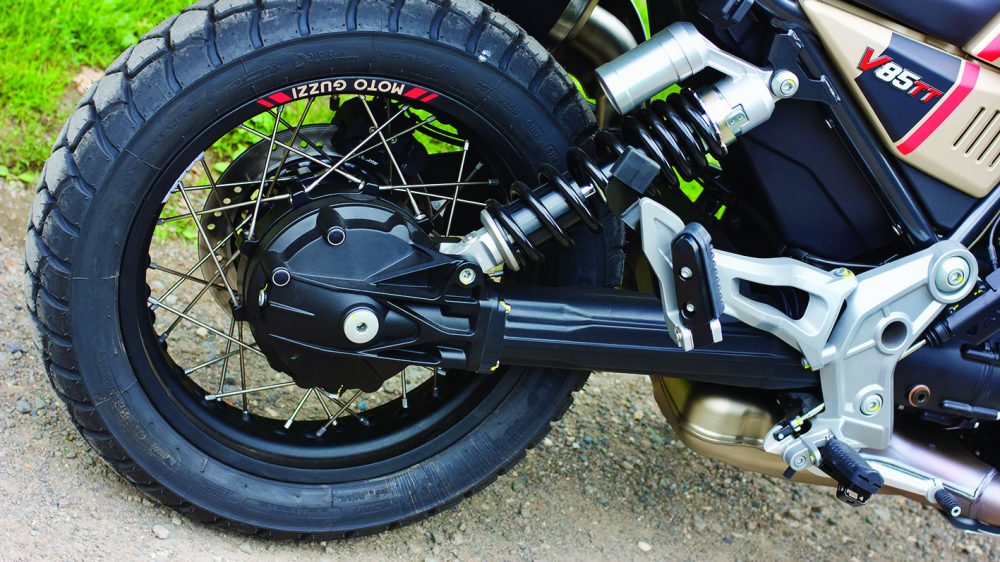
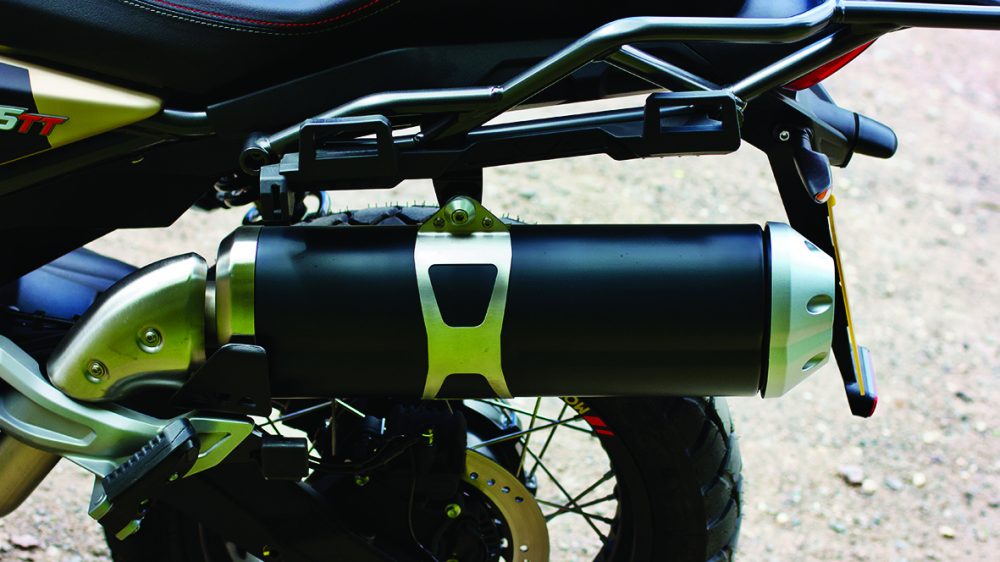
moto guzzi v7 stone

A Change of Seasons (Part 2)

This month Nick Tasker reviews the other Italian bikes that warrant some page space, along with the rest of the Japanese and the European manufacturers, Indian and Chinese, plus the electric bikes new to the market.

THE OTHER ITALIANS

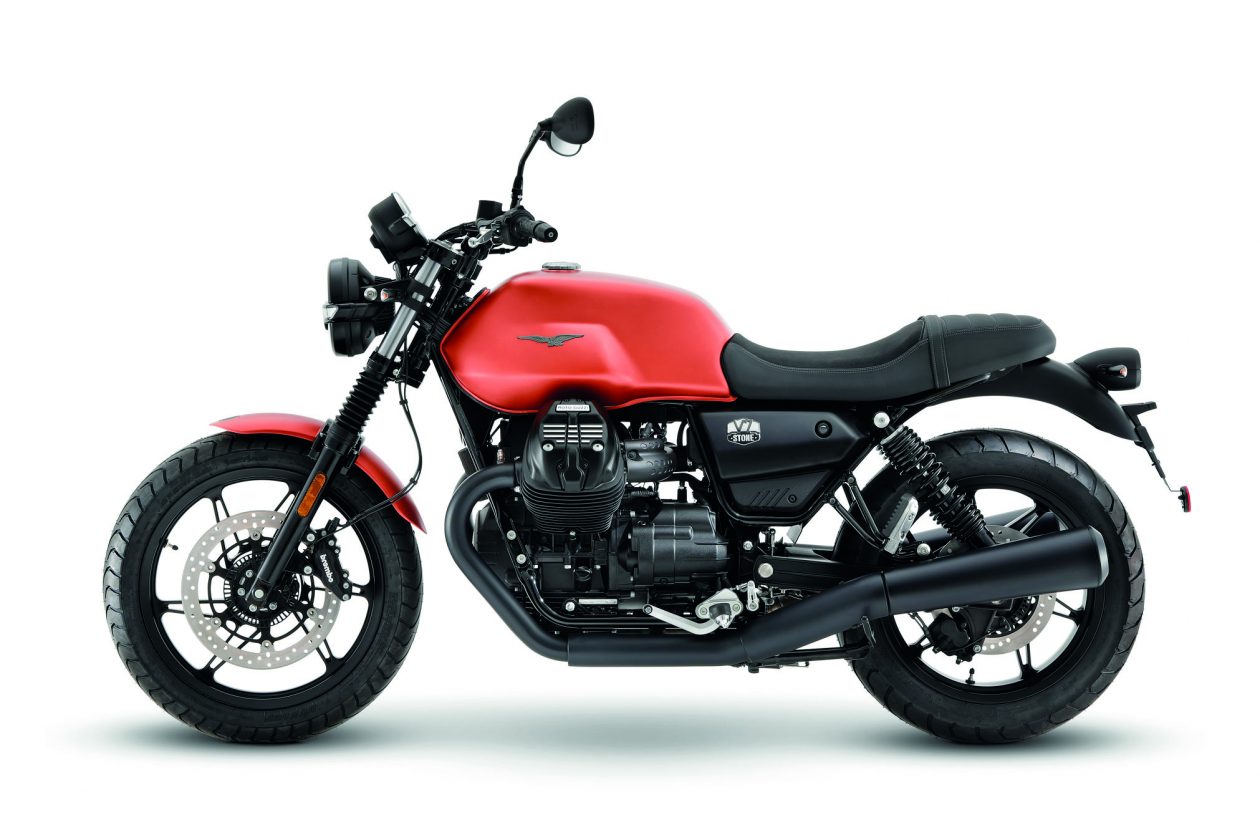
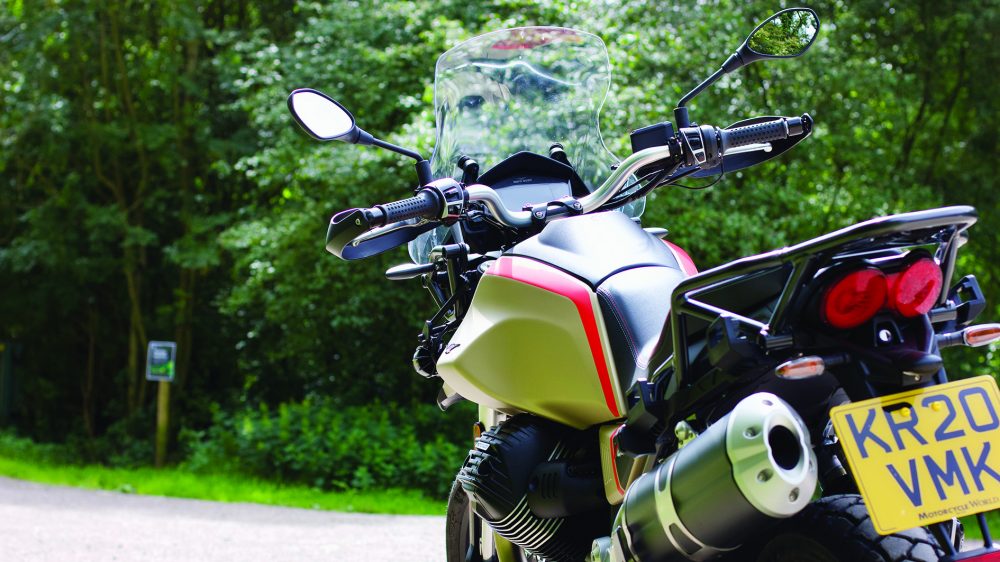
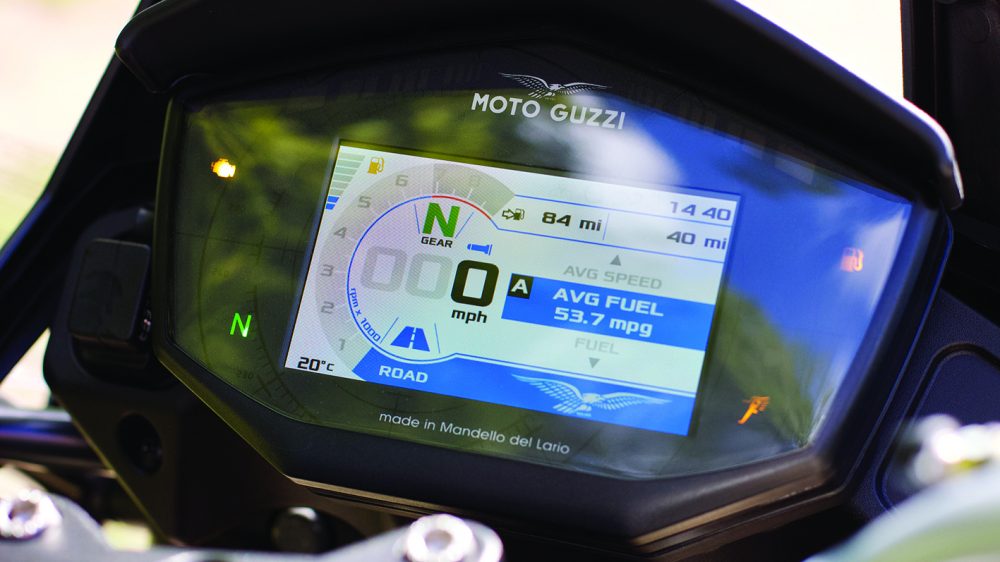
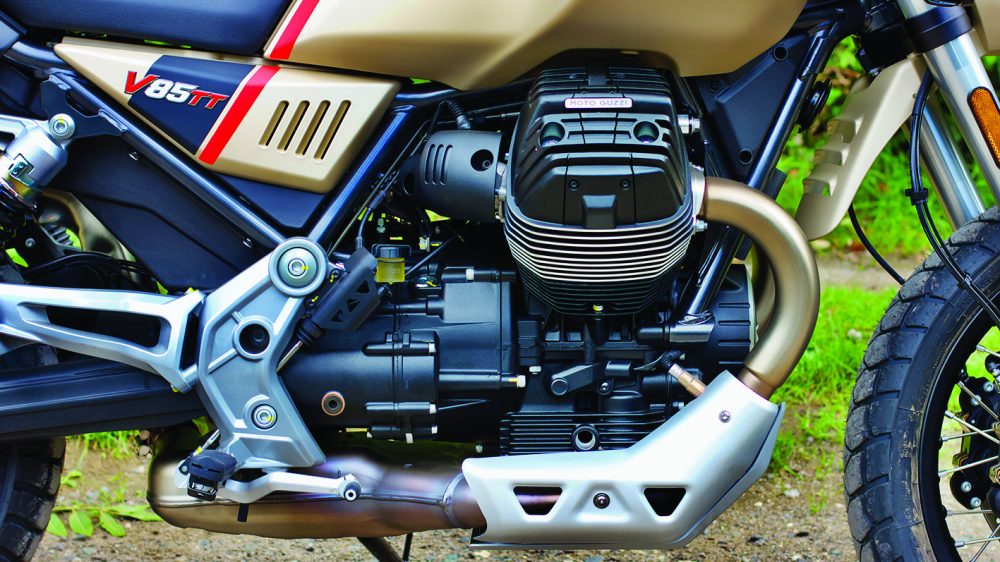
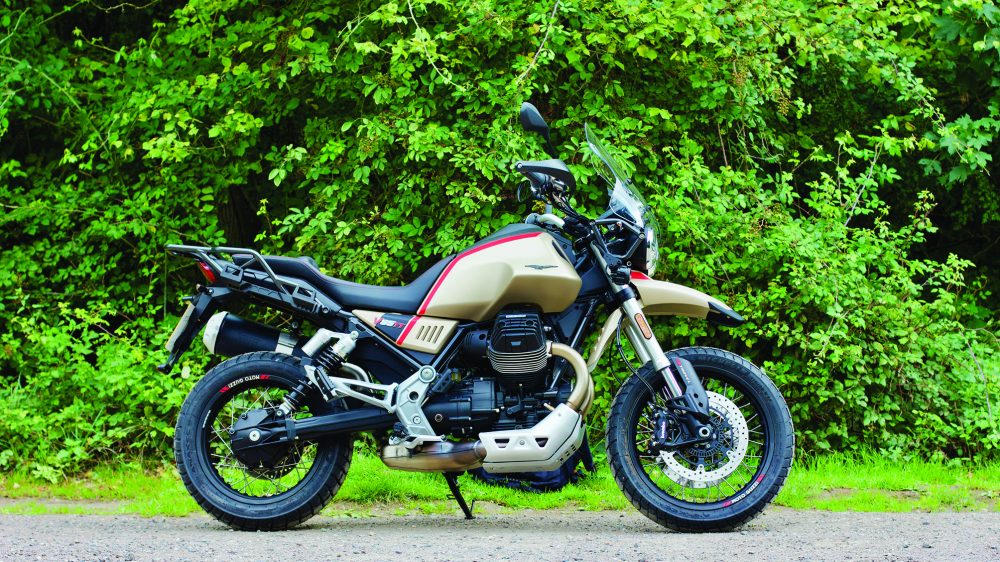
While Ducati may be the quintessential Italian motorcycle, it’s easy to forget that their sales volume is completely overshadowed by those of the Piaggio Group. Their Moto-Guzzi brand has taken the best part of their V85TT adventure-touring bike – the charismatic 850cc air-cooled engine – and used it to give their ageing V7 platform a new lease of life. Keeping air-cooled engines alive post-Euro5 is going to be very difficult indeed, and it will be interesting to see just how long the traditionally-minded manufacturer can keep it up. With the death of the old V7 engine, Moto-Guzzi is now a single-engine manufacturer, building effectively just three models. I suspect that the next couple of years’ sales figures will determine whether or not parents Piaggio decide to invest the considerable resources required to develop a future-proof, potentially electrified drivetrain for this niche brand. If you like old-school, air-cooled naked bikes, buy one while you still can.

On the other side of the corporate roster sits Aprilia, another Piaggio brand that’s been shedding models for years now. With every penny apparently going into keeping the remaining few models competitive through occasional nips and tucks, this ‘other’ Italian sportsbike company surprised everyone last year by announcing their new RS660 sportsbike. Lightweight, festooned with high-end running gear, and extracting an impressive 100bhp from a 660cc parallel twin engine, almost 50% more than the Japanese competition. The price tag (£10,000) is closer to what bikers used to pay for their 600cc-class sportsbikes than the current crop of more practical middleweights, so it will be interesting to see if there’s really a market for such a machine. The reduced piston count should mean a less peaky, more road-focused delivery and Aprilia promise that the suspension is tuned for bumpy B-roads, not glass-smooth racetracks. I’m looking forward to finding out if it can live up to the hype.

aprilia rs660
Light, the right amount of power, sensible suspension and leading edge electronics? Consider me intrigued…

But while many won’t agree, the Italian bike I’m most keen to actually ride after the Multistrada V4 does, in fact, sport an exposed trellis frame and single-sided swingarm. What it doesn’t have is front forks, a pillion seat, or a surfeit of power. The Italjet Dragster 125/200 look, quite frankly, like concept bikes or one-off specials made by someone who really misses their Peugeot Speedfight. Even Italjet’s own webpage has to confirm that no, they are not joking – this really is a production bike. It’s expensive for a 125/200cc scooter, but at around £5,000 it’s still nothing compared to what most people spend on their two-wheeled toys. And imagine the crowd you’ll draw after parking up at your local bike meet on one of those!

2018 Yamaha FJR1300ES2
The end of an era; if you want to tour with lots of luggage and a pillion, you’d best buy an adventure-tourer. Everyone else is…
Yamaha Tracer 9
Nips, tucks and new tech abound, but still no word on a UK price…
bmw s1000r
Looks great, probably handles well, and will have fantastic electronics. So why aren’t I excited?
KTM 890 Adventure R
Sounds good on paper, but have the clutch-cooling oil jets been fixed on this one?

Slim pickings here – mostly just new paint and stickers across the board. Plenty of models are living on borrowed time, with derogation rules allowing pre-Euro5 models to be sold only while limited stocks last. Suzuki and Yamaha’s showrooms will look noticeably less diverse as 2021 progresses and for the first time since the 80’s Honda won’t have a V4-powered bike in its line-up. The Yamaha FJR 1300’s almost two-decade-long production run is coming to an end, with changing tastes having already killed off the Honda ST1300 Pan European and Kawasaki GTR1400. But even though adventure-tourers are the flavour of the month, the Yamaha Super Tenere never found much of an audience and the cost of Euro5 compliance was evidently too high to justify.
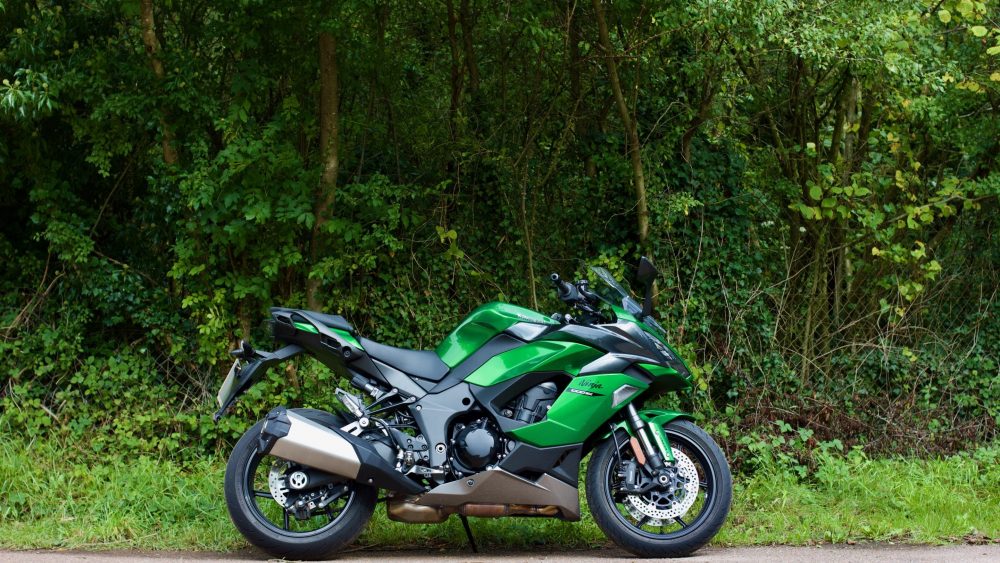
On the other hand, Tracer 700 & 900 have become Tracer 7 & 9 respectively, the larger of the two gaining a number of high-tech features alongside it’s fractionally larger and cleaner three-cylinder engine. It sounds like some of the things I complained about in my review have been addressed (better handling, new up-and-down quickshifter), along with a few things I didn’t really have a problem with (bigger panniers, new electronically-controlled suspension). The latter could result in another unwelcome price bump, and given that the Tracer 900GT was already in danger of losing the value proposition compared to the Kawasaki Ninja 1000SX, this could be a real problem. Move too far up-market and suddenly the more prestigious European offerings start to look more reasonable by comparison.

Speaking of the Europeans, BMW has updated their S1000R naked bike. No ShiftCam technology here, just mild Euro5 tweaks, but the styling is much more cohesive and makes for a significantly more attractive motorcycle in my opinion. But I’m afraid it’s also one of the least interesting offerings in the segment. Flat-plane crank inline-four naked bikes are a little bit like washing machines. They’re very good at their job, they just aren’t usually terribly interesting. And when similar money buys you almost any other engine configuration, you’ve got to discount a lot of other really charismatic motorcycles to end up at the S1000R.

KTM realised that everyone was pushing 800cc adventure bikes up to 900cc and did the same thing, creating the 890 Adventure in the same various flavours as the previous 790. I really wanted to consider that bike as a V-Strom 650 replacement, but the damning reliability reports from the then-new power plant combined with the existing stories I keep hearing about electrical problems prevent me from seriously considering the Austrian brand. Maybe the new 890 platform will be the point when things change; maybe not.

In Kawasaki’s world things have been pretty quiet, save for the unveiling of the updated Ninja ZX-10R. Speaking as something of an apologist for what many people would consider to be ugly motorcycles, I am afraid to say that I haven’t seen a front fairing design this…unfortunate in a very, very long time. Then again, given that no-one except racers buys them anyway, and the fact that they’ll just replace all the bodywork with race fairings, it probably doesn’t matter too much.

2021 Kawasaki Ninja ZX10RR
I know you can’t see it while you’re riding it, but…

INDIA & CHINA

This is where things get a little left-field. There are now so many Chinese manufacturers masquerading as old European brands that it’s hard for even an obsessive like me to keep up. Traditionally fiscally flaky Italian firms like Benelli have enjoyed drinking from the financial firehose of Chinese investors and have a slew of impressive-looking, if rather underpowered and overweight models in showrooms. Chinese manufacturers desperate to shed the stigma of their previous sub-standard efforts have been snapping up defunct British nameplates and using them to flog ultra-trendy small-capacity bikes for years, and some of the results have been just as bad as you’d expect. But for every zombified AJS there are a few that claim to source their engines and electronics from China, yet assemble them in Europe according to our more exacting quality and longevity expectations. Herald even claims that they are graduating from this process after ten years and that their new Brute 500 is wholly manufactured in the UK. Now there’s something I’d like to see in person…

Regardless of where they’re built, it’s true that the quality and dealer support for these less well-established brands has improved dramatically in recent years with the more successful and, one hopes, trustworthy of them all branching out into larger capacity offerings. CFMoto have been selling ultra-budget, Kawasaki-derived 650cc motorcycles for a few years now, and a recent tie-up with KTM is set to extend their range with engines sourced from their new Austrian partner. Chinese police are already testing a 1290-derived fully-faired bike that would be an interesting BMW R1250RT competitor, especially at half the price.

Their countrymen over at Zontes haven’t been selling products in the UK quite as long, but they’re clearly determined to catch up fast. While their 125cc selection does a good job of imitating Kawasaki and Suzuki’s various naked models, their catchily named ZT310-T looks like a Triumph Tiger 1200 that shrank in the wash. Part of the truly enourmous Guangdong Tayo Motorcycle Technology Company, Zontes are keen to follow CFMoto in demonstrating that Chinese brands can deliver more than just throw away learner bikes. The spec list is quite frankly incredible given the £4,199.99 asking price. Keyless start, TFT dash, electric screen, backlit switchgear, Bosch-sourced ABS, Lithium-Ion battery…some of these are features that bikes four times the price don’t always offer.

Herald Brute 500
Designed and built in the UK, they claim. That exhaust system screams “small-series type approval”…
royal enfield meteor 350
If the Interceptor is anything to go by, then the Meteor could be the bargain of the century.

It’s also available with either forged 17” wheels or a spoked 19”/17” combo, depending on whether you expect your journeys to take you onto gravel or not. This thing undercuts the much-vaunted Royal Enfield Himalayan on price and weight while beating it handily on features and performance. It’s well worth checking out the feature video on their UK website which, unlike a few Chinese brands I could mention, actually works and looks like it was designed by professionals. No, I don’t expect the bike itself to be up to the standard of bigger, more expensive European or Japanese fare, but my own experiences with the Himalayan weren’t great and plenty of people took a chance on those at a similar price point. If your £20,000 BMW is too precious to actually take off-road and comes out in a rash in the winter salt, then maybe a Zontes ZT310-T could be worth a look.

Speaking of Royal Enfield, their less off-road focused bikes continue to show promise. Hot on the heels of the universally acclaimed and best selling Interceptor 650 comes the Meteor 350. A more cruiser oriented offering, the new bike will cost just £3749 on the road here in the UK. If the quality and riding experience are up to that of the Interceptor, that price could help move a lot of metal once stocks arrive at UK dealers. Japanese small capacity cruisers have always struggled to maintain the all metal authenticity cruiser riders crave, and the Interceptor’s success proved that well-judged running gear and an ultra-competitive price can make up for the power deficit that often prompts the Japanese to choose water-cooling for their offerings. Royal Enfield has serious ambitions for the western market and I’m very interested to see if the Meteor helps maintain their momentum.

Electric

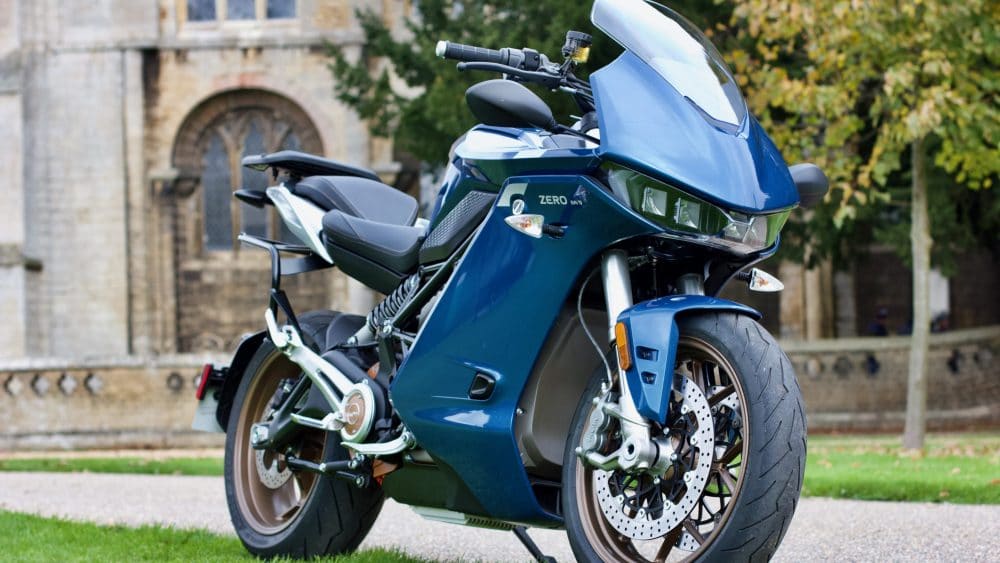
Those of you who have been paying attention at trade shows over the last couple of years will have noted the proliferation of small electric motorcycle and scooter companies. SuperSoco always stood out for me, simply because their design spoke of ambitions beyond the fray of rushed lookalikes. Their bikes have a unique visual aesthetic that suggests actual care and thought are steering the brand even if the performance limited my interest in the past. But while many of these cheap cash-in marques have come and gone, SuperSoco is still here, and frequently sold alongside the more established electric brand Zero in dealerships. What’s more, for 2021, they’re finally offering a 125cc-equivalent option in the shape of the TC Max. It’s currently available for just £3,825 after the UK government’s OLEV Plug-In Motorcycle Grant, which is slightly cheaper than Honda’s similarly styled and performing CB125R. 125’s aren’t exactly expensive to fuel and tax, but charge the removable battery at the office and the savings could add up quickly. Definitely worth a look!

SuperSoco TC Max
60 miles of range at 30mph isn’t much, but then it doesn’t cost much either.

In the same vein we have relative newcomers Horwin, imported to the UK through electric scooter stalwarts Artisan Electric. I’ve never been overly impressed with Artisan’s product: plastic and fake chrome covered imitations of classic Italian scooters matched with relatively low-tech electric drivetrains. They’ve lately diversified into more futuristic designs which I think are much better executed. Their tie-up with Horwin brings the very stylish EK3 electric scooters to the UK for under £4k, but it’s the CR6 retro-bike and upcoming CR6 Pro that really caught my eye. The latter uses the same motor and battery combo, but adds a 5-speed manual gearbox and clutch to eke out every drop of performance and theoretically push the bike up past the 60mph mark. I’m forever pondering the idea of getting another 125cc motorcycle to handle my 70-mile round-trip commute and it would be very interesting to see if the technology has finally reached a point where electric becomes a viable option.

Bring on 2021
As you can see, there’s lots to be excited about for the 2021 riding season. Motorcycling was one of the few success stories of 2020 as dealers reported record sales following the first lockdown in spring. Commuters were encouraged by the government (and, perhaps, common sense) to avoid the crowded petri dish that is public transport but unable or unwilling to switch to their car or bicycle. It seems they suddenly discovered what the rest of us have known all along: that motorcycling is the perfect way for most people to get to work. CBT’s were booked solid and 125’s flew out of showrooms.
But bigger bikes sold well too, even amongst the luxury brands. Perhaps those buyers were simply looking for an outdoor hobby that allowed them some fresh air with built-in social distancing. Perhaps the sobering news gave people the nudge they needed to finally get up off the couch and live a little. All that lockdown enforced time for self-reflection may have helped many realise that life can be short, and that no amount of risk-aversion, healthy eating, and clean living can fully protect us from something like Covid-19. As an otherwise fit, young, healthy individual who caught it early on and was on oxygen a week later, I can confirm that it’s not just the frail, infirm, or incautious who can fall victim to this invisible killer.

Yes, motorcycling can be dangerous, and going for a ride without the right gear and training can multiply that risk significantly, but perhaps 2020 helped a number of non-riders consider that a little bit of risk can be worth it, given the thrill and excitement that motorcycling offers. None of us really know how much time we have on this planet and, as the saying goes, don’t put off until tomorrow what you could do today.

Nick Tasker

First published in Slipstream February 2021
Confessions of a First Time Restorer – Part 2

Part Two – The Stripdown

So, where did we leave it last month? Oh yes, me standing in front of two 1960s BSA C15 Stars in the back garden and thinking ‘Oh, Good God. What have I done?’ I had the outlines of a basic plan of attack in my mind. For starters I was going to do one bike at a time, the red 1961 bike being the first victim. Surely that being the older bike, it would be the simpler bike? I still don’t know on that one, I’ll let you know in a year or so after I’ve tackled both.
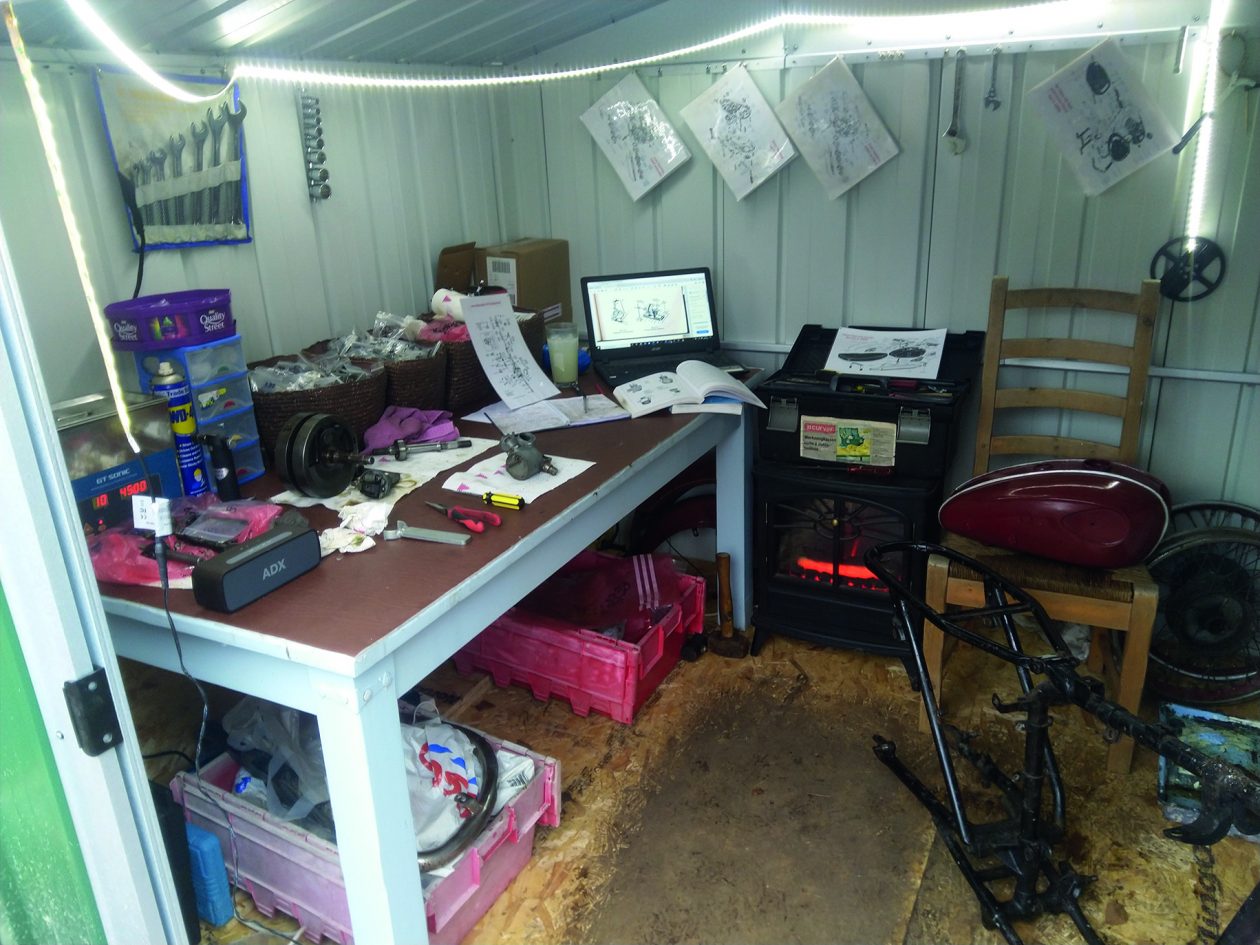
I had been planning in advance though, and even before the bikes arrived, I did know several things for sure – I had bought and built my Mancave, I needed to be methodical and meticulous, I needed new tools, I needed a subscription to Amazon Prime for the tool deliveries, I needed good reference and information sources, and I needed good people for good advice.

Some of these had already been put in place. Whitman tools – bought. Amazon Prime – subscribed. BSA Owners Club membership – sorted. BSA C15 Restoration Group on Facebook – joined. Space for computer and Wi-Fi in Mancave – done. Raiding of my wife’s old crafting storage for empty containers – check.

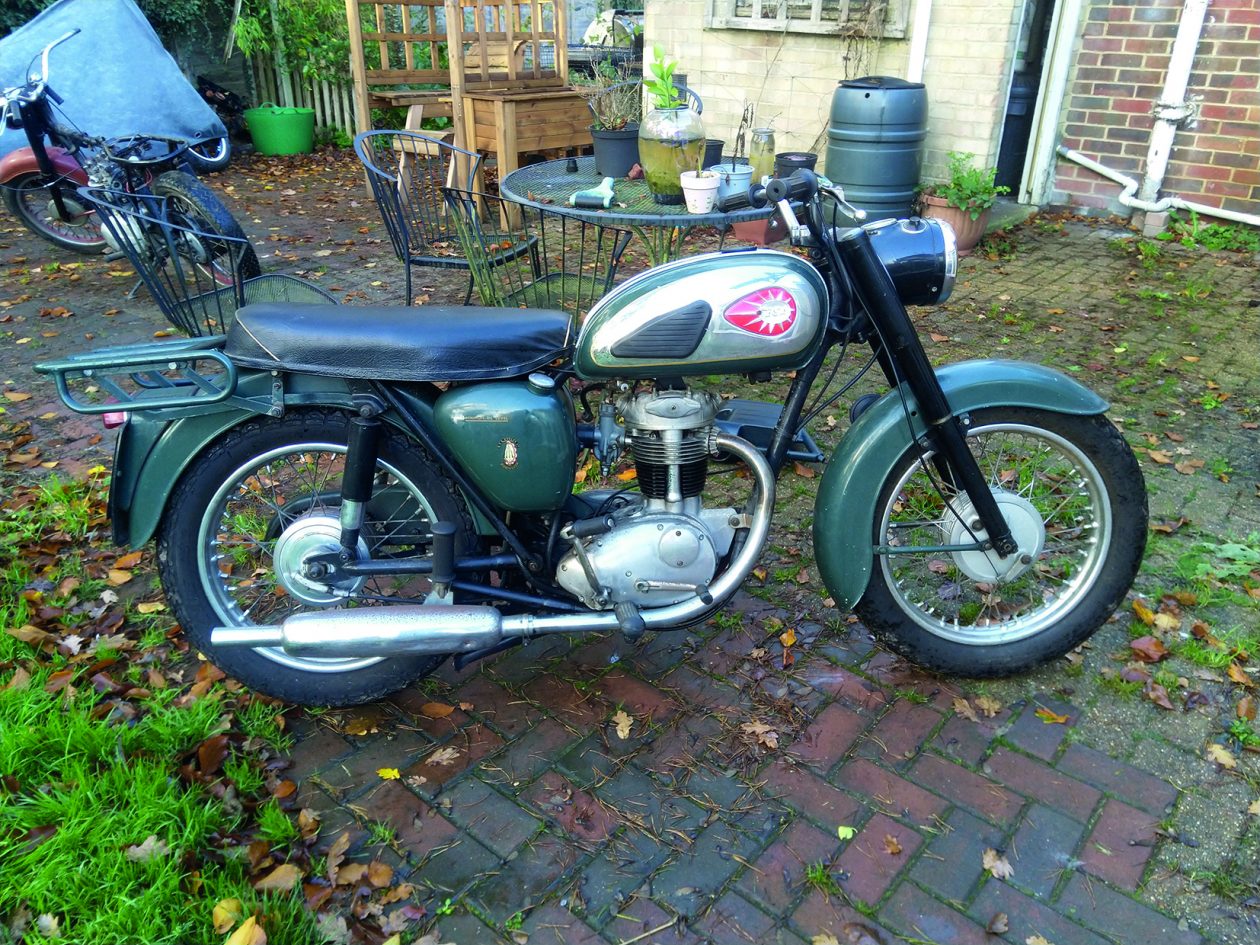
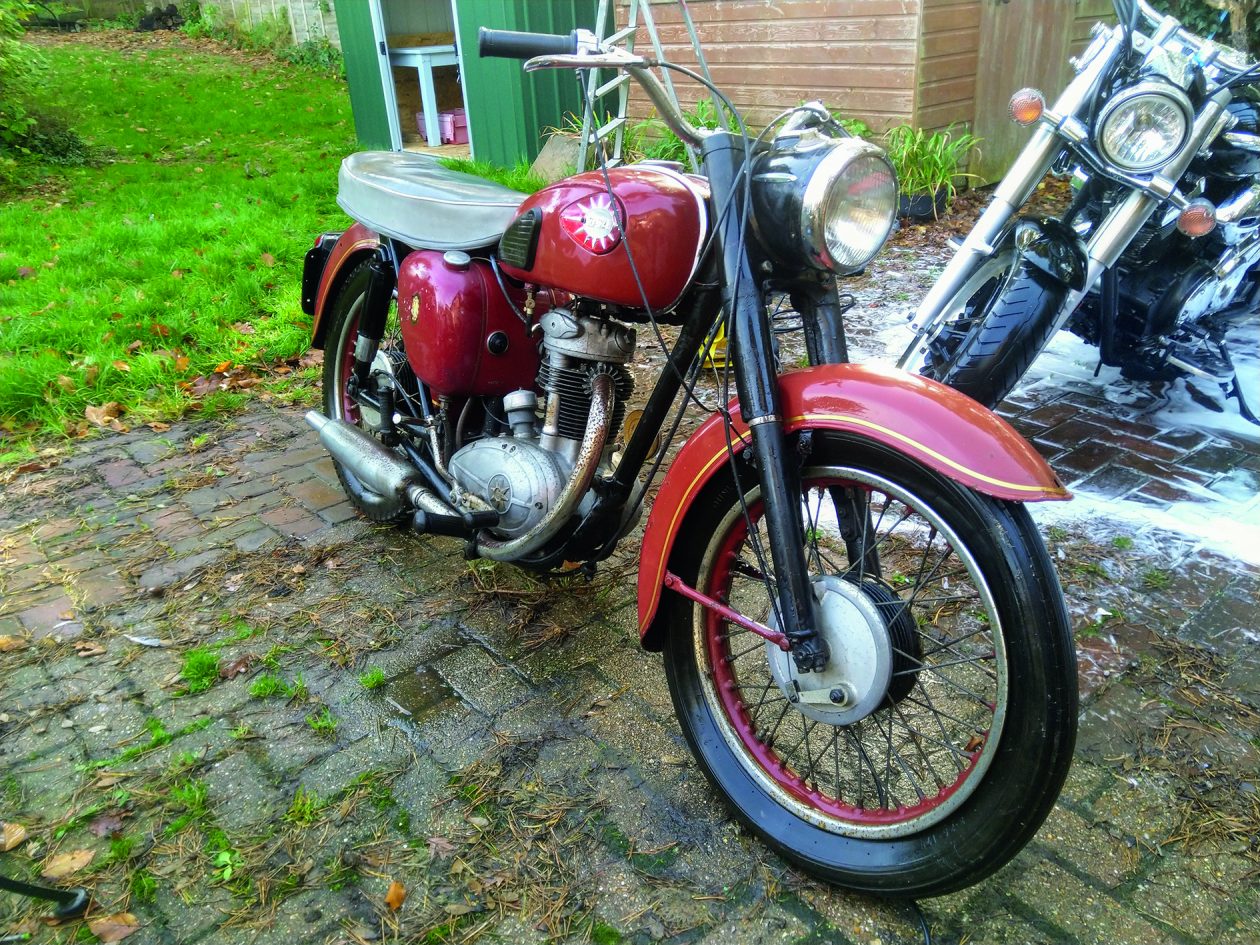
BSA C15
BSA 15 Star
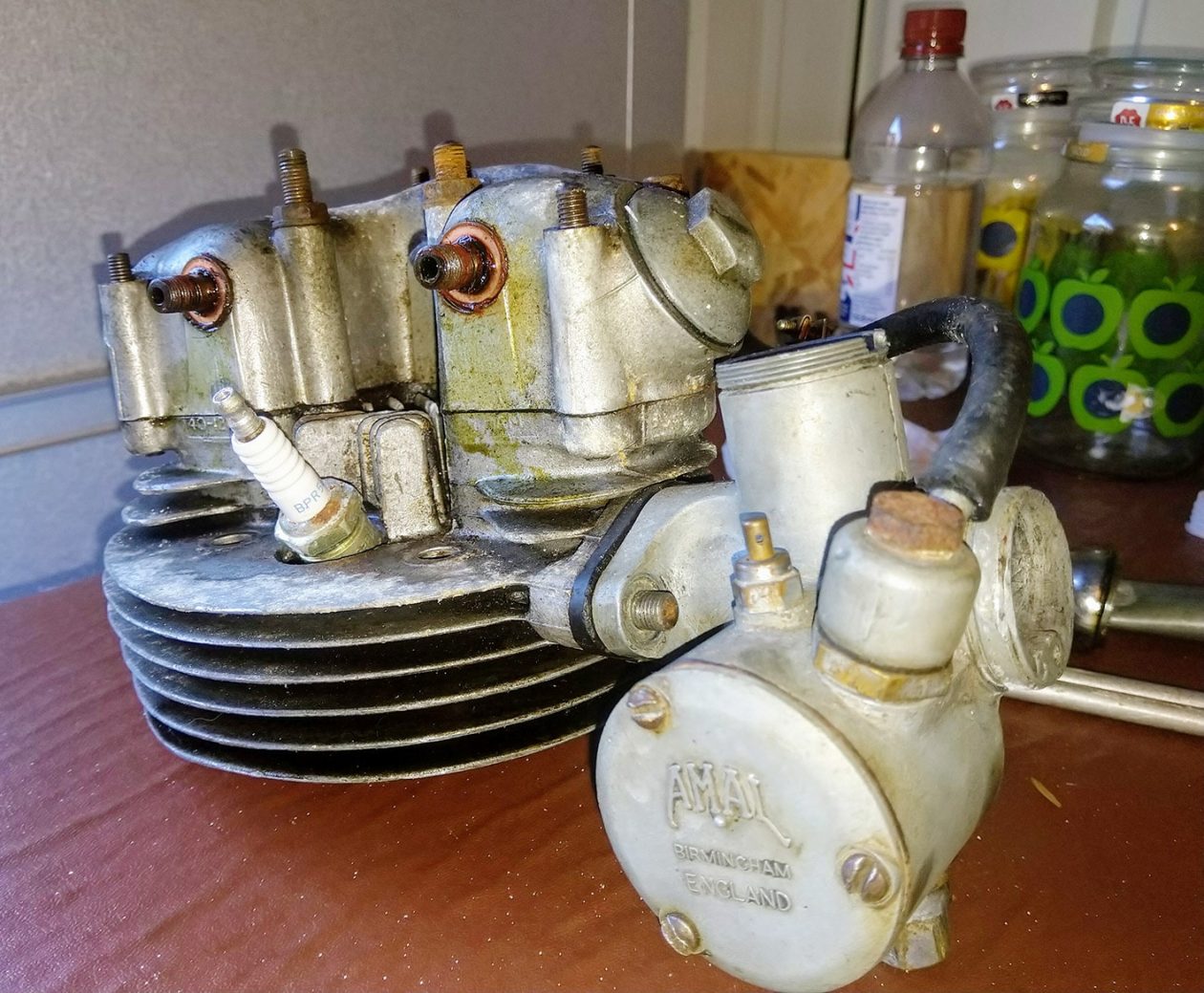
BSA C15 Cylinder Head, Rockerbox and Carburettor
Cylinder Head, Rockerbox and Carburettor
BSA C15 Front Wheel
Front Wheel
BSA C15 Inner Gearbox
Inner Gearbox

I had been recommended some BSA reference books called the ‘Rupert Ratio Unit Single Manual’, volumes 1 (the Engine) and 2 (Everything but the Engine). Unit single denoting the BSA models that had the engine and gearbox in one single ’unit’, and they were ‘single’ cylinder. The Rupert Ratio books had been recommended to the extent that buying these was a no-brainer – without exaggeration, everyone told me to get them (I have since noticed them in the background of YouTube videos about C15 restoration as well). Therefore, they were ordered, and I duly received both books, signed by the author no less! These two books (there is a 3rd volume which covers the lesser-known models) look at the BSA unit singles in great detail and make the task of working on the bikes a lot easier. Well, they actually make it possible to do anything at all for someone with my level of knowledge. What I also found out later is that ‘Rupert’ and his wife are members of the C15 Facebook group and join in many a discussion. I’ve bought a centre stand off them as my bike didn’t have one and I couldn’t source one anywhere at all. I was contacted by them to say they had one. ‘Rupert’ (a.k.a. Dave) and his wife, Lisa, are very generous with their advice and knowledge. If you do any work on a C15, you need these books.

Talking of knowledge – what on earth were all these bits and pieces that were going to come off the bike called? Easily sorted. A Google search later provided schematics for all sections of the engine and frame were printed off and laminated. These schematics are labelled with the original BSA part numbers, and I put these numbers and their relevant descriptions on the back of each sheet – very useful. Now covered in oil and grease, hence the laminating.

But how would I remember where each bit was from after it came off the bike? This is where I went a bit OCD. When I was a teenager in the 80s (you know, the last decade of decent music, and the decade responsible for my love of cruisers) my Dad got an Armstrong Siddeley Star Sapphire which he did up. He had a lot of knowledge about cars and engines, but he still took some photos to aid him when it came to reassembly. Not many though – they had to go to Boots to be printed. Other people had also said to take photos. I decided that I needed a cataloguing system. Therefore, each part that came off the bike was photographed and given its own unique code. Lots of parts were also photographed in situ to aid reassembly. This code and the part description were duly entered into a ledger (it’s going to be on a spreadsheet for the second bike). The camera’s photo file name was manually changed to the code and description (hence I can now search the photos by part name and code). Each part was then put in its own bag and the part code written on the bag. A bit of a faff, and definitely time consuming, but I know that I will be very glad of it when it comes to reassembly. I know where each part is and have a photo and description of it. So far, I have over 750 photos! Thank goodness for digital photography.

As an aside I have just realised that maybe some theme is going on here – my Dad had an Armstrong Siddeley Star Sapphire. My day-to-day bike is a Yamaha XVS950 Midnight Star. And these two bikes I have inherited off Sharon’s Dad are BSA C15 Stars!

Anyway, it had occurred to me that as I was going to be doing this properly, I needed some new toys. Shame! Out came the bank card and I hit the internet. Parts washer, ultrasonic cleaner, tap and die set, gear pullers, tyre levers, valve spring compressor, torque wrench. All needed and bought. Along with other speciality BSA tools. These were not all bought before I started. Some were ordered as I went along and realised that I needed them. That Amazon Prime next day service has really paid for itself.

I felt I was as prepared as I could be, so I set to it. On day one I just tackled easy bits of bodywork to settle in. Petrol tank, mudguards, oil tank, seat. It was an easy start and got me going.

Things got more difficult though, not only with things that I couldn’t work out how to do (that bloody engine just wouldn’t budge out of the frame), but also with the joys of BSA design – I mean, who really thought that having to take off the chain before you can take off the chainguard was a good idea?

So, the frame was now stripped and ready to be painted. However, when it came to the engine that was a different matter, my DIY knowledge had a reduced impact. I’ll come to that shortly but, firstly, there were more important issues.

I had been working on the patio as the weather was mild, but I soon had to move into the Mancave due to the rain and then because of the cold. And it did get cold – too cold. How could I continue if I couldn’t feel my hands? I had to think outside the box. There was no way in hell I was going to be allowed to bring the bike inside and work on it there. I would have been instructed to ‘remove myself from the premises with immediate effect’!

Therefore, an intricately planned, and painstakingly executed, military style operation was carried out. In other words, whilst my wife was out, I nicked the heater from the conservatory. At the time of writing, it is 6 weeks and counting that I have got away with this. I guess this being published will tell how closely Sharon does read my ramblings! My progress may be about to slow considerably due to the injuries I’m going to sustain.

But I am, at present, able to work in a nice warm Mancave. Please also note in the photo above, on the floor next to the heater, that most vital piece of equipment when dealing with a vintage motorbike – the club hammer! And yes, the toolbox is fine on top of the heater. The heater is designed to allow things to be put on it. I can see people shaking their heads in disgust.

Anyway, back to the engine. In the end I was very pleased with how the engine came apart. I learned a huge amount. There was the odd time that I had to resort to the blowtorch I’d nicked from the kitchen (oh Gawd, now I’m in more trouble) and rubber mallet but in general it came apart well. Again, things were very dirty though. I am glad that I have taken it apart.  There were several things in the depths of the engine that will need attending to. A previous owner had filled up an internal gap with red hematite. This hematite fell out of the gap when I reached that area of the engine. I thought that the casing was falling apart, so asked advice only to be told that the gap was meant to be there to allow oil to move around. That was a relief but made me wary that a previous owner may have had a similar level of knowledge to me and done some things wrong. Several components will need replacing. The distributor drive shaft and the distributor drive pinion both have teeth missing from them (that may sound all knowledgeable, but I had to look up their names to write this!). Coincidentally these are right next to the hole that was filled in. Other parts such as bushes, springs and bearings will need replacing as a matter of course.

Another carefully planned sneak attack also had to be enacted. When it came to removing the aforementioned bushes and bearings the advice I received was unanimous – put the casings in the oven at 150 degrees. Really? Did people actually want me to live through this? Regardless, one day, when my kind, beautiful and adorable, better half (she might get this far in the article) was out, several engine casings went into the oven. And out came the bushes and bearings exactly as they were meant to – success!! Along with copious amounts of very smelly oily smoke. My survival was in the balance here. Kitchen door shut, extractor fan on, windows open, all Gods prayed to. Fortunately, the smell was 90% gone by the time Sharon got home, but my speciality hangdog look and some shameless emotional bribery of ‘well, it was for your Dad’s bike’ had to be employed. I made it – just! Tip – make sure you have the parts thoroughly wrapped in foil when they go in the oven. It takes longer to heat them through but keeps all noxious odours out of the kitchen.

I am always aware that I still have a lot to learn. Jim Bates came over one day in between lockdowns for an outside, socially distanced check up on my progress. I proudly showed him my work. On the desk were the flywheels. ‘Those will need replacing’ says he pointing at the crank sleeves (had to look that one up too). ‘Eh? What?’ says I. And the same with some bearings. Oh bugger. A good lesson though. I really need to check these engine components properly before they go back in. Fortunately, the Rupert Ratio books, and the internet, are gold mines of information, and I know that many very helpful people are just a post away.

So, the bike is now all apart and it’s time to move on to Stage 2 – cleaning and restoration.  Which makes it time to sign off for this month. The many bits and pieces need a really good clean, they’re filthy. The parts washer and ultrasonic cleaner are going to be well used. The frame is going away to be painted. The tinware needs to go somewhere for the paint to be restored, or redone if necessary. I don’t know which yet. The shiny bits need doing. The wheels need rebuilding (the rear potentially needing a new hub thanks to my mistake). The petrol tank and oil tanks need to have their internals checked over. So, whilst I might not be in the shed as much, I’ve still got plenty to be doing. This, I will update you on next month.

In the meantime, keep healthy and stay safe out there, both on and off road.

Jon Case

First published in Slipstream February 2021

BSA C15 Stage 1 Complete
Stage 1 Complete
Jon Case

Confessions of a First Time Restorer – Part 1

Part One – How it all Began

Firstly, let’s get the introductions out of the way. My name is Jon Case and I’ve been riding for just over 3 years, and a member of TVAM for 2 years. A few years ago I reached that mid-life crisis moment. I’d had enough of the career lark, the kids were in their teens, my wife had her hobbies, and I had some personal issues that were in the process of being sorted. To that end, and thankfully with the support of my family, I packed the career in and decided to start again. I handed back the company car, gave up the sales job and went working stacking shelves in a supermarket. This turned out to be the best thing I had ever done career wise. I re-discovered happiness.

A few months into this I found myself thinking about motorbikes one day. I’d always wanted to ride a motorbike but had never learned. My father had been a surgeon in the era when helmets were not compulsory and protective gear was not a priority. He was very anti-bikes due to the number, variety and seriousness of the bike injuries he saw. So there was no chance of me being allowed to learn to ride, and then I never got round to it when I was older.

Jon Case

I’d always loved cruisers and always said that one day I was going to own a Harley. It was never anything but cruisers. No other type of bike interested me. This I put down to being at a very impressionable (read hormonal if you wish) age when Terminator first came out and, of course, there were those Meatloaf album covers!

It just happened – I decided I was going to learn to ride a bike. A bit of research and I was booked onto a DAS with Bike2Bike in Newbury, fortunately a very good choice. I worried about telling my Mum, but she was very supportive. I did my CBT – God knows how I passed that! I really could not get the hang of this ‘clutch with the hand’ thing and spent half my time stalled. The examiner obviously wasn’t watching when I did a wheelie out in front of a car when pulling onto the road for the first time (a buttock clenching moment, I can tell you). Before even thinking about Mod 1 I decided I needed practice. Through Bike2Bike I hired a 125 for a few days, and just spent that time out riding on quiet roads learning to control the bike and that flaming clutch. But I wasn’t enjoying it and that worried me. It felt like the slightest gust of wind would blow me over. I didn’t feel in control. It all just felt wrong.

I decided to persevere, and I did my theory, rocked that – 100% on the test and 76% on the hazard perception, and booked my Mod 1 training and test. The day of the training was a revelation. I started moving on a big bike and it was a eureka moment. This is what I had been expecting. This was what I hoped it would be. This was fun! Soon Mod 1 and Mod 2 were passed, and I was on the bike hunt.

Cruisers! Aah, they’re just great. Many will disagree but that’s the beauty and variety of biking – there’s something for everyone. The look of cruisers, the sound, the ability to mod, the lack of electronic gizmos, the feel of riding one, the low seat position, the admiring looks of passers-by (well, in my imagination anyway) – fundamentally, the feeling and the image! I soon realised though that a Harley was not what I really wanted. Lots and lots of research and Excel spreadsheets followed. For the money I had there were issues with age, reliability, value for money and the lack of performance that money would realise when buying a Harley badge versus other brands. I settled on a 2009 Yamaha XVS950A Midnight Star with 5,800 miles on the clock. This was a lot of bike for the money, and on Wednesday 13th September 2017 I proudly rode home (very tentatively – I bottled parking at the motorway services and drove straight out) and everyone was out!

Roll on a year and I was very happy with my bike, and I still am. She’s gorgeous. Whenever there is something wrong with her I end up a nervous wreck. ‘What’s wrong with her? Is she okay?’ I worry more about her being ill than the kids, but I never said that. And I’d lay money on that there’s a good few of you nodding in agreement. She has that lowdown torque, just the right amount of power for me (okay, it’s a measly 55BHP, but that does me fine, and she keeps up with more powerful bikes without the slightest problem), the wonderful sound I achieved with a new exhaust and hypercharger, the look with the removal of the pillion seat and a few carefully chosen bits of chrome bling.

The simplicity of the bike, not even a fuel gauge after having a car full of toys. A re-modelled seat to make it comfortable after more than 100 miles. The removal of the screen for non-motorway trips. The feeling and the image! I defy anyone to say they haven’t admired themselves in a shop window as they ride past! I was a happy chappy. To quote one of my colleagues at the time – ‘I’m not interested in motorbikes and I don’t like smoking, but you looked cool as **** when you rode out of work yesterday with a fag in your gob’. I can see all the heads shaking in disgust at smoking while riding, but if you position that ciggy just right, there is no ash issue!!

Anyway, I had always planned on getting an advanced riding qualification but wanted some time in the seat first. Starting to ride at my age I was extremely conscious of not having a big metal cage around me. I was also conscious that whilst I had nearly 30 years of driving experience under my belt, and knew how to handle roads and traffic, I was pretty pants at riding a motorbike. I wanted to be a lot better. A friend, John Stevens, who was a member of TVAM until he sadly died earlier this year suggested I join TVAM, so that was what I did.

I was fortunate enough to be allocated Jim Bates as my Observer. He patiently guided me and taught me a huge amount. I’d always thought I was a good driver – not great, just good, but the amount I learned from Jim was astounding, and can be credited to having saved me from one accident that I know of. I didn’t rush it as I worked weekends so it had to be fit in when I could, but in November last year I passed my Advanced test. I just missed out on a F1RST by riding too slowly! But that’s me, and I rode as fast as I personally felt comfortable doing in the pretty grotty November conditions. I’m a much better rider now (and driver actually), but still have plenty I can learn.

BSA C15

So, we finally arrive at the joys of 2020, and me actually getting to the point. I had recently changed jobs and was looking forward to getting more involved in TVAM. Doing various additional courses, going on trips and finally being able to attend St. Crispin’s Sunday. Then 2020 really kicked into gear and all plans went out the window.

I am fortunate enough to be a critical worker and in no danger of losing my job or being furloughed, but we were, and continue to be, affected by Covid. My wife’s business has suffered. My son missed college and had to have assessed BTEC grades. My daughter continues to suffer. She missed a quarter of her GCSE syllabus and still doesn’t really know if her GCSEs are going to happen. My wife’s uncle and our neighbour died of Covid, my friend John Stevens died, and then to top it all my Father-in-Law, Peter, unexpectedly died in his sleep in May.

Peter had numerous vintage bikes in his garage that had not been touched or used for years. My Sister-in-Law decided to take a BSA Bantam and a Triumph Tiger Cub, and my wife asked if I wanted two others. This kind of threw me – I knew nothing about bikes apart from how to ride them. The mysteries of an engine are exactly that to me – mysteries. They would need restoring, they hadn’t been started in at least 20 years, probably more like 25. But they’d been kept inside. Could I do it? Would I have the skills to do it? What on earth is a Rockerbox? Where would I do it? How would I learn? Ultimately, what the hell is a BSA C15 when it’s at home? The questions and doubts kept coming. But the seed had been sown.

Yes, you’ve guessed it, there were two BSA C15s available if I wanted them, a 1961 and a 1967. Time to ask the experts. I joined the BSA C15 Restoration Facebook page. I got, and continue to get, amazing advice from these people. Things like buying the bible according to BSA C15 owners – the Rupert Ratio books which look at the C15 in minute detail. Which tools I would need to get, i.e., Whitworth. I asked advice of the BSA Owners Club and found out that C15s are good bikes for a first restoration as they are relatively simple. Both bikes have matching frame and engine numbers, the 1961 still with its original paint. A couple of posts on the TVAM Facebook page yielded good advice. I picked Jim Bates’s mind on a ride out to the Sammy Miller Museum. It’s really worth a visit, a fantastic place, and if anyone wants to buy me a bike, I’ll have a Zundapp K800 please – I’d love to read Nick Tasker’s take on that bike.

BSA C15

All this was answering questions, quashing doubts and pushing me more and more towards giving it a go. In the end I decided to go for it. A shed/mancave was purchased, a van was hired and then on the 1st November the bikes came to their new home.

On my first day off after bringing them home I got the bikes out of the shed, looked at them, and thought ‘Oh Good God, what have I done?’

But I have dived in there, am making good progress and learning a huge amount. I now know what a rockerbox is. So you can find out what that progress is, I will write some follow ups to this over the next few months to let you know how I’m doing, what adventures I’m having, my successes and my failures. It won’t necessarily be every month as I do have to earn the money I’m spending on them, and it’s a slow process being my first restoration. I am having a thoroughly enjoyable time though and hope you will enjoy reading about it. The strip down of the first bike is well progressed, so next month I’ll give you an update. Bye for now, and stay safe.

Jon Case

First published in Slipstream January 2021

The Future for TVAM and our Environment?

During the national lockdown and with the various regional tier restrictions that followed, it has given us all a bit more time to reflect on our family priorities and key leisure activities. Our normal European bike tours have not been possible, plus overseas holidays cancelled. One outcome for many of us, has been to place a greater emphasis on the UK for riding and ‘stay at home’ holidays. In particular, the local environment of the Thames Valley plus surrounding counties, where many of us walk, ride and cycle to enjoy the outdoors, gaining some much-needed recreation and exercise.

Looking at what we do within TVAM, we essentially ride for pleasure, with skills instruction to aid our enjoyment whilst honing our safe riding skills. Put bluntly, we ride around in big circular routes burning fossil fuel. At this point it’s worth stating, “and long may that personal freedom continue” as I, for one, enjoy this activity immensely. It did however make me consider what we could do to mitigate our own CO2 emissions, aka Carbon Footprint?

After doing some on-line research it seems that a large motorcycle’s CO2 emissions are around 160-200kg of CO2 per 1,000 miles, whilst a healthy mature tree absorbs around 22kg of CO2 per year.

Putting this into context against TVAM activities, I wanted a ‘ballpark’ figure to work with, so if TVAM have ~500 active members on social rides, weekends/trips away, training and track days which on average do 1,200 TVAM specific club miles p.a. that gives a club Carbon 

Footprint of around 100 tonnes of CO2 per annum. This represents a sizeable forest of trees, almost 5,000 in total, which need ~2 hectares of land (20,000 square meters, equivalent to 5 acres).

This stark fact made me realise the size of the challenge faced, in wanting to fully offset our club CO2 emissions, but nothing worth doing comes easy. I then mused on ‘eating the elephant one bite at a time’ if we could just plant a tree for every member – each year for the next 5 years. This would make TVAM the first motorcycle club in the UK (in the world?) moving toward becoming a Carbon Neutral Organisation. But  what would this cost and how to achieve it?

I was pleasantly surprised that funding the purchase of sufficient trees is not the financial issue I had anticipated. Buying in bulk (1,000) Oak saplings 2-3 ft in height (60-90cm) have a cost of less than £1 each. It turns out that the English Oak is one of the best species for fixing the maximum amount CO2 in the UK climate.

My thoughts are to align with an existing Thames Valley Woodland Charity with a similar catchment area to TVAM so that the ‘halo effect’ benefits the local community, helping with our club profile and recruitment; we plant the trees where we live or ride our motorcycles. 

So what do we do – what’s next you ask?

The TVAM Committee have looked at this initiative, making a number of constructive proposals as to how best TVAM can support and implement for 2021 onwards. Namely that this is not mandatory on the membership, it would be funded entirely by additional voluntary contributions collected and donated from the membership. In January we will create a five year carbon neutrality campaign on the website. This will allow members to donate a one-off amount or to set up a recurring annual donation. If you are an income tax payer, we should be able to collect gift aid on this amount.

Volunteers required!

I will be looking to raise a small team to actively drive this initiative forwards, anyone who feels passionately about improving our environment is welcome to get involved. You will be asked to contribute as little or as much as you can spare e.g. become a day volunteer to go out supporting our tree planting activities along with our (yet to be) chosen woodland charity partner, or man an information/donations desk at St Crispin’s. I would stress that this initiative is just at the embryonic start-up stage and it will be up to the volunteer team to create and shape our detailed activity plans. We will be working for and on behalf of all TVAM members, with responsibility to deliver results in a productive and transparent way. Once up and running, we will track our progress against annual targets and report regularly via Slipstream and/or groups.io.

If you have comments, questions, suggestions or feel you can help, please make contact with myself directly winstnig@outlook.com or via the contact box in the web shop area for CO2 Neutrality donations.

Many thanks for your support

Nigel Winstanley

First published in Slipstream January 2021

round britain rally

Round Britain Rally 2020

The Round Britain Rally is an annual event that normally runs from the beginning of April to the end of October and involves using your bike to visit landmarks around the UK. I’d heard about it a few years ago and decided to enter in 2020, taking advantage of no longer working full time.

All the relevant information is to be found on the resolutely old-school website at www.roundbritainrally.co.uk . It’s probably best viewed using Netscape Navigator at 640×480 on a CRT screen. The site very concisely describes the aim of the rally:

“The objective is to encourage you to use your vehicle for recreational touring in some of the best countryside on mainland Britain. This will require you to explore back roads and lanes that you may otherwise avoid, to visit places of interest (landmarks) that you may not have known existed. To prove you have visited the landmark you will be required to take a photograph of the site with your motorcycle/tri-car at the scene.”

I sent off my entry form in January and was rewarded in mid-March with a full set of rules and a spreadsheet with the list of 80 landmarks. These were sited from Helston in Cornwall to Haster near Wick, from Pembroke in SW Wales to Orford in Suffolk, and all over the place in between. So you already get the idea that doing the whole lot would be quite a challenge. I’d decided that at a first attempt and especially given the Covid-19 restrictions that had to be observed, I wasn’t aiming for the whole set, but would just concentrate on days out from home and see how many I could manage.

The landmarks all have point scores, lower for those that are easy to find and near main routes, higher for places that are miles off the beaten track and far from any other landmark. Adding up the scores for those you visit gives you a total and an overall ranking from “Finisher” (up to 200 points) to “100% All-Rounder” at 2000 points with no errors.

One dubious advantage of the first lockdown period was that at least I had plenty of time to plan routes. I worked out that there were around 25 landmarks that should be fairly easy to reach from home, so I spent time googling them, bookmarking any relevant website for more details, and entering waypoints and routes into Garmin Basecamp. It struck me that doing this in ye olden days of the rally, just with a map and no internet references would have been an awful lot harder. As soon as lockdown was over, I was ready to set out to get the first three in my plan on a brilliantly sunny day. These were: The old Control Tower at Greenham Common (the closest to home); a memorial on the site of the old ironworks at Bratton in Wiltshire and Great Coxwell Barn in W. Oxon. The route was an easy 134 miles and took in some familiar roads on the way out before getting into new territory for me beyond Pewsey. I really enjoyed this section on the A345, A342 and B3098.

round britain rally map

Then, some familiar Wiltshire roads via Avebury and back through the Vale of the White Horse.  I’d scored 55 points and had a fun day out.

I wasn’t too bothered about planning the most efficient routes as I was looking to have enjoyable rides more than anything else. The least efficient ride I did was 200 miles to East Creech in Dorset, making 200 Miles for 1 Landmark (MpL*). The best was 197 miles around Herts/Beds/Bucks/Northants for 4 landmarks, so 49 MpL. The longest day was about 300 miles. I did work out after a couple of outings that the best strategy for me was to cover the most distance on the way to the first landmark and then work back from there, as visiting each landmark gave a break in the ride every hour or so and it meant I wasn’t left with a solid 2-3 hour ride home at the end.

The landmarks themselves varied from extremely low key to enormous, including war memorials, pieces of civil engineering, statues, and historic sites of various types. As advertised, plenty of them you would not have known existed, and some were rather poignant. At RAF Tempsford, now mostly reverted to fields, a stone pillar marked where SOE agents were flown into occupied territory during WWII, many never to return. A small plaque by a field in Northamptonshire recorded where a B-17 bomber had crashed on a training exercise that took the place of a cancelled raid, with the loss of most of the American crew.

A particularly memorable ride was to get 2 landmarks near the Welsh border. I had an errand to do near Stroud on the way, but with that done, set off via Gloucester and the north side of the Severn Estuary. The A48 was an enjoyable road and went through some towns that were more picturesque than I expected. At Lydney Harbour, I found the memorial to the Severn Railway Bridge disaster and took some pictures across the estuary. It was a dull day with rain starting, but rather an atmospheric view. The next target was St Michael’s Church at Garway in Herefordshire, which I reached after a brief flirtation with Wales and then a tricky approach up and down some ridiculously narrow, muddy AND steep lanes. The church dates from 1180, but had no direct road access, so I had to be satisfied with a rather distant picture. I then had a 2 hour ride home in pouring rain and discovered when I got back there was another nearby landmark just over the Welsh border that I hadn’t known about!

It was our wedding anniversary in mid-September, so we did a combined night away and landmark grabbing tour through Sussex and Kent. At the Rudyard Kipling statue in Burwash, against all the odds, we met another rally participant on a modern Enfield 650. He had ridden up that morning from Devon on a plan to grab 6 landmarks that day, with more the day after. He was clearly a more serious participant than us and said he’d actually completed the rally a few times with a full score.

After doing all the trips I’d planned, I added up my score for the first time and found that I’d made a slight error with one photograph and so if the rules were strictly applied, I’d be 10 points short of a Bronze award. Arrghh! So as insurance I ended up doing a detour to Wivenhoe in Essex on a day that I already needed to go over that way for other reasons.

That done, I submitted my entry and soon heard back from the organiser, Dave Hancock, that I had qualified for a Bronze award with 420 points. To get the next level, Silver, I would merely need another 380. A job for next year, perhaps?

In summary, doing the rally lived up to my expectations. I had several great days out on the bike, mostly in fine weather, I travelled on lots of new roads and learnt a bit of obscure history along the way. If you fancy a crack at it yourself in 2021, all the entry details are on the website.

www.roundbritainrally.co.uk

Trevor Warwick

First published in Slipstream January 2021

New Online Presence

How long does a website last? In the case of TVAM’s nearly 10 years! Though continuously developed and tweaked, even our Webmaster Steve Dennis agreed the underlying format had reached its sell-by date in 2020. In the fast changing world of online, especially during the past year, the Committee agreed in August it was time for a new one. A requirements document was written and five web developers invited to tender. In the end we selected a submission by a club member which included a lot of his free time as a volunteer, making the venture affordable, whilst an agency, City Click Media, undertook the design.

A small working group was formed to manage the development which included writing all the copy, sourcing images and also developing a new logo. All done over the Christmas break. The new site is very firmly targeted at non-members encouraging them to:  Request a free Taster Ride; Apply for the RideUP Scheme; Buy the Advanced Rider Course, or Meet us at St Crispin’s. All great calls to action which visitors can use to engage with us.

Many organisations donated time and resources to the project at no-cost including; IAM RoadSmart, Nutty-Tart-Grafix, Hounddog Films, Toggled, This is Nicely Done Productions󷐬 and Nippyfingers Publishing, making it a true team effort and to everybody involved we offer our thanks.

To help promote the new website a 15s video has been produced for use on social media. Please look it up and forward it on to your biker mates who may not have (yet) joined the Club.

This new site for tvam.org will go live towards the end of January.

Salli Griffith

First published in Slipstream January 2021

Yamaha TMAX

A Change of Seasons (Part 1)

So, 2020 is finally over. I don’t think there has ever been a year that so many people all over the world have looked forward to seeing the back of. As motorcyclists in the UK, we snatched a scant few weeks of good riding between various lockdowns, but European trips were largely cancelled. The smart ones with flexible schedules shot off to Scotland at the earliest opportunity, but the weather was typically appalling by that point in the summer. In the end I escaped the claustrophobia of my own four walls on four wheels, not two.

My motorcycling blog saw traffic more than double as bored bikers headed online for their motorcycling fix, but I was generally stuck at home and able to provide little in the way of new content. With a vaccine on the horizon and hopes of a return to normality for 2021, has the global pandemic permanently changed motorcycling in any way?

fantic caballero rally 500
Off-road specialist Fantic’s lighter and cheaper Triumph Scrambler 1200 competitor looks genuinely capable.

Looking over my notes from the last few weeks’ sustained barrage of press-releases a few trends do start to emerge. For one thing, we might be about to see history repeat itself as the complacent European and Japanese brands find themselves tripping over more affordable and increasingly well-spec’ed offerings from India and China. The flood of cheap and nasty 125s has abated, with quality and features improving as product ranges expand up the capacity ladder.

At the same time, we’re seeing traditionally off-road-exclusive brands like Fantic bring genuinely intriguing road-legal offerings to market. I don’t quite think we’re going to see Triumph once again swept aside in a wave of better and cheaper machinery as they were in the 70’s. The more established brands do seem to have learnt their lessons from history. Manufacturers with existing small-capacity programmes are expanding them; those without are scrambling to extend their large-capacity-focused ranges downwards. Still, competition is going to be fierce and some of the established businesses may not be able to survive on the more meagre profit margins that will be on offer once traditional motorcyclists stop buying £20,000 toys in the numbers they’ve become accustomed to.

As old age begins to bite, motorcycling’s traditional bulk-buyers are increasingly looking for smaller and lighter machines that will be less likely to overwhelm them at the next stop light. The few young riders that are fighting their way into the sport despite all the roadblocks don’t have any loyalty to the old brands and are just as likely to consider a Zontes as they are a Yamaha. They also don’t know or care which brands are genuinely European and which are simply classic brands slapped on Chinese-made hardware. A long-time motorcyclist might be able to tell the difference between an unbranded brake calliper and a top-shelf Brembo item, but they’ll still struggle to convince a cash-strapped twenty-something that such jewellery is worth five times the price.

All of this means that I’ll be watching how the industry reacts and changes over the next couple of years with great interest, and that the list of bikes I’m looking forward to riding in 2021 has never been more diverse. Let’s take a look, shall we?

HONDA

By sheer number of interesting new models, the Japanese brand takes the top spot. That being said, like many of their established competitors, we’re mostly talking about small capacity bumps (CRF300L, Forza 350/Forza 750) and light styling work (NC750X) as older engines are reworked to meet the new Euro5 emissions regulations that come into force this January. We may no longer be part of the EU, but the UK market isn’t anywhere near big enough to justify the development costs of its own models, so we get what Europe gets. The good news is that in most cases these emissions-related tweaks also result in more power and in a few surprising, but very welcome cases, less weight.

But wow, talk about blindsided – I did not see either the Trail 125 or CMX1100 Rebel coming, though perhaps I should have. In the same way that the original Trail 90 was derived from the C90 of the time, it must have been relatively cheap/easy to repurpose and restyle the current Cub platform to create this intriguing new off-road focused model. The low-range gearbox its ancestor featured may be missing, but the Trail 125 makes up for it with more power.

And while ground clearance improvements may be marginal, that rear-mounted snorkel and light weight should mean you can take this thing damn near anywhere – as long as you’re not in a hurry. The only slightly worrying thing is that Honda UK has been strangely silent on UK/European pricing and availability, with all the press focused on the US launch. Here’s hoping we’re not going to miss out like we did with the CTX700…

The Rebel 1100 is interesting if only because it shows that Honda are serious about extending their platform-sharing approach to every engine in their range. Shoehorning the latest Africa Twin’s 1.1-litre parallel twin engine complete with DCT gearbox into their existing CMX500 Rebel chassis caught everyone by surprise, but now adds credence to the rumours of a similarly-powered CB1100X sports-tourer. I’ve got a soft spot for feet-forward cruisers, but an even softer spot for do-everything road bikes that combine reasonable power with all-day comfort and hard luggage. Add in Honda’s excellent six-speed dual-clutch transmission and you’ve got a potential 2022 bike I’d ride tomorrow.

honda trail 125
Look at that snorkel! Look at that luggage rack! Imaging how light it is! I bet you could ride that anywhere…

Triumph

Triumph’s new entries are notable, if not necessarily terribly compelling. The brand announced it would cut a quarter of its UK workforce during the summer and the pressure was presumably on to put some new metal in dealers without spending any significant sums on development. The internet (and some personal friends) collectively lost their minds over the Trident 660 and as an avowed previous-generation Street Triple fan they assumed I would be all over it. But I’m afraid that I may be as cynical about this machine as I suspect Triumph’s product planners were. Detuning and sleeving down their current 765cc three-cylinder engine and slotting it into a cheaper steel-tube chassis with even cheaper brakes and suspension is a price-point play, plain and simple.

triumph trident 660
Basic steel frame, two pot sliding calipers and a sleeved-down engine. I just can’t see what all the fuss is about...
triumph tiger 850 sport
Some stickers and ten horsepower off the top; laziest rebrand ever

The retro styling is very fashionable right now, and the £7k price is extremely competitive, but it’s very telling that journalists coming back from the launch have been very polite and noncommittal about the performance. I’m sure it’s fine, and if you really want a new middleweight naked that looks a little less futuristic than the current alternatives then, by all means, go right ahead. But one day you’ll pull up next to a more powerful, lighter, better-specced 675cc Street Triple and I suspect that you may have some regrets. Low-mileage Street Triples from that era can be had for less than half the price of a new Trident 660, and won’t really depreciate much further. And if your heart is truly set on that single round headlight, there are kits you can buy for the Street Triple that’ll do that for you too.

Then we have the ‘new’ Triumph Tiger Sport 850. The name alone had my attention, as I pictured a smaller, lighter, more modern version of the practically Neolithic 1050cc-engined Tiger Sport. I imagined a slick half-fairing, aerodynamic hard luggage, and a full suite of touring creature comforts. Instead, some bright spark has put new stickers on the base-model Tiger 900 and taken 10bhp out of the engine. Hilariously, none of the marketing material suggests any actual mechanical changes, implying that said power cut was achieved solely through software changes. I daresay a Power Commander and some dyno time could get it all back just as easily.

If ever there was a motorcycle designed by the marketing department, this was it. The base-spec Tigers probably weren’t selling terribly well, as no-one walks into a dealer and then signs up for a fractionally cheaper PCP plan in exchange for losing most of the features that made the bike so compelling in the first place. My read on such models is that they exist purely to allow the advertisers to quote unrealistic starting prices in their ad copy, and are rarely actually purchased by anyone (I’m looking at you BMW). My guess is that no-one was buying base-spec Tigers, but Triumph didn’t want to lose the opportunity to write “starting from £9,300!” in their ad copy. This is their attempt to bring in some buyers who can’t convince themselves to accept the stripped-back option, but could live with it if they convinced themselves that it was actually the “sporty” option. It’s the most cynical thing I’ve seen a manufacturer do in a long time and suggests that Triumph are really feeling the pressure.

Ducati

Ducati are a brand I usually steer well clear of, because their line-up already contains too many things to tempt me. Admittedly, the purchase prices and running costs can usually throw a bucket of ice water on any serious notions of ownership. In the meantime, the brand is slowly but surely shedding everything that kept it rooted to the past, and not everyone is happy. Traditionalists are losing their minds over the fact that the new Monster abandons not only its iconic steel trellis frame but also the stylish single-sided swingarm they know and love. They complain that the reinvented version looks too much like the Japanese competition, which is deeply ironic if you know your motorcycling history. But I strongly suspect that folks old enough to lament the loss of these ‘defining’ features haven’t bought a Monster in years – they’ve been buying and riding far more powerful, expensive motorcycles and were never the target customer anyway. Younger riders who choose Ducati for their £10k naked bike aren’t likely to care how true to the spirit of the original M900 their new bike is. But they will probably appreciate the significant weight savings brought by that new extruded aluminium frame.

ducati monster
No trellis frame? No single-sided swingarm? Traditionalists hate it, people who’ll actually buy it don’t care.
ducati multistrada v4s
I need to start playing the lottery…

It will be interesting to see how those older, more affluent riders react to the new Multistrada V4. If moving away from the classic L-twin and it’s expensive-to-service cambelts wasn’t bad enough, Ducati surprised the entire motorcycle world late in 2020 by announcing that their V4 Granturismo engine would also leave behind desmodromic valve actuation in favour of the same spring-based system that every other engine manufacturer in the world has been using for decades. Modern engineering means that the advantages of using separate followers to close as well as open the valves of a four-stroke engine have fallen away. And while tradition might have been reason enough to persist until now, switching to a mechanically-simpler system has also allowed them to double the valve-check service interval to a staggering 36,000 miles.

Kawasaki have been embarrassing the competition for years with their 26,000 mile intervals, and Triumph’s more recent large-capacity engines aren’t bad at 20,000 miles. But I’m willing to bet that plenty of Multistrada owners won’t ever cover 36,000 miles in the entire time they own the bike, trading in as many do every three years under their PCP agreements. Those owners will never actually pay for a valve check ever again. For people like me who keep their bikes for years and rack up six-figure mileages, this means significantly reduced servicing costs over the life of the bike. Throw in world-first features like adaptive cruise control and the kind of refinement and attention to detail that Audi’s stewardship has instilled over the Italian brand’s recent history and we’re left with a seriously compelling do-it-all motorcycle.

Tour, commute, embarrass sportsbike riders at trackdays…I bet you really could do it all, and perhaps even without the traditional flakiness and servicing expenses for which Italian motorcycles have been known in the past. The only two flies in the ointment are the reported thirst of that engine (compensated somewhat by the impressive 22l fuel tank) and the purchase price. In theory you could ride out of your local Ducati dealer on a Multistrada V4 for ‘just’ £15,500, but given what you’d sacrifice over the ‘S’ version, I daresay nobody will. I expect the base model to be quietly dropped after the first year, just as they did the cooking-grade Multistrada 950. Add the ‘Travel & Radar’ pack to get the touring basics like panniers and heated grips (as well as that fancy radar-guided adaptive cruise control) and you’re going to need to find more than £20,000. I’d also be adding a top box and a bit of crash protection, so let’s call it a nice round £21,000. At that price, it had damn well better be the only motorcycle you’ll ever need, because you’re certainly not going to be afford to buy any others.

Nick Tasker

First published in Slipstream January 2021

Next month Nick moves on to review the other Italian bikes that warrant some page space, along with the rest of the Japanese and the European manufacturers, Indian and Chinese, plus the electric bikes new to the market…

zontes zt310-t
morocco dades gorge

Sand Dunes & Souks

It goes without saying that 2020 has not exactly been the year for international travel, with or without a motorcycle. The world grinding to a halt has brought uncertainty and frustrations to many of us and as a keen motorcycle traveller, who loves nothing more than making a beeline for Folkestone and the Channel Tunnel when the summer arrives, I’ve certainly felt this. That said, the change in pace has brought its advantages and a chance to reflect on past trips. I recently found myself flicking longingly through photos of Morocco which I visited in September and October 2019 just before all the borders closed. Whether you are a seasoned traveller of the Maghreb, or you have Morocco on the bucket list, I hope you find my experiences of this wonderful country interesting.

Having seen a fair amount of Europe on the bike, I was keen to venture a little further from home. Morocco had really appealed to me for some time, mainly because I had absolutely no idea what to expect. I booked three weeks off work and set sail on the Santander ferry from Plymouth. Not owning a ‘proper’ adventure bike, the trip was done on my Yamaha FZ8. Absolutely no off-road capability, questionable luggage-carrying capacity, and high mileage from being used as my commuter made it an interesting choice, but it had two wheels and an engine so it was good enough for me. Also, it was my only option!

Rif mountains.

The first part of the trip was fairly standard, the 24-hour crossing the Bay of Biscay, then making my way down through Spain, stopping in Burgos, Madrid, Malaga and finally in Algeciras. I had made the decision not to camp on this trip so was booking cheap hostels along the way. Algeciras was the destination as it was here I planned to make the crossing to Africa. On approach to the port town there are dozens of kiosks and travel agents advertising crossings to Tangier Med, meaning there is no need to book from home and making it very easy to remain flexible. I was lucky enough to find a very helpful agent who booked me a flexible ticket both ways and even threw in a free bottle of wine. I chose a cheap hostel overlooking the port and took an early crossing the next day.

My first night’s accommodation was in Chefchaouen, the ‘blue city’. I had met up with another solo traveller on the ferry and we decided to grab lunch in Tangier, a 45km drive around the N16 coastal road from Tangier Med. The first five miles out of Tangier Med make you feel a long way from home – just two hours on a ferry and you have arrived in a totally different world. The crowds lining the sides of the main roads, the small shacks and the barren landscape are a far cry from the relative greenery and affluence you left behind in Western Europe a few hours ago. Shortly after, we went our separate ways and I joined the N2, winding my way through the northern Rif Mountains into the touristy blue town. On arrival in Chefchaouen, and like most major towns and cities, you are unable to get anywhere near the centre with your vehicle, which is where most of the hotels are. Tipping a local to help you find a safe spot for the bike and your way to the hotel is a wise move, as the old streets can be maze like.


Todra river.

One night in the blue city was more than enough. The town that looks so idyllic on Instagram exposed as some old building painted blue in real life, and the small narrow streets are plagued by tourist overcrowding. I took the backroads to Fes from here, avoiding the signposted main roads and opting instead for the R408, a very rural back route.

This was a good move as it was quiet, beautiful and full of small communities where you see the real Morocco. Stopping anywhere near these villages attracts a crowd in seconds which at first can seem intimidating, but you soon realise that the locals just want to say hi and be friendly.

Arriving in Fes, I was hailed by a parking attendant and ushered into his car park. This seemed a bit of a con at first, but I accepted, paid and tipped him an extra 10 Dirham (80 pence) to look after my bike whilst I spent a couple of days in the city. This tip turned out to be the bargain of the holiday. On my return he was very proud to show me that he had remodelled his corrugated iron barn around my chained-up bike. Slightly embarrassed of having doubted the man, and humbled by his generosity and hard work, I tipped him again before loading the bike up and heading out into the Sahara. The cities are full of people who will harass you for money and it’s wise to be vigilant to this, but you will be bowled over by how kind the vast majority of people in this country are to travellers. Fes is a fascinating place to spend some time if you want a break from the bike, with plenty of interesting attractions and activity to fill a rest day.

It was after leaving Fes that the fun motorcycling really started. The N13 heads south from the city and is a fantastic road with long sweeping bends that take you into the peaks and give the full view of the vast desert you are passing through. I continued this road to Errachidia and onto Merzouga the following day. The latter part of this turns into long straight desert roads which can be a bit of a slog in the heat, but it is worth heading south to experience the vast sand dunes and rolling desert scenery.

Touring in Morocco on my FZ8

Another must see whilst in this part of the country is the Todra Gorge, with its single-track mountain roads through the vast canyon of the Todra river and the famous mountain pass of Dadès Gorge. Even in peak season, these roads are reasonably quiet and are the perfect playground on two wheels. The scenery will take your breath away around every corner too.

After a couple of days of exploring mountain passes, only to eventually discover they turned to gravel tracks and turning back (on account of my lack of knobbly tyres), I picked up the famous Tichka pass, which takes you north from the Atlas mountains and into Marrakesh. I was looking forward to Tichka, but had unfortunately timed it with some fairly major resurfacing work, meaning dozens of harsh gravel sections which were causing punctures in trucks and 4x4s. Miraculously I made it through without an issue and into the city. Biking through this bustling city in the heat was not an experience I would repeat in a hurry. On approach I was harassed by kids on mopeds trying to sell me directions, something which was made worse when a local crashed into the back of my bike as I stopped to avoid a pedestrian. Fortunately, we were both okay and there was no damage.

It was in Marrakesh that I decided to wander the souk, an experience I would highly recommend. Largely unchanged in format for centuries, the souks are a labyrinth of stall traders and a fascinating insight into Moroccan culture. As I have a love of cooking, I treated myself to a traditional Moroccan tagine. Looking back, buying fragile cookware when you’re a thousand miles away from home on a motorcycle, isn’t the most sensible thing to do. And in a scene which wouldn’t have been out of place in a ‘Top Gear’  special, I found myself disposing of some of my best Primark apparel to accommodate it in the top box. I was extremely pleased, and shocked when I unpacked it in Reading with not so much as a chip on it.

The day had arrived for me to head for the port and back to Europe. I had seen the best bits and always planned for a day of motorways, it seemed a fair trade off for more time in the Atlas Mountains and rest days exploring the cities. The port at the weekend is far busier and chaotic than during the week, with ferry timetables seeming to go out the window and boats missing their arrival time slots the journey back to Spain took just shy of 12 hours, and I arrived in the early hours of a Monday morning. I had enough time during the final leg of the tour to ride round the Algarve before heading North through Portugal, crossing Northern Spain, into the Picos and back to Santander for the sail home. I arrived back home late Sunday night before dragging the bike back out for the Monday morning commute up the M4 into London, still covered in red Saharan dust.

Fantastic roads, unbelievable scenery, a warm and welcoming culture and great value for money means I’d highly recommend Morocco as a biking destination. One of the best things about motorcycle travel for me is the feeling of how joined up the world really is, and this is hard to ignore after a trip to this amazing country. You can leave your home in the UK, jump on your bike and a few days later be riding past some sand dunes in the Sahara Desert. There are a few ferries and a bit of paperwork to navigate in between but it really is that simple. You do not need any expensive equipment or special vehicle to visit Morocco – I am a firm believer that the best Adventure motorcycle is the one stood in your garage – just a bit of common sense and a thirst for adventure.

A few tips for first time visitors:

Motor Insurance and Currency
The Moroccan Dirham is a closed currency, meaning it cannot be bought outside of Morocco. Entering Tangier, you will see kiosks selling the Dirham which is roughly 12 to the Pound.

On arrival the port authority will ask for your V5 and they will issue you with a small card. Use this at a kiosk in the port to buy your Motor Insurance, which cost 30 Euros for 10 days. Periodic police checkpoints in Morocco will ask you for this card so keep it somewhere handy. Most checkpoints wave you through and if they do stop, they are very friendly with no issues.

Accommodation
Accommodation is inexpensive in Morocco. Even in the relatively touristy rural areas of High Atlas and Dadès Gorge, you can get a nice room with breakfast and dinner included for around 25 euros. I was in Morocco in late September and early October, one of the most popular times with travellers avoiding the height of the summer and never struggled with finding somewhere. I tended to book a day ahead online but had a couple of times where I just found somewhere en-route.

It’s worth checking out the Riads. These tend to be family run and have 2-3 rooms. The hosts I met were incredibly accommodating, and they were great value for money. A great way to get a more local feel and some delicious home cooking.

Food and Drink
You will find plenty of roadside restaurants, and supermarkets are common in the towns for lunch on the go. For those worried about food hygiene, most traditional Moroccan dishes are slow cooked so I had no real issues. Avoid salads and drink bottled water only. Hotels and restaurants do not serve alcohol, but it’s easily found in supermarkets if you want a few cans.

Local driving
As you can probably imagine, the driving standards are not quite on par with, say, TVAM standards. There are broadly two types of vehicle to watch out for, the 40-year-old Mercedes van with four odd wheels carrying 8 tons of luggage on the roof, and the highly impatient tourist minibuses. Neither want to wait for you, or get out of the way, and neither will factor their vehicle’s limitations into their overtakes. Go round every corner expecting the worse and be ready to back off. If you brave the motorway for whatever reason, be extra careful.

The road quality is also worth mentioning. The surface is generally good, however I encountered lots of road improvement works which see you sent out onto a gravel track for a short stretch. I was on road BT023 Battlax sport touring tyres on the Fazer and was fine but keep this in mind, both when riding and deciding whether to pack for puncture repairs. If you are on a bike with off-road capability this should be no problem at all.

Safety
As a precaution I kept my camera in my lockable top box and all my documents, money and phone in my tank bag which I never left behind…exactly the same as I would at home. I took a lightweight lock and used it but rarely felt like it was necessary.

In terms of personal safety, I never felt at risk in the rural areas. Wandering around the cities alone at night is not advisable, particularly in Fes. If you want to go out to a restaurant, your hotel will arrange someone to take you and bring you back.

Andy Barnes

First published in Slipstream November 2020

Resources
Morocco Overland by Chris Scott is a great book to have whilst planning your trip. Geared up to those going off the tarmac but also extremely useful if you just plan to stay on it!

Zero SR/S (2020) Review

Are motorcycles finally ready to embrace electric motors?

2020 will be remembered for a lot of (mostly terrible) things, but it also stands to become the turning point for electric car ownership in Western Europe. A number of regulatory and social factors have collided with the relentless march of technology, and electric cars are finally good enough to replace their petrol-powered versions for many people.

There is now genuine choice from a broad swathe of manufacturers at a wide range of price points and form factors. Need something cheap and cheerful? The Renault Zoe has you covered. Got kids to haul around? The Kia E-Niro awaits. Money to burn? Sir or Madam’s Porsche Taycan is right over here. Time to replace your Volkswagen Golf? Try the ID3. All good cars at competitive price points, and despite their high-tech electric powertrains they are all genuinely usable real-world transportation.

Car manufacturers in Europe are under the gun of course, with new internal-combustion-engine (ICE) powered cars set to be banned from sale in the next couple of decades. The UK government has triggered one of the shorter countdowns, with 2035 looming large for manufacturers who have yet to dip a serious toe into electric waters. True, questions remain on how those forced to park on the street will charge their cars, and our high-speed recharging infrastructure is a patchwork of broken and incompatible chargers, but I’m confident that those problems can be solved in time. Price and range still leave room for improvement, but we’re honestly not far off. No, the bigger question and my chief concern is how our precious motorcycles will fare in this brave new world.

For now, the upcoming UK ICE ban does not include motorcycles and scooters, so it sounds like you’ll still be able to buy petrol-powered two-wheelers in 2035. Of course, there’s plenty of time for our Government to change its mind, and even if not, it’s only a matter of time before ever-tightening emissions regulations squeeze the petrol out of your tank. It’s also true that our electric two-wheeled choices are getting better, even if pickings are slim at the moment. In a few short years promising newcomers Alta Motors and Mission Motors have both risen and then fallen again, while electric pioneers Zero have been quietly, ahem, plugging away.

Despite Harley-Davidson’s £30,000 Livewire and its high-profile television debut garnering all the publicity, it’s Zero’s new SR/S that caught my eye this year. Essentially a faired version of 2019’s SR/F, the SR/S and its naked sibling mark a turning point in Zero’s product design and capabilities. Their previous offerings with their less powerful, shorter-ranged bikes never caught the imagination of mainstream motorcycling. Performance and finish quality equivalent to a 20-year-old Kawasaki Ninja 250 and asking prices not far removed from high-end Ducatis were of little interest to all but hard-core early adopters, though they did show up in some odd places. I’ve never ridden one because, quite frankly, they were just too expensive and too short-range to be serious contenders for any of my purposes.

But the new SR platform is a very different beast. Gone are the spindly wheels and questionable running gear, and instead we’re looking at proper modern sports bike tackle. Sure, the J. Juan brakes are an oddity and don’t quite match the bite and power of the best Italian or Japanese competitors, but twin four-piston radial-mount calipers are nothing to sniff at. Showa adjustable suspension front and rear ticks a quality box, while LED headlamps and a TFT dashboard present the very picture of high-tech modernity. But where you’d expect to see cylinder heads and a catalyst-packed exhaust system poking out from under shiny plastics, we instead see a lightly-finned battery pack and gold-anodised electric motor.

And what a motor it is. Packing 110bhp and a frankly ridiculous 190Nm from a single moving part, Zero’s latest-generation permanent-magnet brushless motor spools the fat 180-section Pirelli Diablo Rosso 3 rear tyre up through a maintenance-free kevlar belt drive. Numbers like this have to be taken with a pinch of salt, because the way that electric power is delivered is so different to what we’re used to. But in the right throttle mode, the SR/S builds speed more than quickly enough. I actually suspect that output at lower speeds is being limited by the traction control to prevent either burnouts or wheelies, and I wasn’t brave enough to try switching it off.

Conventional… until you notice the lack of exhaust

Zero were one of the first to market.

An unassuming piece, this beast of a motor has to be held back by electronics.

Even my dealer had trouble adjusting the settings, and that was with the bike stationary.

Electric motors deliver 100% of their maximum torque straight from zero rpm, so there’s no waiting for an engine to spool up and into its power band to make swift progress. But also unlike an internal combustion engine, that torque figure never gets any higher as revs climb. In unrestricted form an electric motor’s dyno chart would be a straight diagonal line, with output plummeting as revs rise. The Zero’s chart is weirder still, supporting the theory that the bike is massively limiting its output until almost 4,000 RPM. I suspect that 140Nm isn’t the maximum twist the motor can produce – it’s simply the maximum that the bike’s traction control system has decided that it’s safe to deliver.So what does that feel like to actually ride? Well, it’s…different. An electric motor under load actually makes quite an interesting array of (admittedly quiet) noises, and is honestly a lot more interesting to listen to than many of today’s overly-silenced petrol bikes under many conditions. It is utterly silent when stationary, however, and it’s almost eerie pulling up to a set of traffic lights and being able to hear the sounds of the city or countryside around you. It’s also hilarious to swoop past traffic on the open road in total silence, having changed no gears – just twist and really go.

There’s a hell of a lot to like about electric powertrains. Obviously, electricity is cheaper than petrol, but the fact that you can top up at home and leave the garage with a fresh ‘tank’ every day is a novelty that never gets old – or so I’m told. At a stroke, zero-emissions zones are of no consequence, and you’ll never wake up your neighbours leaving for an early Sunday blast, nor get dirty looks from people as you rattle past them outside peaceful village cafes. The instant on-demand power at any speed is addictive, and you’ll never experience a power train with more immediate throttle-response.

The ownership experience should be more relaxing, too. All those dirty, messy, oily reciprocating parts are gone, replaced with a big sealed battery pack and a spinning shaft inside some electromagnets. There’s no oil to change, no valves to adjust, no filters to replace – not even a chain to lubricate! Aside from your tyres and brakes there’s nothing to warm up when cold, nor anything to bed in when new. An electric motor is a devilishly simple thing compared to the incredible complexity of an internal combustion engine, and needs practically no maintenance. And that’s what makes Zero’s insistence on a 4,000-mile service schedule so baffling. Yes, pivot points need lubricating and brakes and tyres need checking, but not even Suzuki insists on dealer visits that often. Still, an electric motorcycle is a prime candidate for easy low-cost home servicing.

But there are downsides too – both to electric motorcycles in general and the Zero SR/S in particular. Electric motors are extremely efficient at turning energy into motion (95+% is not uncommon) with petrol engines struggling to convert more than 20-35% of their fuel into motion. Yet even state-of-the-art lithium-polymer batteries are hopelessly poor at storing energy when compared to liquid fuels. Based on a number of sources, it’s generally agreed that the energy density of a high-tech 14.4kWh battery pack like the Zero’s is handily beaten by just two litres of bargain-basement supermarket petrol. And that battery pack is heavy, pushing the otherwise mechanically simple SR/S up to a meaty 230kg curb weight.

The efficiency of that electric motor is a good thing then, because I doubt that even my V-Strom 650 would get very far on just two litres of fuel. But while Zero claim 150 miles’ range in the city, after just 13 miles of mixed riding I had already drained 23% of my battery’s charge. Ride normally and a fully-charged battery wouldn’t get you much more than 60 miles. Ride hard and you wouldn’t last an hour before stopping dead at the side of the road. Trundling in a more relaxed manner between public charging points might make a new type of touring possible, but one mistake and you’d be calling for someone to collect you in a van.

No clutch lever, obviously – just direct, instantaneous drive.

Commuting might make more sense. Regenerative braking, where ‘engine braking’ is actually the electric motor converting your unwanted momentum back into electricity, makes stop-start traffic a far less wasteful endeavour, and the average European commute would be comfortably handled by the Zero’s battery pack. My own ~70 mile round-trip to work and back might be a challenge, except that my employer has installed free electric charge points all around the parking lot. I’m the perfect target customer for a good electric motorcycle.

But while the Zero SR/S nails the electric part, it falls somewhat short on being a good motorcycle. I was actually surprised when I checked the specs later and found that the bike weighs ‘only’ 230kg, because on the go it feels like it weighs a lot more. In a straight line, even on bumpy roads the suspension does its best to hide the bulk, but arrive at a corner and suddenly you realise that there is almost no feel from the front forks. I can only surmise that the suspension and chassis are simply underdeveloped, the result of a tech company building a drivetrain first and a motorcycle second. The bike understeers when first tipped in, then dares you to lean it further to complete the turn, all while the front end is communicating nothing about how much grip is actually available. The contrast to Kawasaki’s identically-weighing Ninja 1000SX could not be starker.

Approaching a corner is almost as bad as riding around it. The brakes are fine, but again, the front forks let them down. You don’t have the confidence to squeeze hard, and for some reason the sportier the riding mode, the less of a braking effect the motors are programmed to give you. The result is that you freewheel into every corner as though in sixth gear, yet don’t have the front-end feedback you’d need to trail-brake to compensate. And before anyone suggests dragging the rear brake as a solution, it’s so ineffective that it’s barely adequate for slow-speed manoeuvres, never mind high-speed corner entry!

That battery sits low in the chassis, but doesn’t actually hold that much energy.

J.Juan front brakes are fine, but Showa-sourced forks deliver little feedback.

Unpack your sandwiches and a good book, and plug in the charger.

Direct-action shock absorbs bumps well, with plenty of adjustability.

Perhaps these handling issues are merely a symptom of my age-old problem – I simply don’t weigh as much as the suspension’s designers anticipated. Zero is an American manufacturer, so their average rider specification may well skew heavier than the European or Japanese brands. I am usually able to determine whether a suspension is otherwise good or bad just by riding it, and can make an educated guess as to how the bike would perform once adjusted for my lighter stature. But in the case of the SR/S, I simply can’t tell. Maybe the Zero would positively scythe down British B-roads after £1,000’s worth of suspension work, but that’s a heck of a gamble on an already £20,000+ motorcycle.

Switching the bike into ‘Street’ or even ‘Eco’ mode cranks up the regenerative engine braking in stages, and ‘Eco’ provides much more natural control going into bends as a result. But with the throttle set this way getting back on the power is so slow and woolly that you lose all precision, making corner exits a sloppy mess. My dealer tells me that it’s possible to configure a ‘Custom’ mode that would combine the crisp throttle-response of ‘Sport’ with the maximum engine braking I craved, so maybe that would provide a solution for more enthusiastic riding.

But switching back into a gentler mode for cruising is not easy. The clunky mode-switch requires multiple press-and-hold operations, and you’ll need to spend a frankly dangerous amount of time looking at the dashboard to confirm that your inputs have been registered before moving on to the next stage in the process. Imagine trying to program the timer on a digital watch while also riding a motorcycle and you’re just about there. The heated grips are a similar story – adjusting the heat requires delving into a menu and holding various mode switches down for a few seconds. Would an extra button or two really have been so hard?

And the thing is, when riding progressively an experienced motorcyclist will adjust their engine braking constantly by selecting the appropriate gear for the speed and difficulty of each corner. Binding the regenerative engine braking to throttle modes makes this impossible, and makes you wonder why there isn’t a foot-operated lever of sorts that would allow you to adjust the level of the effect in real-time? Electric cars do this exact thing with paddles behind the steering wheel, and the concept works perfectly.

The overall impression the bike gives is of a product entirely built around its core technology, with details at the periphery left as something of an afterthought. The much-lauded hard luggage requires one of the ugliest pieces of bolt-on scaffolding I’ve ever seen, and the optional top-box mount is barely integrated at all. The bike is meant to epitomise the latest in high-tech transportation, yet features what I believe are 2006 Triumph Daytona 675 filament-bulb indicators. The switchgear is rather cheap and nasty, and the plastic hatches on the faux-tank and charging ports are very flimsy indeed. When so much of the bike oozes class, these other pieces stand out a mile and would really spoil the ownership experience.

No gear lever, of course, but you do get belt-drive and a centre stand.

The seat seems fine for short trips; you’ll never get a chance to try it on long ones.

The seat and general riding position is relatively comfortable and nicely detailed, the paint and lines of the bodywork clean and uncluttered in pleasant comparison to many modern motorcycles. The wing mirrors are incredible – mounted low, like old BMW tourers, they provide a clear rear view completely devoid of shoulder or elbow. I’m a fan of the clean and easy-to-read dash, even if the user interface for configuring it is a nightmare. For my height the windshield works really well, keeping pressure off my chest but directing clean airflow at my helmet. With the handling issues resolved, it would be a lovely motorcycle to spend time on.

Low mounted mirrors are excellent, something other manufacturers should take note of.

Really well-judged screen is effective, with no adjustment necessary or possible.

Of course, that brings us back to the range, because you’d be spending just as much time drinking coffee while it charged as you would riding it. And that’s not really Zero’s fault, who have been relentless in their push to bring practical electric motorcycling to the mass market. Harley-Davidson’s LiveWire can reportedly get a little further on a full charge and has the added benefit of DC fast-charging support, rare as such chargers are in the UK. Given Harley-Davidson’s more extensive experience of actually building motorcycles, perhaps the overall result is a little more cohesive – although you’ll certainly pay for it. A brand-new LiveWire makes Harley’s petrol bikes seem cheap at an eye-watering £30,000 a piece.

Consider the specifications and performance of both these examples and you’d reasonably expect petrol-powered equivalents to cost around half what Zero and Harley-Davidson are asking for their premium electric motorcycles. And while electric cars seem to be around £5,000-10,000 more than their internal-combustion cousins on a spec-for-spec basis, it’s a fact that those massive battery packs add a tremendous cost to the parts list. The SR/S and LiveWire have batteries that are much, much smaller, so where is all that extra money going?

I fear that the answers lie in sales volume and development costs. Even if electric vehicle battery cells can be purchased wholesale from any number of suppliers these days, developing a good motor and the supporting electronics costs money. Then there’s the engineering required to slot it all into a modern chassis, whose design has been steered by the physical dimensions and necessities of internal combustion engines for more than 100 years. Styling, marketing, user interface design – all the things that don’t directly contribute towards the individual cost of a product must still be paid for in the end, and when that cost is spread over a relatively small number of customers, each sale must cover a larger chunk. Later, when all that prior expense has been paid off, and if the products continue to sell, then prices can come down. That’s why a new Suzuki SV650 today is significantly cheaper than its inflation-adjusted 1999 ancestor. Cars, even electric ones, can amortise those costs over hundreds of times as many actual sales, rapidly closing the gap on their petrol-powered versions.

The people who jump in at those early price points, who are willing to pay an outsized chunk of the manufacturer’s research & development costs are called early adopters, and it is they who Zero and Harley-Davidson and all the other nascent electric motorcycle manufacturers are aiming for. They need that money to pay for the work that’s already been done, so that future models can be offered to the rest of us at more palatable price tags. And perhaps some of that money will go towards refining the experience, sanding down the rough edges and ensuring that those future products aren’t just notable for their powertrain, but instead notable for being really great motorcycles.

First published in Slipstream December 2020

TFT dash is easy to read, but the user interface is an ergonomic disaster.

That battery doesn’t cost £10,000, so why is the SR/S £10k more than a Ninja 1000SX?

And if it sounds like I’m disappointed, it’s because I am. I really wanted to come back from my time with the SR/S gushing that it was worth the sky-high price, that electric bikes had finally reached the point when they were good enough to not only compete with conventionally-powered motorcycles, but to replace them as well. If you’re a technology enthusiast with money to burn and can overlook the many rough edges then there’s plenty to recommend here. But for everyone else, I have to recommend sticking with petrol for a couple of years longer.Nick Tasker
Rear brake is terrible, barely enough for low-speed manoeuvres.

Why I Bought a KTM 790 Duke

I’d had my Suzuki SV650N for 8 years and it was time for a change. I now own a KTM Duke 790 which is fantastic – though not the usual choice for a step up from an SV. What led me to the KTM?

I had been pondering a new bike for a while, as I had outgrown my elderly SV and needed more power. The decider for me was a 250 mile TVAM ride in August in the wind and rain on my underpowered SV650…. time for a new bike.

I wanted a bike with a bit of spirit that I wouldn’t outgrow quickly, yet calm and stable, light [not more than 170kg], upright and flickable but would double up as a tourer with a bit of kit on it. I also wanted riding modes, abs, traction control and an up and down quick-shifter, and it had to be narrow and light enough to squeeze through the alleyway to my back garden.

Initially I looked at the F900XR, Shiver 900, Tracer 900GT, Tiger 900GT pro, MT07 and the Street Triple. Although these are great bikes, none of them actually fitted me or my requirements, and I had to be quite disciplined in turning away from them. This was hard.

So what did I need? Well, what mattered most of all [after the squeeze] was that I needed an upright seating position – less stress on the joints. Looking up Cycle-ergo.com and using my SV as a comparison, I was able to see what it would be like sitting on different bikes. I know this sounds rather mechanical but it was actually very helpful, further proven from visiting dealerships to sit on bikes. It was fun going in with my list of what I NEEDED not what have you got, and helped me see through the marketing blurb.

Cycle-ergo.com indicated the KTM naked sports bike Duke range. Power-wise for me, this meant either the 690 or 790.  Anything bigger was wider and therefore irrelevant – I know you can get narrow bars for any bike but this was a mod too far for me. I wanted to keep it simple.

So it was down to the KTM Duke 690 or 790. A spin on Chris Brownlee’s 690R single was delightful – I came back saying, it’s really light I must have said it about 3 times, I was astonished at how quick and nippy it was yet stable and solid. However I wanted more technical gadgets and a twin, so this led me to the 790 and Alan Bradford who gave me loads of helpful tips on his, thank you.

I had first seen the KTM Duke 790 aka ‘The Scalpel’ in a ‘Ride’ magazine a couple of years back in 2018. The mere name of it put me right off. Who rides a bike called a scalpel? But two years on I saw it in a different light, looking closely at its features and found that it ticked all my boxes. I was ready to book in a test ride.

I loved it from the start. It was amazing. Light, powerful, flexible and equally at home filtering through town or out on the twisties. A little windy at high speeds and the original seat was like a plank but this was sorted with a touring screen and their comfort ergo seat. A parallel twin and 105bhp but only 169kg – perfect. Great price at £7,500 new for the 2020 version which I recommend, as they have re-designed and fixed some issues prevalent in the earlier version.

A second test ride confirmed my selection and I was ready to buy.

Early days were spent on local roads, learning all the technology – I had never had anything like this before, not even ABS on the SV. The emissions requirements make it a bit twitchy at low speed but I adapted and it doesn’t bother me now – choosing a lower riding mode helps. It is also a bit vibey at higher speeds but not excessive. Everything else is fabulous!

The first 600 miles were running it in so I was careful not to over-rev it. It felt like learning to ride all over again which was a surprise [only my second middle-weight bike]. A little ‘red mist’ was quickly eradicated by my advanced rider training.

At 1,000 miles, what do I like about it so far? It has had its first service, oil change and the full rev range has been unleashed. This bike just keeps giving and giving, right through the rev range. It accelerates really quickly, is light and fun through the twisties yet stable and not intimidating. I don’t feel overpowered by it and love the different riding modes, abs and lean-sensitive traction control. I’m loving the quick-shifter and auto-blipper. Narrow for filtering and lovely sounding – bangs and pops through the exhaust. The suspension, though not adjustable on the forks, feels well set up, and the preload is adjustable. I have it on the comfort setting and it is great. This bike gives me the potential to grow with it. I currently ride in the ‘street’ mode but am looking forward to exploring the sport and track modes. Would I recommend it? Absolutely! Check it out, what have you got to lose?

Catherine Russell

First published in Slipstream November 2020

National Road Rally 2020

On 12th September 2020, Stef Bellon, Hev & Barrie Smith (me 😊) took part in the National Road Rally (NRR).
Stef and I have completed the rally on previous occasions, on our own and with other people, and we completed the 20hr rally in 2017 with Andy McWalter. This was Hev’s first time riding in the event. I appreciate that many of our members have also taken part as individuals or formed small teams of between 2 & 4 people. TVAM members have traditionally done well in the rally with ‘Thame Village Idiots’, AKA Si Rawlins, Chris Bowler and Martin Cragg, regularly winning the overall team event for many years. Si also tells me that a TVAM member won the overall individual award a few years ago.

I should explain what the NNR entails. The quote direct from the NRR website is, “the National Road Rally is a navigational scatter rally organised in conjunction with ACU and the BMF. The event is not a race and each rider follows their own route, visiting different controls around the country, the only time stipulation is that riders complete their route in the allotted time. The number of controls each rider visits will depend on the award that they are competing for.”

Traditionally there are thirteen award categories that riders could compete for: five daytime awards; three night-time awards; three 20hr awards; and two 20hr awards with special assessments involved at the start of the rally. The different awards were calculated based on start times and total points or distance travelled between controls. The matrix gives you a number of points between each control, ranging from 20 to 50 points and these are what you’re credited despite how far you actually travel. It’s worthy of note that you can only arrive at a control that is linked by the matrix to your previous control. For example, we could travel from Sherfield On Loddon to Winchester to Horndean because they were linked, however we couldn’t go direct from Sherfield On Loddon to Horndean because they’re not linked on the matrix.

Due to Covid-19, this year the NRR was reduced to an 11hr rally and it ran from 09:00 until 20:00 on the day. The reduced hours did not appear to put riders off. The awards page of the NRR website shows that 590 riders took part this year, compared to 600 in 2019 and 576 in 2018. This is across the whole of England.

As a team, we decided that we would go for the Gold Award, which meant that we had to start between 09:00 and 10:00, finish by 20:00 and visit 12 controls obtaining a minimum of 265 points and a maximum of 280 points.

We arrived at Reading Harley Davidson at Winnersh Triangle at 08:45 ready to get on the road and have a fun day out riding motorcycles around the countryside. Stef had already plotted the route, using the matrix to create a circular route, meaning that our first and twelfth controls would be Winnersh. Leaving Harley Davidson at 09:00 we knew that we had an unpressured 11hrs ahead of us. The stops that you have to comply with, a minimum of 45mins, happen naturally with re-fuelling and eating so the biggest challenge of the day was avoiding the largest roads whilst still meeting our target of finishing by 8pm.

Stef led us on the first leg to Sherfield On Loddon, a lovely, twisty, typical-Stef road, with the odd emergency stop to avoid him going past the goat track he intended to take next! Plenty of gravel on the road but at least no fords on this occasion. We arrived at the control postcode to find that the old garage had been turned into a hair salon. No use at all to Stef and I and even Hev didn’t appear that impressed. On consulting the control details in our rider packs, we found that the garage was still in operation at the back of the salon. A quick walk down the side road and we found it.

In previous years each control was clearly visible, often with a gazebo and people gently beckoning you over to them with the concern that the average rider cannot see a huge tent in the middle of a car park! This year, due to the current restrictions, each control consisted of an A4 size fluorescent piece of paper with the NRR logo and a six-figure control number written on it with a black permanent marker. Unfortunately, not all of these pieces of paper were located in the most obvious position.

We advanced sort of people with our sharpness of observation should have found these easy to spot, or so you would have thought! Ok, we got there in the end and noted the control number and time on our control cards. We were awarded 20 points for the first leg.

We switched leaders and I led the next leg to Winchester, taking in the A33 to Basingstoke and then the B3046 through the Candovers before picking up the A31 to Winnall, Winchester. Stef and I knew this control well, as it’s a regular on the rally.

After a short stop we continued south-west to Totton, which is as far south as we went before heading north-west to Amesbury and Countess Services. Yes, the controls are often in the most beautiful locations! We made this our lunch stop, with a baguette from Subway, and spent about 45mins chatting whilst sat on a nice grassy spot at the back of the services. As I said, there was no real pressure on time and we needed to ensure that we remained fresh throughout the full day’s riding.

Our next leg took us west to Warminster and, as the A303 was congested and uninspiring, we headed north to Durrington before turning west through Larkhill, Shrewton, Chitterne and then picked up the A36 to Warminster. The control was in the services and, struggling to find it, we headed around to the filling station to fill the bikes. Sure enough there was the control poster, stuck on the filling station window.

From here our route took us north through Devizes, another control, and on to Cricklade our 8th Control point. The controls and points were ticking by nicely. From Cricklade the route went through some of the nicest countryside the west of England has to offer, the Cotswolds. We went west through Ashton Keynes and past the Cotswold Airport on our way to Nailsworth, our next control. The control here was at the Weighbridge Inn, the regular place for the control point for the rally and a lovely little pub that I could imagine was heavily frequented by locals eating and drinking in normal times. From here we turned north to pick up the Cirencester road (A419), bypassing Cirencester and crossing the A417 at Quarry Junction. We worked our way east until we picked up the B4425, a fantastic road that cuts through the Cotswolds to the beautiful village of Bibury. We continued north-east along the B4425, through Aldsworth and up to join the A40 at Burford.

The A40 was busy, as we were now late afternoon, and Stef decided to take a short detour, basically the wrong exit, off the roundabout with the A361 that landed him up a dead-end. He realised as he looked to his right to see myself and Hev riding slowly along the A40 laughing! A kind couple stopped to let him across the path to re-join the A40 heading towards Oxford. It wasn’t long before we turned down to Carterton our 10th control point. We couldn’t avoid a few extra minutes laughing at Stef’s error a few miles before! We only had two control points to go now and plenty of time on our side.

We headed south past Brize Norton and down to pick up the A417 at Stanford in the Vale. At Challow we picked up the B4001 and headed down to Lambourn and on to Chilton Foliat before picking up the A4 at Hungerford. We had to head towards Marlborough on the A4, as the control point was at Froxfield. With about an hour and a half left, we set out east to return to our original control point in Winnersh, taking the A4 for much of the route to Theale before heading across to Burghfield, Grazeley, Three Mile Cross and Shinfield. We arrived at Winnersh shortly after 7pm and, having completed all twelve control points, accumulated 270 points and done it all within the 11hr timeframe, we achieved the gold award. Our total mileage was just under 300 miles for the day.

We then had to log the controls we visited, the six figure control numbers and the points between the controls onto the NRR website in order to gain our award.

The day worked well because we had three riders that worked well together. We changed the leader for each stage and made sure that we rode to the standard we’re known for in TVAM. We stopped regularly to refuel ourselves and the bikes and generally kept the day light-hearted and relaxed. We didn’t push beyond our comfort zone and, if one of us saw something from another rider that we weren’t happy with, we stopped.

Hopefully the 2021 event will be back to the more normal event with manned controls and plenty of fun interaction with the great people that look after those points across the country.

If anyone is looking for a fun day’s riding, then the 2021 event is planned for Saturday 3rd and Sunday 4th July.

Barrie Smith

First published in Slipstream November 2020

Girl Torque

The official TVAM discussion group for women members.

In September we finally started to get some runs going that I had promised the group pre-Covid. After rides out to Aston Pottery and then down to Longstock on the first two Saturdays of the month, both in glorious sunshine and September warmth, our third run of the month saw rather chillier autumnal temperatures taking over, with a couple of the group breaking out their electrically heated gear! Okay, I did have my heated grips on and also changed from my summer to winter gloves and added a layer.

Despite the coolness of the weather, the sun was shining and our little group headed out from St Crispin’s, which I haven’t seen since 2019, to enjoy Bryan Symon’s route which you will find on our centre pages this month. Starting from the Sainsbury’s store at Calcot we headed straight out onto country roads, thoroughly enjoying this first section. Bryan’s first marked stop was at The Grocer Chef, about 40 minutes into the route in the small village of Ardington. The cafe, also the village shop, had plenty of outdoor seating and we ordered coffee, managing to resist the cakes and pastries on offer. Our host was a keen motorcyclist and had rushed out to the front of the premises to see what we were riding, but in line with the route instructions we had parked up round the back of the buildings a short distance away. Note that you have to walk round past the bakery to access the front of the shop/café. If you can find your way into the centre of the village you can park immediately outside.

The Grocer Chef, Ardlington.

The Old Post Office, Guiting Power.

Refreshed we headed on north towards Charlbury and beyond before turning westwards and further into the Cotswolds on empty roads with a mix of fields of harvested crops, sheep, small towns and villages to view, then filtering through Stow-on-the-Wold and across the always busy A429 Fosse Way before heading to Lower Sewell on a narrow country road leading us up and away to our second stop, and time for lunch at The Old Post Office in Guiting Power. Parking around the corner we walked back to hopefully find some availability. With only a few busy two-seater tables at the front we were seated at the only available table inside this quaint eatery and shop, our luck was in. Ram-packed with odd bric-a-brac, cards and gifts we felt we had landed in a time warp. The food was excellent with lots of choice, a great stop for lunch or at any time as the cakes looked delicious too. Make sure you have a browse upstairs where even the toilet is decked out in items for sale.

The Old Post Office, Guiting Power.

The Old Post Office, Guiting Power.

The Old Post Office, Guiting Power.

Court Hill Centre (inside)

Court Hill Centre (outside)

The first section of the afternoon led us through the Cotswolds, again through lovely countryside and villages, plus an extremely busy Bourton-on-the-Water, looking like it would at any normal time with little use of masks apparent and people in close proximity everywhere you looked – well we weren’t stopping, just passing through thankfully. A fast and flowing ride took us to Court Hill Centre, arriving at 4.05pm, to find it was closed at 4pm. But not to worry, they were really accommodating and served us coffee, tea and cakes with no pressure to drink up and leave quickly. From there we opted for the more rural journey back to the start through Chieveley, Hermitage and Yattendon before waving each other goodbye as we approached Reading.

This is a lovely ride I will certainly repeat, all the stops were must do’s, with friendly and welcoming staff.


Salli G

First published in Slipstream October 2020

Moto Guzzi V85TT Review

An absolute winner on paper; can the reality live up to my expectations?

Now here is a bike I’ve been waiting a very long time to ride. I never found time last year, and with the pandemic shuttering the country for months on end it’s taking some time to work through my shortlist of sensible do-it-all motorcycles. Can Moto-Guzzi’s retro-inspired entry into the increasingly-crowded market win me over?

On paper, things look pretty good. Technical specifications list a modest 80bhp from the modified 850cc version of Moto-Guzzi’s venerable ‘small-block’ twin pushing an acceptable 229kg wet weight. Part of this mass is accounted for by the class-leading 23 litre fuel capacity, a welcome sight in a world where BMW’s F900XR carries just 15 litres. ABS and traction-control are to be expected, full LED lighting is on-trend, but cruise control is still a welcome surprise. Four-piston Brembo front brakes bode well, and an air-cooled shaft-driven drivetrain is a fantastic recipe for a low-maintenance motorcycle.

Build quality is first class, even if aesthetics are highly subjective. I can appreciate the retro styling, but some colour schemes are definitely more appealing than others. There are fine details galore, including the Moto-Guzzi wings emblem designed right into the twin headlight housing as an LED running light. Paint is glossy and thick-looking but the number of exposed alloy surfaces suggest a salty winter might not be a good idea. Still, this is clearly a clean-sheet design – there are model-specific castings everywhere, and even the V9-derived engine is essentially all-new for this application.

Colour dash is modern, but very much a first effort with clunky menus and tiny text.

850cc 90-degree longitudinal twin has lost none of its character.

The rather small full-colour dashboard comes to life with a flashy animation, confirming that Moto-Guzzi are trying hard to be taken seriously in an increasingly high-tech market. But the noise and physical response that result from pressing (and holding) the starter button tell a very different story. The starter motor clunks, seethes, and whines, and the two cylinders cough and splutter into life after a second and settle into a loping, uneven idle. This is nothing like the refined experience recent BMW boxer twins have become; it’s far more akin to coaxing a Harley-Davidson to life.

That engine – and the sensations and motions it generates in the chassis even before you’ve selected first gear – set the tone for the entire riding experience of the V85TT. My words on that score should not necessarily be taken as criticism – I happen to love this sort of mechanical theatre. It gives each ride a sense of drama and occasion, but others may find the crudeness at odds with their expectations and quickly resent it.

Holding the bike upright in preparation for takeoff, the whole machine throbs beneath you, and blipping the throttle causes the chassis to twist to the right in reaction to the spinning crankshaft. Dropping into first is a little clunky, but once warmed up the gearbox is as slick as any I’ve used, to the point where clutchless shifting becomes easy and fun. Not that using the clutch is hard work – it’s feather-light, a modern affectation that hints at the modern engineering lurking beneath the old-school aesthetic. The ride-by-wire throttle is equally light, enabling the one-button cruise control and variable riding modes that, while having zero discernible effect, are de riguer for any new motorcycle in 2020.

Once on the move, the mixed bag of new and old starts to become more problematic. The brakes work as well as you would expect from premium parts, and the suspension is on the good side of firm, but never quite settles. Turn-in is a little slow, possibly due to the extra weight of those spoked and tubed wheels. Still, the wide handlebars make it easy enough to lever the V85TT into corners, where it will happily hold or adjust a line without complaint. Trundling around town, the throttle seems a little imprecise, and there’s a definite feeling of stumbling from the engine, especially down low. I suspect that tuning an air-cooled engine to pass 2020 emissions regulations required some difficult compromises, and the ride-by-wire throttle is clearly being used to filter throttle inputs in compensation for the dips and bumps in the torque curve.

I like to think I’m a technical guy, but I couldn’t get the V85’s cruise control to work at all.

Beautiful to look at. Worst seat ever.

Outside of 30 mph speed limits some issues become magnified. The bike I rode was still being run in, with the engine speed limited by the computer to just 7,000RPM. Anything above 5,000 generated an increasingly distressing array of Christmas lights on the dashboard as the on-board computer implored me to take things easy with the new engine. As such, short-shifting was the order of the day, and while the 850cc 90-degree twin is willing enough low down, there isn’t enough power there for progressive overtakes, and not enough of a rev ceiling to go in search of all of the power plant’s claimed 80 horses. Once the unusually-long 1,000-mile running-in period was over and the full range of the engine could be used, things might be easier, but I can’t imagine the engine vibrating any less at higher revs. While this is one area where I was unable to make a fair assessment, I’m confident in saying that this is an engine that will always be happier on a relaxed trundle than a spirited ride.

And honestly, that could be said for the entire motorcycle. The firm yet unsettled suspension detracts from the enjoyment of the ride, giving a worryingly numb or detached feeling. Combined with the rather imprecise throttle, the V85TT comes across as somewhat bewildered at or above the national speed limit – more of an ivory-handled butter knife than a carbon-steel scalpel. But then you have to ask yourself – what would you rather have in your hand when buttering a scone during an unhurried afternoon tea?

The fact is, the Moto-Guzzi V85TT might be very good at a certain type of motorcycling, and might be the perfect choice for a certain type of motorcyclist. That person would still need to do something about the horrendous windshield, which generated buffeting so bad it almost gave me a headache after an hour. Standing full upright on the pegs only just put my helmet out into clear air, while ducking right down improved matters significantly.

Next, a new owner will need to do something about the worst seat I’ve ever encountered on a motorcycle. I can see what Moto-Guzzi were trying to do – it’s narrow near the front to facilitate a shorter reach to the ground, and wider further back for comfortable seating. But pushing yourself back that far creates an uncomfortable reach to the bars and prevents you from bracing your knees against the tank. I understand that shorter riders need to be accommodated, but those riders would also have even shorter arms, making this configuration a lose-lose for all parties. Moto-Guzzi offer an optional comfort seat, but I wouldn’t be enthusiastic about gambling on that solution with my own money.

Every bike should have a shaft drive, in my opinon.

Mode switch seems to be entirely for show – the bike doesn’t feel any different regardless.

Exhaust looks bland and is mostly drowned out by the wind noise.

There are a few other small niggles. The indicator switch has no click when you press it, and very little travel, meaning that you’ll need to look down at the instrument panel to check if you’ve actually cancelled your signal. I couldn’t figure out how to activate the cruise control system, and it took two of us to deduce how to change engine modes, which, as I’ve mentioned above, seem to have zero actual effect. If you move your boots too far back or in and touch the frame you’ll discover the unpleasant buzzing vibrations that the rubber-faced pegs are hiding, so you have to be careful where you place your feet. And the tubed tyres mean that any punctures will require either tyre levers or a breakdown truck, rather than a 5-minute plug at the side of the road.

It’s a damn shame, as I’ve recently confirmed that the maintenance costs on Moto-Guzzis are hilariously low, thanks to those exposed cylinders and lack of coolant. Not only can mechanics get to the valves easily, adjusting them is the work of a moment due to their old-fashioned pushrod design. No chain to oil or adjust removes a tedious job at the end of a long day’s touring, and the oversized fuel capacity and impressive 55mpg should make for an excellent touring bike – and for some people I’m sure it will.

For my purposes, I need something a little sharper on a twisty road with fewer potential compromises to put down the £11,000 Moto-Guzzi want me to hand over in exchange for my own V85TT. It’s possible that I could fix the handling and comfort with suspension mods and a new seat, resolve the buffeting with an aftermarket screen and get used to the frustrating switchgear. Maybe I could convert the wheels to tubeless tyres, or replace them entirely with an aftermarket alternative. That done, I could perhaps enjoy the character and practical benefits of an air-cooled, shaft-driven Moto-Guzzi. But that’s a lot of ifs and maybes, a lot of financial risk I’d have to be comfortable with, and I’m not sure I’m willing to do that.

If you like what the V85TT has to offer but don’t actually do any long-distance touring, then the reality is that you can pick up a V7-III Stone for almost £5,000 less and enjoy that same low-tech, low-effort, low-precision experience while trundling around your local roads. But if you are planning to do a lot of long-distance travel or need something you can rely on as your do-it-all daily bike, I’m afraid I have to recommend looking elsewhere.

Nick Tasker

First published in Slipstream October 2020

Kawasaki Ninja Z1000SX Review

Can Kawasaki’s updated Sports-Touring stalwart win over a V-Strom fanboy?

Kawasaki’s Z1000SX has been a best-seller for the brand ever since it launched in 2011. It almost single-handedly breathed life into the dying sports-tourer genre of motorcycling, offering ageing sports bike enthusiasts an alternative to the unstoppable adventurer-tourer juggernaut. Of course, it wasn’t perfect, and has been revised every couple of years since with nips and tucks to keep customers happy. Now the evergreen bike has been re-branded the Ninja 1000SX, and has received a plethora of upgrades to match. Is it enough to tempt my fancy?

A first-generation Kawasaki Z1000SX actually made it onto the same shortlist as the freshly-updated Triumph Street Triple R, the bike I eventually purchased in 2013. Back then my criticisms were that it was expensive and heavy, and I was keen to try something light and flickable after my 250kg Suzuki Bandit 650S. But all the reasons I considered it then are still true today, and at £12,000 on the road for the Tourer model it’s downright reasonable compared to some of its increasingly expensive competition.

A shame then that it’s still a 235kg proposition, a mass figure that’s quite apparent when wheeling the bike around for photographs – and that doesn’t include the 56 litres of included waterproof plastic panniers that clip neatly onto the integrated luggage racks. You could save yourself £1,000 and choose the standard bike, but alongside those boxes you’d also lose the taller touring screen, tank pad and heated grips. The version I was given to ride for this review lacked all of those extras, but they’re certainly features I’d want on my long-distance touring motorcycle.

What has changed in the last decade is that motorcycle user interfaces have become significantly more sophisticated. Tucked away in the Ninja’s fairing is a neat little full-colour computer screen, providing more information than most people would ever want about their ride. The basics are all there – speed, tachometer, gear position – alongside some more modern content such as average and instant fuel consumption. Toggle through the display and you can also find some truly nerdy delights such as battery voltage and highest-recorded lean angle. You can even set the display to show you your current lean angle in real-time, a feature that is almost guaranteed to result in a spectacular crash!

While the right-hand switch cluster holds nothing more than an integrated starter/kill-switch, the left cluster has been hoarding the remaining buttons. Not only can you control every aspect of the dashboard from here, you can also activate this bike’s new killer feature – electronic cruise control. Z1000SX owners have been clamouring for this feature for years, and the best compliment I can give is that it works exactly as intended. What’s also new is the two-way quick-shifter, allowing you to change up and down through the gearbox without touching the clutch. Usually, I find these systems tend to disappoint, working only at high revs and at wide-open-throttle, but Kawasaki have clearly spent a significant amount of time calibrating their implementation. Any gear, any engine or road speed, any throttle opening – it just works seamlessly.

Passenger grab rails incorporate the mounting lugs for the 28-litre hard panniers.

Not as big and beautiful as BMW’s, but Kawasaki’s TFT dashboard is well designed.

So many buttons on the left cluster, and yet only a single switch on the right.

Quick-shifter works flawlessly up and down the gears; it’s genuinely useful.

Not that using the clutch is a hardship – it’s ridiculous how light modern slipper clutches are, and the Ninja is no different. Kawasaki apparently removed three of the six clutch springs and still somehow generate enough clamping force to keep all 140 horsepower directed at the rear wheel. The new electronic throttle is equally light. With no direct connection to the throttle plates, only a light return spring is working against your wrist, and the combination of the two controls makes tickling out into traffic as easy as on an automatic scooter.

Fuelling is ever-so-slightly fluffy at low revs when cold, but the engine quickly shakes off any cobwebs and provides entirely linear drive as you trundle through town. There’s no drama, it’s all very civilised, with no trace of the low-rev jerkiness I’ve come to associate with big-power motorcycles. What’s more, you can choose pretty much any gear you wish for this job – even sixth works just fine, the 1,043cc in-line four responding without hesitation or complaint to any request at any speed. Kawasaki could have left the engine modes on the drawing board and just reminded their customers that the gearbox will do the same job of modulating rear-wheel torque just fine.

Once opportunities to make progress appear, you might expect me to report that a twist of the wrist transforms the docile steed into a snarling, raging monster – but that simply never happens. I did find that you can provoke a slight head-shake through judicious throttle application in first gear, but the sophisticated traction control systems quickly bring things under control. Perhaps disabling some of these safety features would add a little terror to your day, but the only thing that makes the default bike scary is when you look down at the speedo and realise that you’re going a lot faster than you thought you were.

The brakes are excellent; the suspension sublime.

Rear shock preload can be adjusted easily to cope with luggage or passengers.

It’s deceptive. Whereas other bikes let you know you’re going fast through noise or vibration, the Ninja simply hums along quietly as you smoothly build speed. It’s almost as though Kawasaki have found a way to dampen inertia itself – you twist the throttle, and the tiniest moment later you are simply going faster. A lot faster. It’s just as well that the Kawasaki-branded mono-block four-piston brakes are so good, because you’ll want to know you can safely and quickly scrub off any excess speed before the next corner arrives. Overall, it’s honestly hard to judge your speed because it’s just all so eerily smooth…which is also when you first notice just how astonishingly good the suspension is.

You see, the way I can usually tell that I’m going too fast on most motorcycles is when I’m holding on to the handlebars for dear life while being bounced out of the seat. When I upgraded the suspension on my V-Strom I initially thought I’d wasted my money because nothing seemed to have changed…until I checked my speedometer. Good suspension does that – it lets the useful information from the road surface through while filtering out all of the noise and sharp edges that unsettle both rider and chassis. You should know that there was a nasty bump there without actually getting…well, bumped, and can instead focus on maintaining smooth, fast lines.

Well, the Ninja does that out of the box. I’ve never encountered a stock suspension setup this good before – it’s almost like it’s already been reworked for my 11 stone weight. Gripping the tank with my knees I could feel exactly what the front wheel was doing, could intuitively tell how much grip was available to work with, and as a result had more than enough confidence to scythe along atrociously-surfaced Northamptonshire roads within minutes of setting off. I was able to safely exploit the entire width of the carriageway, positioning myself and the bike for maximum advantage without worrying that I was going to be launched off my line by a mid-corner bump. If I didn’t know better, I’d say the council had magically resurfaced my test route just minutes beforehand. Amazing.

The trade-off for slightly softer, more compliant suspension is that you lose some handling precision. It’s the same on my V-Strom – at very high speeds you start to notice just a touch of vagueness, and the chassis seems to take a little longer to settle itself after big inputs – from yourself, or from the road. While the Ninja 1000SX enables a fast, smooth riding style, it also requires it. There’s no defying physics here – a 235kg motorcycle cannot be forced to react like a 190kg Supersport, and you won’t be flicking the big Ninja from side to side like a ZX-6R. It’s not exactly ponderous, nor are brakes or acceleration noticeably blunted by the extra mass as on some bikes I’ve ridden. I suspect that you’d want to tighten up the damping somewhat before your next trackday, but here in the real world, on real roads, it’s a compromise I welcome with open arms.

Wide, plush, comfortable – one of the best seats in motorcycling.

Tilt-adjustable windshield delivers good results in any position. Touring version is taller.

Supporting both the suspension and indeed my bony backside is one of the most comfortable motorcycle seats I’ve ever spent time on. In an era of narrow, scalloped designs prioritising low height over long-haul comfort, the Ninja’s seat is defiantly wide and plush. Another tricky area, wind protection, has also been resolved without apparent difficulty by Kawasaki’s engineers. The standard windshield can be manually adjusted for angle, and all positions result in a flow of quiet, clean air to my helmet. When so many stock windshields go in the bin on day one due to horrendous buffeting, Kawasaki should be commended for getting this part right straight from the factory.

What else is there to say? The wing mirrors are excellent, and even fold in neatly on a spring-loaded mechanism, allowing you to pop them back into position in seconds should you need to squeeze through a tight spot. Every light on the bike is LED, and the front indicators are even neatly faired-in for improved aerodynamics. You get a hydraulic preload adjuster on the rear shock for when you’re carrying a pillion or have over-filled those panniers, and both front and rear suspension is fully adjustable. Yes, you have to fetch your screwdrivers and do it yourself, but given how good the out-of-the-box setup is, that’s honestly not a problem.

Problems, in fact, are few, but they are there. The Ninja 1000SX is a sports tourer, and yet it’s unique amongst its competitors in not supporting the simultaneous fitment of both a top box and panniers. What’s more, Kawasaki say that this is on purpose, and that having all three boxes mounted at the same time would make the bike unstable at high speeds. Yamaha used to say the same thing about their FJR1300, but even they seem to have that figured out by now.

There’s also no way to mount a centre stand, as Kawasaki have filled that space with an ugly under-body exhaust silencer. Maintaining the drive chain would require a paddock stand at home, and an automatic chain oiler may be worth considering for solo tourists. Further still, because the Ninja 1000SX is technically a new product in the eyes of the insurance industry, the quotes I received were 50% more than an identical Z1000SX from the same insurers. Once the algorithms figure out that we’re no more likely to crash this new bike than the old one, prices should theoretically level out.

If I wanted to nit-pick I’d question Kawasaki’s mounting of the rear brake caliper underneath the swingarm where it will surely seize solid in winter salt. But they’ve been mounting it there since the 80’s, so maybe they know something I don’t. It does mean that paddock-stand lugs are set quite far forward, which might cause clearance issues for some stands. And I’m always going to wish they’d found a way to take 20kg out of the wet weight without compromising load capacity, but I guess that’s a trade-off I’ll have to accept. The dashboard screen is a little small perhaps, and I do worry that it will look out-of-date long before the rest of the bike does. And when everyone else is spoiling us with gold-anodized Nissins or big-block Brembos, the black Kawasaki-branded brakes look a little down-market. But honestly, these really are minor complaints.

No, the only big issues with this bike lie with its motor, and it’ll be up to each individual to decide if it’s a big enough fly to spoil the ointment. First up, my perennial bug-bears of fuel economy and it’s sibling fuel range. 19 litres of petrol seems like a reasonable amount until you look at www.fuelly.com and realise that 45 mpg (UK) appears to be average for this engine. That means around 180 miles to empty, with the low-fuel warning light coming on at just 150 miles or less. What’s softened my stance on this issue recently is the results of my research into long-term running costs, and determining that an extra 10 mpg really wouldn’t save you that much money, even over 100,000 miles. Maybe fuel prices will suddenly spike to £5 per litre and we’ll all switch to Honda PCXs, but otherwise it’s unlikely that many others will notice or care.

Paddock stand mounting lugs are forward, rotating chain adjuster is unique.

The second issue with the motor is down to the complexity and how it’s installed in the motorcycle. Kawasaki quote £400-£600 for minor/major services, and an additional £400 to check the valve clearances – more still if they need adjusting. That big engine is buried under bodywork, hoses, and wiring, and takes a long time to dig out. Combined with the poor fuel economy the Ninja 1000SX becomes one of the most expensive motorcycles to own long-term. It could be worse – valve checks only need performing every 26,000 miles, and if you’re comfortable handling oil and filter changes yourself you could save a lot of money while still leaving the really tricky tasks to the professionals. Still, that’s modern motorcycles for you – high performance, features, and reliability make for complex machinery. One more reason to look forward to electric motorcycles, perhaps?

The final issue with the motor is that it’s a little too good at its job. In-line fours have always prioritised high power-per-displacement ratios – it’s the boring choice, but it delivers results. Interesting inline-fours have existed in both cars and motorcycles in the past, but noise regulations have smothered raucous induction tones and made high-revving screamers impossible. The fact is that noise and vibration are waste products, energy not being used to drive you forward.

And while I still very much enjoy the aural sensations of an internal combustion engine, the tides are turning against us, with whole stretches of road in Germany and Austria now off-limits to all but the quietest bikes. The 1,043cc engine in the Ninja 1000SX has been around since 2003 in various forms, but it’s now so quiet and refined that I can’t imagine an all-electric drivetrain being that much different to experience. There’s a little more mechanical noise at very high revs, but it’s not really something you’d go chasing for aural pleasure.

Maybe you’d get used to it. Maybe you’d modify the airbox, swap out the exhaust, and liberate a little of that early-2000’s Superbike sound. Or maybe smooth, quiet efficiency is exactly what you’re after. Maybe you don’t want a torque curve littered with spikes that send the front wheel skyward when the engine comes on-cam. Maybe you just want to cross continents in speed and comfort, and then embarrass noisier, flashier riders as you overtake them on the outside of a corner while waving nonchalantly at them. If that sounds like your cup of tea, then the Ninja 1000SX might be just the bike you’ve been looking for.

I rode home after returning the Ninja on my de-baffled V-Strom, air-box and exhaust roaring a rousing symphony every time I slammed the throttle wide open for another overtake. It’s something I’d certainly miss were I to swap a mid-capacity 90-degree twin for a turbine-smooth inline-four. But the rest of the package is just so damn good that I may well forgive it this one flaw and learn to enjoy a different type of motorcycling for a while.

Nick Tasker

First published in Slipstream October 2020

Why do people decide to do the IAM Roadsmart Advanced Rider Course?

I suspect the answer to that question is different for every new associate that signs up. Some need the qualification to ride blood bikes; others want the insurance discount; some want the accolade of an advanced riding certificate; some have been on BikeSafe courses; and others just want to improve their riding. (I suspect there is a whole host of other reasons I haven’t thought of).

I have ridden motorcycles since I was 10 years old, I’m now 53 – yes that’s me on my fist bike, an Italjet two stroke 80cc scrambler. Motorcycles have been my life and my passion ever since.

I have had two serious motorcycle collisions on the road, one in 1990, the other in 2009, neither of them my fault, and neither would have happened if I’d been riding like an advanced rider. Hindsight is a wonderful thing!

Well my reason for doing the Advanced Rider Course is a simple one – I thought I was an amazing rider when in fact I was rubbish.

So my journey starts there.

For no particular reason, I had decided that I was going to do loads of motorcycle courses in the summer of 2018. Between April 2018 and July 2018, I did a knee down course, two wheelie courses, and an advanced machine control course – all at Rufforth Airfield near York.

Another of the courses I had booked was the BikeSafe course with the police. I went to Humberside Police’s Beverly office for the day-long Bikesafe course on 11th August 2018. I had thought that with 30 unbroken years of road riding experience that I would be better than any of the riders there, and probably on a par with the police riders. Pride comes before a fall!

The BikeSafe course shocked me by highlighting just how badly I had been riding my motorcycles on the road for over 30 years! How I was still alive was a miracle!

So to correct those highlighted deficiencies in my riding, I decided to do the advanced rider course with IAM RoadSmart. On 13th August 2018, I booked online and was directed to my now beloved West Yorkshire Advanced Motorcyclists (WYAMs). I say now beloved, because I didn’t actually want to be in a motorcycle club when I booked the advanced rider course. I just wanted to learn to be a better rider and perhaps even pass my advanced test. I had absolutely no interest in being in WYAMs. I could not see the point or necessity of of having to join WYAMs – more about that singularly mistaken belief later.
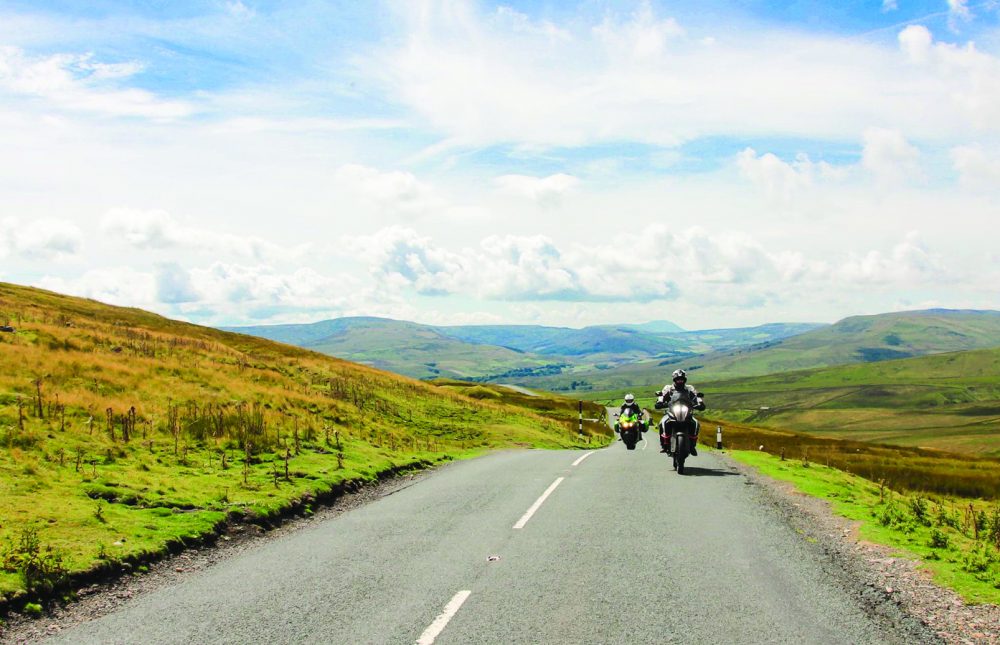

I was lucky enough to get Stuart Fielden as my observer. Some of the associates and newer members may not know Stuart very well, but he is not only a very accomplished and experienced motorcyclist and observer, but he’s an amazing human being too. We became very close friends as he taught me how to be a better rider, and to this day, I’m pretty confident he has no real grasp of how much his sessions saved my life and rescued my crippled mental health. Because in between starting the advanced rider course and finishing it, I underwent a cataclysmic breakdown in my domestic situation, and I was at rock bottom. The advanced rider course literally saved my life, and Stuart’s sessions were the lifeline that I needed to help me out of the emotional hell hole I found myself in. Motor Cycle News recently ran an article about riding motorcycles for mental health – never a truer word has been printed. My bike, and Stuart’s sessions saved my life – literally.

My test took place on a filthy, rainy mid January morning. It remains a completely blurred memory to me. Dudley Martin was my examiner. I do remember it felt like the worst I’d ridden in a really long time, and yet I passed. Dudley later said that I would have got a first if I hadn’t skidded on the cattle grid on the slip road just off J22 of the M62. Fortunately I stayed on the bike, but he was right I hadn’t ‘observed’ the cattle grid because I’d been going too fast as I went over it turning left – hence the skid. A costly mistake!

Anyway I passed. Now what was I going to do? The structured sessions with Stuart were at an end, and whilst we had become very firm friends and remained in close contact, my emotional lifeline had gone. How was I going to survive that loss of regular structured riding with Stuart that had become my lifeline? Well, the answer came in my second guardian angel from the club – Terry Dutchburn. Some of you know Terry very well, other newer members and associates may not. But Terry, like me, is a Geordie. So basically we are brothers, or cousins, or related somehow. We got on like a house on fire from the get go. The reason Terry became involved with me was because Stuart, knowing how important structured riding was to me and my emotional wellbeing, had suggested that I consider observer training. I agreed, got the approval from the committee, and Terry became my observer trainer.

Once again, and I’m sure without even knowing it, the club had provided another experienced trainer in Terry who had unwittingly rescued me from the abyss of facing extreme challenges in my personal life without any diversions.

I had the familiar structure of regular training sessions, this time as a trainee observer. It was another life saver. I passed the observer assessment process and I’m now the club’s newest local observer.

Looking back, I view the dual processes of instruction for my test, and instruction to be an observer as not only incredibly informative, but also as transformative of me as a rider. I have emerged from the personal nightmare of 2018 – 2019 as a stronger and more healed man than when I started, and without even knowing it, WYAMs helped me through it when there was nobody else that could. Motorcycling is my life and Advanced motorcycle training has saved my life. The whole advanced riding journey has been a truly Zen like experience for me.

But the most unexpected surprise for me was the club – WYAMS. Because as I said, when I booked my Advanced Rider Course with IAM RoadSmart online way back in August 2018, the last thing I wanted was to join a motorcycle club! And ironically being in WYAMS is the part of the whole process that has nourished me, and enthused me, and helped me recover as well as making me a better rider.

Two of the most memorable motorcycling days that I have ever had have been club runs! One Tuesday run to the Lakes and one John Burrow’s Sunday run to Whitby. Bearing in mind I have been riding motorcycles pretty much non stop, on and off road, for over 40 years, in Europe, America, Asia, and Australia, to say that two of my best days riding ever has been with WYAMs, in the last 12 months, is truly saying something!

So here’s my impassioned plea to associates, and new and old members alike. This is your club, our club! All of us have one thing in common – we all love motorcycling. The strength of the club is in how the individuals interact. It’s for the long standing members to share their knowledge, experience and skills and for the new members and associates to soak it up! I can promise you this, if you disengage after you pass your test, you are missing the best part of your advanced training. The absolute very best part!

I know it’s difficult coming to any new club and not knowing anyone and feeling like you don’t belong – but you do belong – you are one of us now!

The wealth of riding experience on the training and club runs is probably unparalleled. I defy anyone to go on a club run and not be beaming from ear to ear inside their helmets. I defy anyone who goes on a club or training run not to learn a huge amount from watching the riding of the elder statesmen like John Burrows and Allen Davey to name but two of so many.

Your Advanced Riding journey doesn’t stop at your test pass, but rather that is where it begins! Undoubtedly your riding will improve as you deploy these skills riding solo, but in observing other experienced advanced riders on club or training runs you also learn by osmosis. You critique your own riding by conscious and unconscious comparison. You improve as you ride with good riders. Simple! You cannot buy that quality of training – and you don’t have to it’s free on the club and training runs!

My zest for all things Advanced riding didn’t end there. In fact, that’s where it really began for me! I reached out to a number of other affiliate clubs including Sheffield Advanced Motorcyclists and Thames Valley Advanced Motorcyclists. I wasn’t sure what kind of reception I was going to get as an “interloper”. However, the IAM RoadSmart family has not disappointed, I’ve been made to feel very welcome by both. I spoke to Chris Brownlee, a fellow North Easterner, and chief Observer for TVAM. He could see I was deeply enthusiastic about how TVAM operate, and so he invited me to join TVAM and I did, and was invited on the TVAM Observer weekend which was sadly cancelled but I’ll be there next year!

We may all have started our advanced motorcycling journeys for different reasons, but we all share the same passion – two wheels.

Looking back, I guess it was silly of me to think I wouldn’t be welcomed by “my tribe” even though they are at the other end of the country!

I’m so glad I didn’t do what I had planned to do when I was at rock bottom. And if this article gives just one person the strength to “hang in there” for another day, then another, and another, until that dark pit is a distant memory, then my advanced motorcycling journey won’t have just saved me, it will have saved someone else.

Chris Dunn

First published in Slipstream September 2020