The Bike Experience

I visited The Bike Experience yesterday. They’re a charity that helps to get disabled riders back on a bike again. The event was held at Silverstone and is one of several they hold each year.

By using adapted bikes, and a lot of volunteers, The Bike Experience teaches and advises motorcyclists who have been disabled how they can ride again, through the provision of an adapted and modified motorcycle that allows them to ride in a safe environment using a logical step-by-step process.

Although the event was at Silverstone there’s no element of track use or racing; like some of our courses, they just need a large area of tarmac.

There were about a dozen people booked onto the session to have a go on the bikes.  Some had been before and for some it was their first time. There was a wide range of (dis)ability too; several were wheelchair-bound, some needed crutches, or had lost a limb, and several had had strokes.

The bikes used have been adapted in lots of ways.  Several had all of the controls moved on to one handlebar (some on the left and some on the right) so that they could be used one-handed.  Most had clips or Velcro attached to allow feet or legs to be more securely attached – but not so attached that the rider wouldn’t part company with the bike in the event of a spill.

One bike had outriggers fitted, so that beyond a set lean-angle an outrigger would touch down and prevent the bike falling over. Maybe this bike would be useful for so many of those TVAM members I’ve been hearing about recently lying their bikes down in car parks…

Key to the process were the volunteers present, who easily outnumbered the candidates. All were trained, and some had special roles, such as ‘catchers’ who would help to launch a rider that couldn’t easily get a foot down – and then catch and steady them as they came to rest. It was quite a sight to see two, three or four catchers congregating on a slowing bike and get hold of it at just the right moment to stop it going over as it came to rest.

The Bike Experience makes no charge to candidates and is run by volunteers. Their costs, however, are significant; they pay £4,000 per annum in public liability insurance, and they pay Silverstone £1,000 per session for the use of the empty car park. This means that they need to raise at least £14,000 per annum just to run the 10 sessions, before they’ve spent any money on bikes or riding kit.

It’s worth every penny though.

Riding a bike is a very rewarding experience. There’s something about riding a bike that you don’t get driving a car and most of us don’t ride just as a means of transport to get from A to B.  Watching the candidates yesterday it was interesting to see their reactions. Those that had been before were getting kitted up and approaching the bikes with obvious anticipation. Newer candidates seemed apprehensive and expressed concerns about being able to get on the bike and manage the controls.

All of the candidates, once on the bikes, listened to the helpers and then executed their exercise with enthusiasm.

You could see the confidence build in all of them as they got better and better. The sense of achievement, and the huge grins as the helmets came off, was obvious.  Without exception the candidates came away having moved from “I’ll give it a go” to “look what I just did!”

It made me think about my own riding.  How, with four fully-functioning limbs, I find riding a very rewarding experience. Many of the candidates rode with a confidence, fluidity and smoothness that meant, once they were on a bike you couldn’t tell they had any disability. I guess that’s how they feel too.

Safe, and rewarding, riding

Chris Brownlee

First published in Slipstream August 2018

There’s more information on their website at www.tbex.co.uk and more up-to-date information on their Facebook page at www.facebook.com/TeamTBEX

They would welcome more involvement from clubs, and are happy to provide tea, coffee, toilets and cake if anyone wants to organise a ride-out to drop in on one of the sessions (please let them know in advance).

Sausage Fest & Slow Riding

TVAM held their Sizzling Sausage Slow Riding Social afternoon on August 19th in blazing sunshine after the regular St Crispin’s monthly meeting. Over 100 members enjoyed the wide range of sausages on offer from the charcoal BBQ including South African Boerewors, German Grilled Beer Bratwurst, Welsh Lamb and Mint and Red Sky Tomato, Basil & Mozzarella all accompanied with pot-fried onions, sweet peppers and salad. Ice creams and drinks helped counter the hot weather.

Of course there was a slow riding course to also navigate and many intrepid riders attempted to get the slowest time over the course which had been laid out by the training team. The slowest time was actually set two-up, so pillions really do slow you down!  A great afternoon.

Rider’s Ride (August 2018)

Continuing with our Rider’s Rides feature after a break. Here we feature a TVAM member and their bike, talk about why they chose that model, what they use it for, as well as what they like and dislike about it. Want to see your bike featured? Get in touch at pressofficer@slipstream.org

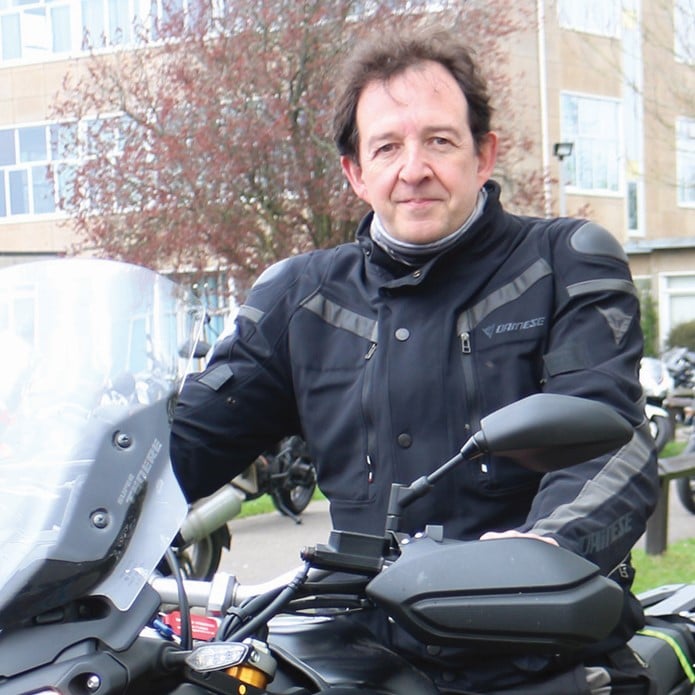
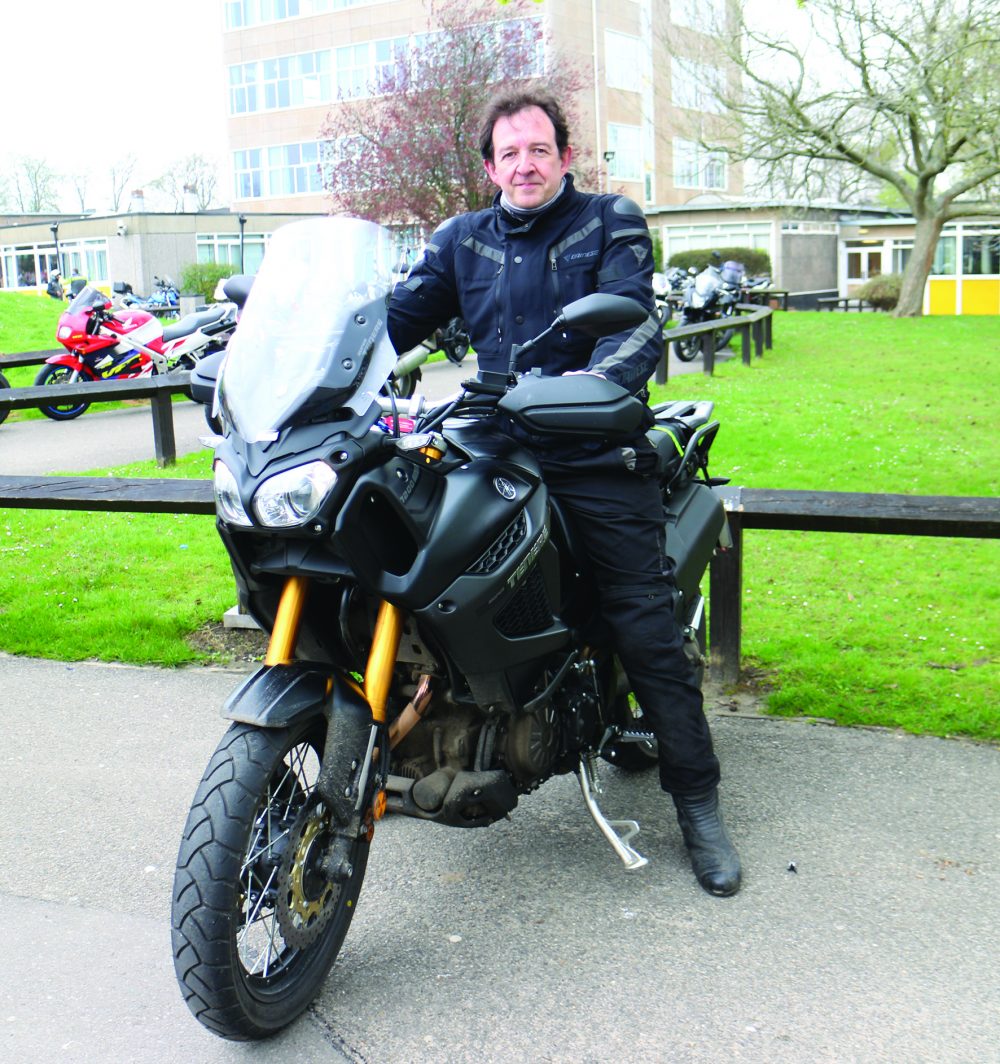
This month we have Steve Dobson and his go-anywhere Yamaha:

Steve – tell us about your new Yamaha.

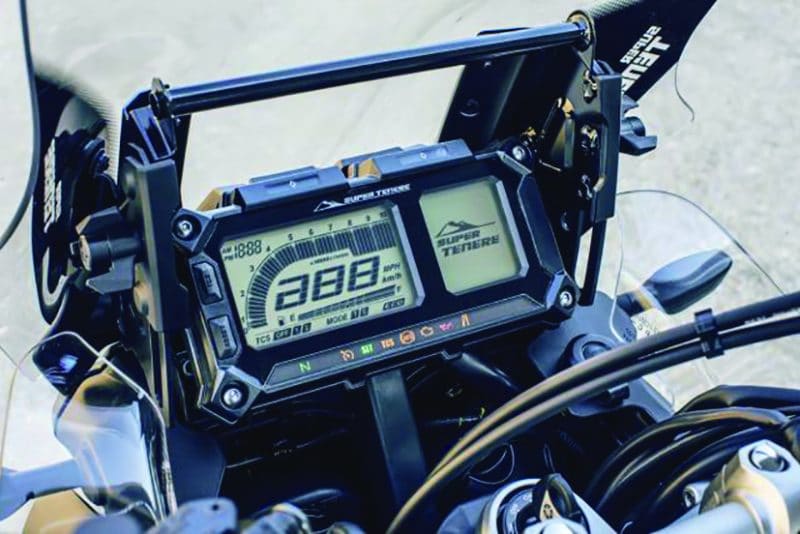
It’s a Super Tenere Raid Edition. The same as the XT1200ZE model with some extras.

And how long have you been riding this one?

Just 3 months at this point!

Did this replace another bike, or is it an addition to an existing fleet?

It’s a replacement. I had a Yamaha Tracer 900 (16 model) beforehand – a great bike, but I was on my third oil cooler in just two years! All fixed under warranty of course, but I wanted something reliable. I suspect it may be a design issue, as I notice that the recently-updated version of the Tracer 900 has a revised oil cooler. Hopefully that means anyone buying a new one today won’t have the same issues I did!

The Ténéré is a much more off-road focused bike than your Tracer, what with spoked wheels, a 19” front and, I believe, more off-road oriented tyres as standard. Do you intend to experiment with any light green-laning or are you intending to stick to pavement?

I visit lots of sites around UK for work and invariably the last mile of the journey is off road. I have started to use my bike for some of these work visits, so that capability comes in handy. The tyres are not what I describe as off-road but they do have more tread than my previous Tracer’s Pilot Road 4’s.  I would not use this bike for any serious off road stuff though, it’s just too heavy.

Indeed, 261kgs wet – shaft-drive will do that! Do you notice the weight when riding, cornering etc, or just when pushing it around?

You don’t notice the weight in corners or even when doing slow riding, I feel it’s precise and well planted.

There are a lot of great choices in the Adventure-bike segment these days; did you consider, say a Suzuki V-Strom 1000, KTM 1190 or BMW R1200GS?

Yes, all of the above – and even a few others, such as the Triumph Explorer 1200. They’re all great bikes – but then again, is there such a thing as a bad bike these days?

Oh, I could name a few…but with so much choice, and so many issues, why go with the Yamaha?

Honestly, it was easier to stick with Yamaha. When I looked around, the deals offered were similar but the trade in value on the Tracer varied massively, £4k low to £5.8k high.

Even so, sticking with the brand after all those problems shows impressive brand loyalty…

I am overly loyal sometimes, some would say I was mad to stick with Yamaha.  Then again, bikes are bikes – sometimes they break down, and not everything goes to plan.  When things do go wrong is when you can really get to the bottom of “dealer service” – find out how much they really care about their customers. Each time my bike went back their focus was on sorting the issue out, rather than debating whether or not the issue would be covered under warranty.  It was a pain, I’m not denying that, but I never had cause to believe it was not going to get sorted in the end.

Which Yamaha dealer are we talking about here?

Woking Yamaha. I also purchased the Tracer there, and I have to say that they were great when sorting out my previous oil cooler issues. Highly recommended.

Are there any specific features or particular capabilities you were looking for when you chose this bike?

Shaft drive, all day comfort, touring capability, reliability.

Have you made any modifications or installed any accessories? Do you have any planned for the future?

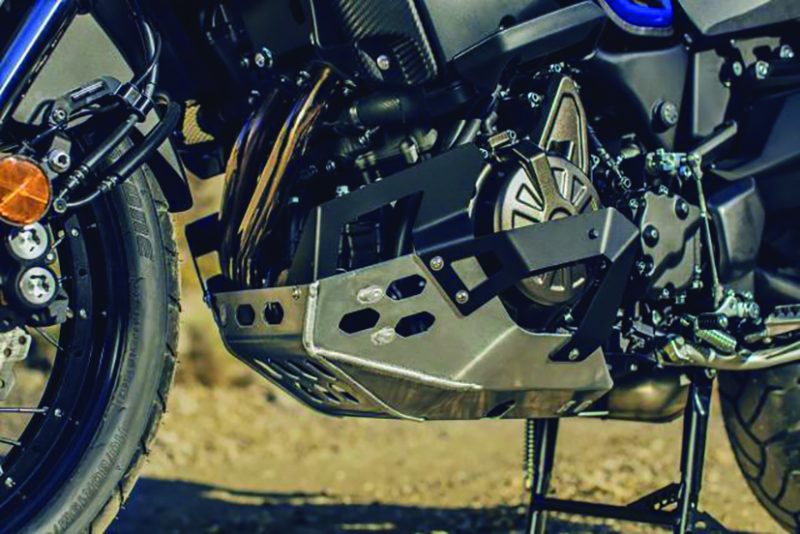
The RAID edition of the Ténéré came with all of the extras I wanted as standard: tank bag, skid plate, panniers, a touring screen complete with wind deflectors, even a set of LED fog lamps. So for now I have nothing else planned!

What sort of riding do you do/plan on doing with this bike? 

Commuting, touring, TVAM Rides – the same sort of thing as before really. It’s a versatile bike, like the Tracer, but I’m finding I’m using it more.

Are there any particular features/aspects that you miss from your previous bike?

Yes…the 900cc triple in the Tracer really was superb. That being said, the 1200 twin in the Ténéré pulls like a train. The whole bike is so well planted at all speeds, and actually easier to ride at low speed than my last bike, and you only notice the weight when pushing it in and out of the garage.

What’s the one thing about your bike you would change if you could?

Drop a few kilos. If only bikes were like people and lost weight the harder you exercised them!


Nick Tasker was talking to Steve Dobson

First published in Slipstream August 2018

20 Things You Should Know about Riding in Canada

I think many of us have pushed beyond our borders to explore Europe. Out there await wide, open stretches of dusty French countryside, verdant green German forests and snowy alpine mountain hairpins. But how many of us have pushed further than that, ventured away from our continent into Africa, Asia or America?

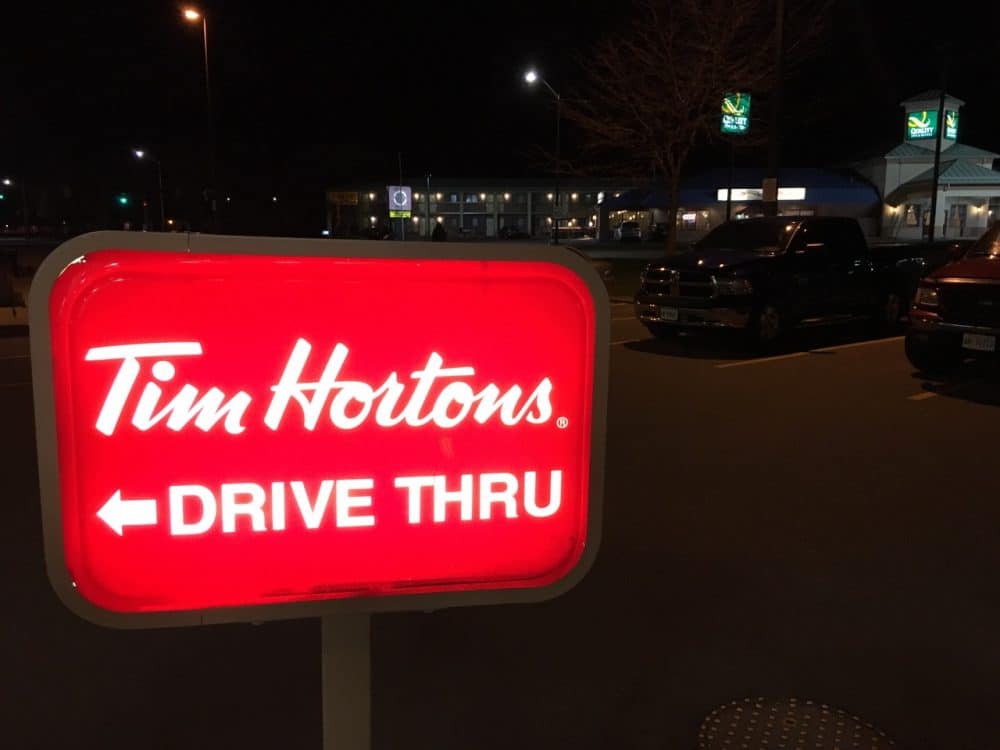
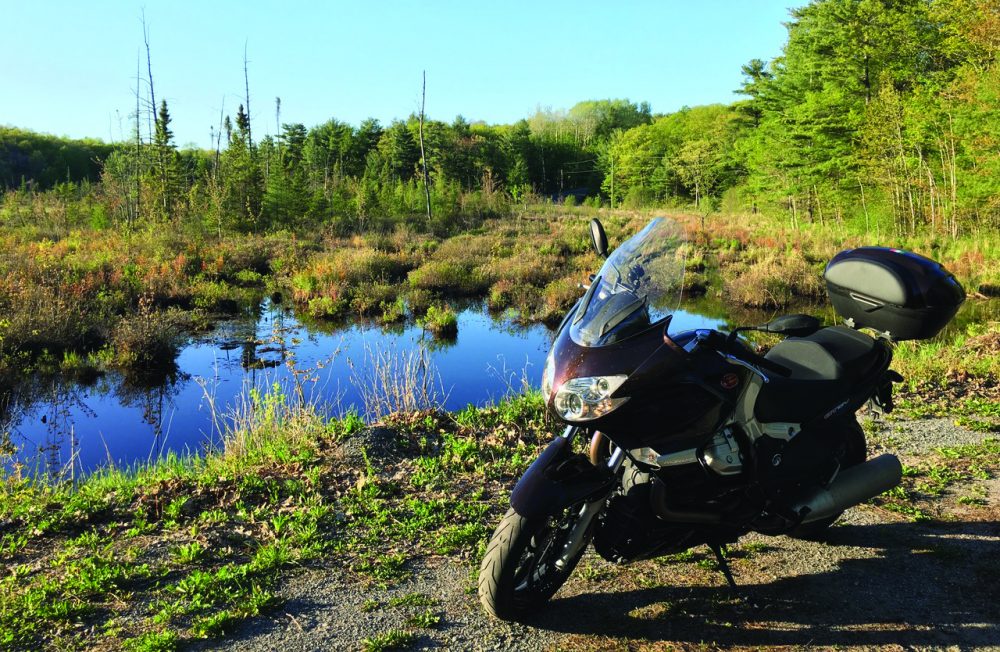
I recently returned from a three-week family visit to Canada; a country known for its vast tracts of sparsely populated land, where bears outnumber the people and Tim Hortons coffee & donut shops outnumber the bears. While there, I had the opportunity to borrow my Uncle’s Moto Guzzi Norge 1200, a bike no longer sold on these shores, and learn a little bit about motorcycling in Canada. Let’s just say the grass isn’t always greener on the other side.

  • Motorcycling & air travel work surprisingly well. Parking is often free, security is good, and helmets don’t count towards your traditional carry-on luggage allowance.
  • Petrol is cheap, but everyone still complains about the price. At last count, you’re looking at around 70p per litre, although if you refuel on Indian Reservations it’s cheaper still.
  • …and it comes in many flavours. Do you know what octane-rating your motorcycle needs? 85? 87? 93? According to your owner’s manual, it’s probably 91, or 97 if you own a modern BMW, but everyone here just buys the cheapest grade anyway. I hope their knock sensors are working.
  • The cars are enormous. The pick-up trucks we see on British roads are dwarfed by those driven in Canada & the US, and after a while you start to think of the Porsche Cayenne as an adorable compact car.
  • Filtering is illegal. And people really, really don’t like it when you do it. You can sit in traffic in 30C+ heat like everyone else…minus the air conditioning.
  • Speed limits are patronisingly low. We complain about Oxford nationals, but let me put things into perspective. Motorways are 60mph, A-roads are 50mph, and B-roads are usually 30mph. Around town 20-25mph is the norm. And it gets worse…
  • The Police don’t mess around. I was fortunate not to encounter this personally, but the police take an extremely dim view of speeding, and lurk behind billboards and trees with radar guns to catch you coming a mile away.
  • Every junction has a Stop sign. And boy, will they nail you for rolling through one of these. They’re everywhere, and particularly galling when a) you can see for half a mile in every direction and no-one is coming and b) you will have to repeat this stop/start pantomime a dozen times just to cross a small town, even when there are no other cars on the road.
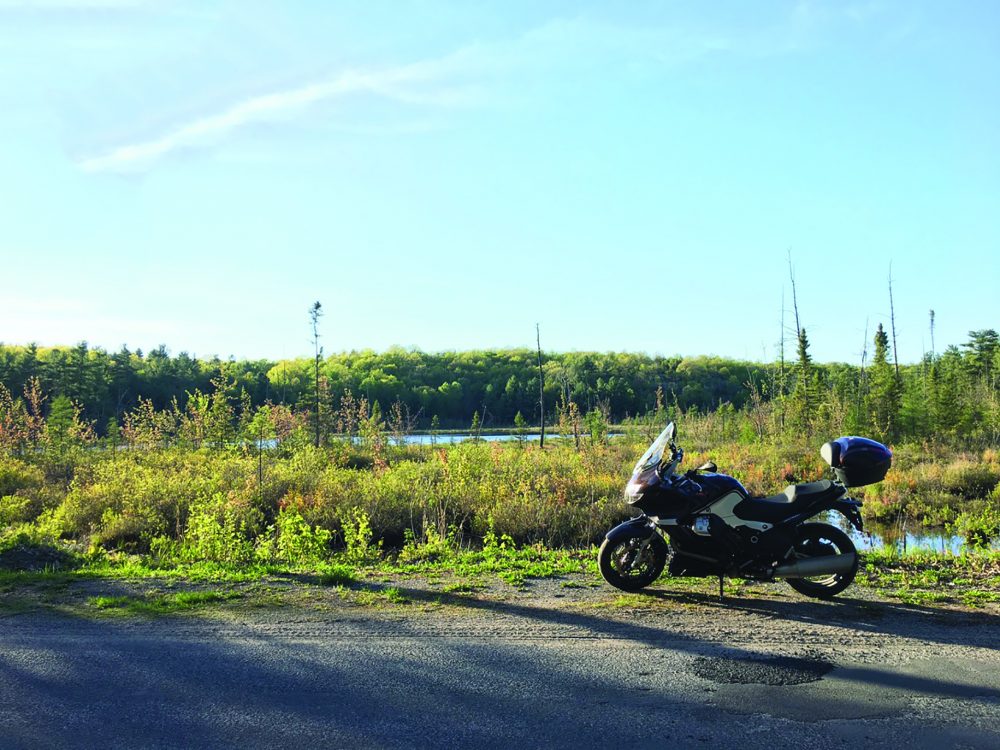
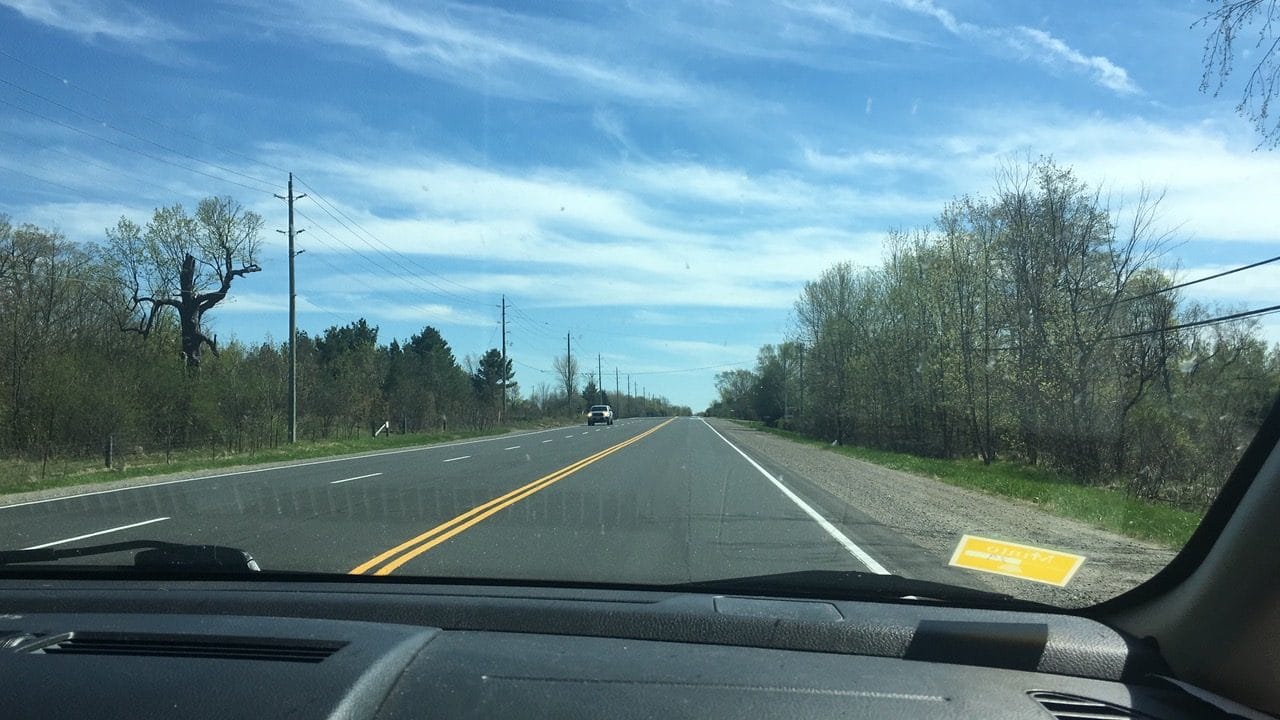
  • Most roads are long and straight. In a country this large, be prepared to go cross-eyed staring at the horizon for hours on end.
  • No-one cares what you ride. Here in the UK cruiser riders won’t wave back, and sports-bike riders seem to ignore anyone not similarly equipped. In Canada, everyone waves!
  • Can-Am sell a lot of Spyders. The three-wheelers never really caught on here, but if you can’t filter, petrol is cheap, speed limits are low and parking is plentiful, then the disadvantages of the larger, heavier vehicles evaporate. They still can’t lean, though…
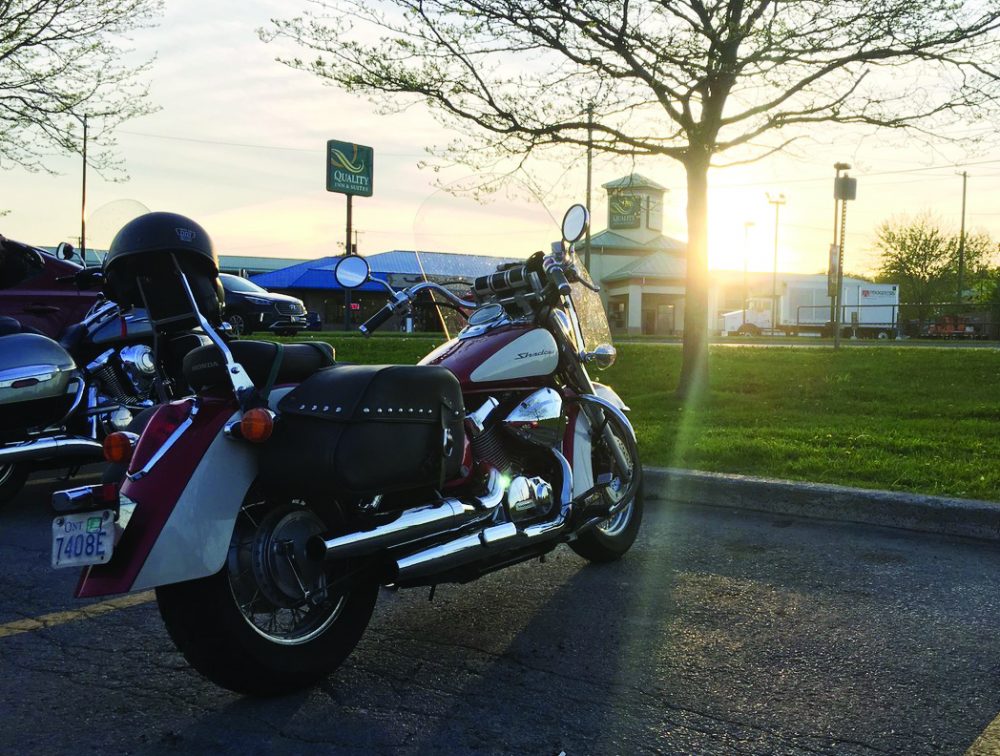
  • Everything else is a cruiser. It’s not quite as Harley-centric as the US, but pretty close.
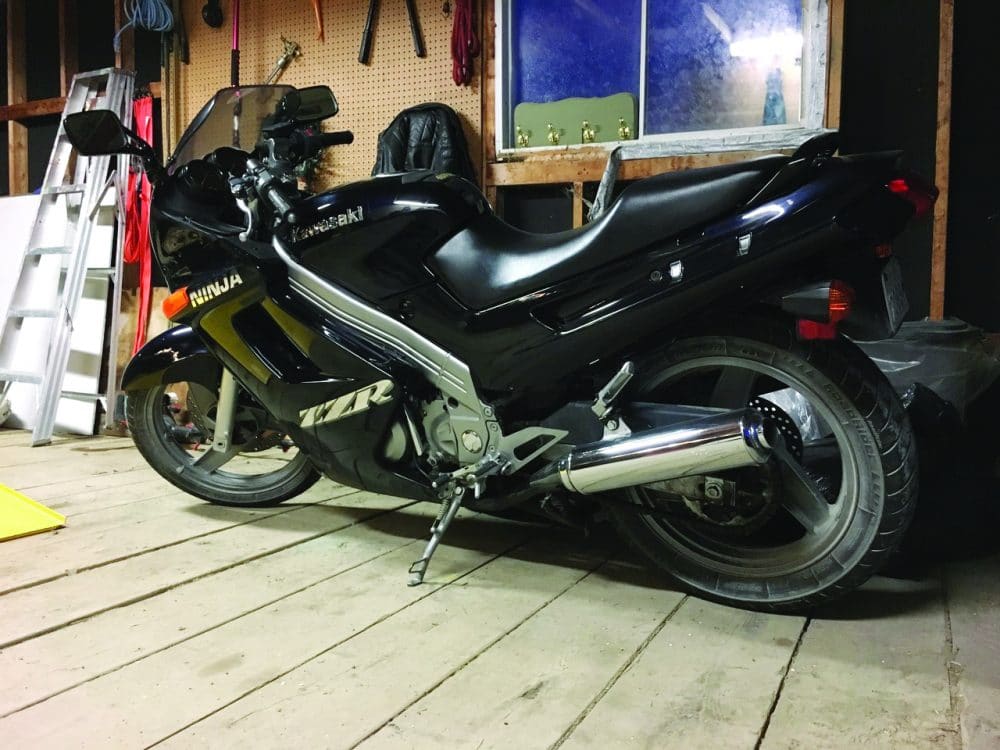
  • All motorcycles look showroom-fresh. No-one rides in winter due to months of -30C temperatures and several feet of snow, and no-one rides in the rain because motorcycles are just recreational vehicles over there. That means no rust, no corrosion of any kind – you’ve never seen such a clean 2002 Kawasaki Ninja 250.
  • Canada has no annual MOT. You have to get a safety inspection when you first buy your vehicle (new or used), but after that it’s up to the owner to do their own checks. Or not, as the case may be. If you borrow someone else’s car or bike, don’t assume their brakes work, or that any other critical safety equipment is functional.
  • Safety gear is very optional. I saw a few people wearing jackets and gloves, though I’m unconvinced that they would have stood up to anything beyond a bit of light gardening. Helmets are open-face, often pudding-bowl design, and sandals are not uncommon.
  • Learners can ride whatever they want. Canada has graduated licensing, but the only limitations are that lower-class license holders aren’t allowed on motorways. 500-600cc motorcycles are considered good beginners’ bikes, and watching people wobble away from the training centre on brand-new, big-twin Harleys is a common (and comedic) sight.

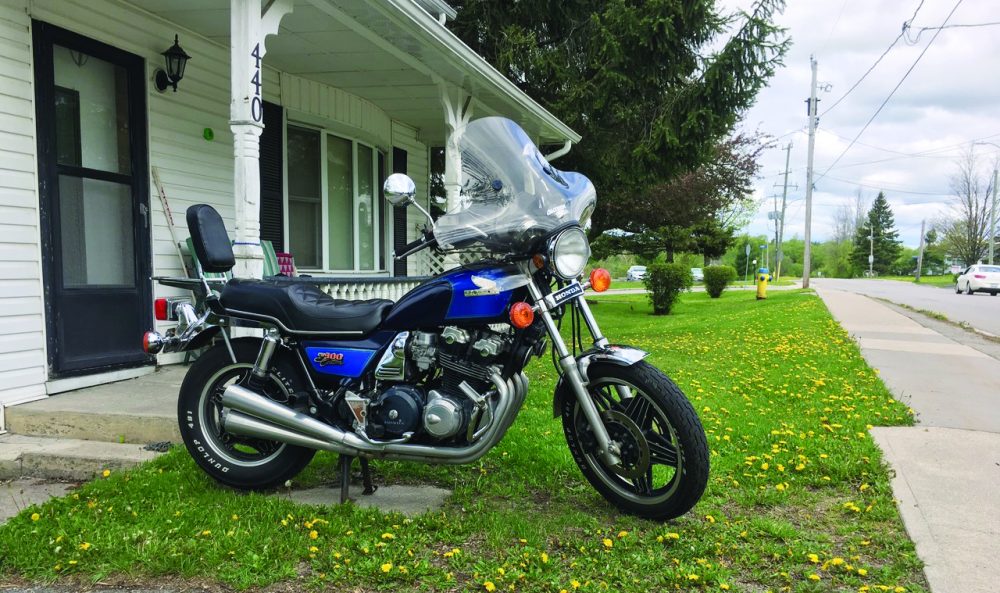
Showroom sparkling

Big on cruisers…

… of any shape and size.

No-one is paying attention. Long, straight roads, cruise-control and ultra-soft suspension combined with low speed limits mean that even I found myself reaching for my mobile phone while out driving my uncle’s truck. Rest assured I stopped myself in time and re-focused on the road, but it goes a long way to explaining the continent’s ‘distracted driving’
You can turn right on red lights. This is fantastic. You’re driving on the right, so if it’s safe to do so you can trundle right through that red light rather than waiting pointlessly.

Good riding is hard to come by. Interesting riding can be scarce, and it’s likely that you’ll need to travel a great distance – several days or more – to find the really good stuff. The local riders just ride the motorways from one Tim Hortons to another Tim Hortons; stopping to eat a donut and admire each other’s chrome before heading on to the next one.

Tarmac is optional. Gravel roads are common once you get away from the main routes, and it’s not uncommon to encounter patches of sand or gravel mid-corner out in the countryside.

I’m told that pushing on to the Rockies will give you some of the most spectacular riding of your life, and that the best riding can be found off-road, out in the endless wilderness or spectacular national parks. But Canada will warp your sense of scale; the entirety of the UK would comfortably fit inside the smallest Canadian province, so simply getting to those roads will eat up your whole trip. Your nearest trackway is several day’s drive away.

After riding in Canada, even the M1 will seem like a cornucopia of excitement, variation and engagement. It was nice to visit my family, but I couldn’t wait to ride my own bike back at home again.


Nick Tasker

First published in Slipstream August 2018