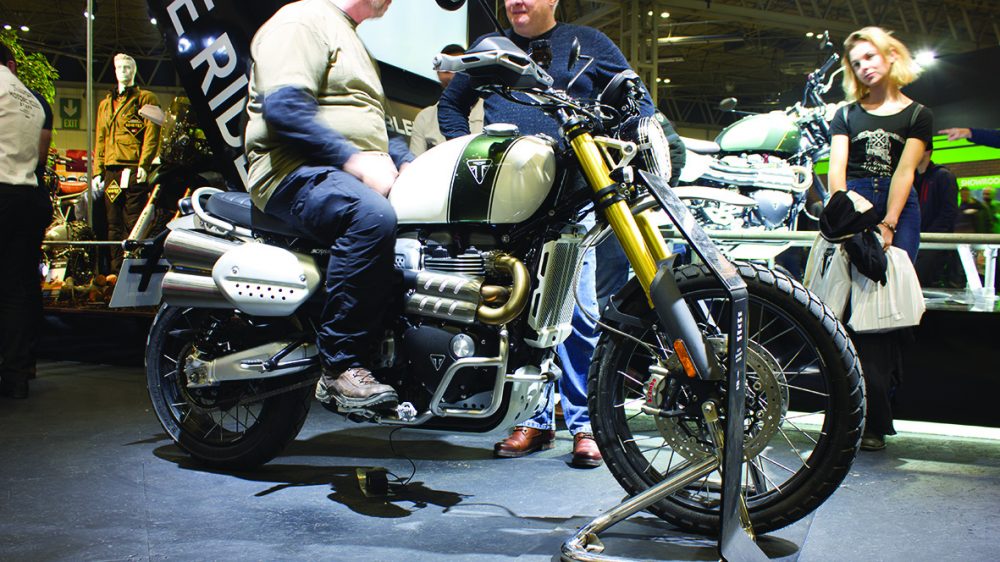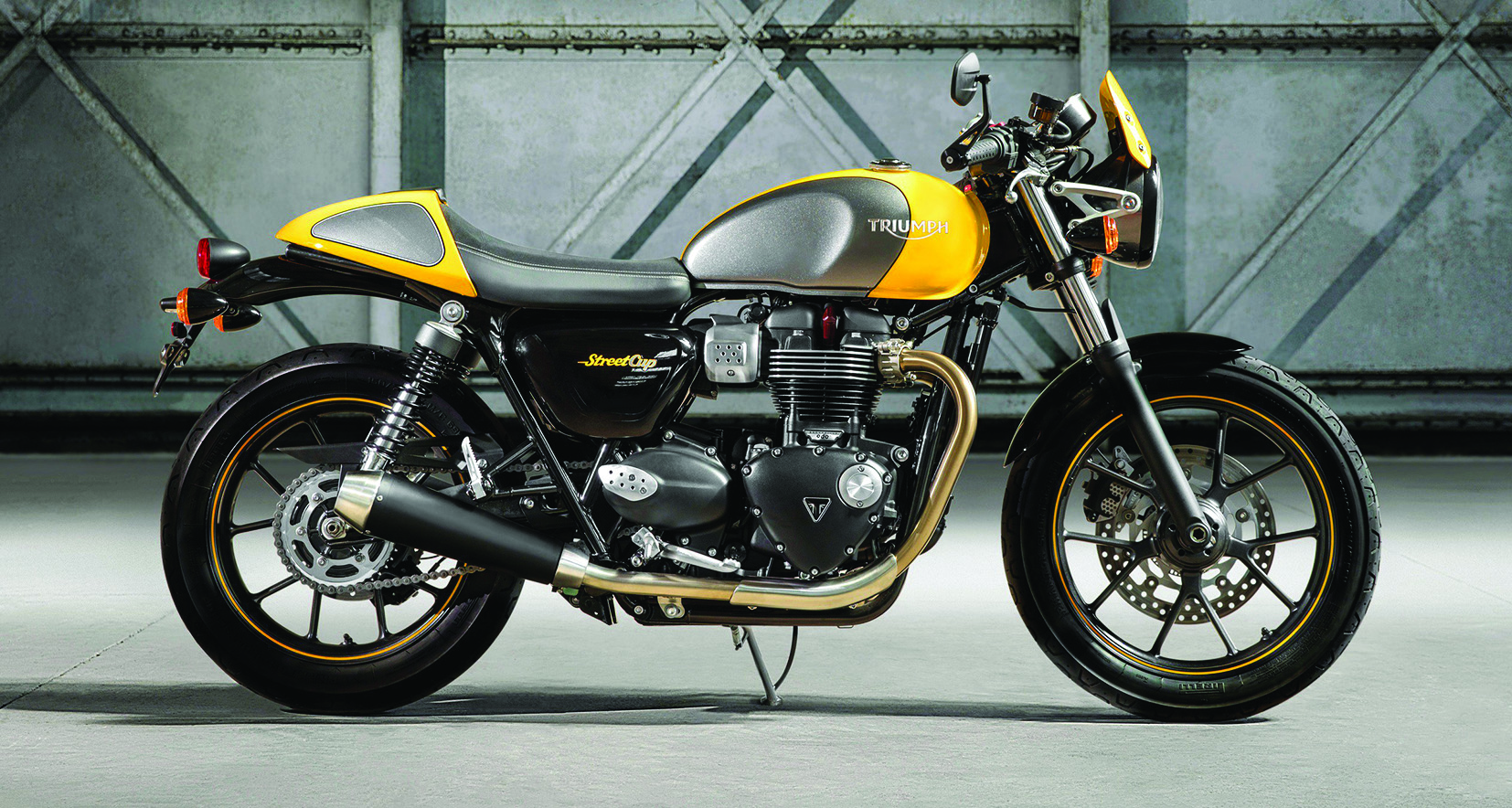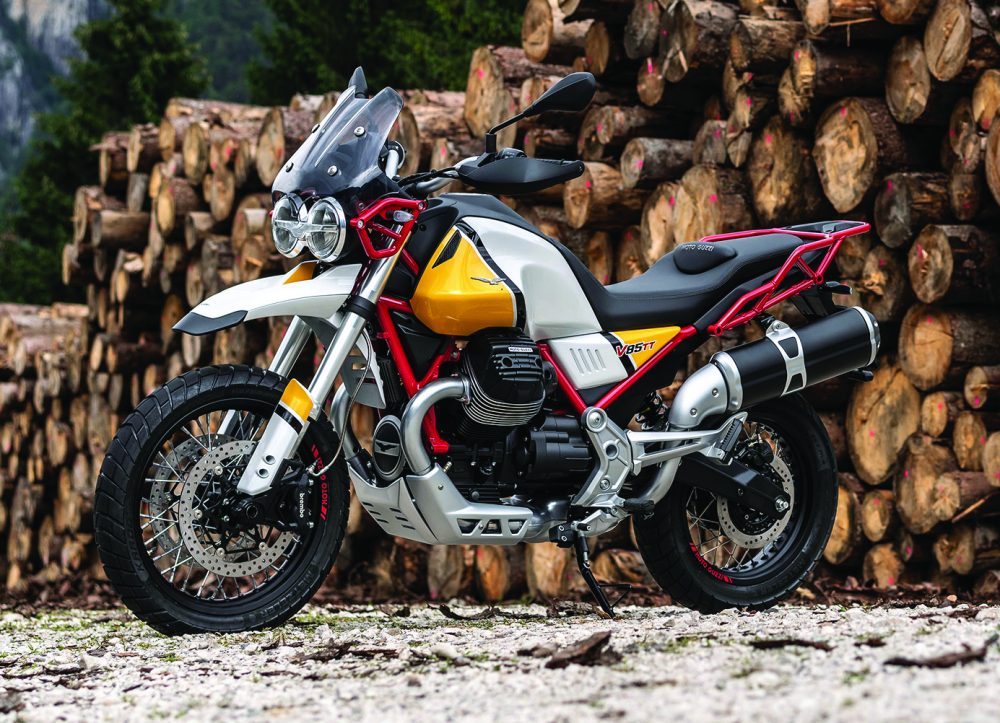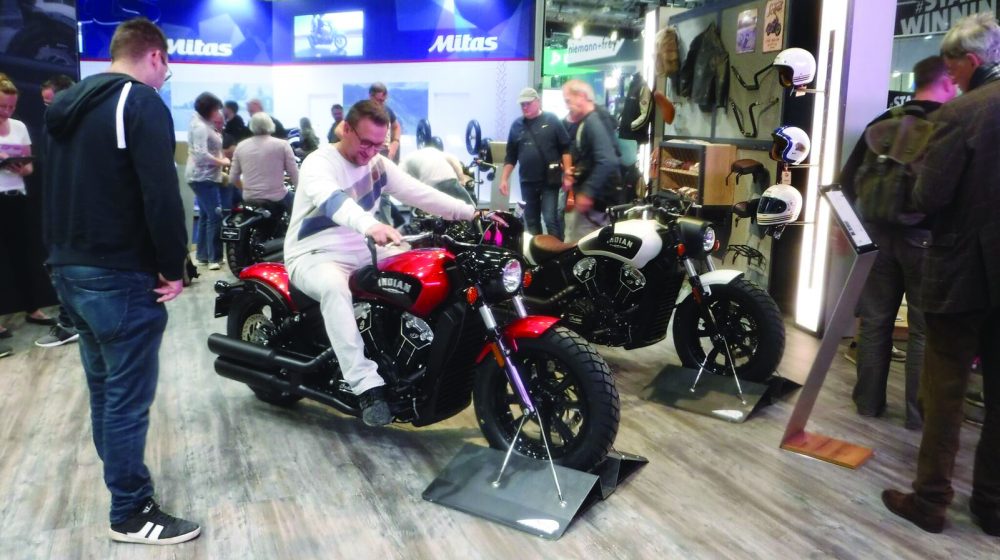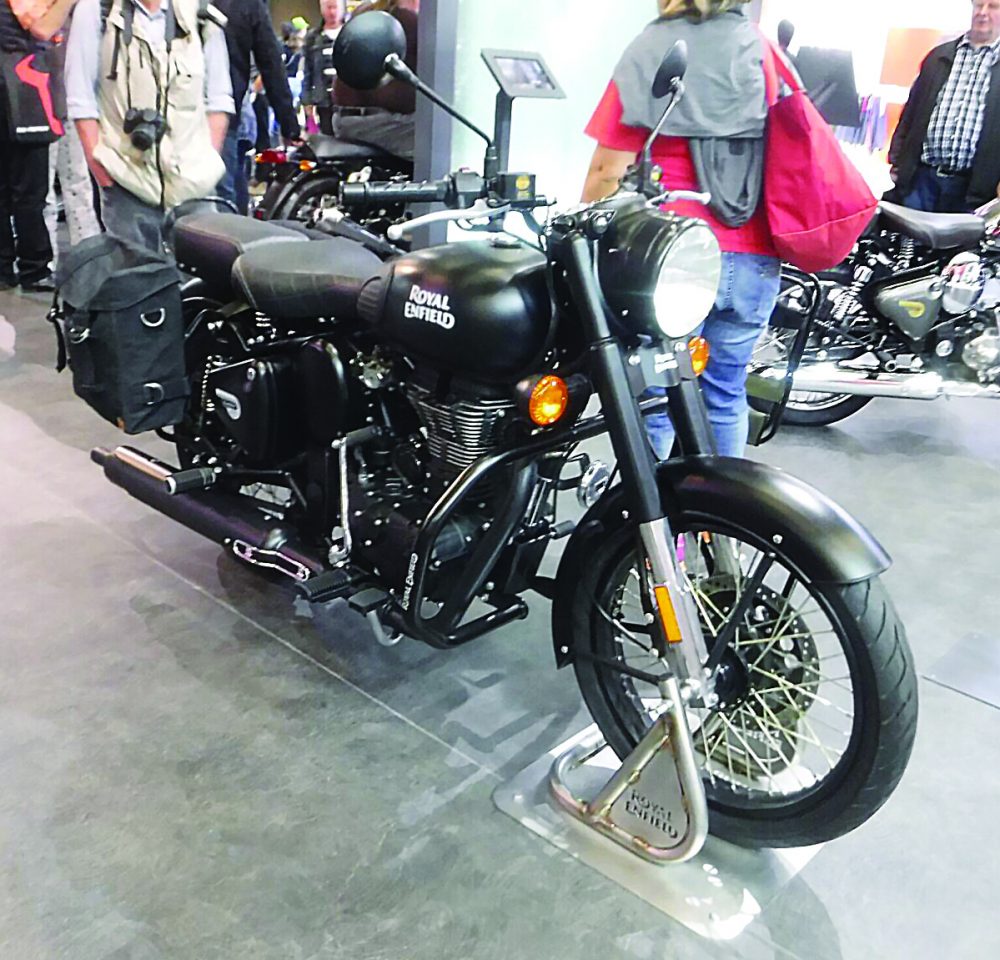
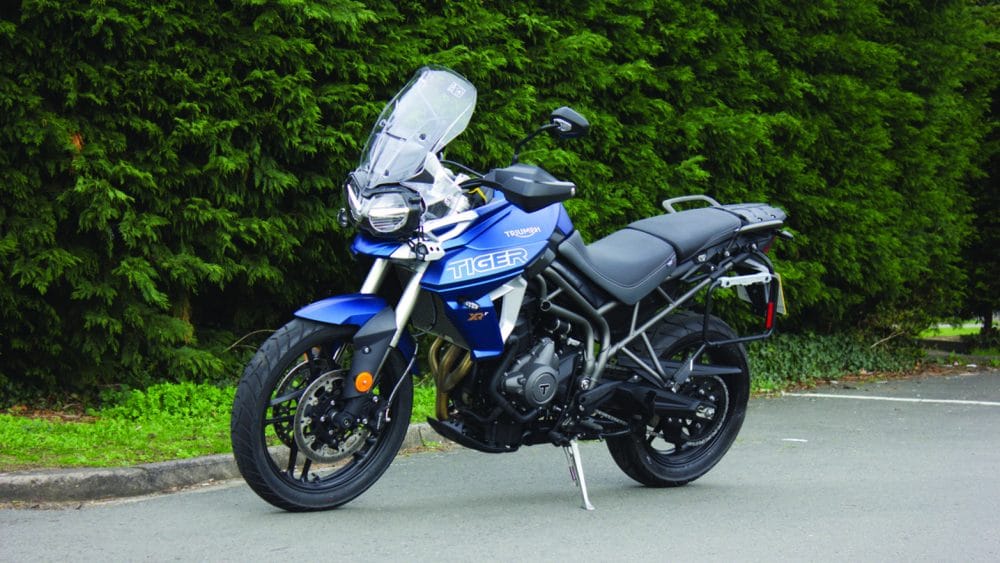
Triumph Tiger 800 XRT

It’s safe to say that Triumph and I have had our differences over the years. My 2013 Street Triple R is the only motorcycle I’ve ever bought brand new, and the brand’s response to my textiles scuffing the paint on the tank within a few hundred miles was that it was my own fault for not paying extra for the paint protection.  I paid many hundreds of pounds on maintenance to maintain the official service history during the first two years, and when I began to experience a hot-starting issue as the warranty drew to a close they refused to even investigate until I’d paid another £1,000 for the 24k service, 3,000 miles early. I gave my dealer the finger and did the work myself.

Beyond that, I’ve reviewed a number of Triumph‘s bikes in the years since, with mixed results. Still, time moves on and Triumph has been working as hard upgrading their Tiger 800 as I have upgrading my own V-Strom 650. Strange as it may sound, there are some things you can achieve with an entire engineering department, a couple of factories and hundreds of thousands of pounds that I can’t match with my meagre resources.
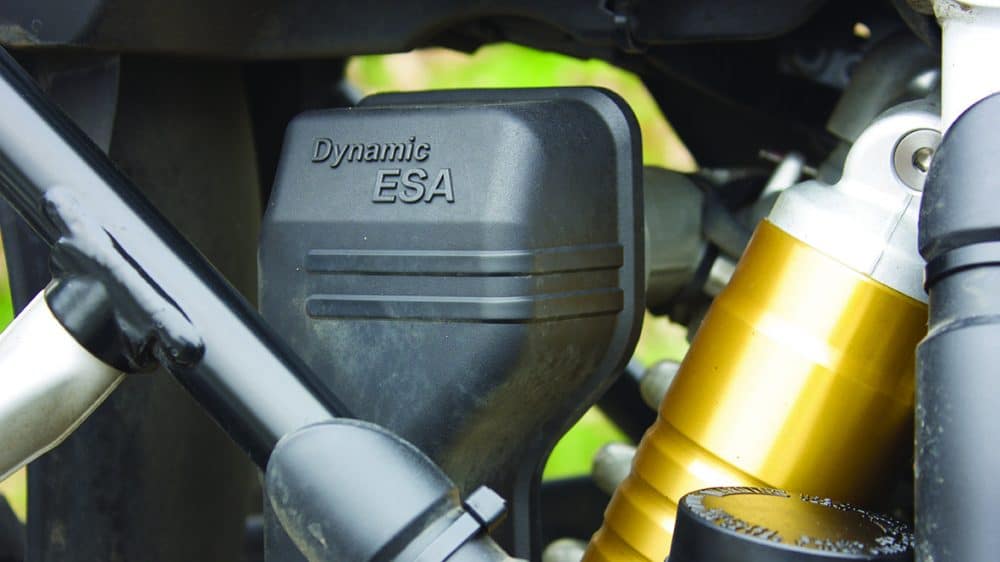
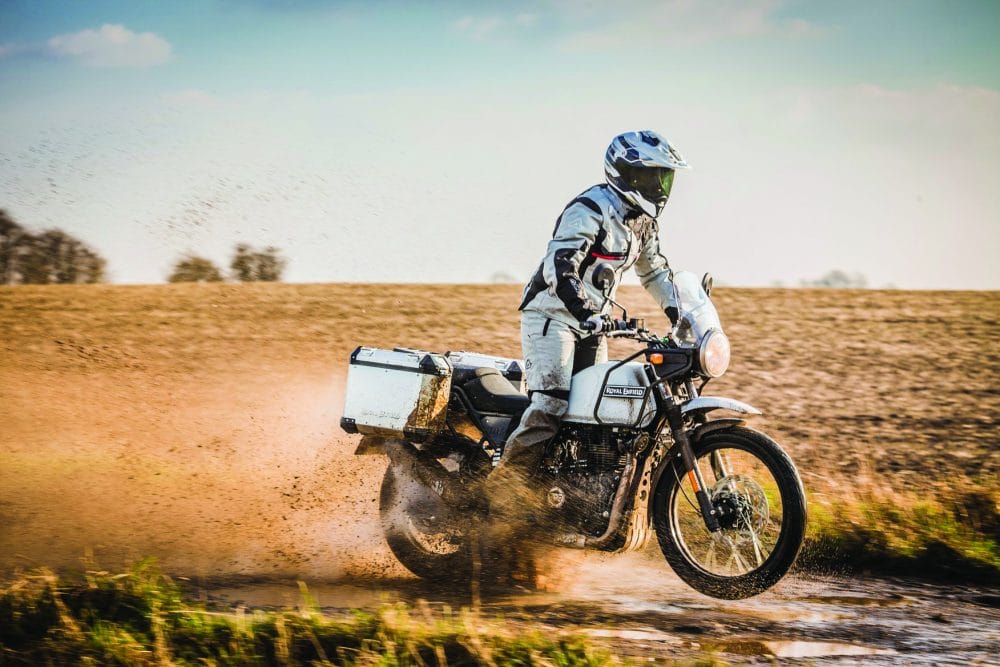
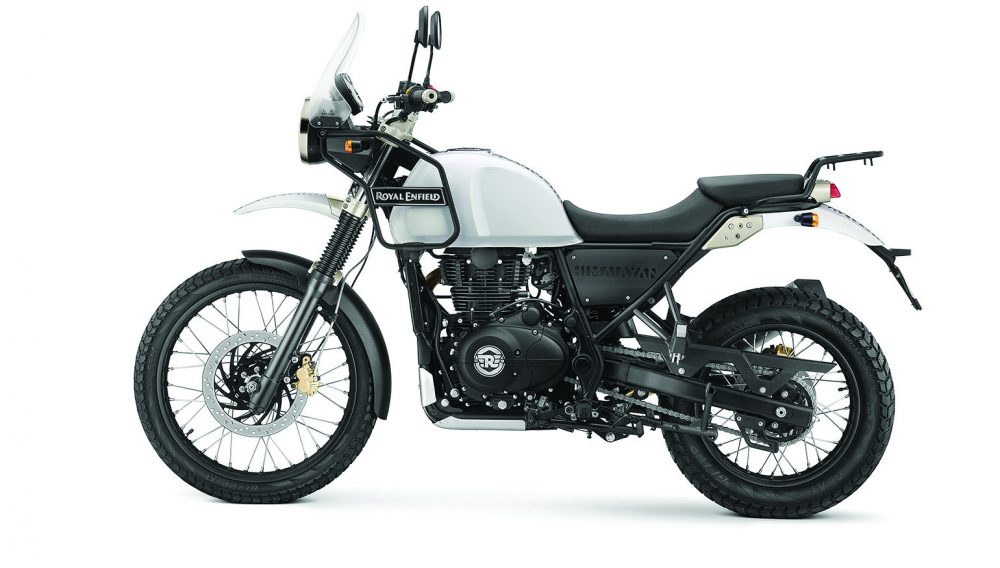
What’s more, contrary to the impression I may have given with the likes of my BMW R1250GS review, I’m not a complete technophobe. My disdain for the integrated electronic gadgetry increasingly infesting modern motorcycles is based on my overwhelming impression that they are primarily intended to improve manufacturer profit margins rather than the rider experience. In some cases, they actually seem designed to fix self-inflicted problems. For example, user-selectable engine or throttle modes (too much power), electronically-adjustable suspension (too much weight) and full-colour TFT dashboards (too many of the aforementioned throttle and suspension modes). It’s little wonder that many people are favourably comparing the genuinely old-school Royal Enfield Himalayan with bikes four times the price.

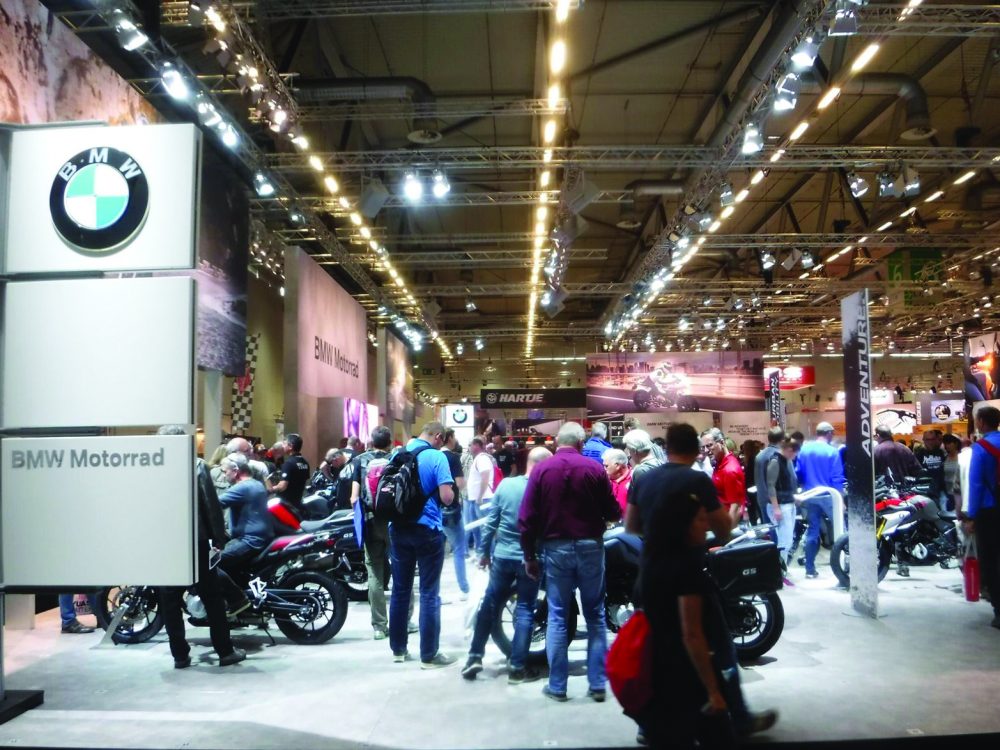
As a result, it was with mixed feelings that I took note of the newly-updated Triumph Tiger 800 at EICMA in 2017. In showrooms last year, it demonstrated that Triumph had spent the eight years since the launch of the original 2010 model nipping and tucking, rather than completely redesigning the bike. Some changes, such as the fashionable new TFT dashboard, I regarded with suspicion. Others, such as the new LED headlights, cruise control and upgraded front brakes were very welcome indeed, and I’ve been meaning to arrange a ride ever since.


But which one would I buy, in theory? Like many of their European competitors, you cannot simply walk into a Triumph dealership and select a bike anymore; you also need to choose a trim level and then pick from a list of optional dealer-fit accessories. A lot of glowing reviews from professional journalists fail to mention that the version they enjoyed on the press launch would cost a paying customer thousands and thousands of pounds more than the advertised retail price.

A base-model Tiger 800 XR can technically be bought for £9,200 but this is a price-point model so poorly equiped that even Triumph doesn’t expect anyone to actually buy it. Choosing the XRX version instead adds another £1,500 to the price tag and the XRT you actually want is almost £13k with a set of crash bars fitted. Adding the three-box luggage set means you’ll be riding home with a £14,000-sized dent in your wallet. Given my well-documented history of criticising the likes of BMW and KTM for similarly inflated pricing, why would I even entertain such an expensive motorcycle?

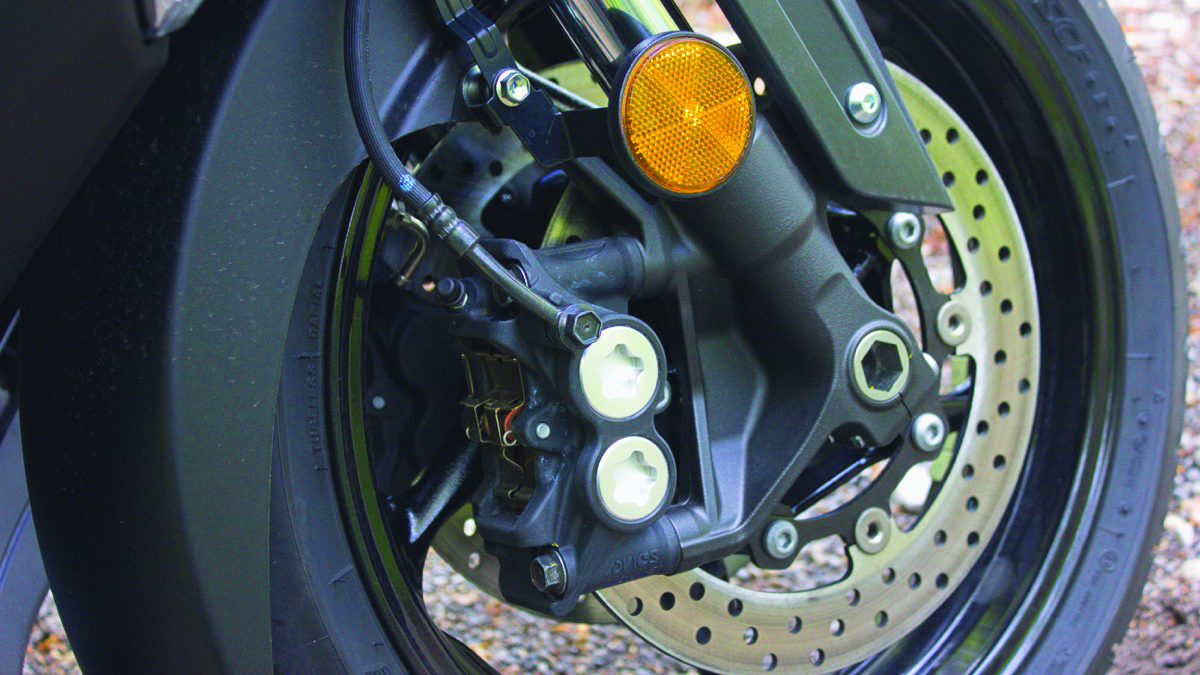
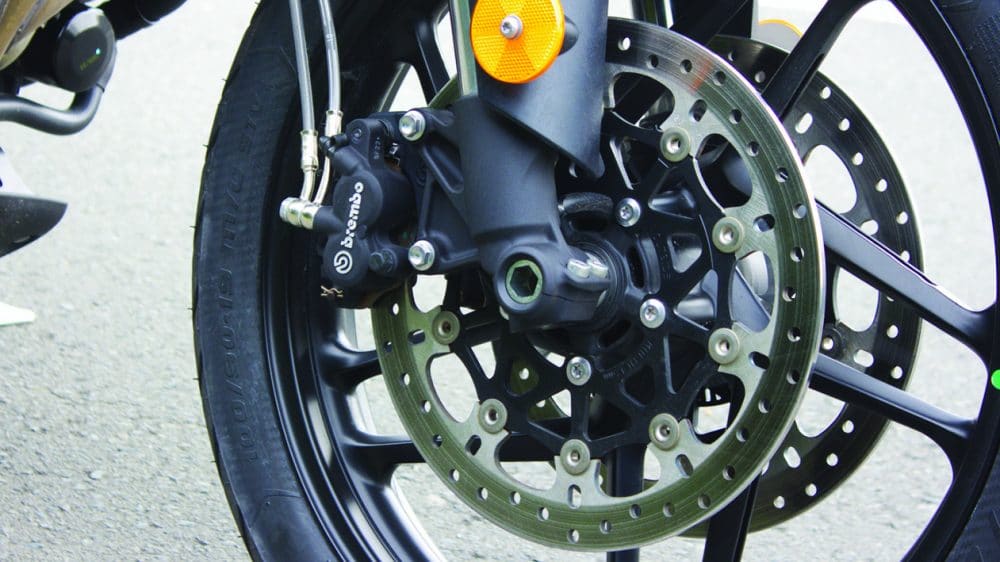
Setting aside the substantial price tag for a moment, we could have a perfect V-Strom replacement on our hands here. Regardless of trim level, you get very similar weight and dimensions as the Suzuki, the same cast 19″ / 17″ wheel combination, good weather protection, and a comfortable, upright riding position. Assuming you ignore the bare-bones XR trim level you get higher-spec Brembo brakes on the front wheel, solving one of my main criticisms of the original bike by dramatically improving braking performance. The suspension is also of higher quality, and Triumph claim to have improved the fuel economy through internal friction reduction and throttle management.
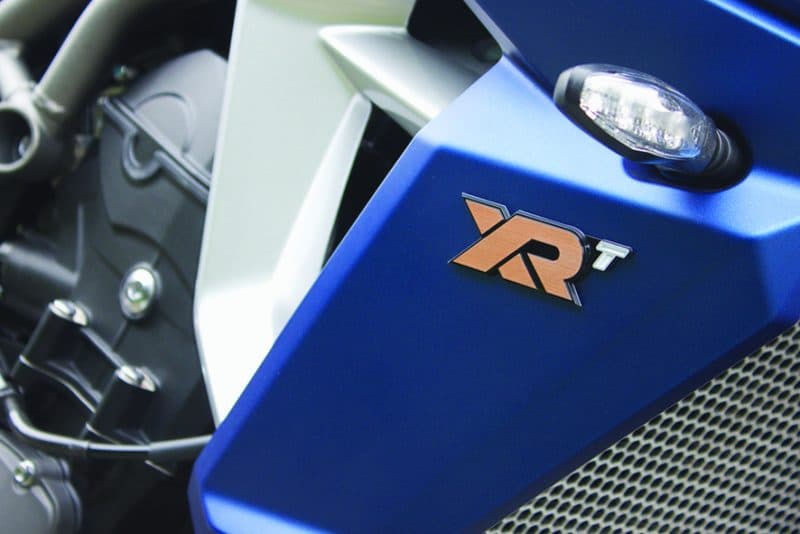
Spend enough money to get the top-of-the-range XRT model and you and your passenger are treated to heated seats, with the rider enjoying heated grips and full LED lighting. Many of the upgrades I made to my own V-Strom 650 (and would make to a new V-Strom 1000) are now standard-fit on the Triumph with other niceties such as cruise control, back-lit switchgear, tyre-pressure monitoring, self-cancelling indicators and traction-control thrown in for good measure. What the Tiger 800 lacks compared to its German, Austrian and Italian rivals is electronically-adjustable suspension, keyless ignition, hill-hold assist, a quick-shifter and an electric screen. For me, at least, that means it offers everything I want, and nothing I don’t.

Of course, if you’re of the 21″ wired-wheel persuasion there’s a mirrored set of trim levels available for you with the XCX and XCA versions. You also get slightly higher bars, a skid plate and taller, softer WP suspension.

Personally, I wouldn’t bother; the bigger wheels are heavier, blunting braking and handling considerably, with the only advantage being greater resistance to damage from high impacts off-road. But let’s be honest, here – if you’re taking a 230kg motorcycle out where that sort of situation is likely, then dented wheels are the least of your worries. Buy a Honda CRF250L instead.

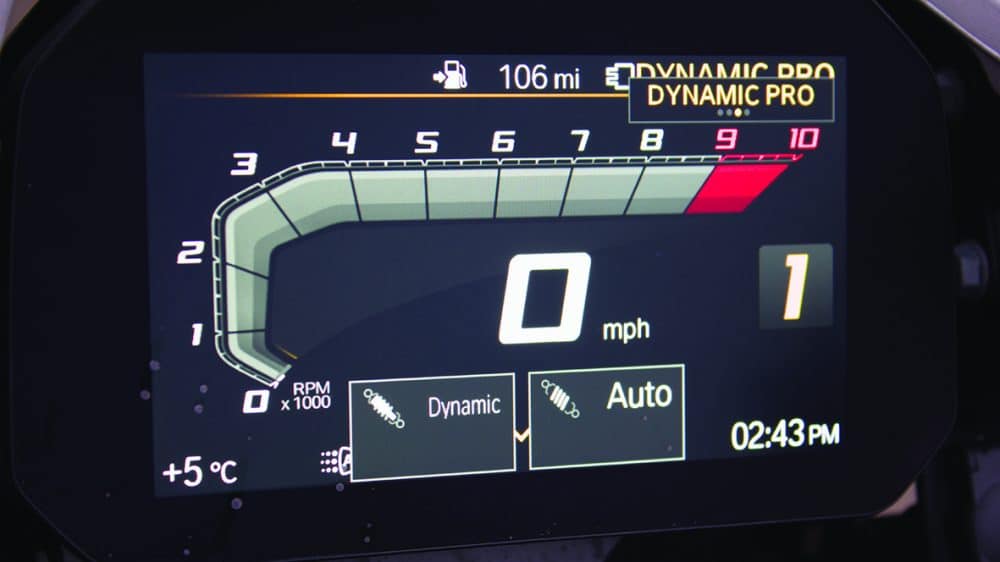
Before I hit the road, I had the Triumph salesman take me through the new full-colour onboard computer – it took nearly twenty minutes. There are four riding modes, each of which can be customised with varying levels of traction control, ABS, several throttle maps and even three different dashboard layouts. While tachometer, speedometer, current gear, air temperature and time of day are ever-present, a small joystick underneath the indicator switch allows you to toggle between two trip meters, each with average and real-time fuel economy and range, coolant temperature and more. Separate buttons switch through the various heat levels for heated grips and seats, riding lights can be switched on and off, and cruise control can be enabled and adjusted in 1mph increments all the way down to 30mph.
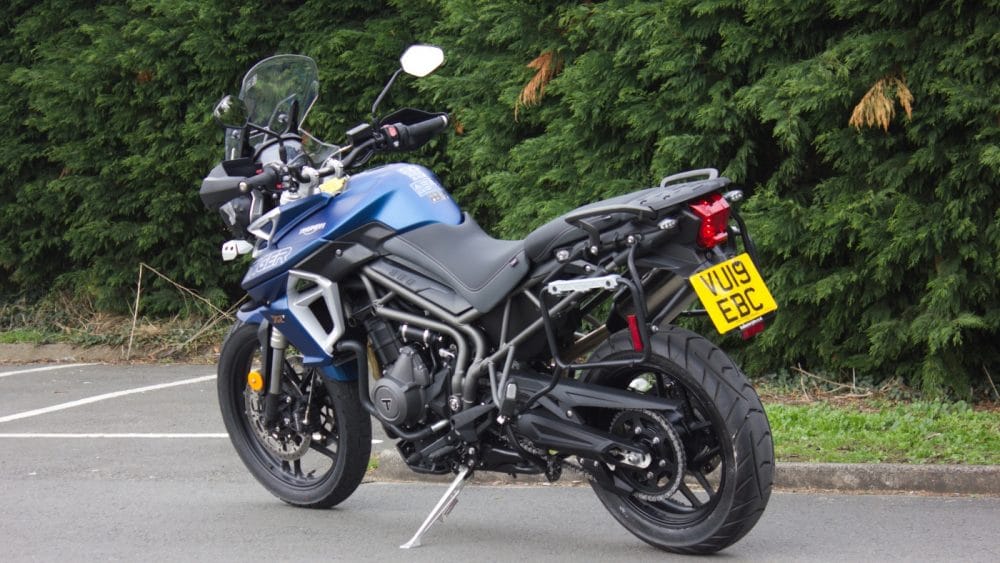
I strongly recommend anyone buying one of these to set aside an afternoon with the owner’s manual to learn how to access all the various pieces of information, but it’s certainly true that you could simply hop on and ride the bike as-is. The default Road engine mode, unlike on many bikes, is just fine and the factory suspension settings are well judged across a variety of surfaces, something that can’t be said for many, far more expensive, systems. The brakes are good, if not quite as sharp as a set of four-piston calipers would be, but are nonetheless a far cry from the wooden, squishy mess that most two-piston systems offer.

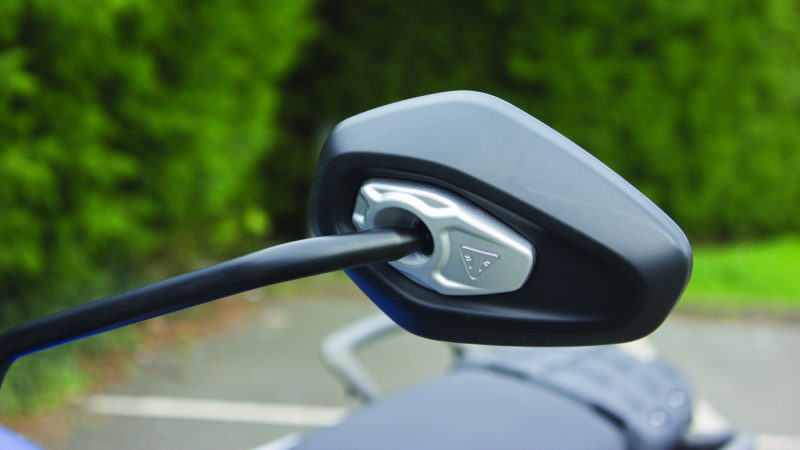
The touring windshield fitted to the XRT is adjustable by grabbing it with one hand and then pulling it up or down and in the highest position is almost tall enough to push turbulent air right over my helmet. A clever arrangement of winglets, designed to work in conjunction with the mirrors and handguards, means that there is zero buffeting around the sides, suggesting that we finally have a maker who is paying attention to something the aftermarket has been fixing for years.

Throttle response is much improved over the first-generation Tiger 800, the new ride-by-wire system smoothing out the off-idle throttle transition extremely well. Even Sport mode is not as snatchy as the previous cable throttle and there’s noticeably more bite to the power delivery as you climb up the rev range. One downside of a fully electronic throttle manifests itself as a slight dip below 4k, as though the computers are just taking the edge off my inputs in order to satisfy noise and emissions requirements.

A look at a dyno chart reveals something else interesting however: a horizontal line as soon as the output hits the 94 horsepower mark. That is the maximum allowed if you want to be able to restrict a bike for 47 horsepower A2 license holders and the ECU is clearly holding power steady from this point on, even as the revs rise the rest of the way to the redline. It honestly looks like there’s another 5-10 horsepower waiting at the top-end for someone who’s willing to visit their local tuner and have such restrictions removed.
Beyond that, the riding experience is rather unremarkable, which can be taken as a compliment or a criticism, depending on your point of view. A snarling, roaring beast of raw fury and adrenaline the Tiger 800 is not, though there’s significantly more character than there was in previous models. Build quality on modern Triumphs is generally very impressive; fasteners are stainless steel by default and metal finishes are tough and should shrug off a salty winter with aplomb. Painted plastics still scratch like any others so it will be interesting to see how the optional matt blue paint would stand up to daily use.

Fuel economy was mid-50’s on my relatively conservative ride. My father was able to average better than that over two years on his 2012 example and Triumph claims that significant improvements have been made since. Controls are of good quality and satisfying to use, with the possible exception of the indicator switch; the fashionable modern microswitch design means that it barely moves when you press it, much like on modern BMWs. In thick gloves, it might be hard to tell whether you hit it or not. Another odd move is that both heated seats are now adjusted via the handlebars, which means that your pillion will have to tap you on the shoulder if their bum gets cold.

Ergonomics are good, although with my short arms I’d ask my dealer to fit a set of risers to the handlebars. Lower seats are available for the short of leg, although you’d lose the heating option, and all seats have two different height settings that can be switched without tools. For the truly vertically challenged, you can even order a version of the Tiger 800 XRX with lowered suspension, although ground clearance suffers and a centre stand can no longer be fitted. I’d encourage interested parties to try the low seat first – it makes a big difference. With my 30″ inseam I actually found the standard seat in the high position to be perfectly manageable, with the added benefit of reducing the bend in my knees.

Aesthetics? Well, adventure-tourers are never going to be the prettiest of motorcycles; upright riding positions and tall fairings/screens can make for ungainly proportions, although Triumph‘s designers have done their best to build a very angry, angular structure into the front end. The matt blue paint on my tester looked even better in the flesh, and the metallic silver or white, which are the other two options at this trim level, look suitably sparkly in the sunshine.
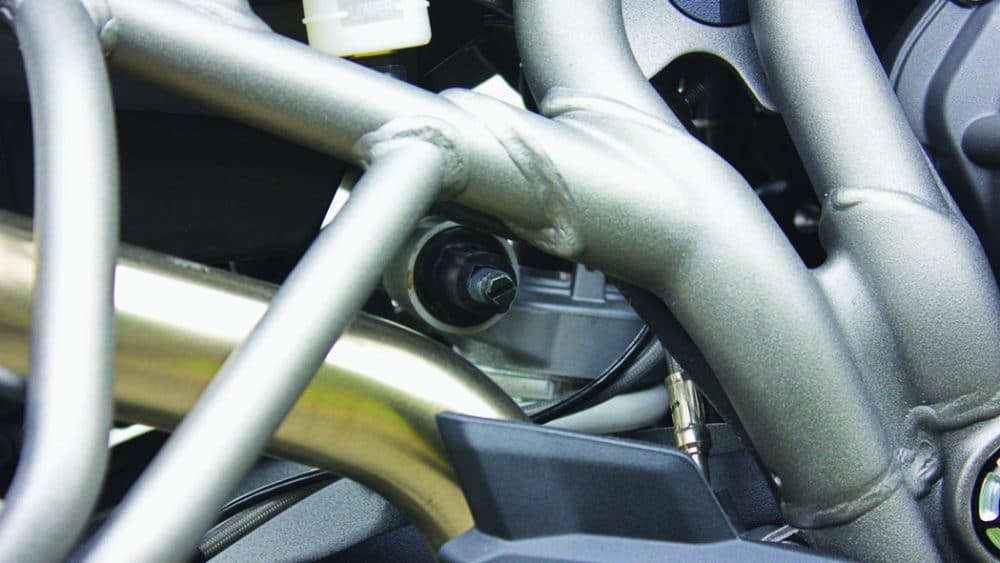
Behind the tank, things quickly descend into a mess of scaffolding and black plastic, with the seat floating on top as though the designers just sort of gave up half-way through. What’s more, choosing your colour has no effect on any part of the rear half of the motorcycle. Still, I’ve seen worse, and there’s no denying the practicality of having so many bungee points available. I’m sure the Italians would be horrified at the focus of function over form, but I could probably learn to live with it.

At the end of the day, I find myself rather taken by the Triumph Tiger 800 XRT. Sure, it’s expensive – a full £2,000 more than a Suzuki V-Strom 1000, which is a closer match in terms of power, suspension and braking performance. But I have to say, you do get quite a bit for your money – the materials and construction on current Triumphs simply ooze quality.

As for me? Well, I’d have to make a choice. The base-spec XR model almost achieves price parity with Suzuki’s V-Strom 1000, though with its more basic brakes and suspension it can’t quite match it for performance and loses much of the electronic gadgets that would make the Tiger 800 such a nice bike to live with. Where the Suzuki really wins, however, is simplicity and reliability.

The last chinks in the Triumph‘s armour are the running costs. The official maintenance schedule dictates minor services at 6,000 miles, with prices between £300-400 for each visit. At 12,000 miles the checklist for the mechanic is extensive, and includes an extremely time-consuming check of the engine’s valve clearances. Assuming everything is in spec, you can expect a bill of around £800, and it gets far worse if any of those valves actually need adjusting.

I suspect that most Tiger 800 owners cover more than the UK-average 4,000 miles per year, so it’s worth doing some calculations to determine just how expensive things could get for you before signing on the dotted line. At my rate of 25,000 miles per year, I’d be looking at paying my local dealer a hefty £2,400 annually just to maintain the warranty. I’m sure you can see why I tend to do my own servicing these days.

Like my own V-Strom 650, a new V-Strom 1000, or any of the other 800cc road-focused Adventure-Tourers, the Tiger 800 XRT is an effective way of crossing countries quickly. The top speed won’t make headlines, but the focus on rider comfort and compliant suspension matched with a real-world fuel range approaching 250 miles per tank means that the miles just fly by.

Cruise control takes the stress out of the motorway stretches, and the wide bars and light handling make easy work of curvier roads. By focusing on genuine, practical improvements rather than flashy but marketable gimmicks, Triumph have succeeded in turning the previously disappointing Tiger 800 into a motorcycle I can wholeheartedly recommend. I can give no higher praise.

Nick Tasker

First published in Slipstream June 2019

Triumph to BMW – What was I thinking?

I have been riding Triumph Tigers of various descriptions for 25 years. I have covered many thousands of miles on my various Tigers, and every time I have changed, I have used the opportunity to try other similar bikes and to be happy in my own mind that I was still happy with my choice of ride. I also had a very good relationship with Bulldog Triumph and their chief mechanic, Chris Powers, who has been looking after my Tigers for all that time.

So now I have switched to an R1250GS Adventure. For a start, my last two Tigers were Explorers and they are really nice bikes, and plenty powerful enough, handle well, brakes are ok, and good fun solo, but a bit top heavy with a pillion on board. So I have a new girlfriend who likes riding pillion, therefore my new ride had to be more pillion friendly. I tried the new Tiger 1200 which didn’t feel a great deal different to the older Explorer. Yes it had a fancy digital display, better brakes, semi-active suspension and a reworked version of that lovely triple engine, but it still felt the same.

I then tried the new R1250GS Adventure. That also has a fancy digital display, active suspension, a reworked engine, brilliant brakes etc. etc., but it feels very different to the Tiger. The biggest difference is the weight. Yes, on paper, with a full tank of fuel (30+ litres) it is physically heavier than the Tiger (which is now lighter than the Explorer), but it doesn’t feel it. Not even pushing it around. Riding the BMW, it feels even more balanced, especially with my girlfriend on board.

It also has that wonderful tele lever front suspension, and linked brakes that I really like, and a better mounting for the GPS (the new Tiger has the mount on the handle bars which precludes the use of a tank bag).

So I bought one.

I have now done 1500 miles in all conditions, and do I still think I made the right move?

The BMW is a very comfortable bike to ride, very comfortable for my pillion as well. It is more economical than I was expecting, the suspension is brilliant, and the gearbox is very smooth (much better than the BMW’s of old.  I haven’t felt the need to change too much other than fit a taller screen. The Triumph engine is more exciting and doesn’t shake you from side to side, but the 1250 engine on the GS is more exciting than that on the 1200 – it has those few extra ponies in there.

I am not sure that there is much in it from the rider information. The Triumph display is adjustable, and you can change the display.  It is also getting connectivity like that on the BMW (but hasn’t been released yet), and the Triumph’s illuminated switchgear is neat, and an electric screen which is probably a bit of a gimmick (the BMW’s adjustable screen can be easily controlled on the move, by hand).

The only big downside of the BMW that I can see at the moment is the reduced service intervals (6,000 mile to Triumph’s 20,000) and that the dealer isn’t quite as close Bulldog.

Simon Whatley

First published in Slipstream June 2019
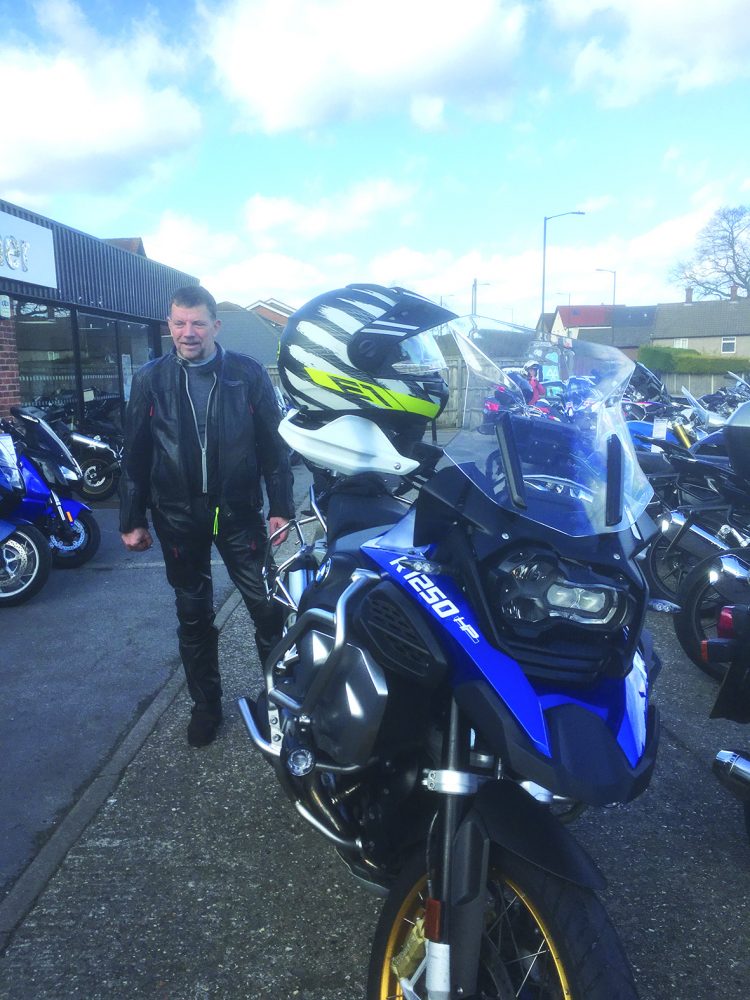
A Different Type of Riding (Part 4: 2019 Yamaha T-Max)

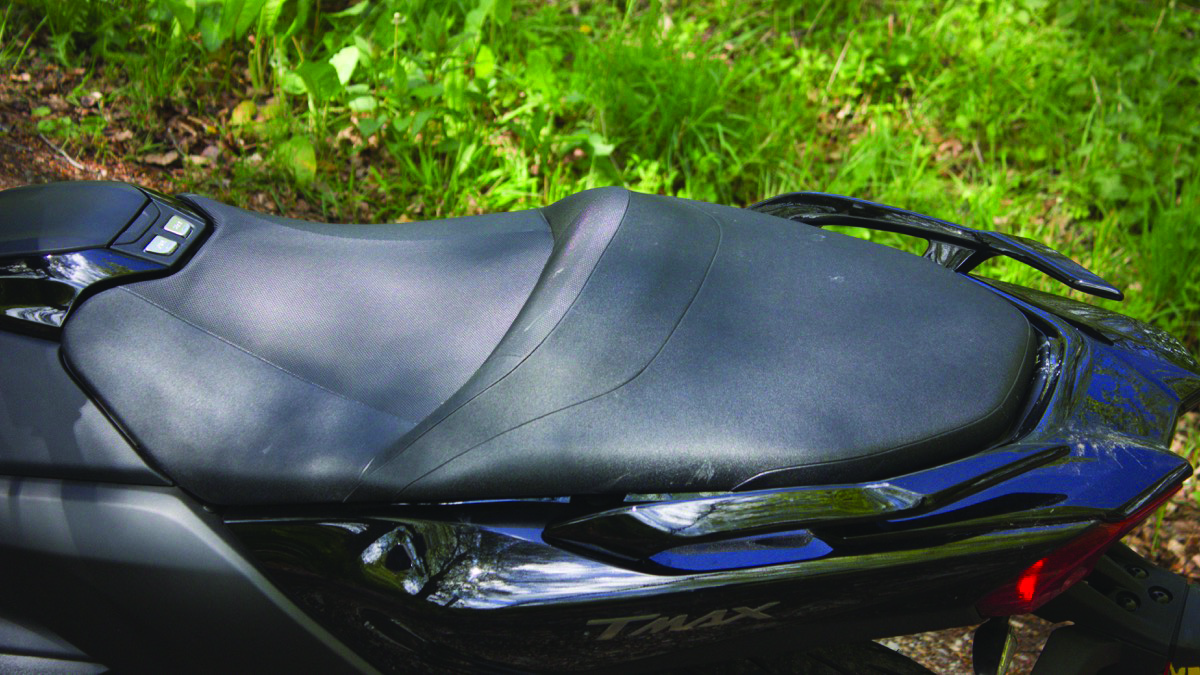
It’s been a little while since I test-rode any new motorcycles as part of my search for a comfortable, relaxing, low-speed, two-up touring bike. I wanted something with a feet-forward riding position, that could carry two in relative comfort while being sufficiently engaging that I wouldn’t mind the slower, more relaxed sort of riding that typifies my family tours. Frustratingly, it seems that motorcycle design has become extremely polarised, with manufacturers pushing their designs into increasingly narrow genres, and finding the right mix of price and features was proving increasingly difficult.

I started by giving scooters a go in the shape of Honda’s new Forza 300. Perfect on paper, the reality was a disappointment, largely due to the forgettable riding experience and unpleasant buffeting at speed. The next obvious contender for riders seeking a feet-in-the-wind stance were cruisers, exemplified in my case by the Harley-Davidson Sport-Glide. There was an awful lot to like – an engaging engine, comfortable ride, and lockable hard luggage, but a starting price of £15,000 proved too bitter a pill for me to swallow.

Other, cheaper cruisers are available, but pillion accommodations on smaller and cheaper models are clearly an afterthought. The attitude of both Harley-Davidson and Indian is that riders intending to bring company along on their adventures should be looking to their respective full-price, full-dress tourer ranges. Triumph is no better; I had high hopes for their new Speedmaster, but the brick-like pillion perch was vetoed by my partner after just a few moments’ seat time.

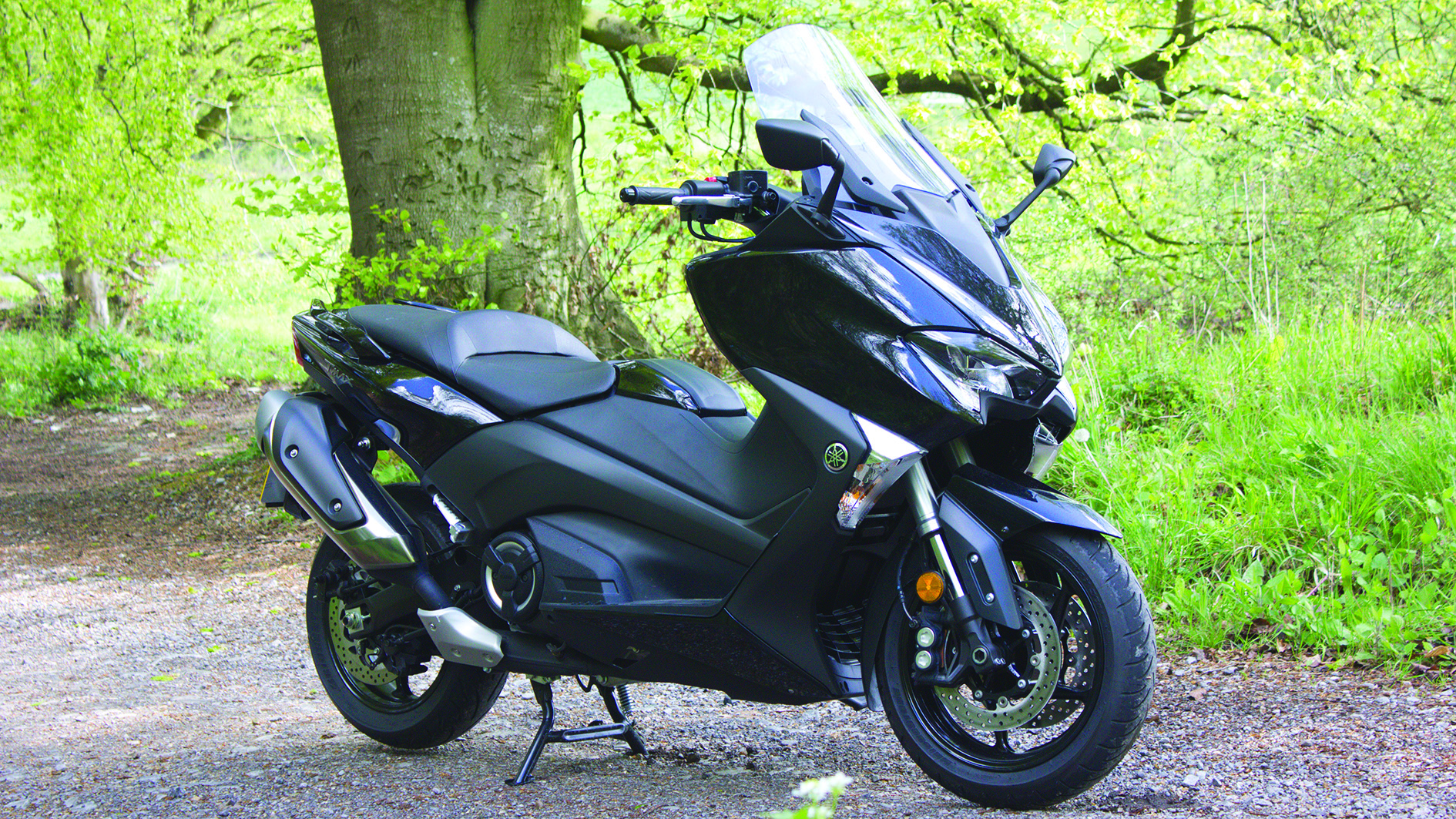
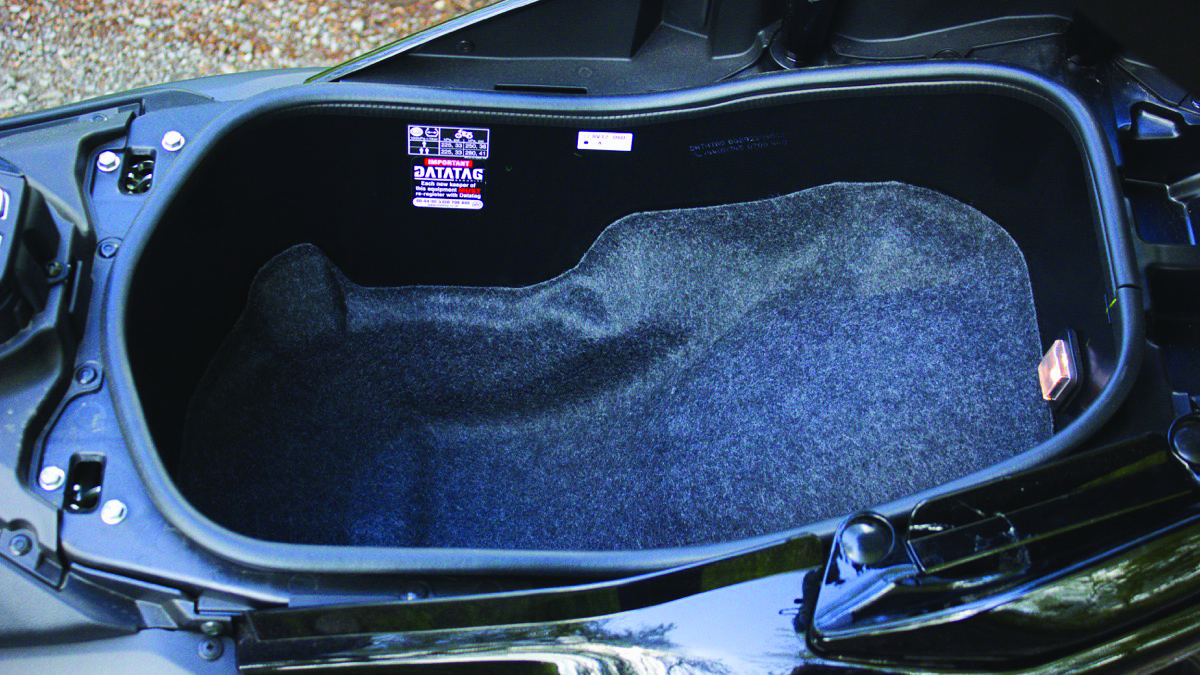
Yet even as I was forced to give up on cruisers, scooters kept pulling me back. I’d previously dismissed the larger Suzuki Burgman 650 and Yamaha T-Max thanks to their circa £10,000 price tags, but on paper, they really did tick almost every box. The bigger the scooter, the bigger the under-seat storage, with enough legroom to let you really stretch out. Top speeds north of 100mph as well as features such as cruise control, heated seats, and electrically-adjustable screens mean that these scooters begin to look more like half-price tourers rather than oversized city runabouts. Considered thus, the £10,000 asking price starts to look a lot more reasonable.

So, could a maxi-scooter do everything for me that a £15,000 Harley-Davidson Sport-Glide offered, but for several thousand pounds less? I zeroed in on the Yamaha T-Max first, its reputation as the better-handling of the big scooters giving it a better chance of meeting my exacting requirements. Confirming this proved a real challenge; none of the five Yamaha dealers I contacted kept a demonstrator on their fleet, the last finally suggesting I call the brand’s head office to track one down.

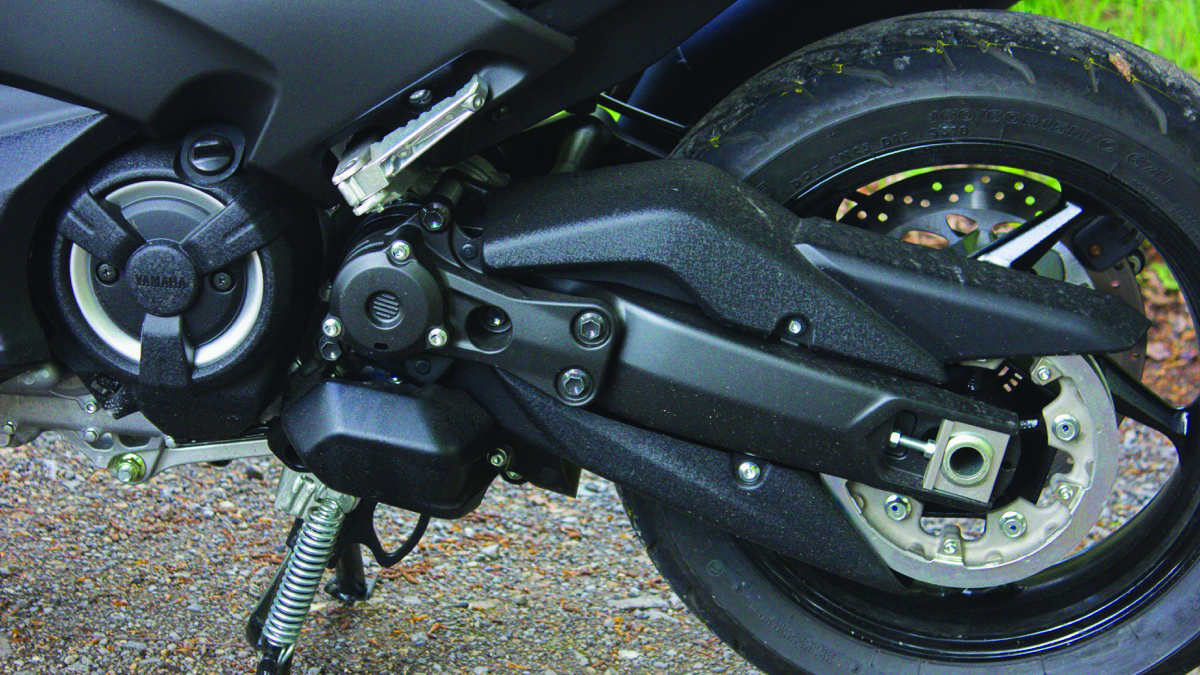
So what does your £10,000 buy you compared to, say, a Honda Forza 300? The extra 251cc of displacement doesn’t tell the whole story – it’s an under-square parallel twin rather than a single-cylinder engine, almost doubling the power output to an A2-compliant 45 horsepower. What you can’t tell without stripping away the bodywork is that, unlike smaller scooters, the T-Max’s engine is bolted to the frame, independently of the wheel and swinging arm. This arrangement matches conventional motorcycles, where the larger engines make the idea of mounting the entire powerplant as unsprung weight unpalatable.

Yamaha has pushed the T-Max’s parallel twin up near the front of the bike and the entire powertrain lies completely flat under the floorboards for a kerb-scrapingly-low centre of gravity. A cruiser-style belt handles final-drive duties, and a stout monoshock is tucked up underneath. Front suspension is by way of a pair of upside-down forks with twin radial 4-piston brake calipers hanging off the bottom. And lest you think that Yamaha needed R1-spec stopping power to handle the excessive mass that maxi-scooters are famous for, the advertised wet weight is a mere 216kg – only 16kg more than the R1.

Weight, incidentally, that Yamaha claim is perfectly balanced fore and aft, in sharp contrast to most notoriously rear-heavy scooters. The result of this is that while the T-Max doesn’t handle quite like a traditional motorcycle, it comes incredibly close. The scooter feels light to turn in, holds a line with poise and doesn’t fight back if you need to push harder in decreasing-radius corners. Lean angle is an impressive 50 degrees, which is just as well given that there’s nothing to grip your knees against, so hanging off isn’t really an option. As such, you can take curves with significant speed and confidence.

Driving out of corners is easy too, because the smooth, torquey engine works with its continuously-variable transmission, rather than seeming to be endlessly straining against it. Certainly, when pulling away from a stop or requesting a sudden burst of extra speed, the engine revs jump quickly and seem to hang in place, disconnected from the bike’s own rate of acceleration. But a couple of seconds later things seem to sync up again, with the engine speeds rising in conjunction with the speedometer, rather than droning listlessly regardless of the situation.

You never quite escape that drone, however. YouTube shows us how these scooters can actually sound fairly entertaining, popping and crackling on overrun as part of an enjoyable sonic accompaniment to more spirited riding – but only if you shell out for an aftermarket exhaust system. Yamaha wants more than £1,000 for the official Akrapovic option, and the T-Max definitely loses points for a stock system that is so quiet and devoid of character as to be quickly (and mercifully) drowned out by wind noise.

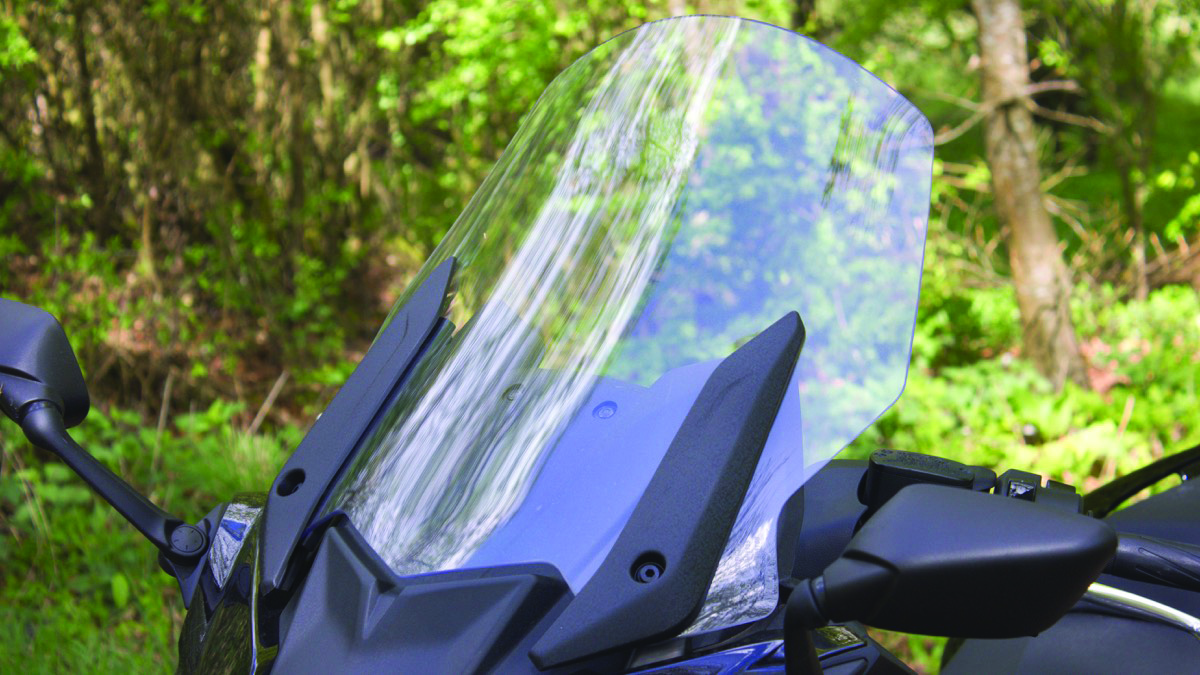
Which is a shame, because I’ve been racking my brains since I handed the keys back, trying to think of any other reasons to subtract points from the T-Max’s score. Yamaha’s designers did their best in wrapping an attractive body around a naturally bulbous layout, but I’d appreciate a more interesting selection of colours than varying shades of black and grey. The stock windshield is good, if not great – wind hits me right in the helmet and can cause a bit of noise at higher speeds, but it’s mostly smooth flow – no buffeting.

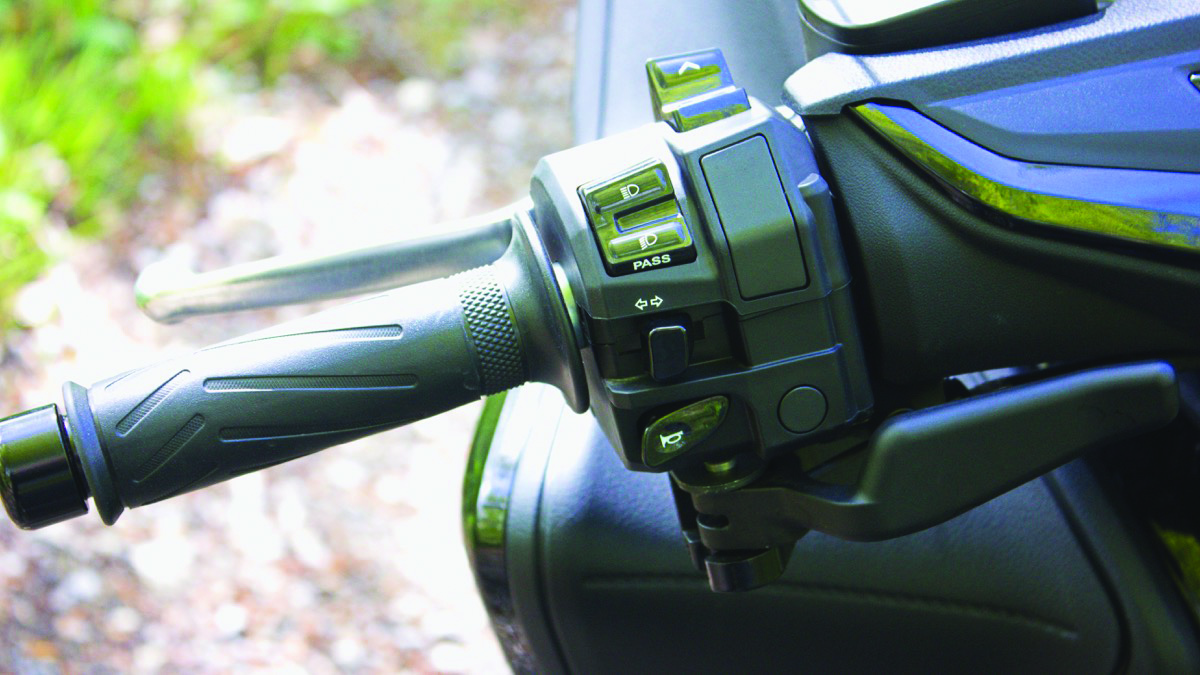
The £1,500 extra you pay for the DX version of the T-Max gives you a couple of extra buttons that raise the height of that windshield a considerable amount, theoretically solving that problem at a stroke. It also gives you electronic cruise control, heated grips and even a heated rider’s seat. There’s also a clever telematics system that allows you to remotely track your bike in case of theft, and view statistics about where you’ve ridden and how fast you were going – the latter not necessarily a benefit, perhaps. But that’s it – the rest are minor cosmetic differences, and if it weren’t for the blanking plates on the left-hand switchgear you’d never know you’d skimped and ordered the cheaper model.

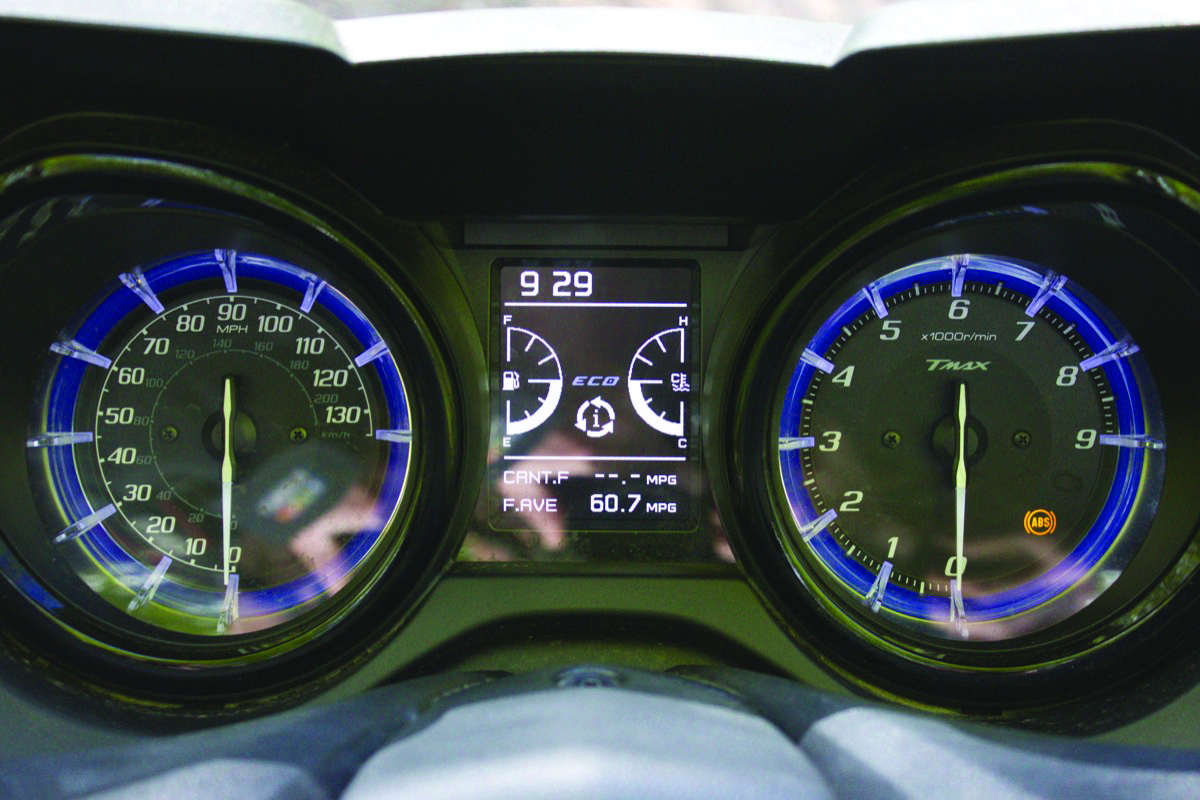
All flavours get large twin dials for speed and revs, both chosen more to make four-wheeled converts feel comfortable rather than provide any real benefit to the rider. Digital speedos are always easier to read, and on an automatic transmission the tachometer only serves as a distraction from the road ahead. And it really is surprisingly easy to get distracted; I frequently found myself looking around and admiring the scenery, so easy was the T-Max to ride.

That should have meant that the experience was boring – I wasn’t being called upon to focus every fibre of my being on the task at hand, yet I was somehow enjoying the ride all the same. If anything, I worry that my riding standard might suffer when I’m not trying to hone my skills to a point with each ride, in every corner. And I would definitely need to decrease my speed further still if I’m going to start admiring distant mountains instead of watching for hazards ahead. But isn’t that what I’m looking for here? I really struggled to figure out what my opinion of the T-Max was, something tangible and objective that I could pin down in writing. But the overriding point is simply that I’d really quite like to ride it some more.

It’s not thrilling or raw, and doesn’t offer any kind of visceral riding experience. It’s not spectacularly efficient for its engine size, the Continuously-Variable-Transmission and barn-door windshield conspiring to push fuel economy down to about 60. Yet, like my V-Strom 650 it’s pretty good at everything while adding a wealth of practical functionality. You can rarely exploit the massive horsepower of a modern sports-tourer in the real world, but you can make use of the T-Max’s genuinely comfortable seat for every second of every ride.

The price of admission will be an issue for some, although a quick scan of the classifieds reveals that there are bargains to be had on nearly-new models. Oil changes are every 6,000 miles, with 12k major services including replacement of the transmission v-belt. Pay a workshop to remove all that plastic and the labour rate can really add up, but my research shows that it’s nothing that a patient home mechanic should be scared of. And being a Yamaha, valve clearance checks aren’t necessary until 24,000 miles, something I feel other manufacturers could learn from.

There’s no oily chain to maintain, thanks to the belt final-drive, headlights are modern LEDs and the massive fairing will keep you warm and dry in conditions when most motorcyclists would be huddling for shelter under bridges. The T-Max genuinely seems to offer all the advantages of the much-maligned scooter format, without suffering from many of the issues that gave rise to that battered reputation. And if you want to tweak the format, the T-Max has one of the most extensive after-market followings I’ve ever seen – at least, once you reach outside of our insular British bubble.

Don’t knock it until you’ve tried it. It may well be that the best low-intensity touring motorcycle is, in fact, a scooter.

Nick Tasker

First published in Slipstream June 2019
Go to Part 2

Dedicated Follower of Fashion?

BMW R1250GS Review

Henry Ford is said to have opined that, should he have asked people what they wanted from a future transport solution they would have simply requested a faster horse. Apple famously made its fortune delivering products that nobody knew they wanted, and it’s arguable that the original BMW R80GS did the same thing. Journalists at the time were baffled, complaining that it was too heavy to compete with dirt bikes, and that more traditional touring bikes had it beat on paved roads. Yet a combination of genuine everyday capability, iterative improvement and a healthy dose of clever marketing mean that the modern-day iteration sold more than 4,000 examples in the UK in 2017.

Almost 40 years of development brings plenty of improvements and refinements, as engineers try to satisfy marketing’s desire to appeal to wider and wider demographics. Lower seat heights entice the short of leg to join the fun, while better brakes and suspension as well as a power output 270% of the original bring in those of a more sporting persuasion. Stronger chassis and subframes provide the passenger and luggage requirements of the touring set and an ever-more sophisticated electronics suite rounds off the package for tech fetishists. The latest revision, the new R1250GS, really should be all things to all people.

Every major manufacturer is working hard to constantly broaden the appeal of every bike in their range. The main problem with iterative development arises when you keep moving the goalposts, when your target keeps shifting. Before you know it, you have lost sight of the original purpose of the thing you were building, and have created something that is a caricature of itself. But going backwards, aiming for less weight, less power, and more control would be unthinkable! It would surely be commercial suicide, as no-one would buy a bike that had lower numbers than the competition!

This story isn’t unique to the R1250GS or even to BMW; consumers have never been good at separating what we ‘want’ from what we ‘need’, and the people in charge of selling us stuff have zero incentive to discourage our appetites. Marketing, journalists and consumers all demand more power, but riders can’t actually handle that, so electronic aids are brought in to compensate. The chassis and suspension can’t handle it either, so they are both beefed up and yet more electronics added to shocks and forks in a desperate attempt to keep the rising mass of modern motorcycles under control at ever-higher speeds on fast-degrading roads.

All those electronics now mean that handlebar switchgear has begun to resemble video game controllers, so manufacturers are sticking with the theme and adding full-colour computer screens where the dashboards used to be. You need a half hour with the instruction manual to get the bike ready to go, and piloting a modern motorcycle at speed is now like flying a modern-day jet aircraft, the laws of physics kept barely in check by an overlapping network of electronic safety nets.

I rode the first-generation water-cooled R1200GS back when it first launched, and found it to be extraordinary. The tremendous capability of the machine far exceeded what I could make use of at the time, and while my riding has continued to develop in the intervening years I suspect that the 2013 machine still has more performance than the average rider can safely use on public roads.

BMW hasn’t been idle either, making nips and tucks throughout the life of the water-GS, with premium features becoming standard-fit and new tech introduced almost every year to tempt well-heeled buyers into adding more ticks to their options list. In fact, the only really notable change over last year’s version is the extra 80cc’s of displacement that give the R1250GS its name. As such this new BMW is simply an example of the culture of excess that has spread throughout mainstream motorcycling; let’s see if we can identify the straw that broke the camel’s back.

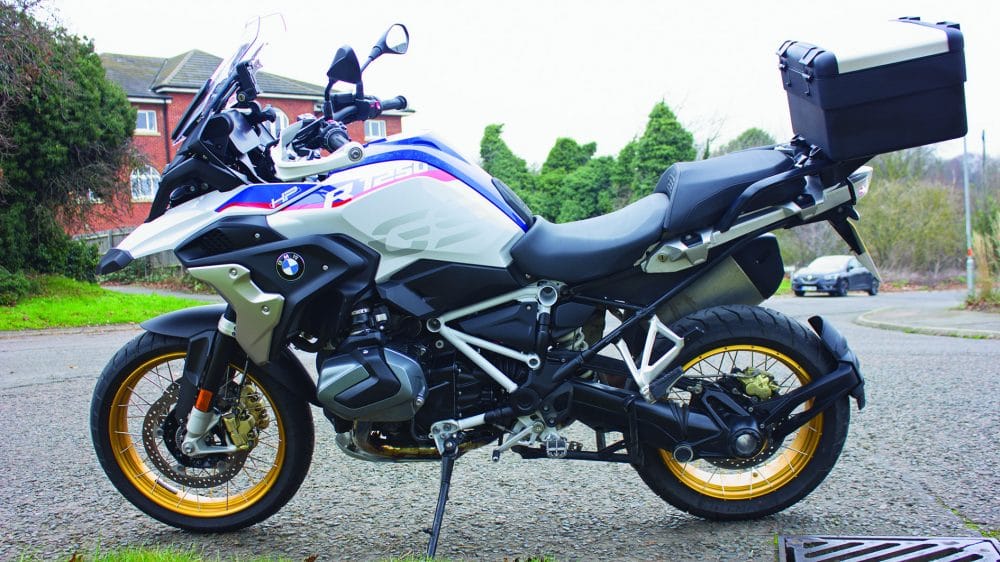
Figures show that mass has increased over time, with the latest GS now weighing in at a shade over 250kg with a full tank of petrol. The optional spoked wheels add a few more kilos, as will the crash bars, luggage and other accessories that owners will undoubtedly bolt on (or more likely have their dealer install). Styling tweaks have served to add a fair bit of visual bulk over the years, and the German flagship is now a truly imposing beast.

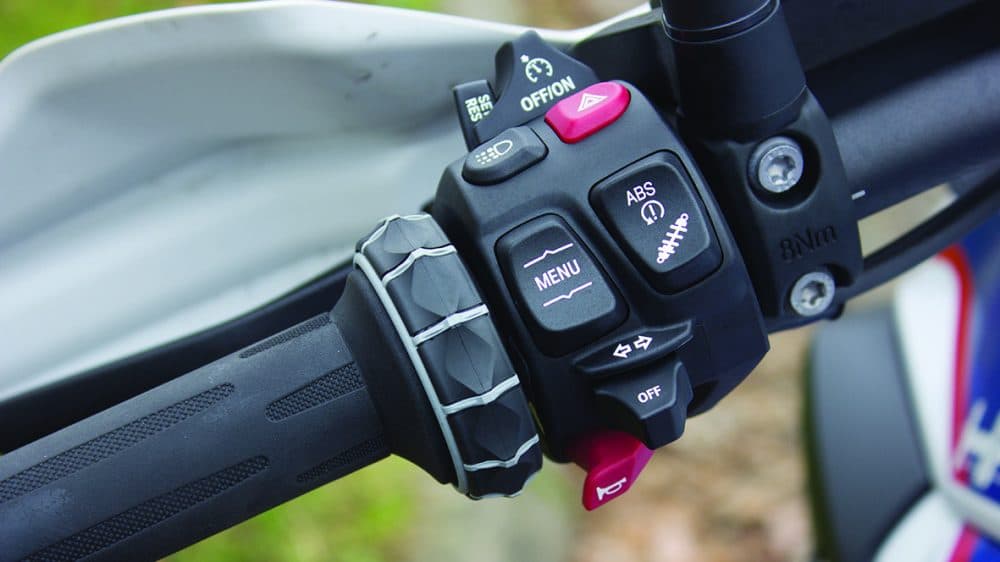
Switchgear is of high quality, with a satisfying feel that is a joy to use – with the sole exception of the indicator and cruise-control switches. There’s so little movement that you find yourself looking down to confirm you’ve definitely pressed them. Despite adding an actual scroll-wheel (which itself contains an additional two tilt buttons) many of the dozen or so buttons have different functions depending on how long you hold them down. Outside of the basic riding functions, the bike is impossible to operate without looking down at the gloriously animated full-colour high-resolution digital dashboard.

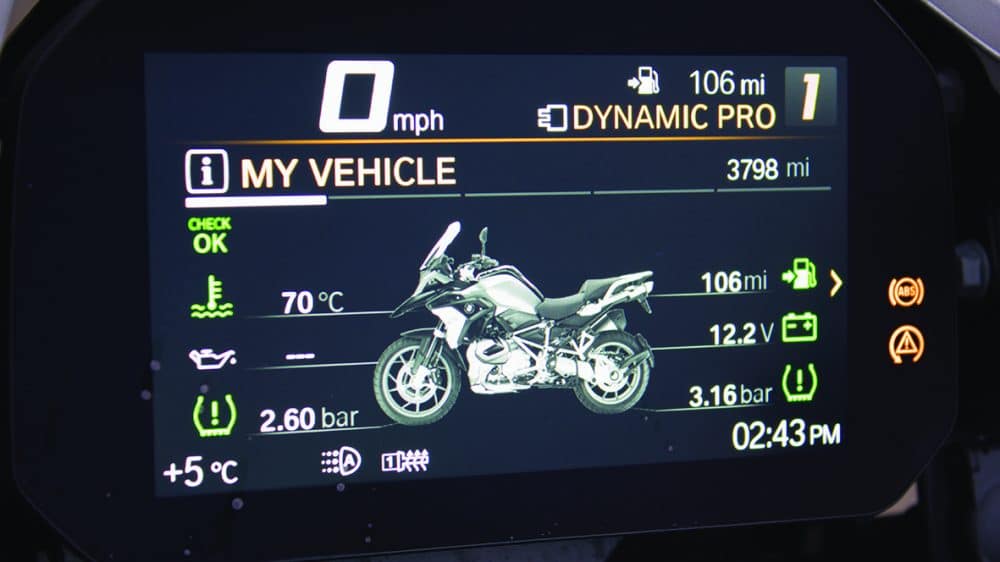
The new BMW computer screen is far better than anything Triumph, Ducati or KTM have on offer at the moment, and feels like a genuine functional improvement over existing analogue or LCD units. It’s large, clear and easy to read even in direct sunlight, uses colour to enhance rather than distract, and provides all the information you need at a glance. Triumph’s units have fascias so large they remind me of old CRT televisions, and reading a Ducati TFT is like trying to decipher a detailed spreadsheet.

And yet, as I alluded to earlier, I strongly suspect that BMW’s primary motivator was not to one-up the competition, but simply to make all their technology manageable through a graphical user interface. It’s already a bit like using a digital watch, with multiple functions attached to each button, and navigating the various menus via the left-hand scroll wheel is probably something that gets easier with familiarity. There are main menus and sub-menus, with screens hidden behind other screens. At one point I resorted to turning the bike off and on again as the fastest way to get back to the regular dashboard layout.

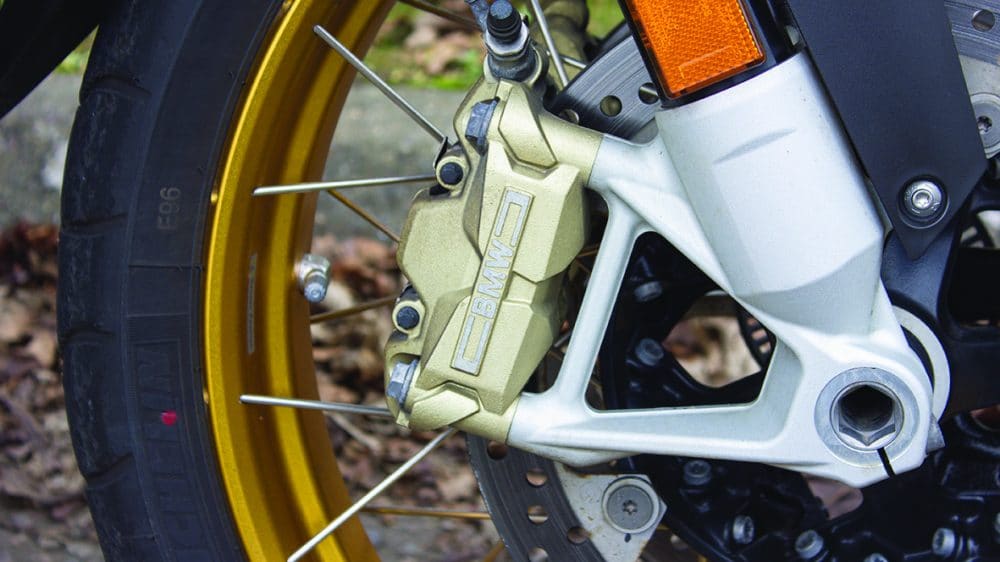
The R1250GS has all the hallmarks of a bike designed through exhaustive focus testing. It has loads of power – 135bhp and 143Nm of torque. The levers, screen and seat are all adjustable, and the suspension can not only be adjusted electronically on the move, it’s now self-levelling depending on load and passengers, and even adjusts the damping in real-time to manage whatever surprises the road surface can throw at it. The brakes, despite no longer sporting the ultra-fashionable Brembo logo, are stupendous; how quickly you can stop is solely dependent on how much g-force your upper body can handle.

You can attach loads of luggage, and even remove the pillion seat for more space to strap stuff to. The lighting is now full LED, and fully automatic. It has cruise control for long motorway trips, the seat is comfortable and the windshield height-adjustable from the cockpit. It even gets acceptable fuel economy, and only very aggressive riding managed to push the average mpg down below 50. Everyone wants multiple riding modes now, so it has those too. Good grief, it even has a quick-shifter, something originally designed for racing and now this season’s must-have accessory. As I said earlier, this bike has been designed to be all things to all people, the formula polished until it gleams – this should be the perfect motorcycle.

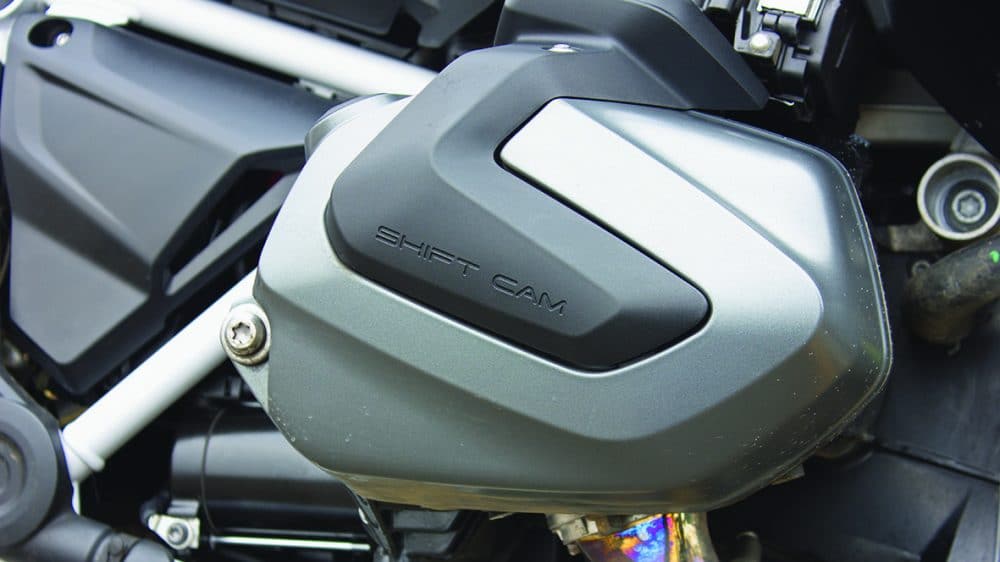
And yet, there are serious issues. Every review of the R1200GS inexplicably complained that it was underpowered compared to the competition, and so an incredibly clever new variable-valve timing system was developed that boosts torque and power across the entire rev range. Despite the 80cc more cubic capacity this enormous engine revs up more like an inline four-litre bike engine than a big, torquey twin. I’m used to the snatchy aftermarket quick-action throttle on my Triumph Street Triple, and in Dynamic mode the R1250GS was far twitchier.

BMW know this, which is why you have to pay extra to even get access to that particular riding mode. ‘Road’ and ‘Rain’ dampen response considerably, but also add a woolly feel and even hesitation that made smooth gear changes extremely difficult. The new quick-shifter suggests that BMW spotted this issue as well, allowing fully hands-free gear shifts. Unfortunately, in almost all circumstances it works very poorly, resulting in jerky upshifts and even worse downshifts. It was so bad that I was prompted to ask the BMW rep if the system was disabled on my example, and I was condescendingly told that I merely needed to get used to it. Perhaps having your pillion’s helmet crashing into the back of your own is an acquired taste?

Similarly ferocious sportsbikes are normally equipped with extremely stiff suspension to counteract the squatting and diving forces caused by accelerating and braking. Matters are complicated somewhat when you’re carrying around 50kg of reinforced subframes, and probably another 100kg of luggage and passenger. But touring riders want a soft, comfortable ride, so computer-controlled suspension is available to try and provide the best of both worlds. It’s a testament to BMW’s engineers that it almost succeeds. The trick, it seems, is to keep the shock absorbers soft most of the time, and then firm them up quickly in response to large, sudden inputs to control excessive movement.

In practice it seems that the on-board computers just can’t cope, at least on Northamptonshire’s rutted tarmac. Small surface undulations are absorbed well enough in ‘Road’ mode, making for a comfortable ride and allowing you to maintain the rapid pace that the engine enables. But hit a patch of rougher asphalt and the dampers seem to lock up, transmitting the shock into the chassis and causing the entire bike to shudder and flex. I’m afraid it’s not what I’d expect from a brand new £16,000 flagship.

Switching the suspension over to ‘Dynamic’ simply made matters worse, delivering a ride so firm that both wheels were frequently bouncing off the ground and triggering the ABS and traction control. The only solution was to ride more slowly, rendering all that power utterly pointless.

Perhaps a beefier rider might better suit the spring rates that BMW have chosen for their shocks, and if you only stick to smooth, open roads you may find the suspension to be perfectly adequate. But surely the whole point of adventure bikes is that they allow us to continue enjoying our roads even as they continue to fall apart? Perhaps that fast-revving engine would be blunted somewhat were I to weigh more than my meagre 70kg, and the bike further loaded down with a pillion and full complement of hard luggage. And perhaps the steep inclines and high altitudes of the Swiss Alps would smooth things out the rest of the way. But unless I just described your sole use-case of a purportedly ultra-versatile machine, I think there are less compromised solutions out there.

I really wanted to like this new GS, I really did. I have tremendous respect for the bike and the BMW brand, and I think that they’re one of the few manufacturers actively trying to solve the marketing and dealership problems that threaten to strangle the motorcycle industry. But I’m afraid that their product has fallen victim to fashion, and the demand for more power and gadgets has resulted in a demonstrably compromised motorcycle. I’d love to see what a 900cc version would look like – 100bhp and a 30kg diet might be the sweet spot, and more of the bike could be enjoyed without computer interference at every turn. It’s a shame the road-oriented F750GS has been so badly neutered to give the off-road focused F850GS room to breathe.

Unfortunately, from my perspective, the iconic motorcycle that kick-started the entire adventure segment has now become just like the company’s cars: overweight, overcomplicated and overpriced. An impressive technical showcase whose electronic faculties are less of a testament to innovation and more of a desperate attempt to win the ultimate game of motorcycle Top Trumps. It’s a little bit like my cooking, in fact: all the right ingredients, yet somehow the result just leaves a bad taste in your mouth.

Nick Tasker

First published in Slipstream May 2019
A Different Type of Riding (Part 3: 2018 Harley Davidson Sport Glide)

Those of you who have been following this mini-series will have discovered that while mid-capacity scooters tick a lot of practical boxes, they don’t provide a visceral low-speed experience to augment a sight-seeing tour through Scandinavia. Given that a feet-forward riding position is on my checklist this time around my next area of exploration was obvious: I needed to look at cruisers.

The thing is, cruisers are surprisingly hard to find in the UK market. The reality is that we’re a nation of recovering sports-bike addicts, shifting to adventure bikes as we and our road network suffer the ravages of age and abuse. Those still looking for their low-tech, low-speed, hair-in-the-wind experience go to the player everyone else gave up competing with; they go to Harley-Davidson.

And yet, my riding experience of previous Harleys was underwhelming in the extreme. Weak brakes, scrunched-up riding positions, minuscule fuel tanks and non-existent suspension led me to conclude that Harley-Davidson were rolling art, and nothing more. Based on conversations with Harley owners over the last few years, my mistake had been riding the “small” Harleys, rather than the “full-sized” ones. They assured me that the build quality and riding experience on the big-twin models was in another league, and that I should stop using their 300kg+ kerb weights as a reason to avoid them.

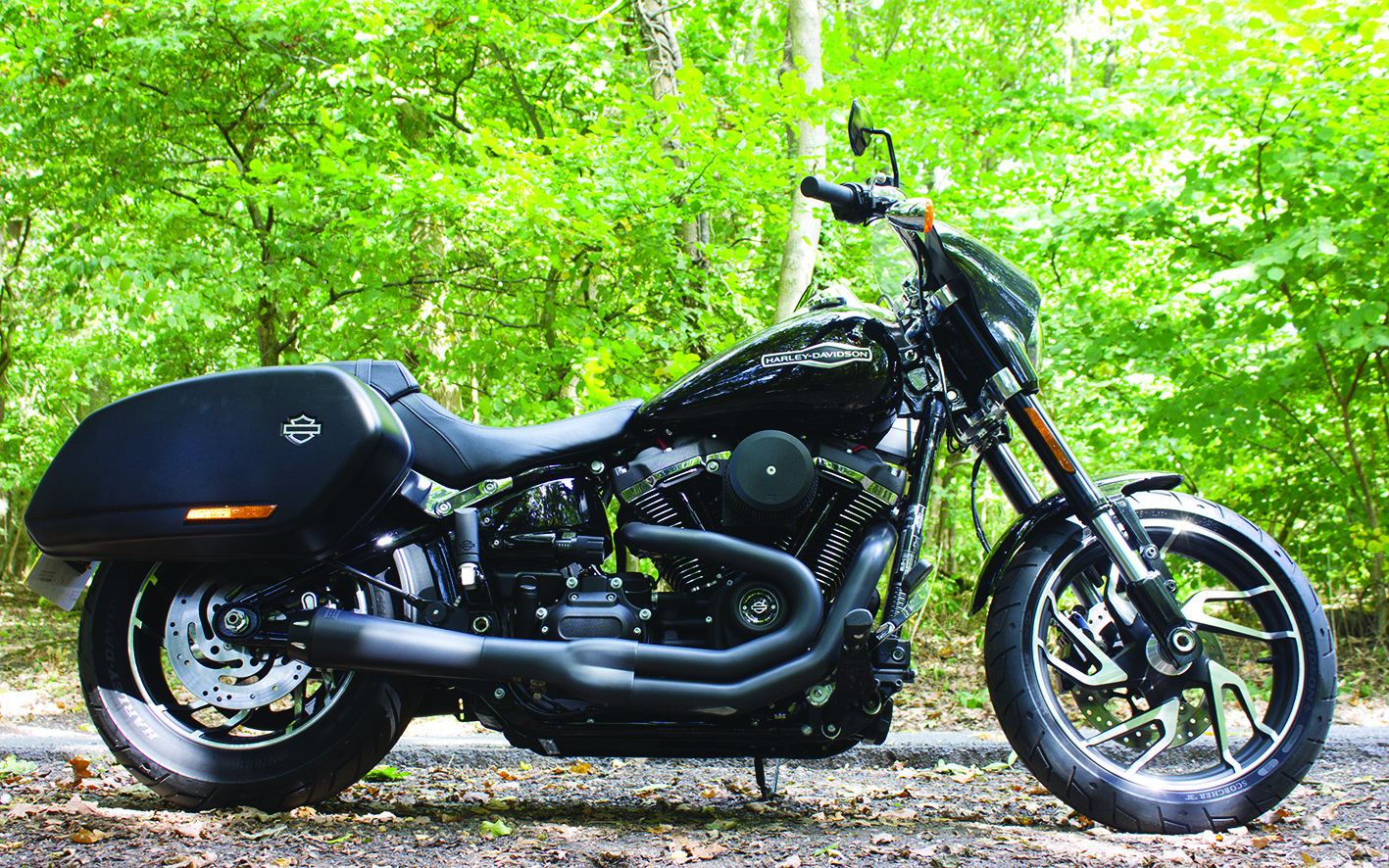
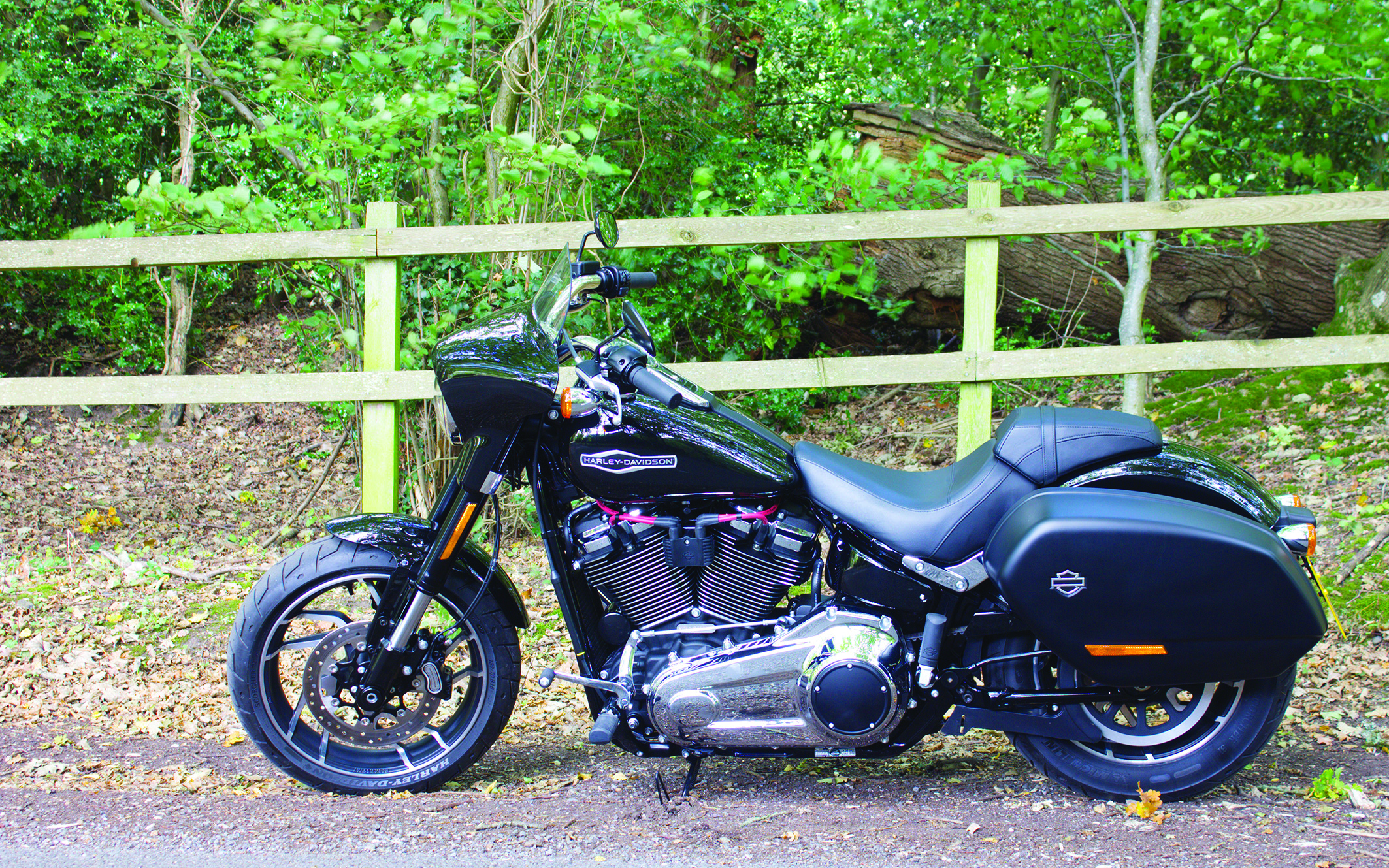
One of the latest of these new Softail models was the Harley-Davidson Sport-Glide. I was intrigued; blacked-out engine with a minimum of chrome, hard, lockable quick-release luggage as standard and even a nifty removable mini-fairing. Black & polished alloy cast wheels and a comfy-looking bucket seat completed the image of a relaxed, light-duty tourer, clearly designed as a stepping stone for those not yet ready to commit to a fully-faired bagger from the Touring range.

The first surprise was the lack of an ignition key. Like the little Honda scooter, all Harleys now use proximity keys instead. The kill switch toggles the ignition state if the fob is nearby, allowing you to start the engine without fishing through your pockets, although locking the luggage still requires an old-fashioned key. Harley also has a typically low-tech solution to the question of opening the petrol tank – they simply don’t make it lockable.

Tucked away on the left instrument cluster is another surprise – a cruise control switch. Further up is the control for the multi-function trip computer, represented by a small LCD screen tucked away underneath the analogue speedometer. You can scroll through a couple of trip meters, the clock, fuel range and even current engine RPM, with a digital segmented fuel gauge running along the top of the display. A single number on the right indicates the current gear, although generally you’ll only need it for confirming when you’re in sixth on motorways.

That enormous clutch-lever is a two-finger pull, and the rumbling engine responds smoothly and easily to the feather-light throttle. I’ve ridden 125’s that were more difficult to set off on, although I did later discover some slight hesitation on initial throttle openings that my salesman attributed to the upgraded camshaft & associated fuelling changes. I would have to ride a stock example to be sure, but it was no worse than any other modern bike I’ve ridden lately.

Harley’s new engines are now fully counter-balanced, leaving just enough of a throb to remind you it’s there without causing your glasses to rattle off your nose at stop lights. Turning onto the road demonstrated that low-speed manoeuvres would be a little tricky with that large rear-brake pedal, but I had already forgotten that this machine weighed a full 100kg more than the bike I’d arrived on – it certainly didn’t feel like it.

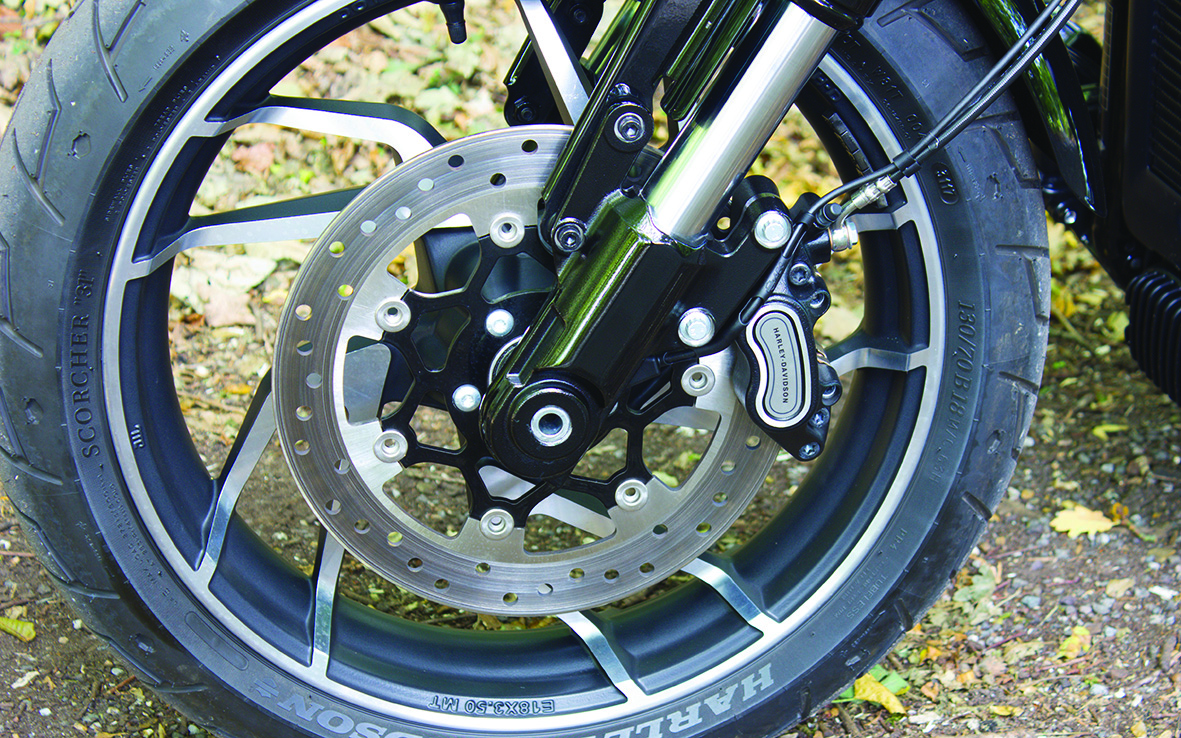
Rolling down the first stretch of road demonstrated a compliant and controlled suspension system at work, communicating the details of the road surface whilst softening their impact. As I approached the first junction I braced myself to begin the process of slowing down 317kg of steel using a single front disk. Imagine my surprise then when I had to ease off the front brake entirely to avoid stopping a dozen metres short of the lights, such was the bite and power of that single four-pot calliper. Harley now out-sources their braking components to Brembo, and the Harley-Davidson Sport Glide stops impressively quickly despite its considerable weight.

Taking a stop to look up some specs online revealed more interesting facts. Thanks to the low-revving engine (redline is somewhere around 5,000RPM) Harley valve trains use hydraulic lifters, meaning that they will never need their clearances adjusting – ever. The kevlar final drive belt means there’s no chain to oil, and anecdotally have been known to last 70,000 miles and beyond without replacement. That new eight-valve engine is also more frugal than the previous generation, thanks in part to twin spark plugs per cylinder, and averages of 50-55mpg are to be expected in normal riding.

Submitting to the inevitable and introducing small oil coolers to keep the exhaust valve temperatures down also means that there was no more heat spilling off the power plant than from any other bike I have ridden. And this was no ordinary engine; the previous owner had dug into the performance section of Harley’s famous parts catalogue and equipped this bike with a higher-lift ‘Torque’ camshaft, a freer-flowing exhaust and intake and a full dyno remap to match. According to the Harley salesman, horsepower was up 30bhp over the original 75, with a matching jump in torque.

Those may not sound like earth-shattering numbers from what is essentially a 1.8litre engine, but the area under the torque curve is immense, delivering more thrust at 3,000RPM than a KTM SuperDuke does anywhere in the rev range. While acceleration is of course a factor of mass, there’s simply no ignoring that much sheer thrust. Let the engine climb up to 3-4k and you’ll be holding on for dear life, with no signs of the engine letting up. Admittedly I would expect an unmodified engine to reign things in somewhat, but all of those upgrades were fully warrantied and fitted by Harley themselves for around £2,000 extra. Think of it as a Sport Glide”R”, then.

So; the engine and brakes impress, in a way that I genuinely didn’t expect. What about the handling? The aforementioned low-speed manners are faultless, and while I daresay that tighter roads might require a lower pace than from a modern super-naked it handled the sweeping curves of Oxford with aplomb. Twice metal met tarmac despite my caution, although I later discovered it to be the after-market exhaust system that was grounding out, not the considerably higher forward-set footpegs. I’m quite certain I would not recommend a Harley-Davidson to someone plotting to chase down sports bikes through the Pyrenees, but then I already have my V-Strom for that.

Which brings us to the raison d’être for this test; I didn’t need or want another fast sports-tourer – I needed something that would be just as much fun when ridden in convoy behind a Belgian camper van as it would chasing down empty tarmac. And I’m extremely pleased to report that the truly characterful engine, a joy to use at any speed in any gear, made for a fantastic low-intensity journey. Motorway riding was a little less relaxed thanks to the minimal windshield. My example was equipped with the optional taller screen, but I do wonder if removing it entirely might net less buffeting.

The integrated panniers solve the luggage problem; the 19-litre tank and (relatively) impressive economy makes 200 miles between fill-ups possible, and the wide, plush seat means I could happily empty that tank multiple times in a single day. I’d personally want to bring the handlebars a little further back to compensate for my stubby T-Rex arms and add a luggage rack to increase carrying capacity further, but the beauty of that Harley parts catalogue is that there are fully-warrantied options available for every taste and requirement.

Dipping too heavily into that catalogue can prove expensive, however, which is a problem when the Sport Glide – one of the cheapest bikes in the Softail range – starts just shy of £15,000. Add an exhaust, a couple of replacement trim pieces to dispatch the remaining chrome and we’re quickly approaching BMW K1600GT territory. Many people will find those prices somewhat difficult to justify when a similar sum thrown at the BMW salesman will see you rewarded with a much lighter, much faster, and genuinely capable motorcycle.

But if we accept for a moment (and I’m still struggling with this myself) that in 2019 big bikes cost big money and start to look closely at Harley’s offerings, you can start to see where all that cash goes. There’s no electronic suspension, but then there’s barely any wiring to speak of – at least, not that you can see, with cables routed internally and hiding inside the handlebars and frame. There’s no forum-argument-winning top-end power to be found, but while an inline-four or 90-degree twin is a more efficient way to go fast, that big Harley engine is simply more enjoyable to use. It’s satisfying in the same way that power tools and food processors are – you find yourself doing odd jobs around the house or making smoothies just for an excuse to use them.
That headline price is going to prove the biggest challenge for me, however. The build quality is incredible, the paint deep and mirror-perfect, and Harley residuals are famously good, although I suspect that’s because many owners barely ride the things. But having met a few who do pile on the miles without a single complaint or mechanical malady it’s clear that an under-stressed, proven formula can make for a reliable motorcycle. I also appreciate the fact that Harley make it easy for those of less average proportions to swap out handlebars, footpegs and seats, although I wish that such items could be fitted at the factory rather than expensive dealer-fit extras.

I’m not done shopping just yet- and I’d very much like to try out an Indian Scout to see if I can find a lower-priced alternative, but the fact of the matter is that the Harley-Davidson Sport Glide has set the bar very high indeed. The search continues…


Nick Tasker

First published in Slipstream May 2019
Kiwi Caper

For years I’ve been hearing New Zealand’s a wonderful place to ride, I’ve got a standing invite from an old mate who lives on Waiheke Island and it’s summer there when it’s winter here. So it was always going to be a place I’d do a bike trip. Preparations finally started October last year and I quickly concluded that, NZ being a big place a long way away, a long weekend wasn’t going to cut it. A guided tour looked the best bet so I started by checking out NZ based tour companies online and, after a few email exchanges, settled on Paradise Tours (as subsequently featured in Bike Magazine). Upfront cost covered bike (a 2017 F800GS looked good), hotels, GPS, insurance, airport transfers, guide and luggage vehicle, plus helmet and textiles to help keep travel bags manageable. The dates worked for a January tour so end of October I booked and paid, easy via PayPal. Though quite late apparently – they said others had booked a year in advance.

Next up was getting there, and Google Flights was my friend. Did I say NZ’s a long way away? Yup, up to 40+ hours and no direct flights. I really didn’t fancy that in coach seats and packed transit lounges so held my nerve and at 2am on Black Friday booked bargain business class Heathrow – Auckland: two 12 hour flights each way with five hour layovers in Shanghai. I flew out on a chilly January Sunday and within hours was besotted with airline lounges and lie-flat seats.

Arriving in Auckland at 6.30am local time I made my way to my mate’s place, stayed there three days, then back to Auckland to pick up the tour. Arriving early had been a good move: despite sleeping well on the flight it took over a day to get properly onto NZ time and Paradise are, understandably, not keen on riders flying in one day and hopping on their bikes the next.

Mike, the owner, met me and three Americans also on the tour at our hotel to give us the keys and a full briefing with a lot of emphasis on the repercussions of speeding – 100kph is the national limit and law enforcement has no sense of humour. He also explained that their three January guided tours (21, 16 and 10 days), were all in fact the 21 day tour with extra riders joining on the 5th and 11th days. My 16 day tour was four days on the North Island meandering south to Wellington via beautiful art deco Napier, then 12 on the South Island, from Picton down the west coast to Invercargill, up to Dunedin and ending in Christchurch.

Glenorchy Road

Mike led us out to Rotorua (volcanoes and hot springs) to pick up the rest of the group and hand us over to Wayne, the tour lead. There we met another half dozen riders, singles and couples from the UK, Australia and the US ranging in age from early forties to late seventies – a mature group (well, not really!), on a variety of BMs: F800’s, 1200RT’s and GS’s to full dress 1600GTL’s.

Chinese photo stop.

Wayne set a pleasingly brisk pace on his 1200GS, Martyn and Sue bringing up the rear in a van full of luggage. Overtaking was allowed in the group but only by invitation of the rider in front, which mostly meant no overtaking; the riding standard was, er, variable: some seemed to have trouble taking in what was in front of them, never mind behind, though to be fair the frequent spellbinding views were quite a distraction as well.

We soon settled into a rhythm, the faster riders setting off first, others following at their own pace, and, despite the speed differences, we never had to wait more than 5 minutes to regroup. Large towns (there weren’t many) were the only tricky places, we had to ‘stay tight’ on the way in so’s not to get separated by traffic lights. This worked fine: a couple of times riders got snagged but the van was in contact with Wayne and always there to round up strays, very reassuring.

Roads were excellent, well surfaced (I saw three potholes in 2,500 miles), grippy and mostly with little traffic, though RV’s, (which Wayne assured us stood for ‘Road Vermin’) were a pain on narrow mountain twisties. There were occasional gravelly sections where roads were being top-dressed, but all well signed (apart from one brown trouser episode where the signs started about 50 metres after the gravel, ahem). The authorities are keen on advisory speed signs before bends (conservative – add at least 30kph), but strangely always set between posted limits – you’d see advisories from 35 to 85 kph (and 85 just meant ‘go faster’), but none divisible by 10.

We had three rest days, Hanmer Springs (where we picked up the 10 day tourers), Queenstown and Dunedin, all with stuff lined up to see and do if lolling around in bars wasn’t your thing. A riding day was 100 – 250 miles, setting off between 8 and 9 after breakfast and a briefing, with stops for lunch and photos as necessary plus coffee breaks morning and afternoon. The aim was to arrive at that night’s stop around 4, enough time to shower and explore before an evening meal. Hotels were never less than comfortable, in some cases luxurious, all with Wifi (though at widely differing speeds) and often on the seafront. Breakfast, always good, was included but everything else was down to us. My UK credit card worked fine, if harder than I’d hoped: a meal was £25 to £40, a beer £4 to £7 and a typical fuel stop around £16 on the GS – frugal compared to the bigger bikes.

North Island done we got the early ferry from Wellington, so no hotel breakfast, luggage out 6.45am, stands up at 7, on the boat by 8. Crossing the spectacular Cook Strait feet up scoffing unlimited food and drink in the posh lounge was lush, as was the scenery three hours later on landfall in Picton. Overall the South Island was the better to bike on, less traffic and more eye-catching scenery, though more RV’s too. It’s also the home of sand flies, evil little sods with bites that itch for days: jungle strength repellent is pretty much the only thing that fends them off, a necessity as they were after us for the rest of the trip.

According to Wayne when Brits enquire about New Zealand tours the most common question is ‘What’s the weather like?’ Well, it’s summer, but you’re in the tropics, complete with rain forests, so while it was never cold, even on the passes, the weather could, and did, change very quickly. We had one day of strong crosswinds (enough to scare a couple of pillions into the van) and two when we got totally drenched, though the roads remained grippy and the bikes, all with traction control, ABS and heated grips looked after us just fine. But mostly it was dry and warm, 28+ degrees some days so lots of water breaks and suntan lotion; there’s ozone depletion over NZ and the sun is fierce.

The first wet ride was Hokitika to Fox Glacier, only about 100 miles plus a ride-out to the Franz Joseph Glacier. Over dinner Wayne had become uncharacteristically pensive as he checked his phone, due, it transpired, to satellites showing a shedload of weather coming in fast complete with official severe warnings. So the group decided on an early breakfast to try and get ahead of it…

Setting off in the dry at 8, within an hour it was chucking it down. A damp coffee stop saw the rain get heavier and we pitched up, soaked, at Fox Glacier around 11.30am to find our rooms wouldn’t be ready for a couple of hours and roads to both glaciers closed as they were now raging, cloud-shrouded torrents. Along with just about every backpacker in the area we dried out over an early lunch under heaters on the veranda of the only bar in town.

View over Queenstown

Arrowtown

The other wet run was a few days later, Te Anau to Milford Sound and back, 75 miles each way, a gorgeous mix of open sweepers and technical hairpins plus a tunnel. About halfway it was still dry and the dead straight road, prairie either side and mountains all around meant a photo stop. Popular, as shown by coach loads of Chinese tourists wandering around. We parked well clear of them, did our own wandering around and then, snaps snapped, Wayne and Martyn herded us together for a group photo. At which point another coach stopped right beside us and disgorged a horde of selfie-stick wielding Chinese who, seeing us as an interesting part of the scenery, rushed over to raucously photobomb us. Annoying, until Wayne gave up trying to politely usher them away and resorted to a very loud ‘F*CK OFF, THIS IS OUR PHOTO’, accompanied by wild gesticulations. Which worked a treat. Five minutes later the rain started and didn’t let up until we were pretty much back there on the way home. Plus side was torrential rain meant the Milford Sound waterfalls were going full pelt, very impressive up close on our boat, despite clifftops hidden in clouds.

Lake Hawea

Lake Pukaki

Through all of this my little GS just kept buzzing along. With engine modes of Road, Rain and Enduro I only used Rain twice and as it poured down each time I avoided it thereafter. Along with Enduro, as off-roading was also something I was keen to avoid. The dynamic suspension was useful though, Sport for the technical bits otherwise Comfort (noticeably softer). Which worked well on the occasional stretches over plains and plateaus, cosseting me as I sat back to enjoy big skies and pristine countryside, interspersed with countless sheep and the odd small town of bungalows with big back yards and corrugated iron roofs. But Sport was the choice 80% of the time, perfect for the fun roads. Picton to Nelson, Queenstown to Glenorchy, Invercargill to Dunedin, Dunedin to Mt Cook (the glacial lake we rode past on the way in was the bluest I’ve ever seen) were amazing, but my favourite was Fox Glacier to Queenstown via the Gates of Haast. A long blast on open sweeping roads around Lake Hawea with spectacular views, then tight hairpins and tricky overtakes up and down the pass, culminating in a stop high above Queenstown to look down on airliners coming along the valley to land at the airport. Stunning.

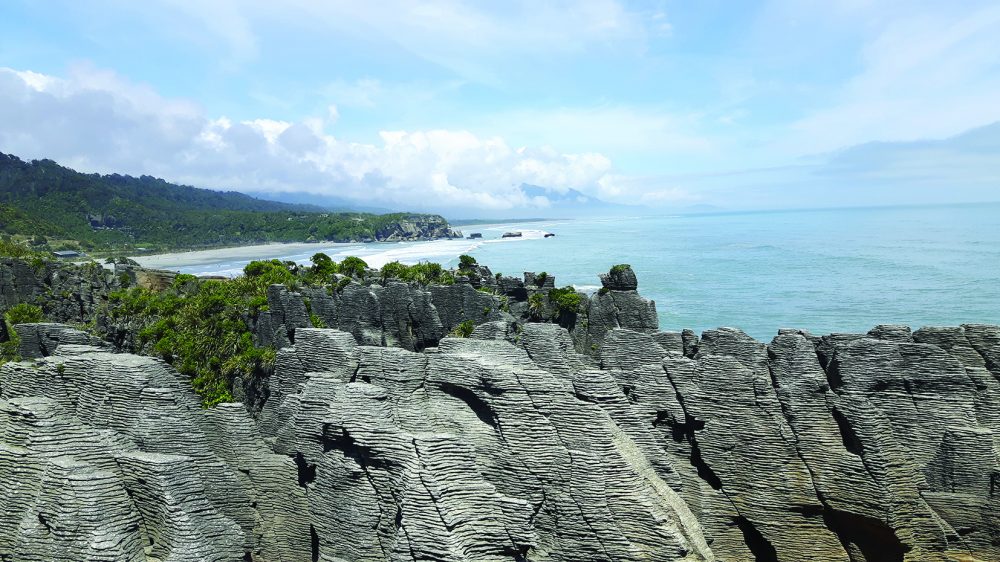
It wasn’t just great riding: there were trips and excursions to take in various tourist attractions, including a traditional Maori village complete with Haka, the very pretty Muruia falls (which appeared overnight in the 1920’s after an earthquake dropped the river bed by three meters), the strangely striated Punakaiki pancake rocks and old mining towns. New Zealand apparently had a bit of a gold rush in the late 1800s and we had stops in Arrowtown, which looked like something out of the wild west, and Reefton, famed for its Bearded Miners who looked like something out of ZZ Top. We even had a brewery tour, entertaining and informative (all Speight’s beer is lager, even the porter, aagh!), but, despite fierce competition, my highlight was Invercargill’s biking shrines.

First up was the Burt Munro ‘World’s Fastest Indian’ display, in a hardware shop for heaven’s sake! You enter to be confronted by a Hesketh, a couple of Ariel Square Fours, a Vincent, a Chevrolet engined bike and various other two wheeled curiosities. Pride of place is Burt’s original bike, a replica you can sit in (it’s tiny), another Ducati powered replica used in the film plus the ‘Offerings to the God of Speed’ display of broken pistons, con rods and barrels, also as seen in the film. Wonderful.

Burt Munroe’s display in Invercargill

Motorcycle Mecca

From there it was a short ride to Motorcycle Mecca for lunch. Set up by a private collector it’s home to a bike themed café and stunning displays of hundreds of bikes on two bright and airy levels. Everything from the last Vincent built (in 2007), Brittens (obviously), more Broughs than you can shake a stick at and less familiar bikes too – Peugeot, Mighty Atom, Nut, even a Ducati scooter. All displayed beautifully and close-up accessible, National Motorcycle Museum take note.

Maybe because we knew it would soon all be over the final ride from Mt Cook to drop off the bikes at Christchurch was a bit of a slog. By then we were 13 bikes and a well-bonded bantering group of 20 Americans, Aussies, Brits and a Croatian couple, and being treated to a farewell dinner by Paradise cheered us up no end: after several beers and bottles of wine to celebrate no prangs, no breakdowns and no learning moments with the Highway Patrol we all agreed it had been a stunningly good trip. And so, sadly, after a leisurely start the next day, for me it was final farewells and the short flight to Auckland. There I availed myself of the Air New Zealand lounge for several hours before picking up the midnight start of my long-haul home, arriving at Heathrow a day later to falling snow and traffic jams. More proof, were it needed, that New Zealand is indeed a wonderful place to ride, especially in January!

www.paradisemotorcycletours.co.nz – it does what it says on the website!

Nick Vale

First published in Slipstream April 2019

A Different Type of Riding (Part 2: The Honda Forza 300)

Feet-forward riding position? Low-speed comfort, lockable luggage and epic fuel range? Surely there can be but one solution – a mid-capacity scooter!

Scooters are much-maligned here in the UK, our past obsession with sports bikes often pointed to as the reason why we are apparently the sole nation on this continent not to whole-heartedly embrace this most practical form of two-wheeled transport. Visit a major European city and they’re absolutely everywhere, complete with massive windshields, huge top-boxes and leg-covering scooter skirts. Unfashionable? You may think so, but the Italians seem to disagree, and fashion is kind of their thing.

Cost could be a factor. The example frequently held up is the Yamaha T-Max, which starts at more than £11,000. Admittedly this isn’t exactly a pizza-delivery vehicle, with a spec list that includes 500cc twin-cylinder engine, radial brakes, upside-down forks, heated grips & seat and even cruise control. It’s less of an oversized Vespa, more of a two-wheeled luxury sedan, with performance to match.And other scooters are available. If you don’t need or want motorcycle-grade top speeds then there’s new growth in the 300cc scooter segment. Yamaha revamped its X-Max last year, Kymco and Kawasaki have been swapping badges and paint on their respective offerings and Honda’s latest 300cc Forza has just landed here in the UK. It’s a perfect opportunity to test out the concept and see if a 20-30bhp automatic could meet my needs as a low-speed tourer.

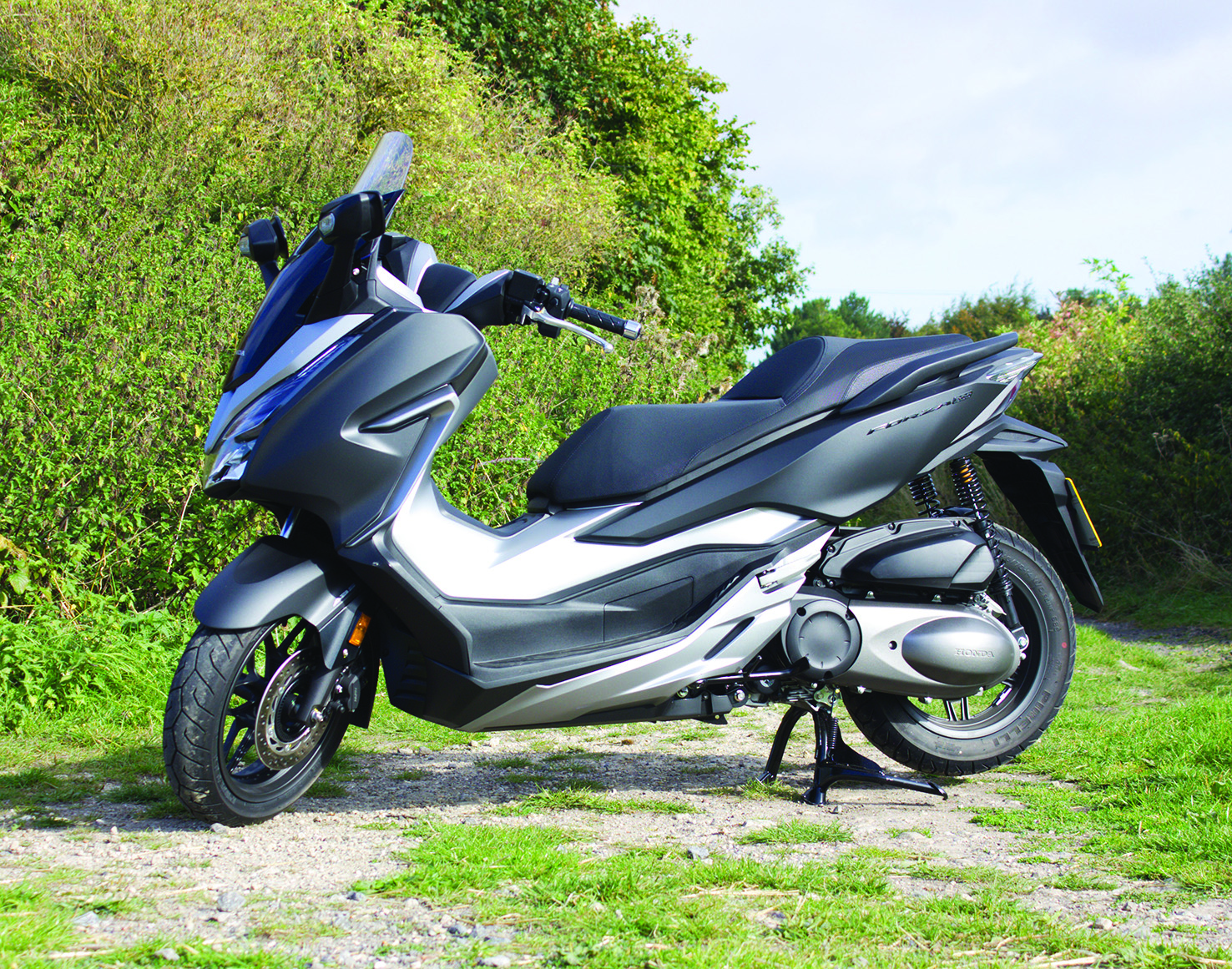
First impressions are good, but probably depend on your own aesthetic preferences. I happen to like the angular spaceship-with-wheels styling, but I’m sure it isn’t for everyone. The wheels are well-proportioned, although at fifteen inches are still considerably smaller than what most of us will be used to. Where the Forza begins to really impress is when you take a closer look and start to dig in to the spec sheet & features lists.

To start with you get full LED lighting from stem to stern – no incandescent bulbs to fail unexpectedly while on tour, which means no need to carry spares. They’re also a damn sight brighter, and do a great job of attracting the attention of perennially distracted car drivers. Next up, a centre stand comes included, something that – with fitting – often adds close to £400 to your average adventure-tourer’s price tag.  Unfortunately, it turns out the real reason for this is that the Honda refuses to start or run while the side-stand is extended, a safety feature necessitated by the automatic twist-and-go gearbox on the Forza.

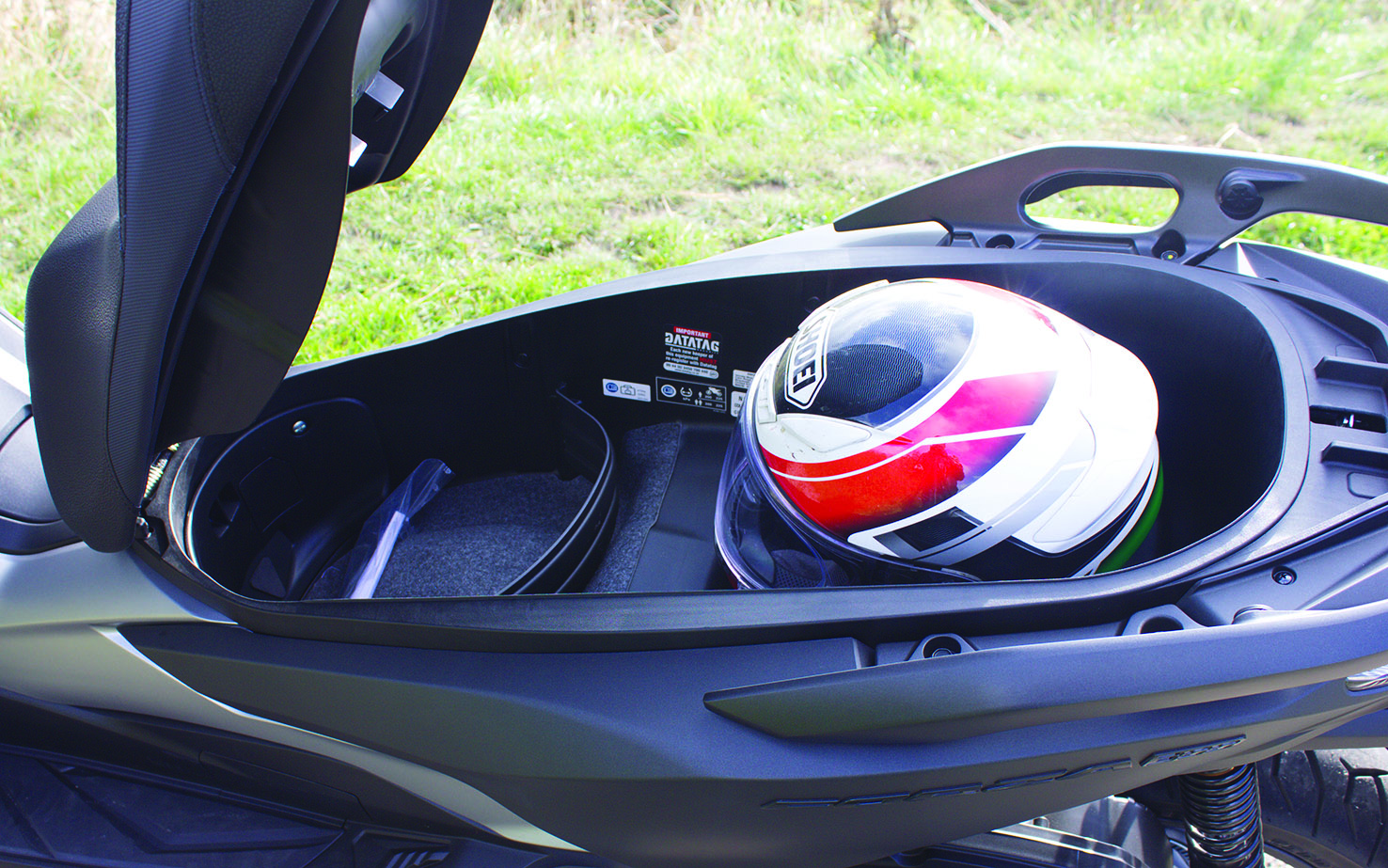
At the back we have a secure cavernous under-seat storage area, easily matching the capacity of an average top-box, while simultaneously keeping any luggage weight low to the ground. A top-box is available if yet more storage is required, with the added benefit of being linked to the same keyless access system the ignition uses.

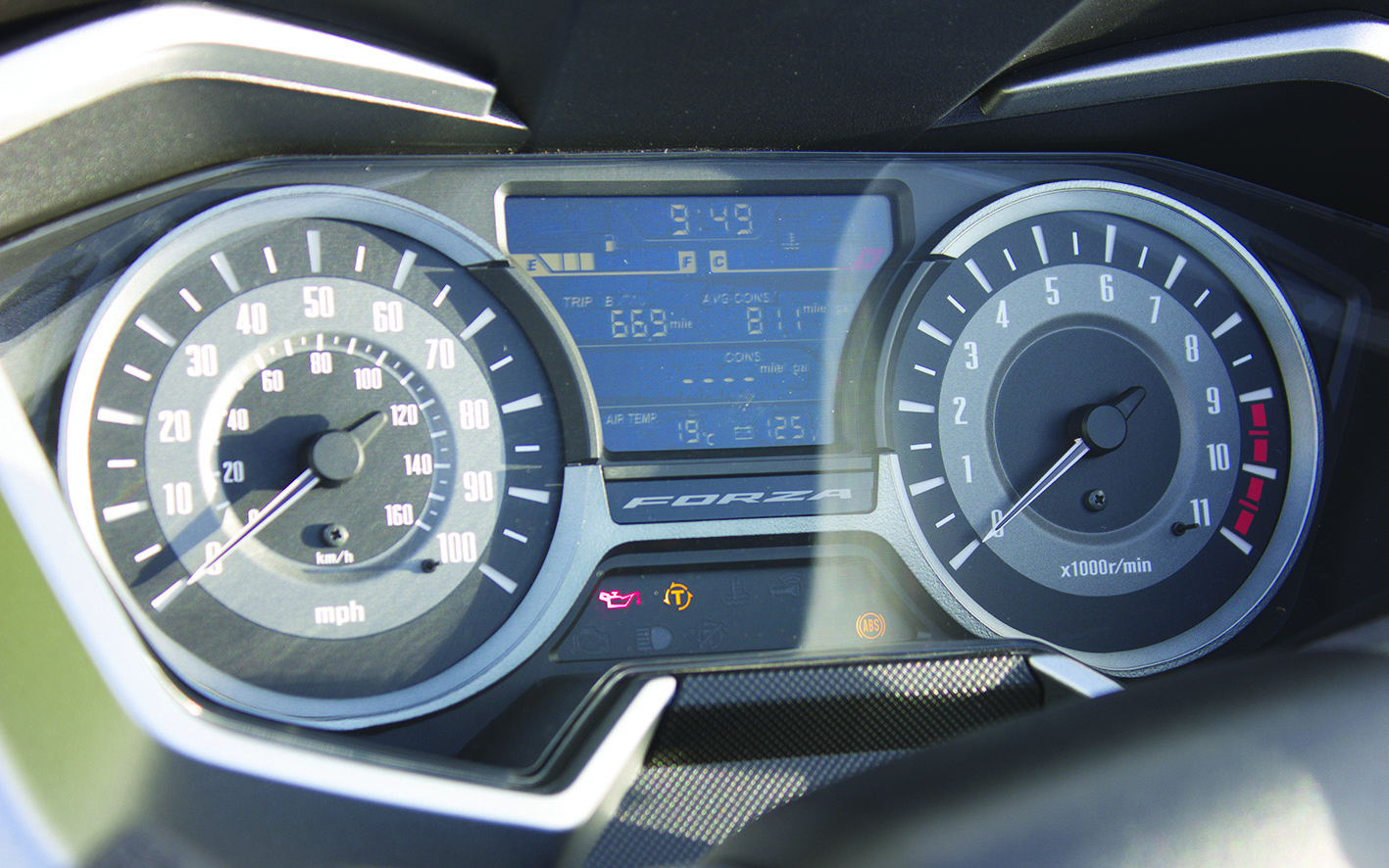
That’s right – up front, there’s nowhere to insert a key, a proximity fob similar to many high-spec cars is provided instead. As long as this key is somewhere about your person, you can push the ignition knob to activate the system and then twist it to the relevant position. Setting the ignition to On wakes up the comprehensive dashboard tucked away inside the fairing. Road & engine speed are represented by large dials with easy-to-read numbers either side of an inverted LCD display. Here a bored rider could monitor air temperature, charging system voltage and instantaneous fuel consumption, alongside the usual twin trip meters and multi-segment fuel-gauge and coolant temperature.

Settings can be scrolled through using the left-hand switch-gear, which also includes the controls for disabling the traction control system (not really necessary with just 25bhp) and raising and lowering the electronically-adjustable screen. This last piece of equipment sounds great on paper, reacting quickly to the controls and allowing you to keep your view clear around town and dial in more wind protection on the motorway.

Unfortunately, in practice the windshield is at best ineffective and at worst downright awful. I’m 5 foot 10, and my choices were limited to where on my helmet I wanted the turbulent air directed. In the low setting I got a whistling noise and an amplified amount of air forced through the tiniest gaps in my visor’s seal. In the highest setting my head was batted around like a tethered ping-pong ball at anything above 50mph. A new shape and possibly a much taller screen are desperately needed. Either that, or a hacksaw to remove it entirely and let my Shoei’s aerodynamics do their job in a clear air stream.More useful is the small fairing cubbyhole on the left-hand side of the front fairing. Neatly integrated and otherwise invisible so as to avoid tempting casual thieves, it’s surprisingly spacious, large enough to hold a water bottle. It also contains a 12V power socket, although this will be limited to charging smartphones. Heated gear will draw more power than the meagre 24 Watts on offer, and would require leaving the cubby open to allow the cables to exit.

It’s very telling that we’re almost 1,000 words into this review and I have yet to mention the brakes, suspension or engine at all. Unfortunately, this where it all falls apart for me. None of those components do a bad job, per se. There’s just nothing remarkable or memorable about the experience they offer. The suspension, basic as it is with old-fashioned twin-shocks hanging off the end of the swing-arm, works fine, absorbing the undulations of our pock-marked road surface without too much difficulty. Pot-holes are to be avoided, especially with those smaller wheels, but given the superior quality of tarmac available on the continent shouldn’t present a problem while on tour.

The brakes are odd. Both operated by levers on the bars, the front brake is relatively tame and squishy, the rear biting so hard that it the ABS system can be triggered at will. I quickly reverted to my usual scooter tactic of squeezing both levers hard and genuinely wonder why a single linked lever couldn’t be offered instead. The rear is too sharp to be used for slow-speed manoeuvres, and the smooth engagement of the constantly-variable transmission and automatic clutch mean that U-turns can be executed using throttle alone.

The whole drivetrain, in fact, is utterly unremarkable. If it weren’t for the very faint vibration and low buzz at the edge of earplug-dampened-hearing you could believe that this was Honda’s first electric motorcycle. Torque off the line is smooth and plentiful, tapering off quickly as speeds rise towards the national limit. An indicated 90 is possible, or so I’ve heard from a friend, and if it weren’t for the atrocious windshield the Forza would be perfectly capable of crossing the empty expanses of northern France during the opening salvos of a longer tour.

At lower speeds the throttle response is perfectly judged and the added headroom over lower-capacity scooters means that overtakes are perfectly achievable, albeit with a little more forward planning than is necessary on the 150+bhp monsters many of us are used to. On the other hand, at an impressive 80mpg during mixed riding, as well as cheaper consumables and servicing, it will cost an awful lot less to run than such powerful machines.

While trundling along at 30-40mph is utterly effortless, it’s also utterly forgettable. Riding a bicycle would deliver a more memorable experience than this, and means that what I remember most about those stretches of road is the podcast I was listening to at the time. And that, I’m afraid, means that the Forza 300 fails a critical litmus test in my search for a family touring bike. In its attempts to create a two-wheeler to tempt bored commuters out of their anodyne four-wheeled boxes, Honda has succeeded too well. Even the colour options – mostly various shades of grey – match the soulless identikit cars clogging up our nation’s cities each morning.

All the practical stuff is accomplished with the usual efficiency, and as a way to get to work cheaply and easily I cannot fault it. But I don’t need a commuter. I need a fun-to-use low-speed tourer that will galvanise rather than homogenise every mile ridden, that will add flavour to my travels and become a memorable part of those future adventures. And I’m afraid the Honda Forza 300 fails hard here. My search continues…

Nick Tasker

First published in Slipstream April 2019
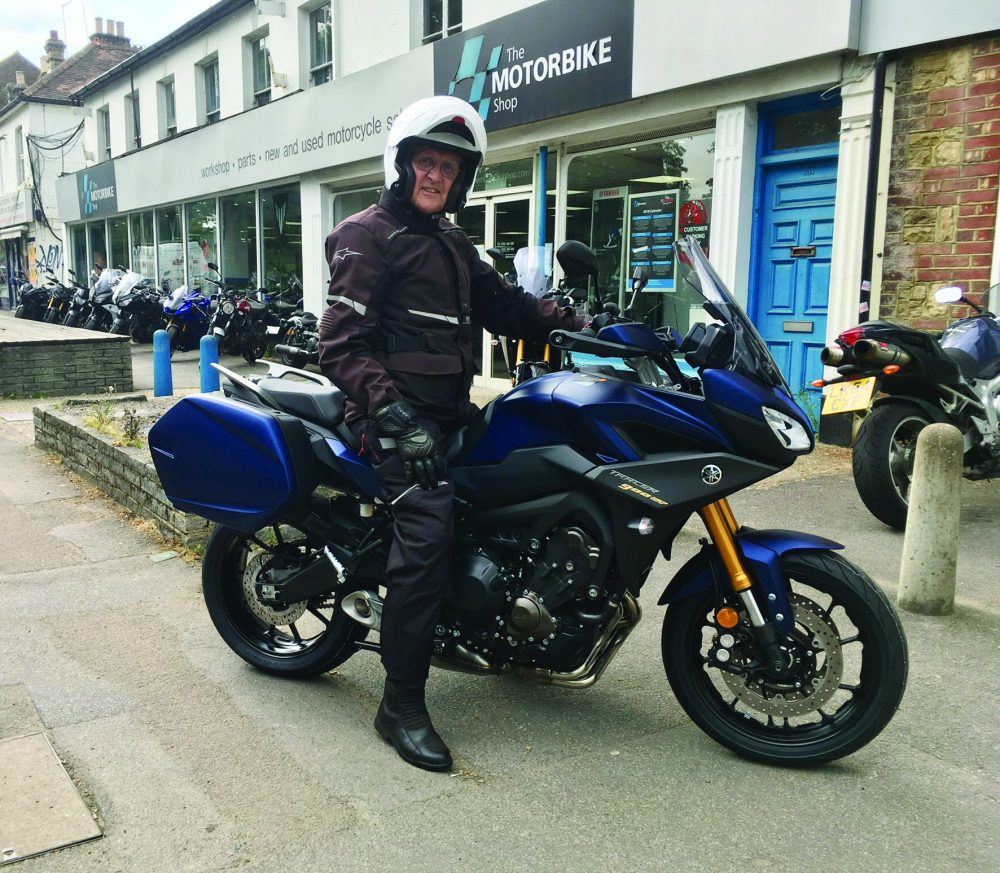
Yamaha Tracer 900GT

Do expectations always deliver? And just what is the true potential of the new Yamaha Tracer 900GT? Keith Yallop reports on his bike purchase of May 2018. After over 9,000 miles he asks, “Is this the ultimate jack-of-all-trades?”

I have been biking for many decades having ridden about 1/2 million miles – or to the moon and back – on over 50 different machines of various sizes and capabilities.. My last few bikes have all been high-performance sport tourers with the emphasis on ‘sports’. I do quite a lot of touring in this country and across Europe with my riding buddy, Paul Ruden. We quite often do over 500 miles a day. In 2017 we did a European trip with me on my Kawasaki Z1000SX, which is a great bike, but the riding position was starting to take its toll on my ageing joints. At the end of a day’s ride I was glad to get off it. I came to the conclusion that my biking requirements needed some major reassessment.

So over Christmas 2017 I drew up a list of what I wanted from my motorcycling, taking into account that I was entering into my twilight years and my ageing joints were not as flexible as they used to be. High on my list was comfort, ease of handling, light-weight, narrow (to aid filtering), panniers which were not too large and could be easily removed. Low on the list was dropped bars, big cc, massive horsepower and MotoGP acceleration. Don’t get me wrong, I appreciate a bike with low down punch but over 100mph top speed was definitely moving off my radar and comfort was becoming a priority.

So what fitted these requirements? I started to look at a range of bikes all in the upright adventure touring position. During December 2017/January 2018 I visited BMW, Triumph, Honda, Ducati, Suzuki, Kawasaki and Yamaha. All the dealers offered great sports tourers, all with good points and some not so good. However at The Motorbike Shop in Farnborough I was invited to take out a Yamaha MT-09 Tracer. This bike was not on my list but I thought why not give it a try? After an extended 50 mile ride I felt that this machine and I could have a long and happy relationship. It all seemed to gel for me, this was probably helped by the fact that I have owned a number of Yamahas.

The throttle response was very lively, especially when in sports (A) mode, where with its short wheelbase it would easily lift its front wheel if you left traffic lights too energetically. On my return to the shop I was informed that a brand new model called the Tracer 900GT would be launched in early summer 2018. It would have an extended swing arm to reduce front wheel lift and make the bike more stable with panniers fitted. It would have a host of extras as standard, including panniers, touring screen, narrower bars, better seat, quick-shifter, updated suspension, cruise control and the list went on. It would be sub £11k. They offered me an excellent part-exchange price for my Z1000SX so I made an instant decision to place an order, one I hoped I would not regret.

I spent a nervous 5 months wondering if I had made the right decision and found myself asking if it was going to be anywhere near as much fun as the demo MT-09 on which I had ridden. Or had the practical additions to the GT changed this new model for the worse?

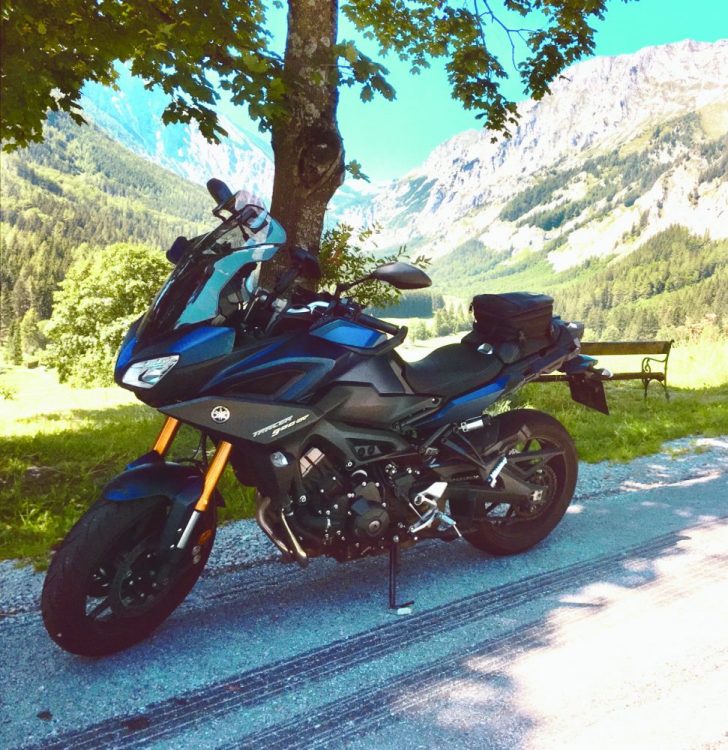
On the 21st of May I was the first rider in the UK to take delivery of the Tracer 900GT, or so I was told. The first thing that struck me was just how impressive the bike feels. It has the same grand presence as an adventure bike, but obviously with the road-focused bias. Sitting on the machine allows for a good view over the traffic ahead and the large screen appears to provide good protection (more on that later).

The bike feels tall with an 850mm seat height, but despite this I’m still able to flat-foot pretty easily when sat on it (I’m 5’ 11”). For those who might be a little more vertically challenged this could be more of a problem, however there is a lowering kit available.

It’s all well and good babbling on about the GT’s finer details but unless it rides well on the roads and operates well in real situations then it doesn’t mean diddly squat. So how does it ride?

Well the suspension was not one of the best points of the MT-09 based models of old. I was therefore pleased to discover that the revised suspension immediately puts to rest any previous questions over the earlier model. The suspension has been uprated using Kayaba units featuring dual springs and adjustability of both high and low speed compression damping, as well as preload and rebound damping. The rear shock preload is easily changed thanks to a side-mounted adjuster, perfect for those who are looking to travel with a pillion and/or lots of luggage. Yamaha have obviously been listening carefully to their customers, which is certainly refreshing in the motorcycle industry. Through corners it is probably one of the most ‘flickable’ bikes I have had the pleasure to ride.

Yamaha have also gone to town on reprogramming the MT-09 ECU mapping. Renowned for being a little snatchy on the power, the old map has been updated to give a much smoother delivery and also make the bike much more manageable when sat at a higher revs.

After riding over 9,000 miles on the bike in this country and across Europe, I must say it is a very pleasurable bike to be sat on for long distance cruising. It is very responsive and agile even though it weighs in at 227kg fully kitted out with panniers and fuel. Combining the excellent chassis with the brilliant 847cc triple power unit makes for an engaging ride that doesn’t leave me feeling disappointed or achy.

It would be pretty easy to think of these rather significant updates being the end of the story, but it is in fact just the beginning. Yamaha have seemingly thrown most of their accessories catalogue at the GT to make it into a machine that you could pick up tomorrow and set straight off on a European tour.

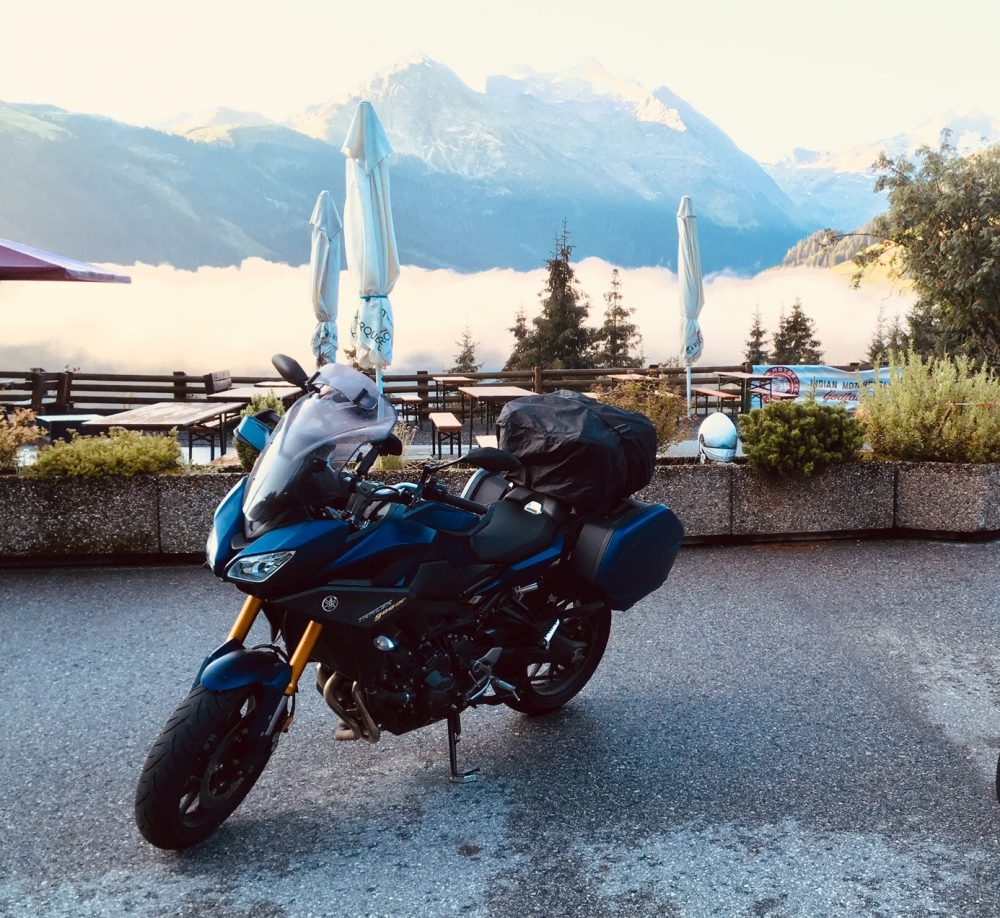
The most notable of the accessories is of course the hard luggage, which offers a mediocre 44-litres of storage. As the silencer is tucked away under the engine this allows both panniers to be of equal size. However the panniers will not take a full-face helmet. I have modified a soft bag of similar capacity to clip onto the rear seat thereby giving me close on 90-litres total luggage for touring. I replace this large bag with a smaller bag of 15 litres for weekends away. A plus point is that the paniers are very easy to remove using the ignition key and there is no scaffolding left behind.

Alongside the panniers the GT also comes with a centre stand, hand guards and heated grips where all 3 settings can be programmed individually to allow 10 different heat choices for each setting (30 in total), this makes winter riding a far less disconcerting prospect.

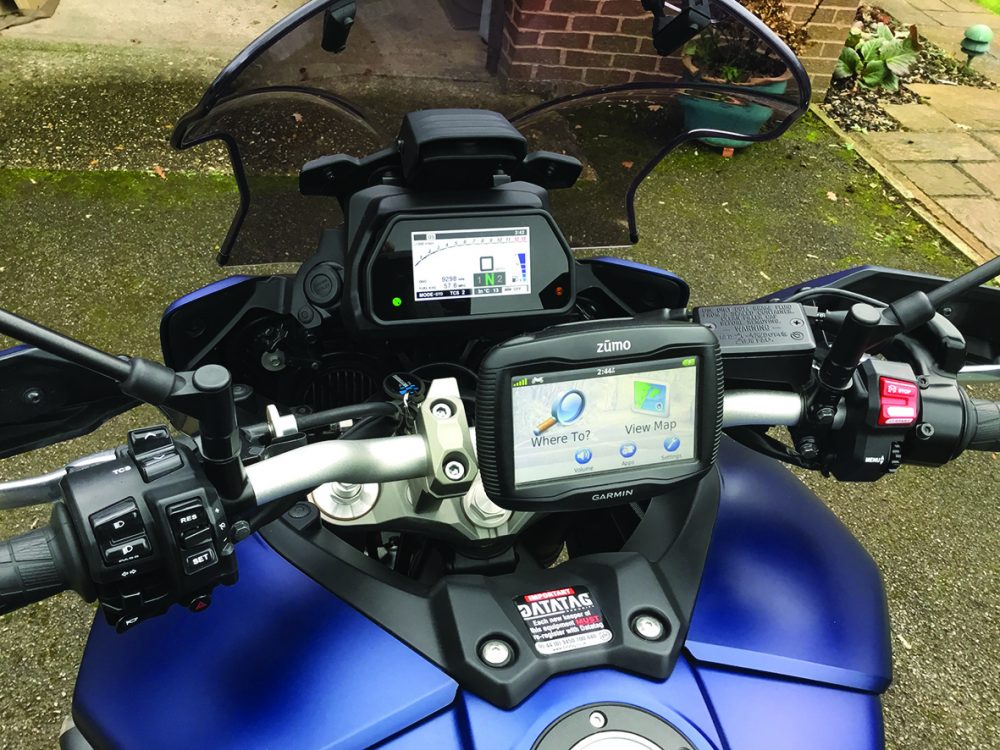
The rest of the electronics package is also very impressive with three selectable engine modes and traction control settings. There’s also cruise control, which definitely makes long range touring much more pleasurable. The coloured TFT instrument panel is from the R1 dash and although it is a bit on the small size it can be programmed with just about any information you would like the bike to give you, including gear indicator.

Impressively, the Tracer 900GT also comes with a slipper clutch down and quick-shifter up. The quick-shifter certainly makes for a smooth and simple affair when kicking up through the gearbox, it’s very easy to get used to clutchless upshifting. However I have to say that I still often prefer to use the old way and change gear with the clutch. But the choice is yours.

With panniers removed the bike is fairly light at 205kg and with the ECU programmed to give low down torque it is no slouch. For those of you who are interested in the tech figures, the bike has a triple cylinder 847cc engine producing 115bhp at the crank, has a top speed of 140mph, does 0-60 in 2.7 seconds and quarter mile in 10.6 seconds. But what about stopping? Well the rear brake is ok but not super efficient, the front brakes come from the R1 and are very positive having ample stopping power with very little effort even when the bike’s fully loaded.

However it is not all honey and roses – I do have a few gripes. The first is with the original tyres. The Tracer 900GT came with Dunlop Sportsmax D222 as standard and I was not at all impressed with them. I think Yamaha must have got a bulk cheap deal from Dunlop! Driving hard out of bends the back end seemed to be a little skittish and lively which took me back to my old days of scrambling. It also seemed to grab at every crack or seam in the tarmac. Not quite what I wanted on my new touring bike. So at sub 2,000 miles I visited Mel and he advised fitting a pair of Bridgestone Battlax T31’s. The difference in handling was amazing, the skittish feel had gone and the line grabbing was vastly reduced. What a difference a good tyre can make!

Secondly, I don’t personally like the fuel gauge. It only starts reducing after you’ve dropped to lower than half of the tank’s 18 litre capacity, then it shoots down and hangs around for a long time at 1/8 of a tank. It’s not a big deal and to most of you it won’t make any big difference at all, it’s just what I prefer. So I have set the TFT screen to show how much fuel I am consuming. When it gets near 4 gallons (18 litres) I know I need to look for a petrol station pretty quickly. The fuel consumption indicator is showing 55mpg and on tours I have managed to push a full tank to over 200 miles, the warning light comes on at around 185 miles. That makes it one of the most economical bikes I have owned, other than a BSA Bantam and a Triumph Tiger Cub!

My other major gripe is the screen. I seem to be in good company with this moan as nearly all magazine and online testers say the same. At higher speeds the wind coming around the screen is noisy and seems to buffer me around, especially on motorways travelling behind vehicles. Before my tour to Europe I purchased an MRA touring screen with an aerofoil on top and that has made a lot of difference. The screen is manually pinch and adjust with one hand which was useful in Alps when we came out of a tunnel straight into a tremendous rainstorm. Yamaha do offer their own larger touring screen but it costs a lot more and I am not sure how good it is.

Another minor moan is that you cannot fully put your toes on the foot pegs without hitting your heels on the pillion foot-peg mounts. However I have learnt to come off my toes and use the balls of my feet, seems to work just fine and is probably a little more comfortable.

My final moan is the position of the ignition key. If the handlebars are straight ahead then it is difficult to get your hand in, if they are turned to the right it’s impossible to reach. So steering needs to be turned left to get to the key. Why could they not mount the key in a more accessible position?

I have to be honest though, what I’m most impressed with is the price. While on paper the £10,649 price tag may seem like quite a lot, what you get for the money is nothing short of incredible value. I could not find another comparable motorcycle in this price bracket that even comes close to the specification of the GT as standard and it really makes this motorcycle very hard to fault.

So what extras have I deemed necessary apart from the MRA screen (£108)? Well I have fitted a radiator guard (£40) along with a front mudguard extender (£22). I have also fitted twin horns (£15), a Yamaha larger side-stand foot (£48), a pair of R&G bar ends (£23) and Givi engine crash bars (£126) – just in case I feel the need to gently lay the bike down.

So did the Tracer 900GT tick all my boxes from my Christmas 2017 ‘nice to have’ list? I think it has and probably more. I believe the hard fact about the Tracer 900GT is that you’ll grin like a Cheshire cat whenever you ride it, despite the weather, season or journey. Cold or hot, rain or shine, commuting or charging; the GT will be everything you could ever need and be lots of fun whilst doing it. It’s definitely a bike that has been designed to be a little easier to live with and, importantly, you don’t need to remortgage the house to buy it. The Tracer 900GT is definitely going to appeal to those who want just one bike that will comfortably do a bit of everything and do it well. And finally, to quote MCN, ‘a seriously good bike at a seriously great price’.

Keith Yallop

First published in Slipstream March 2019
A Different Type of Riding (Part 1)

It may come as no surprise to many of you that not everyone wants to ride everywhere as fast as possible. It certainly puzzled me for quite some time.

My entire riding career has been spent in the pursuit of optimising, improving and developing both my skills and the tools I use in an effort to become an ever safer, smoother and faster motorcyclist. I approach everything I do in this manner, always seeking to improve on previous efforts, iterating on designs and techniques in a rewarding, yet ultimately futile attempt to achieve perfection. It’s probably something to do with growing up in Germany.

When my rudimentary skills proved too limited, I joined TVAM. When my bikes held me back, I upgraded and modified them to increase their performance envelopes. I daresay my V-Strom 650 is the most over-developed example in the world, and I’d like to think I could keep up with most of you just fine through any alpine pass of your choice. But I’ve also come to the realisation that for many motorcyclists this might just be missing the point.

Where I find satisfaction and enjoyment from a series of perfectly-executed mountain hairpins, my parents are quite content to trundle along in the middle of their lane, gazing around at the surrounding scenery, often at a considerable amount below the posted limit. When returning from our last trip they enthused at length about the villages, towns and countryside monuments they had seen on our travels. I mostly recalled a series of apexes amongst a green blur in my peripheral vision. Everyone had a great time, in their own fashion.

For a number of years we toured together, with myself and often my brother waiting at junctions and the top of passes for parents, aunts and uncles to catch up. But as time has gone by the performance delta has increased; myself and my bikes have become faster, while they have preferred to dawdle at a decreasing pace. Last year the frustration this caused became too much and we resolved to no longer ride together, parting ways each morning and meeting again at the evening’s hotel to eat, drink and swap stories.

While this initially appeared to be an ideal arrangement, the truth is that in practice it strongly resembles two parallel vacations. We aren’t really on holiday together and there would be precious little difference should the two trips happen in series, rather than parallel. From my perspective nothing would change if they swapped out their bikes for a minivan; either way, we weren’t really touring together anymore.

And so a new solution is needed. Encouraging my family to join their respective IAM-affiliated clubs and learn to keep up has been unsuccessful, because they’re not actually interested in getting any quicker. They have the skills, forged over decades of riding, but aren’t interested in using them to cross countries at speed. And if they won’t go faster, and if I want to get back to riding as a family, then I’m going to have to slow down.

That sounds easy; just use less throttle, right? Except that it’s not. Everyone has their own stride, their own pace – walking down the street with someone who’s gait is considerably shorter than your own offers a similarly frustrating experience. You speed up and slow down, see-sawing back and forth as you attempt to force your own pace to match theirs and, while this is of course possible with considerable restraint, on many motorcycles it can make for uncomfortable and even painful riding.

Both of my own bikes are built to go fast. They’re fun to ride quickly, satisfying tools designed for the purpose of covering distance at speed, regardless of how twisty the route. But sat upright at half their usual speed they are uncomfortable to ride, with engines, brakes and suspension that are ill-suited for this unfamiliar task. With their smaller engines, they demand higher revs for smooth operation, which does not make for a peaceful ride at lower speeds. This results in bikes that are fun when ridden hard, but supremely dull and unmemorable when reigned in for a gentle cruise.

Which is a very long-winded way of saying that I need a new bike! Not a replacement for either of my existing steeds – each serves a very particular purpose and fills a considerable niche of my motorcycling world. There’s still a large gap where a proper dirt-bike should be (watch this space…!) but for now it’s time to fill the newly-created slot designated “Family Touring Bike”.

This means I will be shopping for a motorcycle using radically different requirements than I have ever considered in the past. Horsepower isn’t important. Cornering ability is secondary. As a touring mount items such as hard luggage, wind protection and a 200-mile tank range are minimums, but experience has also taught me to value compliant suspension, low maintenance engineering and seats and handlebar configurations that are all-day comfortable.

New to the list is a feet-forward riding position. Despite my best efforts with foot-peg relocation, my knees still ache after long days on the V-Strom, never mind my Street Triple. That discounts your usual suspects – most tourers have your knees at a 90-degree angle at most and I am really aiming for much more than that. Highway pegs are one suggestion, but as the name suggests they don’t work terribly well on winding roads where the rear brake and gearshift might be required at any moment.

But more than anything, whatever I choose absolutely, positively must be enjoyable – rather than frustrating – to ride at low speeds. It’s time to go shopping…

Nick Tasker

First published in Slipstream March 2019
Through Northern Europe & The Balkans to Athens

The usual winter time discussion over a beer: where can we go this year that would be memorable and that we haven’t been before? How about Athens?

International trips are easy to plan with Booking.com, magazine articles, Google maps distances, talking with mates and “bestbikingroads.com”. We aim to stay in reasonably-priced and characterful hotels, arrive at night stays between 5pm and 6pm, shower, beer, dinner. We ride 150-250 miles per day allowing for coffee stops, photograph stops and not racing the clock, unless it’s a schlep through Germany of 450 miles… which doesn’t take long on their motorways.

What could possibly go wrong?  Well, pretty well nothing much through the easy northern countries, across the fabulous Dolomites and into lovely Slovenia. It’s a lot like Austria, with mountains, a beautiful lake and world heritage site at Bled, and an attractive lively capital in Ljubljana. We find Germany, Austria and Switzerland fantastic biking but a bit sterile (or are we just jealous of the obvious wealth) and ……have BMW really made so many GSs?

The Mostar Bridge, Bosnia and Herzegovina.

Riding through Croatia is terrific; beautiful and on good-condition coastal and inland roads.  It’s in the EU but not in the Schengen customs area, so border crossings can be slow at peak summer times, but not on this trip or others I’ve done. We went in mid-September and crossed at a quiet crossing, so there was no problem. Even though credit cards and Euros are “widely accepted” this is not universal so having some of the local currency (Kuna) is worthwhile. You can get Kuna in the UK.

Looking at the Foreign Office website, Kosovo seemed a bad idea. They advise against all but essential travel in the north and there are all sorts of problems trying to get from Kosovo into Serbia. Serbia looks easy and our bike insurance covered it, but the roads look OK rather than great and it sent us further east into Greece than we wanted.

So, Bosnia, Montenegro and Albania it was. No problems with hotel booking anywhere, so that’s easy. You need to get bike insurance at each of these borders, unless you can find a more helpful UK insurance company than we could. The currencies for Bosnia and Albania are also obtained at the borders. Credit cards are usually OK in hotels. Montenegro uses the Euro but is not in the EU and of course Greece is in the Euro Zone. Health insurance is a must of course.

In practice all of this worked smoothly with no crossing taking more than 45 minutes. The only delay was at the Montenegro/Albania border where the non-English speaking insurance man was so excited to have people who had ridden all the way from the UK in his office, that he made us speak to his son in London on Facetime. Typical of the lovely people we met everywhere.

Albania seemed a bit scary on the Foreign Office website: “Over 80,000 Brits visit Albania each year, mostly trouble free……you are advised not to get into arguments about traffic incidents since arms ownership is high”. That’s in addition to the warnings about landmines and unexploded munitions….and aggressive driving.

The roads in Bosnia are brilliant, curving through mountain ranges with little traffic. Mostar with its famous, religious and culturally significant rebuilt bridge, is now a major tourist destination.  It still has buildings with shell holes in the side and a conspicuous mix of churches and mosques with, what looks like, a competition to build the highest minaret/spire. The hotel put me in a noisy room near a rooftop club thinking that we were there for a cliff jumping competition and would be at the closing party. An easy mistake to make for two recently retired British guests! Maybe next year. We saw no Brits and heard no English spoken, a real adventure.

Montenegro is beautiful with the most amazing bay, the Bay of Kotor, which is more dramatic and unspoilt than anything in Spain, France, Italy or Croatia. It is becoming a playground of the rich, with some prices to match. There were loads of police with radar guns, which apparently is a feature of the Montenegrin coast; or so we were told by a keen motorcyclist on the reception at our slightly inland hotel. He advised us to head for the north of the country with quiet and police-free roads. Unfortunately, our itinerary did not allow for this but we still found some fabulous and empty roads.

Aetolia. Northern Greece.

South Albanian Coast

These former Yugoslavian countries are on the up, especially those on the sea or able to chase the tourist dollar (or Euro). There are some Soviet-era buildings which have often been nicely upgraded…formerly hotels for the workers. On the other hand, there are massive new graveyards, both Christian and Muslim, a reminder of the recent horrendous civil wars. The Mostar bridge was destroyed in 1993 after standing for over 400 years. This is one reason why these countries are keen members, or aspiring members, of the EU: to protect sovereignty and borders.


Peacekeepers in Albania for Kosovo

We should have looked at “bestbikingroads.com” more closely for Albania. The ride down the northern half was horrible. It is a minor oil-producing country with unattractive industry.  There are queues on its one motorway, as well as people selling produce on the hard shoulder. Every type of European four-legged animal is wandering about. In one town we found that all the man-hole covers were missing. I don’t remember that hazard in the advanced riding preparation!

The one central resort looked very Soviet with miles of identical blocks of flats perpendicular to the sea. Horrible! In contrast, further south, Vlore and Sarande were smart and sophisticated with a legendary coast road between them which was probably the motorcycling highlight of the trip: a euphoric mix of sweeping bends and tight corners, across a mountain pass, hugging the steep-sided hills that dropped off to the Mediterranean with views across to Corfu.

Northern Greece, again beautiful, but typical of Greece just now, ill-maintained and dispirited, with empty shops and cracked paving slabs. This was true of Ioannina a pretty lakeside town. Having said that, most towns have a lively area, especially if they have a Uni.  We were drawn into a café by Pink Floyd and Led Zeppelin, joining the young crowd with two nostalgic Brits of a certain age. Next stop was Delphi, home of the Oracle (named after a shopping centre in Reading).

Southern Albanian Coast

Leaving Jablanica in Bosnia and Herzegovina

Bled, Slovenia

Our final bike destination was a transport depot on the outskirts of Athens thanks to the final fling of the suicide-inducing Garmins which sent us all over an industrial estate. Mapping is not so good in these countries and so sat-nav has a free range to send you all over the place. You need to have an idea in your head of where you are going.

Athens of course looked beautiful for the last night of the trip. A bus to Athens airport and EasyJet home and that was it.

Having done eleven countries in ten days we entrusted the return of the bikes to Kamikaze Motorcycles. I hope they didn’t pay consultants for the name because it gave mates a great chance to explain to us that our bikes would be dismantled and the bits sent to the Ukraine.  However, a week later they were in the depot in Essex. We would not have been able to get so far without them.

So any regrets? Absolutely none. Looking back even the horrible northern Albania added texture and contrast to the trip. Otherwise we experienced great roads and met great people. As always, one more day would have been nice to explore northern Montenegro and Albania for instance: same with any great trip.

So where this year…..places ending in ‘stan’ or Istanbul?

Roger McDonald

First published in Slipstream February 2019
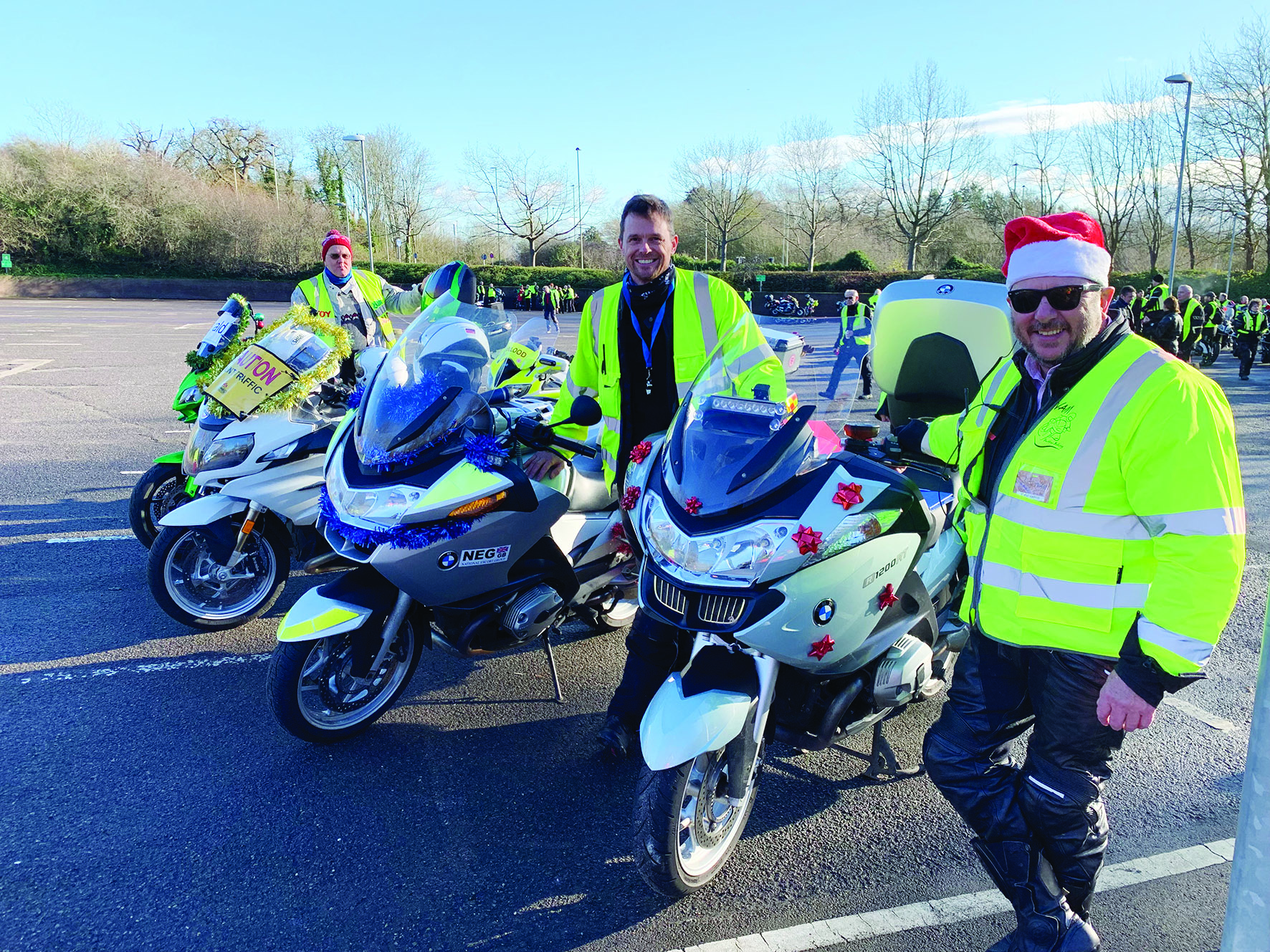
Motorcycle Live 2018 Part 2

Continuing Nick Tasker’s review of the Motorcycle Live event held last November at the NEC…

Ducati

We had all the big reveals last year so, for 2018, the Italian firm have tried to make as big a deal as possible about mid-cycle refreshes to their existing models. Their hilariously silly Diavel cruiser and monstrously oversized Multistrada Enduro got the new 1260cc DVT engine, resulting in smoother running and a more civilised low-speed response. The Multistrada 950 is joined by an ’S’ model, with electronic suspension and a few other goodies, raising both the price and a number of questions.

The attraction of the smaller-capacity Multistrada for me was that it was a simpler, cheaper bike for real-world riding where the bigger brother was more of a car-priced technical showcase. So how many people really want the toys from the bigger bike, yet shun the extra power, given that the weight and seat height figures are so similar? If you wanted something much lighter you could always treat yourself to the new Hypermotard, which now sports the smaller Multistrada’s engine and restyled bodywork, but loses any semblance of practicality. I bet it’s utterly hilarious to ride.

A lot of people have been expecting a new Streetfighter with the V4 powerplant, but instead we were given the Panigale V4R. Available with either 221bhp or 234bhp with the optional Akrapovic exhaust system and featuring winglets on the front fairing to keep the even-lighter bike on the road, I’m honestly not sure what to say. I haven’t ridden the previous V4, but I’m told that it’s terrifying and exhausting in equal measure. I’m not sure how increasing horsepower by 15% is going to help things in that regard.

Ducati Diaval 1260S

Triumph

Triumph are increasingly fond of announcing their new bikes at dedicated events throughout the year rather than saving them up for show season and those shopping at their local dealer next year have a breadth of updated models to choose from. The Street Twin is now quite a bit more powerful, making it an interesting choice for solo retro motoring rather than simply a castrated, beginners-only Bonneville. The Bobber has spawned so many new variants that I’ve lost track, although the more practical Speedmaster version does stand out. Even so, someone should tell Triumph that adding a pillion seat only helps matters if said seat is large enough for an actual human backside.

The T120’s have gained a couple of rather pretty special editions to celebrate the 60th anniversary of the original Bonneville for 2019, but they’re entirely styling exercises with no real changes. The only genuinely new model was the Scrambler 1200, a bike that the company claims has genuine off-road capability when compared to the more style-oriented alternatives on the market. The inclusion of a bluetooth-connected dash with GPS functionality leads me to suspect that we’re actually seeing the genesis of the retro adventure bike. Big and powerful enough to haul you and your luggage across the country and with just enough off-road capability to handle the gravel road to the campsite. It would solve the one problem that even those of us who like, and ride, adventure bikes generally agree on – they’re all pretty ugly motorcycles.

Triumph Scrambler 1200

Moto Guzzi

Speaking of retro adventure bikes, that’s possibly what Moto Guzzi is pinning its future on. The V9’s continue to be ignored in favour of the cheaper and more entertaining V7s, but at least the styling department has recognised this and is churning out new variants faster than even Harley-Davidson can manage. With their older 1200cc-engined bikes all killed off by Euro 4, Moto Guzzi would surely have folded were they not sustained by owners Piaggio. I bet an awful lot of jobs depend on the success of the new V85TT, and so they’re keeping their cards close to their chest with no solid details available.

It’s interesting that the bike was showcased with Metzeler Tourance tyres rather than some semi-knobbly treads, suggesting that the Italians are very aware that this is going to be a road bike rather than something aimed at serious off-roaders. All the other boxes are checked – metal panniers, raised mudguard, spoked wheels – so it remains to be seen whether a charismatic but overweight and underpowered air-cooled engine can compete in a world where even Triumph’s classic bikes sport secretly modern, powerful liquid-cooled engines.

Moto Guzzi V85TT

Honda

I feel that Honda have been on a roll lately. None of their models have shattered segments or set sales charts alight, but every single one of their models seems to be really rather good. Traditionally one of the more conservative manufacturers, and frequently late to the party on any new trend or fad, they’ve been showing and then releasing some interesting new interpretations of their old staples lately.

Their CBR650F has morphed into the upgraded CBR650R, with more power, less weight, upside-down forks, radial four-piston brakes, lower clip-ons, an all-new fairing with LED lighting styled on the new Fireblade, and a very cool LCD dashboard. Despite all this, you can still take one home for less than £8,000 and enjoy a genuinely usable road bike that doesn’t need revving to the stratosphere to pull away from the lights. For sporty riders, who mostly ride on the road and don’t need to win forum arguments with power figures, this could be a fantastic choice.

If you like the 650cc inline-four but prefer the style of the larger Neo-Café CB1000R, that combination will be available to order in 2019. Even A2 licence holders can get in on the fun with the CB300R. Going back up a capacity step, the three 500cc twins have had a styling revamp, and the X version even gains more ground clearance and a 19” front wheel to bring it more in line with other road-focused adventure bikes.

The only genuinely all-new bike for 2019 is the return of the legendary Super Cub. A glorious re-imagining of the original, it oozes quality and style and is a far more practical nostalgia trip than last year’s MSX-based Monkey. Complete with a semi-automatic gearbox, solo seat, luggage rack and even a fully-enclosed chain, this would be a brilliant way to get around town while making every other scooter look dull by comparison.

Honda CBR500R

Honda CB650R

KTM

KTM have teased us with their 790cc twin-cylinder concept for years, finally delivering their new middleweight Duke last year. Riotously fun to ride, journalists and early adopters were nonetheless concerned with what seemed like a rather cheap, flimsy feel to many of the components. I’m concerned that this new platform may end up sharing the reputation for build quality that the Indian-made 125 and 390’s suffer from, which would be a real black mark against the new 790 Adventure.

KTM 790 Adventure

Like its 1090 and 1290 stablemates, the smallest Adventure can be optioned in either base or R trim, depending on how much of your riding is likely to be away from tarmac. This, itself, raises the ongoing debate for our age, which is how much off-roading you can really do on a motorcycle that weighs more than 210kg wet. I daresay Lyndon Poskitt or the like could make any of the 800cc/210kg adventure-bike crowd positively fly, along even the very worst terrain, but he’d be far more likely to take something that weighed half that much for such an excursion.

KTM have a reputation for building genuinely capable faux-roaders, and the 21/18” wheel combos on offer along with the novelty engine-hugging fuel tank means the 790 adventure certainly has the right ingredients. The R model comes with an extra 2” of ground clearance and all the electronic gadgets that are expected these days and, of course, there are plenty of accessories available for those looking to spend even more.

Everyone Else…

Shall we start with Watsonian-Squire? You might have missed them at previous shows but they were always there, usually as part of the small Royal Enfield stand with a Bullet 500 clamped to one of their sidecars. Things must be looking up, as their marketing department found the budget for a much larger dedicated stand. Personal favourites were the bright-orange Vespa GT200 and the previous-generation Triumph Bonneville, both with beautifully matching sidecars. I’m not sure they work in the UK as anything but a novelty and, without proper fork conversions, they will be absolutely pigs to steer, but I want one all the same.

Watsonian Squire Vespa

Kymco were there as usual, their stand growing in strength and stature each year as their market share in mainland Europe continues to expand. This time they were showing off a beautiful 55th anniversary edition of their AK550 max-scooter. What? You didn’t know that Taiwanese Kymco have been making motorcycles since 1963? Or that they make a pretty cool swingarm-equipped sport-scooter that’s a bit like a cheaper, better-specced Yamaha T-Max? We don’t really buy scooters here in the UK, possibly because there seems to be a hard divide between those who commute into and around big cities and those that ride for pleasure. That doesn’t seem to be stopping Kymco from trying though.

Kymco AK550 55th Anniversary Edition

Indian trotted out a tweaked and varied range of Scouts (small, 1200cc water-cooled cruisers) and Chieftains (enormous air-cooled cruisers), but also announced their intention to be taken seriously by the rest of the motorcycling world by showing off their new FTR1200 naked. Although lightweight and powerful compared to anything else in their lineup, 120bhp and 235kg wet could be a tough sell in what is an incredibly competitive segment. At £12k for the base model it’s outgunned by pretty much everything until you start looking at bikes with a third less capacity. I’m glad they’re branching out, but I’m going to need someone to explain to me exactly why I should walk past every other bike in the segment and choose one of these instead.

Indian FTR1200

Vespa had a rather reduced showing this year, normally showing up with enough scooters to seriously worry a cafe full of Rockers. More disappointingly was that their new electric scooter was up on a plinth with Do Not Touch signs stuck to it. It’ll probably disappear without a trace here in the UK, but this thing could be a game-changer in the likes of Milan or Rome. When everyone rides scooters to work, people default to Vespa. That means that until Vespa make an electric scooter, you’re not even going to entertain the idea of buying one. The performance is about equivalent to a 50cc petrol scooter, maxing out at around 30mph, and range shouldn’t be an issue given the application. I’d certainly like to try one, but if my commute were that short, I’d probably just cycle…

CCM Spitfire

I was genuinely worried that CCM were going out of business after their stands shrunk dramatically over the last couple of years. Their clever 450cc single-cylinder adventure/enduro bikes were great on paper, and were much loved by everyone who bought one. But the old Rotax engine couldn’t pass Euro 4, and so CCM had to go back to the drawing board. They made a couple of lightweight tube-frame roadsters, mostly as an internal experiment and now they can’t keep up with demand for variants thereof. Every bike at the stand was either sold out or taking pre-orders, each one customised according to its buyer’s preferences, and all of them hilariously light weight and beautifully made. With no plans to make more than 200-300 per model but with new variants each year it seems that the only way to get on the list is to take a chance and put down a deposit!

Norton Ranger

Norton have been parading their V4-based race bike for what seems like forever, but that also means that a lot of people will have missed the other carbon-fibre-faired race bike they debuted at Motorcycle Live. Effectively their V4 engine with the rear bank of cylinders chopped off and bored out to meet the 650cc class limit for the super twins race series, the nearly £20,000 bike is unlikely to sell in huge numbers. It is road-legal though, as required for homologation purposes and weighs around 180kg wet in that form, but race kits are available to shave several kilos off that number. The bike will also be available in presumably cheaper naked form, with a variety of concepts shown off at the show. Think of them like really upmarket Yamaha XSR700’s.

There were at least a dozen other players present – mostly Chinese makes that had acquired existing historical nameplates in an effort to buy credibility, such as Benelli and AJS. While the former would probably resent association with the latter, any Chinese manufacturer has an uphill struggle convincing British buyers that their bikes are a worthwhile investment. Lexmoto continue to fly the flag for recognisably Chinese imports, but I have inside information that suggests the build quality and after-sales support is still nowhere near minimum acceptable levels. Building trust takes time and I’m not sure that the meagre sales available in our car-dominated part of the world will ever really be worth the effort for companies used to selling millions of units a year back home.

Didn’t make it to the show this year and fancy doing some speculative shopping without being bothered by dealership sales staff? The London Motorcycle Show runs this coming weekend from the 15th-17th of February at the Excel Centre in London. See you there!

Nick Tasker

First published in Slipstream February 2019
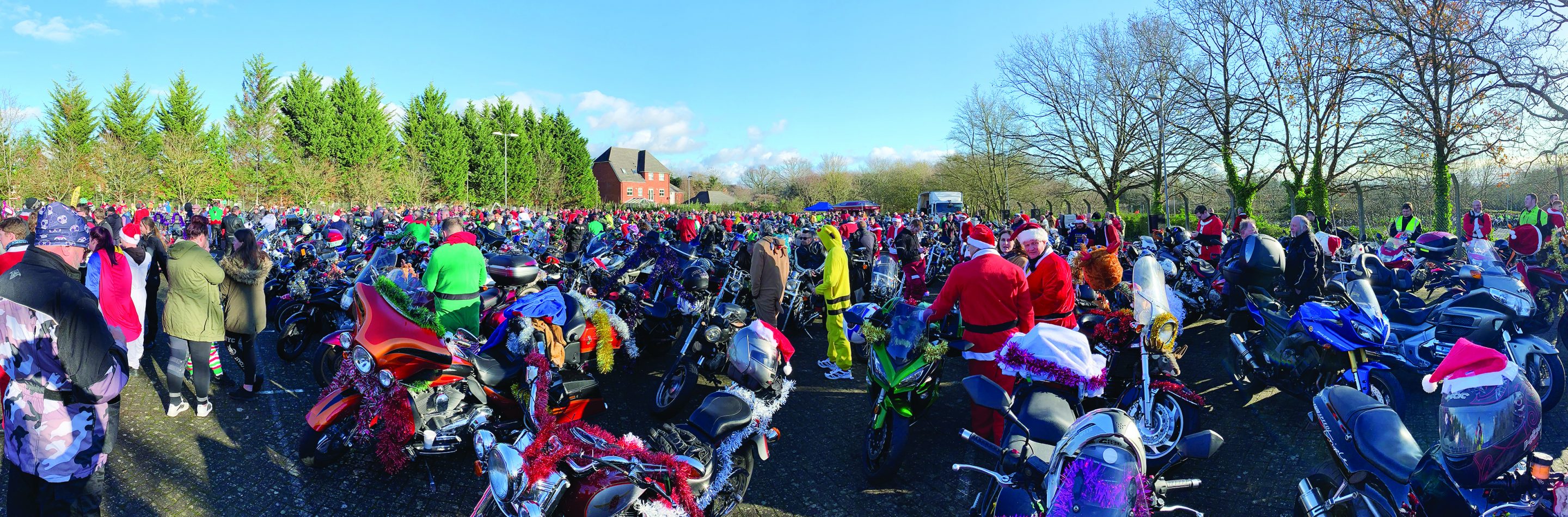
The Royal Enfield Himalayan

Remember when the Dacia Sandero launched in the UK? It made a big splash in the automotive press and even beyond; an actual, proper car for just £6,000. With the competition priced close to three times that amount it was no surprise that a lot of people picked one up almost on impulse. Once things calmed down a bit, the more serious, cynical journalists got their hands on them. Eventually a consensus was reached that, while you could buy a new car for just six grand, you could also buy a much nicer used car for around the same money.

My suspicion is that the Royal Enfield Himalayan might suffer a similar fate. Right now, we’re all going crazy for the things and, on paper, it’s easy to see why. A brand-new air/oil-cooled 411cc single with a low seat height, genuine off-road capability, and impressive luggage capacity for just £4,200 on the road? Surely there must have been a mistake? The internet is already awash with videos of people loading them to the gills, throwing on a set of serious knobbly tyres and tearing off into the wilderness; the big-dollar BMW/KTM/Triumph adventuring experience for a quarter of the price.

While at our local Royal Enfield dealer, I saw a chap pull up on a Himalayan wearing what looked like a full set of very clean BMW adventure textiles. It occurred to me that someone who had already signed on the dotted line for a motorcycle that was just a few accessories short of costing £20,000 would probably not be too keen on risking their expensive new machine down a rutted country lane. One mistake, one surprise rock or rut and the repair bills could easily be in excess of what a whole Himalayan costs to buy outright. And so, in a way, this new Indian-made motorcycle might simply be the world’s most expensive set of crash bars.

Those of you who have recently sat down with a salesman in a European motorcycle dealership will have noted how little adding thousands of pounds of electronic suspension, heated seats and aluminium panniers seems to add to the proposed monthly payment. I can’t help but wonder how long it will be before some enterprising BMW dealership starts offering to roll a whole second motorcycle into that 3-year plan.

But does the Himalayan deserve better than this? Can it stand alone as a perfectly good motorcycle, a worthy competitor to our overwrought, over-complicated and over-priced Japanese and European machinery? Have the Indian-owned Royal Enfield finally got the hang of quality control and delivered a reliable, dependable, rugged motorcycle that we can be proud to put in our garages?

Judging that last point is normally very difficult on a carefully-controlled test-ride. Manufacturers, and by extension, their dealers, are understandably very careful to ensure that a potential customer has a flawless introductory experience that will encourage them to hand over their credit card at the end. Fortunately, the Himalayans we took out obliged by breaking down almost immediately, thereby putting the matter to rest.

My brother’s bike decided that throttles were for wimps and wedged itself wide open, refusing to be fixed and needing to be coaxed back to the dealership with the clutch. In addition, neither of us could read half of our instruments due to the significant condensation behind the glass on the displays – a common issue, according to the internet, and apparently preventable by greasing all the connectors to the clocks, but still not really something I would expect to have to do on a new machine.

The next black mark was for the brakes. We both discovered that stopping distances were far, far greater than we would expect, and had to haul on both lever and pedal rather brutally to prevent obstacles in front causing unplanned wheelbase reductions. The front brake has no feel and no bite, requiring the rider to simply squeeze the lever as hard as they can as far in advance as possible. The rear is the opposite – loads of feel and bite, but it locks up almost immediately, causing the ABS to cut power to the brake and rendering it essentially inoperative. It’s possible that the softer brakes might be ideal for use in dirt or gravel but on the road they’re simply not fit for purpose. Better pads might help, but again, it’s something that should have been resolved at the factory.

Things start looking better as we work our way down the parts list. The seat is surprisingly comfortable – even for pillions – and the riding position somehow works well both when sat down or stood up on the pegs. Combine that with an extremely low seat height that would allow most riders to rest both feet flat on the ground yet miraculously fails to result in my knees sticking up around my ears while on the move. Our shortened ride time did mean that an extended test would be required to confirm if things remained comfortable for longer trips.

The suspension was soft, but not sloppy, and probably a good fit for the sort of riding this bike was designed for. I’m quite sure that the higher cornering speeds possible with better tyres might cause wallowing but achieving those high speeds would be a challenge with the meagre 24bhp on offer.

That’s not to say that the Himalayan feels slow, as long as your expectations are realistic. The 411cc air/oil-cooled engine is surprisingly smooth and relatively punchy, feeling more like a slightly breathless V-twin than a thrashy single. There’s not a whole lot going on below 4,000rpm, even if it’s more tractable than plenty of larger multi-cylinder bikes I’ve ridden, but the show’s all over before the needle reaches 6K. Even then you can feel valve float setting in and distressing noises can be heard from the top-end before the tachometer is past 5,500, so the usable power band is surprisingly narrow. It’s just as well that the gear shift is accurate and the clutch light, as you’ll be using both frequently.

Speaking of the clutch, one modification I would have to do on day one would be an adjustable lever. The biting point on the Royal Enfield is somewhere just beyond my fingertips, meaning that those of us with smaller hands may find pulling away from a stop a matter of setting the revs and just letting go of the clutch entirely. The soft bite and small displacement mean that setting off isn’t too bad but low-speed manoeuvres inevitably lack accuracy.

Other than that, it has to be said that niggles, irritations and deal-breakers are notable by their absence. The Himalayan may not do anything spectacularly well, but neither does it fall noticeably short anywhere. The footpegs don’t get in your way when you set your feet down, and the side stand is easy to extend and retract, two tricks that plenty of bikes costing 3-4 times as much somehow struggle with. The windshield is well designed, if a little too short, and a small fairing would make motorway stints entirely manageable.

As standard it comes fitted with a pair of practical tank-mounted pannier rails, with an optional rear-mounted set and matching metal panniers available from your local dealer at a refreshingly low cost. The dashboard is fully-featured, offering an analogue tachometer and speedometer as well as various trip meters and even a compass – something I cannot recall having ever seen before on a production motorcycle. So far owners have been averaging almost 80mpg in mixed use, meaning that a 250-mile range is easily achievable from the relatively meagre 15 litre tank.

I would prefer to reserve judgement until I’ve had more time in the saddle, but my brother feels that the only test ride long enough would involve multiple border crossings and a few months of atmospheric exposure. All the enthusiastic video reviews online seem to be shot in the driest, dustiest parts of Utah or Arizona, and I can’t help but wonder how well this machine would survive a couple of wet British winters. Used Bullet 500’s seem to be either immaculate fair-weather bar-hoppers, or look like they’ve been dredged up from the bottom of a river.

I could excuse a lot about the Himalayan by recalling that I could take one home for just £4,200. I could excuse the cheap components, the list of urgent upgrades/repairs, and even the 3,000 mile service intervals that include a valve clearance check every single time. I can appreciate the rugged styling, practical touches, low seat height and impressive fuel economy, and I would probably struggle to point out a serious competitor at any other new-bike dealership.

The Honda CRF250L would come close for entry-level dirt capability, although luggage and pillion capability are comparatively non-existent. Triumph or Ducati’s latest small-capacity Scramblers would be just as capable off-road and far better on it, but are double the price. In fact, the biggest competition for this £4,000 new motorcycle is a £4,000 used motorcycle. And that is where, test-rides or not, things fall apart rather upsettingly for the Himalayan.

You see, you can buy a whole raft of used mid-capacity adventure bikes for around the same price and, with matching dirt-oriented tyres, would be no less capable off-road than the small-capacity Royal Enfield. There’s nowhere that I would take a Himalayan that I wouldn’t take my V-Strom 650 and you can buy those for £3k. It wouldn’t be new and it wouldn’t be covered under a warranty but experience has shown me that you wouldn’t actually need one in any case. It would shrug off a few winters, be more competent during the tarmac sections of your trip, and would likely feature fewer pre-existing issues that required your immediate attention.

Certainly, a BMW F700GS or Triumph Tiger 800 would weigh more than the Himalayan, but not by much – the small 411cc single manages to tip the scales at a surprisingly heavy 190kg. If the low seat height is what caught your attention, then might I suggest you leave the majority of your budget in your pocket and pick up an early Honda CB500 instead? Similar weight to the Enfield, similar seat height, but with double the cylinders, power and torque. Bolt on a set of crash bars, lever on some Mitas E7’s and hit the trails.

I think that the Royal Enfield Himalayan’s biggest triumph may be to demonstrate conclusively to the rest of us that you can take pretty much any bike anywhere as long as you don’t care if it gets a little beat up. It has reminded us that most off-roading is actually just gravel roads with a bit of grass; trails that do not require any of the trappings of a serious enduro machine.

There’s a chap circumnavigating the globe right now on a Ducati Scrambler – a motorcycle roundly mocked by off-road enthusiasts as a poser/hipster/city bike – and Nick Sanders has toured the length of Africa on a Yamaha R1. Charlie and Ewan took BMW R1150GS’s on their famous cross-continental adventures, but their cameraman got stuck far less on the piece-of-junk Russian motorcycle he picked up at a local market. As far as I can tell, the biggest problem the Royal Enfield Himalayan has is that we don’t actually need it.

Nick Tasker

First published in Slipstream January 2019

Reading Toy Run 2019 (Gallery)

Christmas cheer for the kids of Barnardo’s

1,528 motorcycles with 447 pillions attended the Reading Toy Run this year. The run which goes from The Amec Foster Wheeler building (now called Wood Group plc) to High Close School, the Barnardo’s school in Wokingham is in its 33rd year.

Last year’s run had to be cancelled due to adverse weather conditions, but this year the sun came out to play which ensured a great turnout.

The run takes place on a closed road sanctioned by Wokingham Borough Council, so it must be closely marshalled. A large percentage of the marshals come from TVAM and the organisers would like to pass on their heartfelt thanks to all from the club who gave up their time for this worthy cause.

Winter Riding

This is one of a series of articles on advanced riding techniques that appears in the Club’s monthly magazine, Slipstream. This month we look at winter riding and the conditions which dictate some different thinking when out on the road with regards to your riding, your kit and the weather. As the nights draw in and the temperature begins to drop, many riders call it a day and pack up their bike and gear for the winter. However, I often hear statements like ‘There’s no such thing as bad weather, just inappropriate clothing’ and, ‘As advanced riders we do it all year round,’ both of which are true in parts. But as an advanced rider out and about during the coming months, what additional aspects of riding should you be aware of?

Appropriate clothing

In summer the airflow jacket and summer gloves were a godsend, but already these are at the back of the cupboard and the textiles are back on, which is great until the first really cold morning when an early start is required for a long ride ahead. Cold weather is dangerous. As your body’s core cools, your thinking becomes slower and reaction times get longer. The body starts to protect the vital organs so blood circulation to the extremities like your hands and feet reduce, and they lose most of their sensitivity. The result is you lose control of them. Hyperthermia alone can kill, riding a motorcycle while hyperthermic is not big or clever, so always be self-aware and recognise if you’re getting cold, and take action. Wear multiple insulating thin layers, but ensure you retain enough movement for effective control and observation. Avoid clothes that make you sweat, as damp clothing under a waterproof layer can make you even colder. Outdoor stores sell a range of base and intermediate layer garments which work just as well on the bike and are cheaper than some of the fancy motorbike brands. Ensure you close all the zips and fasteners to prevent ballooning, including pockets. Keep your head, hands and feet well insulated. If you regularly travel distances in winter, consider the use of electrically heated gloves or the jackets. Remember if you feel you are getting cold find somewhere sheltered to stop, warm up and maybe have a hot drink.

Weather

Collisions are often blamed on bad weather, but the real cause is human error. You must ride according to the conditions and deal with these safely. This starts before you start out. Check the forecast, anticipate changes that may occur during your journey, and if necessary check the weather again during your journey. There are many free weather Apps you can download to do this including RainToday which gives real-time rainfall maps for the whole of the UK. The weather affects both you and your machine. How far can you see, how fast are your reactions and what level of grip do your tyres have?

Riding in Poor Visibility

Do you commute? Is the low sun always in your eyes when riding east in the morning or west in the evening? If it’s a social ride, could you plan a north/south route during these shorter days to avoid this? Other examples of weather that reduces visibility are fog, mist, heavy rain, road spray, falling snow and sleet. When weather reduces your visibility, reduce your speed so you can still stop within the distance you can see to be clear on your side of the road. Regularly check your actual speed on the speedometer, as it can drift upwards without the usual reference points. Ensure your headlight and rear lights are all working and are clean and bright. Keep good rearward observation for vehicles that want to travel using your rear light to navigate with, or worse, are approaching from behind at speed as they may not have seen you. Focus on the edge of the carriageway, hazard lines, and cat’s eyes to help guide where the road goes, especially near junctions or corners.  Staring into a featureless mist, you will quickly lose any sense of where you are and your eyes will get tired.  Focus on what you can see, but avoid being drawn into just looking at the lights of the vehicle in front. The distance between you could quickly reduce and you could collide with it if it stops suddenly. Fog, mist, cold weather and rain can all cause your visor to mist up on the inside. This further reduces your visibility. Riding with your visor up is not practical in cold weather as your eyes begin to stream with water and you can get cold very quickly. Use anti-misting spray on both surfaces of the visor. Pin-lock double glazed visors significantly reduce misting, but if it still occurs raise your visor a fraction to increase the airflow over the inner surface. You can also try fitting a nose-guard to your helmet to direct your warm, damp breath downwards. Clearly, riding with a tinted or smoked visor at night or in poor visibility is just stupid!

Road Surfaces

Weather and road surface combine to affect the level of tyre grip your bike will have, and could also affect the handling.  We’ve all experienced a wet road and expect a reduction of some kind in the grip available. This changes depending on the road surface type and in winter a further reduction in grip will occur due to colder tyre temperatures.  If salt has been spread to disperse ice, the resulting wet road will have a further reduction in grip due to the emulsion that water and salt form when mixed. If you don’t believe, me try using an eye wash without salt in the water. It’s the salt in your tears that enable your eyelids to glide painlessly open and shut! The same will happen to your tyres if you don’t allow for it. Always look well ahead to identify changes in road surface, and adapt accordingly. Control of your bike depends on tyre grip for steering, braking, acceleration and banking. Adjust the demands you make on your tyres grip according to the changing conditions. If your bike has different mode settings, read and understand the effects they have on handling. Selecting rain mode may not only flatten the engine’s torque delivery but could adjust the ABS and traction control settings to be more sensitive. Common road surfaces that can cause a hazard for motorcyclists are tar-banding around road repairs, mud, wet leaves, drain covers, diesel spills – especially on roundabouts – smooth shiny areas (especially when wet) where the tar ‘puddled’ during the recent hot summer, and road-marking paint. Look out for pot-holes or puddles of water which may conceal one. Hitting a pot-hole at any speed can damage a wheel and be seriously dangerous for the rider. If you fail to spot one of these and can’t avoid them, slow down on the approach if possible and pass over them with care, trying not to put steering, braking, or acceleration inputs into the bike while you cross them. Harsh steering or braking can destabilise the bike, especially if the grip is already compromised. Weather conditions can cause ice to form on the road. Ice comes in many forms, but generally you can’t see black ice, while white haw-frost you can. Look out for both types under trees and in other shaded areas even when the sun has been out for some time and melted it everywhere else. Generally bikes and snow or ice don’t mix…

Night Rider

Strangely it’s harder to see in the dark than in daylight. Observation therefore requires a different level of skill to be effective. Contrast levels fall and edges become less distinct. Motorcycles generally have poor headlights, so your visibility is reduced in range. It’s no longer possible to pick out hedge lines way up ahead or the camber of the road so clearly. Night riding also puts additional strain on your eyes and highlights any defects in focus you may have. Ensure you’ve had your eyes tested recently. Being able to read a number plate at 20 metres in sunlight may not be good enough to ride a country road safely at night. Ensure you have a clear visor and it’s clean and unscratched. Same for all your lights. Are they clean, working, bright and correctly adjusted? Use main beam on unlit roads but remember to dip it for other road users, including when following another vehicle. You may also find a dipped headlight more effective if riding in mist, fog, snow or sleet, as it reduces the reflected glare. Think about your clothing. Hi-vis generally doesn’t work at night as it appears black or grey under artificial light. What you need is reflective clothing. Does your riding gear have good reflective areas? Are these clean and visible?  Rucksacks generally mask any reflective areas on jackets, so if you use one be aware and consider fitting a topbox with reflective tape if riding regularly at night.

Overall

As the more challenging conditions of winter approach, think about if your journey is really necessary on the bike if poor weather is forecast. If necessary take the bus, car, train, or even walk.  Examiners will cancel tests if the forecast is to be below 5c on the day. There’s a reason for this, as there are old riders and bold riders, but no old, bold riders. And examiners are generally the former. However, winter riding on those lovely bright, clear days can be fun. It presents new challenges for the thinking rider which with care and consideration you can master and reap the rewards. There are TVAM social rides throughout the season, including normally the New Year’s Eve one. Prepare well, enjoy the ride, and a hot coffee generally tastes better at the end.

You can find out more about all advanced riding techniques in Motorcycle Roadcraft and the IAM RoadSmart Advanced Rider Course handbook. Read all our articles printed in 2018.

To the Land of Wallace & Gromit

One Year after joining TVAM, I find myself heading North with thirty-odd, like- minded souls for a 3Rs adventure in Yorkshire to put into practice everything I have learned over the past 12 months. The skies are blue and the roads are dry and as we meet up in Oxford for the briefing it becomes very quickly apparent that everyone involved is friendly and inclusive and so I feel very relaxed as we set off for the first of my three observed rides for that day.

As an Associate I welcome any opportunity for an observed ride as, without exception, I always take away something constructive which I then immediately try and apply to my next ride. The Observers and TObs on the trip were all supportive and incredibly generous with their time and my riding benefited as a result. Friday was a very long day but for me the time flew by and we reached the hotel much sooner than I was expecting. The accommodation was excellent as was the food – certainly no food shortage up north as the portions were enormous!

Nigel planned and led a spectacular route on the Saturday which included some challenging terrain over the Yorkshire Dales. The peaks, being saturated in low cloud in parts which reduced visibility significantly, were obscured but lower down the views were simply stunning. Following lunch at The Wensleydale Creamery (yes, cheese was consumed) there was some light precipitation which added to the afternoon challenge of navigating the already wet cattle grids, conveniently located on aggressively downward sloping bends, not to mention the added hazard of marauding sheep….. extreme caution recommended!

Safely back at the hotel, more excellent food and drink was consumed whilst recapping the day’s events followed by the obligatory awards with everyone concluding the evening in high spirits. Sunday was another glorious day for the ride home. For me, as an Associate, it was a brilliant weekend made so by the inclusive nature of everyone involved.

Because the weekend ran so smoothly, it is easy to forget just how much time, planning, and hard work it takes to make this trip so enjoyable for the participants lucky enough to partake. The trip is purposely kept to relatively small numbers and it is all the better for it. And, whilst I feel conflicted to promote it (to the point where I cannot get on it next year), it would be remiss of me not to say that it has to be the best experience I have enjoyed in TVAM since joining the Club and I will keep everything crossed for a place next year!

Phil Chadwick

First published in Slipstream November 2018

Riders Ride (November 2018)

Continuing our Rider’s Rides! Each month we feature a TVAM member and their bike, talk about why they chose that model, what they use it for, as well as what they like and dislike about it. Want to see your bike featured? Get in touch at pressofficer@slipstream.org

This month we have Jono Wiles and his Bonneville.

Well this looks familiar; but which specific flavour of bike are we looking at here?

It’s a 2016 Triumph Bonneville T120 Black edition.

And how long has this example been lurking in the shadows of your garage?

I bought it back in November last year.

Did this replace another bike, or is it an addition to your fleet?

Whilst I would love a garage full of bikes it’s my only ride! It replaced an older version of the Bonneville, an air-cooled T100 SE.

There’s a lot of choice in the retro/classics segment at the moment; did you go straight for an upgrade or consider anything else (e.g. Moto-Guzzi V7)?

As I had already ridden a Bonnie I didn’t look too closely at other options. As before, I wanted a classic-looking bike with modern performance, and personally think that Triumph have done a great job in creating a fantastic range of old-school-looking bikes. I do like the look of the Moto-Guzzi, and I also considered the BMW R-nineT, but I still feel Triumph pip them both on style, quality and reliability.

The older Bonneville’s were fairly basic bikes, tech-wise. Was there anything in particular you were hoping to get from this upgrade?

I loved my old Bonnie but it was missing some key features: ABS, traction control, heated grips etc. The new one is a comprehensive ground-up redesign with twin front brakes, electronic ride-by-wire system, riding modes, torque assist clutch, LED lights and, in the T120, a much more powerful 1200cc water-cooled engine. Combined, these make my new T120 a much more responsive, safe and powerful bike. The clutch is a dream and really light, which is great when riding for extended distances. The engine delivers 50% more torque and 20% more power than my old bike and sounds great with the pea-shooter style exhausts. Contrary to expectations, it also handles well on both twisties and the open road.

Sounds like you’re a big fan! I’m guessing you collected this one from an equally enthusiastic dealer?

Yep – I bought it from Laguna in Maidstone; at the time these models were hard to find second hand, and I didn’t want to buy new and take the hit on the initial depreciation.

How did that work out?

They were okay to start with, but after I got the bike home I noticed the hazard lights weren’t working. Laguna picked the bike up again, fixed the problem and got it back to me within three days but it was a bit annoying, to say the least. I have to question if they really performed the promised checks that were claimed to have been carried out, and one of the key reasons I wanted to buy from a dealer.

I normally stick to Jack Lilley Triumph in Ashford; they maintain my bikes as they are local and are a great bunch who I would thoroughly recommend. For example: when I took the T120 in for a recent service, I mentioned the front brakes squeaked a bit when used at low speed. Apparently this was a common problem for the early T120’s and Triumph issued a fix, but my bike was just a few months out of warranty by this point and so wouldn’t normally be covered.

But the guys at Jack Lilley called Triumph and persuaded them to sort it out at no cost, which they really didn’t have to do. Considering the fix included a new front wheel, discs and pads, which would have cost me £1,200 + fitting, I was understandably delighted. It shows that they really care about their customers. In fact, this was another thing Laguna should really have resolved before selling it to me five months earlier!

I’m no expert, but that bike looks a little different than the examples I’ve seen. Have you made some changes?

The Bonnie came with some modifications already fitted, such as a tail-tidy, different indicators, suspension and an upgraded Vance & Hines exhaust. I have since added a Dart fly-screen which makes a huge difference to wind buffering for such a small bit of plastic, and finally panniers to make it more suitable for touring.

So not just a Sunday cruiser then!

I only started riding two years ago when my best mate (who had ridden for years) arranged a biking trip to the US for his 50th. So I thought: why not? I passed my test and three months later I was riding an Indian Roadmaster 2,500 miles from Colorado, to California, passing through Ohio, Arizona and Nevada on our way to LA and San Francisco.

It was a fantastic experience on an absolute beast of a bike and a real baptism of fire. As a novice rider I learnt a lot very quickly, but it got me hooked and I have not looked back since. Since then I have been to Holland, France and Spain, and plan to go on at least one or two trips away each year from now on. The TT and Balkans are already in the diary for 2019!

The T120 is quite a bit more powerful than your old T100; has your riding changed at all as a result?

The T120 has allowed me to progress my riding – especially the cornering side – but I still see myself as a beginner, which is why I joined TVAM. Being a member gives me the opportunity to improve my capability as well as socialise and ride with a bunch of like-minded people. It’s been fantastic! Only a few weeks ago I went away on the ‘Let’s go to France’ trip for a long weekend. Expertly organised by John Rodda it was truly excellent. There were six of us altogether, everything was planned well, from the route to hotels and the daytime activities. Everyone looked out for each other and John was a brilliant tour leader.

Sorry I missed it! Did the trip highlight anything lacking that you missed from your old bike?

I certainly don’t miss the manual choke or woolly front brakes! But then this new bike had been customised by a company called 8 Ball who are commissioned by Triumph to fettle some of their bikes, so it looked mean and sounded great.

On the flip side, even with the indicators fixed they were still not great quality and rather small. Equally, whilst the rear light looked good and fit the aesthetic, it too was quite small, and I received some feedback during TVAM rides on how ineffective they both were. As such I have just swapped the tail tidy for an R&G racing set-up which was a bit pricey, but after doing some research it came back as the best option. It also allowed me to reinstall the rear grab-rail, which is handy for pillions or attaching extra luggage when touring. I then fitted some Triumph short-stem indicators which are both much brighter, making me far more visible to motorists.

Finally, the only other issue, common to all naked bikes, is that you can’t help but be somewhat envious of the fairings on big touring bikes while blasting down the motorway! But I suppose those are the choices we make and I wouldn’t swap my bike for anything.

So it sounds like you’re pretty pleased with your purchase then!

Yes – it’s perfect for me and the type of riding I want to do. So, whilst it wouldn’t suit everyone, I absolutely love this bike!!

Nick Tasker was talking to Jono Wiles earlier this summer.

First published in Slipstream November 2018

All Bikers Great and Small

TVAM 3Rs – Up North Edition, October 2018

As summer began to fade into memory and autumn took hold, 30 hardy TVAMers gathered in Oxford for a 3-day trip to the Yorkshire Dales. Smaller in scale than 7Ws, but no less ambitious for fun, 3Rs is TVAM’s bi-annual trip taking a group of Associates, Green Team Members, Trainee Observers and Observers away from the familiar stomping grounds of the Thames Vale and taking in the wilder, twistier bits of the UK.

The destination this time around was the Yorkshire Dales, with its wonderful combination of breathtaking scenery and technical, twisty tarmac. Thanks to a dedicated team of organisers, our intrepid riders were all prepared, packed, briefed and ready to go from the ever-popular Oxford Sainsbury’s on the Friday morning. The weather gods had smiled on us and held the rain off, but thermal linings, heated grips and winter gloves were high on the list of vital accessories for the trip northward.

Two runs set out around 9am for the 200-mile journey to our base for the weekend; a hotel near Kelbrook, north-east of Burnley. Our fine run leaders had carefully selected their routes to take in some tremendous roads, with the absolute bare minimum of dual carriageways and the maximum quota of enjoyment. For a mixed group with a range of abilities, marking was generally excellent and almost all of our band of riders managed to follow the guidance faultlessly. I say almost, because one of our number, James, can tell you first hand how important good marking is and how failing to take in what they are telling you can result in spending an eye-watering 3 hours stuck on the M6.

That minor mishap aside, we all arrived safely at the hotel just after dusk. Though the rides had been fun and scenic, I think we were all glad to be safely there and we soon assembled in the bar for the tall tales of which a group of bikers like ourselves are so fond. Once fed and watered, we were briefed on our rides the following day. We were also forewarned that awards would be handed out on Saturday evening.

Bright and early, and following a hearty breakfast, we assembled in the car park to head off for the main rides of the weekend. Our run leaders had reconnoitred the routes in advance and selected some of the most thrilling, challenging, technical roads you could wish for, through some of the most beautiful scenery in England.

The ride I was on led us past Malham Cove, a natural inland cliff-face carved out of limestone. I’d visited this famous landmark some years earlier and had said how great it would be to ride our bikes on these roads. To have that wish come true was an absolute treat. After plying our way along rolling, twisty moorland roads we arrived for our first stop in Hawes, home of Wensleydale Cheese and several pretty tea-rooms.

Coffee, tea and cake were taken and we took the opportunity to talk over what we’d seen and learned. Personally, with all the bends, blind summits and hidden dips, I can vouch for the lesson I got on ‘dead space’. These dips and curves were more than big enough to hide cars and vans from view. This really drove home the valuable advice I had received a few months before… “Never put your bike anywhere your eyes haven’t been.” I wish the two oncoming ‘numpties’ who flew towards me had been applying that knowledge. Still, no harm done, but the near miss reminded me that this is not just a jolly, but also the most beautiful classroom you can find.

This first leg was just the taster. Dry-stone wall lined roads, cattle grids, frisky sheep, recently fallen leaves and traction-control invoking hump-backs featured throughout the day. There were also two long spells of riding in the cloud base on top of the moors requiring us to keep our wits about us.

However, none of this did anything to dampen the mood. Rarely is applying the learnings of Advanced Riding so much fun. There was even the chance to show off our motorway skills. Motorway, on a TVAM weekend, I hear you ask? Yes, but trust me, there probably isn’t a more attractive piece of motorway in the UK than the M6 between J37 and J39. It is one of the rare sections where the carriageways are a couple of hundred yards apart and the views are stunning.

Our lunch stop was a lovely country pub with a roaring fire and welcome delicious food. With full tummies, we climbed back on our trusty steeds and continued our odyssey around the moors. The varied roads, weather and surface conditions meant that lessons continued to be learned. Again, for my part, the importance of taking the prevailing light into account was driven home in dramatic fashion.

As I turned right onto a dual carriageway, I’d failed to make allowance for the unusual half-light being cast by the sun streaming through low cloud. This peculiar light, combined with a grubby visor meant I failed to spot a black car with no headlights coming from my right. His quick actions saved me and I made damn sure to pay extra attention at junctions, flipping my visor open if my vision was even slightly compromised.

Our final coffee stop was as Aysgarth Falls, another tourist spot I’d visited on a previous holiday and just as beautiful when viewed from astride my motorbike. Scrumptious cakes were consumed before the final leg of the day back to the hotel. And so, 200 plus miles and around 8 hours after leaving the hotel that morning, we returned, tired but exhilarated from our day out in England’s green and pleasant land. Our gratitude to our run leader, Kelly, and patient back-marker, Paul, was matched by stories we heard from the other group who had been lead hither and thither by Nigel and back-marked by Bob.

It cannot be over-stated how grateful we all were to our run leaders and back markers. Trips like these cannot succeed without them. As an aspiring run leader myself, having taken the Run Leader/Back Marker course, I see the dedication they have and the hours and days they put in preparing. I can vouch too for the effort it takes and would encourage as many of you as possible to join their ranks.

Saturday Night meant our second dinner at the hotel, where the theme of good solid food in large portions continued. More stories were told and award nominations submitted ahead of the medal ceremony. I shan’t name names, but the Numpty award involved overcooking it on a cattle grid. The Poor Marking award went to the chap who didn’t notice he was being asked to go down as a marker and instead shot past the run leader. Diamond Geezer went to the very kind hearted Gary who took Nina pillion all day after she fell ill overnight. The lesson here of course is that she correctly applied the final S of the POWDDERSSS check, ‘Self’ and remained safe by not riding when she felt too ill.

Lastly, a brief mention of the Most Improved Rider medal which was very generously awarded to me. As Coral explained, a couple unfortunate experiences meant I lost a lot of confidence earlier this year. But, with the support of my fellow club members including Colin Wheeler and taking part in training weekends like this, I am once again in love with Ulysses, my faithful BMW S1000R.

Tired and happy, we retired to bed after a thrilling day, ahead of the ride back South on Sunday. Again, our thanks go to those who volunteered to lead us on the homeward journey. They too ensured fabulous roads and fuel and food on the way. As the groups headed home I can imagine they all went home feeling grateful, happy and full of the joys that only a 600-mile training weekend can bring.

Finally, a huge thank you to all involved in the organisation of this fantastic weekend. Hotels don’t book themselves, routes don’t appear out of thin air and emails don’t write themselves. Coral, Brian, Kelly, Paul, Anthea, Andy, Andy, Nigel, Bryan, Bob, Piotr and Anetta, thank you for making all this possible.

Dee Scott

First published in Slipstream November 2018


The 7Ws Smile Says it All! (Gallery)

A short time ago, my husband returned from his first training trip to Wales. He raved about it so much, saying it was a great confidence-booster weekend, exactly what I needed to build up my own confidence and suggesting that I go on the next trip. “Good for him,” I thought, but there was no way I felt ready to go on one of those trips yet. I had only passed my test last year and had only been riding ‘properly’ – albeit rather nervously – since the summer started.

The next time I attended the St. Crispin’s meeting Lou Dickinson came up to me. She told me that she had ridden in behind me and could see that I was nervous and said that I should definitely go on the next 7Ws weekend. This was my first time meeting Lou but my husband had already told me how great she had been observing and training him on the previous trip. I could see how much his riding had improved as a result, but then he had been riding for 20 years so, in my head, it was always going to be easier for him. I politely said to Lou that I would go, secretly hoping that, with so many people applying for it, I may not get a space… but then I got the dreaded email… I had been allocated a place… now I had to go. What had I let myself in for? The answer…. the best decision I ever made!

On the first day, we arrived at the meeting point earlier than everyone else, filled up our bikes and went into the café for breakfast. As more and more riders turned up I became concerned that I would not be as good as a lot of them and that I was going to be holding everyone up. Was it too late to go home? The feeling of intimidation by such a large number of people soon left me however when, after the introductory meeting, we all went to our allocated, much smaller, groups. There were around 12-14 people in my group with an Observer for each Associate. The rules of marking and the role of the back marker were explained and I was also assured that my Observer would stop with me when it was my turn to mark. I began to feel more at ease as we were now a smaller group of smiling faces. My first Observer was Ian who instantly made me feel comfortable and reassured me that it was okay to ride at my pace and not anyone else’s.
The routes were planned to avoid boring motorways and included lots of great roads to get us to Wales with plenty of stops and support from the Observers, which made the run a very manageable distance. A few great tips from Ian meant that I could feel the improvement in my riding position before we even got to our first stop. So, when we did stop I had the start of that 7Ws smile on my face. And this was all within the first hour of a 3-day training weekend!

Paul then took on the challenge of my next observed ride. When I became frustrated with myself over some of my attempts on bends he provided encouragement and tips which really improved my ride – not to mention the overtakes. He helped me go from two overtakes since I had passed my test, to half a dozen in the few hours I was being observed by him. And this was still only day one!

Arriving at the hotel after a spectacular ride down we fuelled up and parked our bikes all ready to leave early in the morning. The hotel was booked exclusively for us and had secure parking, great service and amazing staff all for the small amount that we paid for the weekend.

We freshened up, then after dinner, were entertained by Sean Westlake from Rapid Training, who told us many humourous tales of motorcycle-related wisdom. Then we retired to the bar for further tales of our ride experience, adventures and lessons learned on the way down. That night I went to sleep thinking, “How can this get any better?”….but it did!

On the second day, which was the main event of the weekend, I was looking forward to riding on the amazing Welsh roads with some stunning scenery and photo opportunities. We were allocated to our run leader and back marker and were talked through our run for that day. Again, we had a nice intimate group and by now there were a few familiar faces from our chats in the bar the night before. Once again, I took advantage of an observed ride and started my day with Lou and within no time at all she had worked with me to achieve an improvement on my lines through bends, making all the lovely twisty roads so much more fun. With her words of encouragement my 7Ws smile was becoming wider and wider as the day went on. Heather took over the reins on my next observed ride and I managed a few more overtakes that I would not have dreamed of doing a week ago. What was happening to me… was I becoming a proper biker?

What an amazing day, riding through the fantastic, twisty roads of the Welsh hills and valleys. It really could not get any better than this. Even the rain stayed away.

After dinner on Saturday evening, an awards ceremony was held during which wooden spoons were awarded for a variety of achievements or infringements, such as the worst overtakes or the most improved rider/s.  It was all delivered in good spirits with lots of banter and humour and made for a very enjoyable part of the weekend.

On the final day the trip back to Oxfordshire took in some enjoyable twisty roads providing the opportunity to practice what we had learned over the weekend. Again, there were plenty of stops to refuel or get coffee or lunch, making the distance back quite comfortable.

I came home from the weekend with the 7Ws smile; the wooden spoon for the most improved rider; many new friends and above all a massive confidence boost and significantly improved riding ability. This was all down to the efforts and hard work of the 7Ws organisers, Observers, run leaders and back markers who volunteered their time and efforts to organise the venues and routes to provide a great training and development opportunity. I cannot recommend the training weekends enough. The one-on-one observed rides, encouragement, feedback, welcoming and supportive approach really made me feel like this weekend was all about me and my fellow red badge holders.
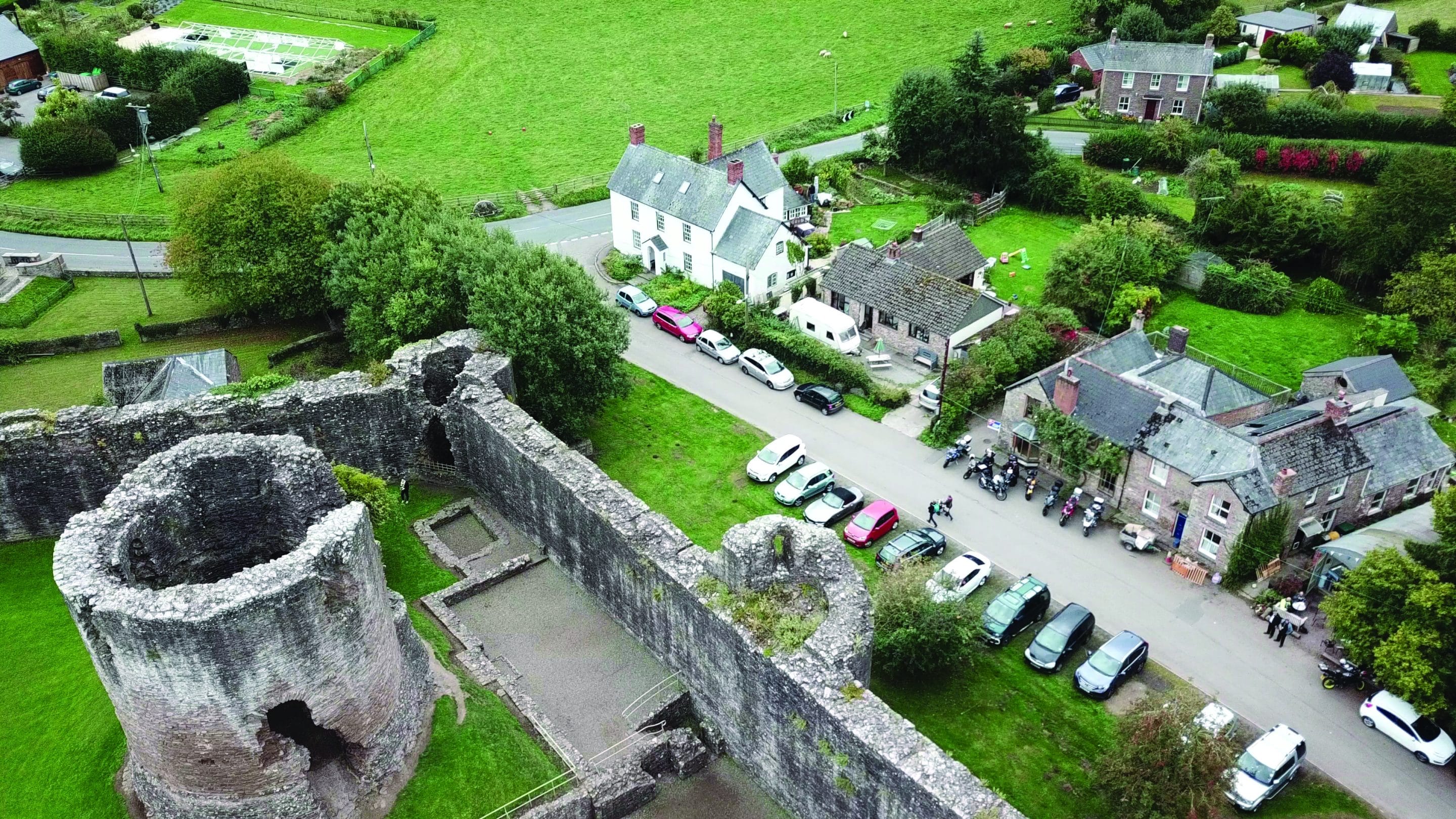
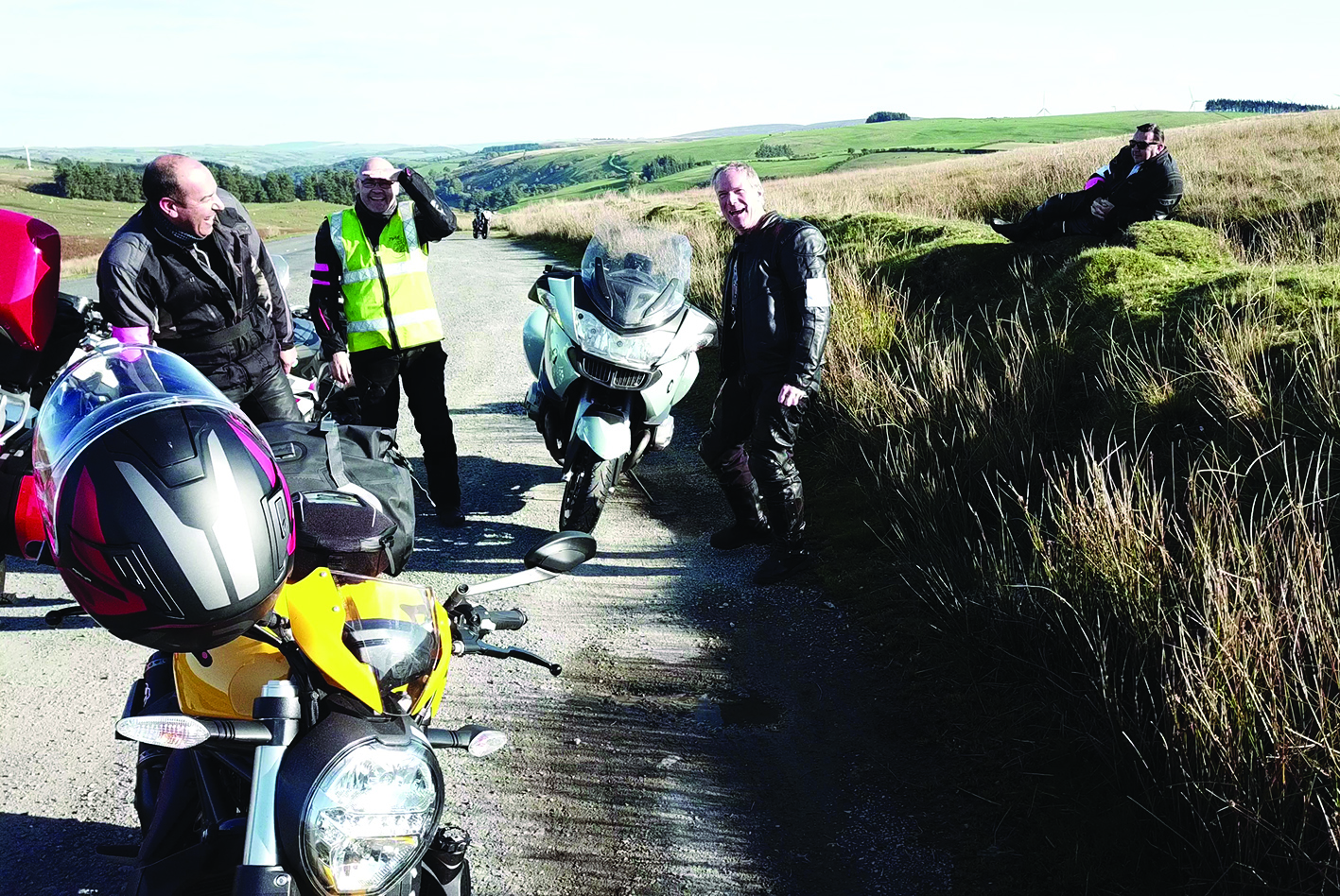
Looking forward to the next one!  Here’s hoping that I get a space… and I really mean it this time!

Rhona Ferry

First published in Slipstream November 2018

Intermot 2018

Intermot, the Cologne International Motorcycle Show, has one key difference when compared to the other European bike shows – it only runs every other year. For one reason or another I’ve kept missing my window of opportunity, but this time I was finally able to line things up and book my tickets.

A short flight and a couple of nights at a local hotel are one option, but naturally I chose to take two extra days and use the bike instead. The Mosel and Eiffel are fantastic riding at any time of year, but in Autumn the scenery takes on an even more spectacular hue, with reds and oranges joining in amongst the stereotypical evergreens.

The show itself is broken up into two parts; a whole third of the floorspace was dedicated to a massive exhibition of custom bikes and culture, with beard trimming & haircuts offered alongside countless modified bikes and accessory stalls. The remaining four halls were dominated by motorcycle manufacturers large and small, with everything from oil, clothing and parts suppliers squeezed in between them.

New announcements were few and far between, with most manufacturers saving their high-profile launches for EICMA or their own carefully-controlled press events. Instead, shows like this, or our more local Motorcycle Live! serve as an opportunity to see and sit on every possible bike in one place, free from the presumptive interruptions of sales staff. So rather than working my way through the major players and simply listing what’s new, I’m going to take a slightly different tack this time.

The club is fortunate to have attracted many new members in the last few years, and I myself have had a number of people approach me for purchasing advice. Experienced motorcyclists know what’s available, have formed their own preferences over years of riding and sampled a broad cross-section of machinery. But what if you’re new to riding, passed your test recently and are riding a CBR600F purely because it caught your eye at a local dealer? A motorcycle show is the perfect opportunity to see the full range of motorcycles in one place, and be reminded of the sheer scale and variety of two-wheeled transportation.

So let’s take a quick, broad-brush scan of the main genres of motorcycle on show in Cologne, and remind ourselves what we might want to take a look at when heading to Motorcycle Live! in the coming week. I’ll pick out a recommended starting point for you newcomers, as well as a more left-field alternative for those that like to live more dangerously than the rest of us. But I should stress that nothing beats a test ride, and comparing the competition is the only way to figure out exactly which variant you will personally prefer.

Kawasaki ZX-6R

Supersports

Derived from a desire for maximum performance, a modern sportsbike sacrifices almost everything in the pursuit of getting the rider around their local racetrack at the maximum possible speed. Comfort, tank range, luggage capacity – any semblance of practicality is entirely secondary, which often means that on-road riding is severely compromised.

And let’s face it, if you’re reading this, then most of your riding probably happens on potholed public tarmac. Twenty years ago, sportsbikes were the only way to get half-way decent engine, braking and suspension performance, and more road-focused designs meant that the compromises weren’t half as drastic. But in 2018, the stands are full of bikes of every stripe that could thrash a GSX-R from a decade ago along any stretch of road you care to mention.

There’s certainly a purity of sensation that comes from riding a sportsbike; that feeling that your hands are gripping the front axle, not a set of clip-ons a half-metre further up. But don’t kid yourself that you “need” one for road riding – not anymore. Buy one because you love how they look, you love how they sound, and are addicted to that startling top-end rush that only comes from a screaming inline-four at 12,000RPM and above. Buy one because you want one; squeeze into your leathers and pretend you’re winning the TT on your way to work.

The bike to beat remains BMW’s S1000RR, and rumours of an impending update mean that deals are doubtlessly available. If you fancy something more exotic, Ducati’s recently-released Panigale V4 will be sure to delight and terrify in equal measure.

Naked

Motorcycling is all about the sensations you can experience when you’re out in the elements. The sights, the smells, the feel of the wind tugging on your clothing and the mechanical sounds and sensations of your bike beneath you. While any motorcycle devoid of fairing is technically “naked”, this genre of biking tends to refer to performance-oriented machines with more upright riding positions and minimal wind protection.

Time was that manufacturers would simply tear the plastics off their latest sportsbike, replace the clip-ons with handlebars, soften the suspension and de-tune the engine for a less “focused” power delivery. These days, the naked bike is just as likely to be an orphan, designed and built from the ground up to be a performance street machine.

And therein lies the truth of it; the differences here mean that naked bikes are generally much better road bikes, their lack of wind protection only becoming an issue when at very high speeds or on a racetrack, where their erstwhile cousins come into their own. Handlebars are better for slower, tighter roads than fast, flowing corners, and the comfier suspension can better deal with the imperfect tarmac we face on a daily basis. They’re not as pretty as sportsbikes though…

Recommendations here are tough as, unlike the ultra-focused sportsbike world, there is real breadth to the naked category. I’ve personally got a soft spot for the Suzuki SV650, especially now that it’s finally got the upgraded front brakes it’s always deserved. The Triumph Street Triple is something of a benchmark, although I resent the 17kg weight gain that accompanied last year’s redesign. The left-field suggestion would be the new KTM Duke 790, the Austrian brand’s first parallel twin and, apparently, an absolute riot to ride.

Adventure-Tourers

What do you buy if you want to circumnavigate the globe, riding through swamps, jungles, deserts and tundra? You buy a Honda CRF250L. There; you’re welcome. What you don’t buy is a quarter-ton of gadget-laden German behemoth and pretend it’s a dirt bike.

It’s impossible to discuss the Adventure segment without BMW’s synonymous R1200GS, now swollen to 1,250cc in its latest iteration. The rise of the Adventure bike is the fall of the sportsbike, as people who bought into the racing fantasy decided that the round-the-world fantasy was a more comfortable and surprisingly practical alternative. The two-wheeled equivalent of a Range Rover Sport, no true off-road enthusiast would ever consider one seriously, even if their dirt-oriented performance is often surprisingly impressive. Instead, the attraction for most lies in how good they are at pretty much everything else.

Suzuki V-Strom

BMW R nineT

Triumph Street Cup

Moto Guzzi V85TT

They’re touring bikes that weigh less. They’re naked bikes with more wind protection, space for a pillion and massive panniers. They’re tall enough to see over cars and powerful enough to overtake whole strings of traffic in an instant. Big tanks often mean long stints between fuel stops, and heated grips and hand-guards make bad weather a non-issue. If your wallet is thick enough, you can even enjoy the very latest electronic gadgets – electronic suspension, cruise control, self-aiming cornering lights…the list is practically endless.

At the other end of the spectrum, those with less extravagant tastes can enjoy smaller, simpler, and, crucially, cheaper options. Tall seat heights can be an issue, though many manufacturers have begun offering lowered seats and suspension. They’re also not the prettiest bikes in the world, with styling having come at the very bottom of the list of priorities when the engineers were drawing up their plans.

Let’s face it, the BMW R1250GS is the benchmark here, even if you’ll end up losing it amongst the sea of nearly identical bikes at your local cafe. Many people opt for something else, just to be different, but you’d be doing yourself a disservice by ignoring it. Or you could go in the other direction, and try out a Kawasaki Versys 650. Cheap suspension, and the stock seat isn’t fantastic, but it’s cheap and utterly hilarious to ride fast. Try one.

Sports-Tourers

Your hardcore trackday enthusiast would probably describe a 2002 Honda Fireblade as a sports-tourer. It looks like a modern sportsbike, but has a more comfortable seat, higher clip-ons, space for a pillion and somewhere to strap luggage. I wonder if we’ll be making similar comparisons about our current razor-sharp race-replicas in 2030?

Sports tourers are, in essence, sports bikes that you could tour on without enduring crippling pain half-way through the first day. Riders who can’t stand the look of adventure tourers but can’t handle the riding position of a true sports bike for hours on end will delight in discovering that very few compromises are necessary as long as your preferred tarmac is publicly-owned.

Those compromises mean more weight, as stiffer frames are needed to carry luggage and passenger. Larger fuel tanks mean less time looking for petrol, and wider seats mean your backside won’t notice that you’re stopping less frequently. This, plus the more protective fairing, means that they’re always larger, heavier machines than the lithe super sports they visually ape. They’re not perfect: clip-ons, even raised ones, aren’t always comfortable for those short of arm, and limited steering lock can make low-speed manoeuvres challenging.

Of course, some people would argue that the line between sports tourers and some adventure tourers becomes blurred as the former becomes more upright and the latter grows more fairing. Hybrids definitely exist, and could arguably be the best of both worlds for those who aren’t as interested in the lifestyle imagery of either extreme.

The Kawasaki Z1000SX is the place to start here; it’s been a best seller since its inception, which means that the classifieds are full of options for the used buyer, and the latest model has had plenty of owner feedback steering its development. Change those horrible Dunlop tyres immediately though; feedback here is universally damning. The left-field choice in this case has to be the Yamaha Tracer 900GT; very much a hybrid machine, and very much a fantastic motorcycle, if you can get comfortable with the taller stance.

Tourers

So you like the weather protection and clean lines of a faired motorcycle, but have a lot of miles to cover. Also, you aren’t necessarily as interested in dragging your knee around the local hairpins when you arrive. Shuffle the priorities around, make comfort and luggage for two the ultimate goal and you end up with a full-sized touring bike. Chances are, in fact, that you’ll end up on a Honda Goldwing.

Practically inventing the format when it grew a full fairing in the 80’s and the bike that everyone points to as the stereotypical example even now, it characterises the concept better than any other motorcycle. Huge tank; massive, comfy seats; enormous fairing and cavernous luggage; and, finally, an oversized engine to haul its impressive weight around. This combination also scales down quite successfully, and it’s hard to spot the point at which you can tack the word “sports” on to the beginning of “tourer” as you move down in size.

I would argue that the tipping point is when the journey starts to matter more than the destination. If you reach the top of the B500 in the Black Forest and wish that your bike were lighter and more involving to ride, then you’ve gone too far in the touring direction. If you’re happy to look at the scenery as you entertain the wildlife with your on-board speaker system and don’t mind slowing down a mite for the corners, then you probably chose well.

While the Goldwing is the King, the truth is that you might want to start your search at the BMW K1600GT. Regularly updated, loaded with gadgets and with tremendous performance, it’ll surely get you to where you’re going quickly and in maximum comfort. The left-field choice here, depressingly, is another BMW – the R1200RT. Leaning dangerously close to the “sports” side, it provides a lighter-duty alternative and should definitely be sampled.

Indian Scout

Cruisers

It’s common that a genre is defined by a particular bike, but Cruisers are defined by a brand. Harley-Davidson has been making motorcycles for more than a century, and detractors would joke that their bikes haven’t changed much in that time. And from a certain angle, it’s true; cruisers are defined as much by their aesthetics just as other categories of motorcycle, but no other genre has had to make so many concessions in pursuit of its particular style.

While the chrome, feet-forward riding position and long, low chassis have all been proven to be mostly optional over the years, the air-cooled narrow-angle v-twin engine remains something of an anachronistic necessity. It’s also a ticking timebomb, cooling after a long ride while manufacturers wonder how much longer they can squeeze the designs through emissions regulations. It’ll be a shame as, to those that enjoy them, there’s an indelible character to an air-cooled twin, one that makes them extremely enjoyable to use, even if they’re not terribly powerful.

In any case, most manufacturers decided not to wait and killed off their cruiser lines in the UK years ago, and only the recently-revived Indian remains as a real competitor. Broadly split into naked and semi-faired versions, cruisers are surprisingly similar to sportsbikes in that practicality and comfort takes second place to a primary focus: in this case, an aesthetic ideal.

A full-dress tourer will give you Goldwing-matching comfort, luggage capacity and unfortunately the weight to go along with the image. Lose the fairing and you’ve got a whole swathe of configurations to suit every taste, as long as you enjoy lots of exposed metal. Cruisers are heavy, slow, have limited ground clearance and suspension travel, but enjoy low seat heights and relaxed riding positions in exchange. They’re very much a matter of personal, even acquired, taste but if you don’t like it, you can always change it. Cruiser culture is inextricably enmeshed with the custom scene, something that Harley-Davidson has wholly embraced; their 2019 accessories catalogue is almost two inches thick…

It’s hard to recommend a particular model here, because the devil really is in the detail and personal taste is so much of a factor when shopping for cruisers. I’m very taken by the Harley-Davidson Sport-Glide, which matches the stripped-back cruiser aesthetic with a modicum of touring capability and an awesome engine. The left-field choice would be the Kawasaki Vulcan, with a water-cooled parallel-twin 650cc engine borrowed from the manufacturer’s own Versys & Ninja 650’s. Comfy, punchy, light and fun.

Royal Enfield Interceptor

Classics

Harley-Davidson should have been owning this segment, but their marketing department changes direction like an overloaded oil tanker. The explanations for the popularity of bikes that look and feel like those from fifty years ago are many and varied, but the numbers speak for themselves. Customers love the look, sound and feel of old bikes, but would find living with a genuine classic a real culture shock; modern interpretations of those motorcycles tend not to constantly leak oil and require riders to clean condensers and re-gap spark plugs at the side of the road.

This means that bikes that are still built like it’s the 1960’s – I’m looking at you, Royal Enfield – often don’t quite find the audience they hope for. Conversely, simple styling jobs on top of, otherwise modern, water-cooled nakeds fall similarly flat. And while, like with cruisers, actual performance takes a relaxed back seat to aesthetic priorities, we’ve reached a point in motorcycle development that the compromises are becoming less and less noticeable.

When power output, cornering capability, braking performance and even suspension take second fiddle to making the rider feel cool, the engineers are often left with little to work with. Steel tube frames, spoked wheels and classic-style engine casings are all heavier than their modern alternatives, dulling potential performance. But modern engineering is now so good that the results – even with these illogical handicaps – can be quite impressive. All that competing engineering costs money however – what look like very basic, no-frills motorcycles can frequently carry hefty price tags.

If the aesthetic appeals to you, just be aware of what you’re getting into and also be aware that compromises are going to be necessary. Choose well and you’ll find that you’re able to keep up with your riding buddies just fine on real roads and will look good doing it. It’s also a broad enough segment that you can probably find a classic that caters, at least somewhat, to your needs. There are sporty classics, touring classics and classics that will make a simple trip to the shops a memorable adventure.

While I have plenty of personal issues with the Triumph Bonneville T120, it is the segment-defining model. Impressive performance, despite its appearance; just make sure that you’re aware of the shortcomings and try one for yourself before buying. The left-field choice here would have to be Royal Enfield Interceptor; not yet available, admittedly, but a new UK-designed 650cc twin for around £5k could excuse an awful lot of sloppy welds.

Something Else

Lest we forget, grouping motorcycles into genres like this is extremely subjective, and the previously mentioned grey areas between them mean that motorcycling is more of a multi-dimensional spectrum than a series of neatly-defined categories. I choose to think of them as points on a compass, extremes to refer to so that newcomers might understand the full width and breadth of the choices available to them. Gaps exist and can sometimes be filled by buying something close and then modifying it to more closely fit your particular needs.

But the most important thing is knowing what you want and why well in advance of when you start shopping. Yes, a particular bike may catch your eye aesthetically, but it’s your butt that’s got to sit in the seat and your wallet that has to pay for it. Figure out what you’re hoping to do with your new bike, taking into account what you did with your old bike and make sure that you’re not repeating old mistakes.

Note what is popular and find out why others like the bikes they do; their tastes and needs might not align with yours. When someone recommends something, consider the lens through which they are viewing it – few people will consciously admit to themselves that they bought the wrong bike, never mind admit it to others! Which is a long-winded way of saying that everyone should buy a Suzuki V-Strom 650, because it’s obviously perfect!

Nick Tasker

Originally published in Slipstream November 2018

3Rs Yorkshire Weekend

The second trip for the 3Rs team took a group of 30 TVAM members to the Yorkshire Dales over the weekend of 19-21st October. Smaller in scale than 7W’s but no less ambitious for fun, 3Rs is TVAM’s bi-annual trip taking Associates Full Members, Trainee Observers and Observers to the wilder, twister bits of the UK. The wonderful combination of breathtaking scenery and technical twisty tarmac was a great opportunity to refine those cornering and other advanced riding skills.