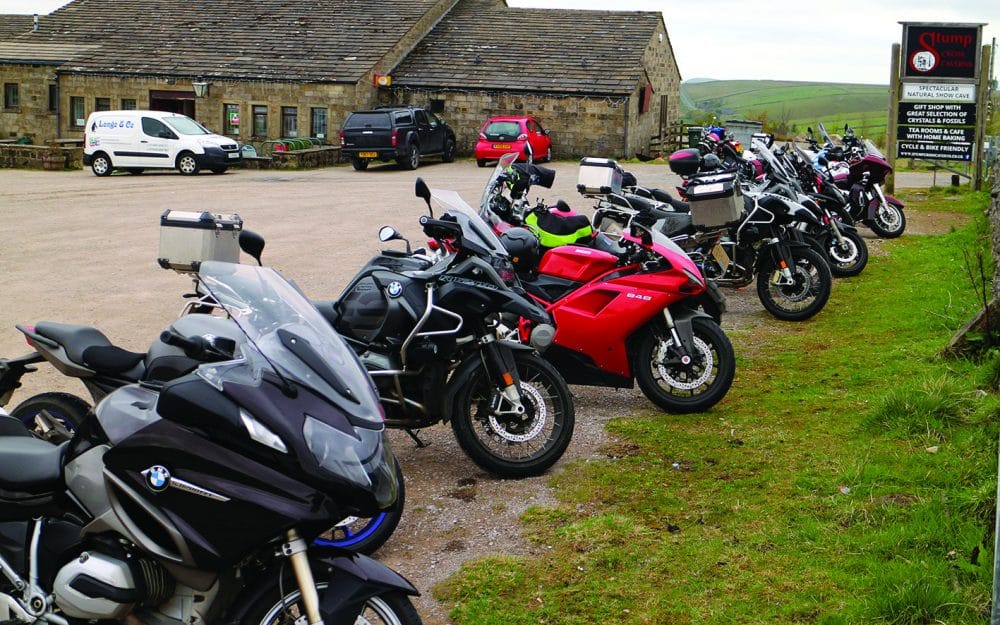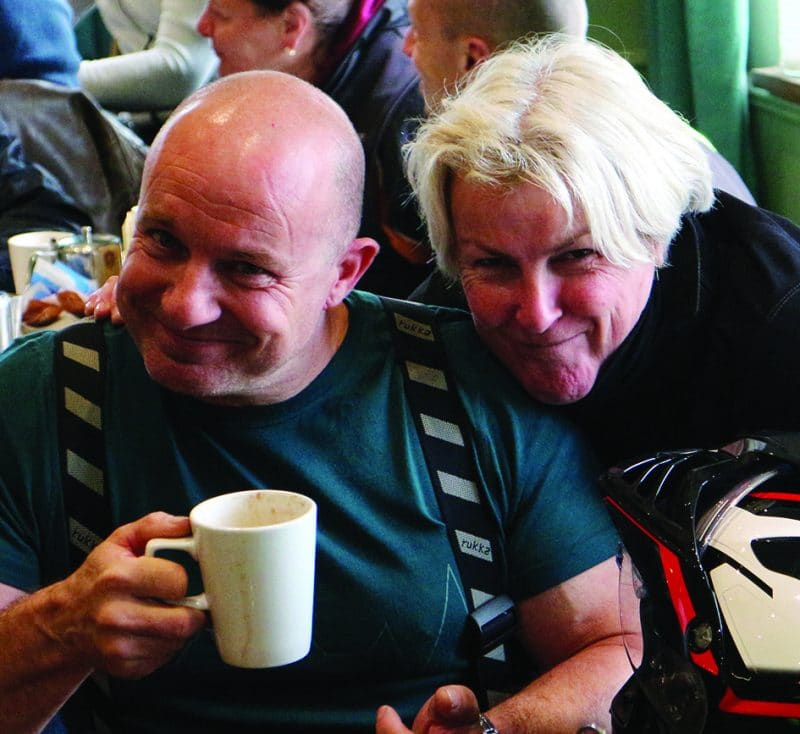
End of an Era

As we reach the end of the decade and another season packed with motorcycle shows has wrapped up it’s worth reflecting once more on where the last ten years have brought us, and where we might be going. The age of the superbike is over, and the age of the hyperbike has begun. But so, I would argue, has the age of reason.

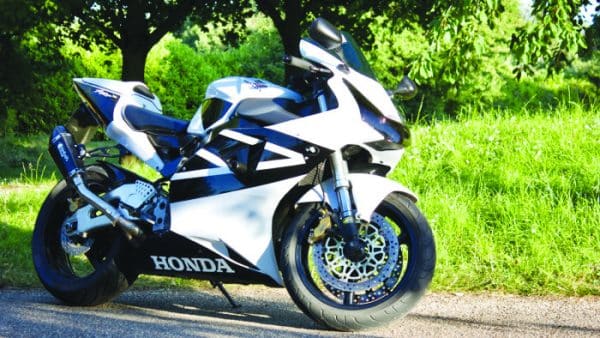
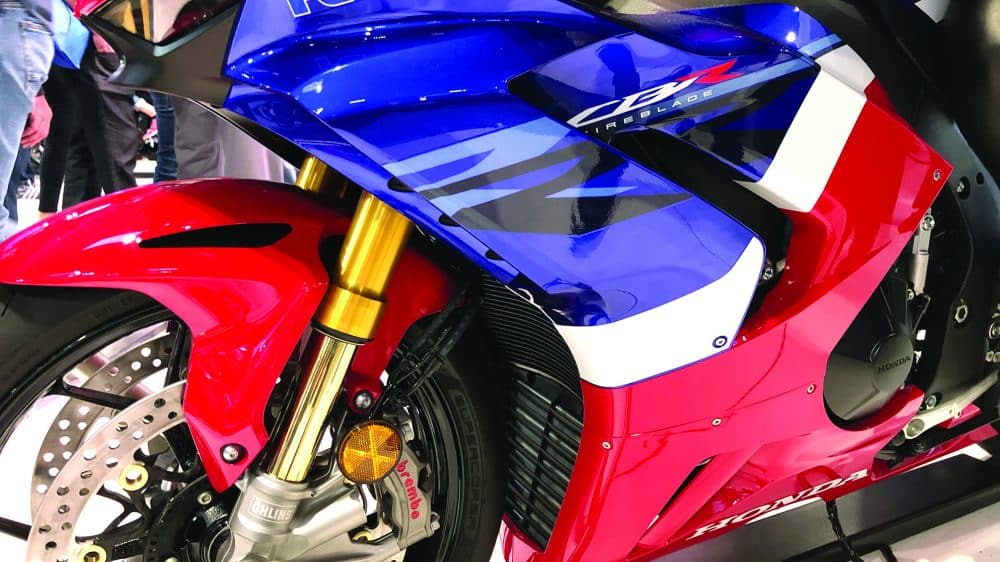
With the launch of the new Honda CBR-1000RR-R Fireblade, the last of the sensible road-biased 1000cc sportsbikes is dead, and a new era of £20k+ exotica is upon us. At a time when fewer and fewer new riders are choosing to embark upon their motorcycle journey, the crossing of this psychologically important barrier is triggering a wave of introspection across huge swathes of the biking community.

Such flagship models are now well and truly out of reach for the vast majority of riders. And even if you are personally financially capable of placing such a vehicle in your garage for the length of a PCP contract, the value proposition becomes ever-harder to justify when the real-world application of these bikes has shrunk at a rate inversely proportional to their rapidly rising cost.

A laser-focus on on-track performance has destroyed any real-world usability litre-class sportsbikes once possessed. Big adventure tourers like BMW’s R1250GS, KTM’s 1290 Super Adventure and Ducati’s Multistrada 1260 Enduro have gotten bigger and heavier to the point that they’re now no longer effective as all-road devices, more akin to two-wheeled Porsche Cayennes than Land Rover Defenders. The sports-tourer genre used to be where softer, slower sportsbikes lurked in order to avoid unflattering comparisons with razor’s edge performance machinery of the day. Yet Kawasaki’s H2 SX uses a supercharged 1000cc engine to warp space and time in a way that speed freaks from the golden age of sportsbikes could only dream of.

Don’t get me wrong – I love that these machines exist. But they exist now purely as statements, both of the technical capabilities of their manufacturers and the girth of their owner’s wallets. They have fully embraced their role as the Lamborghinis and Ferraris of the motorcycle world: expensive toys designed to mollify the wealthy rider’s ego with the knowledge that, if called upon, they could comfortably outrun a category five tropical storm.

Small Ones are Juicier

Not too long ago, mid-capacity motorcycles were considered to be temporary stepping-stones with zero street cred and significantly reduced build quality and specification. To roll up at a bike meet with “only a 600” was to invite ridicule and mockery. This attitude persisted for decades, with PCP providing a way for the illusion of affordability to persist in the face of soaring price tags. But now that thread has finally snapped, and there’s a kind of freedom in finally accepting that the vast majority of us can safely ignore the top-shelf selections entirely.
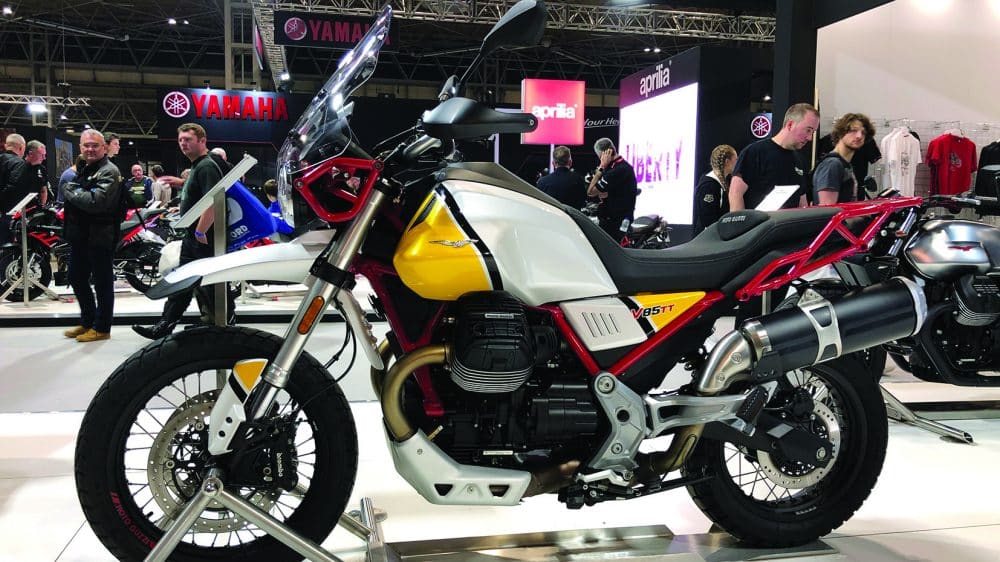
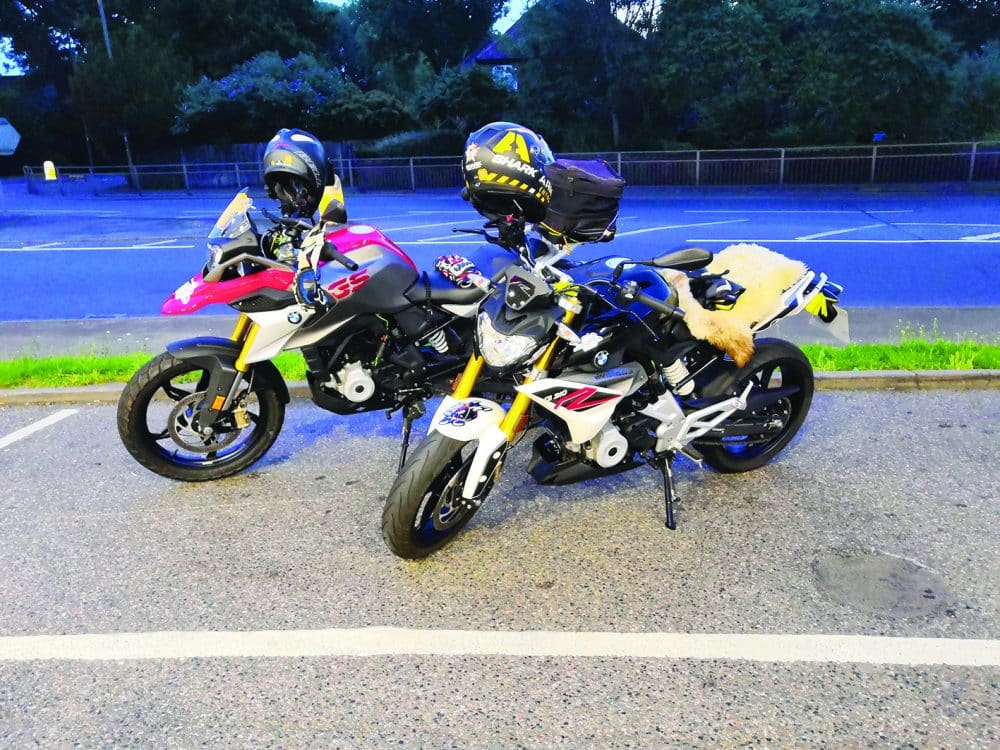
One of the best adventure-tourers on the market, featuring “only” 850cc of displacement.

What’s more, today’s mid-capacity bikes are a far cry from the bargain-basement parts-bin specials we remember from twenty years ago. The variety, capability and equipment level you can now purchase for half the price of the top-range machinery is truly remarkable, often far in excess of top-flight machines from just a few years ago.
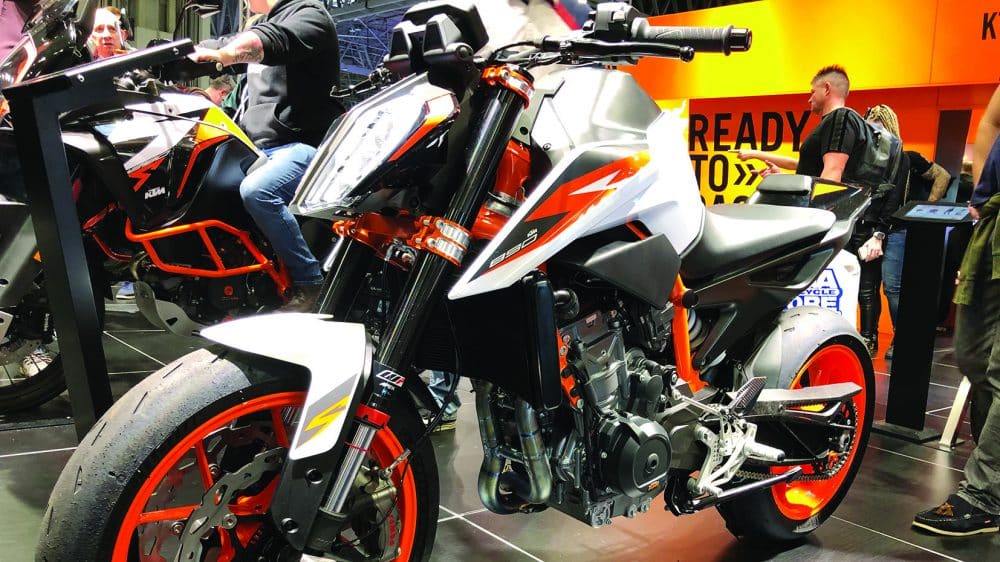
890cc only seems small because KTM has desensitised us with their 1290cc version.

That Ducati 916 you always promised yourself one day? A new Panigale V2 will outrun it on the straights and leave it for dead in the corners, all while using less fuel and with service intervals that would’ve seemed pure fantasy just a decade ago. You really don’t need a Panigale V4, and now that you can’t afford one, you can happily forget all about it.

Owners love their Yamaha FJR1300s, and in ages past the brand’s Tracer 900 would’ve been ignored as a low-powered learner-tolerant alternative. But the FJR is heavy, thirsty, and not noticeably more powerful than it’s significantly cheaper stablemate. You’re not giving up build quality or electronic toys, nor are you noticeably sacrificing luggage capacity or pillion comfort. You get high-spec brakes and suspension, just like you’d expect on a flagship high-performance machine, and all for less than £10,000. The fact that Yamaha sells every one they can build supports my thesis that the era of egotism and excess is indeed over for most riders. Perhaps now we can finally agree that 115bhp is more than enough for a road bike and that choosing a “smaller” machine is no longer a sign of mental, physical, or sexual deficiency.

I’ve ridden and loved the Tracer 700 and the updated version looks fantastic. What’s more, the Euro5 updates don’t seem to have dented the power output nor added to the weight – it’s fully-fueled and ready to propel you across the continent at a lithe 196kg, and all for just £7,400. But nothing better highlights the “less is more” era we currently find ourselves in than the new Yamaha Ténéré 700. Sharing the same drivetrain as the Tracer and MT07, the Ténéré asks buyers to dig a little deeper at £8,700, but in return delivers far more capable off-road performance than any of the big-capacity flagships. KTM’s 790 Adventure pulls off the same trick, proving once and for all that anyone who tells you they need the bigger 1290’s power output to scramble down green lanes is lying to themselves, as well as to their bank manager.
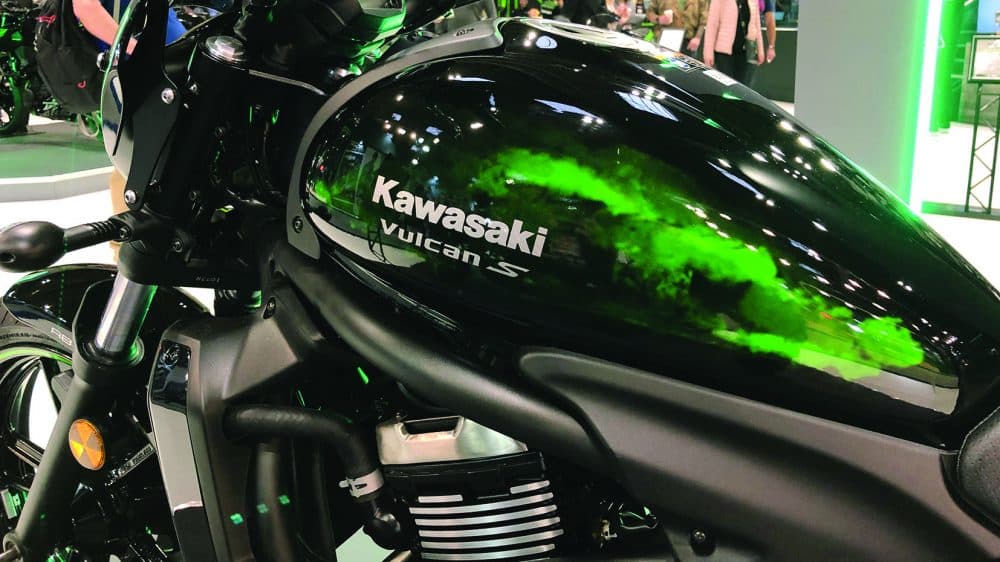
Want to cruise in comfort? 650cc is plenty, and a £6,600 price tag is welcome.

BMW’s new F900XR makes the far-more-expensive, thirsty, and heavy S1000XR largely redundant for most riders. Anyone contemplating the purchase of a new Honda CRF1100 Africa Twin for an off-road adventure hasn’t seen the price tags, nor spent much time in the dirt and mud, where the brand’s own CRF250L reigns supreme. At almost £20,000, a top-spec Africa Twin will now cost you more than four CRF250Ls. You could pay for three friends to join you and still save money.

I’ve ridden and loved the Tracer 700 and the updated version looks fantastic. What’s more, the Euro5 updates don’t seem to have dented the power output nor added to the weight – it’s fully-fueled and ready to propel you across the continent at a lithe 196kg, and all for just £7,400. But nothing better highlights the “less is more” era we currently find ourselves in than the new Yamaha Ténéré 700. Sharing the same drivetrain as the Tracer and MT07, the Ténéré asks buyers to dig a little deeper at £8,700, but in return delivers far more capable off-road performance than any of the big-capacity flagships. KTM’s 790 Adventure pulls off the same trick, proving once and for all that anyone who tells you they need the bigger 1290’s power output to scramble down green lanes is lying to themselves, as well as to their bank manager.
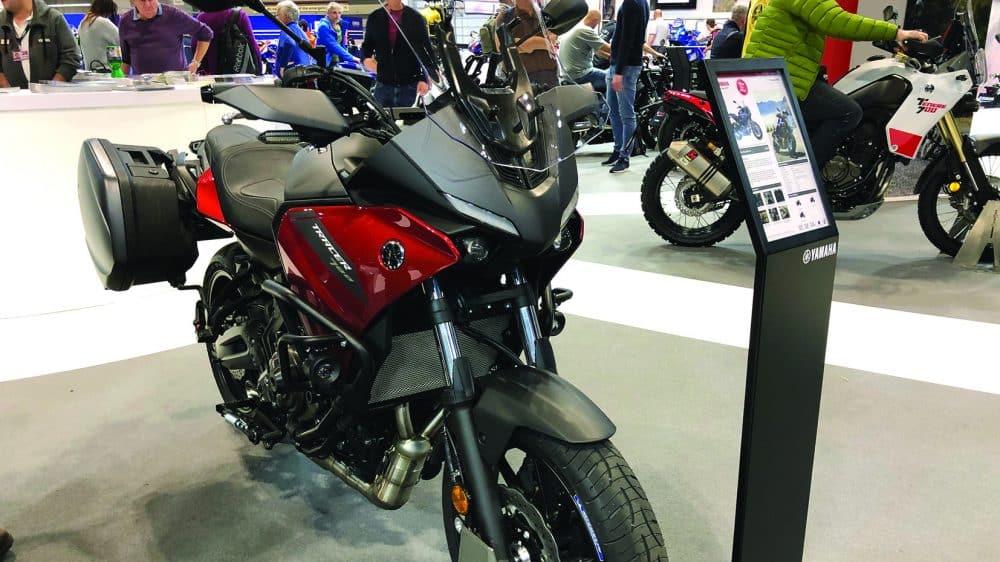
Want something sportier? 700cc is all you need to tour Europe.
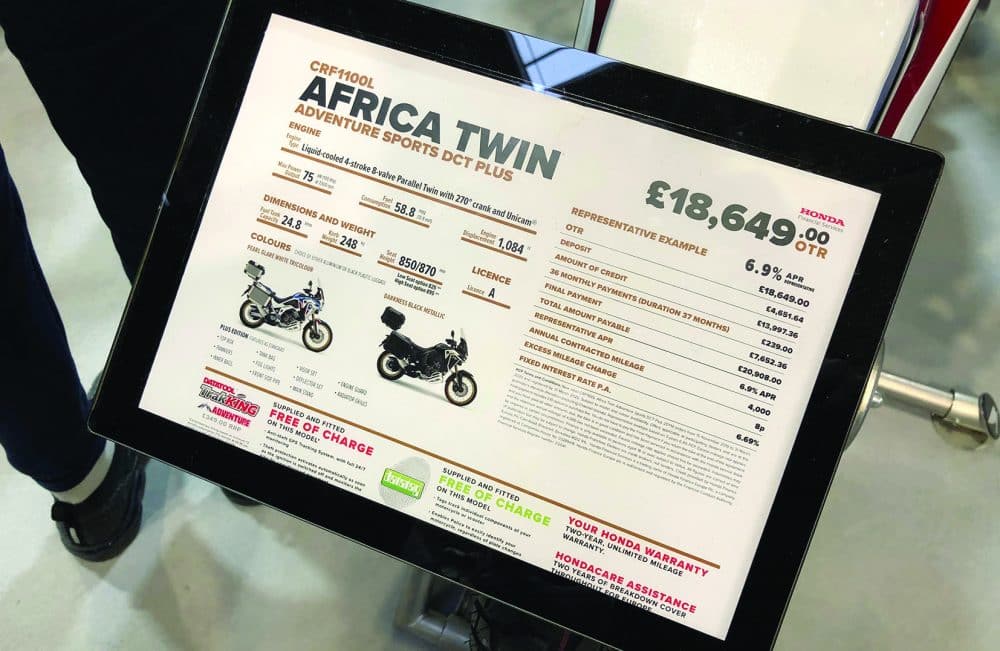
Buy this bike on PCP and it’ll cost you almost £21k. Not interested.

BMW’s new F900XR makes the far-more-expensive, thirsty, and heavy S1000XR largely redundant for most riders. Anyone contemplating the purchase of a new Honda CRF1100 Africa Twin for an off-road adventure hasn’t seen the price tags, nor spent much time in the dirt and mud, where the brand’s own CRF250L reigns supreme. At almost £20,000, a top-spec Africa Twin will now cost you more than four CRF250Ls. You could pay for three friends to join you and still save money.

Harley-Davidson’s idea of downsizing is entertaining, with their physically-imposing and aesthetically-challenging Pan America displacing a claimed 1250cc, matching all but the very biggest of its European competitors’ flagships in the segment. Even the 950cc Bronx is hardly a small machine, while unlikely to register as a serious alternative to Triumph’s existing Speed Triple or its ilk. Price, as well as weight and power figures, will be very telling. But as the new Indian FTR1200 has lately proven, American cruiser manufacturers are facing an uphill battle to compete in these market segments.

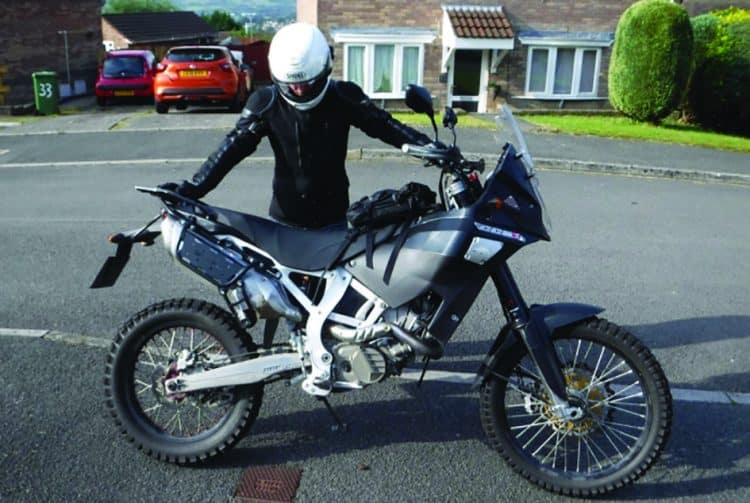
As a rider interested in exploring some off-road adventures after even a 650cc Suzuki V-Strom proved too large and cumbersome for the Trans-European Trail, I am delighted to see Fantic making some serious moves in UK market. Their interesting new Caballero 500cc single-cylinder road bikes appeared in magazine reviews earlier this year, providing a cheaper (and purchasable) alternative to CCM’s many hand-made Spitfire variants. What’s more, they offer a selection of 50cc, 125cc and even a 250cc road-legal enduro bikes, undercutting Honda’s popular CRF250L on both price and weight. Colour me interested.

Continuing the off-road theme, Husqvarna has diverged from their KTM overlord’s 690 Enduro by adding a Long-Range (LR) variant to their 701 Enduro. With 25 litres of fuel, the frugal and well-equipped single-cylinder motorcycle should be good for more than 300 miles of off-road riding. Only the BMW R1250GS Adventure claims a similar tank range, yet costs almost twice as much and would get itself wedged solid on trails a Husqvarna rider would breeze along. For those seriously planning some long-distance off-road adventures, the showroom choices have improved markedly this year.
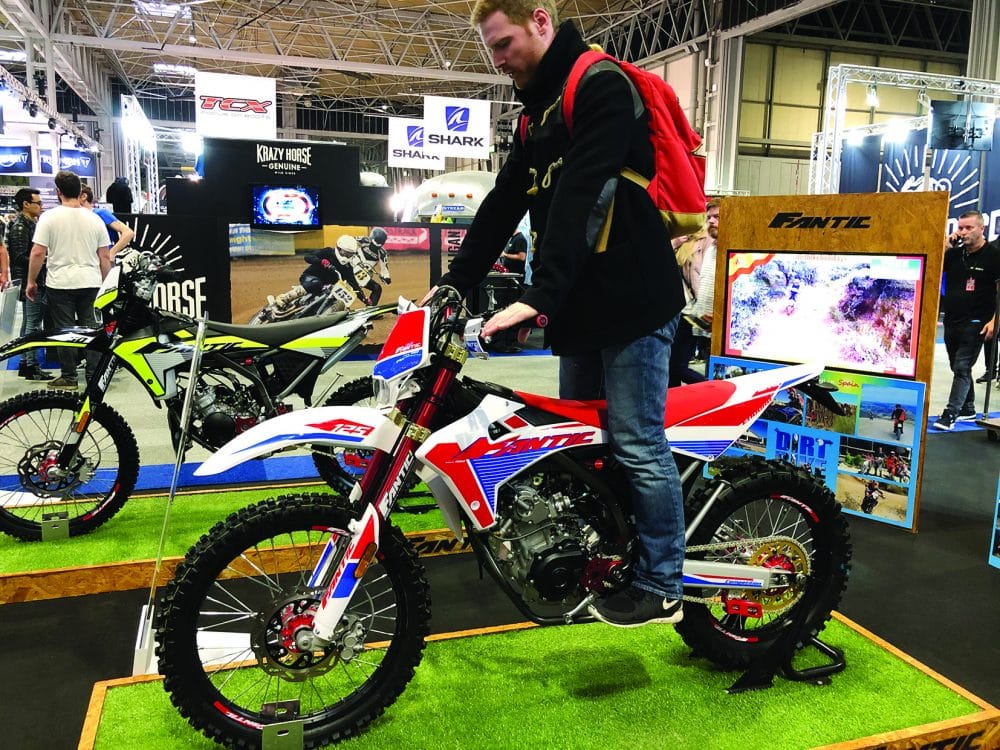
How fast do you ride off-road? 250cc versions are available too.
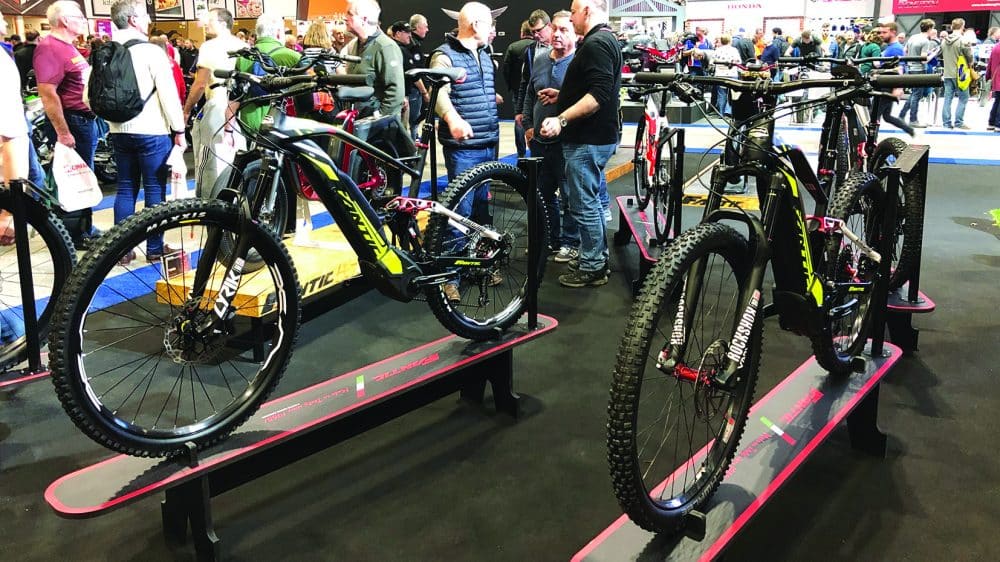
The second evolution of the motorcycle?

Which brings us neatly back to the very start of this piece. For years, bikers have persuaded themselves and each other that they needed more power, more engine, more speed, and manufacturers were only too happy to oblige. We pushed them harder and harder, to the point where whole new kinds of electronic rider aids had to be developed to keep these new monsters in check, and still we demanded more. But now the bubble has burst, and we’ve finally realised that not only can smaller, cheaper motorcycles be just as fun and capable as their high-end cousins, in many cases they can actually be better in almost every way.

The Cycle Begins Anew

And not a moment too soon. Because while the motorcycle industry continues to wrestle with chronic addiction to baby-boomer cash, competition is arriving from an unexpected and ironic source. Motorcycles were originally born from bicycle manufacturers bolting early petrol engines into beefed-up frames. And while our evolutionary offshoot has produced the dinosaurs of our time, the meteorite of demographic, social, and political change is poised to kill it off entirely.
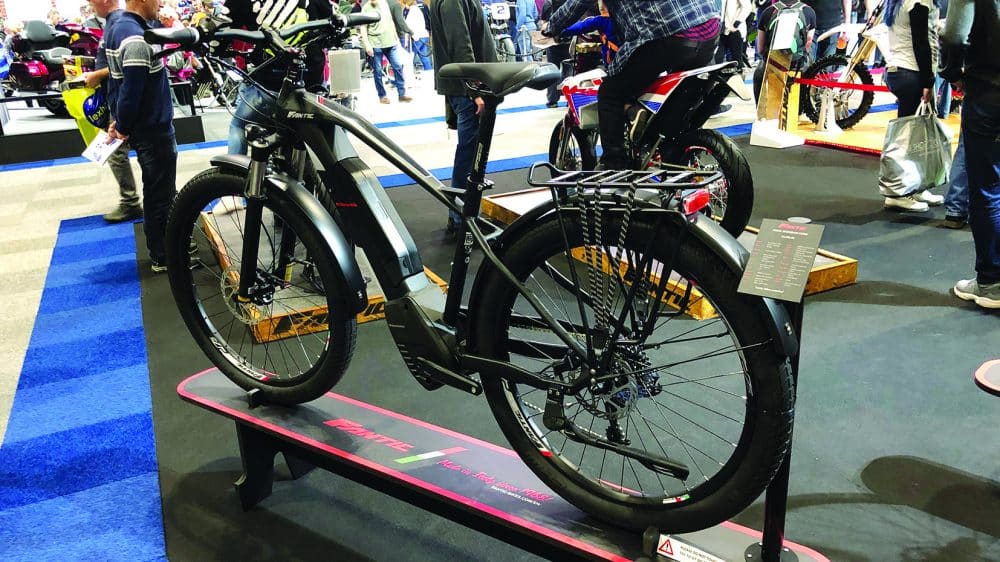
Threat or salvation? Motorcycle alternative or stepping-stone?

In the meantime, the original strain has persisted, and in the last ten years has begun to rapidly mutate. Across Europe, more bicycles are now sold with electric motors than without. These electrically-assisted bicycles take the bite out of hills, provide a safeguard against exhaustion, and are even providing a way for older or less fit individuals to get some much-needed exercise. As legislation begins to choke the life from the motorcycle industry in its current form, this unlikely competitor has emerged to nibble at the edges.
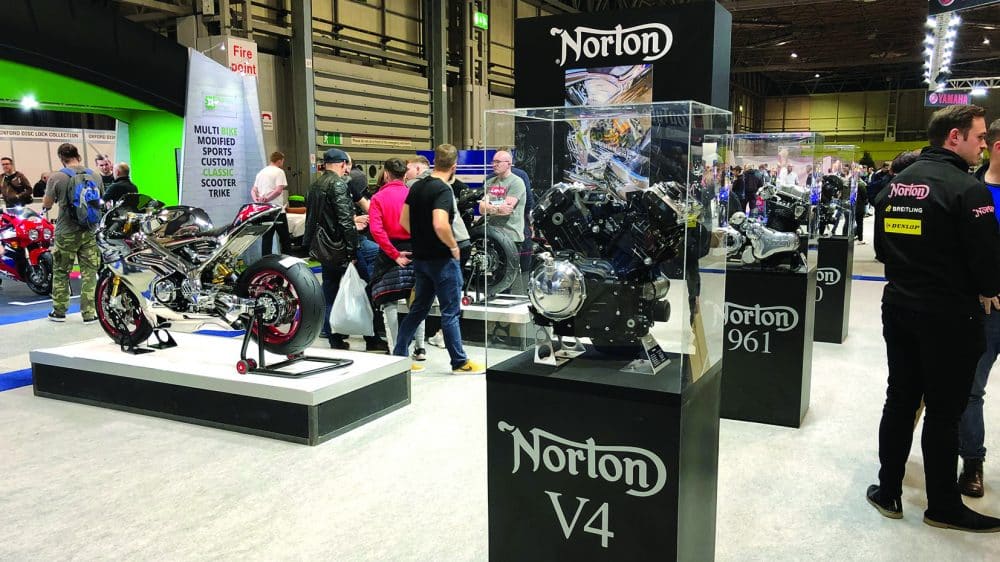
Boutique builders may one day be all that remains of mainstream motorcycling…

Prices have plummeted, and a high-quality multi-purpose e-bike with luggage rack, lights and mudguards can now be had for under £3,000. In increasingly-densely-populated urban centres, even a motorcycle no longer makes sense. And while a traditional bicycle might leave you arriving at work hot and sweaty, an e-bike does not. All these factors combined mean that motorcycling is fighting for relevance in a world increasingly hostile to its very existence.

It’s entirely possible that motorcycling can co-exist with autonomous cars and swarms of cyclists, both in terms of space on our roads and room in our budgets. But if it does, it will be as a much smaller version of itself, and with much smaller, more affordable motorcycles. There will always be room for high-priced exotica, and people willing and able to purchase and perhaps even ride them. But those few riders alone won’t keep the bike cafés open, the leather and textile makers in business, nor provide enough of a voting population to keep the encroaching safety legislators at bay.

Manufacturers follow the money, and if we show them that mid-capacity motorcycles can sell, then more will come. This will make the sport more affordable, and if we desist in our hostility towards small-capacity motorcycles and their riders, then perhaps some of those e-cyclists will be tempted to try something faster, without pedals. The next ten years will make or break motorcycling in the UK, and perhaps the whole of the developed world. E-Bikes could save us or destroy us, and the outcome is entirely up to whether we can embrace a small-capacity future or choose to hide in the past.

Nick Tasker

First published in Slipstream January 2020
Girls On Top – Motorcycle Adventure

(Nobody said it would be a holiday!)

by Dani Fiddaman and Steph Jeavons

Hold My Beer!

Two years ago, as Steph was getting close to the end of her journey around the world, she mentioned the idea of a new adventure. “Do you fancy riding to Everest Base Camp?” she said. “I have an idea to lead a group of women and I need my wingman with me”.  Steph and I had met 5 years earlier on a trip across America and had shared a room for nearly 3 weeks. We’ve stayed in touch and been Roomies on several occasions since.  Well, I didn’t need asking twice!! As a girl from Norfolk, mountains have always held a fascination for me, and they don’t come any bigger than this one. Plus, Steph and I had ridden in Nepal together already, when I visited her there whilst on her trip, and had promised that we would go back to Kathmandu together one day to eat momos.

The idea had come to Steph after talking to Alex Pirie (founder of the Nomadic Knights motorcycle tour company). Alex and his wife, Vidhya, had helped Steph with getting her bike into India in 2014 and they hit it off, planning to work together at some point in the future. Alex already ran tours in India and the Himalayas and was planning trips to Base Camp, but never before with an all-female group. It seemed like the logical thing to do, after a beer or two! “Girls on Top” was born and the date was set for September 2019, once Steph was home and the Friendship Highway had reopened after the disastrous earthquakes in 2015.

We Got This!

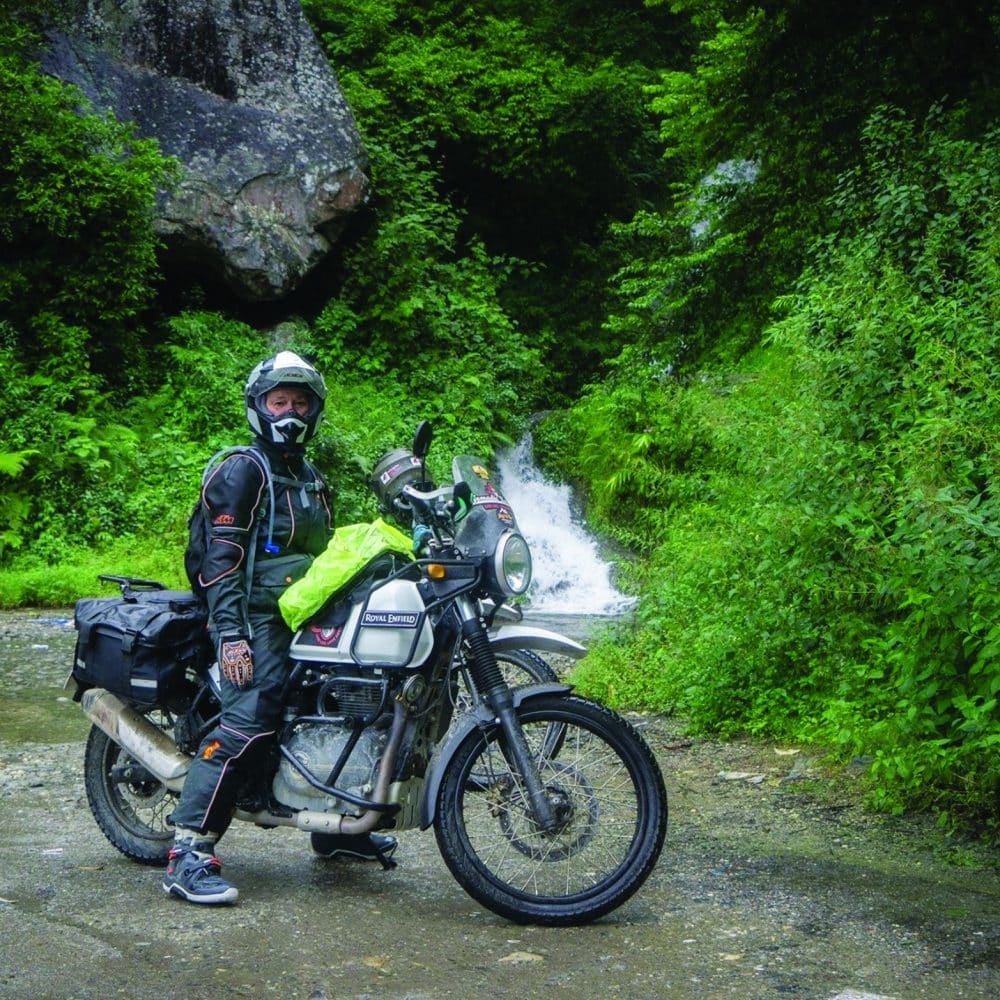
The plan was to take 24 women, including me and Steph, from Kathmandu into Tibet and up to Everest Base Camp, using Royal Enfield Himalayans (of course!!), all on recognised roads. We knew the altitude would be a challenge, with Base Camp being at 5200m, but we had two weeks and planned to acclimatise by taking our time to get there, riding over mountain passes at 5000m, and by spending several days on the Tibetan plains above 4000m before descending to Lhasa for a rest day ahead of our night at Base Camp. We were also to be prescribed altitude sickness pills, which make your fingers tingle and give you weird dreams! We’d have a doctor with us, as well as a support truck with mechanics, bike spares, medical supplies and our luggage; and with Alex in the lead and Andy as a sweeper, both on bikes too, we had everything we needed. The bikes were well equipped with soft panniers and tank bags but we’d only need to carry what we required during the day – water, snacks, spare gloves, extra layers as along with altitude comes a temperature drop.

Baptism of Fire (and Water)

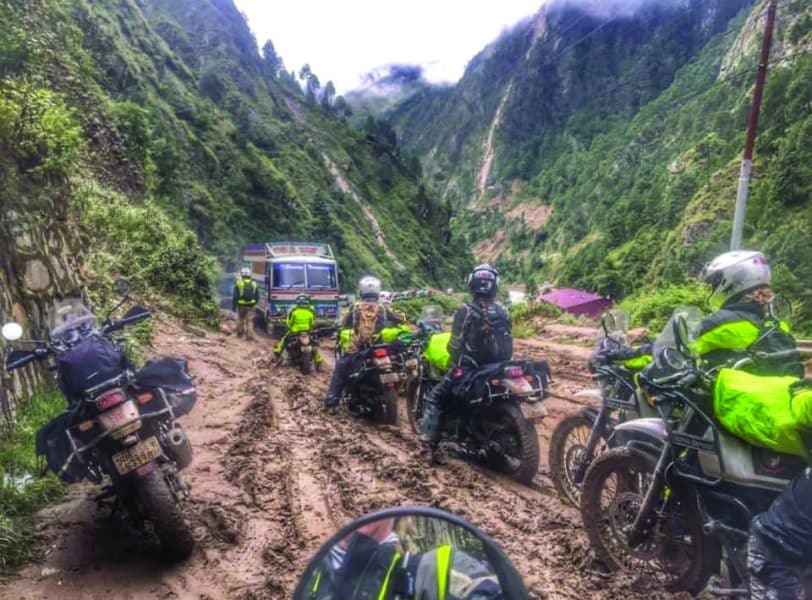
Day 1 started with a long wait for our Chinese visas (Tibet being a province of China) and…..rain. Lots of rain!  The monsoon season should have been over but nobody told the rain clouds. Eventually we set off out of Kathmandu, heading for Bidur then Syabrubesi and our hotel for the night, 130km in total. It was soon obvious that the road conditions, some tarmac with patchy sections of gravel and soil, had not been improved by the weather! The soil had turned to mud, there were deep potholes full of water and rivers crossing the road. Up on the pegs, off road style! The Himalayans coped well with the conditions, bouncing along in the potholes, ploughing through the mud like little tractors. The low seat height however meant a lack of ground clearance, which would occasionally get us stuck in a rut, rear tyre spinning on a rock thrown in by a truck driver for traction. But they just kept going, even after being dropped under water!

I was enjoying myself, but other girls less so. It was certainly in at the deep end on our first day and by dark we had only done half of the 130km. Two girls had ridden their bikes over the edge of the road in the bad conditions, thankfully stopping in the green vegetation a little way down rather than plunging all the way to the bottom of the valley. With the help of the locals and the support truck, we got them back on the road.  We regrouped in Bidur, found a hotel that could take 30 people at short notice, had some dinner and took stock. We knew the next bit would be tougher as the road we wanted was closed by a landslide and we had to take the fabled “bottom” road. We slept on it, but in the morning, several girls were suffering after their falls on the previous day and others were exhausted after struggling with the challenging roads. It was with heavy hearts that 10 decided that they wouldn’t continue. Their dreams of Base Camp ended in Bidur.

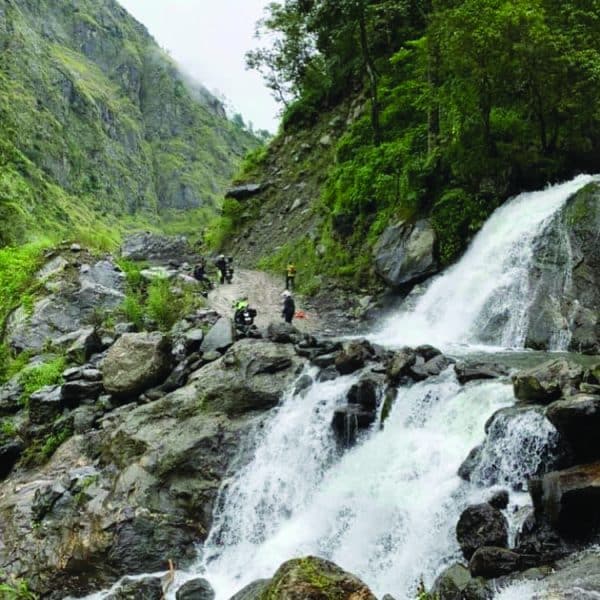
The remaining 14 set out to do battle with the 60kms of rutted, axle-deep muddy road, and with the trucks and buses who were also forced to use this route. It was incredibly tough. It took us 10 hours and we dropped the bikes many times, but got through it together with gritted, and gritty, teeth. Karen dropped her bike in a river, the waterfall crashing down on her like some kind of waterboarding torture but at least we cooled down whilst helping each other across. In those conditions, lifetime friendships were forged! Once again, we finished in the dark, having been forced to walk around trucks stuck in the mud, blocking even bikes getting through, and then hitched a lift in a local 4WD pick-up truck for the last few kms. Alex hired a JCB and driver to clear the route and our support team worked all night to ferry the bikes down while we slept.

After Adversity Comes Reward

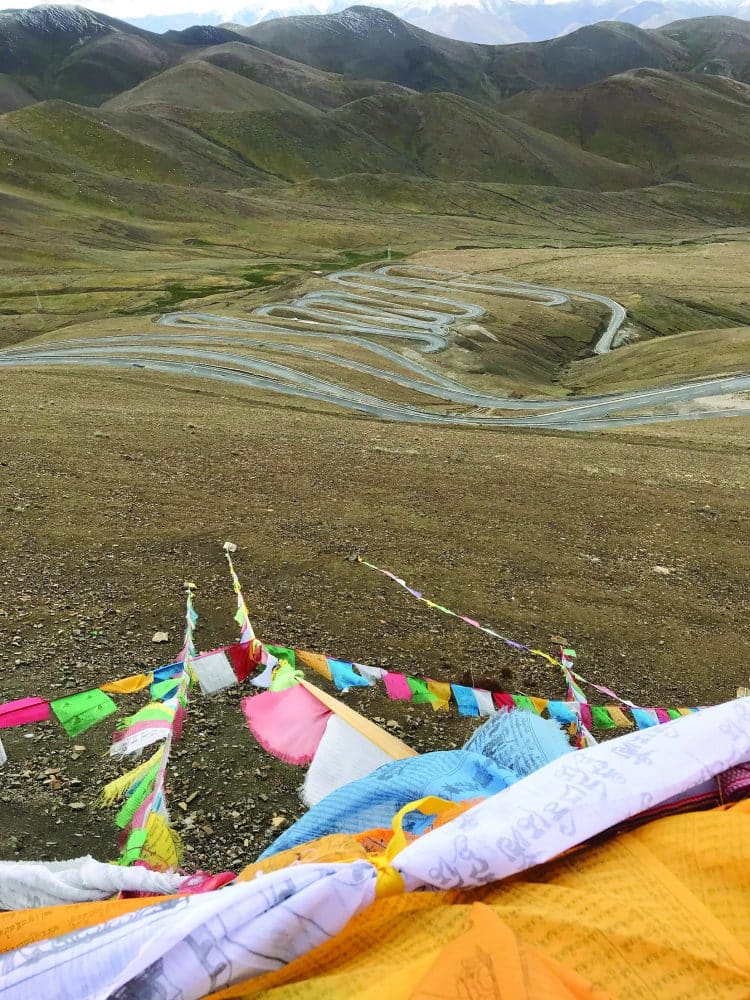
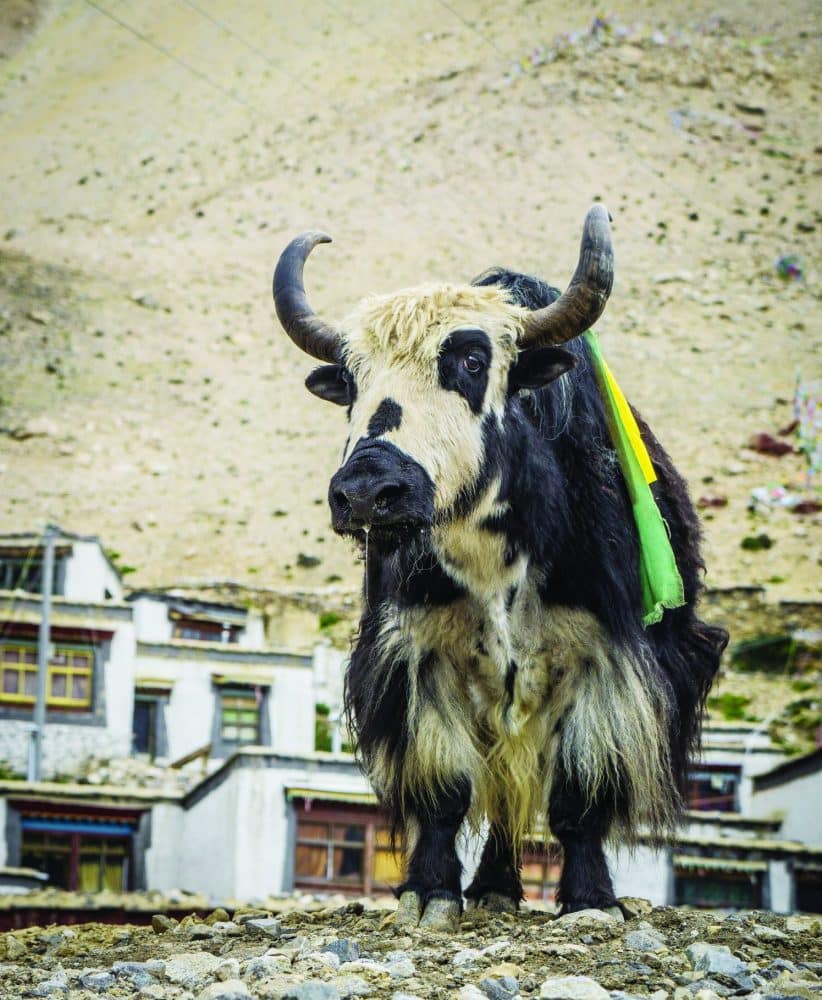
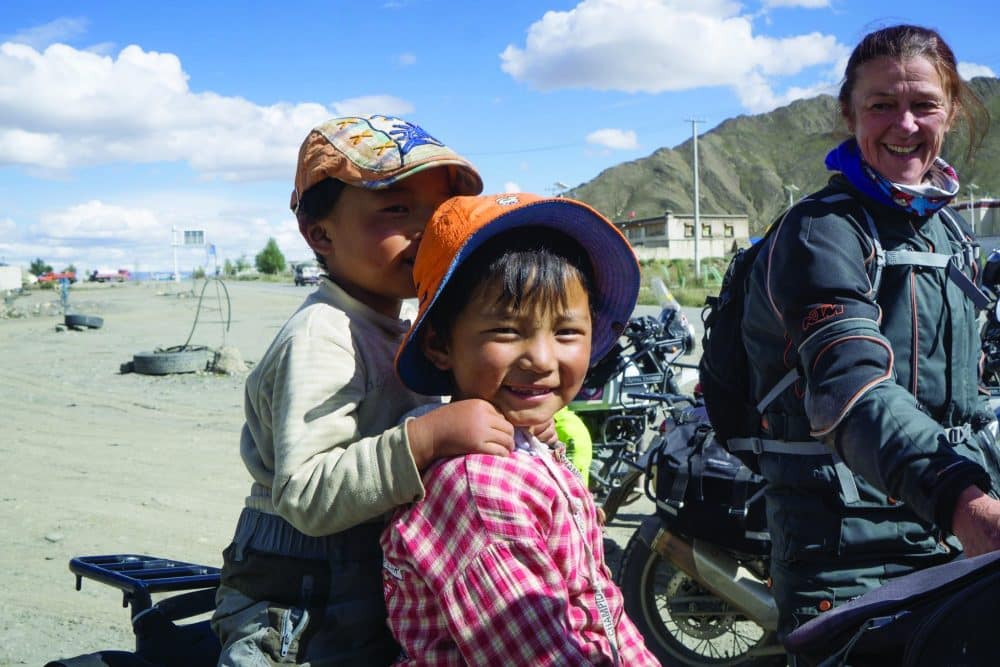
Tibet! Never have I been so relieved to see tarmac. After a short ride we waited 5 hours at the border, while our Tibetan agents needed all of their negotiating skills (and no doubt a few bribes!) to get us through, as our visa details had changed with fewer people and bikes. Finally, we were allowed to cross into China/Tibet. Immediately the road conditions improved, along with the weather, and we happily rode the high passes, twisty hairpins and high Tibetan plains at 4500m with their almost lunar landscape. There were still plenty of challenges: trucks and buses to overtake; yaks and goats to avoid; cars braking suddenly for the speed cameras; and the cold, dry altitude making both us and the bikes a bit wheezy. The 410cc Himalayans were happy pottering at 80-100kph, but would need a quick downchange for any serious overtakes. They were never going to be nimble but they are very stable and handling was secure in the bends.

A night in Xigaze city came and went, along with another of our team, unfortunately injured hitting one of the many small tractors that run alongside the road or, in this case, cut across it in the dusk and dust, with no lights. The remaining 13 made it to Lhasa the next day and finally a rest day at a lower altitude. This provided a chance to do some sightseeing in the beautiful temples, squares and Potala Palace gardens and to do some laundry (we were pretty smelly after the muddy battles in the humid 28C of Nepal). After Lhasa we rode back up to above 4000m to New Tingri, wrapped up well with thermal base layers and winter gloves. Tomorrow we would set out for Base Camp, only 70km away, with the promise of hairpins and a first sighting of Qomolangma, the Tibetan name for Everest.

Everest “Babe” Camp

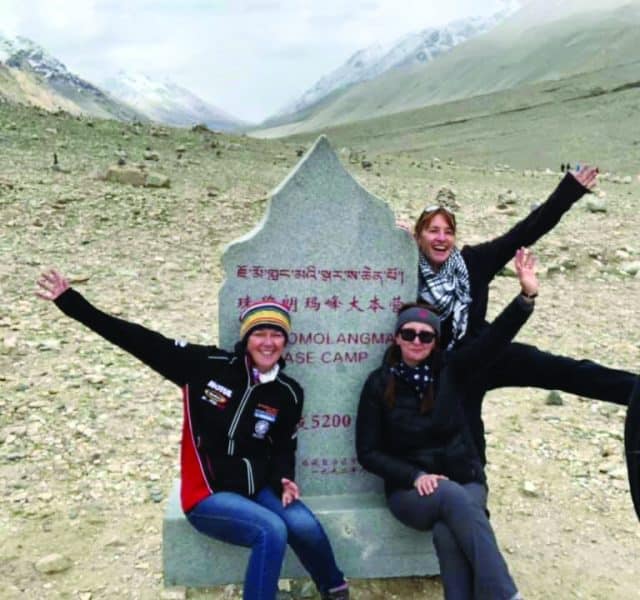
So named by a predictive text error by my other half, but seeming quite appropriate! Woohoo, we made it!! The first ever all-women team to ride to Base Camp. Actually, it was the easiest day’s riding of the trip – beautiful, twisty roads, little traffic and simple navigation. Then for the final few kms we were chauffeured in an electric bus – along with a few other tourists – as the Chinese are trying to protect the national park around the big mountain. The rooms at the Rongbuk monastery are basic, with no showers and “hole above a pit” toilets, but the beds have electric blankets and the restaurant serves delicious food and pints of milky coffee. Perfect. We went to bed happy, but anxious that we hadn’t seen Everest yet, there was still too much cloud. Were we to be disappointed?

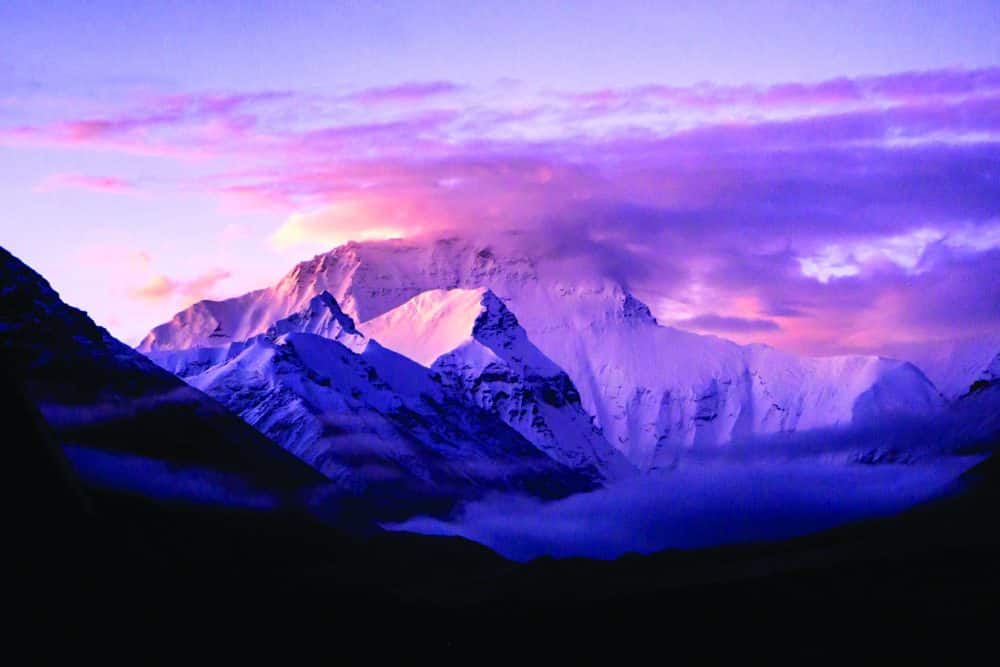
Thankfully overnight the sky cleared and I woke while it was still dark and walked up the road, the sky overhead full of amazing stars, to wait for the sunrise. A few girls had experienced pounding headaches and sickness overnight from the altitude and I’d been having nosebleeds, but the view that we finally got was worth all the blood, sweat and tears! 15 minutes later, Qomolangma decided that we’d been blessed enough and pulled the veil back over herself. She was gone and, after breakfast, so were the Girls On Top, heading back down to our bikes and onward to Xigaze again.

Kathmandu or Bust!

Our last day riding back to Kathmandu was “only” 180km, but we already knew how challenging the roads could be in Nepal. The weather forecast was for more rain and we had the border crossing to get through too.  In our favour were the 2.5 hours we would get back in time differences and that the landslide had been cleared, enabling us to avoid the “bottom” road that had been such a mudfest. Most of the group had flights home booked for the following day so there was no option but to keep going until we got “home”. We’d also heard about another road from Bidur to Kathmandu, rumoured to be 100% tarmac! Of course, it wasn’t – that would have been too easy! – but it was slightly better condition than our outward route and allowed faster progress…… until we hit the mother of all traffic jams, with about 10km to go, just as it got dark. Truck after large, noisy, smelly truck, buses and cars all stuck in both directions, local bikes weaving through them and the road full of potholes and puddles. We squeezed through, split into small groups of 3 or 4 bikes, trying to look out for each other. Chantil dropped her bike, disappearing between the trucks, but was up on her feet, picking her bike up single-handedly, powered by adrenalin!

We regrouped outside Kathmandu, the whole team back together, to tackle the Death Race 2000 that is the ring road. Dark, chokingly dusty, some vehicles with full main beam, some with no lights at all, people crossing in between the traffic, dogs and cows in the road….. you have to be prepared for it all!  Observation, observation, observation doesn’t come into it – you need your sixth sense working overtime!

The euphoria of making it back to the hotel together, all safe, as one closely knit team, was incredible. We were tired, we were smelly, we had no clean clothes (the support truck was stuck in the traffic, finally arriving at 5am with our luggage) but we had done it! 17 hours after we started, and 180kms of the toughest roads I’ve ever done. Much gin was drunk.

Massive thanks to Steph, Alex, Vidhya, Samdup and Tsela from Explore Tibet and all of the Nomadic Knights team for making it possible. To all of the Girls on Top who dared to sign up for the adventure and to the mighty Enfield Himalayan. Nobody could have predicted that I’d learn to love a bike with 24hp!

Huge thanks to Dani and Steph for the article and pictures from their amazing trip.

Tempted?

Intrigued?

Well, they are doing it again in 2020!

Dates: 13 – 26 September
Distance: 2340 km
Motorcycles: Royal Enfield Himalayan or Royal Enfield Bullet Trials Works Replica 500
Riding days: 11 days
Duration: 13 nights
Riding conditions: 90% tarmac, 10% gravel/broken roads
Challenge: 80%

Cost: US$5,980

www.nomadicknights.com/girls-on-top-part-two-september-2020

Who wants to Wander the Wobbly Windies of Wild West Wales?

and how about adding the wet!

First Time Run Leader – Mark Melbourne

The email arrived announcing the 39th 7Ws, and it was a welcome distraction. Now for the form. The usual stuff, but then questions about run leader and back marking. The simplest solution was just to leave the boxes unticked, but maybe I could go on the course and try back marking, or really push the boat out and do the run leaders course. Why not? I ticked the box.

Weeks pass and September draws even closer, and emails arrive confirm my attendance. Job done, 7Ws booked and paid. A few days pass and I receive an email from Ness. Dear Mark, are you able to take a run from Oxford to the Hotel? I was in the home office staring at the email, pondering on the implications, assessing the request that had just been made. I will think, and decline.

Again a few days passed and the mobile rang. I didn’t know the number, but answered. “Hi Mark, it’s Ness from TVAM.” Five minutes later I was a run leader. I’m still unclear how that happened! I won’t go through the detail of planning, app checking, route checking and google street view virtual trip clicking, but I was concerned.

Finally, the big day had arrived, the 39th 7Ws. The pre-ride briefing was given, and I sat wondering what I’d signed up for. I was issued with double white armbands. I was looking official and it went to my head a bit. There were 30 minutes to go, and we were the last group to leave. Just to add to the tension, we were apparently waiting for a pinlock visor to arrive. With 10 minutes to go, I scrambled around making sure route app was working – all dressed and ready to go.

Outside in the car park, as the ‘orange’ run leader it was my turn to speak. Are you all happy? Good to go. I couldn’t say much more, as my briefing notes were on the kitchen table 22 miles away. Fortunately, Ness stepped in and filled in the numerous blanks. All that was left was for me to put on my helmet and get on my bike – which was parked in the ‘pink’ run bay. I put this down to early nerves when parking.

I felt like a flight leader preparing for take-off, seeing the bikes forming up behind me ready for the off.  Lights on, all pointing in my direction all waiting for me to set off. I did so, praying that the navigation app would perform, and it did. Not the usual Garmin or TomTom but a little known app called Kurviger. She started talking to me. “Take the 3rd junction.” A quick glance in the mirror confirmed that I was being followed. Great it’s all working. Now for my very first marker, look, aim and point. A quick glance in the mirror confirmed they had stopped safely.

After a solid 4 minutes and 30 seconds it all looked like it was going to plan; taking the bends, riding smoothly, all good. Then, why am I on the A420? I should have taken the left fork. No one will notice if I just pop down, go around and come back up. It worked a treat, and I was back on track. (Proofers note: To her great amusement the backmarker spotted the run leader on the opposite side of the dual carriageway, heading back in the direction from which we had just come.)

From here on, the journey was almost flawless, with only minor hiccups. My biggest worry seemed to be losing everyone for a few miles. Where have they all gone? I wasn’t going that quickly, surely. But coffee breaks and lunch soon solved that issue.

The roads got better and better, and I shouted “#@$! Yeah” after a particularly exhilarating and progressive ride through the glorious Welsh countryside. Arriving at the hotel some hours later, much to my relief it seems that I had only lost two: one over-enthusiastic rider who overtook me, and one that didn’t turn in to the hotel. To these two poor lost souls, I am sorry.

It was a nerve-racking adventure, and my first attempt at being a run leader. It completely knackered me, as the levels of concentration involved were more than anticipated. It wasn’t just riding, it was the planning for the safety and directions for the group, the riding and in the wet. I really don’t like riding in the wet.

I had dinner and some drinks, and hit the sack. Would I do it again? Absolutely! It was one of the most rewarding things I have ever done, and the feedback I received was overwhelming.  However, with all these things I couldn’t have done it without a fantastic backmarker (big shout out for Kathy Drogemuller) and all the team between us. Without them it could have all gone wrong, so even if I was in the front, it was a team effort. Thanks to everyone on making my first run a success. Of course, a final thank you to Ness who talked me into it and supplied all the help and support I needed.

Second time attendee

Rhona Ferry

It was September 2018 that I attended my first 7Ws, and my first trip with TVAM. I had been full of anxiety, as I didn’t know what to expect and at that time didn’t really know many people. Those fears were soon squashed that weekend and, feeling that I had to spread the word on how great 7Ws is, I wrote about my experience for Slipstream.

Fast forward 12 months and I was counting the days until I headed off on another 7Ws. I was really looking forward to a weekend of riding, training, fun and catching up with friends made over the past year through other activities within TVAM.

On this trip , however, a new training opportunity called ‘Starburst’ was introduced which meant that there were now two types of training opportunities available to associates. The first was the usual group ride out with the advantage of being allocated different observed rides throughout the day, and the other (Starburst) was a full day’s 1:2 training session with an Observer.

As this was the first time this training opportunity had been offered, my husband and I decided to sign up, thinking it would be the boost needed to iron out our bad habits. It certainly did that.

We were allocated Barrie Smith as our trainer for the day and it began with a very thorough briefing about what we could expect for the day ahead.  My husband and I each had different areas to work on. Barrie worked seamlessly the entire day so I didn’t feel like I was holding them back, and vice versa.

It really did feel like one to one training and he built my confidence so much. Barrie also recognised when I was tired from pushing myself and made sure I had sufficient breaks to recharge. I got so much out of the day and felt improvements on areas that I had struggled with before, as did my husband.

The route had a variety of fast-flowing, twisty roads and some more technical sections and just the right amount of traffic for overtaking practice. It took in parts of the Rhayadar ring, heading up to Snowdonia and stopping at a disused power-station with scenic views overlooking a lake at Llyn Trawsfyndd.

The return ride included Newtown to Crossgates where we could really put what we had learned during the day into practice. I couldn’t believe how I rode that route in comparison to the last time I was there – smoother, faster and safer.

The day included plenty of stops to discuss opportunities for learning and improvement, as well as lunch and cake stops. We both gained a lot out of it and would highly recommend the intensive training day if given the opportunity. What a great idea for associates! We really are spoilt for learning choices with this club.

A huge thank you to Barrie for his time and valuable training. We could definitely feel the difference riding home the following day. We would also like to thank Ness, Andy and all for making this 7Ws trip another one to remember. They even managed to control the doom and gloom weather for most parts of the days.

Roll on the next one.

27th – 29th March 2020
First published in Slipstream November 2019

One Bike to Rule Them All?

Motorcyclists, on average, own more than one motorcycle. Only truly hardcore automotive enthusiasts own more than one car, the financial and logistical constraints of the format conspiring to ensure that even most performance-oriented cars need to be able to function as someone’s only mode of practical transport. Motorcycles don’t have that problem.

Today, it’s possible to have a garage full of bikes that have dramatically different operational envelopes. But what came first, the chicken or the egg? Do we need multiple motorcycles because each one is only good at one thing? Or is it the other way around, and brands are only able to thrive while selling specialised hardware precisely because they know you have other bikes for other purposes?

There are dirt bikes for exploring byways; sportsbikes for clipping apexes at trackdays; naked roadsters for B-road blasts; big tourers for nipping to the Black Forest for a long weekend in comfort; and even long, low cruisers for rolling up at your favourite biker cafe in style. In truth, I could spend the rest of this article just listing the many genres and applications of motorcycles, and still have someone email me a list of those I’d missed.

And yet, even if you have the means to stock your garage with diverse choices, there’s a purity to doing it all on just one bike. There have been several times in my riding career when the question of which bike to ride was moot, and it’s always liberating. No worries about whether I’ve brought the wrong bike for a particular ride or trip, no nagging concern that I might’ve had more fun on one of my other motorcycles. It was a bike ride, I rode my bike. Simple.

Insurance, tax and MOTs all need paying for regardless of how the mileage is divided up, and the reality is that you can only sit in one saddle at a time. Sure, there are practical benefits to sharing the load – if one bike is off the road for repairs or maintenance it’s handy to have a backup. Although it must be said that this argument breaks down if, like me, you aim for your fleet to have as little overlap as possible. If your sporty bike gets a puncture the day before a trackday you can’t exactly shrug and take your cruiser instead.

And yet, I’m increasingly convinced that one bike can do it all. Twenty years ago the only way to get good brakes, suspension and decent power was to grit your teeth and clamber aboard a dedicated sportsbike – comfort and practicality be damned. They were the flagships, and everything else was compromised in some way – and so people compromised on luggage and comfort instead. But these days the most expensive bikes in the showroom stand tall on their dirt-styled tyres, glowering down at lesser bikes with their array of LED spotlights. Adventure Bikes can do now everything as well, or better, than everything else in the showroom.

20 years ago, top-flight sportsbikes were the only way to get good performance.

Touring, trackdays & commuting – there’s a certain simplicity to doing it all on one bike.

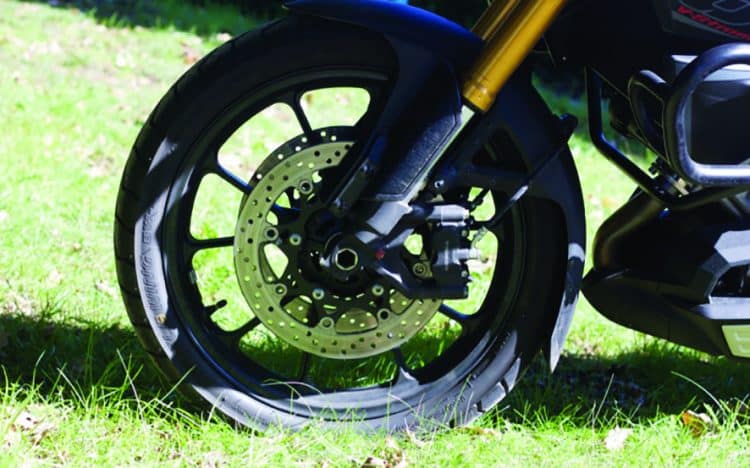
Upside-down cartridge forks and radial brakes, but also two-up comfort and luggage?

Comfort? Check – Adventure Bikes, or Adventure Tourers as some variants are labelled, are designed to soak up big miles with ease. Performance? Check – the top-flight models from the European manufacturers use big engines to put out more torque and power than can be usefully employed anywhere outside a racetrack. Brakes and suspension are not only better quality than race bikes from just a few years ago, they manage the trick of enabling these big beasts to out-handle dedicated performance machines on the bumpiest of neglected British roads.

Want tech? Sportsbikes are the ones playing catch-up these days, with the slickest TFT screens, automated electronic suspension and riding aids going to the Adventure Bikes first. And finally, luggage; beefy subframes and fashionable yet functional top-loading panniers mean that the dedicated touring motorcycle has all but died out, with only BMW and Honda offering a grand total of three models between them in the UK. I know that there’s a little more choice in North American markets, but in Europe, the Adventure Bike has completely taken over.

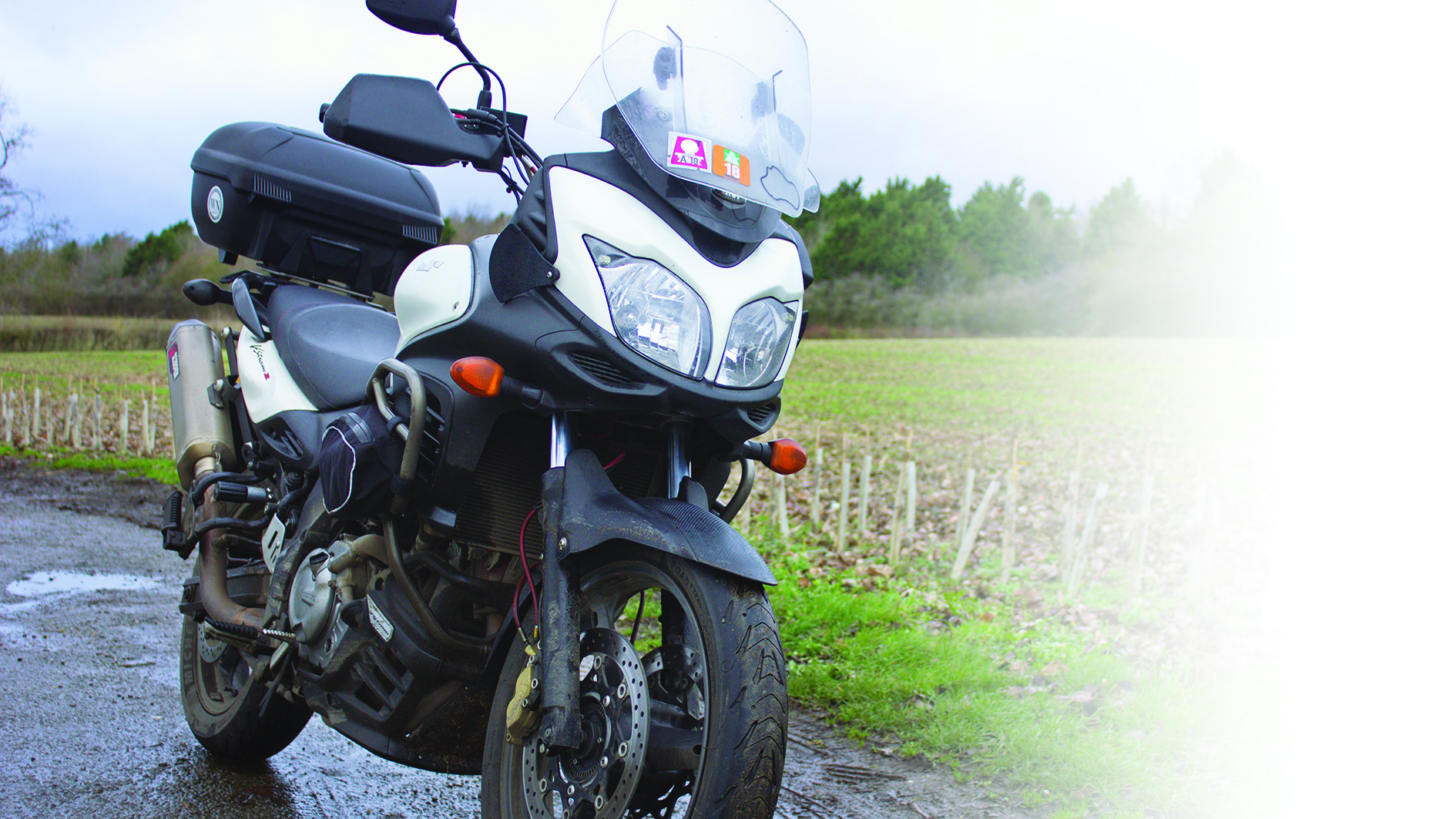
And honestly, I’m just as guilty of contributing to this state of affairs. I bought a V-Strom 650, modified it to suit and then spent 75,000 miles riding it in all conditions, on all surfaces, in every type of terrain and weather, across borders, on road, track and beyond, with and without luggage and passenger. And during my adventures, did I ever think that another bike might have been better at performing the task at hand, might have made a trip, ride or other biking experience that much more enjoyable? Sure – but only for one small part of the journey. You see, unless you do all your riding within a few miles of your house, you’re going to put down some miles travelling to the good roads, or the racetrack, or the trailhead. And while a sportsbike will be slightly more fun when you’re actually knee-down at Mallory Park, there’s a reason why hardcore track-rats cart their bikes around in vans. Carving up mountain passes is indeed more rewarding on my Street Triple than it is on my V-Strom, but only just. And the V-Strom will make the journey there far easier and more enjoyable, with better wind protection, as well as easier-to-use, more spacious and more secure luggage.

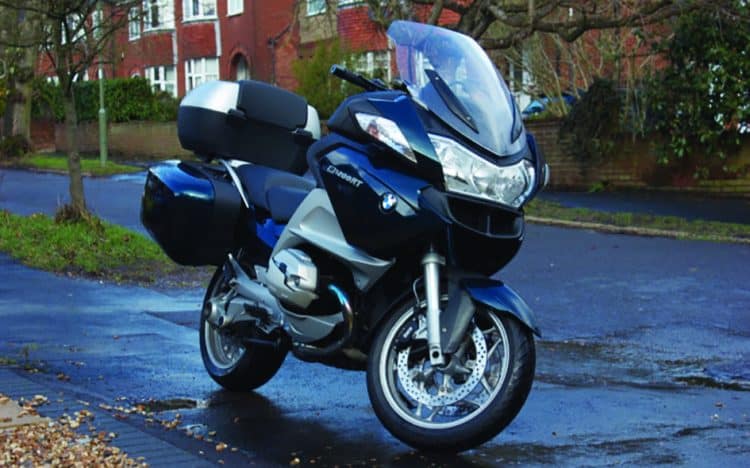
Dedicated touring bikes still exist, but adventure bikes have largely made them redundant.

With bumpy roads, variable weather and lots to carry, would they have been better off on ADVs

After several days of re-packing and re-strapping my tailpack, I really started to miss my topbox.

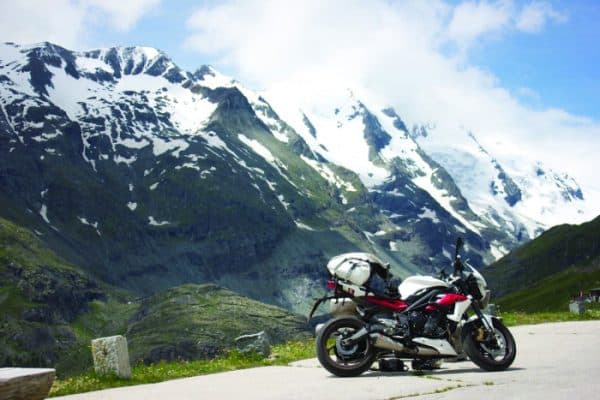
This point was driven home by me earlier this year across two separate trips – one 7-day blast across the Swiss Alps, and another shorter loop around the Scottish North Coast 500 – both undertaken by myself and a friend on our trusty Street Triples. We both had an absolute blast, but after long days in the saddles we realised that we would’ve given up very little in terms of cornering enjoyment if we’d been riding middleweight Adventure Bikes instead.

500 miles along French motorways was a trial to be overcome. Squeezing clothes and toiletries into tiny tailpacks was a daily frustration. The bumpy roads of the highlands knackered our wrists and short fuel ranges were a constant gnawing concern. Sure, you may want to stop every 100 miles, but you can’t always find an open petrol station in many of the most interesting parts of Europe, never mind beyond! When the rain arrived, I missed my V-Strom’s windshield, fairing and handguards. And while oiling my chain would’ve been easier with the V-Strom’s centrestand. Many adventure bikes solve the problem entirely with shaft-driven rear wheels.

A BMW R1250GS is lighter and more nimble than it’s fully-faired RT cousin, has better wind protection than the naked R and will be far more comfortable during the long motorway stretches than the RS. An S1000RR has more power and weighs less than an S1000XR, but which one would you rather take for a long ride through the Pyrenees? Which one would your pillion prefer? Naked bikes, sportsbikes, retro roadsters – they all look great and perform brilliantly when the conditions are magazine-photo-perfect, but at any other part of the trip you’ll want something a little less single-minded.

Twenty years ago the compromises would have been huge. I would have had to sacrifice a massive amount of engine, handling and braking performance to get my desired level of comfort and practicality. Not any more. And there will certainly be those of you who see the pain and discomfort of using a more focused device as a badge of honour and pride, and I certainly understand that. There are those amongst you for whom any compromise will be one too many. My brother maintains that he’ll never give up the front-end feel he enjoys from his sportsbike, and his wife seems perfectly happy to tour from that tiny back seat. That said, it’s funny how he’s putting far more miles on his CCM GP450 these days…

And so, as always, it comes down to personal preference. I’m not going to be thinning my personal fleet just yet, nor stop adding more specialised bikes to the garage to fill ever-smaller niches. I’m fortunate enough to able to afford to keep multiple motorcycles, even if the annual mileages on my more focused vehicles is dwarfed by that of my Adventure Bike. And if you only have the resources or the space to keep a single motorcycle in your garage, then why not pick one that is a jack of all trades, while also managing the impressive trick of damn near mastering them all?

“Call that an adventure bike? This is an adventure bike!”


Nick Tasker

First published in Slipstream November 2019

From Rookie to Advanced Rider

Until a few years ago, I had absolutely no interest in bikes. My only experience was riding my Dad’s old Puch Maxi 50cc moped just to get me to and from college for a year. Once I’d passed my driving test, I never gave bikes a second thought. I preferred riding horses!

Fast forward to 2012, my husband Ian announced, out of the blue, that he wanted a bike and would take his test again. Mid-life crisis I called it. He had ridden bikes as a teenager, a 125, then an RD250 at 17 but once he’d got a car, he sold it and never got another one. In March 2012 he booked himself on a 1-week DAS course. The day after he passed, he went over to Aylesbury to pick up his Honda CBF600 SA. I was  persuaded to jump on the back one Summer’s evening and reluctantly agreed. I absolutely hated it, way too fast and I felt vulnerable and not in control – never again! Until a year later when he changed to a Triumph Sprint, this time it was more comfortable, but I still wasn’t convinced.

As a keen cyclist, Ian was interested in marshalling at cycling events and one of his friends from Reading Cycling Club said he would need to do the advanced test so suggested joining TVAM. By Spring 2014, after chopping in the Truimph Sprint for a Triumph Explorer 1200, he joined TVAM. I rode pillion a couple of times on the Explorer and found it pretty comfy. That summer for my 50th birthday, I agreed to a weekend away on the bike to Hay-on-Wye. I was nervous but we had a great time. Later that year, Ian passed his advanced test.

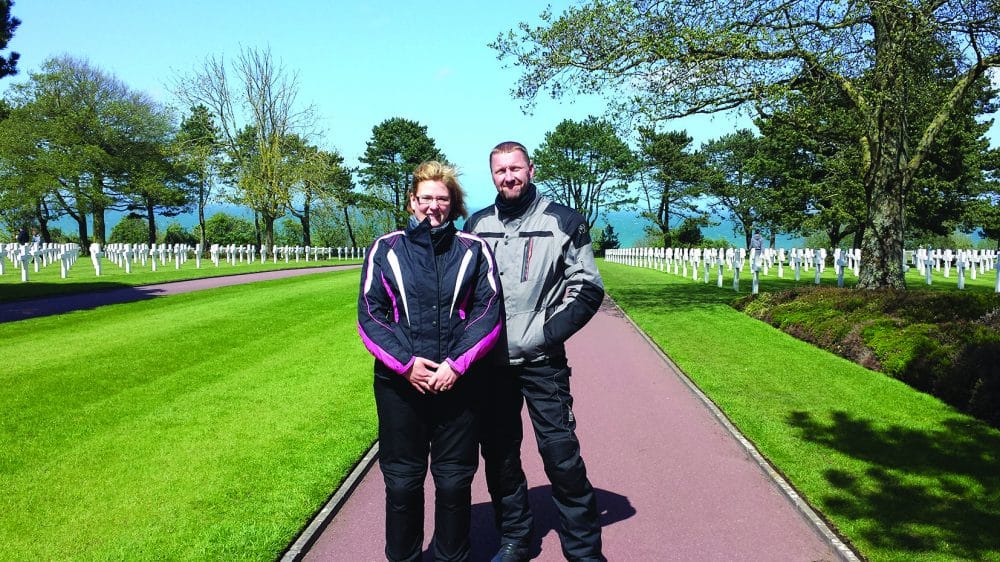
In early 2015 we found out about a trip to France for 1 day, a ‘French Taster’. It was one night in Calais and a day’s riding on some French roads. Good for those who had never biked abroad. We had a great time despite the appalling weather. Strangely, it didn’t put me off and a couple of months later we went on another french trip to Normandy with some more TVAM members. I’d always wanted to see the beaches and the WW2 sites. I was actually beginning to enjoy this biking lark! We did the pillion riding course which was really useful and informative. Looking back, I think the people we’d met helped make these trips so enjoyable as well as some lovely roads.

We began to visit Wales a couple of times a year where the roads are just fantastic! Ian had been on his first 7Ws so we rode some of those amazing roads in mid Wales. I started to tag along to some of the Green team runs and some of the other group runs. I had got used to the marker system and buddy system after a few rides, but at this point, whilst I had become accustomed to riding pillion, I still had no desire to ride myself.

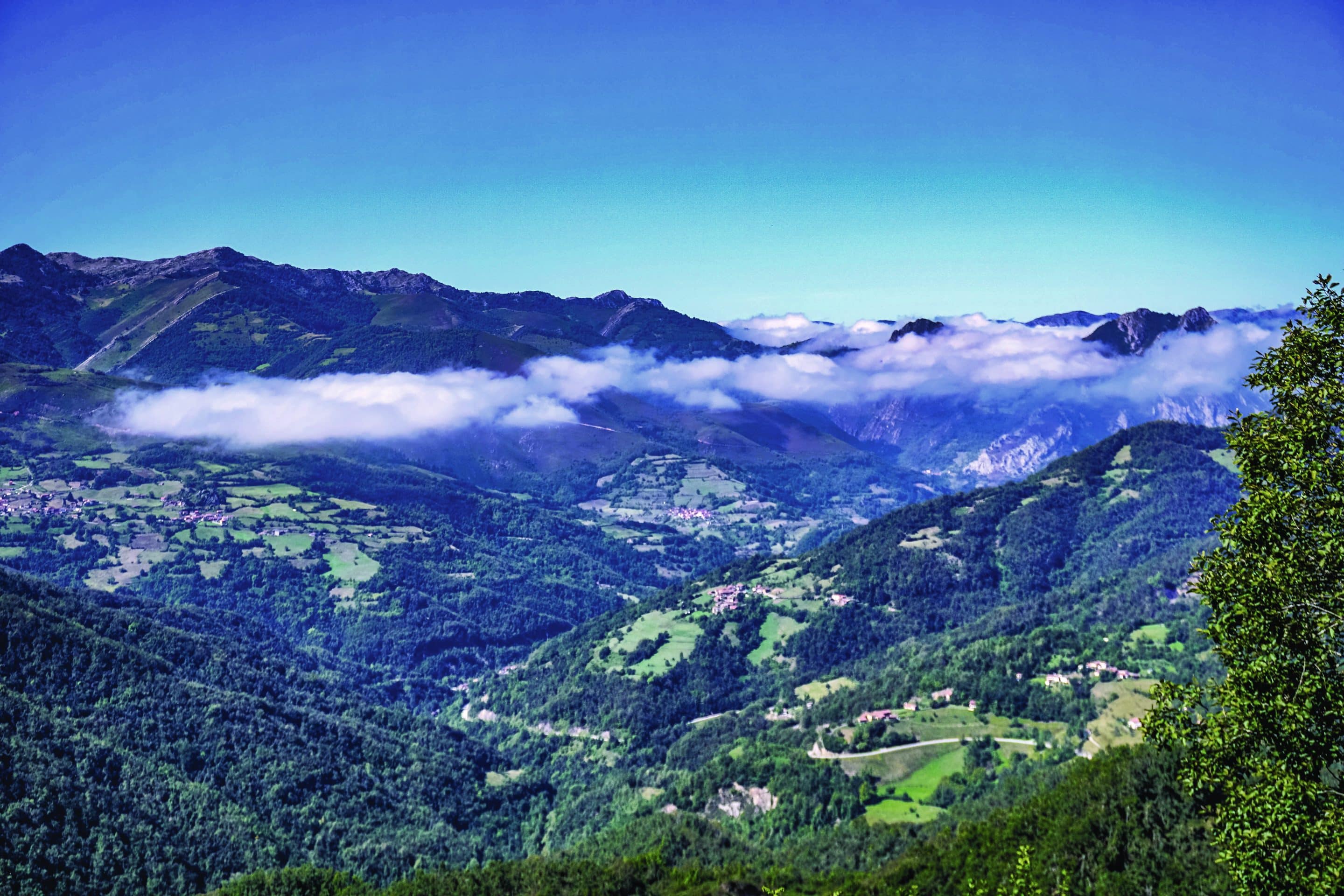
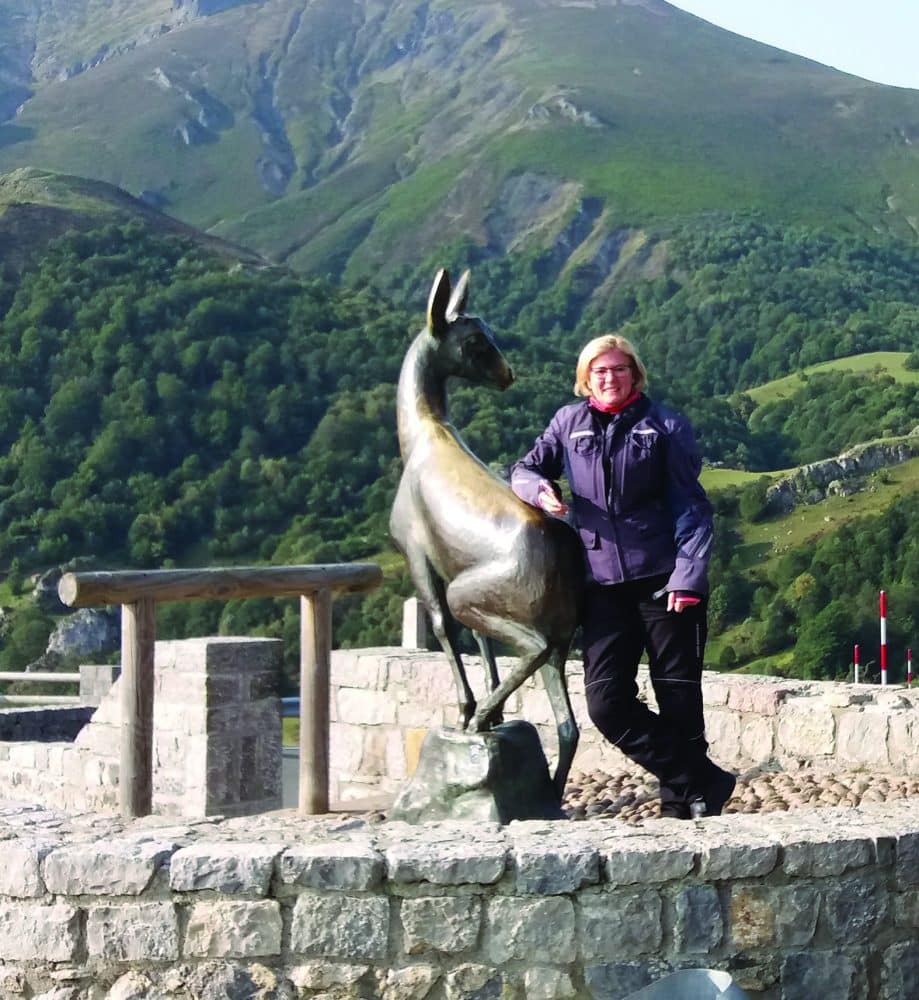
In September 2016, we went to the Picos de Europa national park in Spain with some other TVAM members. I absolutely loved it! The roads and scenery were fabulous, we were with a great bunch of people and we all got along well and had some laughs (and a few gins!) along the way. On my return, I decided to bite the bullet and get some bike lessons. So, in October 2016, I booked a taster session with Lightning Training in Caversham. I got on one of their CB125s and rode it around the car park for a bit getting used to the gears and brakes. Despite driving for over 30 years, riding a geared bike didn’t feel natural at all, however, I enjoyed it, so I did my CBT training the following week. I spent the first half of the day around the car park getting up into 2nd gear and practising emergency brakes and U-turns. I got my certificate at the end of the day, really pleased with myself – not bad for a 52 year old!


I was keen to do my Direct Access quite quickly – I wanted to get it done and dusted in a week, like Ian had before – so, I booked a ‘Roadrider’ day for the following week to get some more road experience. I had to go to the Lightning’s Oxford centre as Reading was fully booked. I rode the CB125 again around Oxford City centre, which was very challenging – bicycles and buses everywhere. We rode a couple of times between their Oxford and Reading centres to pickup and drop off the bikes, and as we did I was becoming more used to the bike’s controls.

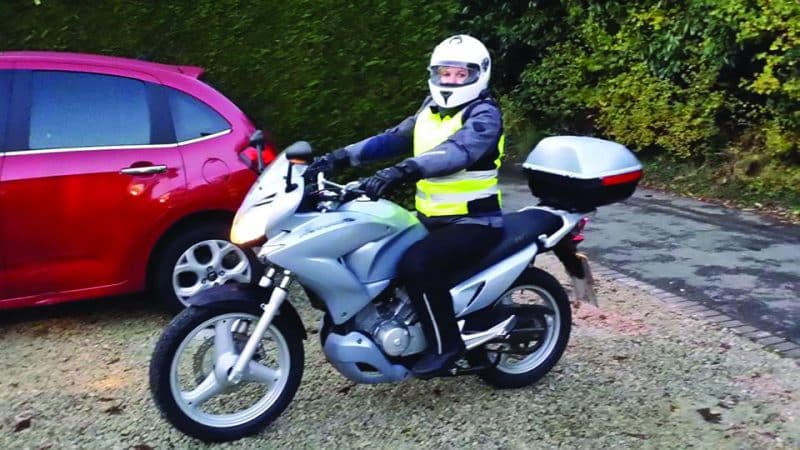
I booked my MOD 1 training for the following week with Lightning, again. I spent all day in their training pad on a knackered old Suzuki Gladius. I was a bit peeved as they had some newish CB650s but they thought they were a bit tall for me. I had a fairly good first half of the day, then I dropped the bike on a U turn ending up with a massive bruise on my leg. It knocked my confidence and they decided not to let me out on the road that day so I was a bit deflated and decided I wasn’t ready for the test. I had bought myself a CB125 but found it a bit small so I got myself a 2007 Honda Varadero 125, which was perfect for me. It was a bit taller and didn’t feel like a 125 in size. It was a great practice bike and I went out a few times on it just getting used to gears, brakes and turning. I kept it for a year, until I got bored of trying to keep up with Ian on his Triumph Explorer.

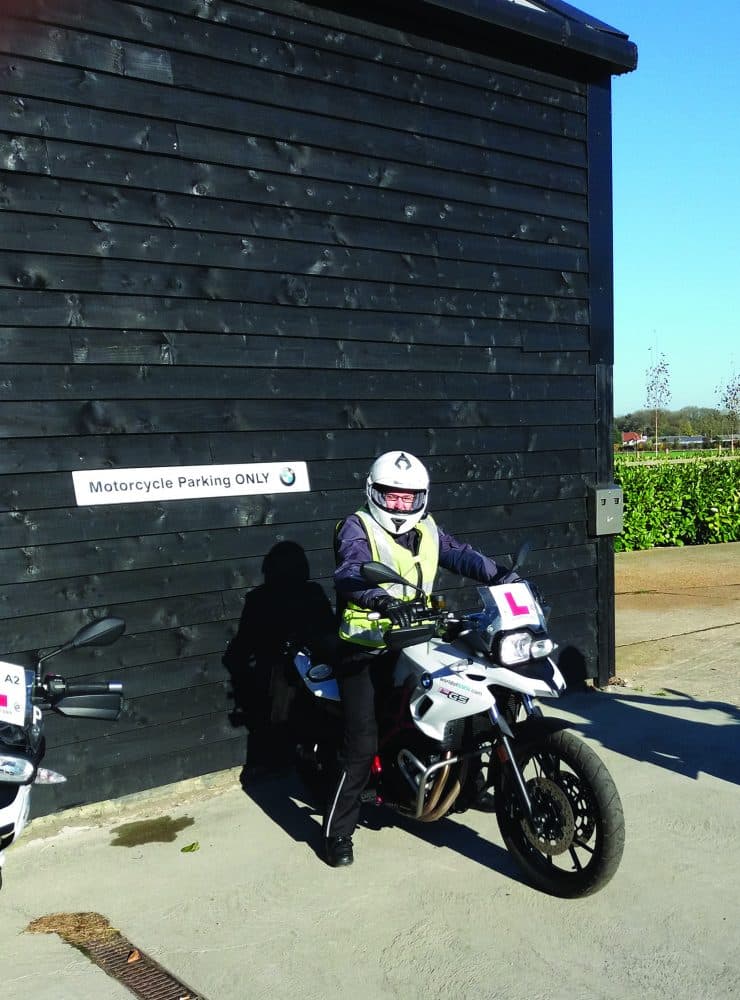
In 2017, going pillion again, we went on our own to France for a ten-day tour, then again to the Picos in the September. When I got back from Spain, I decided I was ready for my big bike test. I had heard about BMW’s Rookie to Rider training through another TVAM member, so I made some enquiries and in October 2017, almost a year to the day of passing my CBT, I booked myself on a 5-day training course up at their centre in Royston, Hertfordshire. The process was pretty easy and they even recommended a local B&B. It turned out that the lady owner had recently passed her DAS with them the summer before and couldn’t recommend them enough. The best thing of all was I got to learn on a new F700 GS!

On the Sunday morning, I arrived at the training centre in Royston around 9am having travelled up the day before. Over a couple of cups of tea, I filled in all the paperwork and then we had a briefing in the classroom with the other students. I immediately opted to start on the 700 rather than the 125. We did a couple of hours or so around their training pad just so they could see our level of riding, then we went out into the countryside, stopping in the popular biking village of Finchingfield. As I reverse parked, my foot slipped on loose gravel and the bike went over – couldn’t have happened in a worse place in front of all those Sunday bikers! Anyhow, I brushed myself down and carried on after a quick cuppa. Apart from that slight hiccup, we had a cracking day’s riding, even getting in some twisties. I couldn’t wait for day two.

Day two was MOD1 training day. Lots more in the training pad, mastering the slaloms, figures of 8 and lots of U-turns. I managed to drop the bike a couple of times doing U-turns but carried on, determined to master this manoeuvre. We did lots of road riding in the afternoon.

Day 3 was more MOD1 and MOD2 training and we got to practise in the actual DAS test enclosure before the test. I dropped the bike AGAIN on the U-turn. At least it was a practice and not the real thing. I was beginning to doubt my U-turn abilities. Everything else was spot on.  .

Day 4 was the MOD1 test. I was nervous and didn’t sleep much the night before. After some more practice in the training pad we headed off over to the test centre just outside Cambridge. There were 2 of us and I went first. I failed! I was gutted and so was Julie, my trainer. I’d done a near perfect test with just that one fault. I’d wobbled over the white line on the U-turn. I did the actual U-turn OK but going over that line was a fail! How frustrating, the other chap passed.

I decided to save day 5 for another time and upon my return home, I spent days on my 125 practising. I had to wait 3 weeks for a re-test, thankfully passing MOD1 the second time and immediately booked my MOD2 test for the following week. I passed with just 3 minors. I was over the moon!

While I was away, Ian had sent me a picture of a 2013 BMW F700GS, the same as I’d been training on at Royston which was for sale in Christchurch. So, the day after I passed, I removed my L plates from my 125 and rode it down to Christchurch on a rainy November day to view the BMW. I picked my new bike the following week, riding home on my own BMW700GS. Happy days! Stopping in Lyndhurst for lunch on the way home, I stalled and dropped my new bike in the car park. I’d only had it five minutes! The throttle was sticking a bit, but I had to ride it home like that in the rain and it was getting dark! I rode quite a bit during the winter months and decided to wait until the Spring before joining TVAM and eventually joined as an Associate in April 2018. Since then, I’ve had over 30 observed rides some good and some not so good but my scores were coming down and my riding improving. I was struggling with cornering, particularly right-hand bends not looking round enough and keeping to the left. I practised these a lot and went on the 7Ws last October plus the Look, Lean and Roll course this year which both helped my riding, cornering and overall confidence immensely. It all started to fall into place.

Finally, on August 1st 2019, I took my Advanced Test and got a F1RST! I am absolutely chuffed to bits. Looking back, it took longer than I would have liked, but I’ve learnt so much in that time, especially as I’ve only been riding a bike just under 3 years. Of course, there’s always room for improvement and I see this as a continuing learning curve with each ride. I cannot thank Observers enough for their support. Steve, my Observer, for encouraging me and getting me through this process. I’m not the easiest of students. Plus, of course Ian, for putting up with me along the way. It’s been quite a journey.

Riding a bike has opened up a whole new world. I’ve been on roads I never knew existed in this country, seen stunning scenery and ridden amazing roads in the UK and through France, Belgium, Luxembourg, Germany and Spain. I’ve met some fabulous people along the way in TVAM, alll of whom have been so friendly and encouraging throughout my journey. Too many names to mention, but you know who you are.

Looking forward to new adventures and hopefully a new bike in the near future.

Julie Colville 

First published in Slipstream October 2019

Why do they do it?

Changing the framework of your mind!

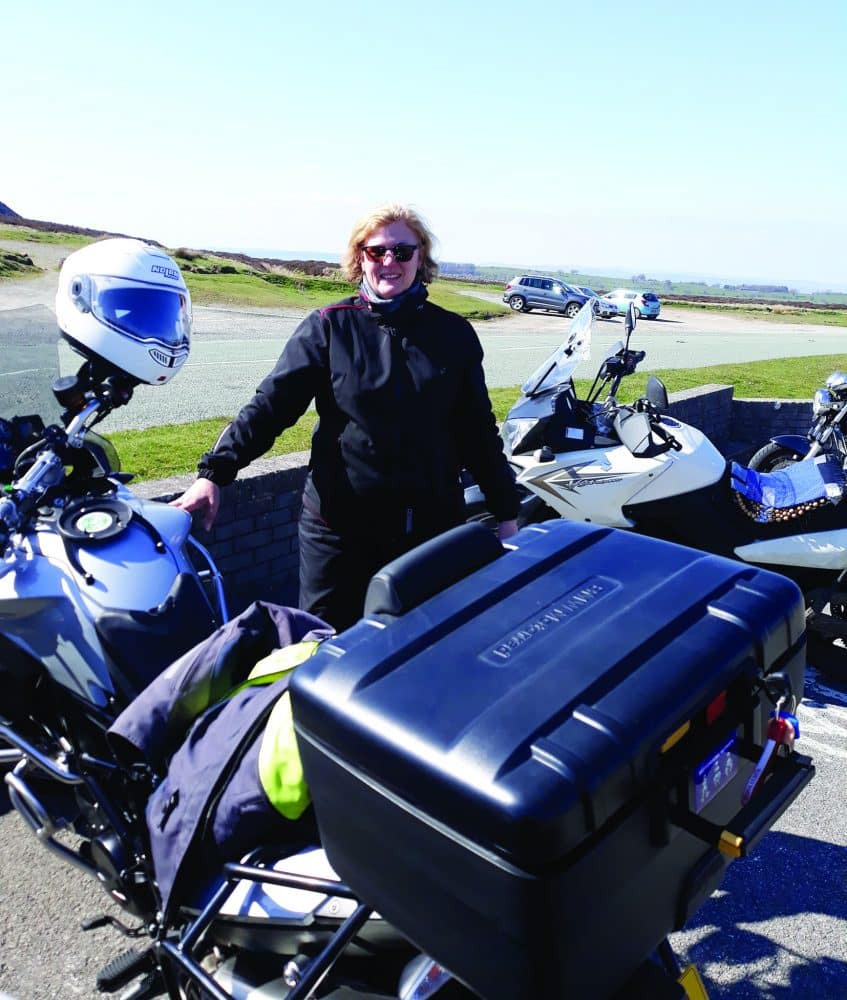
Elspeth Beard, you may have come to see her at the TVAM Seminar on 19th June – nearly 100 members did. Describing her as a remarkable lady is never going to do her justice! If you missed it, you missed a great opportunity.

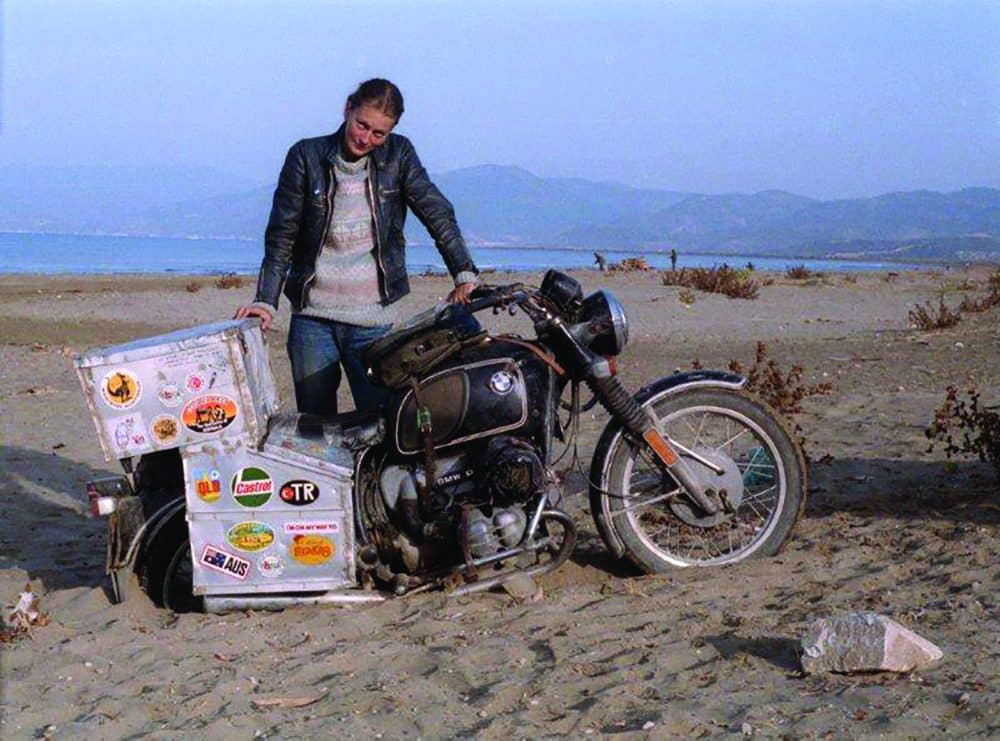
In 1982, at just 23 years of age and training as an architect, Elspeth decided to go around the world solo on her motorcycle! At this time there were no credit cards, mobile phones, no Sat Navs, no internet and little in the way of global communication – do you remember the telex machine? She was the first woman to embark on such a journey and when she left she had little idea of what lay ahead.

She spoke with great humility about her travels having survived some horrendous accidents, travelled through some very unsavoury countries, fended off sexual advances and fallen in love twice. She worked at various places and saved money to enable the next part of her journey. Camping for much of the journey Elspeth rode across the United States to Los Angeles, crossing to New Zealand, stopping in Australia, then on to Malaysia, Singapore, Nepal, India, Iran, Turkey and back home. En route, she looked after her own BMW R60/6 with the help of a Haynes manual and religiously carried out the maintenance.

Her story was told with honesty and wit and is an inspiration for all motorcyclists. In all, Elspeth covered 35,000 miles over two and a half years but when she returned her story went unheard. It wasn’t until 2008 that a freelance journalist heard about her adventure and wrote about it.

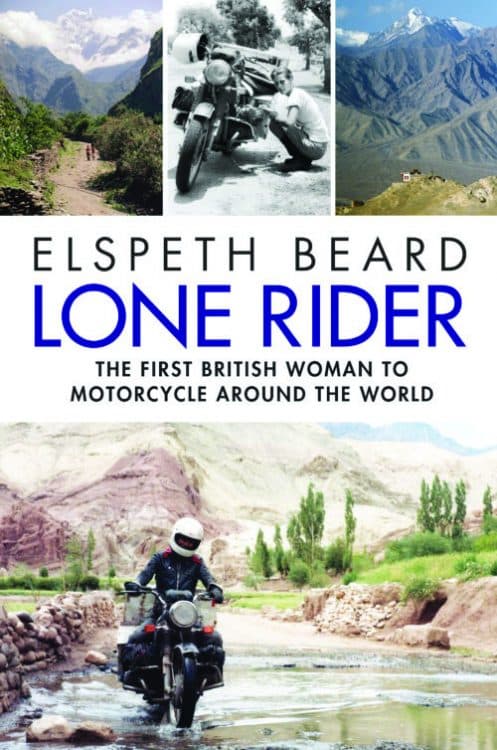
Slowly her story emerged and in 2014 Elspeth finally decided to write her book ‘Lone Rider’. Fast forward 5 years and there is now talk about wanting to make a film about her. What a fantastic end to a story that continues to inspire so many – what an amazing lady!

In Elspeth’s words, ‘There are always excuses not to do something and never the right time to make a start, so just do it!’

David Naylor

First published in Slipstream October 2019

David Jacobi Müllenborn Trip 2019


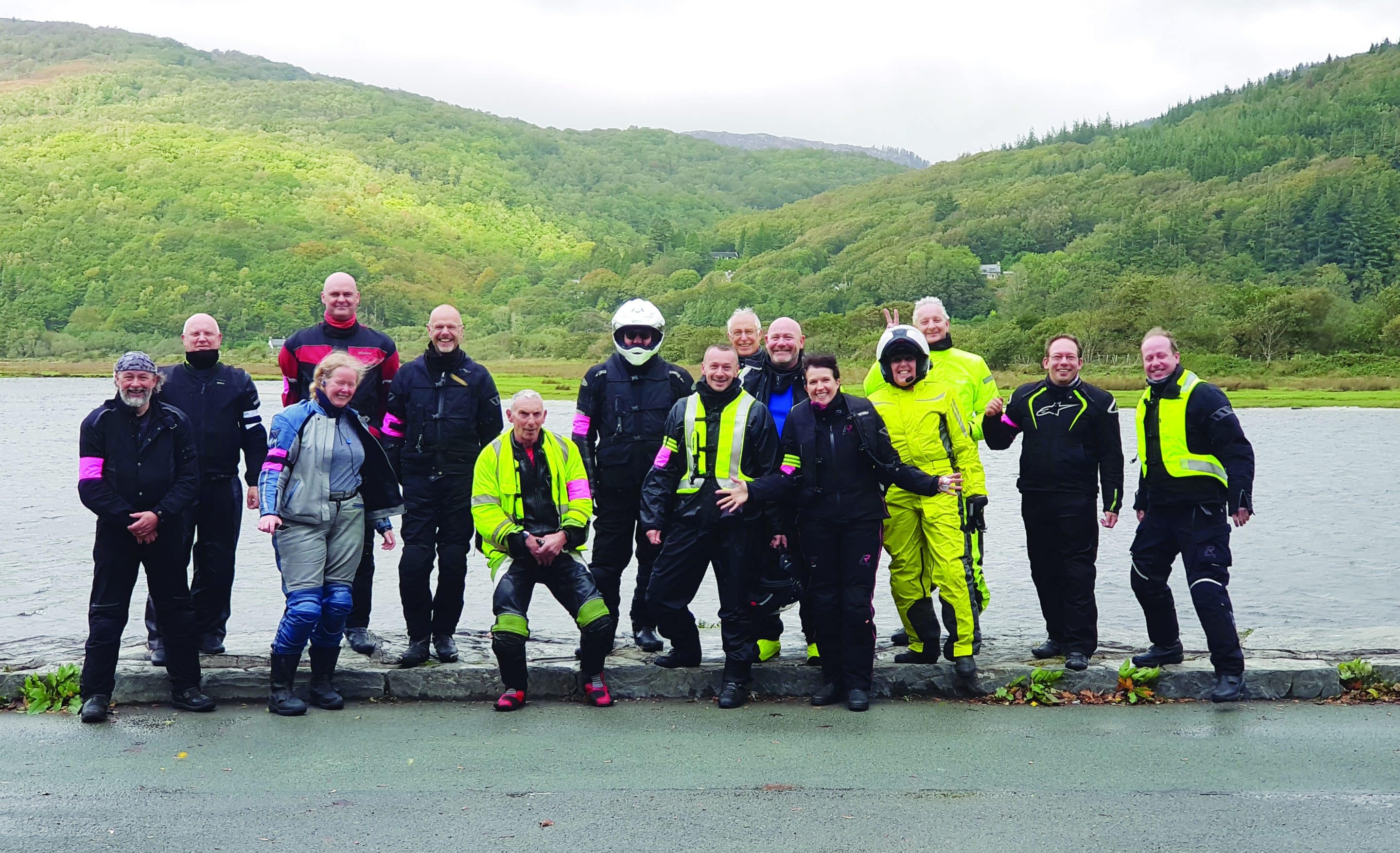
So having dashed off a few lines about riding before, I wondered how hard it could be to write something to capture the happenings on the recent TVAM trip to Mullenborn – named after our past late Chairman David Jacobi who started it all back in 2009.

The thing about Germany is it’s a long way away. This means to get there in a single day you either have to leave home very early or stay down in Kent near the Eurotunnel terminal. Being an older chap, used to a comfortable life and afternoon naps, I chose the latter and booked into what I thought was the Holiday Inn at North Ashford. I’d stayed there many times before and it’s got good rooms, secure parking under CCTV cameras and, most importantly, a bar and food. In the car park is a ‘pub’ owned by the hotel which serves an alternative menu.

Only on checking my booking on the morning of departure did I see I’d actually reserved a room at the totally different Ashford International Hotel. Apart from being a bit more expensive and a lot bigger, it delivered the sleep package I was looking for. It did have the advantage of being next door to a Sainsbury’s Superstore, which serves probably the cheapest petrol in Kent, right on Junction 9 of the M20 if you’re passing.


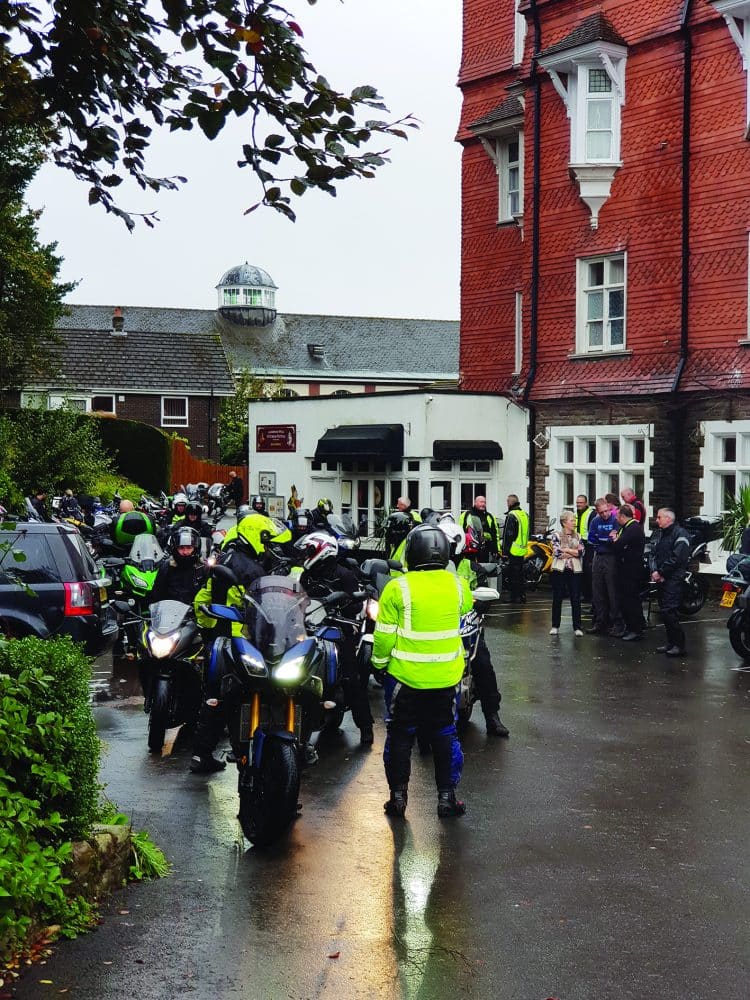
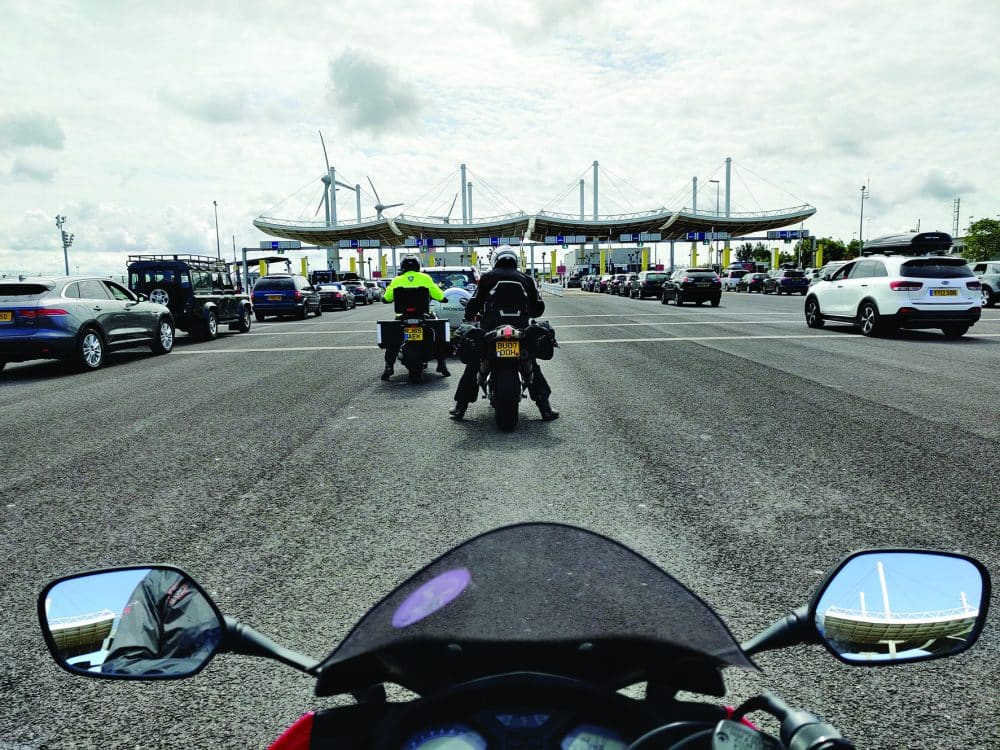
So come the Friday morning arriving at the tunnel terminal was a steady stream of TVAMers all kitted out with top boxes, panniers and strap-on luggage, eager and excited about the long weekend ahead. Those of us with weather apps though were more excited about the biblical weather forecast for northern France that awaited us. Embarking went smoothly and all 40 bikes managed to get to France on the train without incident.

The run from the tunnel to the hotel is not a short affair as it necessitates crossing France and Belgium before descending into Germany so, rather than have a peloton of 40 bikes in convoy, we split into three groups of around 12 – 15 bikes each. Now, despite the harmonisation of Europe, speed limits in each country are different. In France the motorways are 130kph unless raining when they reduce to 110kph. Over most of the country the speed limit on rural roads is just 80kph. In Belgium the motorways are 120kph regardless of conditions (like the UK) and rural roads are 90kph. In Germany though sense prevails and the motorway limit is 130kph with rural roads being 100kph. They also have very few speed cameras – unlike Luxembourg – but more of that later!

Sure enough the heavens delivered on their promise and within an hour of leaving the tunnel our waterproofs were being tested as only the manufacturers could have dreamed of. Through France the 110kph limit seemed sensible with the spray and so speeding up to 120kph in Belgium was probably not a wise move. Of course our group of 15 bikers soldiered bravely on and once in Germany the clouds were touching the hills either side of the road.  Even a downhill motorway section with a slight bend seemed testing at 80kph (that’s 50mph for any Brexiteers).


Two of the three groups chose the the motorway all-the-way route, which though bum-numbing and boring got us to the hotel in time for an early bath and beer well before dinner. One brave group though went for the wiggly half-and-half route and arrived some time after the others, somewhat drowned and thankful no doubt for a hot shower and dinner.

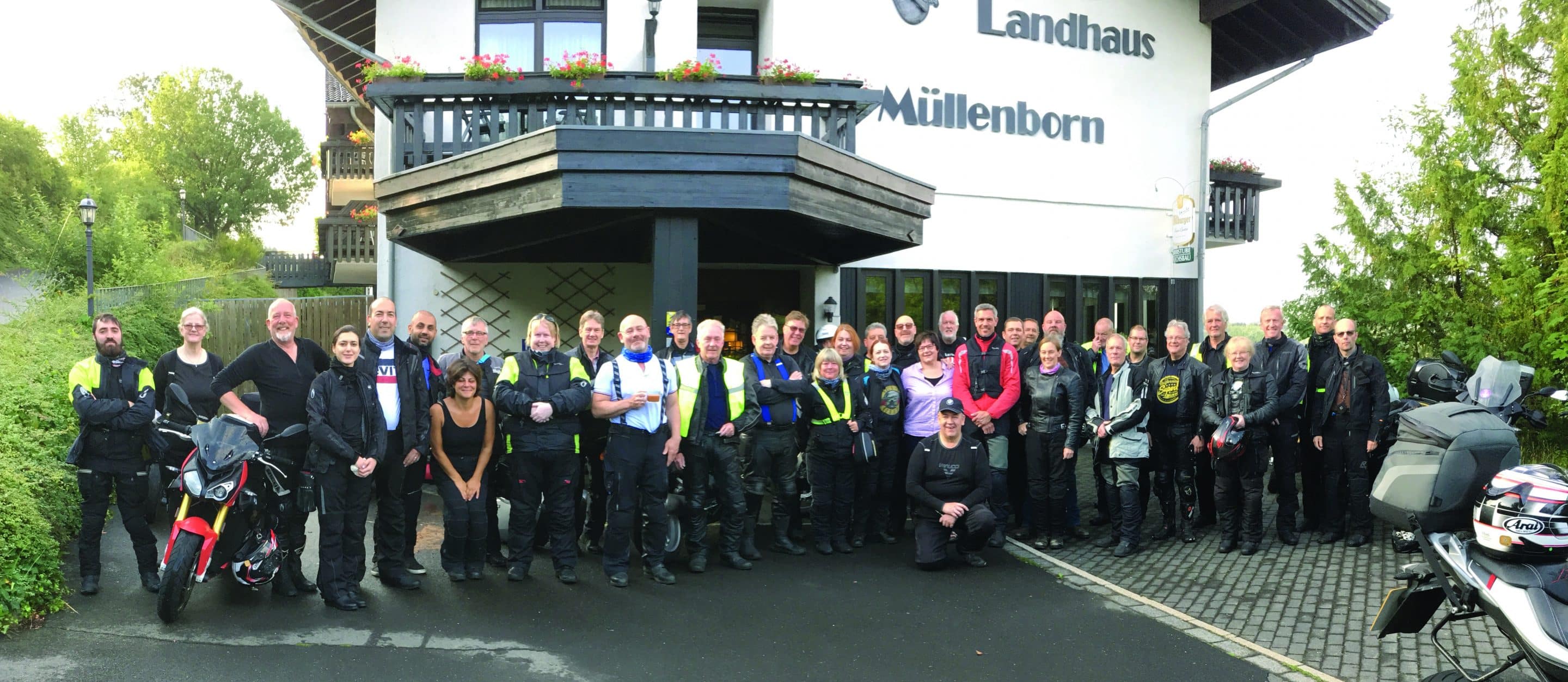
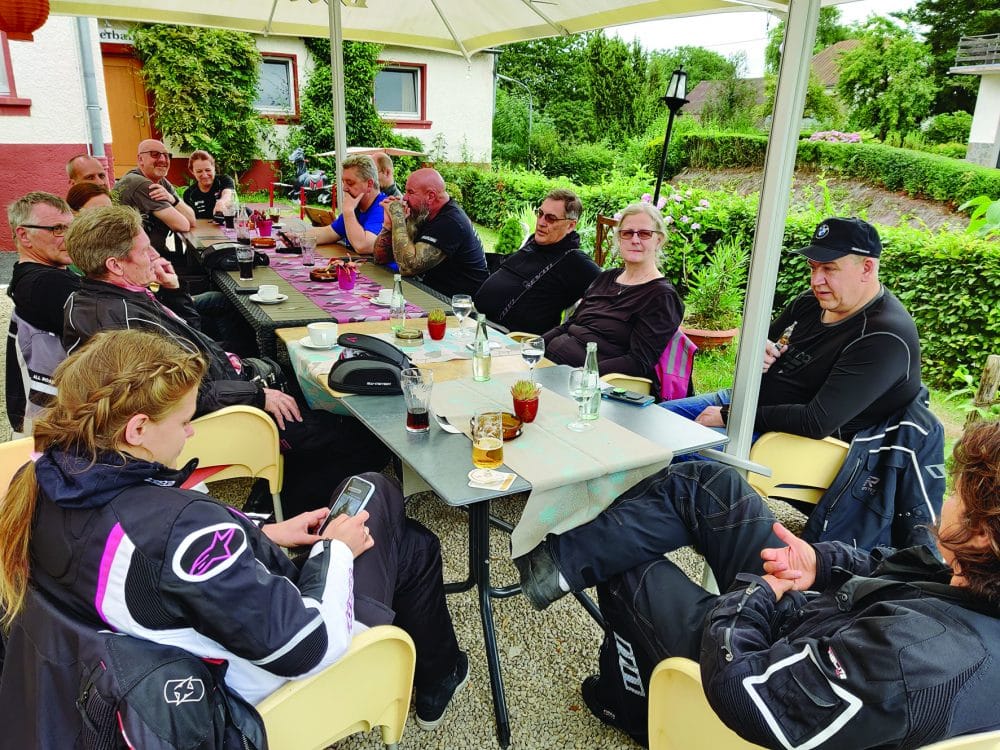
As always Frau Maria, owner of the Landhaus Mullenborn hotel, did us proud on the meal front. Feeding 40+ bikers at one time takes some skill but we sat down to a hearty three course meal with main courses to suit all tastes and food persuasions. My argument that beef is really a vegetarian dish as they only eat grass won few votes but there was still plenty to go round for everyone. Dessert was a selection of cheese cake on sponge (a change from a biscuit base) and other colourful choices. And so it was every evening including the excellent BBQ cooked on the terrace on Sunday evening.

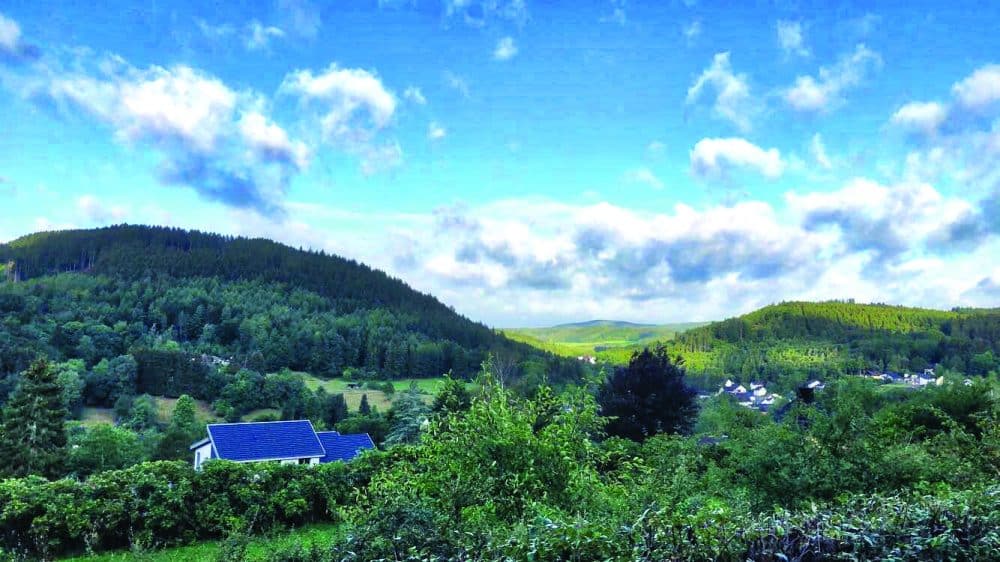
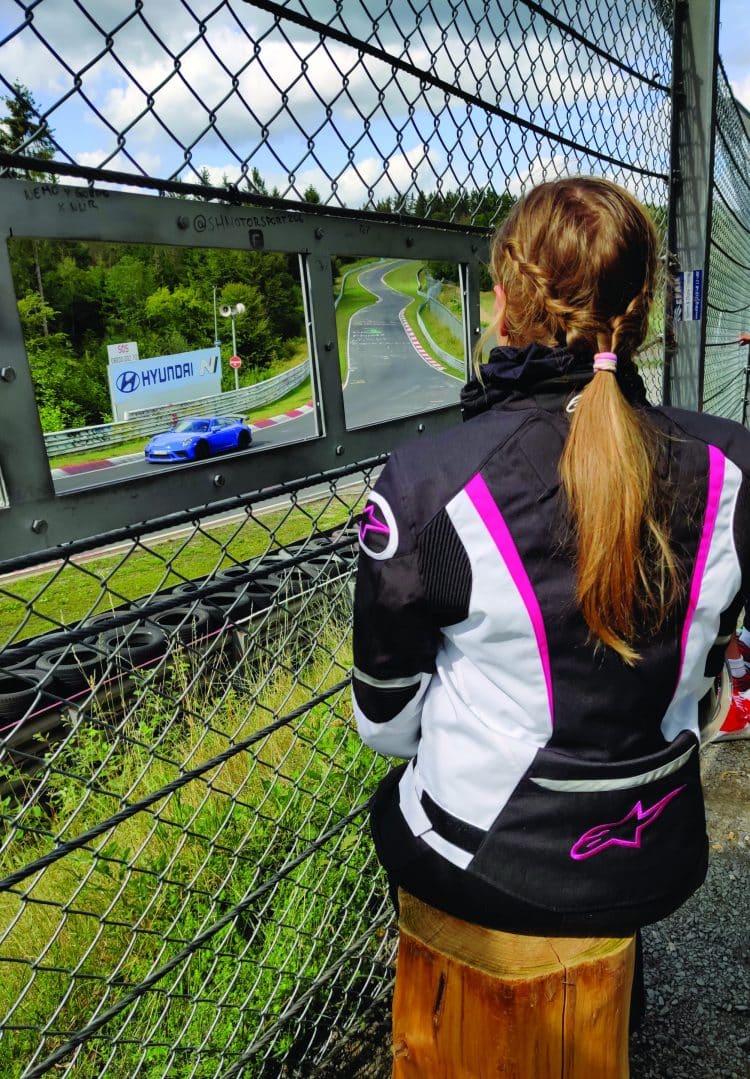
Saturday dawned bright and beautiful and with wet weather gear stowed a number of runs set off to explore the area. Immediately noticeable were the wonderful road surfaces, all black, smooth, and curvy.  The Germans still invest heavily in their road network, as a few found out by the number of road closures we came across as they re-laid thick tarmac over large sections. Why try the infamous Nurburgring when for free you can ride roads like this?

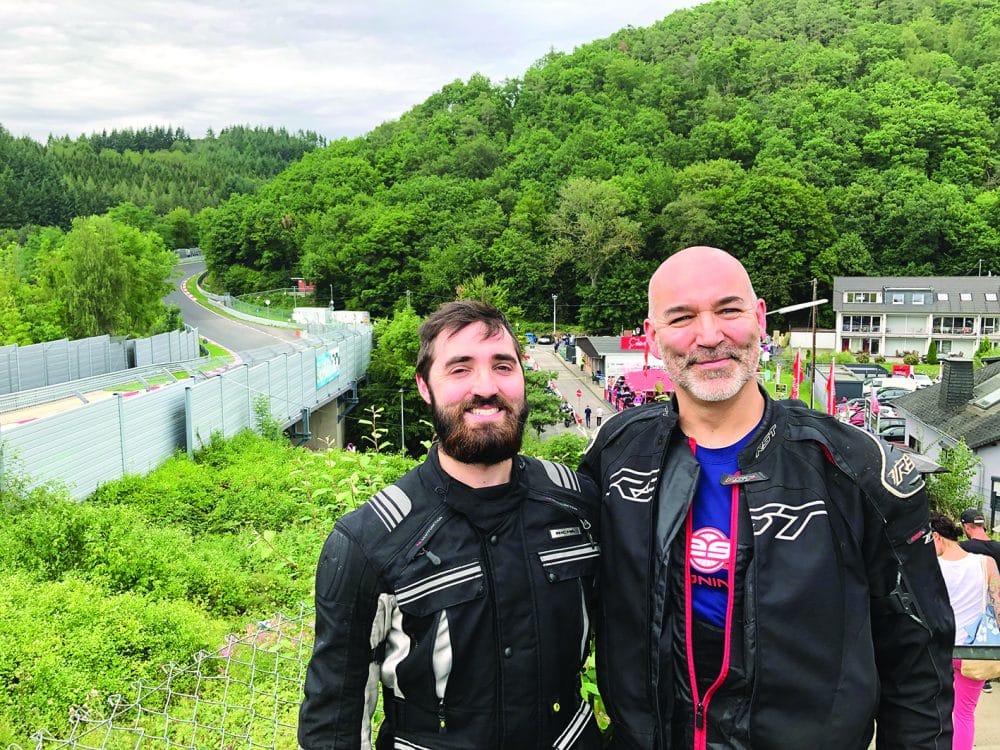
Sunday was a repeat of Saturday only most people trying a different route from the day before. With 6 different choices it was a hard decision which to go on. My group decided to do the North Loop route which promised coffee and cakes as well as river views. Sure enough we arrived at the Luxembourg border in good shape to storm across the bridge and into the river-side cafe where a huge selection of cakes and pastries awaited. The diet was on hold (again). As this cafe also has a fuel station we were able to also replenish our bike’s thirst for fuel and then head-off back into Germany for more twisty roads. A stop at the ‘Ring’ was inevitable so at Adenau we stopped for afternoon refreshments and a bit of spectating. Unfortunately an incident had closed the track so apart from seeing two cars and motorcycle exiting on the back of flatbed trucks there was little action to see.

Monday was a day for going off-piste. A small number of us set off to reconnoitre a possible new route for next year. Taking a slightly different route down some really fast (ahem) twisty roads back to the Luxembourg border for morning coffee and cakes (again!). Then it was new stuff and with Garmin twisty routes selected we set off towards Belgium and to the town of Bastogne. Here they commemorate the WWII Battle of the Bulge which took place in the hills around the town. Sure enough there were a couple of 2nd World War jeeps there as their drivers did their own road trip and of course the Sherman tank which is parked proudly on the edge of the square to remind everyone, complete with battle scars.

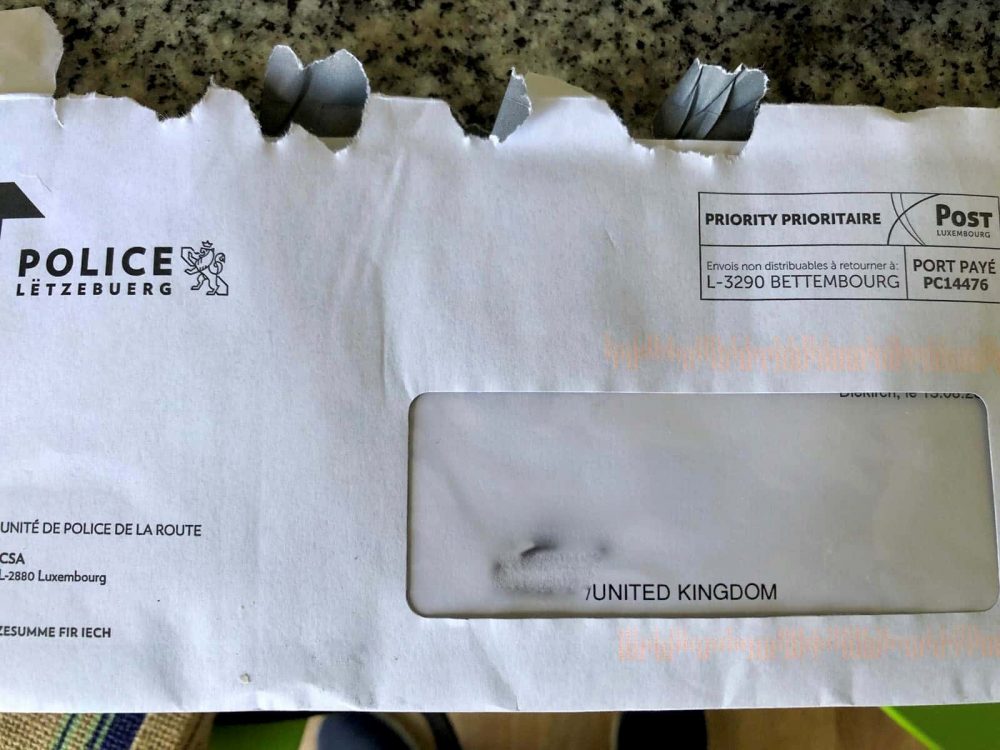
Unfortunately our trip had taken us across to Luxembourg whose police had kindly placed a few speed cameras along our test route. And yes, some of our number tried them out, they do work and what’s more they are very efficient at getting the letters out!

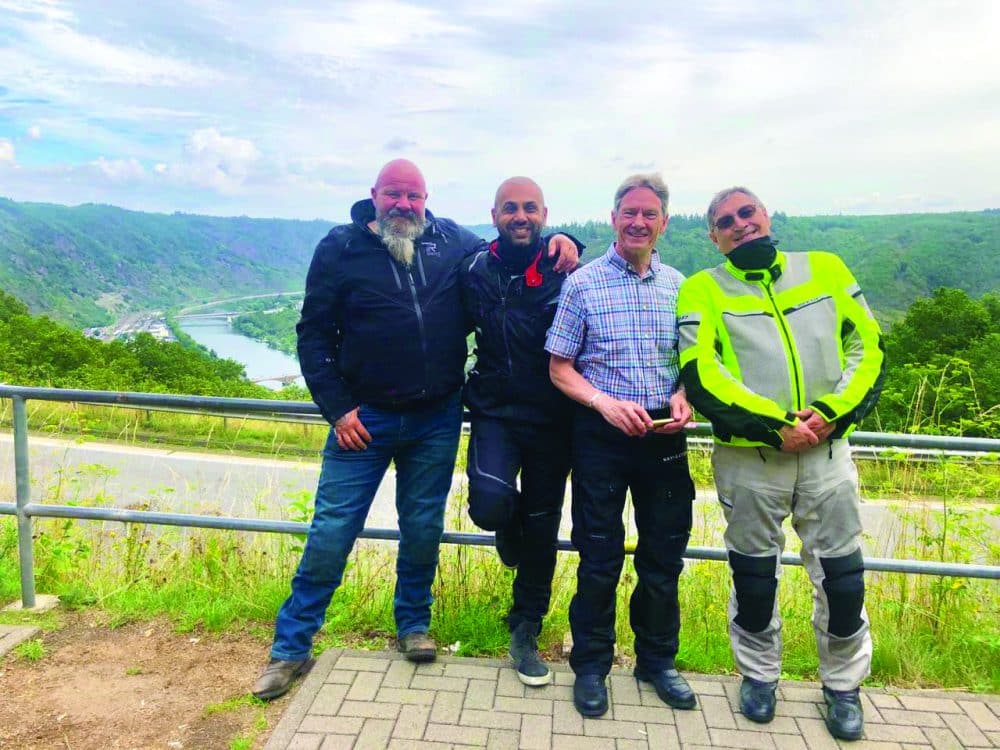
Tuesday was the return trip to Blighty. An early breakfast was followed by the mass photo and then the three groups started to wind their way home. A group of four decided to go independently and take the half and half route to the tunnel but having been thwarted by yet more road closures and diversions reverted to the motorways and actually beat the first motorway group to the tunnel! Not sure how that happened – hopefully not more letters in the post!

Andy Slater

First published in Slipstream September 2019

Saddlesore 1000

Chasing the Sun, G310 Charity Fun for Hampshire and IOW Air Ambulance

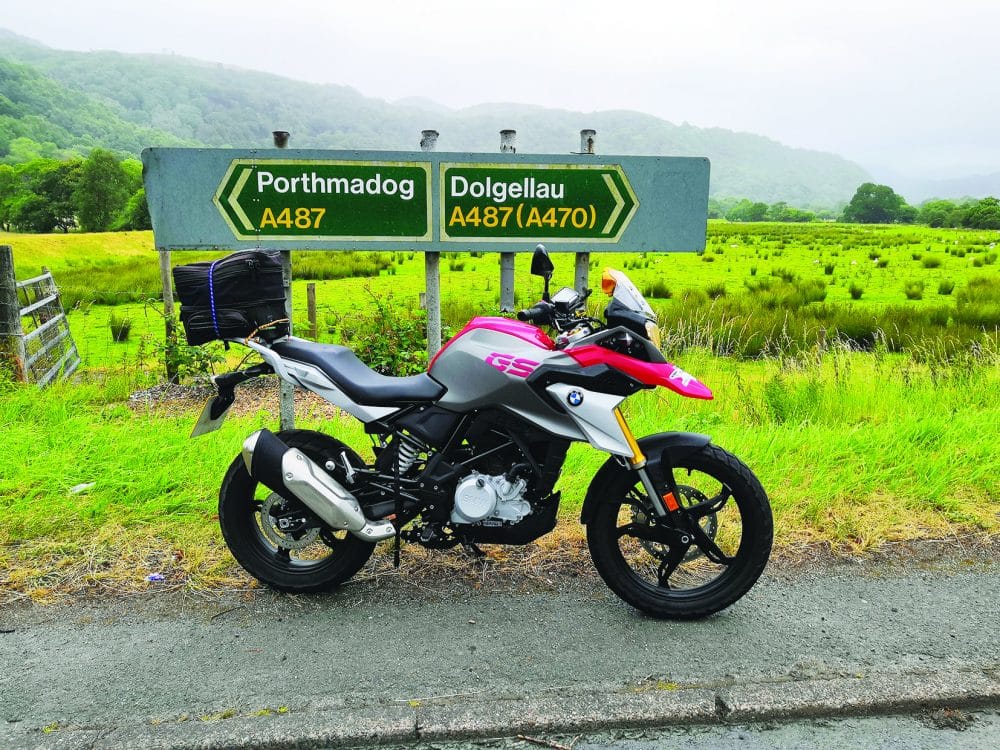
The Saddlesore 1000 mile in 24 hour Challenge is described as an entry level event by the Iron Butt Association, so I thought to myself, “What better for an entry level event than an entry level bike?”, and so was the G310 1000 mile Challenge conceived.

Sometimes how much fun you had during an event is best measured by how you feel in the days following; the tiredness and feeling low only being the swing back from the size of the adrenaline-fueled high.

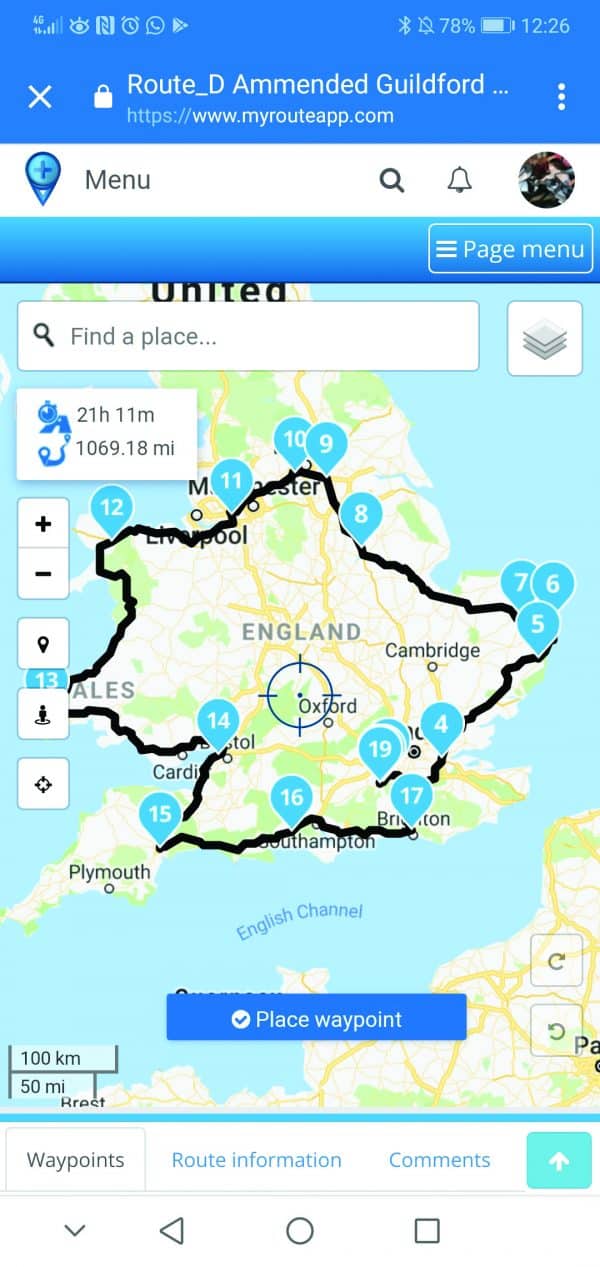
How many bikes, in any manufacturer’s range, can run that high in the rev range for 24 hours? We averaged 48mph over the 1080 miles covered if we include stops. We took in 12 fuel stops and about 160 minutes off the bikes for fueling and breaks, giving 1190 minutes riding (that’s 19 hours and 50 minutes for those of you without a calculator). The G310 bikes ran perfectly, never missing a single-cylinder beat and never letting us down, utterly reliable.

The start was in Guildford, close to work, at first light. We set off just before 5am and chased the sunrise, until it started to shower as we drove through East Anglia. Getting some early motorway miles along the Miserable 25 (sorry M25) was important. We made great time to Great Yarmouth and knowing the roads certainly helped as we rolled in 25 minutes early, clearly making better time than the predicted progress from myrouteapp.

A sterling start and this helped set the mood – we can do this, we have a realistic shot. There was no going back and no negative thinking. Before we started I was very optimistic and our mindset was always, “The bikes are capable and we have to dig deep to match the bikes.” I also anticipated that an easy run at the start of the day was crucial.

From Great Yarmouth the roads became congested with bleary-eyed drivers but yet again this was no issue for the mighty G310s. Our steel horses allowed us to carve through the traffic, the lightweight bikes filtering better than an Italian barista who had consumed too many espressos that morning.

During this leg, which took us towards the A1 for the northern route, James and I had an opportunity to road test some of the bike features. For example, we discovered that during a 3rd Gear roll on test the GS smashed the R but the R was back on top when we changed the test to a 4th Gear roll on test. The GS has better fuel range than the R, but the R has more top end with slightly better brakes.

By the end of the trip I think I can comfortably say the GS was better for the long trip, given the extra leg room and height. The screen on the GS also helps. Each time I looked back on the motorways I could see James’ gangly figure tucked in like Frankie Detori, or was he spooning it?

The A1 and M62 past Ferrybridge and then A55 to Bangor went by in a blur of motorway miles with bluetooth headsets and Amazon music to the rescue. We shared on Instagram the jubilation (or was it relief) of reaching the next corners but the best was yet to come. We knew we could make it. Bangor was half way and now we were heading home.

The stories of the Red Dragon, so synonymous with Wales, lie in both myth and fact. I can say that the roads in Wales are like the Dragon both mythical and factual, a true treat. The only trouble with these slinky black ribbons that wind through the proclaimed God’s Country and the numerous villages, is that they slow the overall progress. That said, we enjoyed carving our way through the breathtaking Welsh scenery and we even took time out to stop for photos.

Let’s not forget that the Saddlesore is not a race but a challenge to be enjoyed at every opportunity. Taking motorways and major A roads is easier but not as enjoyable. Remember the highs and lows? This was a high.

At Haverfordwest we took a much-needed break, went live on Instagram and grabbed food. We were ahead of the worst case scenario but behind the earliest time of arrival, we were in good shape. Spirits were high but we also knew that we would be leaving behind the best of the riding.

Heading to Exeter was going to be a slog. A combination of motorway and major A roads with these amazing little yellow-coloured devices to help verify our average speed at every opportunity, how helpful? Night fell over Wales and we drew into what would be the most dangerous section. Because the G310s were doing 150-170 miles on a tank we stopped frequently and looking back on this it was a strategy that kept us fresh.

In general we felt driving standards to be very good across the UK, I only had one moment where a van decided to shift from the left lane on the roundabout to take the right exit, so cutting straight in front of me. My eyes were high and so it was all under control but, despite what is implied by roadcraft, I am only human and I did share universally acknowledged hand signals for indicating which direction the driver should have taken. Both duly acknowledged with apologetic hands from the driver that implied “sorry mate I didn’t see you’’. No harm, no foul, let’s crack on with the ride.

At Exeter we took stock. I grab out the inner jacket for my trusty StreetGuard Suit, which has never let me down. If there was one criticism of the bikes it has to be the headlights. If buying the G310GS, I would add the BMW Auxiliary Lights. I had to use what amounted to a tealight candle to cut a path along the A35 in the complete darkness. It is rather eerie with no roadside lighting. Fortunately, the risk of wildlife taking a kamikaze run kept the adrenaline flowing. I had to draw on every ounce of experience to keep systematic.

Ah the true challenge begins, no longer about the 33hp performance but now about the head handling fatigue and picking the right riding lines at night. On the A35 coming to Dorchester we caught up to a car that was making good and safe progress. I took the decision to follow. The car’s main beam bringing an early dawn to the night sky, I could see again. James, my constant shadow, summarised this route beautifully. A challenge mentally and a test of the bike as I had to fight for quick corrections, which the bike gave me every time I asked, although I would probably have shod the G310GS with different rubber, as the feel is not great at the edge of the tyre.

A splash and dash at Ringwood gave an opportunity to observe interesting local life venturing out in the wee hours. Judging the condition and stagger of this specimen I dare say that staying at home would have been a better shout. These are some of the risks with night riding, yet fewer patrols and more yellow devices on poles in the sky are suggested to be the correct strategy.

From Ringwood it was fairly simple riding to Brighton. The roads were lit up like the daytime and a kaleidoscope of cats-eyes gave me a runway strip to aim for. Still eyes wide open. A brief detour around the outside of Brighton following diversion signs put a small dent in our time, but we knew we had this in the bag, we knew the bikes were solid. It would only be our own misjudgment that would let the side down. We’re going to make it!

I enjoy working for BMW; it is a brilliant Brand to work with. Likewise I don’t think many people would say, at around two in the morning, that they would be looking forward to heading to work, however, we were two such people. James had reached the point of, ‘let’s get this over with’ and wanted to rush the Brighton fuel stop. I did slow things down deliberately to ensure we left with the right mindset. We had a long 50mph Average Speed Camera stint to do and we needed to keep focused. These were the banker miles. Brighton was 1000 and everything else was dotting i’s and crossing the t’s.

We rolled into Guildford before 3:30am. An almost anticlimactic feeling crept over us. A combination of relief, excitement, tiredness and the realisation we had to ride home. Where’s my bed? After photos, we both said to each other “stay safe”, knowing that most accidents happen close to home. This final part is a word of caution. On my way home I knocked back the speed, even in nationals to around 45mph. Exiting a village towards the wood, I came round a corner to see a deer exit the woods. I was in the correct road position so handled the situation by slowing and pulling across the road. The deer and I play another day.

Lightning can strike twice, about two miles up the road another deer bolted from the woods and again I duly manoeuvred around. Bambi and I head off to tell this tale. Don’t drop your guard after the perceived Iron Butt finishing line, the finish is at home in bed.

My thanks to the following groups for promotion and members donations: my IAM group TVAM, Thames Valley ROSPA and Southern BMW Owners Group. A special thanks to my wife and family for their support. My wife’s remark was a word of thanks to BMW, the G310 did not wake her up upon my return. If you do wish to contact me about BMW or the trip then please email me simon_forder@hotmail.com. Finally, thank you to everyone who donated to https://www.justgiving.com/fundraising/vinesbikesfundraising or in the pots. We think combined we have just about reached our target, post-event donations still very welcome!

Simon Forder

First published in Slipstream September 2019

3Rs Returns to Ross-on-Wye

The weekend of the 9-11th August saw 30 riders and 1 pillion head to Ross-on-Wye for a superb weekend, staying at the Penyard House Hotel. The weekend promised good roads in good company with observed rides to those that wanted them. The weather, by contrast, was not quite so accommodating.

As we gathered at Morrison’s Café in Reading early on the Friday morning, the rain promptly started. However, by the time we had finished breakfast and received our briefing, the weather had improved slightly and the sun even tried to come out. We headed off in 2 groups to wind our way through some lovely countryside on some great backroads – both groups arriving at the hotel within 10 minutes of each other having covered approximately 150 miles – great timing!

The Penyard House Hotel is a lovely place to stay. Set in some beautiful grounds just outside Ross-on-Wye on the A40. The staff made us feel very welcome; the food was tasty and the rooms were clean and comfy – what more could you ask for?

The main topic of conversation during breakfast on Saturday morning was the atrocious weather forecast. Torrential rain and gusts of up to 60mph in exposed areas. Not ideal biking weather! That said, the decision was soon made for the entire group to go on Kelly’s run which was heading north. It appeared that this would avoid the worst of the weather that was tracking in from the west – sorry Gary (next time). The run was excellent, almost 200 miles, mainly B-roads in the morning and then some nice, fast-flowing A-roads in the afternoon.

Saturday’s pre-dinner drinks were enjoyed outside in the sunshine – what a variety of weather we had endured that day. During dinner each table were handed a quiz paper with a selection of Highway Code and Roadcraft questions, along with some general motorcycle trivia. James did an excellent job as quiz master. Hopefully we all learnt something – if nothing else, that it was probably high time we re-read the Highway Code.

On Sunday we enjoyed a leisurely breakfast before splitting into 2 groups and heading for home. The weather was much more favourable and some of us even got home in the dry, whilst those of us that took the more scenic route were not quite so lucky.

Whilst the weather was far from ideal it didn’t stop the fun. Keep an eye out in Slipstream for details of next year’s 3Rs trips.

Tom Grey

First published in Slipstream September 2019

Some comments from those who took part:

Can’t improve on a great weekend, just want more please.

I really enjoyed the 3Rs. What made it stand out for me was the company and a chance to meet some new TVAM people. The organisation was flexible and seamless with everyone working together.

It was my first 3Rs but hopefully not my last. I liked the size of the group as you got to speak with everyone.

Fantastic weekend, very good value. The 3Rs is by far my best TVAM trip to-date. Particularly impressed by the organisation, quality and value of the hotel and the smaller and friendly group of fellow TVAM riders. Please put me down for the next one.

Keep it small. The event has a great feel to it.

More people with pink hair! Really great weekend.

All in all a really enjoyable weekend with plenty of rocking, rolling and riding present – and quite a bit of the wet and windy thrown in for good measure.

Roll on 2020 with more 3Rs trips to enjoy.
Well done to the organising team!

We All Have A Story To Tell

We all have a motorbike story/journey to tell. Mine started in 1992 as an 11-year old going to secondary school for the first time and passing the motorbike shop with its mass of green Kawasakis outside. When I first saw a Ninja, I knew I would one day own one.

Fast forward a few years to July 2017. I sat my motorbike theory test and passed first time. I sat the test even before having ever been on a bike. My theory was, if I couldn’t pass the written test then there wouldn’t be any point doing the practical. It wasn’t until a year later that I took my CBT in July 2018. Oh my, I fell in love. I knew this was something that I really wanted to do. The feeling of being on a bike was akin to my other passion – skydiving – freedom! Due to work, it took me until September 2018 to pass my full licence.

As a nurse, I knew passing wasn’t the end of my motorbike journey, rather it was just the beginning. I was aware I needed to be as safe as I possibly could, having seen what happens when things go wrong. In November 2018 I joined TVAM. I remember my first ride, I was shocking! The second observed ride was just as bad. I came to a stop at a junction, put my foot down, went to go but had to stop again. I’d noticed bikes coming around the blind corner. It was almost like the tarmac had been removed, there was nothing there. The road had disappeared and I toppled over onto my ass, laughing at my stupidity. I’m not sure my Observer, David, saw the funny side. At the time we discussed it and we went through what happened and what went wrong. It’s only now, after going through the process, that I fully appreciate why David hadn’t see the funny side. Firstly, I’d missed the sign to say ‘give way 100 yards’. Secondly, I didn’t read the road and hadn’t noticed it was off camber – until I was on my ass.  Finally, I rushed into something without an appropriate plan. On my second observed ride, I was still learning the system – IPSGA.

I was still making silly mistakes up until my 7th observed ride – 6 weeks since starting at TVAM. But then, something clicked. It all made sense. Hoorah! I was riding at an advanced level on each observed ride and I understood. I was becoming a thinking rider. I was becoming a safer rider. I was also becoming a fatter rider thanks to all the coffee and cake over debriefs!

At this point, I thought of something crazy. I will ride around the Highlands on my own, but that’s a story for another day.

Then came my first, big group ride on 7Ws. For most people, 7Ws is a weekend full of fun, sun (at times) and learning. For me it was full of tears, tantrums and losing myself a little along the way. The Friday of 7Ws riding to Wales, was great. My only kind of cock-up was filtering on a solid white line for the Chief Observer to witness. Duh! In my defence, the road was clear and the car behind me was making me nervous, so I avoided danger. That’s my story and I’m going to stick with it. The Friday for me was the best part of the weekend. Having never ridden within a big group or over such distances, it was a challenge which I embraced with both wheels. I hold onto that experience with very high esteem and it helped shape me into a good rider.

On the Saturday, I went on the pink run. I really had no idea what to expect. I went pink because it’s such a pretty colour. In hindsight, I should have paid attention to the ride not the colour. I’m not going to go into much detail, but I was rocking backwards and forwards, crying and ready to hand in my keys! Thanks to Ness and Barry, that didn’t happen. With their observation, knowledge, support and guidance I survived the Saturday. It gave me the reality check that I needed.

On the Sunday, the final group ride, I took the long ride home. Again, in hindsight, I should have taken the quick route. Although this ride was tantrum and tear free, the fatigue had set in. I had to, at each stop, check my own human factors, looking for holes, repair those holes and continue riding again.

Although, my experience on the 7Ws wasn’t like most peoples, I am very much looking forward to September, where I plan on being a back marker.

Anyway, I came back from the 7Ws a different rider. I was a lot more competent, but I’d also lost some of my confidence. Although I have a very limited biking history, the one thing I’ve learned is you need to be competent, but you also need confidence – not too much, but just enough, and I’d lost some of mine. I felt sorry for my Observer; he really didn’t know what he was getting himself into when he was paired with me. I’m not going to lie; I was – still am – a challenge. It took a pep talk and a social ride for me to regain what I’d lost. From that point, each ride was about fine tuning. My cross check went swimmingly and I was recommended for my advanced test. Hoorah!

After only 9 months of riding under my belt I went to Scotland and rode the NC500 on my own. I had to come back a few days earlier than planned because I had, whilst on the NC500 route, booked my test. I never do anything the easy way.

I remember the morning of my advanced test; I was bricking it. Yes, I vomited! I’m not ashamed to admit that nerves got the better of me for all of 10 minutes. But I took it like a girl, I ‘super-womaned’ up, I could achieve anything, and I did. I passed my advanced test with a F1RST and full clean sheet of ones.

I went from a learner, to advanced rider in 9 months! Within 6 months of joining TVAM I had undergone 16 observed rides, countless social rides both with large groups, small groups and, when not on an official ride, my ‘riding buddy’ David. With maybe 60 hours of contact time, countless text messages ranging from analysing rides, discussing situations and random questions with my Observer, I was an advanced rider. As I said, I could achieve anything and I did, but I had the support of the group and my Observer. If it was not for David but also Alan, Steve, Ness, Keith and many more Observers and fellow Associates (mostly Julie – who was told everything – if it went wrong, we discussed; if it went right, we discussed) I wouldn’t have been able to achieve my goal. I look forward to where my place fits within the group, my story isn’t like everyone else’s and I want to pass on my journey and experience to the future, thinking riders.

Unfortunately, 4 days after passing my advanced test I came off my bike, broke my foot and am unable to ride for the moment due to being in cast – but that’s a story for another day!

Oh, and if anyone is wondering – The Tea Cosy, Hurstbourne Tarrant was probably the best stop off/debrief location/cake-eating place David and I visited whilst on our journey to making me a thinking rider.

Paula Nash

First Published in Slipstream August 2019

Garmin/BMW SatNav 6: Black Screen Disaster & Repair

A few weeks back, while planning my 7Ws routes and uploading to my SatNav 6, the screen went black and just wouldn’t switch on. Battery was good, external power good, it just wouldn’t turn on. Like laptops when they go wrong, you simply remove all power supplies and the battery, wait 30 seconds then restore power. The SatNav 6 has 2 screws on the rear battery compartment so I simply removed the cover, disconnected the battery, waited, then put it back; fixed.

I was about to ride the final leg of my tour of reservoirs when the damn thing went blank again. The micro crosshead screwdriver that I had packed for such an occasion came out, and I disconnected the battery then tried to plug it back in again. However, the connectors are somewhat flimsy (and that’s an understatement) and the pins got bent over. On straightening them, one broke off. Connecting the SatNav 6 to the bike was futile as they don’t work without the battery installed.  Fortunately, Paul Taylor lent me his SatNav 6 and we made it back to the hotel via my planned route without a hitch.

The Fix

The photos below show just how small the pins are. I snapped off the remaining 3 and the pin on the left has the solder leg still attached, whereas the other 2 snapped in the same place as the one in Wales. Compared to the millimetre marks on the ruler, the actual area of metal holding the pins to the solder tag is probably less than an eighth of 1 square millimetre. No wonder they bent over and then snapped!

There wasn’t even any support along the base of the rest of the tag either. It makes me wonder if this design was to ensure they get sent back for repair.

The fix involved going on to Ebay and finding 4 pin Micro JST connectors. £1.82 got me 2 pairs, and I set about soldering the new connectors on.

You can just make out the remains of the tag of the pin that snapped in Wales. It’s the rectangular bit inside the white circle.

The other 3 pins are still in place before I pulled them out. The new connector’s wires were soldered onto the circuit board and battery. Now, when I have to disconnect the battery due to gremlins, I can disconnect at the connector block and not have to worry about pins the size of bees’ antennae.

The actual soldering was tricky, as I had to get the tip of the iron in the hole where the original connector block resided, while holding the wire in place with needle-nose tweezers. How robust it’ll be is yet to be determined, but reinforcing the solder connections with epoxy might be needed. Only time will tell. At least the £600 poorly designed device is now working again.

Gaz

First published in Slipstream August 2019

Full English, -ish


A trip to the Norton factory meant arriving early at Beaconsfield Services for a full English – Norton’s surely nothing if not the full English? Park up, wander in, burgers, sushi and chicken galore; but egg, bacon, black pud and the rest, in grease with a crisp fried slice? No chance – unless the well-hidden ‘spoons could provide, but by the time I’d spotted it I’d plumped for a McBacon bap. Looked good, but a bit pricey and didn’t quite hit the spot.

There must have been 10 of us there by 8.15am and already it was warm. As we scoffed, more turned up, amongst them run leader Phil Donovan. Troughing complete he gave us a briefing and new TVAM run arm-bands, complete with insert for my ICE contact details (my brother, who’d kill me if he got the call), phone PIN code and little else – who knows their blood type and would the medics trust what was scribbled there anyway? Then it was just a question of herding some 20 bikers into a shape suitable for the ride to Castle Donington, a tricky exercise made all the more so by Phil instructing us to form a line along the Costa car park then vanishing. Once we’d worked out it must be the Starbucks car park things sped up and I doubt we waited more than 10 minutes before Phil swooped past and led us on our way.
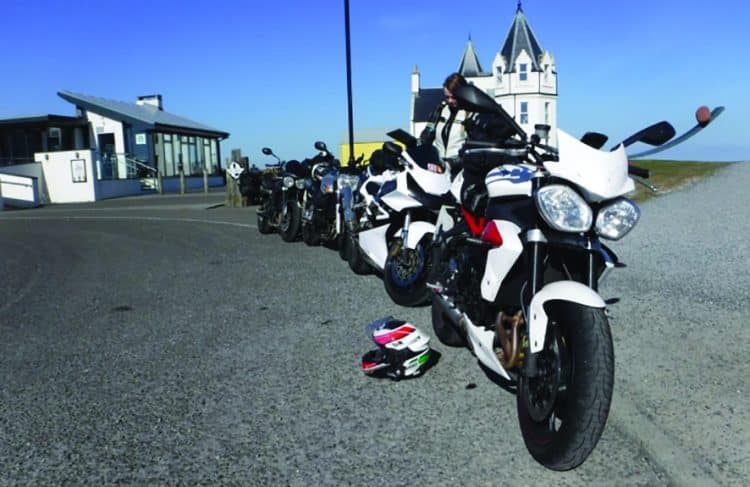
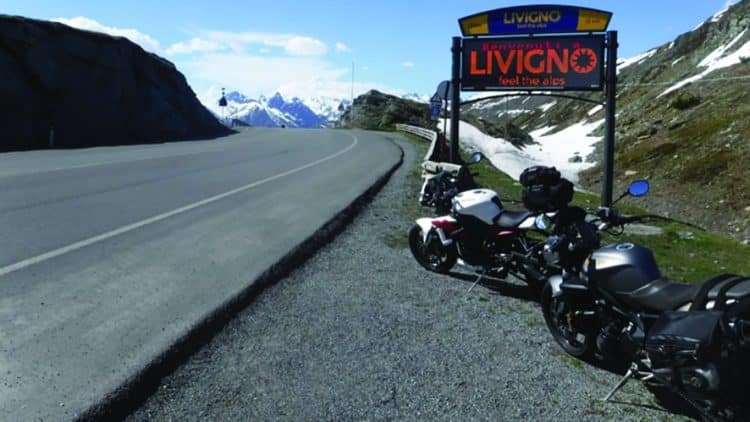
A fair old way it was too, and on a Friday not exactly traffic free. Phil had sorted a good route with a fine selection of A’s and B’s, no motorways and a couple of comfort breaks. First of which was the Super Sausage café, where there was no time for their splendid looking full English, though Robin, who met us there on his venerable Falco (he’s adopted a Trigger’s Broom maintenance regime) had had time to indulge. Then to a converted barn for (mostly, ahem) pre-booked lunches, followed by more herding to get us away in good time for factory arrival by 2.30pm.


As the afternoon progressed the traffic did the opposite and overtake hunting became necessary and frequent, as did queuing at lights and junctions. All of which, plus more time than expected waiting with Phil for markers, started to threaten our ETA. I’m not that well up on TVAM ride etiquette but couldn’t help thinking that watching the rider in front ignoring overtakes you’d take is less helpful than being waved past and getting a move on. And queuing two abreast to pull away in pairs would be a good way to keep the group moving along apace. Bikes toppling at fuel stops rather holds things up too… But we didn’t get lost and made there it intact just in time for the 3pm tour – bravo the marker system!

Parked up we walked down the drive to the magnificent Regency pile that is the Norton factory, through a tastefully manicured country park under the gaze of a very glossy and languid-looking peacock. Directed by friendly staff to the showroom we were signed in and given permission to drool – close up the bikes look very, very tasty indeed; poised, purposeful and beautifully presented.

Dragged from the showroom by our two guides, first up was a stroll through the grounds to the fabrication unit for an entertaining chat and the opportunity to get our hands on some bits. Blimey they take their time building stuff. First a tank, brushed alloy and achingly pretty but at least three full days to hand bash, weld and polish (which was why we only got to handle a previously dropped and cross-sectioned example). A clutch cover, milled from billet with ‘Norton’ proudly hewn into it – strewth, that’s heavy, no wonder the 961 engine is such a lump. A polished alloy single-sided swingarm, a thing of beauty and no little weight either. A front fairing spider (the intricate assembly of narrow alloy tubes connecting fairing to frame), all hand welded and polished too; OK, starting to see why these bikes cost so much. Robotic assembly would work much better for that job, as it would for the pipe bending – apparently there’s a guy who just does that, all day.

The scope to customise is truly astonishing…

Next up it’s the factory itself. Disappointingly we weren’t allowed to view engines being built as ‘that happens on the first floor’. Eh? What we could see was less factory more open-plan office, desks and chairs replaced by ramps, stands, tool chests and, yes, bikes. At one end an ancient belt drive Norton, scattered around the floor a mostly touch-accessible selection of newer machinery, including very handsome V4’s, one of which was started for us, oh wow! Plus 961 and Atlas variants alongside ex-race bikes in glorious, unwashed, post-TT condition. All fantastic looking, though no photos allowed and a ‘development’ section I was chased out of!

Each bike is hand built by two mechanics in its own bay to the specification of the buyer whose details are included on the build sheets. Virtually unlimited buyer bespoking is available and encouraged, the parts department picking the bits, all double-checked by the mechanics as they bolt them together over a couple of days. Apparently Euro 4 compliance means there’s not a huge variation for different markets which must simplify things a lot.

Beautiful bikes all, but the 961’s have pushrod operated valves, make about 80bhp and cost somewhere around £15,000. The new 650cc Atlas motor is more up to date with overhead cams and, err, that’s about it. The Ranger version’s a stylish-looking twin, sporting hipster vibes and off-road pretensions (hard to see how a vertical gear linkage half the height of the bike could survive a close encounter with anything solid), a tad more power than the 961 and cheaper too – though still north of £11,000. But fancy triple figure horsepower and a pose quotient to die for? That’ll be the 200bhp V4 SS then, a snip at £44,000. Gulp…

Great trip and pleased I went (well done again to Phil for making it happen), the bikes are gorgeous, but their price clearly pertains more to the craftsmanship than its practical upshot. When the owner of Rolex was asked about the state of the watch market he said he had no idea as Rolex wasn’t in the watch market: something similar’s going on here. I’d love to own one, but, given my dining room feels a more appropriate place to keep it than my garage, I can’t help feeling their peacock best sums up Norton for me. Though I suspect that, were I to win the lottery, the McBacon bap would run it close.

Nick Vale

First published in Slipstream August 2019

Europe for Beginners

Top Tips for First-Time Travellers

Since returning from a European motorcycling adventure last year, I’ve been trying to figure out how to turn my experiences into an interesting article for the magazine. A straight-up ride report (“…and then we carved through yet another dozen hairpins…”) doesn’t make for terribly engaging reading in my opinion. And as readers of my scribblings will know, I prefer to try to educate while I entertain, and there’s always something new for all of us to learn.

So let’s consider this a review of sorts; a short(ish) summary of an unconventional motorcycling adventure, where I challenge conventional wisdom and somehow convince my first-time touring partner into coming along for a non-stop, full-speed dash through the European countryside.

To give you an overview, this was a 3,500-mile, two-week all-inclusive sampler of European motorcycle touring, an opportunity for me to show my partner what she had been missing all these years during which her riding had been constrained to our rainy little island. This included French motorways, Belgian forests, the valleys of the Mosel, forests of Bavaria, derestricted German Autobahns, Austrian food, Swiss Alpine passes, Italian roadworks, French lakes, Spanish mountain gorges and a lot of McDonalds restaurants.

Cramming my favourite bits of Europe and the entire Pyrenees mountain range into a 14-day vacation that included my own brother’s wedding was a little ambitious. 300-400 miles a day quickly proved impossible, with an average of 250 more realistic, despite my creative interpretations of continental traffic regulations. Rural road maintenance crews love to dig up (and then abandon) the only route out of town with maddening regularity, but empty sidewalks will work at a pinch. We also learned that Honda Fireblades consume around a litre of oil per thousand miles, and had ample opportunity to discover that 10W40 is pretty much the same in any language.

Pay at the Pump is one of the greatest inventions of the current century, and our continental cousins have embraced it wholeheartedly. So have McDonalds, with their restaurants now featuring multi-lingual touch-screens alongside table service. This means that meal stops can be short and your interaction with the locals can be reduced to an absolute minimum.

The more sociable among you may be horrified at the idea of travelling thousands of miles to computer-order the same bland-tasting American hamburgers for lunch, day after day, but the truth is that rural Europe really leaves you no choice. The Spanish and the French seem to compete for who amongst them can shut down the longest during the afternoon and, if you are somehow fortunate enough to discover some dingy roadside café willing to feed a pair of strangely-dressed foreigners with a limited grasp of the language, they do so only with extreme reluctance.

My purpose for travelling is to ride motorcycles on entertaining roads through spectacular scenery and the routes I chose clearly did not coincide with the European Good Food Guide. Google proved no help either, as outside of major cities what little information is available on the platform is inaccurate and incomplete, making the task of reliably locating any functioning establishment beyond multinational chain restaurants impossible.

And you know what? McDonalds isn’t so bad. The architects appear to have been competing with one another for the most interesting interpretation of the American fast-food staple, with regional variations in menus providing a modicum of culinary variation. The food is fine, the toilets are clean, the WiFi is good, and the air conditioning is extremely welcome. But most importantly, they’re open. And they have parking. And you can find them, easily, without having to detour to some traffic-clogged capital and traipse around baking city streets in a vain attempt to find somewhere that offers the bare-minimum of celiac-friendly menu options.

The Booking.com app means that you can pick your daily end-point during your afternoon coffee break, although first-time travellers should be aware of a few peculiarities. The French interpretation of the word Hotel is fairly broad and it is only after booking that it is possible to discover the latest allowable check-in time. This might be far earlier than you would expect and supremely unhelpful if you’re running late and still an hour away from the room you just paid for.

The following day we left Mandawa and headed for Bikaner, covering another good mix of road types and avoiding herds of camels. We were now really loving the Bullets, the big 500cc single, thumping away, exhaust burbling, plus the popping and banging on the overrun. We stopped off for a tour of the Fort of Junagarh then on to Bikaner, where we stayed in an ancient palace which now served as a 5 star hotel.

After a good breakfast of traditional Indian or European fare, we were back on our Bullets heading for the golden city of Jaisalmer, on the edge of the Thar desert. Dinner in the open roof-top restaurant watching the sun set on Jaisalmer Fort was spectacular. The fort looks like a giant sand castle rising from the sandy plains.

Breakfast Included is also subjective. In some places it’s a multi-menu banquet from 7am onwards, while in others you delay your departure only to discover you’d have been better off saving your money and opting for a petrol-station coffee & croissant instead. Our last hosts informed us upon check-in that breakfast wasn’t served until 9am – a full half-hour after our latest realistic departure time, should we still wish to catch our ferry. We left the room keys at an abandoned reception desk when we left. They’re just lucky I’d paid in advance before arriving as there was no-one awake to check us out either.

I do recommend picking somewhere that has an on-site restaurant, however. The couple of times we chose more characterful bed & breakfast options we got badly burnt when no alternative meal options were available in any nearby towns. The hotel’s own restaurant might not be the last word in quality or value but it’s better than cereal bars and bathroom tap water. I’ve decided to pack a can of baked beans and a tin-opener next time, just in case.

As for routes and riding, Europe certainly offers plenty of surprises. The observant number-plate spotter will note that while the British do not seem to venture much further east than France, the Dutch seem to have fled their own country en mass, with bikes and cars alike strewn across the entirety of German-speaking Europe. Petrol stations rarely sell anything other than E10, the 10% ethanol-fortified fuel that the continent switched to some years back. Those of you running newer bikes might notice a slight drop in fuel economy, while those running older machinery might notice it eating holes in your petrol tank and associated piping.

The Italians have an interesting way of discouraging speeding with, what I could only deduce were, speed-sensitive traffic lights. No junctions, no pedestrian crossings and they’d turn green again as soon as you’d stopped but if you approached them more slowly, they wouldn’t change in the first place – an interesting tactic, for sure. Speed cameras themselves are slowly spreading across the French countryside like an infectious disease, usually concealed and on otherwise perfectly safe roads. Fortunately the locals seem as unimpressed as I was, with the overwhelming majority having been comprehensively disabled through the generous application of spray paint.

Mountain passes, both in the Alps and Pyrenees, can vary tremendously in terms of traffic, road surface, severity of corners and width of carriageway. If a pass crosses a border, then you can often tell when you’ve moved into a new sovereign land not merely by noting the abandoned check-points, but from the sudden change in tarmac quality. Italy – I’m looking at you.

You might also find that a pass that was all flowing, well-telegraphed bends on smooth, wide, empty tarmac on one side of the mountain becomes a treacherous, single-width goat path with, in many cases, actual goats waiting for you on the other side of a blind hairpin. Cows, too, are frequently to be found enjoying the tarmac and evidently doing their best to cover every square inch in dung as they move up the mountain.

Tunnels are frequent and sometimes many miles long, offering a welcome respite from hot or wet weather. But beware – the smaller ones sometimes feature unexpected livestock seeking shelter from the rain, whilst the larger tunnels often sport surprise toll booths on the other side. The remote operators of these booths apparently subscribe to the very American idea that getting a foreigner to understand you is merely a matter of shouting more loudly at them, in this case through a tiny little speaker. It’s ok though; after a while they seem to give up and let you through anyway.

Choice of bike is important for a trip like this. A 100-mile tank range is insufficient, as taking the scenic route can easily mean fuel stops are necessarily further apart. Sportsbikes – even those with raised bars – simply aren’t comfortable for consecutive 10-hour riding days, and the rest of Europe seems to agree. We saw just two fairing-clad travellers in two whole weeks on the road. BMW has half the market sewn up with R1200GS’s littering the slopes and K1600’s and S1000XR’s dotted around liberally to break up the monotony. Harley-Davidson is clearly doing very well in Europe, with an easy third of our fellow bikers having chosen the bar-and-shield brand for their twisty, mountain adventures. Honestly, it was impressive to watch – limited ground clearance simply means your lines through the hairpins have to be spot-on.

But adventure bikes of all shapes and sizes are clearly the weapon of choice for travellers of all stripes. I finally discovered where all of Suzuki’s European V-Strom 650’s have been hiding – they’re all in the Alps, making the absolute most of their modest horsepower to embarrass their better-heeled brothers and sisters. More than once I wished I could hand out TVAM business cards as I overtook well-financed yet dangerously-unskilled riders on my way up a mountain. With cornering lines like that, they may well find their ride back down the mountain takes considerably less time than they might have previously expected.

No matter what you ride, make sure that you have a firm set of low-speed riding skills under your belt before you venture into these mountains. Some hairpins are closer to uphill u-turns than any of the bends you’ll encounter on our comparably flat little island. Also, ensure you have enough power and confidence to execute overtakes on relatively short pieces of road, or you may find a wonderful stretch utterly ruined by the maddeningly slow Fiat or Citroen blocking the view ahead.

Being comfortable on loose surfaces would be advantageous too. More than once we found the Spanish mountain roads strewn with gravel and at one point the racetrack-smooth tarmac simply stopped mid-way through a fast right-hander, becoming a genuine hard-core gravel track. My V-Strom took it all in its stride, but Jasmine on board her Fireblade was unamused.

Others may disagree, but I also recommend that you stick to a full waterproof textile suit for a trip like this. Leathers and waterproofs may be your preference for an unavoidable shower, but up in the mountains it’s easy to be caught by surprise. In the space of ten miles we went from sitting outside a café drinking hot chocolate in the sunshine to peering through dark clouds at flooded roads on the side of a mountain. If your default gear is already waterproof you can just ride on but anyone who needs to stop to get changed will already be soaked by the time they find somewhere safe to pull over. Heated grips can be most welcome, even in September.

Down in the foothills of Spain however, you’ll wish they were electrically cooled as well. Even in mid-September, and even in the hilly north of the country, we were consistently suffering high 20’s, with a genuine 33ºC predicted for the day after we set sail from Bilbao. A friend from Portugal had previously advised me that, should I wish to venture any further south, I should restrict my plans to early spring at the latest, and I think I can see why.

If you’ve never travelled in Europe, you’ve really got to get out there. TVAM runs a number of trips each year, with several specifically designed for first-timers to get their first taste of riding on the right. And it’s really very easy, and relatively inexpensive – the Eurotunnel is around £80 return for bikes and even less if you’re going for five days or fewer. Weekend trips are doable and your range only increases if you can get a Friday or a Monday off work too.

Travel light, take a toolkit, keep your smartphone charged up and enjoy Europe before they decide they don’t want us difficult Brits visiting anymore.

Nick Tasker

First published in Slipstream July 2019

Hot Weather Riding Tips

  •  Make sure all your helmet vents are open. The forehead is a major site of sweat glands (along with hands and feet). Take your lid and gloves off immediately when you stop.
  • Airflow next to the skin is critical, so lots of vents and a loose fit works best. This is why textile kit will keep you cooler than leathers (take the lining out, obviously). Leathers can create a boil in bag effect unless vented.
  • If you’re wearing loose textile kit, wear a specialist sports t-shirt underneath to wick away sweat and maximise cooling.
  • If you really suffer, wear a cool vest like BMW’s Hyperkewl, or Revit’s Cooling Liquid Vest.
  • If you’ve got a Camelbak system, drink little and often. If you’re wearing leathers it won’t stop your temperature rising because your sweat is not able to evaporate, but it will delay the onset of dehydration.
  • On trackdays, drink a lot between sessions; on road, at every petrol stop or break.
  • Don’t drink strong coffee. It’s a diuretic, which means it causes you to lose body fluid. Weak coffee and tea probably has a net benefit, but water is much, much better.

First published in Slipstream July 2019

Welsh Frolics

Well, despite the discouraging forecast, 8 hardy souls set out from the H Café in the drizzle to brave the Welsh hills.  Upland roads were avoided as these would have taken us into the cloud, so we stuck to the valleys and enjoyed practising smooth riding skills all the way to our hotel.

The next morning was dry in defiance of the forecast, and regrets about abandoning the Dawn Raid were expressed by some. A lovely ride along the Elan Valley and even a dry(ish) run on the famous Newtown to Crossgates road.

A picnic in the garden of the still-closed Radnorshire Arms, then a race to get home before the next bank of rain came in all added to a great few days on the bikes.

Ken Jeddere Fisher

First published in Slipstream July 2019

Sammy Miller’s aka “Cake Heaven”

The Sammy Miller Motorcycle Museum is probably “one of the premier bike museums in the country in terms of the quality and provenance of the exhibits.”

I wouldn’t know, I didn’t go in. I was very happy looking at the array of cute animals in the car park, and the birds as you walked into the compound. I was even happier when I turned right and found some of the most amazing cakes I’ve ever seen.

The outside tables were full of half eaten cake; it was a cake graveyard, so upsetting. Being a cake lover, I didn’t understand why there were so much wasted cake. Until I spent 10 minutes choosing my cake, 20 minutes attempting to eat it all, only to fail and put the rest in my tank bag, covered up in a takeout box.
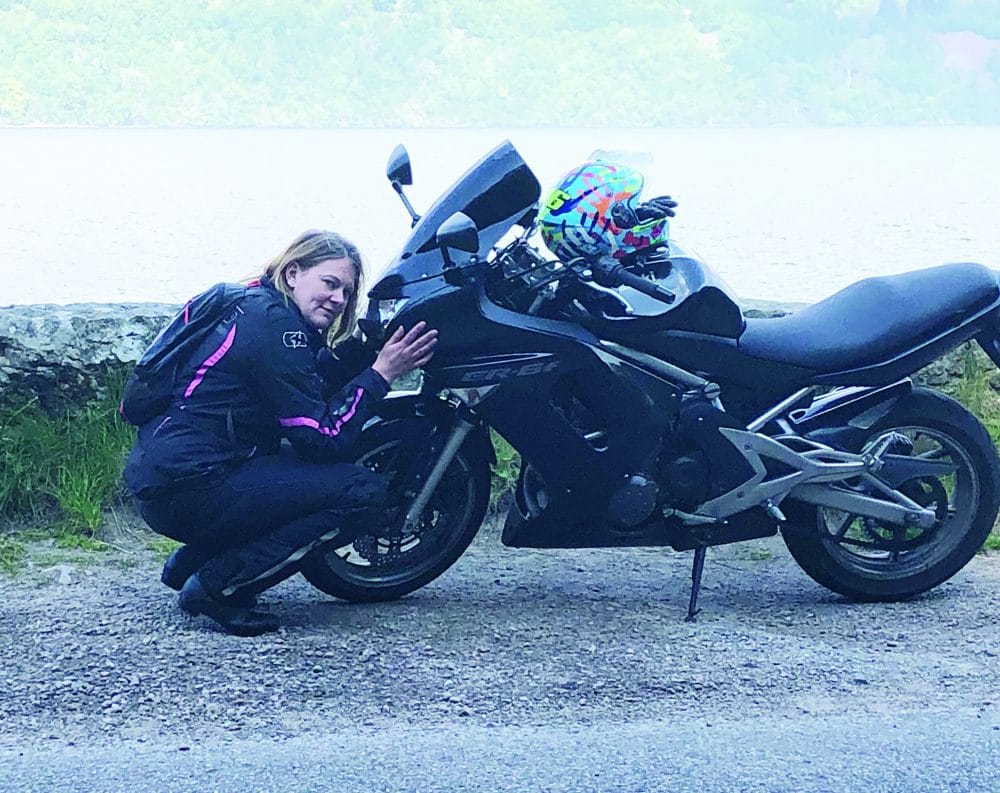
If anyone wants to know what the museum is like, you’re going to have to ask someone else. I honestly have no idea.

Now the important part is down, let me get onto some of the details of the Steve Harris, Sammy Miller B run. We met up at Blackbushe airport, and had a pit stop at Little Nellie’s Diner in Kingsclere to collect a few more. With a total of 15 riders we headed for the New Forest via the twisty route. It was my first time through the New Forest; I didn’t expect to have to stop to allow cows to cross the road.

Anyway, we headed for our lunch stop, The Cliffhanger Café in Christchurch. The food was amazing. I would highly recommend their mussels. The view was stunning and the roads were fantastic.

Once we were fuelled with food we actually headed for the museum, or for me – dessert. The boys and girls got to play with old bikes, whilst I had cake and a nap.

The ride back to Reading had much more pace to it, albeit still stunning roads. The ride was respectful to others abilities and it was a pleasure to ride with everyone. I would definitely go there again –the cake was that good.

Oh, if anyone is wondering what happened to the rest of the cake, it thankfully survived the journey home and was very much enjoyed the next day.

Paula Nash

First published in Slipstream June 2019

Sunshine, Marshmallows & Chocolate*

It seemed like a good idea at the time, volunteering to help man the TVAM stand at the MCN Festival in Peterborough, with free camping thrown in. Kelly and I met up with Cheryl for the ride up to Peterborough, with Kelly agreeing to lead the way, as I can’t navigate to save my life!  After an uneventful ride up, we arrived at the showground, found our spot in the Clubs area and pitched tents.

We were soon joined by Phil, in the car and towing a trailer. The car and trailer turned out to have been previously owned by Dr Who as out came a tent, then another, then a marquee, then a gazebo, then a windbreak, then the TVAM sail flags. These were soon followed by enough camping equipment to support a Scout jamboree (tables, cooker, air mattresses, cool boxes, sleeping bags). Once all this was pitched/ raised/ setup, the Tardis then produced a BMW S1000 XR which Phil had picked up only a few days before. “I have some bits to fit onto this over the weekend,” he said smugly. With everything set up, we retired to the Moose Bar where we were later joined by Tony who had left Reading after work.
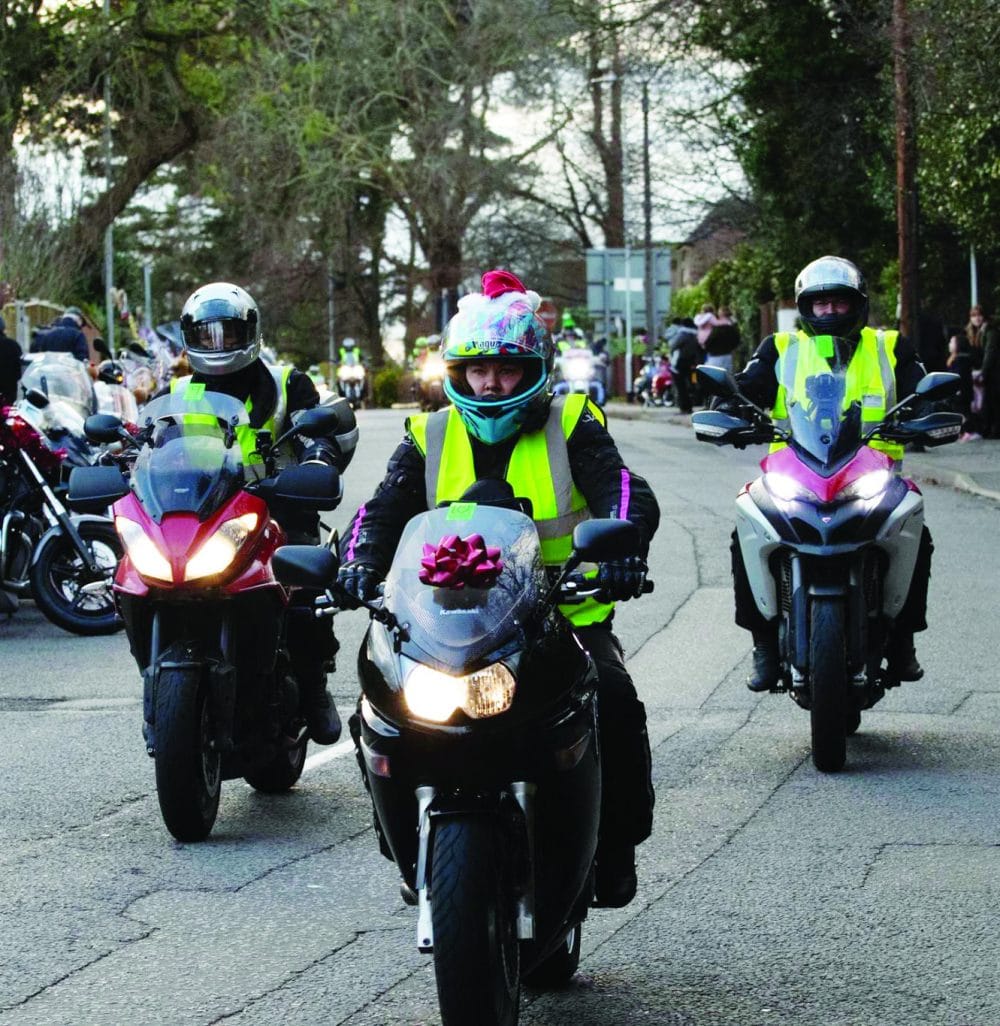
On Saturday morning, we set up our stand and waited for the crowds to flock to us, all eager to sign up. That was the idea, anyway. The weather was against us with rain putting off the hordes and we just talked bikes with the people who did stop. Phil decided it was the ideal opportunity to start “fettling”, oil cooler and radiator guards first. After 5 hours, much laughter and p**s taking, he had finally got them fitted – R&G have a lot to answer for!

There were fleets of demonstration bikes from all major manufacturers just waiting to be rid

den. Cheryl went off to test ride a Monster 797 (“totally different to my Hornet, would need more time to get used to”), Kelly rode a Zero electric bike and Tony rode an Indian Chieftain (“very nice ride, light feel into corners, great look, nice sound but very jerky in corners”).

Whilst they were away, Phil decided that he would fit his new levers next. Unfortunately, he didn’t offer them up first and, having fitted the clutch lever, he realised that it wouldn’t clear some of the switches and dials on the bars, so every time he pulled the clutch in, his headlight would flash – back on with the old one! It was about then that I noticed that he was missing a pillion peg and mentioned it to him. He then proceeded to blame either Tony or me and thought we were holding it to ransom**. The banter lasted all weekend and I ended up making one for him out of twigs and Duct tape so he would feel better (see photo). ***

We were joined then by Andy, Ness and Andy’s son, Sam. They went to pitch their tent near ours, only to realise they had left the poles behind! One trip to Argos later, one new tent.

We all took turns to man the stand whilst others went off to visit the various trade stands (clothing, tools, manufacturers, moto jumble, usual show fare) and the club stands (mainly owner clubs, Honda, Ducati, 2-stroke, sidecars, Valkyries, etc) and Cheryl test rode a Honda CB1000R (“loved this bike, definitely one I’d consider in the future”) with Andy and Ness booking test rides for the next day. Phil fitted a fender extender and crash bungs and we all went for some light refreshment then turned in for the night.

On the Sunday, I got up early to book some test rides, but, being an advanced rider, I soon decided that someone else’s brand new bikes and a raging hangover do not mix! We again set up our stand, welcomed by glorious sunshine and bacon sandwiches. There seemed to be more people around. We also met Ross, who was up for the day, and who had just signed up for TVAM’s RideUp scheme. Andy and Ness went out on their rides and Cheryl came back infuriated (apparently the test ride she had booked with Honda had left 10 minutes earlier than scheduled).

During the morning, we all helped each other pack up and, with the show closing, we left about 3pm for the ride home. I got back around three hours later, tired but very contented. I think I can safely sum the weekend up with Tony and Cheryl’s comments: “great company, new friends, laughter and fun,” and I think we are all up for it next year!

*Yes, I know, I didn’t mention the marshmallows and chocolate, but they were in the mix somewhere

**Phil’s BMW dealer has since apologised for leaving the footpeg off and is sending it to him

***BMW have now offered me a job designing the foot pegs for their new range of bikes

PS: Not all of this necessarily happened in the order stated as it’s all a bit of a blur, to tell the truth, but it did all happen at some stage as did a lot more besides! Come and join us at one of our future promotional events.

Ian ”Orc” Christopherson (who may or may not return the footpeg next year)

First published in Slipstream June 2019

3Rs go to the Yorkshire Dales (May 2019)

Say Cheese!  Maybe a little bit of Wensleydale?


Fantastic roads & scenery. Perfect amount of stops. The group I was allocated to was brilliant……lovely and thoughtful riders. Pleasure to be riding with them all.

The best days riding I have had in a long time, did not know these roads existed.

We were very lucky to have a group that bonded well, rode responsibly, respecting one another.

Fab roads…..amazing scenery. Plenty of stops. No pressure, very relaxed. Great day ….. considering I get a little anxious on technical roads, I loved it and it has helped my confidence massively.

Excellent routes, well led runs, spectacular scenery and riding challenges.

It was awesome. Challenging but rewarding.

Excellent, a surreal trip around some of the most beautiful and challenging countryside.

This was my first 3Rs trip so I didn’t really know what to expect but I had a fantastic few days and picked up some good advice to improve my riding skills.

As an Observer who doesn’t get to do much social riding I found the trip immensely rewarding and it reignited my love of riding.