The Royal Enfield Himalayan

Remember when the Dacia Sandero launched in the UK? It made a big splash in the automotive press and even beyond; an actual, proper car for just £6,000. With the competition priced close to three times that amount it was no surprise that a lot of people picked one up almost on impulse. Once things calmed down a bit, the more serious, cynical journalists got their hands on them. Eventually a consensus was reached that, while you could buy a new car for just six grand, you could also buy a much nicer used car for around the same money.

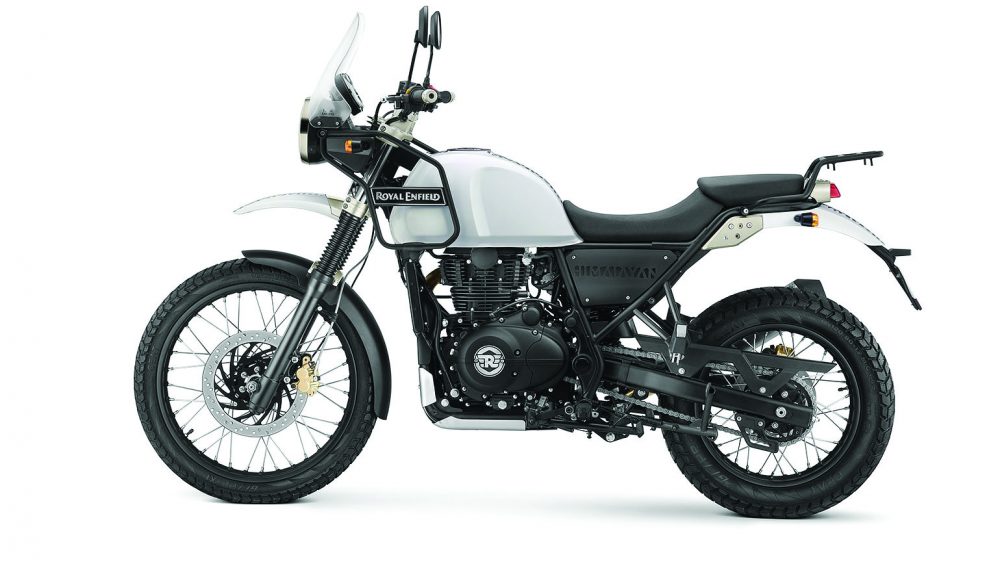
My suspicion is that the Royal Enfield Himalayan might suffer a similar fate. Right now, we’re all going crazy for the things and, on paper, it’s easy to see why. A brand-new air/oil-cooled 411cc single with a low seat height, genuine off-road capability, and impressive luggage capacity for just £4,200 on the road? Surely there must have been a mistake? The internet is already awash with videos of people loading them to the gills, throwing on a set of serious knobbly tyres and tearing off into the wilderness; the big-dollar BMW/KTM/Triumph adventuring experience for a quarter of the price.
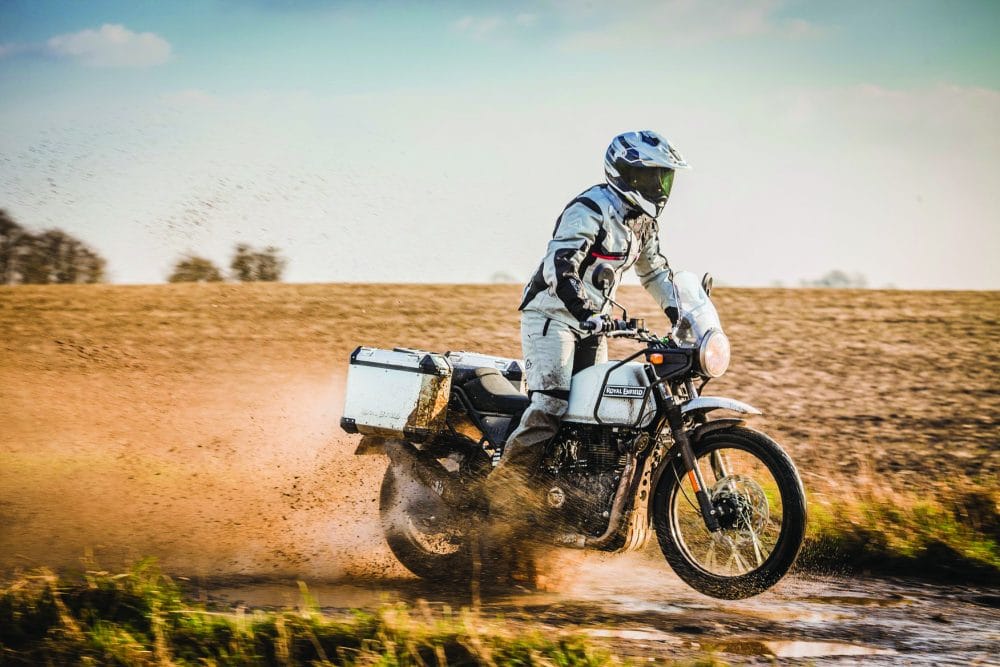
While at our local Royal Enfield dealer, I saw a chap pull up on a Himalayan wearing what looked like a full set of very clean BMW adventure textiles. It occurred to me that someone who had already signed on the dotted line for a motorcycle that was just a few accessories short of costing £20,000 would probably not be too keen on risking their expensive new machine down a rutted country lane. One mistake, one surprise rock or rut and the repair bills could easily be in excess of what a whole Himalayan costs to buy outright. And so, in a way, this new Indian-made motorcycle might simply be the world’s most expensive set of crash bars.

Those of you who have recently sat down with a salesman in a European motorcycle dealership will have noted how little adding thousands of pounds of electronic suspension, heated seats and aluminium panniers seems to add to the proposed monthly payment. I can’t help but wonder how long it will be before some enterprising BMW dealership starts offering to roll a whole second motorcycle into that 3-year plan.
But does the Himalayan deserve better than this? Can it stand alone as a perfectly good motorcycle, a worthy competitor to our overwrought, over-complicated and over-priced Japanese and European machinery? Have the Indian-owned Royal Enfield finally got the hang of quality control and delivered a reliable, dependable, rugged motorcycle that we can be proud to put in our garages?

Judging that last point is normally very difficult on a carefully-controlled test-ride. Manufacturers, and by extension, their dealers, are understandably very careful to ensure that a potential customer has a flawless introductory experience that will encourage them to hand over their credit card at the end. Fortunately, the Himalayans we took out obliged by breaking down almost immediately, thereby putting the matter to rest.

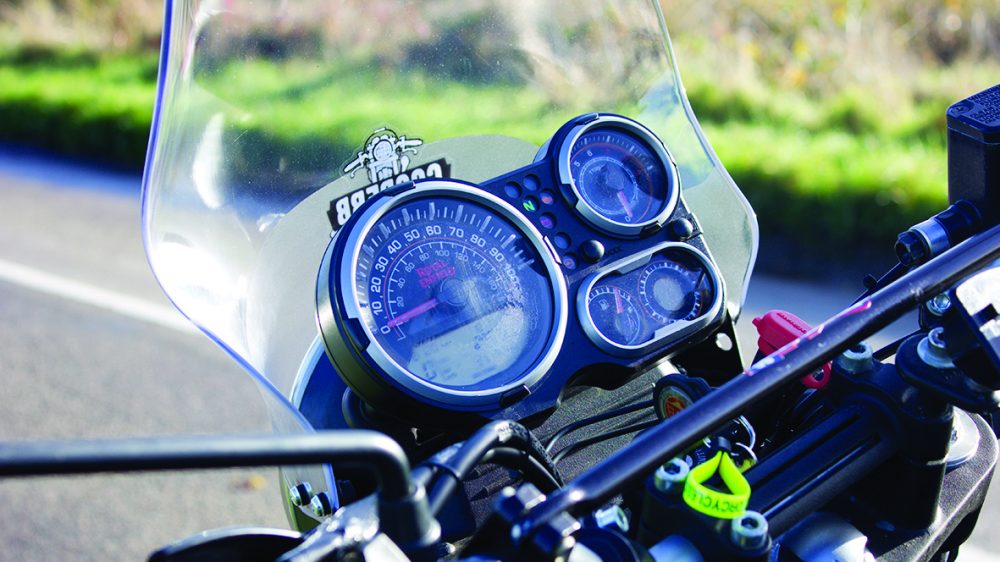
My brother’s bike decided that throttles were for wimps and wedged itself wide open, refusing to be fixed and needing to be coaxed back to the dealership with the clutch. In addition, neither of us could read half of our instruments due to the significant condensation behind the glass on the displays – a common issue, according to the internet, and apparently preventable by greasing all the connectors to the clocks, but still not really something I would expect to have to do on a new machine.
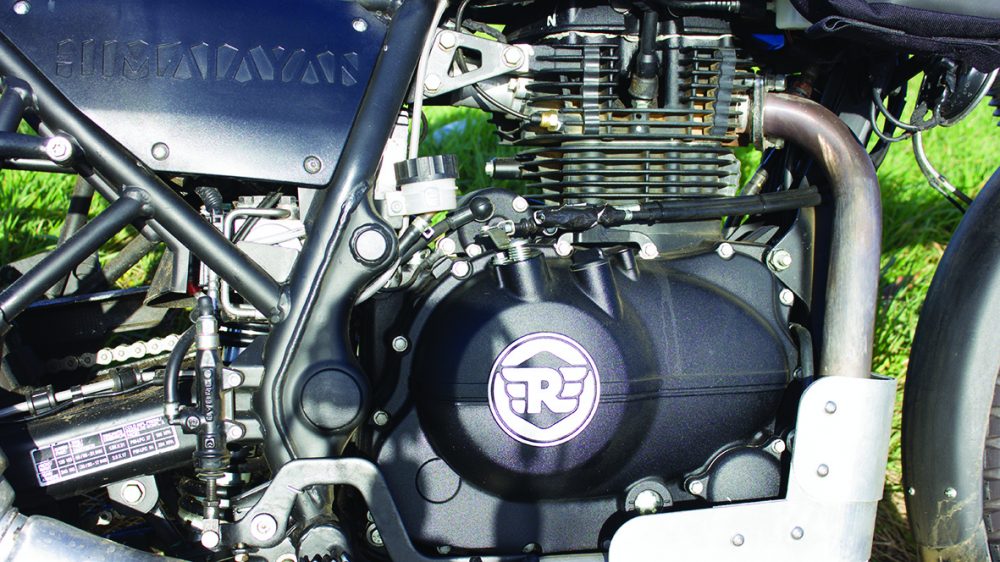
The next black mark was for the brakes. We both discovered that stopping distances were far, far greater than we would expect, and had to haul on both lever and pedal rather brutally to prevent obstacles in front causing unplanned wheelbase reductions. The front brake has no feel and no bite, requiring the rider to simply squeeze the lever as hard as they can as far in advance as possible. The rear is the opposite – loads of feel and bite, but it locks up almost immediately, causing the ABS to cut power to the brake and rendering it essentially inoperative. It’s possible that the softer brakes might be ideal for use in dirt or gravel but on the road they’re simply not fit for purpose. Better pads might help, but again, it’s something that should have been resolved at the factory.

Things start looking better as we work our way down the parts list. The seat is surprisingly comfortable – even for pillions – and the riding position somehow works well both when sat down or stood up on the pegs. Combine that with an extremely low seat height that would allow most riders to rest both feet flat on the ground yet miraculously fails to result in my knees sticking up around my ears while on the move. Our shortened ride time did mean that an extended test would be required to confirm if things remained comfortable for longer trips.

The suspension was soft, but not sloppy, and probably a good fit for the sort of riding this bike was designed for. I’m quite sure that the higher cornering speeds possible with better tyres might cause wallowing but achieving those high speeds would be a challenge with the meagre 24bhp on offer.

That’s not to say that the Himalayan feels slow, as long as your expectations are realistic. The 411cc air/oil-cooled engine is surprisingly smooth and relatively punchy, feeling more like a slightly breathless V-twin than a thrashy single. There’s not a whole lot going on below 4,000rpm, even if it’s more tractable than plenty of larger multi-cylinder bikes I’ve ridden, but the show’s all over before the needle reaches 6K. Even then you can feel valve float setting in and distressing noises can be heard from the top-end before the tachometer is past 5,500, so the usable power band is surprisingly narrow. It’s just as well that the gear shift is accurate and the clutch light, as you’ll be using both frequently.
Speaking of the clutch, one modification I would have to do on day one would be an adjustable lever. The biting point on the Royal Enfield is somewhere just beyond my fingertips, meaning that those of us with smaller hands may find pulling away from a stop a matter of setting the revs and just letting go of the clutch entirely. The soft bite and small displacement mean that setting off isn’t too bad but low-speed manoeuvres inevitably lack accuracy.

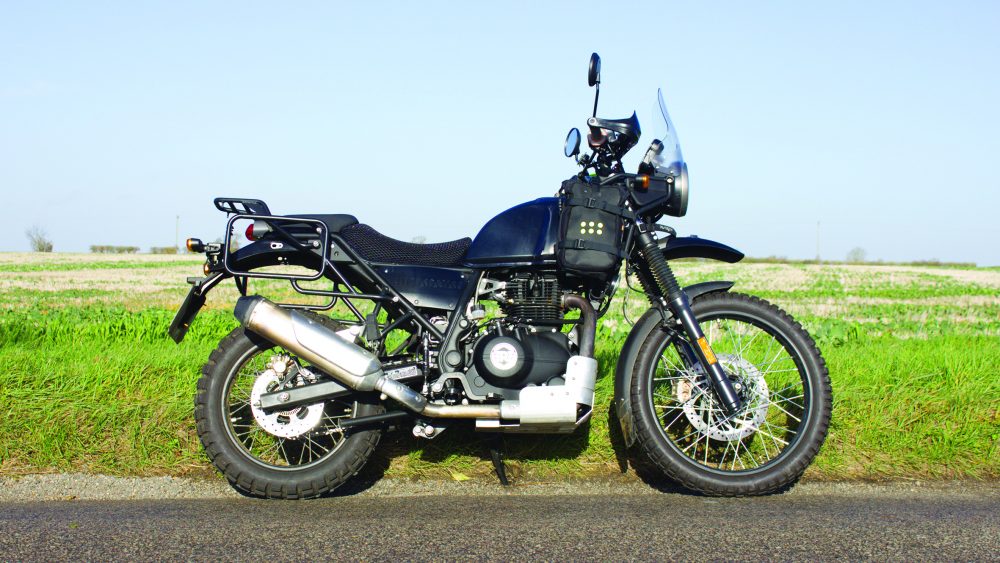
Other than that, it has to be said that niggles, irritations and deal-breakers are notable by their absence. The Himalayan may not do anything spectacularly well, but neither does it fall noticeably short anywhere. The footpegs don’t get in your way when you set your feet down, and the side stand is easy to extend and retract, two tricks that plenty of bikes costing 3-4 times as much somehow struggle with. The windshield is well designed, if a little too short, and a small fairing would make motorway stints entirely manageable.

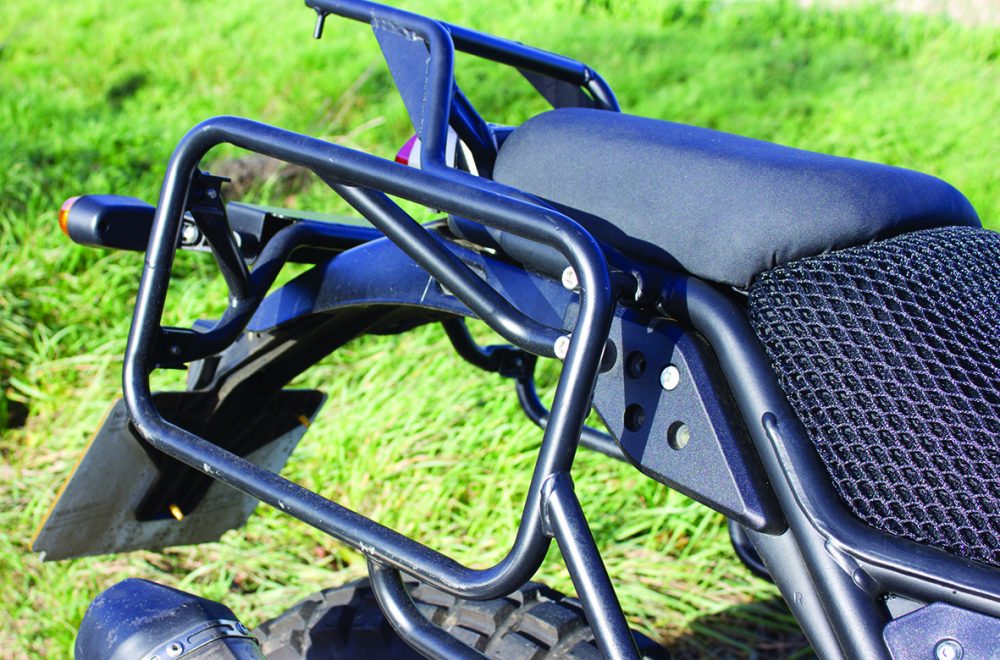
As standard it comes fitted with a pair of practical tank-mounted pannier rails, with an optional rear-mounted set and matching metal panniers available from your local dealer at a refreshingly low cost. The dashboard is fully-featured, offering an analogue tachometer and speedometer as well as various trip meters and even a compass – something I cannot recall having ever seen before on a production motorcycle. So far owners have been averaging almost 80mpg in mixed use, meaning that a 250-mile range is easily achievable from the relatively meagre 15 litre tank.

I would prefer to reserve judgement until I’ve had more time in the saddle, but my brother feels that the only test ride long enough would involve multiple border crossings and a few months of atmospheric exposure. All the enthusiastic video reviews online seem to be shot in the driest, dustiest parts of Utah or Arizona, and I can’t help but wonder how well this machine would survive a couple of wet British winters. Used Bullet 500’s seem to be either immaculate fair-weather bar-hoppers, or look like they’ve been dredged up from the bottom of a river.
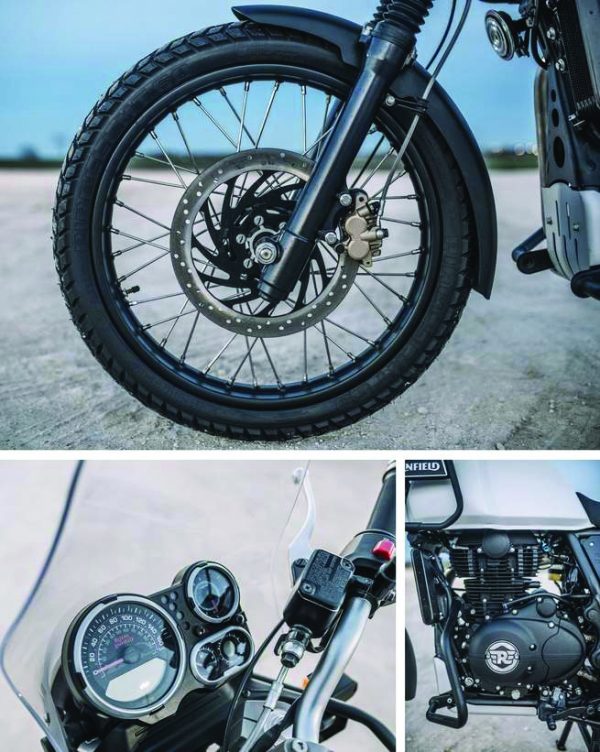
I could excuse a lot about the Himalayan by recalling that I could take one home for just £4,200. I could excuse the cheap components, the list of urgent upgrades/repairs, and even the 3,000 mile service intervals that include a valve clearance check every single time. I can appreciate the rugged styling, practical touches, low seat height and impressive fuel economy, and I would probably struggle to point out a serious competitor at any other new-bike dealership.

The Honda CRF250L would come close for entry-level dirt capability, although luggage and pillion capability are comparatively non-existent. Triumph or Ducati’s latest small-capacity Scramblers would be just as capable off-road and far better on it, but are double the price. In fact, the biggest competition for this £4,000 new motorcycle is a £4,000 used motorcycle. And that is where, test-rides or not, things fall apart rather upsettingly for the Himalayan.

You see, you can buy a whole raft of used mid-capacity adventure bikes for around the same price and, with matching dirt-oriented tyres, would be no less capable off-road than the small-capacity Royal Enfield. There’s nowhere that I would take a Himalayan that I wouldn’t take my V-Strom 650 and you can buy those for £3k. It wouldn’t be new and it wouldn’t be covered under a warranty but experience has shown me that you wouldn’t actually need one in any case. It would shrug off a few winters, be more competent during the tarmac sections of your trip, and would likely feature fewer pre-existing issues that required your immediate attention.

Certainly, a BMW F700GS or Triumph Tiger 800 would weigh more than the Himalayan, but not by much – the small 411cc single manages to tip the scales at a surprisingly heavy 190kg. If the low seat height is what caught your attention, then might I suggest you leave the majority of your budget in your pocket and pick up an early Honda CB500 instead? Similar weight to the Enfield, similar seat height, but with double the cylinders, power and torque. Bolt on a set of crash bars, lever on some Mitas E7’s and hit the trails.

I think that the Royal Enfield Himalayan’s biggest triumph may be to demonstrate conclusively to the rest of us that you can take pretty much any bike anywhere as long as you don’t care if it gets a little beat up. It has reminded us that most off-roading is actually just gravel roads with a bit of grass; trails that do not require any of the trappings of a serious enduro machine.

There’s a chap circumnavigating the globe right now on a Ducati Scrambler – a motorcycle roundly mocked by off-road enthusiasts as a poser/hipster/city bike – and Nick Sanders has toured the length of Africa on a Yamaha R1. Charlie and Ewan took BMW R1150GS’s on their famous cross-continental adventures, but their cameraman got stuck far less on the piece-of-junk Russian motorcycle he picked up at a local market. As far as I can tell, the biggest problem the Royal Enfield Himalayan has is that we don’t actually need it.

Nick Tasker

First published in Slipstream January 2019

Reading Toy Run 2019 (Gallery)
Christmas cheer for the kids of Barnardo’s

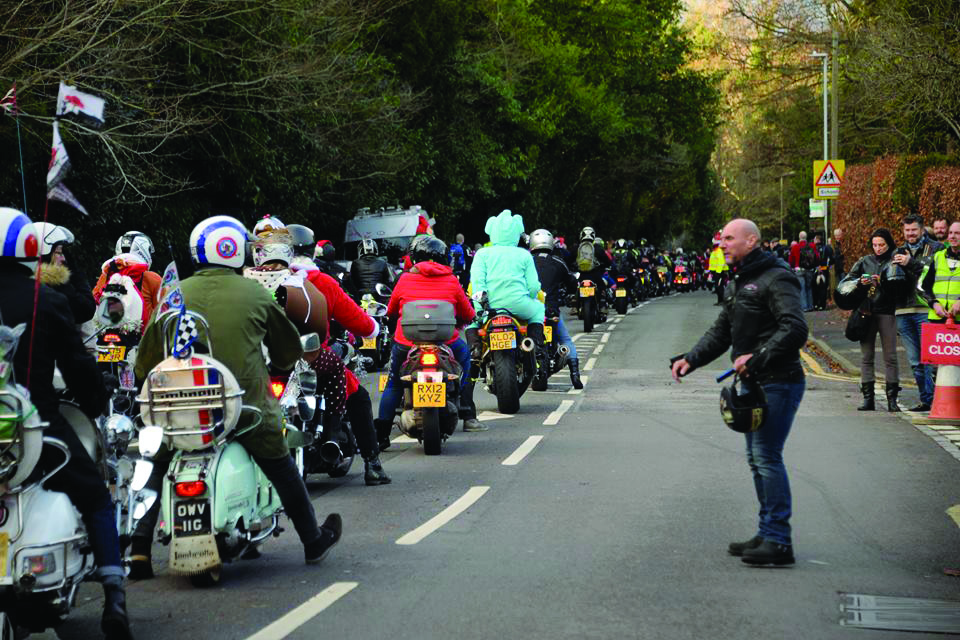
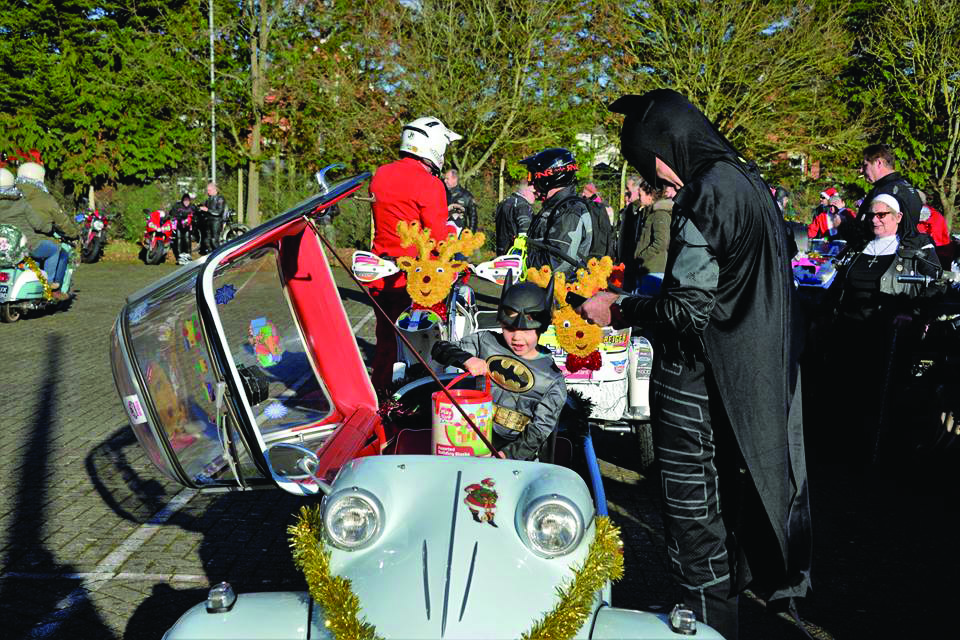
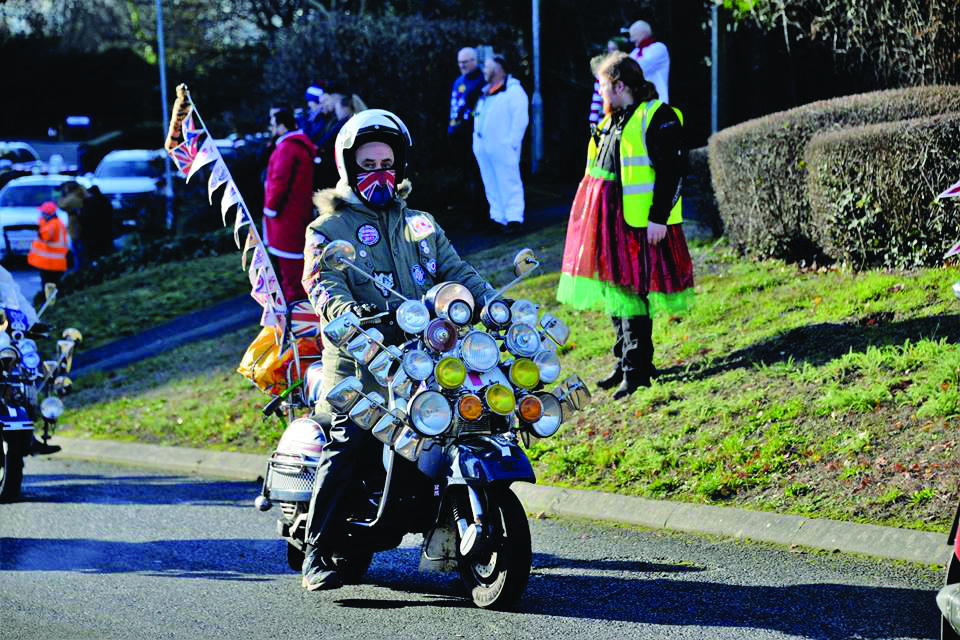
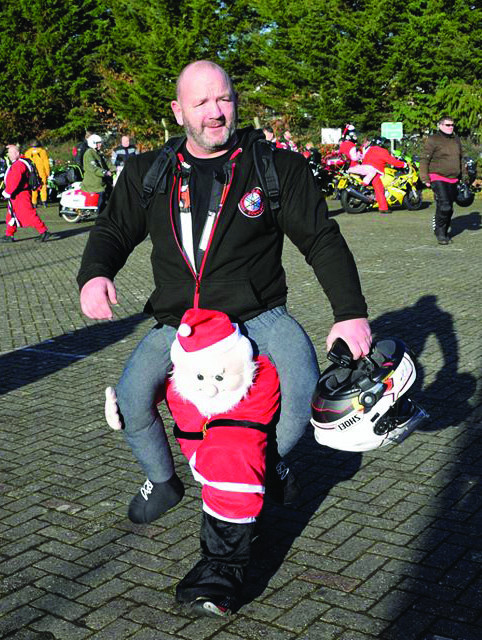
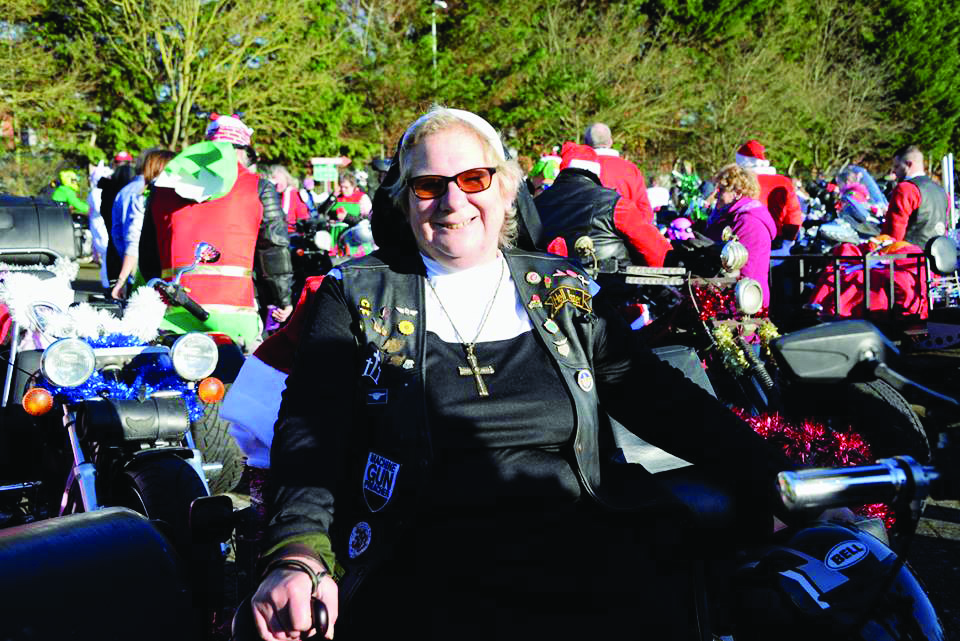
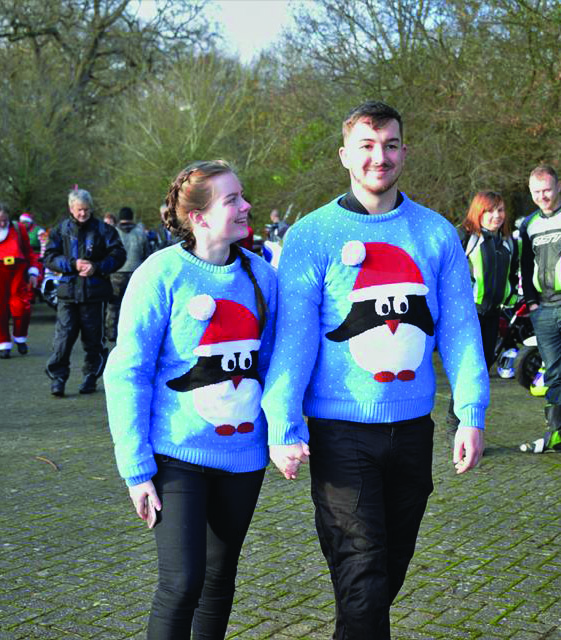
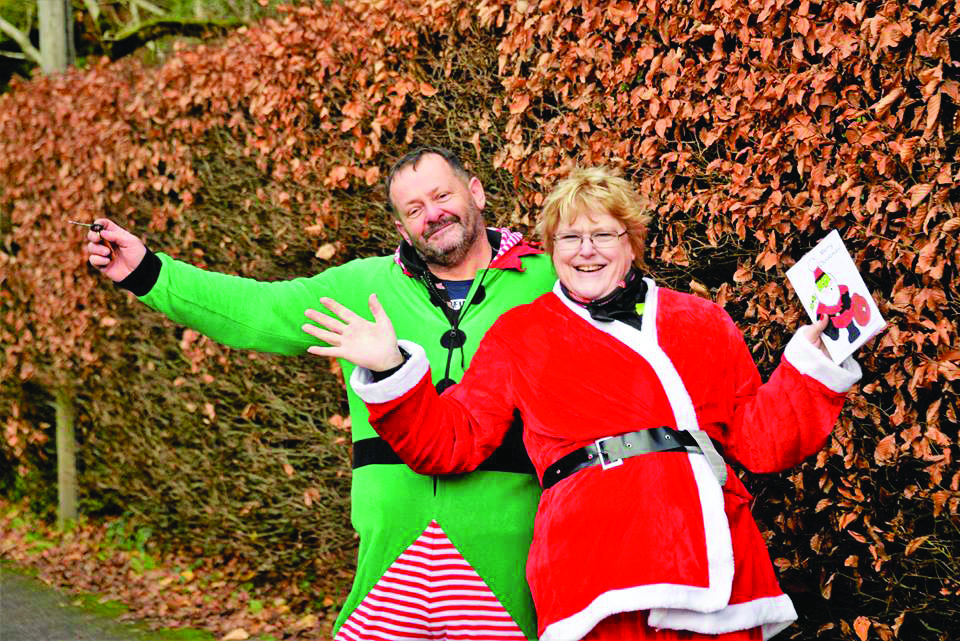
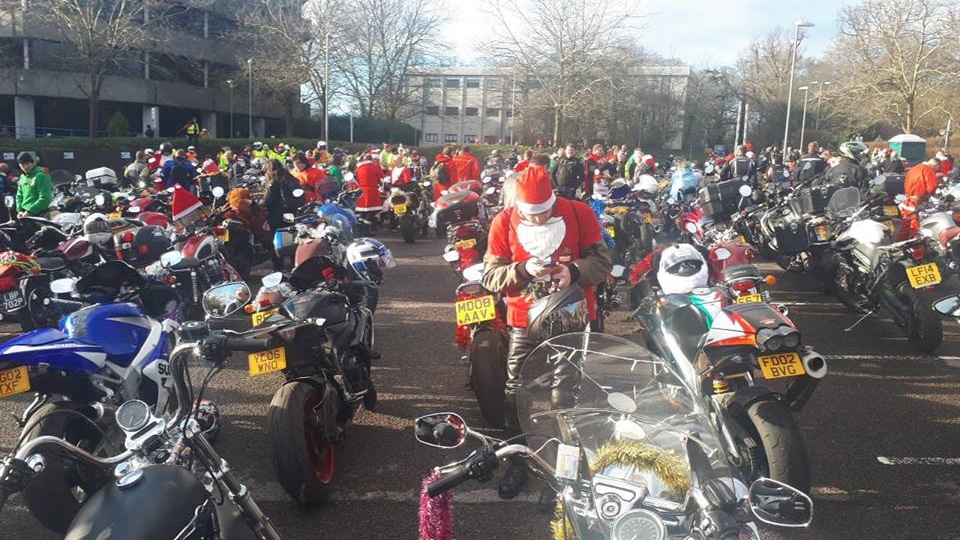
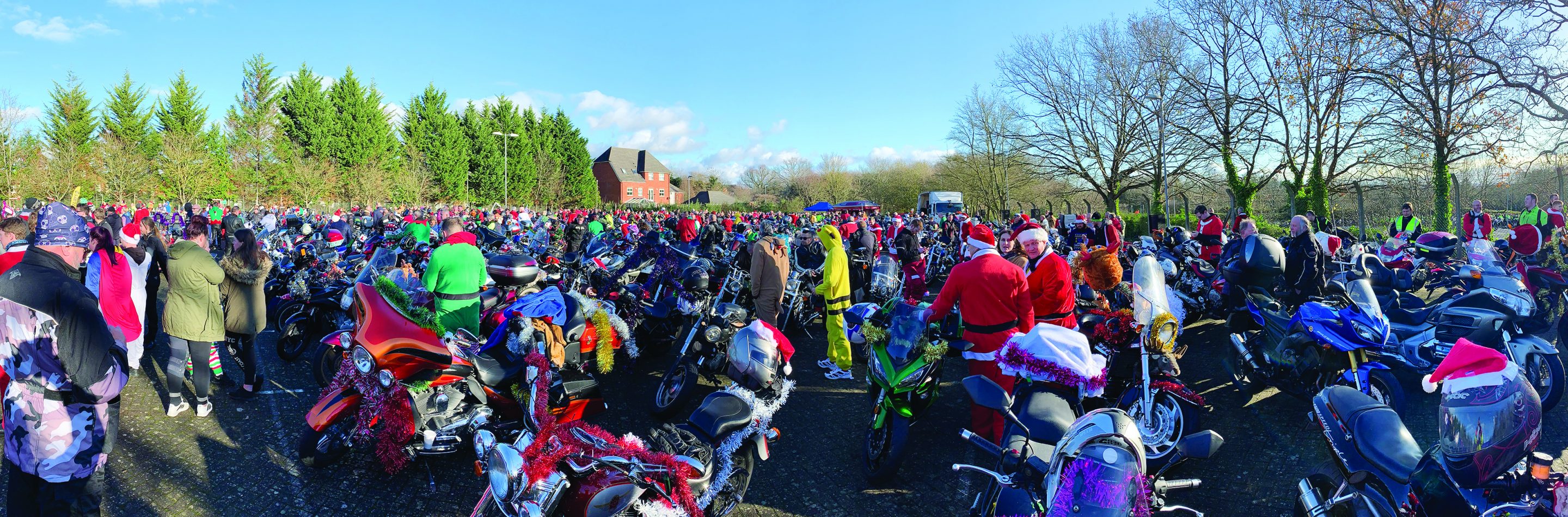
1,528 motorcycles with 447 pillions attended the Reading Toy Run this year. The run which goes from The Amec Foster Wheeler building (now called Wood Group plc) to High Close School, the Barnardo’s school in Wokingham is in its 33rd year.

Last year’s run had to be cancelled due to adverse weather conditions, but this year the sun came out to play which ensured a great turnout.

The run takes place on a closed road sanctioned by Wokingham Borough Council, so it must be closely marshalled. A large percentage of the marshals come from TVAM and the organisers would like to pass on their heartfelt thanks to all from the club who gave up their time for this worthy cause.

Winter Riding

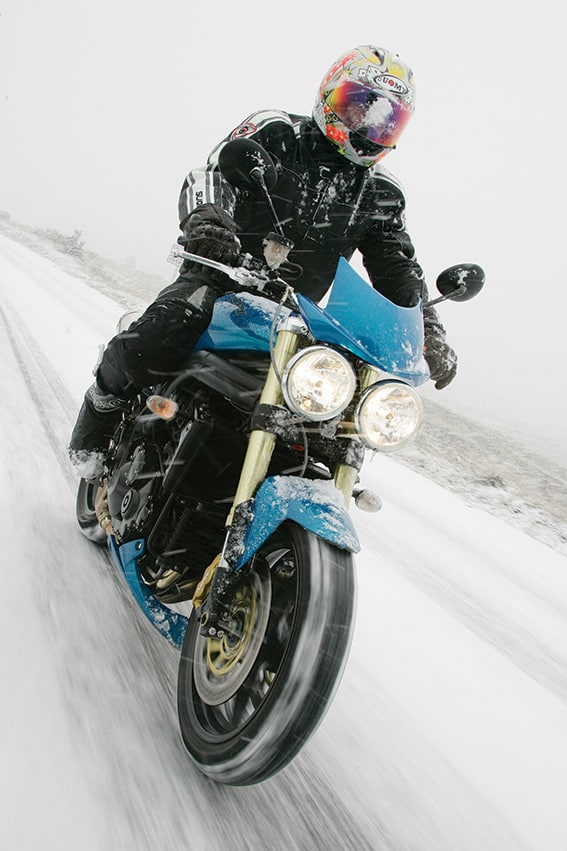
This is one of a series of articles on advanced riding techniques that appears in the Club’s monthly magazine, Slipstream. This month we look at winter riding and the conditions which dictate some different thinking when out on the road with regards to your riding, your kit and the weather. As the nights draw in and the temperature begins to drop, many riders call it a day and pack up their bike and gear for the winter. However, I often hear statements like ‘There’s no such thing as bad weather, just inappropriate clothing’ and, ‘As advanced riders we do it all year round,’ both of which are true in parts. But as an advanced rider out and about during the coming months, what additional aspects of riding should you be aware of?

Appropriate clothing

In summer the airflow jacket and summer gloves were a godsend, but already these are at the back of the cupboard and the textiles are back on, which is great until the first really cold morning when an early start is required for a long ride ahead. Cold weather is dangerous. As your body’s core cools, your thinking becomes slower and reaction times get longer. The body starts to protect the vital organs so blood circulation to the extremities like your hands and feet reduce, and they lose most of their sensitivity. The result is you lose control of them. Hyperthermia alone can kill, riding a motorcycle while hyperthermic is not big or clever, so always be self-aware and recognise if you’re getting cold, and take action. Wear multiple insulating thin layers, but ensure you retain enough movement for effective control and observation. Avoid clothes that make you sweat, as damp clothing under a waterproof layer can make you even colder. Outdoor stores sell a range of base and intermediate layer garments which work just as well on the bike and are cheaper than some of the fancy motorbike brands. Ensure you close all the zips and fasteners to prevent ballooning, including pockets. Keep your head, hands and feet well insulated. If you regularly travel distances in winter, consider the use of electrically heated gloves or the jackets. Remember if you feel you are getting cold find somewhere sheltered to stop, warm up and maybe have a hot drink.

Weather

Collisions are often blamed on bad weather, but the real cause is human error. You must ride according to the conditions and deal with these safely. This starts before you start out. Check the forecast, anticipate changes that may occur during your journey, and if necessary check the weather again during your journey. There are many free weather Apps you can download to do this including RainToday which gives real-time rainfall maps for the whole of the UK. The weather affects both you and your machine. How far can you see, how fast are your reactions and what level of grip do your tyres have?

Riding in Poor Visibility

Do you commute? Is the low sun always in your eyes when riding east in the morning or west in the evening? If it’s a social ride, could you plan a north/south route during these shorter days to avoid this? Other examples of weather that reduces visibility are fog, mist, heavy rain, road spray, falling snow and sleet. When weather reduces your visibility, reduce your speed so you can still stop within the distance you can see to be clear on your side of the road. Regularly check your actual speed on the speedometer, as it can drift upwards without the usual reference points. Ensure your headlight and rear lights are all working and are clean and bright. Keep good rearward observation for vehicles that want to travel using your rear light to navigate with, or worse, are approaching from behind at speed as they may not have seen you. Focus on the edge of the carriageway, hazard lines, and cat’s eyes to help guide where the road goes, especially near junctions or corners.  Staring into a featureless mist, you will quickly lose any sense of where you are and your eyes will get tired.  Focus on what you can see, but avoid being drawn into just looking at the lights of the vehicle in front. The distance between you could quickly reduce and you could collide with it if it stops suddenly. Fog, mist, cold weather and rain can all cause your visor to mist up on the inside. This further reduces your visibility. Riding with your visor up is not practical in cold weather as your eyes begin to stream with water and you can get cold very quickly. Use anti-misting spray on both surfaces of the visor. Pin-lock double glazed visors significantly reduce misting, but if it still occurs raise your visor a fraction to increase the airflow over the inner surface. You can also try fitting a nose-guard to your helmet to direct your warm, damp breath downwards. Clearly, riding with a tinted or smoked visor at night or in poor visibility is just stupid!

Road Surfaces

Weather and road surface combine to affect the level of tyre grip your bike will have, and could also affect the handling.  We’ve all experienced a wet road and expect a reduction of some kind in the grip available. This changes depending on the road surface type and in winter a further reduction in grip will occur due to colder tyre temperatures.  If salt has been spread to disperse ice, the resulting wet road will have a further reduction in grip due to the emulsion that water and salt form when mixed. If you don’t believe, me try using an eye wash without salt in the water. It’s the salt in your tears that enable your eyelids to glide painlessly open and shut! The same will happen to your tyres if you don’t allow for it. Always look well ahead to identify changes in road surface, and adapt accordingly. Control of your bike depends on tyre grip for steering, braking, acceleration and banking. Adjust the demands you make on your tyres grip according to the changing conditions. If your bike has different mode settings, read and understand the effects they have on handling. Selecting rain mode may not only flatten the engine’s torque delivery but could adjust the ABS and traction control settings to be more sensitive. Common road surfaces that can cause a hazard for motorcyclists are tar-banding around road repairs, mud, wet leaves, drain covers, diesel spills – especially on roundabouts – smooth shiny areas (especially when wet) where the tar ‘puddled’ during the recent hot summer, and road-marking paint. Look out for pot-holes or puddles of water which may conceal one. Hitting a pot-hole at any speed can damage a wheel and be seriously dangerous for the rider. If you fail to spot one of these and can’t avoid them, slow down on the approach if possible and pass over them with care, trying not to put steering, braking, or acceleration inputs into the bike while you cross them. Harsh steering or braking can destabilise the bike, especially if the grip is already compromised. Weather conditions can cause ice to form on the road. Ice comes in many forms, but generally you can’t see black ice, while white haw-frost you can. Look out for both types under trees and in other shaded areas even when the sun has been out for some time and melted it everywhere else. Generally bikes and snow or ice don’t mix…

Night Rider

Strangely it’s harder to see in the dark than in daylight. Observation therefore requires a different level of skill to be effective. Contrast levels fall and edges become less distinct. Motorcycles generally have poor headlights, so your visibility is reduced in range. It’s no longer possible to pick out hedge lines way up ahead or the camber of the road so clearly. Night riding also puts additional strain on your eyes and highlights any defects in focus you may have. Ensure you’ve had your eyes tested recently. Being able to read a number plate at 20 metres in sunlight may not be good enough to ride a country road safely at night. Ensure you have a clear visor and it’s clean and unscratched. Same for all your lights. Are they clean, working, bright and correctly adjusted? Use main beam on unlit roads but remember to dip it for other road users, including when following another vehicle. You may also find a dipped headlight more effective if riding in mist, fog, snow or sleet, as it reduces the reflected glare. Think about your clothing. Hi-vis generally doesn’t work at night as it appears black or grey under artificial light. What you need is reflective clothing. Does your riding gear have good reflective areas? Are these clean and visible?  Rucksacks generally mask any reflective areas on jackets, so if you use one be aware and consider fitting a topbox with reflective tape if riding regularly at night.

Overall

As the more challenging conditions of winter approach, think about if your journey is really necessary on the bike if poor weather is forecast. If necessary take the bus, car, train, or even walk.  Examiners will cancel tests if the forecast is to be below 5c on the day. There’s a reason for this, as there are old riders and bold riders, but no old, bold riders. And examiners are generally the former. However, winter riding on those lovely bright, clear days can be fun. It presents new challenges for the thinking rider which with care and consideration you can master and reap the rewards. There are TVAM social rides throughout the season, including normally the New Year’s Eve one. Prepare well, enjoy the ride, and a hot coffee generally tastes better at the end.

You can find out more about all advanced riding techniques in Motorcycle Roadcraft and the IAM RoadSmart Advanced Rider Course handbook. Read all our articles printed in 2018.

Reading Toy Run

TVAM will again be supporting the Reading Toy Run this coming weekend with many of the Marshals being Club members. With over 1,500 bikes, 2,000 riders and passengers taking part bringing many thousands of gifts for underprivileged children, the Toy Run needs 150 marshals to make it happen. TVAM have always provided the lions share of the marshals for this event, for which the organisers as well as the boys and girls at Dr Barnardo’s homes are eternally grateful. Let’s hope the weather stays dry and lots of people turn out to watch as usual.

To the Land of Wallace & Gromit

One Year after joining TVAM, I find myself heading North with thirty-odd, like- minded souls for a 3Rs adventure in Yorkshire to put into practice everything I have learned over the past 12 months. The skies are blue and the roads are dry and as we meet up in Oxford for the briefing it becomes very quickly apparent that everyone involved is friendly and inclusive and so I feel very relaxed as we set off for the first of my three observed rides for that day.

As an Associate I welcome any opportunity for an observed ride as, without exception, I always take away something constructive which I then immediately try and apply to my next ride. The Observers and TObs on the trip were all supportive and incredibly generous with their time and my riding benefited as a result. Friday was a very long day but for me the time flew by and we reached the hotel much sooner than I was expecting. The accommodation was excellent as was the food – certainly no food shortage up north as the portions were enormous!

Nigel planned and led a spectacular route on the Saturday which included some challenging terrain over the Yorkshire Dales. The peaks, being saturated in low cloud in parts which reduced visibility significantly, were obscured but lower down the views were simply stunning. Following lunch at The Wensleydale Creamery (yes, cheese was consumed) there was some light precipitation which added to the afternoon challenge of navigating the already wet cattle grids, conveniently located on aggressively downward sloping bends, not to mention the added hazard of marauding sheep….. extreme caution recommended!

Safely back at the hotel, more excellent food and drink was consumed whilst recapping the day’s events followed by the obligatory awards with everyone concluding the evening in high spirits. Sunday was another glorious day for the ride home. For me, as an Associate, it was a brilliant weekend made so by the inclusive nature of everyone involved.

Because the weekend ran so smoothly, it is easy to forget just how much time, planning, and hard work it takes to make this trip so enjoyable for the participants lucky enough to partake. The trip is purposely kept to relatively small numbers and it is all the better for it. And, whilst I feel conflicted to promote it (to the point where I cannot get on it next year), it would be remiss of me not to say that it has to be the best experience I have enjoyed in TVAM since joining the Club and I will keep everything crossed for a place next year!

Phil Chadwick

First published in Slipstream November 2018

Riders Ride (November 2018)

Continuing our Rider’s Rides! Each month we feature a TVAM member and their bike, talk about why they chose that model, what they use it for, as well as what they like and dislike about it. Want to see your bike featured? Get in touch at pressofficer@slipstream.org

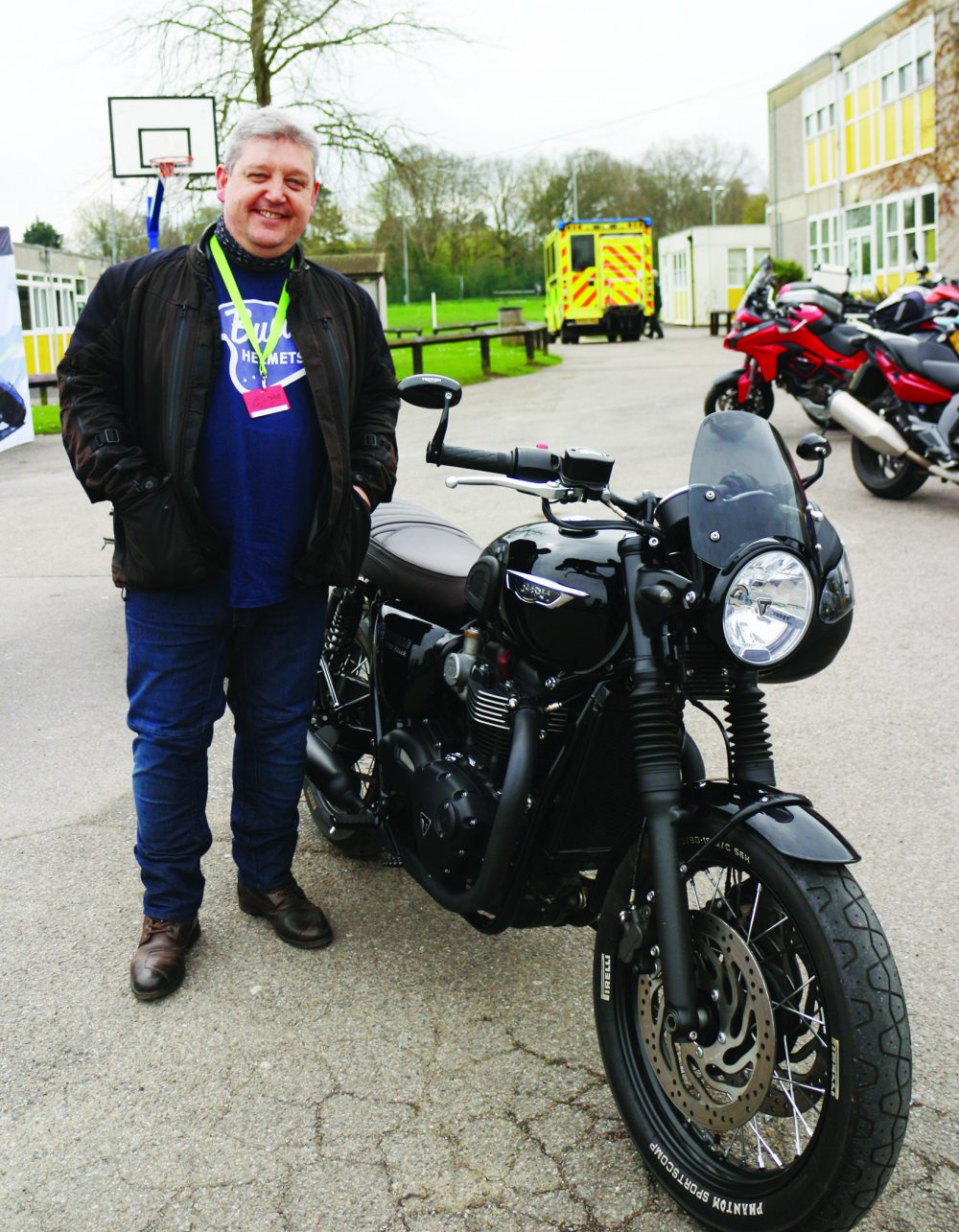
This month we have Jono Wiles and his Bonneville.

Well this looks familiar; but which specific flavour of bike are we looking at here?

It’s a 2016 Triumph Bonneville T120 Black edition.

And how long has this example been lurking in the shadows of your garage?

I bought it back in November last year.

Did this replace another bike, or is it an addition to your fleet?

Whilst I would love a garage full of bikes it’s my only ride! It replaced an older version of the Bonneville, an air-cooled T100 SE.

There’s a lot of choice in the retro/classics segment at the moment; did you go straight for an upgrade or consider anything else (e.g. Moto-Guzzi V7)?

As I had already ridden a Bonnie I didn’t look too closely at other options. As before, I wanted a classic-looking bike with modern performance, and personally think that Triumph have done a great job in creating a fantastic range of old-school-looking bikes. I do like the look of the Moto-Guzzi, and I also considered the BMW R-nineT, but I still feel Triumph pip them both on style, quality and reliability.

The older Bonneville’s were fairly basic bikes, tech-wise. Was there anything in particular you were hoping to get from this upgrade?

I loved my old Bonnie but it was missing some key features: ABS, traction control, heated grips etc. The new one is a comprehensive ground-up redesign with twin front brakes, electronic ride-by-wire system, riding modes, torque assist clutch, LED lights and, in the T120, a much more powerful 1200cc water-cooled engine. Combined, these make my new T120 a much more responsive, safe and powerful bike. The clutch is a dream and really light, which is great when riding for extended distances. The engine delivers 50% more torque and 20% more power than my old bike and sounds great with the pea-shooter style exhausts. Contrary to expectations, it also handles well on both twisties and the open road.

Sounds like you’re a big fan! I’m guessing you collected this one from an equally enthusiastic dealer?

Yep – I bought it from Laguna in Maidstone; at the time these models were hard to find second hand, and I didn’t want to buy new and take the hit on the initial depreciation.

How did that work out?

They were okay to start with, but after I got the bike home I noticed the hazard lights weren’t working. Laguna picked the bike up again, fixed the problem and got it back to me within three days but it was a bit annoying, to say the least. I have to question if they really performed the promised checks that were claimed to have been carried out, and one of the key reasons I wanted to buy from a dealer.

I normally stick to Jack Lilley Triumph in Ashford; they maintain my bikes as they are local and are a great bunch who I would thoroughly recommend. For example: when I took the T120 in for a recent service, I mentioned the front brakes squeaked a bit when used at low speed. Apparently this was a common problem for the early T120’s and Triumph issued a fix, but my bike was just a few months out of warranty by this point and so wouldn’t normally be covered.

But the guys at Jack Lilley called Triumph and persuaded them to sort it out at no cost, which they really didn’t have to do. Considering the fix included a new front wheel, discs and pads, which would have cost me £1,200 + fitting, I was understandably delighted. It shows that they really care about their customers. In fact, this was another thing Laguna should really have resolved before selling it to me five months earlier!

I’m no expert, but that bike looks a little different than the examples I’ve seen. Have you made some changes?

The Bonnie came with some modifications already fitted, such as a tail-tidy, different indicators, suspension and an upgraded Vance & Hines exhaust. I have since added a Dart fly-screen which makes a huge difference to wind buffering for such a small bit of plastic, and finally panniers to make it more suitable for touring.

So not just a Sunday cruiser then!

I only started riding two years ago when my best mate (who had ridden for years) arranged a biking trip to the US for his 50th. So I thought: why not? I passed my test and three months later I was riding an Indian Roadmaster 2,500 miles from Colorado, to California, passing through Ohio, Arizona and Nevada on our way to LA and San Francisco.

It was a fantastic experience on an absolute beast of a bike and a real baptism of fire. As a novice rider I learnt a lot very quickly, but it got me hooked and I have not looked back since. Since then I have been to Holland, France and Spain, and plan to go on at least one or two trips away each year from now on. The TT and Balkans are already in the diary for 2019!

The T120 is quite a bit more powerful than your old T100; has your riding changed at all as a result?

The T120 has allowed me to progress my riding – especially the cornering side – but I still see myself as a beginner, which is why I joined TVAM. Being a member gives me the opportunity to improve my capability as well as socialise and ride with a bunch of like-minded people. It’s been fantastic! Only a few weeks ago I went away on the ‘Let’s go to France’ trip for a long weekend. Expertly organised by John Rodda it was truly excellent. There were six of us altogether, everything was planned well, from the route to hotels and the daytime activities. Everyone looked out for each other and John was a brilliant tour leader.

Sorry I missed it! Did the trip highlight anything lacking that you missed from your old bike?

I certainly don’t miss the manual choke or woolly front brakes! But then this new bike had been customised by a company called 8 Ball who are commissioned by Triumph to fettle some of their bikes, so it looked mean and sounded great.

On the flip side, even with the indicators fixed they were still not great quality and rather small. Equally, whilst the rear light looked good and fit the aesthetic, it too was quite small, and I received some feedback during TVAM rides on how ineffective they both were. As such I have just swapped the tail tidy for an R&G racing set-up which was a bit pricey, but after doing some research it came back as the best option. It also allowed me to reinstall the rear grab-rail, which is handy for pillions or attaching extra luggage when touring. I then fitted some Triumph short-stem indicators which are both much brighter, making me far more visible to motorists.

Finally, the only other issue, common to all naked bikes, is that you can’t help but be somewhat envious of the fairings on big touring bikes while blasting down the motorway! But I suppose those are the choices we make and I wouldn’t swap my bike for anything.

So it sounds like you’re pretty pleased with your purchase then!

Yes – it’s perfect for me and the type of riding I want to do. So, whilst it wouldn’t suit everyone, I absolutely love this bike!!

Nick Tasker was talking to Jono Wiles earlier this summer.

First published in Slipstream November 2018

All Bikers Great and Small

TVAM 3Rs – Up North Edition, October 2018

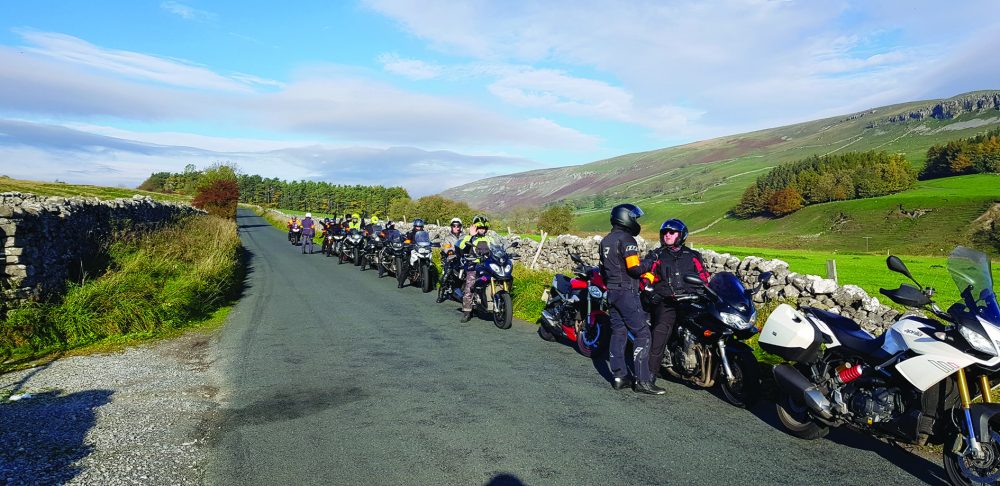
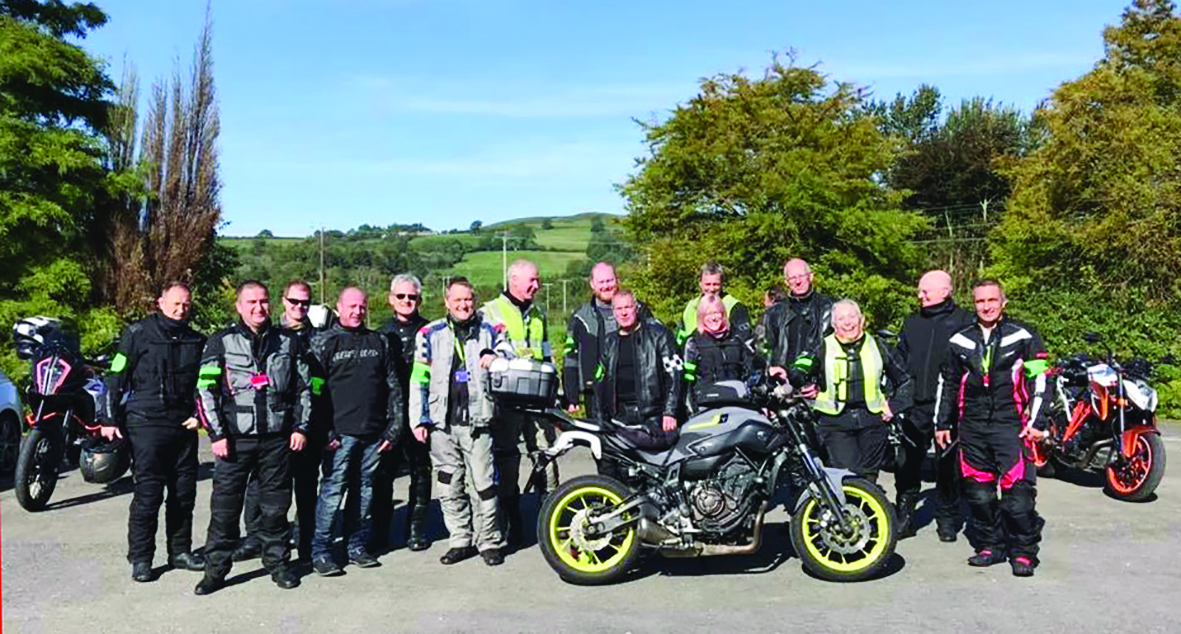
As summer began to fade into memory and autumn took hold, 30 hardy TVAMers gathered in Oxford for a 3-day trip to the Yorkshire Dales. Smaller in scale than 7Ws, but no less ambitious for fun, 3Rs is TVAM’s bi-annual trip taking a group of Associates, Green Team Members, Trainee Observers and Observers away from the familiar stomping grounds of the Thames Vale and taking in the wilder, twistier bits of the UK.

The destination this time around was the Yorkshire Dales, with its wonderful combination of breathtaking scenery and technical, twisty tarmac. Thanks to a dedicated team of organisers, our intrepid riders were all prepared, packed, briefed and ready to go from the ever-popular Oxford Sainsbury’s on the Friday morning. The weather gods had smiled on us and held the rain off, but thermal linings, heated grips and winter gloves were high on the list of vital accessories for the trip northward.

Two runs set out around 9am for the 200-mile journey to our base for the weekend; a hotel near Kelbrook, north-east of Burnley. Our fine run leaders had carefully selected their routes to take in some tremendous roads, with the absolute bare minimum of dual carriageways and the maximum quota of enjoyment. For a mixed group with a range of abilities, marking was generally excellent and almost all of our band of riders managed to follow the guidance faultlessly. I say almost, because one of our number, James, can tell you first hand how important good marking is and how failing to take in what they are telling you can result in spending an eye-watering 3 hours stuck on the M6.

That minor mishap aside, we all arrived safely at the hotel just after dusk. Though the rides had been fun and scenic, I think we were all glad to be safely there and we soon assembled in the bar for the tall tales of which a group of bikers like ourselves are so fond. Once fed and watered, we were briefed on our rides the following day. We were also forewarned that awards would be handed out on Saturday evening.

Bright and early, and following a hearty breakfast, we assembled in the car park to head off for the main rides of the weekend. Our run leaders had reconnoitred the routes in advance and selected some of the most thrilling, challenging, technical roads you could wish for, through some of the most beautiful scenery in England.

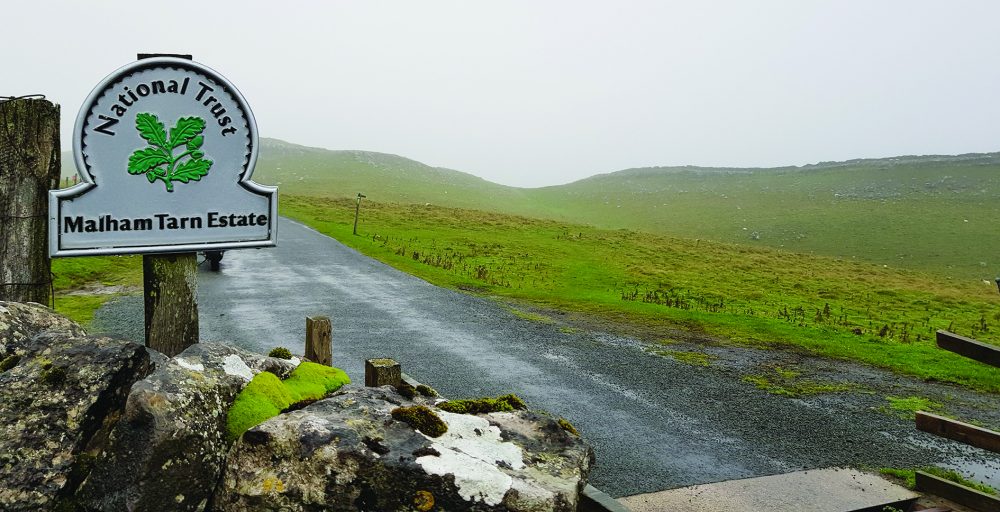
The ride I was on led us past Malham Cove, a natural inland cliff-face carved out of limestone. I’d visited this famous landmark some years earlier and had said how great it would be to ride our bikes on these roads. To have that wish come true was an absolute treat. After plying our way along rolling, twisty moorland roads we arrived for our first stop in Hawes, home of Wensleydale Cheese and several pretty tea-rooms.

Coffee, tea and cake were taken and we took the opportunity to talk over what we’d seen and learned. Personally, with all the bends, blind summits and hidden dips, I can vouch for the lesson I got on ‘dead space’. These dips and curves were more than big enough to hide cars and vans from view. This really drove home the valuable advice I had received a few months before… “Never put your bike anywhere your eyes haven’t been.” I wish the two oncoming ‘numpties’ who flew towards me had been applying that knowledge. Still, no harm done, but the near miss reminded me that this is not just a jolly, but also the most beautiful classroom you can find.

This first leg was just the taster. Dry-stone wall lined roads, cattle grids, frisky sheep, recently fallen leaves and traction-control invoking hump-backs featured throughout the day. There were also two long spells of riding in the cloud base on top of the moors requiring us to keep our wits about us.

However, none of this did anything to dampen the mood. Rarely is applying the learnings of Advanced Riding so much fun. There was even the chance to show off our motorway skills. Motorway, on a TVAM weekend, I hear you ask? Yes, but trust me, there probably isn’t a more attractive piece of motorway in the UK than the M6 between J37 and J39. It is one of the rare sections where the carriageways are a couple of hundred yards apart and the views are stunning.

Our lunch stop was a lovely country pub with a roaring fire and welcome delicious food. With full tummies, we climbed back on our trusty steeds and continued our odyssey around the moors. The varied roads, weather and surface conditions meant that lessons continued to be learned. Again, for my part, the importance of taking the prevailing light into account was driven home in dramatic fashion.

As I turned right onto a dual carriageway, I’d failed to make allowance for the unusual half-light being cast by the sun streaming through low cloud. This peculiar light, combined with a grubby visor meant I failed to spot a black car with no headlights coming from my right. His quick actions saved me and I made damn sure to pay extra attention at junctions, flipping my visor open if my vision was even slightly compromised.

Our final coffee stop was as Aysgarth Falls, another tourist spot I’d visited on a previous holiday and just as beautiful when viewed from astride my motorbike. Scrumptious cakes were consumed before the final leg of the day back to the hotel. And so, 200 plus miles and around 8 hours after leaving the hotel that morning, we returned, tired but exhilarated from our day out in England’s green and pleasant land. Our gratitude to our run leader, Kelly, and patient back-marker, Paul, was matched by stories we heard from the other group who had been lead hither and thither by Nigel and back-marked by Bob.

It cannot be over-stated how grateful we all were to our run leaders and back markers. Trips like these cannot succeed without them. As an aspiring run leader myself, having taken the Run Leader/Back Marker course, I see the dedication they have and the hours and days they put in preparing. I can vouch too for the effort it takes and would encourage as many of you as possible to join their ranks.

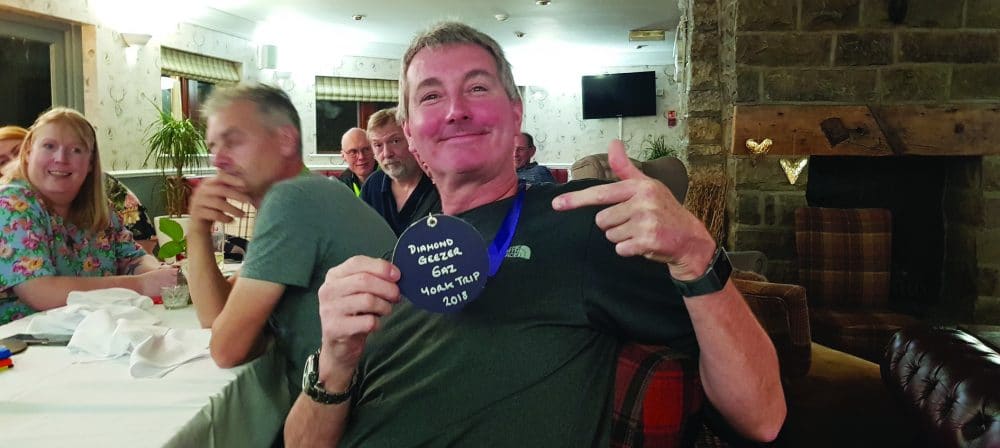
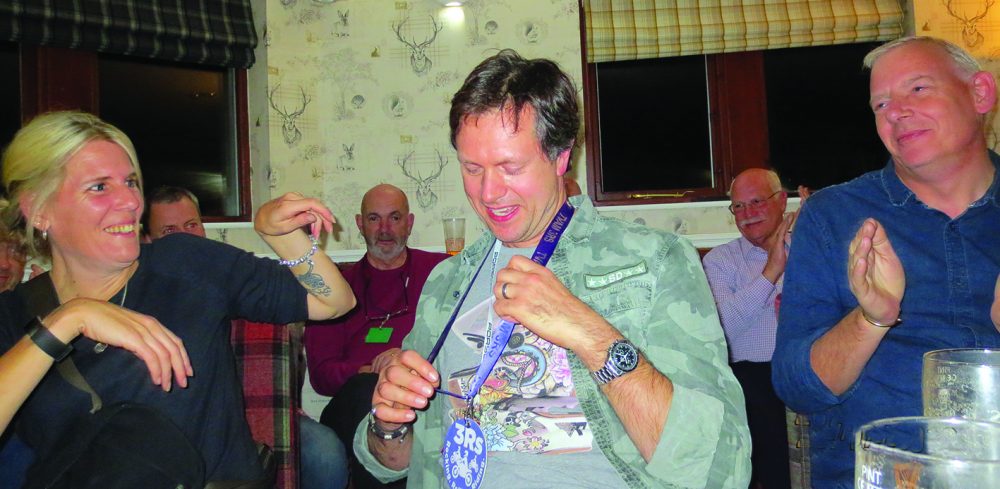
Saturday Night meant our second dinner at the hotel, where the theme of good solid food in large portions continued. More stories were told and award nominations submitted ahead of the medal ceremony. I shan’t name names, but the Numpty award involved overcooking it on a cattle grid. The Poor Marking award went to the chap who didn’t notice he was being asked to go down as a marker and instead shot past the run leader. Diamond Geezer went to the very kind hearted Gary who took Nina pillion all day after she fell ill overnight. The lesson here of course is that she correctly applied the final S of the POWDDERSSS check, ‘Self’ and remained safe by not riding when she felt too ill.

Lastly, a brief mention of the Most Improved Rider medal which was very generously awarded to me. As Coral explained, a couple unfortunate experiences meant I lost a lot of confidence earlier this year. But, with the support of my fellow club members including Colin Wheeler and taking part in training weekends like this, I am once again in love with Ulysses, my faithful BMW S1000R.

Tired and happy, we retired to bed after a thrilling day, ahead of the ride back South on Sunday. Again, our thanks go to those who volunteered to lead us on the homeward journey. They too ensured fabulous roads and fuel and food on the way. As the groups headed home I can imagine they all went home feeling grateful, happy and full of the joys that only a 600-mile training weekend can bring.

Finally, a huge thank you to all involved in the organisation of this fantastic weekend. Hotels don’t book themselves, routes don’t appear out of thin air and emails don’t write themselves. Coral, Brian, Kelly, Paul, Anthea, Andy, Andy, Nigel, Bryan, Bob, Piotr and Anetta, thank you for making all this possible.

Dee Scott

First published in Slipstream November 2018


The 7Ws Smile Says it All! (Gallery)

A short time ago, my husband returned from his first training trip to Wales. He raved about it so much, saying it was a great confidence-booster weekend, exactly what I needed to build up my own confidence and suggesting that I go on the next trip. “Good for him,” I thought, but there was no way I felt ready to go on one of those trips yet. I had only passed my test last year and had only been riding ‘properly’ – albeit rather nervously – since the summer started.

The next time I attended the St. Crispin’s meeting Lou Dickinson came up to me. She told me that she had ridden in behind me and could see that I was nervous and said that I should definitely go on the next 7Ws weekend. This was my first time meeting Lou but my husband had already told me how great she had been observing and training him on the previous trip. I could see how much his riding had improved as a result, but then he had been riding for 20 years so, in my head, it was always going to be easier for him. I politely said to Lou that I would go, secretly hoping that, with so many people applying for it, I may not get a space… but then I got the dreaded email… I had been allocated a place… now I had to go. What had I let myself in for? The answer…. the best decision I ever made!

On the first day, we arrived at the meeting point earlier than everyone else, filled up our bikes and went into the café for breakfast. As more and more riders turned up I became concerned that I would not be as good as a lot of them and that I was going to be holding everyone up. Was it too late to go home? The feeling of intimidation by such a large number of people soon left me however when, after the introductory meeting, we all went to our allocated, much smaller, groups. There were around 12-14 people in my group with an Observer for each Associate. The rules of marking and the role of the back marker were explained and I was also assured that my Observer would stop with me when it was my turn to mark. I began to feel more at ease as we were now a smaller group of smiling faces. My first Observer was Ian who instantly made me feel comfortable and reassured me that it was okay to ride at my pace and not anyone else’s.

The routes were planned to avoid boring motorways and included lots of great roads to get us to Wales with plenty of stops and support from the Observers, which made the run a very manageable distance. A few great tips from Ian meant that I could feel the improvement in my riding position before we even got to our first stop. So, when we did stop I had the start of that 7Ws smile on my face. And this was all within the first hour of a 3-day training weekend!

Paul then took on the challenge of my next observed ride. When I became frustrated with myself over some of my attempts on bends he provided encouragement and tips which really improved my ride – not to mention the overtakes. He helped me go from two overtakes since I had passed my test, to half a dozen in the few hours I was being observed by him. And this was still only day one!

Arriving at the hotel after a spectacular ride down we fuelled up and parked our bikes all ready to leave early in the morning. The hotel was booked exclusively for us and had secure parking, great service and amazing staff all for the small amount that we paid for the weekend.

We freshened up, then after dinner, were entertained by Sean Westlake from Rapid Training, who told us many humourous tales of motorcycle-related wisdom. Then we retired to the bar for further tales of our ride experience, adventures and lessons learned on the way down. That night I went to sleep thinking, “How can this get any better?”….but it did!

On the second day, which was the main event of the weekend, I was looking forward to riding on the amazing Welsh roads with some stunning scenery and photo opportunities. We were allocated to our run leader and back marker and were talked through our run for that day. Again, we had a nice intimate group and by now there were a few familiar faces from our chats in the bar the night before. Once again, I took advantage of an observed ride and started my day with Lou and within no time at all she had worked with me to achieve an improvement on my lines through bends, making all the lovely twisty roads so much more fun. With her words of encouragement my 7Ws smile was becoming wider and wider as the day went on. Heather took over the reins on my next observed ride and I managed a few more overtakes that I would not have dreamed of doing a week ago. What was happening to me… was I becoming a proper biker?

What an amazing day, riding through the fantastic, twisty roads of the Welsh hills and valleys. It really could not get any better than this. Even the rain stayed away.

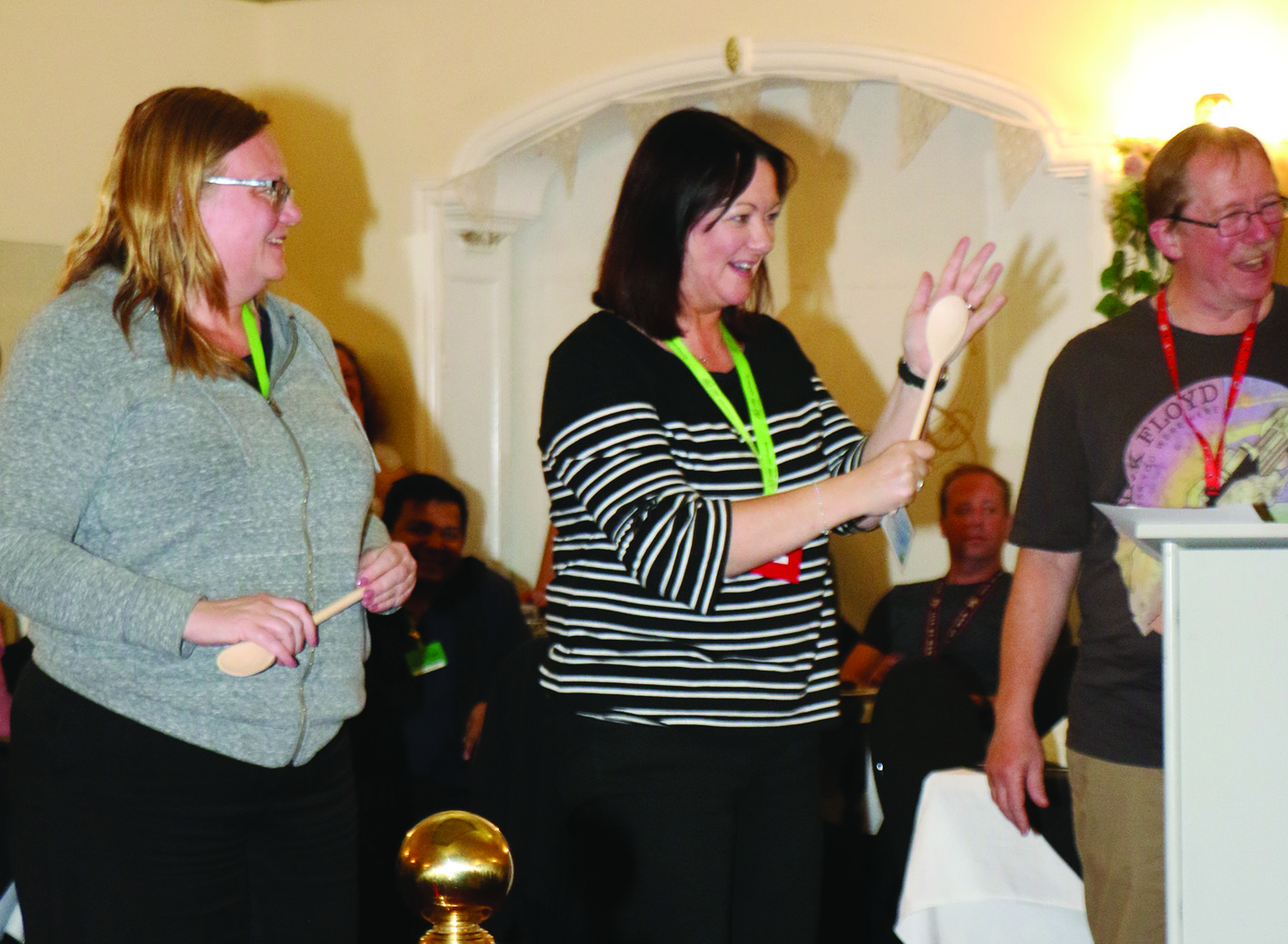
After dinner on Saturday evening, an awards ceremony was held during which wooden spoons were awarded for a variety of achievements or infringements, such as the worst overtakes or the most improved rider/s.  It was all delivered in good spirits with lots of banter and humour and made for a very enjoyable part of the weekend.

On the final day the trip back to Oxfordshire took in some enjoyable twisty roads providing the opportunity to practice what we had learned over the weekend. Again, there were plenty of stops to refuel or get coffee or lunch, making the distance back quite comfortable.

I came home from the weekend with the 7Ws smile; the wooden spoon for the most improved rider; many new friends and above all a massive confidence boost and significantly improved riding ability. This was all down to the efforts and hard work of the 7Ws organisers, Observers, run leaders and back markers who volunteered their time and efforts to organise the venues and routes to provide a great training and development opportunity. I cannot recommend the training weekends enough. The one-on-one observed rides, encouragement, feedback, welcoming and supportive approach really made me feel like this weekend was all about me and my fellow red badge holders.

Looking forward to the next one!  Here’s hoping that I get a space… and I really mean it this time!

Rhona Ferry

First published in Slipstream November 2018

Intermot 2018

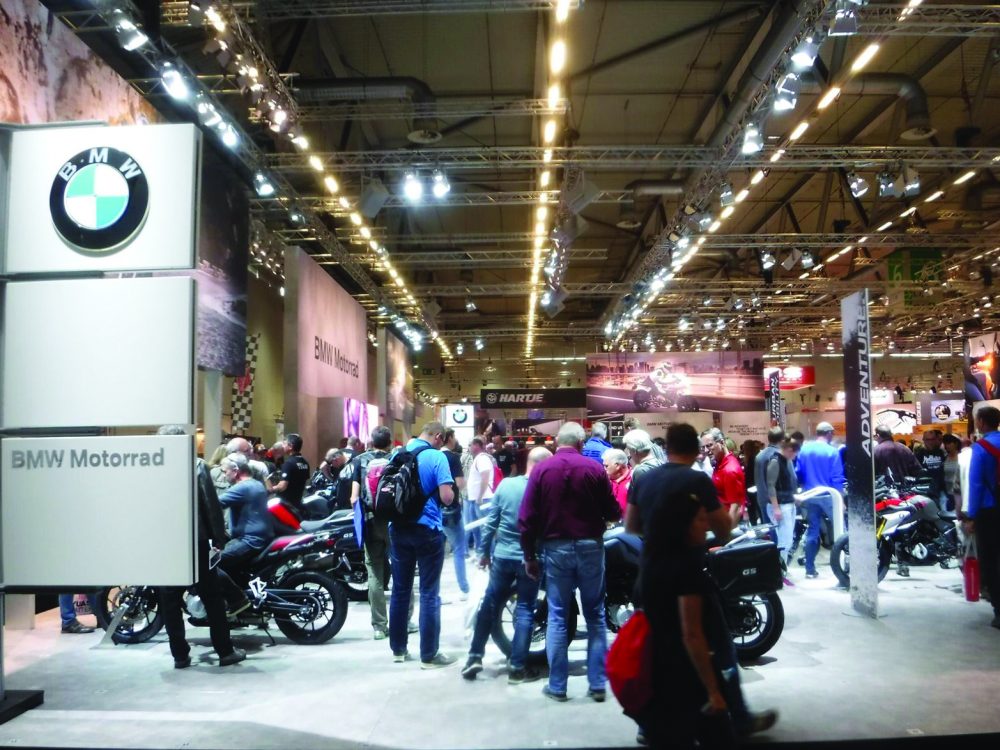
Intermot, the Cologne International Motorcycle Show, has one key difference when compared to the other European bike shows – it only runs every other year. For one reason or another I’ve kept missing my window of opportunity, but this time I was finally able to line things up and book my tickets.

A short flight and a couple of nights at a local hotel are one option, but naturally I chose to take two extra days and use the bike instead. The Mosel and Eiffel are fantastic riding at any time of year, but in Autumn the scenery takes on an even more spectacular hue, with reds and oranges joining in amongst the stereotypical evergreens.

The show itself is broken up into two parts; a whole third of the floorspace was dedicated to a massive exhibition of custom bikes and culture, with beard trimming & haircuts offered alongside countless modified bikes and accessory stalls. The remaining four halls were dominated by motorcycle manufacturers large and small, with everything from oil, clothing and parts suppliers squeezed in between them.

New announcements were few and far between, with most manufacturers saving their high-profile launches for EICMA or their own carefully-controlled press events. Instead, shows like this, or our more local Motorcycle Live! serve as an opportunity to see and sit on every possible bike in one place, free from the presumptive interruptions of sales staff. So rather than working my way through the major players and simply listing what’s new, I’m going to take a slightly different tack this time.

The club is fortunate to have attracted many new members in the last few years, and I myself have had a number of people approach me for purchasing advice. Experienced motorcyclists know what’s available, have formed their own preferences over years of riding and sampled a broad cross-section of machinery. But what if you’re new to riding, passed your test recently and are riding a CBR600F purely because it caught your eye at a local dealer? A motorcycle show is the perfect opportunity to see the full range of motorcycles in one place, and be reminded of the sheer scale and variety of two-wheeled transportation.

So let’s take a quick, broad-brush scan of the main genres of motorcycle on show in Cologne, and remind ourselves what we might want to take a look at when heading to Motorcycle Live! in the coming week. I’ll pick out a recommended starting point for you newcomers, as well as a more left-field alternative for those that like to live more dangerously than the rest of us. But I should stress that nothing beats a test ride, and comparing the competition is the only way to figure out exactly which variant you will personally prefer.

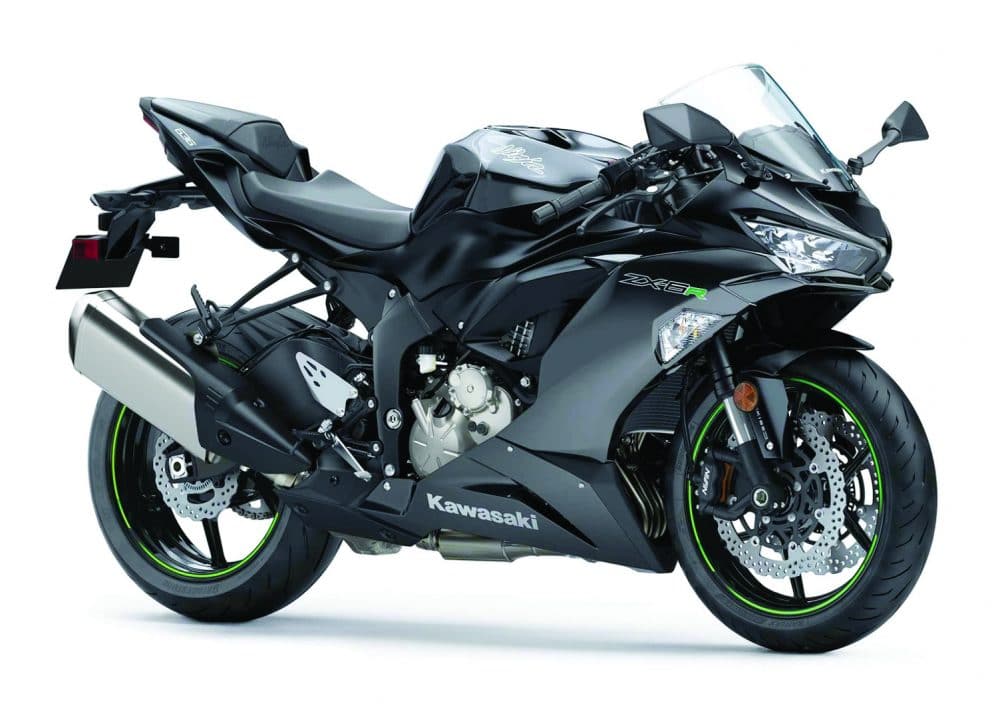
Kawasaki ZX-6R

Supersports

Derived from a desire for maximum performance, a modern sportsbike sacrifices almost everything in the pursuit of getting the rider around their local racetrack at the maximum possible speed. Comfort, tank range, luggage capacity – any semblance of practicality is entirely secondary, which often means that on-road riding is severely compromised.

And let’s face it, if you’re reading this, then most of your riding probably happens on potholed public tarmac. Twenty years ago, sportsbikes were the only way to get half-way decent engine, braking and suspension performance, and more road-focused designs meant that the compromises weren’t half as drastic. But in 2018, the stands are full of bikes of every stripe that could thrash a GSX-R from a decade ago along any stretch of road you care to mention.

There’s certainly a purity of sensation that comes from riding a sportsbike; that feeling that your hands are gripping the front axle, not a set of clip-ons a half-metre further up. But don’t kid yourself that you “need” one for road riding – not anymore. Buy one because you love how they look, you love how they sound, and are addicted to that startling top-end rush that only comes from a screaming inline-four at 12,000RPM and above. Buy one because you want one; squeeze into your leathers and pretend you’re winning the TT on your way to work.

The bike to beat remains BMW’s S1000RR, and rumours of an impending update mean that deals are doubtlessly available. If you fancy something more exotic, Ducati’s recently-released Panigale V4 will be sure to delight and terrify in equal measure.

Naked

Motorcycling is all about the sensations you can experience when you’re out in the elements. The sights, the smells, the feel of the wind tugging on your clothing and the mechanical sounds and sensations of your bike beneath you. While any motorcycle devoid of fairing is technically “naked”, this genre of biking tends to refer to performance-oriented machines with more upright riding positions and minimal wind protection.

Time was that manufacturers would simply tear the plastics off their latest sportsbike, replace the clip-ons with handlebars, soften the suspension and de-tune the engine for a less “focused” power delivery. These days, the naked bike is just as likely to be an orphan, designed and built from the ground up to be a performance street machine.

And therein lies the truth of it; the differences here mean that naked bikes are generally much better road bikes, their lack of wind protection only becoming an issue when at very high speeds or on a racetrack, where their erstwhile cousins come into their own. Handlebars are better for slower, tighter roads than fast, flowing corners, and the comfier suspension can better deal with the imperfect tarmac we face on a daily basis. They’re not as pretty as sportsbikes though…

Recommendations here are tough as, unlike the ultra-focused sportsbike world, there is real breadth to the naked category. I’ve personally got a soft spot for the Suzuki SV650, especially now that it’s finally got the upgraded front brakes it’s always deserved. The Triumph Street Triple is something of a benchmark, although I resent the 17kg weight gain that accompanied last year’s redesign. The left-field suggestion would be the new KTM Duke 790, the Austrian brand’s first parallel twin and, apparently, an absolute riot to ride.

Adventure-Tourers

What do you buy if you want to circumnavigate the globe, riding through swamps, jungles, deserts and tundra? You buy a Honda CRF250L. There; you’re welcome. What you don’t buy is a quarter-ton of gadget-laden German behemoth and pretend it’s a dirt bike.

It’s impossible to discuss the Adventure segment without BMW’s synonymous R1200GS, now swollen to 1,250cc in its latest iteration. The rise of the Adventure bike is the fall of the sportsbike, as people who bought into the racing fantasy decided that the round-the-world fantasy was a more comfortable and surprisingly practical alternative. The two-wheeled equivalent of a Range Rover Sport, no true off-road enthusiast would ever consider one seriously, even if their dirt-oriented performance is often surprisingly impressive. Instead, the attraction for most lies in how good they are at pretty much everything else.

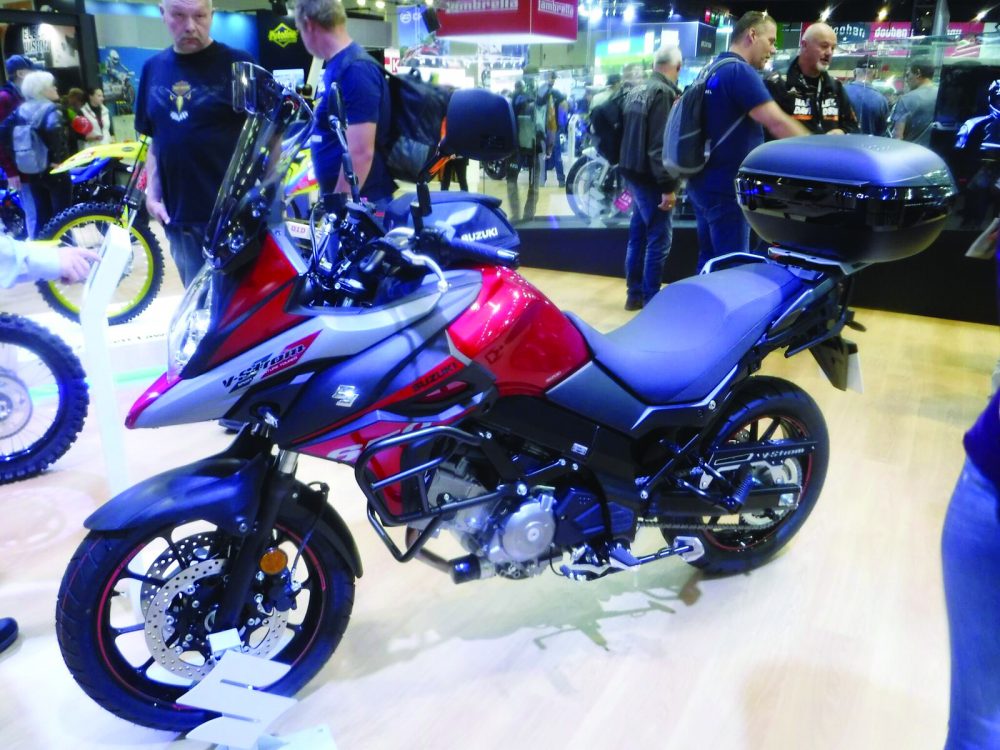
Suzuki V-Strom

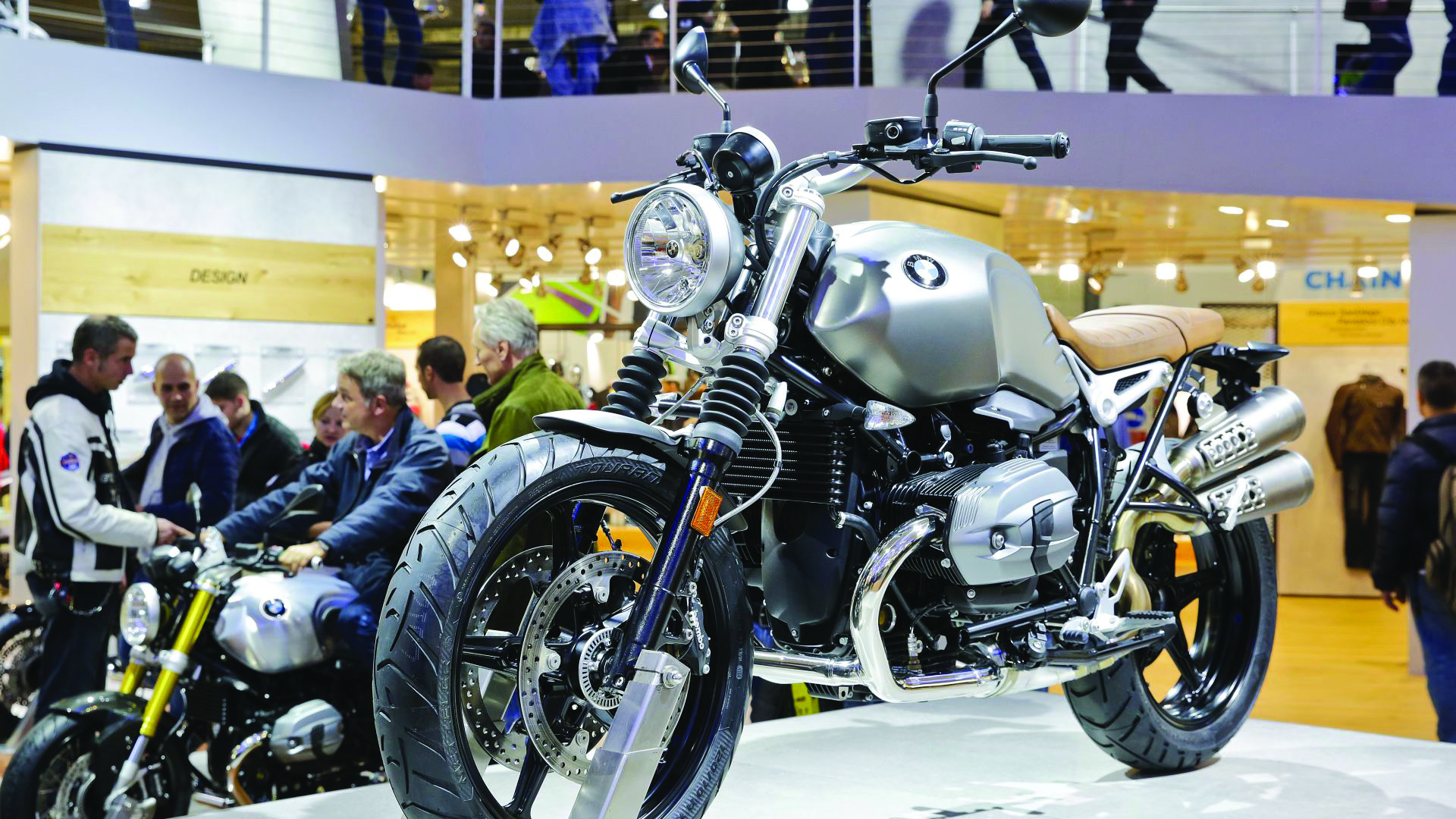
BMW R nineT

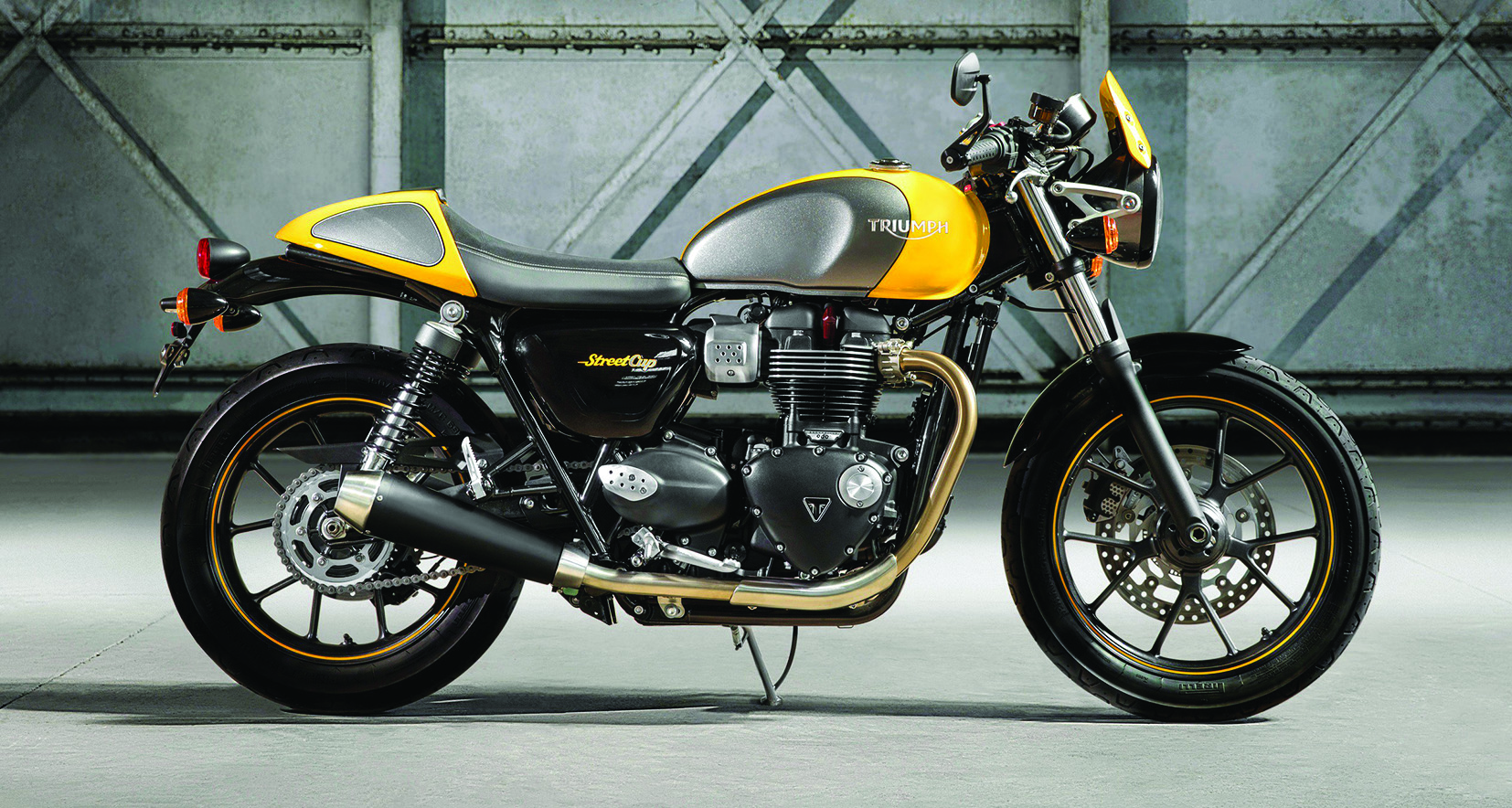
Triumph Street Cup

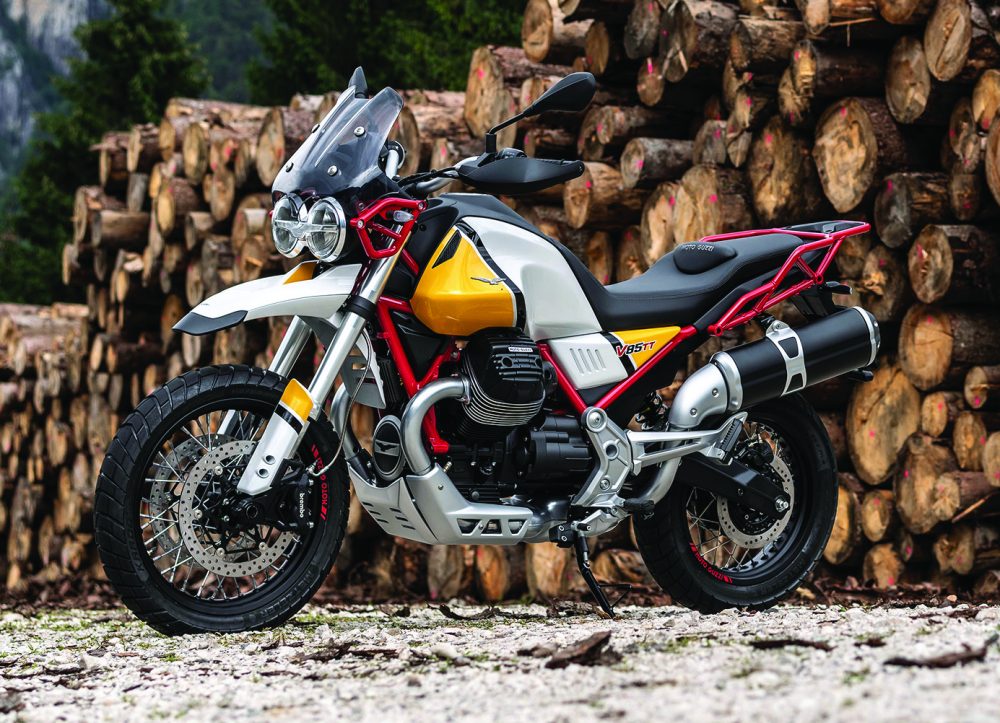
Moto Guzzi V85TT

They’re touring bikes that weigh less. They’re naked bikes with more wind protection, space for a pillion and massive panniers. They’re tall enough to see over cars and powerful enough to overtake whole strings of traffic in an instant. Big tanks often mean long stints between fuel stops, and heated grips and hand-guards make bad weather a non-issue. If your wallet is thick enough, you can even enjoy the very latest electronic gadgets – electronic suspension, cruise control, self-aiming cornering lights…the list is practically endless.

At the other end of the spectrum, those with less extravagant tastes can enjoy smaller, simpler, and, crucially, cheaper options. Tall seat heights can be an issue, though many manufacturers have begun offering lowered seats and suspension. They’re also not the prettiest bikes in the world, with styling having come at the very bottom of the list of priorities when the engineers were drawing up their plans.

Let’s face it, the BMW R1250GS is the benchmark here, even if you’ll end up losing it amongst the sea of nearly identical bikes at your local cafe. Many people opt for something else, just to be different, but you’d be doing yourself a disservice by ignoring it. Or you could go in the other direction, and try out a Kawasaki Versys 650. Cheap suspension, and the stock seat isn’t fantastic, but it’s cheap and utterly hilarious to ride fast. Try one.

Sports-Tourers

Your hardcore trackday enthusiast would probably describe a 2002 Honda Fireblade as a sports-tourer. It looks like a modern sportsbike, but has a more comfortable seat, higher clip-ons, space for a pillion and somewhere to strap luggage. I wonder if we’ll be making similar comparisons about our current razor-sharp race-replicas in 2030?

Sports tourers are, in essence, sports bikes that you could tour on without enduring crippling pain half-way through the first day. Riders who can’t stand the look of adventure tourers but can’t handle the riding position of a true sports bike for hours on end will delight in discovering that very few compromises are necessary as long as your preferred tarmac is publicly-owned.

Those compromises mean more weight, as stiffer frames are needed to carry luggage and passenger. Larger fuel tanks mean less time looking for petrol, and wider seats mean your backside won’t notice that you’re stopping less frequently. This, plus the more protective fairing, means that they’re always larger, heavier machines than the lithe super sports they visually ape. They’re not perfect: clip-ons, even raised ones, aren’t always comfortable for those short of arm, and limited steering lock can make low-speed manoeuvres challenging.

Of course, some people would argue that the line between sports tourers and some adventure tourers becomes blurred as the former becomes more upright and the latter grows more fairing. Hybrids definitely exist, and could arguably be the best of both worlds for those who aren’t as interested in the lifestyle imagery of either extreme.

The Kawasaki Z1000SX is the place to start here; it’s been a best seller since its inception, which means that the classifieds are full of options for the used buyer, and the latest model has had plenty of owner feedback steering its development. Change those horrible Dunlop tyres immediately though; feedback here is universally damning. The left-field choice in this case has to be the Yamaha Tracer 900GT; very much a hybrid machine, and very much a fantastic motorcycle, if you can get comfortable with the taller stance.

Tourers

So you like the weather protection and clean lines of a faired motorcycle, but have a lot of miles to cover. Also, you aren’t necessarily as interested in dragging your knee around the local hairpins when you arrive. Shuffle the priorities around, make comfort and luggage for two the ultimate goal and you end up with a full-sized touring bike. Chances are, in fact, that you’ll end up on a Honda Goldwing.

Practically inventing the format when it grew a full fairing in the 80’s and the bike that everyone points to as the stereotypical example even now, it characterises the concept better than any other motorcycle. Huge tank; massive, comfy seats; enormous fairing and cavernous luggage; and, finally, an oversized engine to haul its impressive weight around. This combination also scales down quite successfully, and it’s hard to spot the point at which you can tack the word “sports” on to the beginning of “tourer” as you move down in size.

I would argue that the tipping point is when the journey starts to matter more than the destination. If you reach the top of the B500 in the Black Forest and wish that your bike were lighter and more involving to ride, then you’ve gone too far in the touring direction. If you’re happy to look at the scenery as you entertain the wildlife with your on-board speaker system and don’t mind slowing down a mite for the corners, then you probably chose well.

While the Goldwing is the King, the truth is that you might want to start your search at the BMW K1600GT. Regularly updated, loaded with gadgets and with tremendous performance, it’ll surely get you to where you’re going quickly and in maximum comfort. The left-field choice here, depressingly, is another BMW – the R1200RT. Leaning dangerously close to the “sports” side, it provides a lighter-duty alternative and should definitely be sampled.

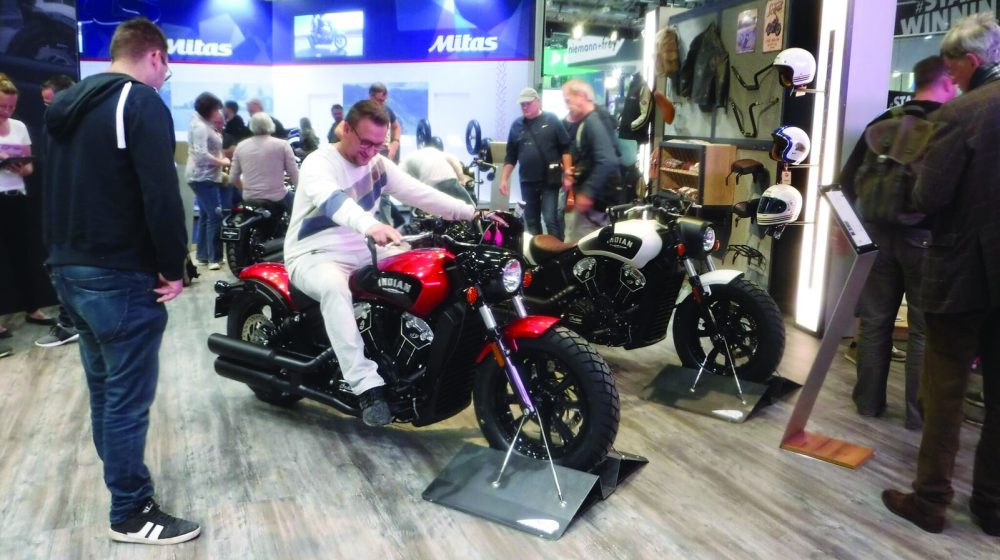
Indian Scout

Cruisers

It’s common that a genre is defined by a particular bike, but Cruisers are defined by a brand. Harley-Davidson has been making motorcycles for more than a century, and detractors would joke that their bikes haven’t changed much in that time. And from a certain angle, it’s true; cruisers are defined as much by their aesthetics just as other categories of motorcycle, but no other genre has had to make so many concessions in pursuit of its particular style.

While the chrome, feet-forward riding position and long, low chassis have all been proven to be mostly optional over the years, the air-cooled narrow-angle v-twin engine remains something of an anachronistic necessity. It’s also a ticking timebomb, cooling after a long ride while manufacturers wonder how much longer they can squeeze the designs through emissions regulations. It’ll be a shame as, to those that enjoy them, there’s an indelible character to an air-cooled twin, one that makes them extremely enjoyable to use, even if they’re not terribly powerful.

In any case, most manufacturers decided not to wait and killed off their cruiser lines in the UK years ago, and only the recently-revived Indian remains as a real competitor. Broadly split into naked and semi-faired versions, cruisers are surprisingly similar to sportsbikes in that practicality and comfort takes second place to a primary focus: in this case, an aesthetic ideal.

A full-dress tourer will give you Goldwing-matching comfort, luggage capacity and unfortunately the weight to go along with the image. Lose the fairing and you’ve got a whole swathe of configurations to suit every taste, as long as you enjoy lots of exposed metal. Cruisers are heavy, slow, have limited ground clearance and suspension travel, but enjoy low seat heights and relaxed riding positions in exchange. They’re very much a matter of personal, even acquired, taste but if you don’t like it, you can always change it. Cruiser culture is inextricably enmeshed with the custom scene, something that Harley-Davidson has wholly embraced; their 2019 accessories catalogue is almost two inches thick…
It’s hard to recommend a particular model here, because the devil really is in the detail and personal taste is so much of a factor when shopping for cruisers. I’m very taken by the Harley-Davidson Sport-Glide, which matches the stripped-back cruiser aesthetic with a modicum of touring capability and an awesome engine. The left-field choice would be the Kawasaki Vulcan, with a water-cooled parallel-twin 650cc engine borrowed from the manufacturer’s own Versys & Ninja 650’s. Comfy, punchy, light and fun.

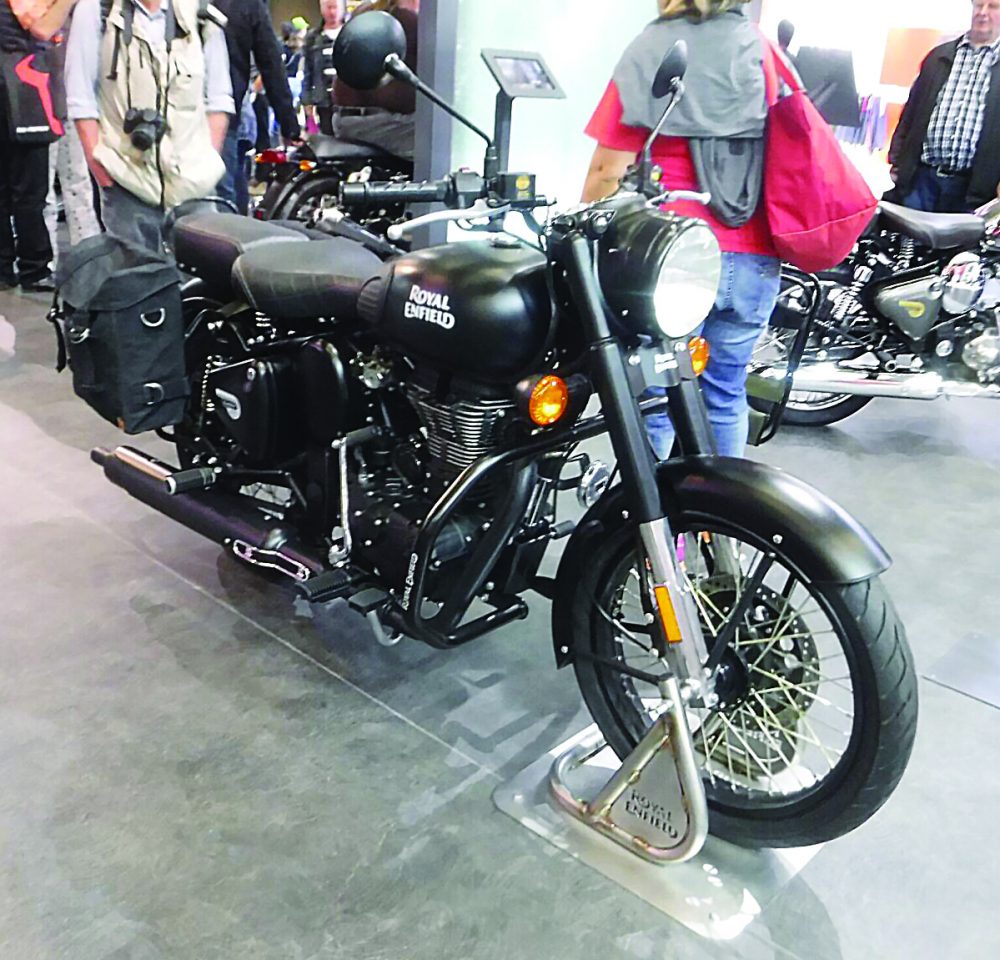
Royal Enfield Interceptor

Classics

Harley-Davidson should have been owning this segment, but their marketing department changes direction like an overloaded oil tanker. The explanations for the popularity of bikes that look and feel like those from fifty years ago are many and varied, but the numbers speak for themselves. Customers love the look, sound and feel of old bikes, but would find living with a genuine classic a real culture shock; modern interpretations of those motorcycles tend not to constantly leak oil and require riders to clean condensers and re-gap spark plugs at the side of the road.

This means that bikes that are still built like it’s the 1960’s – I’m looking at you, Royal Enfield – often don’t quite find the audience they hope for. Conversely, simple styling jobs on top of, otherwise modern, water-cooled nakeds fall similarly flat. And while, like with cruisers, actual performance takes a relaxed back seat to aesthetic priorities, we’ve reached a point in motorcycle development that the compromises are becoming less and less noticeable.

When power output, cornering capability, braking performance and even suspension take second fiddle to making the rider feel cool, the engineers are often left with little to work with. Steel tube frames, spoked wheels and classic-style engine casings are all heavier than their modern alternatives, dulling potential performance. But modern engineering is now so good that the results – even with these illogical handicaps – can be quite impressive. All that competing engineering costs money however – what look like very basic, no-frills motorcycles can frequently carry hefty price tags.

If the aesthetic appeals to you, just be aware of what you’re getting into and also be aware that compromises are going to be necessary. Choose well and you’ll find that you’re able to keep up with your riding buddies just fine on real roads and will look good doing it. It’s also a broad enough segment that you can probably find a classic that caters, at least somewhat, to your needs. There are sporty classics, touring classics and classics that will make a simple trip to the shops a memorable adventure.

While I have plenty of personal issues with the Triumph Bonneville T120, it is the segment-defining model. Impressive performance, despite its appearance; just make sure that you’re aware of the shortcomings and try one for yourself before buying. The left-field choice here would have to be Royal Enfield Interceptor; not yet available, admittedly, but a new UK-designed 650cc twin for around £5k could excuse an awful lot of sloppy welds.

Something Else

Lest we forget, grouping motorcycles into genres like this is extremely subjective, and the previously mentioned grey areas between them mean that motorcycling is more of a multi-dimensional spectrum than a series of neatly-defined categories. I choose to think of them as points on a compass, extremes to refer to so that newcomers might understand the full width and breadth of the choices available to them. Gaps exist and can sometimes be filled by buying something close and then modifying it to more closely fit your particular needs.

But the most important thing is knowing what you want and why well in advance of when you start shopping. Yes, a particular bike may catch your eye aesthetically, but it’s your butt that’s got to sit in the seat and your wallet that has to pay for it. Figure out what you’re hoping to do with your new bike, taking into account what you did with your old bike and make sure that you’re not repeating old mistakes.

Note what is popular and find out why others like the bikes they do; their tastes and needs might not align with yours. When someone recommends something, consider the lens through which they are viewing it – few people will consciously admit to themselves that they bought the wrong bike, never mind admit it to others! Which is a long-winded way of saying that everyone should buy a Suzuki V-Strom 650, because it’s obviously perfect!

Nick Tasker

Originally published in Slipstream November 2018

3Rs Yorkshire Weekend

The second trip for the 3Rs team took a group of 30 TVAM members to the Yorkshire Dales over the weekend of 19-21st October. Smaller in scale than 7W’s but no less ambitious for fun, 3Rs is TVAM’s bi-annual trip taking Associates Full Members, Trainee Observers and Observers to the wilder, twister bits of the UK. The wonderful combination of breathtaking scenery and technical twisty tarmac was a great opportunity to refine those cornering and other advanced riding skills.

Yamaha Niken Review

The New Evolution

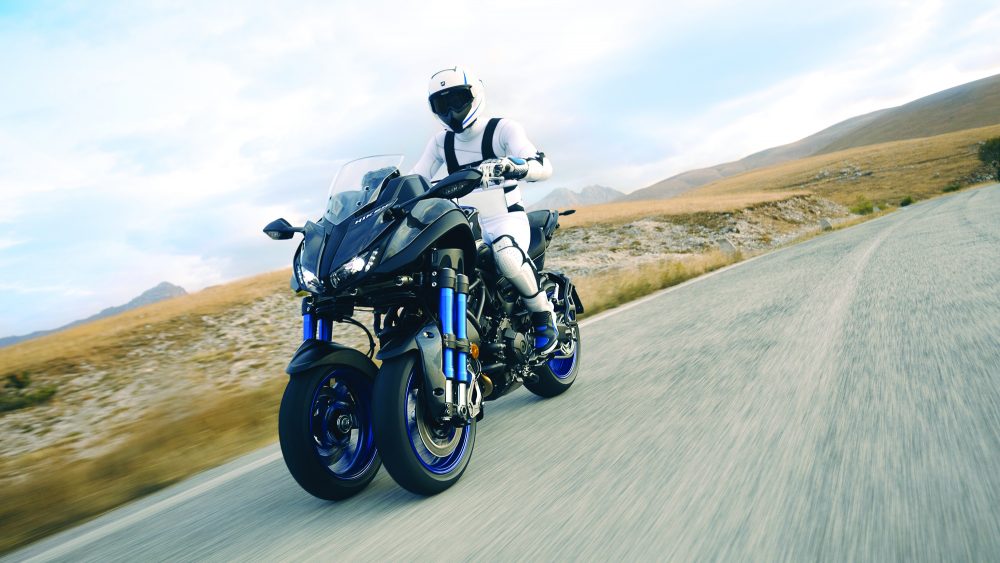
Three wheels has always been an acquired taste, but I have never come across such a biased audience as when I said I had ridden the new Yamaha Niken, pronounced Nike-N. ‘What a load of rubbish’ – ‘who wants a trike’ – ‘it’s just like that scooter thingy’ – ‘I’d never ride such a pile of s**t’- ‘they must want their heads tested’.

Closed minds and closed attitudes. No wonder Yamaha decided to break into the market gently with advertisements in MCN for a pre-launch trial ride at 3 locations in the UK and many others abroad, aimed at the normal rider. Yes, the opportunity was there to try something different – a different experience completely!

Luckily one of the locations was at Box Hill, and is not far from me, so I applied, and was accepted. On 4th August I found myself at an inaugural event with 19 others in an hourly timeslot to see and ride the new ground-breaking machine. It looks different, it is different and thank goodness Yamaha are brave enough to bring it to market!

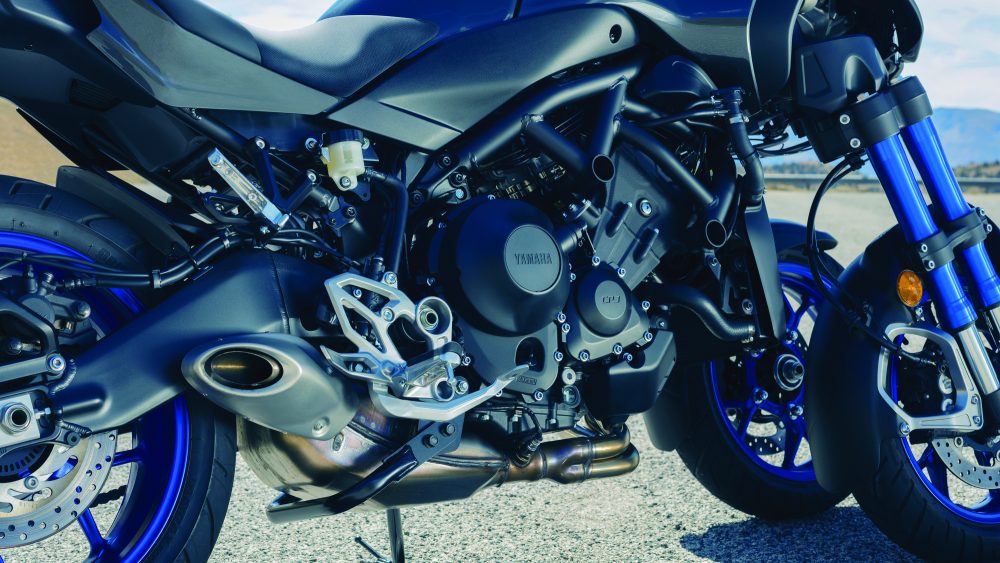
Firstly we had a presentation, where we learned that this concept has been decades in the making. We were shown the superb engineering under the bikini fairing which is just stunning, and told what to expect when riding. It’s like carving through a curve when skiing we were told. These 20 bikes in front of us were the only 20 production bikes in existence at the time, prior to the launch in September.

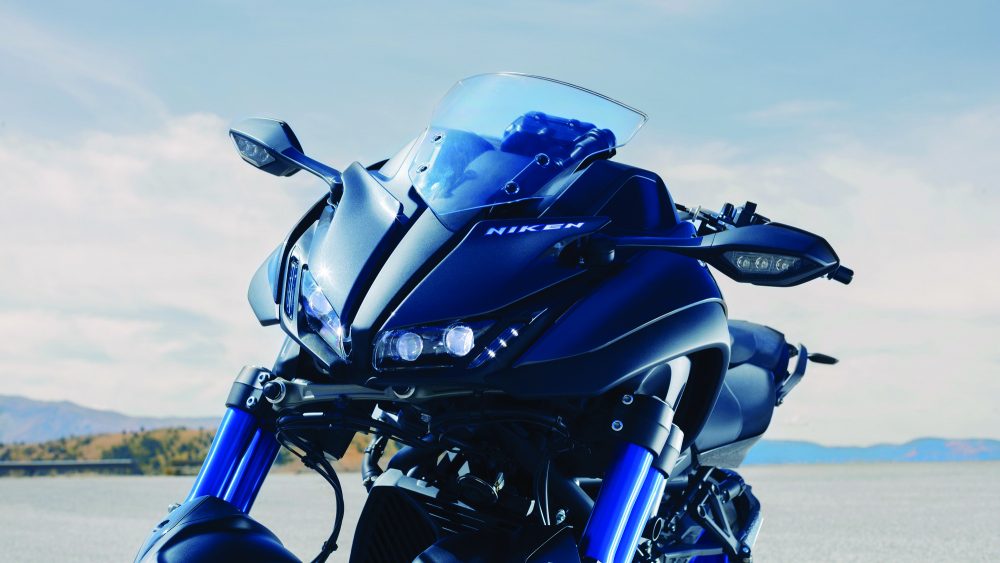
We were given a briefing of the do’s and don’ts on the ride and then got ready. The first thing you find out is that despite having 3 wheels, this bike, when stationary, does not stand up on its own. It’s just like any other 2 wheeler, and requires manual input or a side stand. Sitting on it I found the riding position to be quite upright and, being vertically challenged, I found the 820mm seat height to be about my comfortable maximum. Like any modern bike, there are various electronic riding aids, and we were asked to put them all in the medium position.

Then we were off. The route around Box Hill being varied and quite tight and twisty, it was easy to find out what the Niken was capable of. Well, it was easy to change direction – despite 2 front wheels, 4 shock absorbers and all the extra crossbars holding them together it was totally effortless. This is wrong according to my physics, because the extra mass should make it more difficult to turn but that was not the case.

Puzzled, I continued and found that in tight corners it was amazing. Slowly you start to realise and understand that the cornering ability far outstrips anything you have been used to in the normal biking world.

Two front tyres, two rubber contact patches with the road and amazing stability means you can take liberties in the corners. If you brake quite hard mid-corner, the front doesn’t try to stand up, it just carves through the bend. Neither is there any serious fork dive when braking hard – and when I came across a patch of gravel mid corner, the Niken just rode through it like it wasn’t even there. It’s all just taken care of without any cheek-clenching moments that you would normally expect in those circumstances.

Will the front ever be totally overwhelmed? I am sure it can be, but it’s moved the goal post by at least 50% of the norm, and there are going to be many R1 and Fireblade riders who are totally embarrassed when a Niken spectacularly outrides them on a bend at a trackday.

After just 20 minutes riding the Niken I was totally relaxed and knew that the front end was not going to slide, let me down or cause any reason for raised blood pressure in any circumstances. The riding position was fairly upright and the seat moved slightly rearwards to balance the 50-50 weight ratio with the increased front end weight.

With the front end being so stable, the attention goes to the rear wheel and how soon and how much throttle you can apply when exiting a bend. Possibly not exciting in an R1/Fireblade way, but this is not a sportsbike – it just behaves similarly and is probably in the sports/tourer section with an easy riding position that evokes stability and massive confidence.

The rear of the bike is borrowed from the MT09, as is the 847cc 3 cylinder motor, which has been tuned to give plenty of low down grunt and a very sporty feel with instant pick up, which is surprising considering its moderate 113bhp and the bike’s 260kg weight!

The Niken is the next evolution in motorcycling, and soon the rest of the manufacturers will have to take notice because it takes the average rider and turns then into a road riding god, taking bends in poor weather conditions like you were enjoying them on a sunny day.

So where does the Niken fit into the market? Despite other perceptions it is NOT a trike, nor a scooter. It’s a fully grown motorcycle with 3 wheels. It’s not a commuter bike either, as it’s too wide, and it’s not a sportsbike, as it will never lean to a 60 degree angle like a MotoGP bike, but it is a comfortable long distance sports tourer with a sporty flair, great fun and would give masses of confidence in those hairy Alpine bends.

So would I buy one? I got off the bike grinning ear to ear, so yes I would. £13,500, is not cheap, but for the next biking evolution, fantastic value! I look forward to seeing them in the dealers, and possibly trying one for a couple of hours to really find out what it will do!

Phil Donovan

First published in Slipstream October 2018

Rider’s Rides (October 2018)

Continuing our Rider’s Rides! Each month we feature a TVAM member and their bike, talk about why they chose that model, what they use it for, as well as what they like and dislike about it. Want to see your bike featured? Get in touch at pressofficer@slipstream.org

This month we have John Rodda and his mighty BMW Tourer.

And which flavour of Bavarian boxer do we have here then?

This is my BMW R1200RTLE.

Did it replace an existing bike, or is this an addition to your garage?

The RT replaces my previous bike, a BMW R1200GS Adventure Triple Black. I prefer the weather protection, ride comfort and seating position of the RT. I’ve had a fair number of these models in the past, so I knew what to expect.

My Uncle has a similar love affair with the boxer. Did you consider anything else, say a K1600?

I looked at BMW’s S1000XR – but only briefly. I’ve owned a K1600 and an R1200GS in the past. Both are excellent machines, but the RT seems to suit my purposes particularly well.

How so?

Great comfort, load capacity, fuel range and amazing handling for a machine of this size and weight. The RT also has great presence on the road, and therefore is a little more likely to be seen than smaller sports bikes.

Which dealer delivered this one to you?

BMW Bahnstormer in Maidenhead.

And would you recommend them to other TVAM members?

Yes, plenty of TVAM customers use Bahnstormer already, and are offered a discount on clothing and accessories.

Good to know! The bike looks stock, but have you got any modifications I missed?

I’ve installed a Roadhawk bullet camera tucked almost out of sight on the front fairing, which records witness footage on a continuous loop whenever the bike ignition is turned on.

Sneaky! What sort of riding do you do/plan on doing with this bike?

Anything and everything, from observed rides with my associate to an upcoming tour of France and adjacent countries, as well as motorcycle marshalling on cycle races and other events with the National Escort Group.

Is this different from the sort of riding/trips you used your previous bikes for?

Not really. My motorcycles are part of daily life – not just as transport, but for coaching, tour leading and leisure too.

Anything amiss with your new bike so far?

Nothing much. My previous RT suffered with condensation in the instrument panel, but my current machine is fine so far. Previous experiences with the dealer have always been positive whenever I’ve had a problem, so if anything crops up I know I’ll be looked after.

Overall then, no regrets?

I’m absolutely delighted to be back on an RT. It seems to be the bike that suits me best out of all I’ve ridden, and as an added bonus this version is so far returning more than 60mpg!


Nick Tasker was talking to John Rodda earlier this summer.

First published in Slipstream October 2018

How to Survive your First Trackday

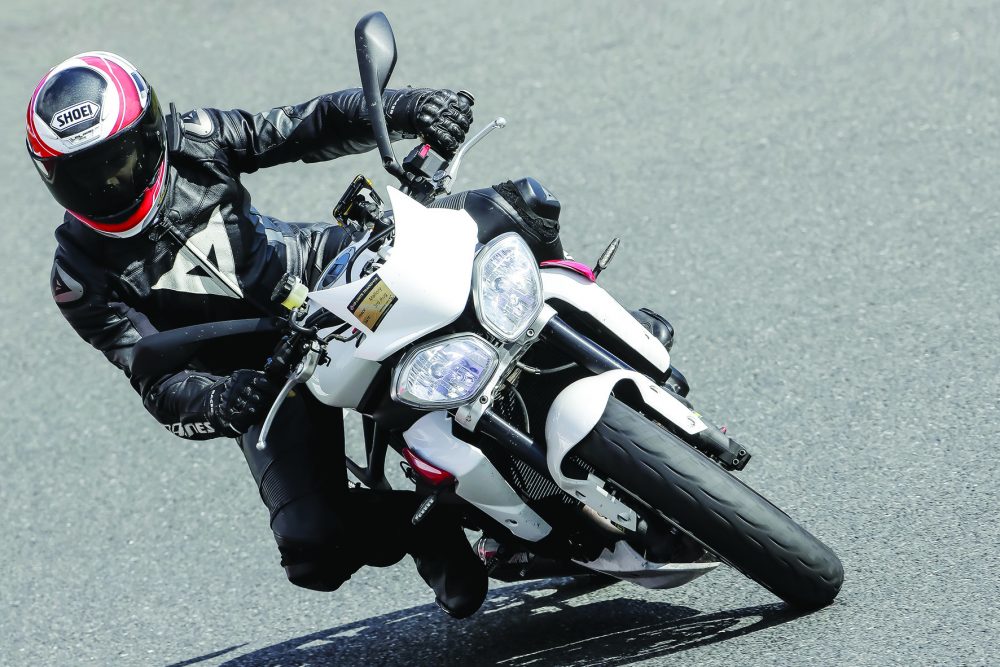
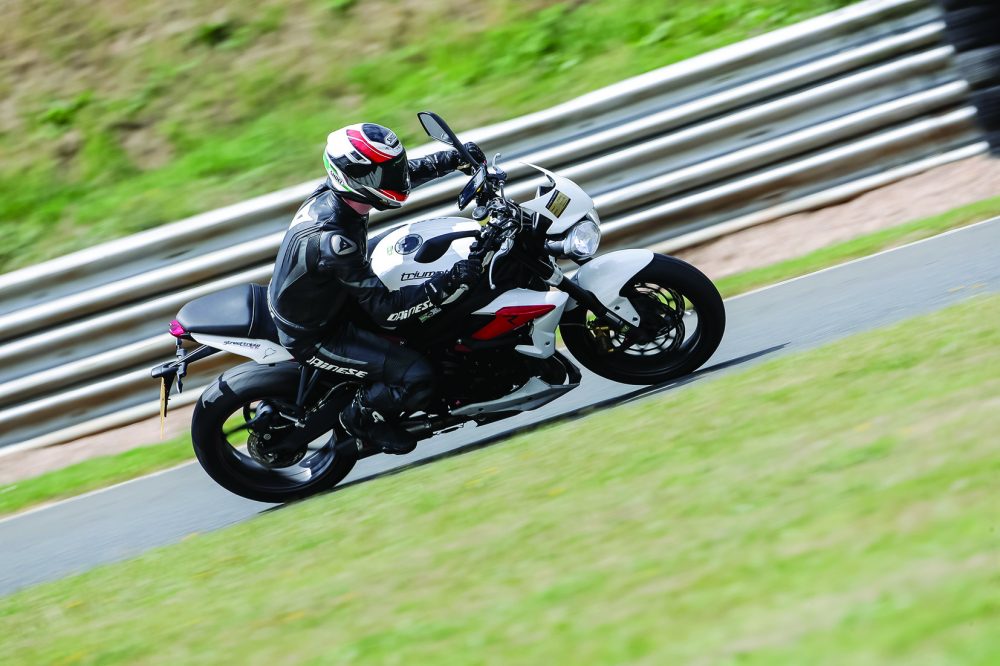
During the very first NEC motorcycle show I attended after bringing home my shiny new Triumph Street Triple R, my brother and I bought our very first sets of leathers. That may seem bizarre to those of you for whom that has always been your standard biking attire, but for many of us whose biking role models were Ewan McGregor rather than Kevin Schwanz, textiles are the default. The plan was to do our first trackday that following summer, but it’s amazing how easily something like that is put off, again and again.

Fast-forward to 2018 and Pat Coneley persuaded me to give his Road Skills Day at Thruxton a go, which aside from a single session at Brand’s Hatch and a terrifying lap of the Nürburgring, was my first real on-track experience. But as you’ll know if you’ve attended one of these yourselves, that was not a trackday. Riding a V-Strom and wearing textiles, we were limited to 100mph with artificial chicanes and had braking and turn-in markers laid out for us to aim for. Remember: Road Skills Day!

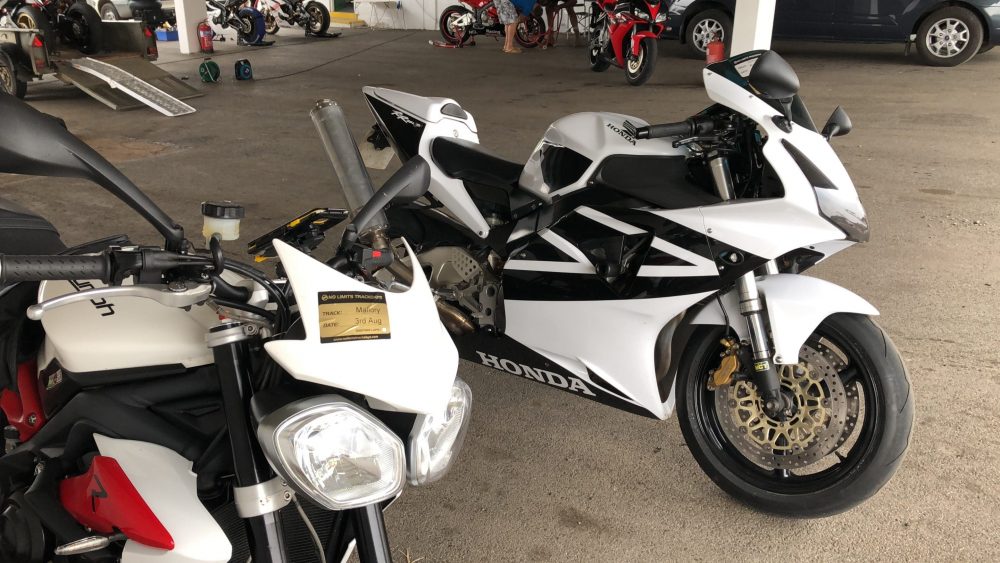
I learnt a lot from my instructor, and the experience as a whole, not least of which that it is possible to ride around a racetrack all day without crashing. What’s more, if I could do it on Michelin Pilot Road 5’s on skinny adventure-bike wheels, then it should be even easier on my Triumph. With my girlfriend itching to drag me along to a ‘proper’ trackday, I had run out of excuses, and so signed up for the No Limits Novice group, and prepared to depart for Mallory Park.

I packed a water bottle, tyre pressure gauge and compressor, along with a handful of cereal bars and sandwiches before setting the alarm for 5am. With sign-on at 7:30 and a planned petrol stop just before reaching the track I needed to leave plenty of time to arrive fueled-up and ready for the safety briefing.

As it happened, I needn’t have worried – traffic is understandably light that early in the morning, and unlike almost everyone else who had arrived in the paddock, I had no van to unload, no tyre-warmers to attach and no maintenance to perform. I had even printed and filled out the requested paperwork in advance, something I soon discovered made me practically unique amongst my fellow riders!

After dropping off the forms and collecting the appropriately coloured wristband, I had some time to kill, and began chatting to the other riders I was sharing the garage with. All were trackday veterans, despite several having placed themselves in the same Novice Group as I. Given that I was expecting to be sharing my sessions with nervous riders wobbling around on a variety of inappropriate machinery, this was certainly something of a surprise.

Looking around the crowd at the safety briefing was also enlightening – the vast majority of riders were men in their 40’s, with a few younger riders and two women. Despite this depressing gender imbalance, the sexist banter I was expecting failed to materialise, with my girlfriend experiencing nothing but friendly helpfulness all day. Aside from a few people mistakenly assuming that it was I, not her, riding the tricked-out Fireblade, there was no trace of the prejudice or stereotyping that often follows female riders wherever they go.

Noise testing (another item I had concerns about) proved another non-issue. My Street Triple on it’s after-market Scorpion exhaust had been measured at 105db by the over-zealous tester at Brand’s Hatch, leading me to suspect I’d never pass the 103db maximum allowed at Mallory Park. Assurances from my mechanic proved true however, with the baffled exhaust measuring just 97db when tested according to ACU regulations. If you’ve got a trackday of your own planned, I recommend getting your bike tested ahead of time, but I was pleasantly surprised to hear some fairly noisy bikes fly through under the limit.

When the tannoy called out for Novice riders to come to the pits, I was certainly nervous. How would I know when to brake and when to turn in? Without the usual roadside furniture of trees and streetlights, and the ever-present road-markings, how would I know how fast I was going? My major recollection from the single session at Brand’s Hatch was that the tarmac seemed to go on forever in every direction and that corners came at you out of nowhere. I was worried that I would low-side in the very first bend. I needn’t have worried.

The fact is, the track was very easy to read. Coloured rumble strips on the apexes of all the corners made the edges of the track easy to spot, and after a couple of sighting laps I was already winding the engine up to the limiter and leaning more, all while looking for overtaking opportunities past slower riders. Everything I’d learned at Thruxton came back to me, with braking and turn-in points easy to figure out after a few corners. The trick, just as then, was to start slow and build speed gently over time.

At the end of my first twenty-minute session, I was surprised to discover how warm I was, despite the cool morning air and uninsulated leathers. Remembering the advice on the Road Skills Day I’d brought along – and proceeded to drink – plenty of water, and topped up my energy with a cereal bar or two between sessions. With each of the three groups running back-to-back, I only had limited time to cool off and admire the shrinking chicken strips on my rear tyre before the call to the pit lane rang out once more.

After my second trip out I was already lapping some riders in my group, and out-braking most others in some of the tighter turns. The forward planning and smooth riding we learn from our Observers is just as important on track, and there were quite a few riders on track that day who could benefit from some advanced training. The long, fast corners were giving me difficulty, however, so it was time to seek expert advice specific to track riding.

Noise testing (another item I had concerns about) proved another non-issue. My Street Triple on it’s after-market Scorpion exhaust had been measured at 105db by the over-zealous tester at Brand’s Hatch, leading me to suspect I’d never pass the 103db maximum allowed at Mallory Park. Assurances from my mechanic proved true however, with the baffled exhaust measuring just 97db when tested according to ACU regulations. If you’ve got a trackday of your own planned, I recommend getting your bike tested ahead of time, but I was pleasantly surprised to hear some fairly noisy bikes fly through under the limit.

When the tannoy called out for Novice riders to come to the pits, I was certainly nervous. How would I know when to brake and when to turn in? Without the usual roadside furniture of trees and streetlights, and the ever-present road-markings, how would I know how fast I was going? My major recollection from the single session at Brand’s Hatch was that the tarmac seemed to go on forever in every direction and that corners came at you out of nowhere. I was worried that I would low-side in the very first bend. I needn’t have worried.

The fact is, the track was very easy to read. Coloured rumble strips on the apexes of all the corners made the edges of the track easy to spot, and after a couple of sighting laps I was already winding the engine up to the limiter and leaning more, all while looking for overtaking opportunities past slower riders. Everything I’d learned at Thruxton came back to me, with braking and turn-in points easy to figure out after a few corners. The trick, just as then, was to start slow and build speed gently over time.

I tracked down one of the instructors on offer at the end of the second session, and requested some pointers. When I lined up for the third time he told me to follow him for the first three laps, after which he would beckon me to overtake and then follow for the rest of the session. His lines through the corners weren’t drastically different to mine, but there was definitely room for fine-tuning.

I caught up with the instructor afterwards and he advised me that I wasn’t hanging off the bike enough, wasn’t taking the faster corners tight enough, and wasn’t using the whole of the track on corner exit, demonstrating that there was far more speed to be had there. I was also losing time by braking too late at the end of the long straight, and therefore making a mess of the corner entry and putting myself on too-wide a line for Gerard’s. While I was already faster than most of my group through the corners, the vast majority of riders were on faster, more powerful bikes and I had my work cut out trying to overtake on the straights.

My instructor pointed out that overtaking on corners was fine as long as I was giving the bikes in front enough room. With a wide track and no oncoming traffic to worry about, I was able to start picking bikes off in the bends, even passing a couple on the inside who took overly wide lines through the hairpin. It turns out all that Alpine practice had paid off!

While timing equipment was officially banned, I’d sneakily left my smartphone running a data recorder throughout the day, so that I could confirm that I was indeed improving session by session. Sure enough, laptimes were slowly dropping as lean angles increased, and only started to climb again when I began pushing myself to go fast, rather than focusing on riding smoothly in some of the later sessions. Thanks to this telemetry I was able to check myself and return to working on my technique. Go smooth to go fast!

As the final sessions approached, I began to notice worrying behaviour from some of my fellow riders. While I myself wasn’t particularly fatigued, due to many years of conditioning from 400-mile touring days, other riders were exhibiting symptoms of overconfidence or reduced concentration. Twice I had people try to outbrake me into the S-bends and then aim for the escape route instead. After having seen what can happen when two riders collided earlier in the day, I decided to pass on the very last session. Unlike many of these race-fairing equipped hotshots, I needed my bike to get home…

The final question was this. After a day of 100mph+ speeds and 45-degree lean angles, would I find returning to public roads and the constraints of the highway code irritating, or even impossible? Many of those I spoke to at the track no longer rode motorcycles on the roads, and some of the younger ones didn’t even have bike licenses. I’d heard about people finding traffic and other hazards too much to deal with after the relative calm and safety of the racetrack. I’m please to say that I thoroughly enjoyed my ride home, and found the speed limits no more onerous than usual.

In truth, while I learned more about myself and my bike from the TVAM Road Skills Day, riding around Mallory Park was tremendous fun and an education to boot. I’ve still got plenty more to work on (I never did get my knee down!) and I’ve confirmed once and for all that the limit isn’t my bike, it’s very definitely still me.

Would I do it again? You bet I would. I’m already booked in at Donnington Park…

Nick Tasker

First published in Slipstream October 2018

Café Review: Annie’s at Canal Yard (Oct17)

We have had no coffee and food stops for a while – so must be time to consult TVAM’s coffee stop list. I have 4 tearoom recommendations that I hope you will enjoy for their location, quality of food and biker friendly welcome. The first is Annie’s at Canal Yard (anniestearoom.co.uk) at Thrupp, near Kidlington OX5 1JZ, reached after crossing the lifting bridge over the South Oxford canal. Although the café has limited seating inside, there are many picnic tables outside overlooking the canal basin. A reserved area of scraped earth and scalpings provides additional parking.

The second is TT Linnet at 41 High Street, Highworth, SN6 7BG. This is a newish mother/daughter owned and run establishment, with a choice of rooms that overlooks the market place car park.

Finally, Lechlade has two worth a visit, the Lynwood and Co Café, Market Square, GL7 3AD

…and the very traditional Tea Chest, Park End Wharf, GL7 3AQ which has its own riverside hard-tarmac parking.

Ride of my Life!

My dear wife Helen won a raffle prize at a fundraising dinner early this year – a pillion lap with the Be Wiser Ducati racing team! Naturally enough, she thought of me. I didn’t try too hard to persuade her that she, rather than I, should take a ride with an athletic young man in racing leathers.

Each team has two riders, and this year the Be Wiser Ducati line-up was, the reigning champion, Shane “Shaky” Byrne, and Glenn Irwin. Very sadly, Shaky was seriously hurt while testing his bike at Snetterton in May. He sustained multiple spinal fractures and broke a lot of ribs, amongst other injuries. I met him on the Sunday and he was in good spirits, fully mobile, but not able to ride for the time being. He has won the British championship six times, and it will be a great loss to the sport if he cannot return to racing. Glenn’s brother Andrew Irwin has stepped into Shaky’s place for the 2018 championship. It was great to see all four Irwin brothers together at Silverstone for the fixture this weekend. I took the picture opposite of them on the grid before Glenn’s second race, with a podium finish.

So my rider for the pillion lap was Glenn Irwin, currently holding third place in the Championship. It was my first pillion ride since I was 14 years old, which was also on a Ducati, with a friend’s dad, and it turned out that it was Glenn’s first pillion ride as well. Unfortunately for him, my weight is half that of the Panigale v4s road bike that we did the lap on.

I was understandably nervous before the race, but just put it out of my mind, telling myself that these guys do this for a living, week in week out, it’s in their blood. An hour before the lap, I retired to the team trailer to squeeze myself into brand new racing leathers. This felt like an all-over corset. Helen told me it was very flattering! We ventured out into the pits and watched the two race bikes being lovingly prepared while the road bike was wheeled out for the pillion lap.

Amid much excitement, Glenn took off on the Panigale to warm it up for the pillion lap. A few other teams were offering pillion rides as well, so there were half a dozen bikes on the grid. With the eagerness of a man ascending the gallows, I attempted to hop lightly onto the Panigale’s pillion seat, which is the size of a postcard and mounted absurdly high behind the rider. Several mechanics held onto the bars to help Glenn steady the bike while I climbed aboard. Glenn said something incomprehensible, followed by “Enjoy the ride”, then set off on the lap.

Helen wondered why I was bobbing up and down as if I were riding a pogo stick rather than a Panigale. That’s because Glenn wheelied the bike in every gear on the approach to the first bend. I wasn’t conscious of any difficulties up to this point because my mind was still on the grid, waiting for something to happen. Things changed rapidly as we pulled onto the first straight, when one of the BMWs shot past on the outside – obviously a slimmer pillion. This was a red rag to a bull, and Glenn hit the power band with immense gusto. I don’t know what I was shouting, and Glenn certainly couldn’t hear at 150 mph, but I was simply unable to maintain my grip around the rider’s waist. He sensed that he was losing me and eased off the throttle before we came to the second bend. I was very conscious that I had nearly tumbled down the Silverstone tarmac and now managed to interlock my fingers around Glenn’s sternum, in a high speed version of the Heimlich manoeuvre.

The second bend was smooth and seamless, a testament to the peerless racing ability of these Superbike champions, but the longest straight was brutal as we pursued the BMW into the left and right Brooklands hairpins. The transition from full acceleration to maximum braking was instantaneous, with my knuckles pressed against the tank so hard that they were bruised the following day. Again, Glenn’s progress through these bends was incredibly smooth, with the black and white trackside strobing past my helmet. As we came out of the right-hander, Glenn laid the power on for a final blast before braking into the grid. I managed to step off and shake his hand, thanking him for the most amazing experience and explaining what happened on the first straight. He said he knew I was in trouble so he eased off to help me. I could not be more grateful for that kindness!

The team had warned me that the G-forces during cornering would strain my neck, but that was not the case. The only strain I suffered was to my right arm, clinging on for dear life, inflaming the muscles and requiring Ibuprofen for the ride home on Sunday evening. The v4s Panigale has 214bhp, and Glenn had unleashed them all at once – what else is a champion rider to do? We completed our pillion lap in 90 seconds and the fastest championship laps were 54 seconds, proving the impact of power-to-weight ratio in racing.

The more decisive factor in the Superbike championship is raw courage. These riders commit their all to every lap, riding hundreds of laps during each fixture and ninety of those during actual racing. Things happen so quickly out there, they can be off in a split second. Mostly they get up and walk away but, occasionally, a rider suffers injuries like Shane did, or worse.

After the pillion lap, Glenn was free to relax and compose himself before the race. The atmosphere in the team garage was monastic, as the mechanics conducted final checks on the bikes. A quarter of an hour before the warm-up laps, the engines were fired up and kept running on tickover. The wheels were brought out, in their heating jackets, and plugged into generators to keep warm. Glenn and Andrew sat in silence, contemplative, putting their minds in the right frame for racing.

Suddenly it was time to race. Wheels were fitted, jackets removed from heated tyres and the championship bikes rolled into the pit lane. Glenn and Andrew jumped aboard and with little fuss, rode out onto the warmup lap. After this, the wheels were changed on the grid to give maximum rubber for two more practice laps and thirty race laps. There was a mandatory dalliance with press and VIP visitors, including yours truly, before the grid was cleared and the race began.

We watched all thirty laps with the Be Wiser team on a screen in their garage. The atmosphere was electric, the pits silent until the riders roared by. There were moments of high anxiety, as bikes came too close together in the bends, and pure exhilaration as Glenn climbed the ranks from ninth to fifth position. Unbelievably, a blown BMW engine took out one of the riders and the resulting oil spill deposited two of the race leaders beside the track. Glenn took a different line, avoiding the oil spill, and claimed third position. After some deliberation amongst the judges, the result was upheld, and Glenn joined the winners on the podium for the obligatory champagne fight. It was interesting to see them chink their magnums together in a winners’ toast but not a drop passed their lips, as the final race awaited them later in the afternoon.

While the riders engaged in gladiatorial combat to hold their place in the race and climb the rankings between races, my abiding memory of the day was of lovely people pursuing a hobby where everything has to come together with surgical precision for each performance. The winning riders take the prizes, but each member of the team takes pride in, and gains purpose from, their part in the race preparations. When that part is done, they stand and watch on screens in silent admiration, waiting and hoping for the result they crave.

Sadly it wasn’t to be Andrew’s day, as he slid off on the left-hand hairpin early in the day’s final race, and had everyone’s sympathy as he walked back to the pits. This weekend’s racing was a success for Glenn, however, as he held his place in the last race and retained third position in the Championship going into the Oulton Park fixture next weekend. I shall be following his career with newfound interest, and my pillion lap with this champion rider has given me a new sporting interest!

Peter Archibald

First published in Slipstream October 2018

7Ws #37 in Wales

It really was a glorious 7Ws #37 over the weekend 28th – 30th September in sunny Wales. Much was learnt and digested by the 60+ riders who attended. We had the pleasure of the company of Sean Westlake, an ex police motorcyclist who has supported our Observers at their weekend in Wales for many years and lately has joined the ranks of Rapid Training to pass on his knowledge to riders on their excellent courses. As usual there will be two 2019 7W’s trips which are a perfect opportunity to improve or revisit your riding skills in an informal and social atmosphere. Many thanks to all those who organised the weekend, led runs and back-marked.
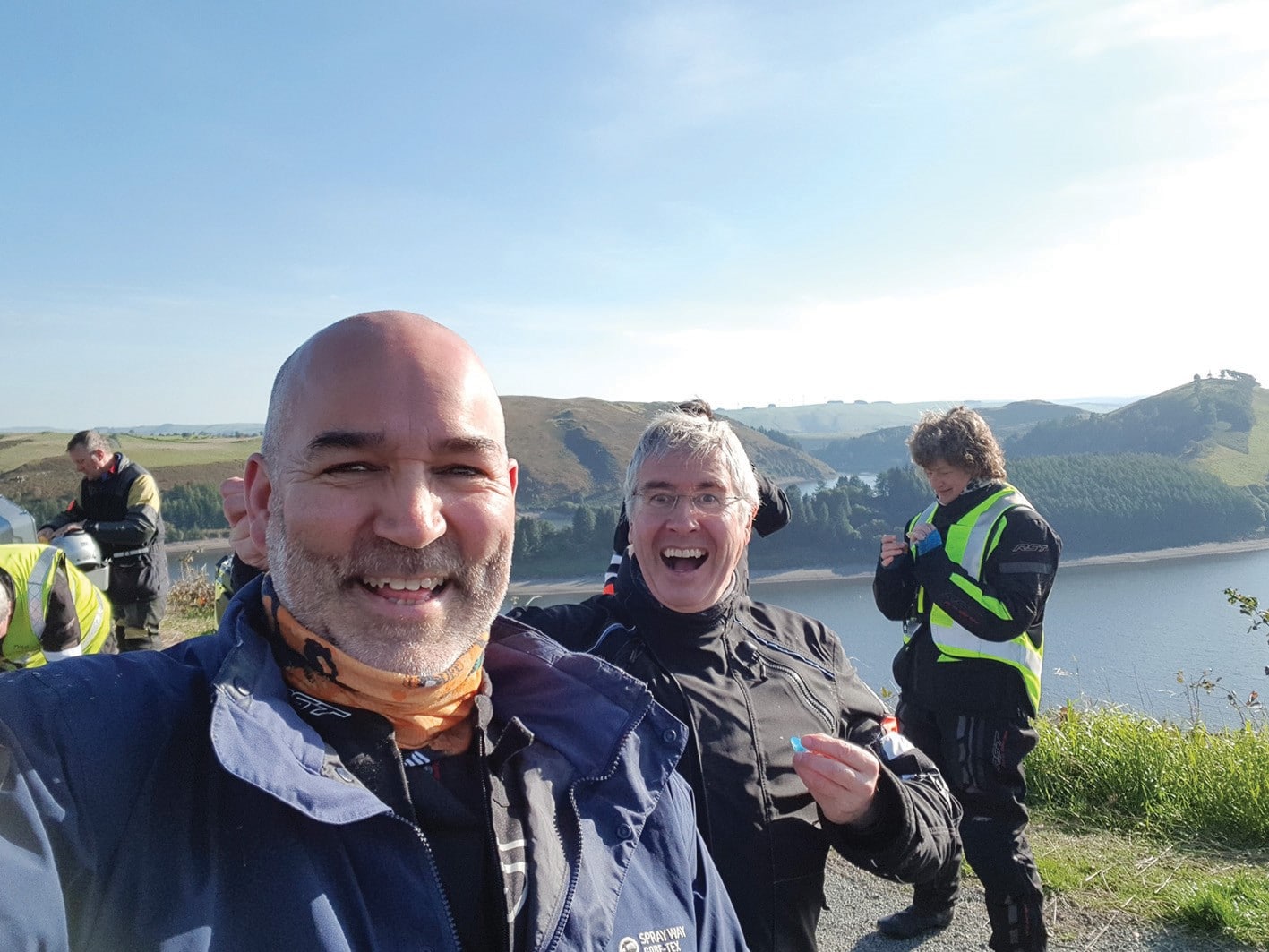
My Welsh Weekend – Lessons to be Learnt

I’d been looking forward to my Welsh trip (led by Dave Parsons) since I’d booked it and, as with most bike tours and trips, we were counting down the days to the event. There were 16 names down but a few were making their own way up, so 12 of us met at McDonalds Calcot, Reading at 9am. We were all excited, fed and hydrated and so, with all present, we decided to leave earlier than scheduled.

We were on our merry way. Dave Parsons took the lead with Simon Wheatley as back marker. Most of us had the routes on our satnavs which Dave had shared through MyRoute-App. This was great, meaning that in case of separation most of us had some idea of where we were going. It was a leisurely ‘B’ paced ride with a few overtakes within the group. Vance Williamson had picked up a brand new Honda with around 20 miles on the clock; the tyres were lovely and shiny and he was running it in.

The weather was great. It was warm and sunny, just what you want for a Welsh trip – none of that wet stuff. We had regular stops as it was getting warmer and warmer and, after covering around 165 miles, made it to Wales incident free then checked in at the Metropole Hotel. We dumped our gear in our rooms and then most of us headed back down for an evening ride of around 70 miles. A few stayed behind.

We left the Metropole at around 5.30pm and within a few minutes were in the twisty roads of the countryside full of nationals, sheep and beautiful scenery. However, within about 10 minutes of riding things weren’t going to be quite so rosy and pleasurable for me.

I made an overtake within the group on one of the straights passing two of the riders. I was in my element. I’ve ridden in Wales many times before and had no reason to be concerned of anything going wrong. By now I was a good 10-15 seconds ahead of anyone behind me. I approached a sweeping left-hand bend. I didn’t feel that I was going too fast, there was no panic braking, I was comfortable. I was following the arc of the bend when I suddenly found myself on the opposite side of the road mid-bend. The fear that tore through my body knowing I could potentially be struck by an oncoming vehicle was indescribable. In a split second I switched that fear into ‘FIX IT, you fool’. I pushed hard on the left bar and put the power on. The bike started to come back but sadly that simply wasn’t going to be enough on this occasion. There was such an adverse camber in the road and the bike was cranked right over. You can only expect so much from a front tyre. The tyre let go, and I low-sided.
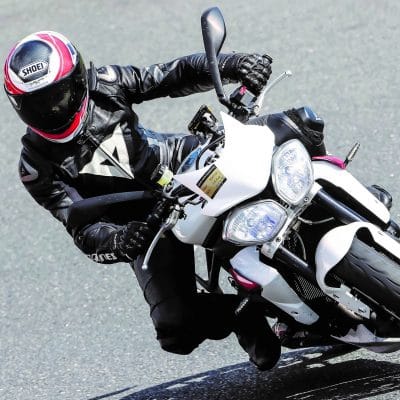
I went down on my left shoulder and slid across the road to the opposite verge. The bike slid behind me, also heading for the verge. I almost came to a stop, but as I went to stand to leave the road I was suddenly struck hard in the back by my own bike. The impact was so severe that it flipped me from facing forward to facing backwards and upside down. The bike came to a rest 2 metres or so away from me facing the opposite way that it had gone down and now laying on its right side, having initially gone down on its left. The bike struck my left side, breaking most of my left ribs in multiple places. The impact also broke my shoulder blade in two places, punctured my left lung and caused a couple of breaks in my right thumb. I was so badly winded that I was gasping for air and in a panic.

The road itself had such an adverse camber that 3 riders rode by without seeing me. A fourth caught a glimpse of something red (my bike, not blood) in the bushes and slowed down, looking back to see me in the road. Eventually the other riders headed back to the scene. I was gasping for air. As most of you who ride with me know, I always wear a neck tube up to my nose, this was restricting my airways (mouth and nose) and with a broken shoulder on one side and a broken thumb on the other I couldn’t pull the tube down. It was also trapped in my lid strap. I was frantically trying to pull this down when help came. I was able to breathe but now the lid was not helping. Nobody was willing to take the lid off, so I asked it to be unstrapped and then forced it off with my forearm. To me, air was now more important than neck injury, besides I knew where the impact had been and was pretty sure I had no neck problems.

I lay there for a bit gasping – it felt like around 3-5 minutes – then I was surrounded by voices. I was blessed to have had 4 passers-by stop who were medics. There were 2 anaesthetists, 1 military medic and a trainee doctor. The military medic took charge. He did some quick checks and could see that things weren’t looking too great for me with my ribs and shoulder broken. It was a warm evening and now I was sweltering in my gear. The trainee doctor had a medi kit with him and asked if I wanted him to cut me out of my gear. I replied that I didn’t really want to cut it off but he pointed out that regardless it would be cut off before I got to the hospital. Some of our guys said that the gear had done its job and was totalled. I couldn’t handle the heat anymore so accepted the offer. The trousers and jacket came off. It was such a relief and the mild breeze helped calm me down as my focus was diverted to relaxing and waiting for the ambulance. Lying there I could see the shock and the concern on the faces of my fellow riders.
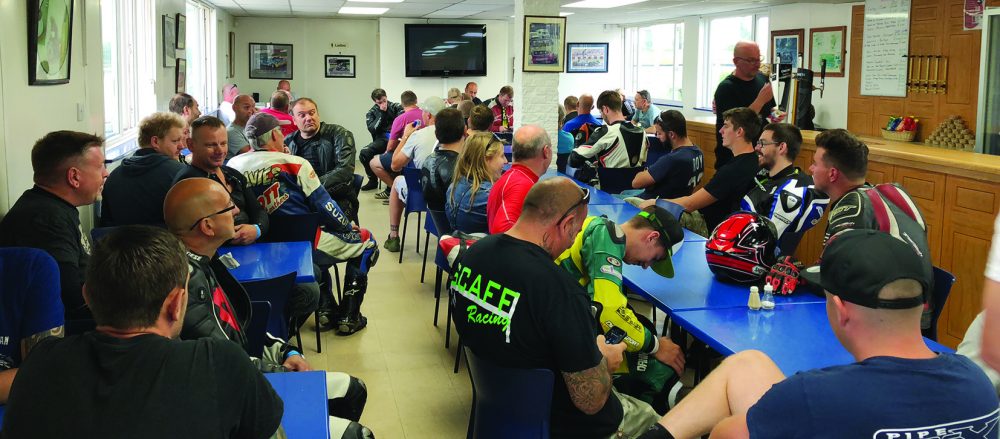
The police, firefighters and ambulance finally arrived but time became surreal and I lost concept of it. It felt like the ambulance arrived in about 10 minutes which I thought was really quick. I was told later it was 30-40 minutes before its arrival. Calling for the ambulance had proved a bit of an issue. Mobile reception was limited and a few had to walk up the hill to get reception. Knowing the name of the road was another problem but thankfully locals had stopped and supplied the information. When the paramedics arrived they took control of the scene and gave me some morphine to ease the pain. Although my gear had been cut off this apparently wasn’t enough, they kept going with clothing removal. My t-shirt and underwear were cut off with firefighters holding up a screen to shield my dignity. I did get to hospital with my socks on though!

Whilst I was being attended to on the side of the road, a sudden commotion broke out behind me. I looked back and saw that Dave Parsons and a few others had jumped onto a police car stopping it heading down the hill with its handbrake off. It wouldn’t have hit me directly but it could have caught my arm, one of the paramedics and then my ride, the ambulance.

I had to be helped onto the stretcher which comes in 2 halves which was a very painful procedure. I was rolled onto the damaged side, then lifted by that side, which hurt like hell. But that wasn’t over, the board had to be clipped together. My gear got trapped between the board, they had to fight with that – it hurt like hell – then the board was stuck to my sticky body – it hurt like hell.

“More morphine, sir?”

“Oh yes please!”

I was very dehydrated but was told I couldn’t have any water until I got to the hospital. Upon arrival it was like a scene from a TV show – medics everywhere. I was sent for a CT scan – they confirmed, “You’re pretty banged up” and I spent over a week in Nevill Hall Hospital in Abergavenny. Although I was the only one involved in this accident it affected a lot of people: myself, the guys in the group ride, the locals and passers-by, the police, fire and ambulance service, the hospital staff and my family and friends.

So what happened? I feel that I’m an accomplished and capable rider, so what led to this mistake? So I need to backtrack to before the event. I own and run a busy and successful garage and I get extremely busy at work and on average work between 10-12 hours per day. I work on my house over the weekends and some evenings which doesn’t leave a lot of time to rest. The night before I had been working on my bike getting it ready for the trip and that day had worked 13.5 hours. I got home late, bed late, up early, out early. It had been a long and hot day’s ride to Wales. Then we ventured out for an evening ride. The excitement kept me going and I think that having ridden in Wales many times before made me overconfident.
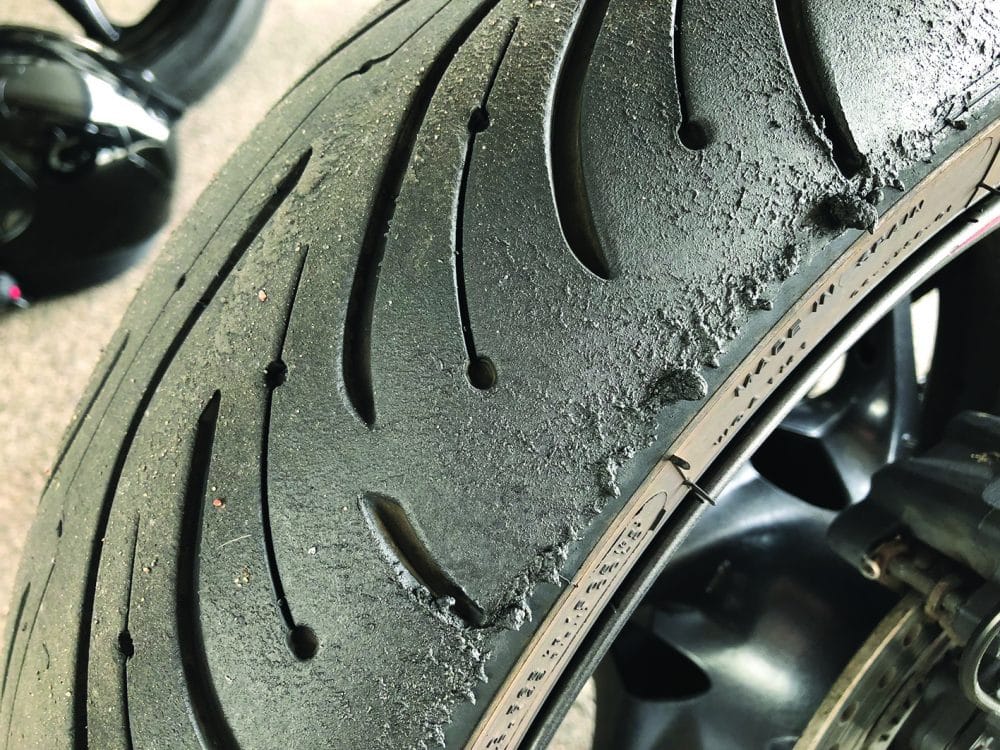
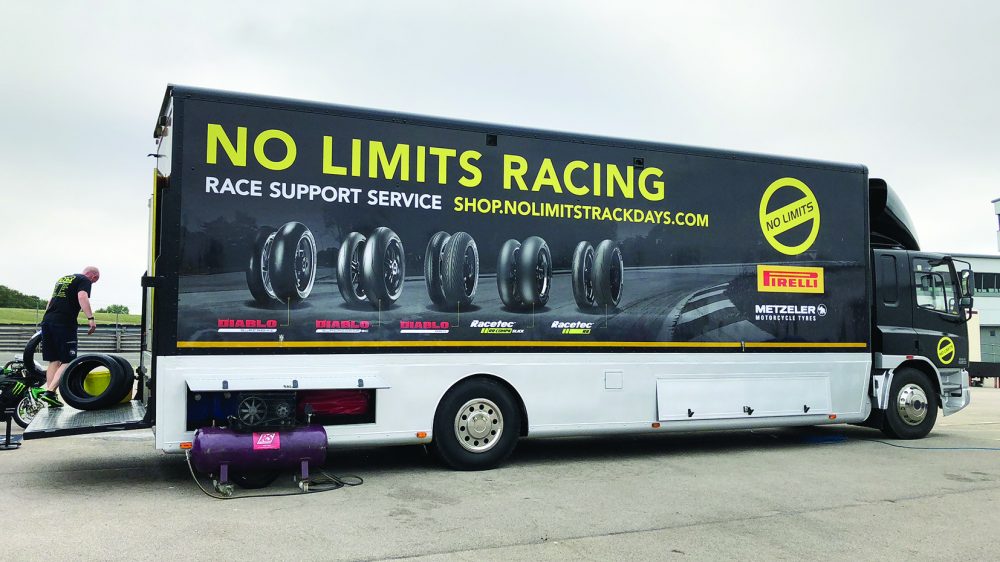
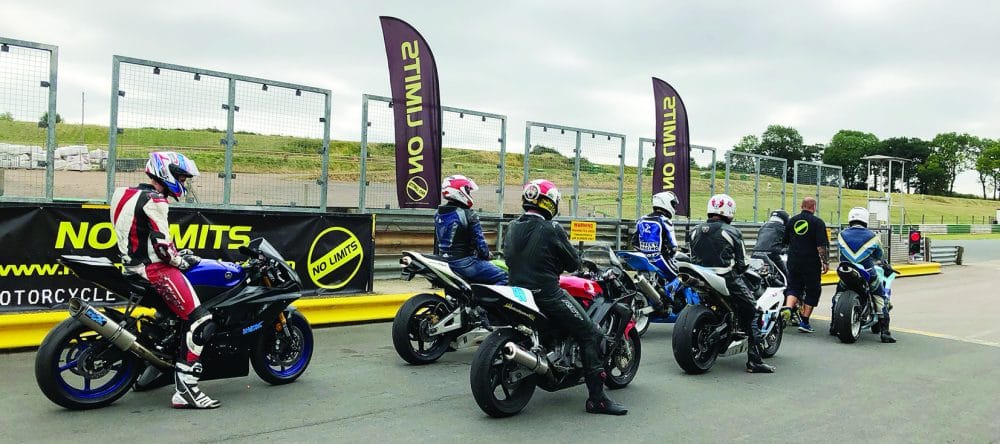
Speed was the primary factor. This gave me no time to react or correct, I had no limit point of vision to work with. Add to that the cocktail of fatigue due to overworking and riding all day in the heat and being dehydrated. When coaching on track days I encourage people to drink, drink, drink, and I had a full bottle of water in my tank bag untouched. There was no one thing that caused this rather a mixture of things. Always self-assess.

How’s my bike? People have asked about the bike. It’s in better condition than me. Apart from a few scrapes and marks, I didn’t break any levers, mirrors, pegs or gear and foot brake levers. The bike is still rideable and in one piece.

Mel Hakhnazarian

First published in Slipstream September 2018

Are You Fit to Ride?

When do motorcycle riders have to take an MOT? Well, never. Unless you reach a certain age or have a declared medical condition you probably have never had someone check out your suitability to go riding. Providing your license permits it you can merrily throw a leg over a 190bhp bike with performance most supercars can only dream of, and ride off into the sunrise.

But are you safe? Who’s responsible for checking you out? After all, we know who’s responsible for checking the bike is safe – POWDDERSS is driven home by all our Observers, so your bike should have brakes that work, tyres that are legal, a chain that is well adjusted and lights that work. The only check you might have had done by an Observer on yourself was the eyesight test. Can you read a number plate at 20 metres? We don’t even ask whether you can see two of them, just the letters and numbers and the order they come in.

Dive to the back of Motorcycle RoadCraft though, and there is a comprehensive checklist for us, the riders. I AM SAFE covers it all but how many of us pat ourselves down before firing up the motor, especially if it was a long night and you’re riding with friends?

Ask yourself these questions:

I - IllnessDo I have an illness or symptoms that might affect my ability to ride?
A -AttitudeHow do I feel about this journey? Am I fully focussed on the riding? Are there human factors, distractions, that I need to take into account?
M - MedicationAm I taking any medication that might affect my riding? Hay fever tablets etc.
S - SleepWas last night a long one? Am I suffering from fatigue or lack of sleep?
A - AlcoholDid I drink a lot last night? Am I still affected by alcohol?
F - FoodAm I hungry or thirsty? Could low blood sugar or dehydration affect my judgement?
E - EmotionAm I angry, depressed or stressed? Could this lead me to take risks?

There are many versions of these self checklists. Use the one that works for you, but importantly act on the information you gain. If you are a bit hung-over and

tired after a long ride yesterday, face up to it and make the right decision. No-one will mind if you opt to sit out a morning’s ride to have a late breakfast, if it means everyone is safe. You can always join a ride later in the day.

Better still of course is to think ahead and plan, just like when on the bike. Pack yourself off to bed early the night before so you‘re bright-eyed and bushy-tailed the next morning.