3Rs Returns to Ross-on-Wye

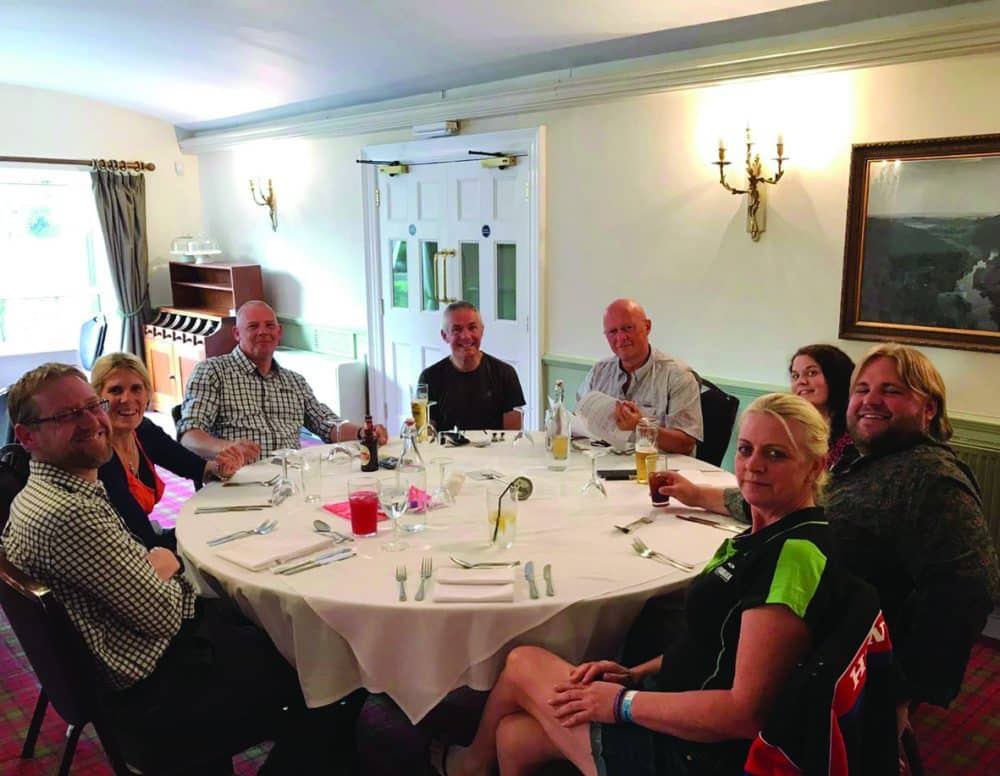
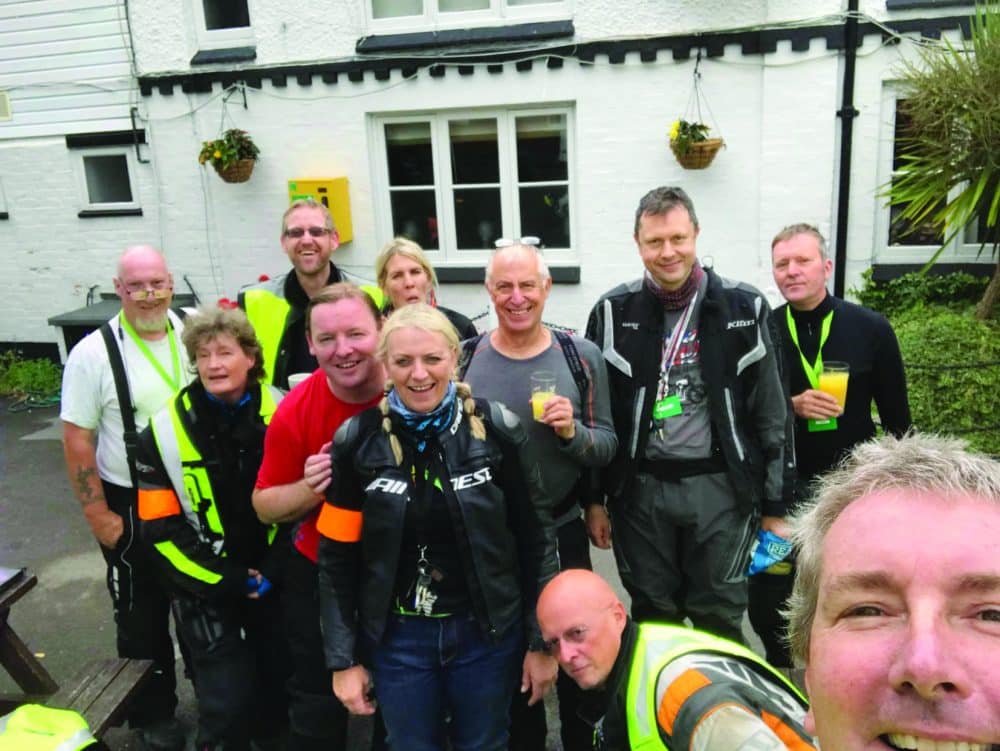
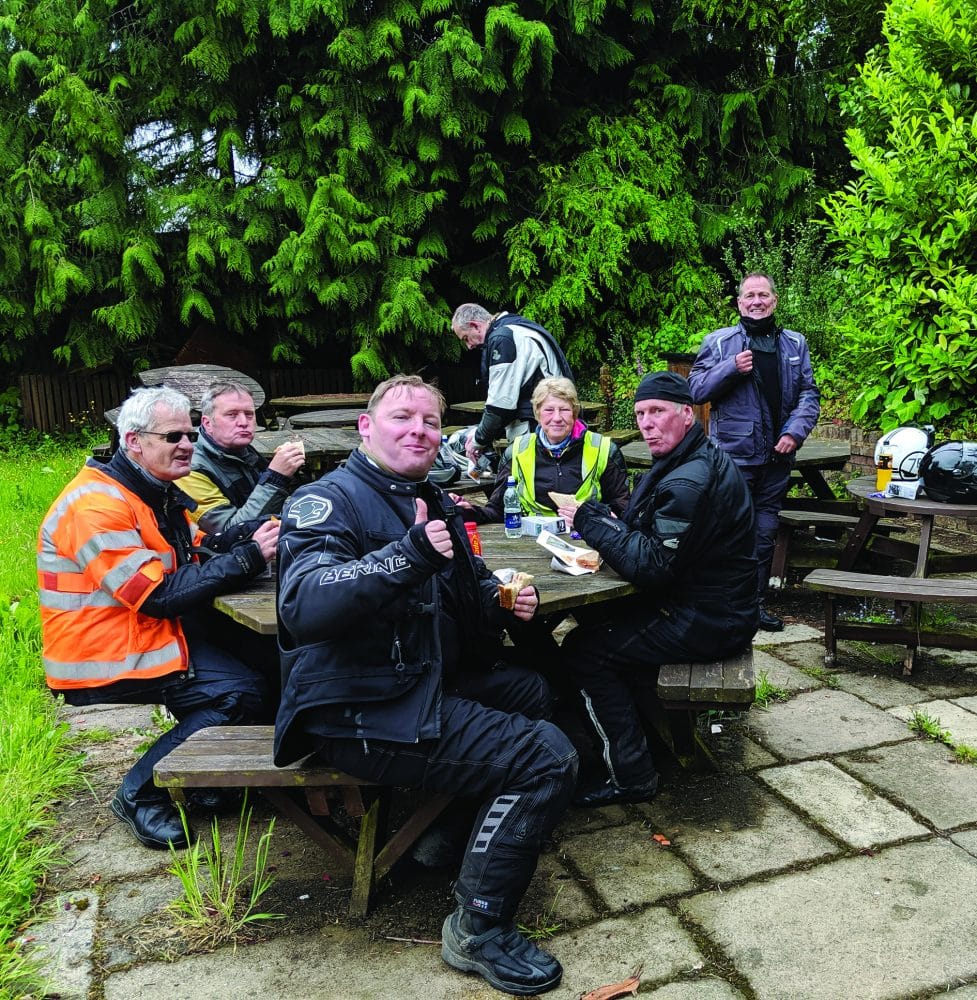
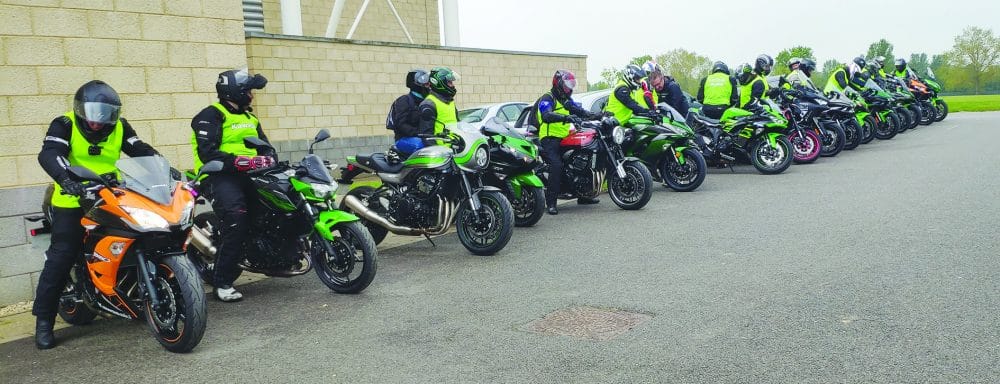
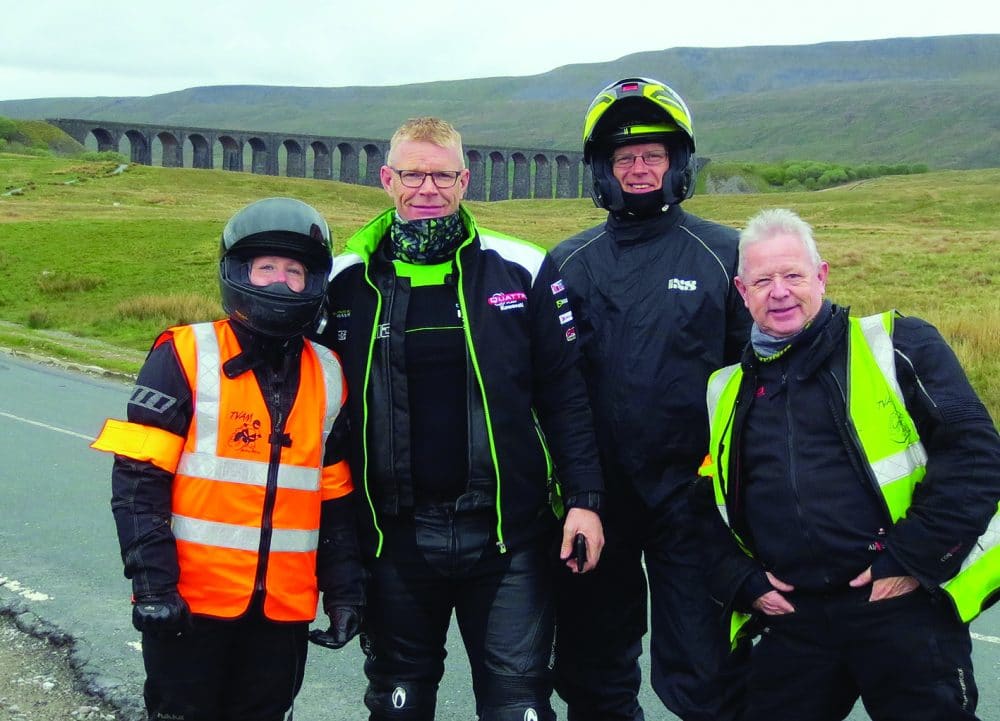
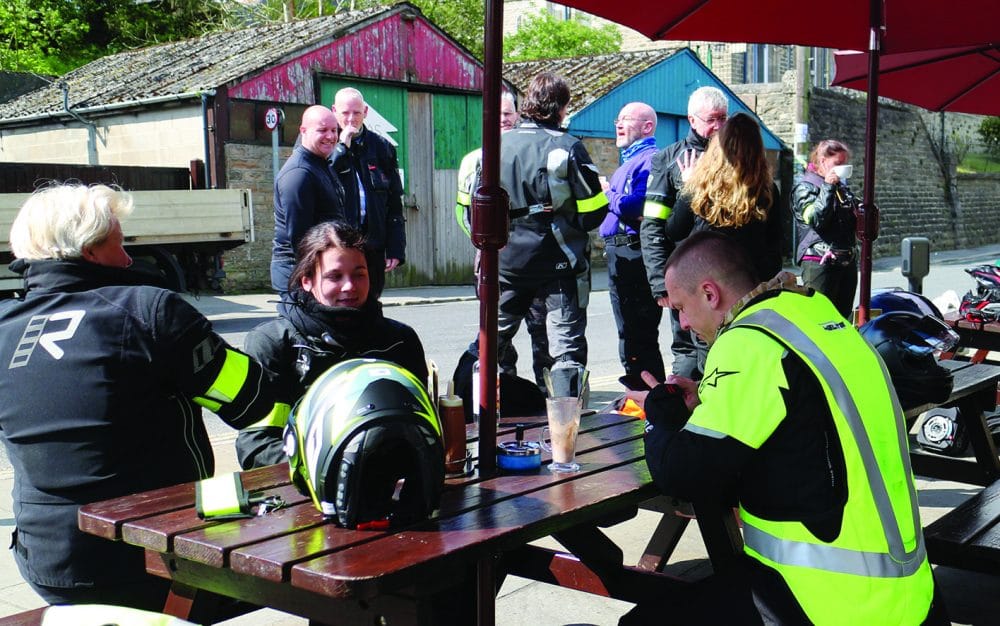
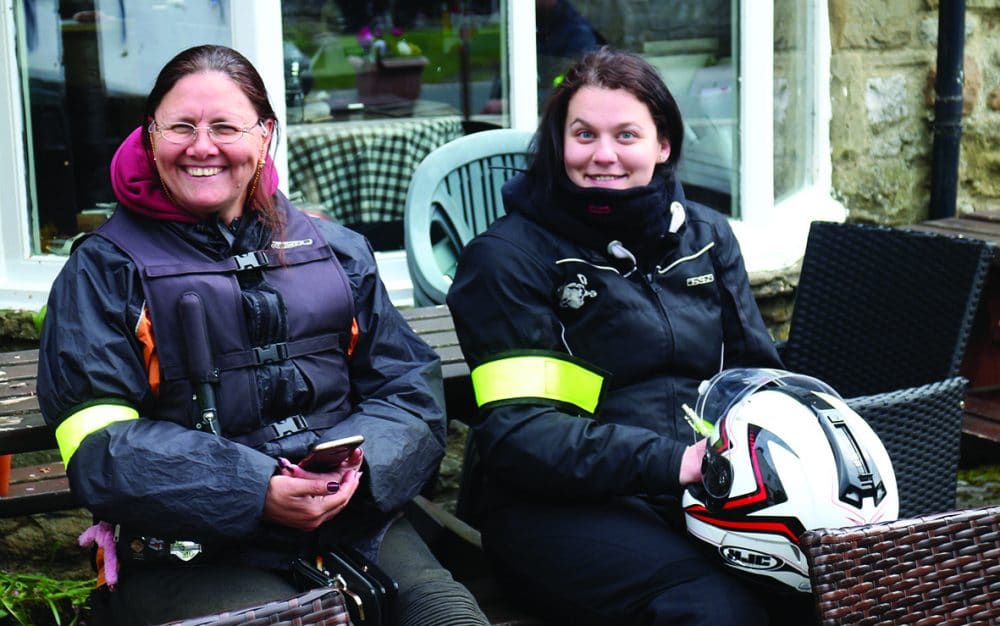
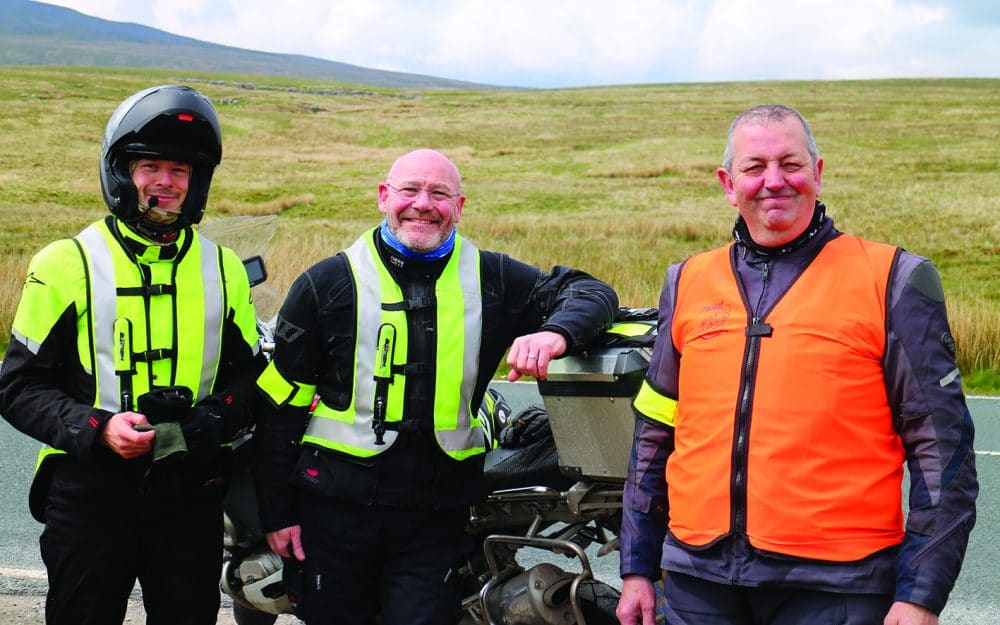
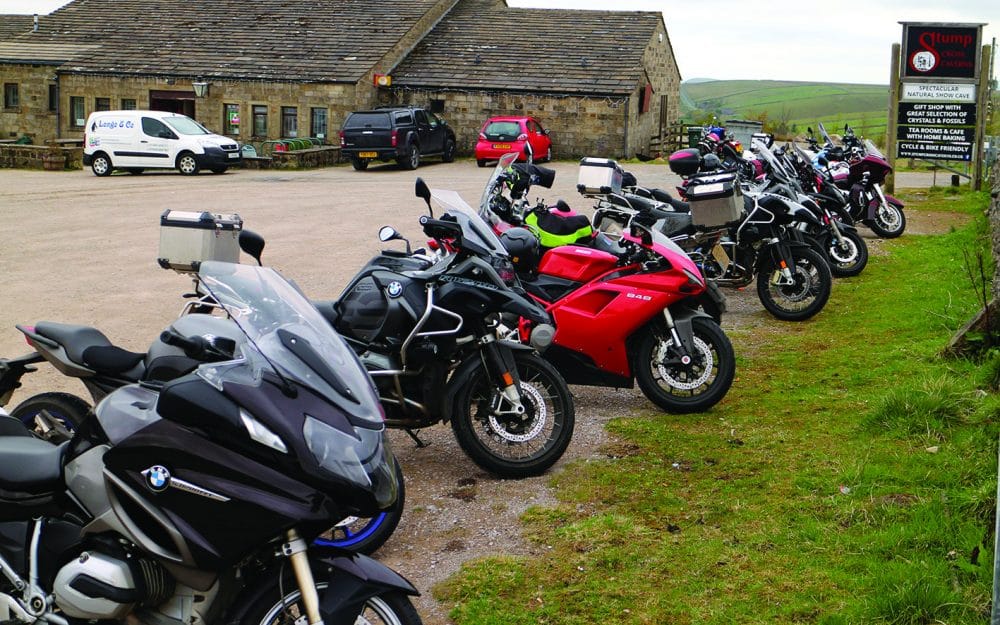
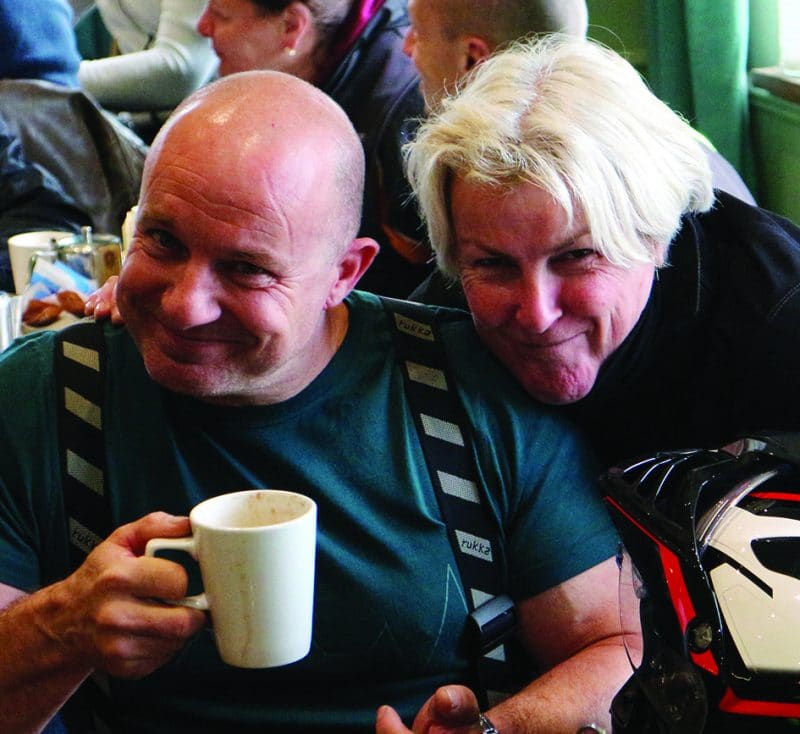
The weekend of the 9-11th August saw 30 riders and 1 pillion head to Ross-on-Wye for a superb weekend, staying at the Penyard House Hotel. The weekend promised good roads in good company with observed rides to those that wanted them. The weather, by contrast, was not quite so accommodating.

As we gathered at Morrison’s Café in Reading early on the Friday morning, the rain promptly started. However, by the time we had finished breakfast and received our briefing, the weather had improved slightly and the sun even tried to come out. We headed off in 2 groups to wind our way through some lovely countryside on some great backroads – both groups arriving at the hotel within 10 minutes of each other having covered approximately 150 miles – great timing!

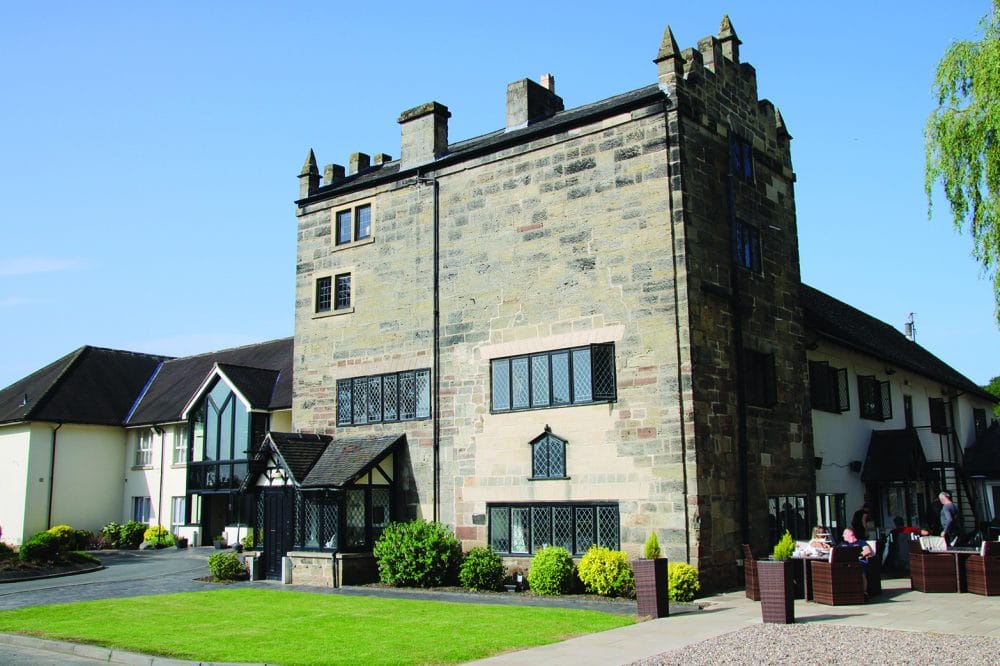
The Penyard House Hotel is a lovely place to stay. Set in some beautiful grounds just outside Ross-on-Wye on the A40. The staff made us feel very welcome; the food was tasty and the rooms were clean and comfy – what more could you ask for?
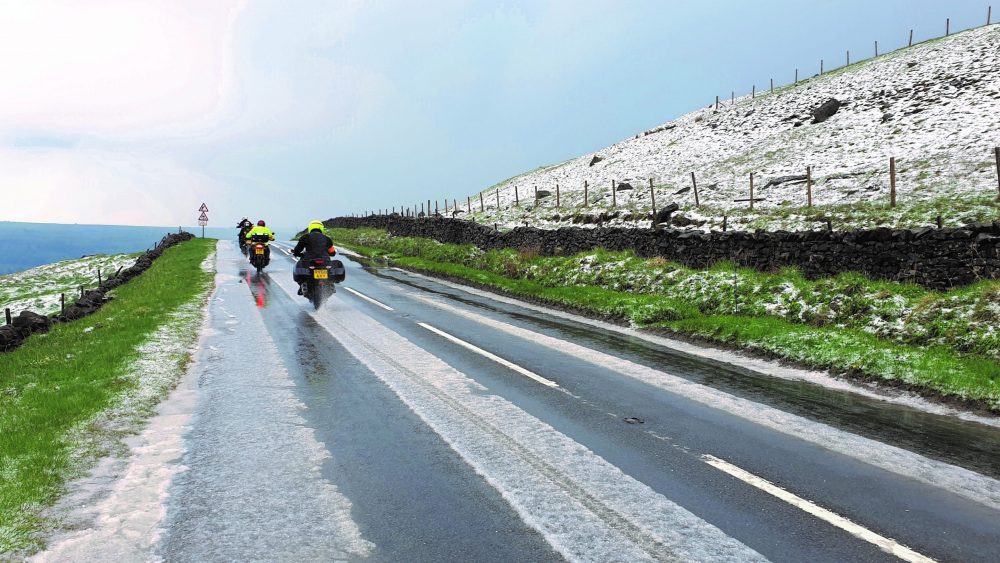
The main topic of conversation during breakfast on Saturday morning was the atrocious weather forecast. Torrential rain and gusts of up to 60mph in exposed areas. Not ideal biking weather! That said, the decision was soon made for the entire group to go on Kelly’s run which was heading north. It appeared that this would avoid the worst of the weather that was tracking in from the west – sorry Gary (next time). The run was excellent, almost 200 miles, mainly B-roads in the morning and then some nice, fast-flowing A-roads in the afternoon.

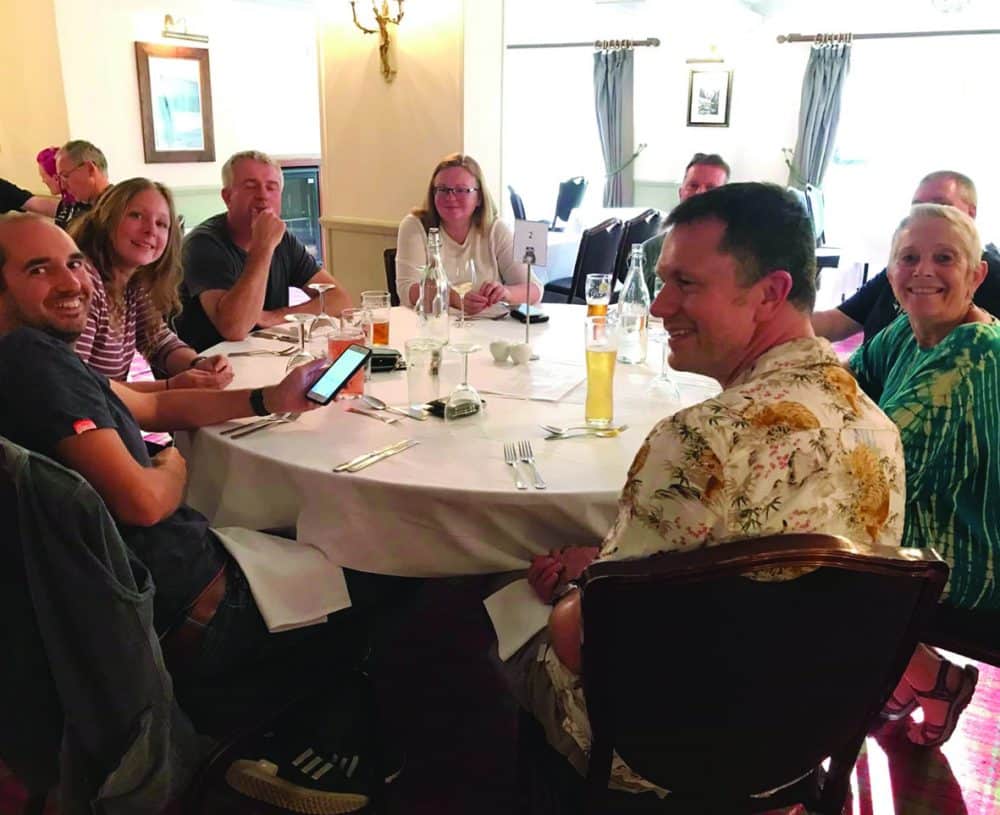
Saturday’s pre-dinner drinks were enjoyed outside in the sunshine – what a variety of weather we had endured that day. During dinner each table were handed a quiz paper with a selection of Highway Code and Roadcraft questions, along with some general motorcycle trivia. James did an excellent job as quiz master. Hopefully we all learnt something – if nothing else, that it was probably high time we re-read the Highway Code.

On Sunday we enjoyed a leisurely breakfast before splitting into 2 groups and heading for home. The weather was much more favourable and some of us even got home in the dry, whilst those of us that took the more scenic route were not quite so lucky.
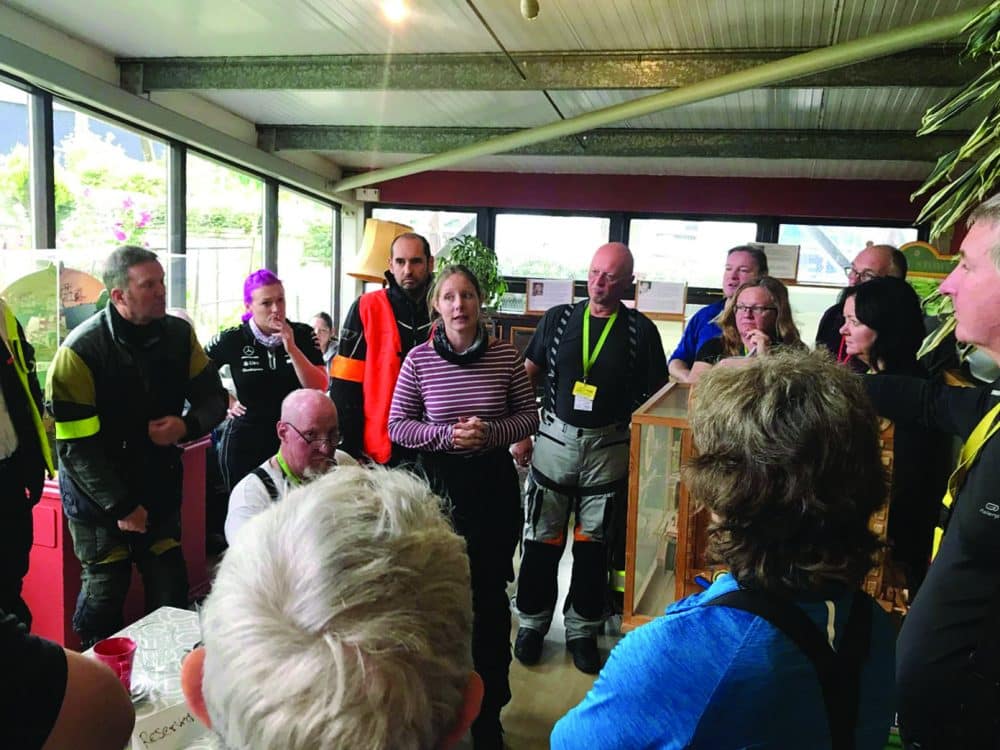
Whilst the weather was far from ideal it didn’t stop the fun. Keep an eye out in Slipstream for details of next year’s 3Rs trips.

Tom Grey

First published in Slipstream September 2019
Some comments from those who took part:

Can’t improve on a great weekend, just want more please.

I really enjoyed the 3Rs. What made it stand out for me was the company and a chance to meet some new TVAM people. The organisation was flexible and seamless with everyone working together.

It was my first 3Rs but hopefully not my last. I liked the size of the group as you got to speak with everyone.

Fantastic weekend, very good value. The 3Rs is by far my best TVAM trip to-date. Particularly impressed by the organisation, quality and value of the hotel and the smaller and friendly group of fellow TVAM riders. Please put me down for the next one.

Keep it small. The event has a great feel to it.

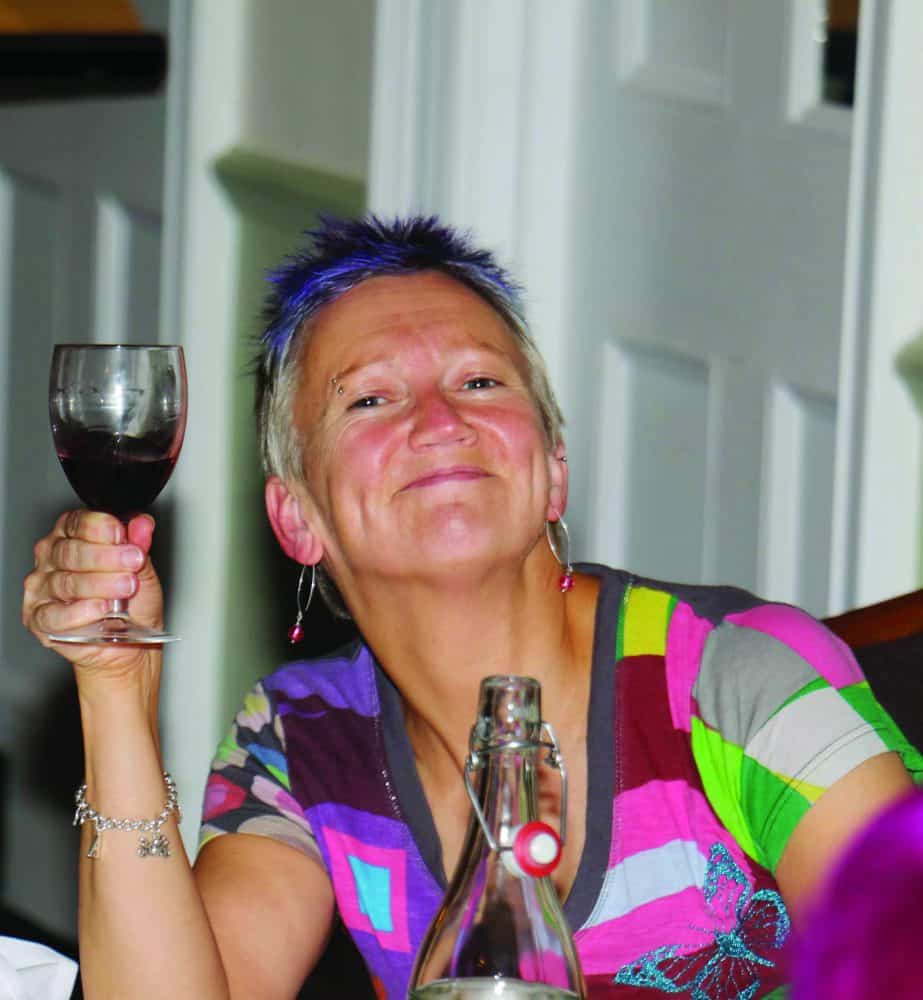
More people with pink hair! Really great weekend.
All in all a really enjoyable weekend with plenty of rocking, rolling and riding present – and quite a bit of the wet and windy thrown in for good measure.

Roll on 2020 with more 3Rs trips to enjoy.

Well done to the organising team!

We All Have A Story To Tell

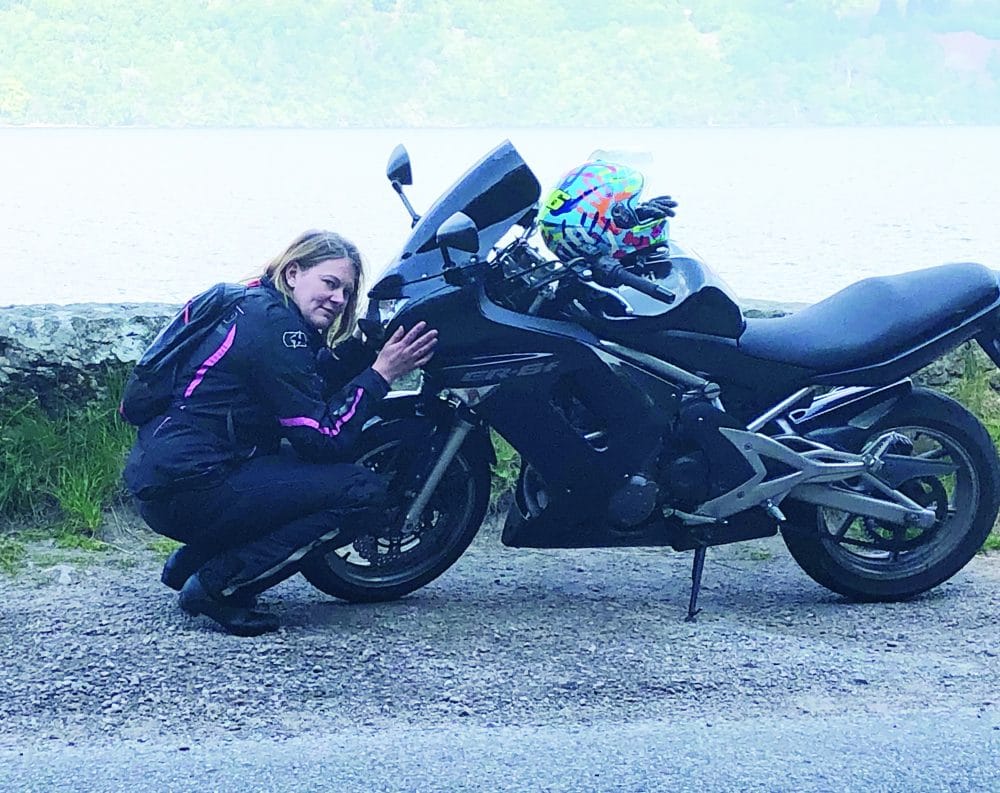
We all have a motorbike story/journey to tell. Mine started in 1992 as an 11-year old going to secondary school for the first time and passing the motorbike shop with its mass of green Kawasakis outside. When I first saw a Ninja, I knew I would one day own one.

Fast forward a few years to July 2017. I sat my motorbike theory test and passed first time. I sat the test even before having ever been on a bike. My theory was, if I couldn’t pass the written test then there wouldn’t be any point doing the practical. It wasn’t until a year later that I took my CBT in July 2018. Oh my, I fell in love. I knew this was something that I really wanted to do. The feeling of being on a bike was akin to my other passion – skydiving – freedom! Due to work, it took me until September 2018 to pass my full licence.
As a nurse, I knew passing wasn’t the end of my motorbike journey, rather it was just the beginning. I was aware I needed to be as safe as I possibly could, having seen what happens when things go wrong. In November 2018 I joined TVAM. I remember my first ride, I was shocking! The second observed ride was just as bad. I came to a stop at a junction, put my foot down, went to go but had to stop again. I’d noticed bikes coming around the blind corner. It was almost like the tarmac had been removed, there was nothing there. The road had disappeared and I toppled over onto my ass, laughing at my stupidity. I’m not sure my Observer, David, saw the funny side. At the time we discussed it and we went through what happened and what went wrong. It’s only now, after going through the process, that I fully appreciate why David hadn’t see the funny side. Firstly, I’d missed the sign to say ‘give way 100 yards’. Secondly, I didn’t read the road and hadn’t noticed it was off camber – until I was on my ass.  Finally, I rushed into something without an appropriate plan. On my second observed ride, I was still learning the system – IPSGA.

I was still making silly mistakes up until my 7th observed ride – 6 weeks since starting at TVAM. But then, something clicked. It all made sense. Hoorah! I was riding at an advanced level on each observed ride and I understood. I was becoming a thinking rider. I was becoming a safer rider. I was also becoming a fatter rider thanks to all the coffee and cake over debriefs!

At this point, I thought of something crazy. I will ride around the Highlands on my own, but that’s a story for another day.

Then came my first, big group ride on 7Ws. For most people, 7Ws is a weekend full of fun, sun (at times) and learning. For me it was full of tears, tantrums and losing myself a little along the way. The Friday of 7Ws riding to Wales, was great. My only kind of cock-up was filtering on a solid white line for the Chief Observer to witness. Duh! In my defence, the road was clear and the car behind me was making me nervous, so I avoided danger. That’s my story and I’m going to stick with it. The Friday for me was the best part of the weekend. Having never ridden within a big group or over such distances, it was a challenge which I embraced with both wheels. I hold onto that experience with very high esteem and it helped shape me into a good rider.

On the Saturday, I went on the pink run. I really had no idea what to expect. I went pink because it’s such a pretty colour. In hindsight, I should have paid attention to the ride not the colour. I’m not going to go into much detail, but I was rocking backwards and forwards, crying and ready to hand in my keys! Thanks to Ness and Barry, that didn’t happen. With their observation, knowledge, support and guidance I survived the Saturday. It gave me the reality check that I needed.

On the Sunday, the final group ride, I took the long ride home. Again, in hindsight, I should have taken the quick route. Although this ride was tantrum and tear free, the fatigue had set in. I had to, at each stop, check my own human factors, looking for holes, repair those holes and continue riding again.

Although, my experience on the 7Ws wasn’t like most peoples, I am very much looking forward to September, where I plan on being a back marker.

Anyway, I came back from the 7Ws a different rider. I was a lot more competent, but I’d also lost some of my confidence. Although I have a very limited biking history, the one thing I’ve learned is you need to be competent, but you also need confidence – not too much, but just enough, and I’d lost some of mine. I felt sorry for my Observer; he really didn’t know what he was getting himself into when he was paired with me. I’m not going to lie; I was – still am – a challenge. It took a pep talk and a social ride for me to regain what I’d lost. From that point, each ride was about fine tuning. My cross check went swimmingly and I was recommended for my advanced test. Hoorah!

After only 9 months of riding under my belt I went to Scotland and rode the NC500 on my own. I had to come back a few days earlier than planned because I had, whilst on the NC500 route, booked my test. I never do anything the easy way.

I remember the morning of my advanced test; I was bricking it. Yes, I vomited! I’m not ashamed to admit that nerves got the better of me for all of 10 minutes. But I took it like a girl, I ‘super-womaned’ up, I could achieve anything, and I did. I passed my advanced test with a F1RST and full clean sheet of ones.

I went from a learner, to advanced rider in 9 months! Within 6 months of joining TVAM I had undergone 16 observed rides, countless social rides both with large groups, small groups and, when not on an official ride, my ‘riding buddy’ David. With maybe 60 hours of contact time, countless text messages ranging from analysing rides, discussing situations and random questions with my Observer, I was an advanced rider. As I said, I could achieve anything and I did, but I had the support of the group and my Observer. If it was not for David but also Alan, Steve, Ness, Keith and many more Observers and fellow Associates (mostly Julie – who was told everything – if it went wrong, we discussed; if it went right, we discussed) I wouldn’t have been able to achieve my goal. I look forward to where my place fits within the group, my story isn’t like everyone else’s and I want to pass on my journey and experience to the future, thinking riders.

Unfortunately, 4 days after passing my advanced test I came off my bike, broke my foot and am unable to ride for the moment due to being in cast – but that’s a story for another day!

Oh, and if anyone is wondering – The Tea Cosy, Hurstbourne Tarrant was probably the best stop off/debrief location/cake-eating place David and I visited whilst on our journey to making me a thinking rider.

Paula Nash

First Published in Slipstream August 2019

Garmin/BMW SatNav 6: Black Screen Disaster & Repair

A few weeks back, while planning my 7Ws routes and uploading to my SatNav 6, the screen went black and just wouldn’t switch on. Battery was good, external power good, it just wouldn’t turn on. Like laptops when they go wrong, you simply remove all power supplies and the battery, wait 30 seconds then restore power. The SatNav 6 has 2 screws on the rear battery compartment so I simply removed the cover, disconnected the battery, waited, then put it back; fixed.

I was about to ride the final leg of my tour of reservoirs when the damn thing went blank again. The micro crosshead screwdriver that I had packed for such an occasion came out, and I disconnected the battery then tried to plug it back in again. However, the connectors are somewhat flimsy (and that’s an understatement) and the pins got bent over. On straightening them, one broke off. Connecting the SatNav 6 to the bike was futile as they don’t work without the battery installed.  Fortunately, Paul Taylor lent me his SatNav 6 and we made it back to the hotel via my planned route without a hitch.

The Fix

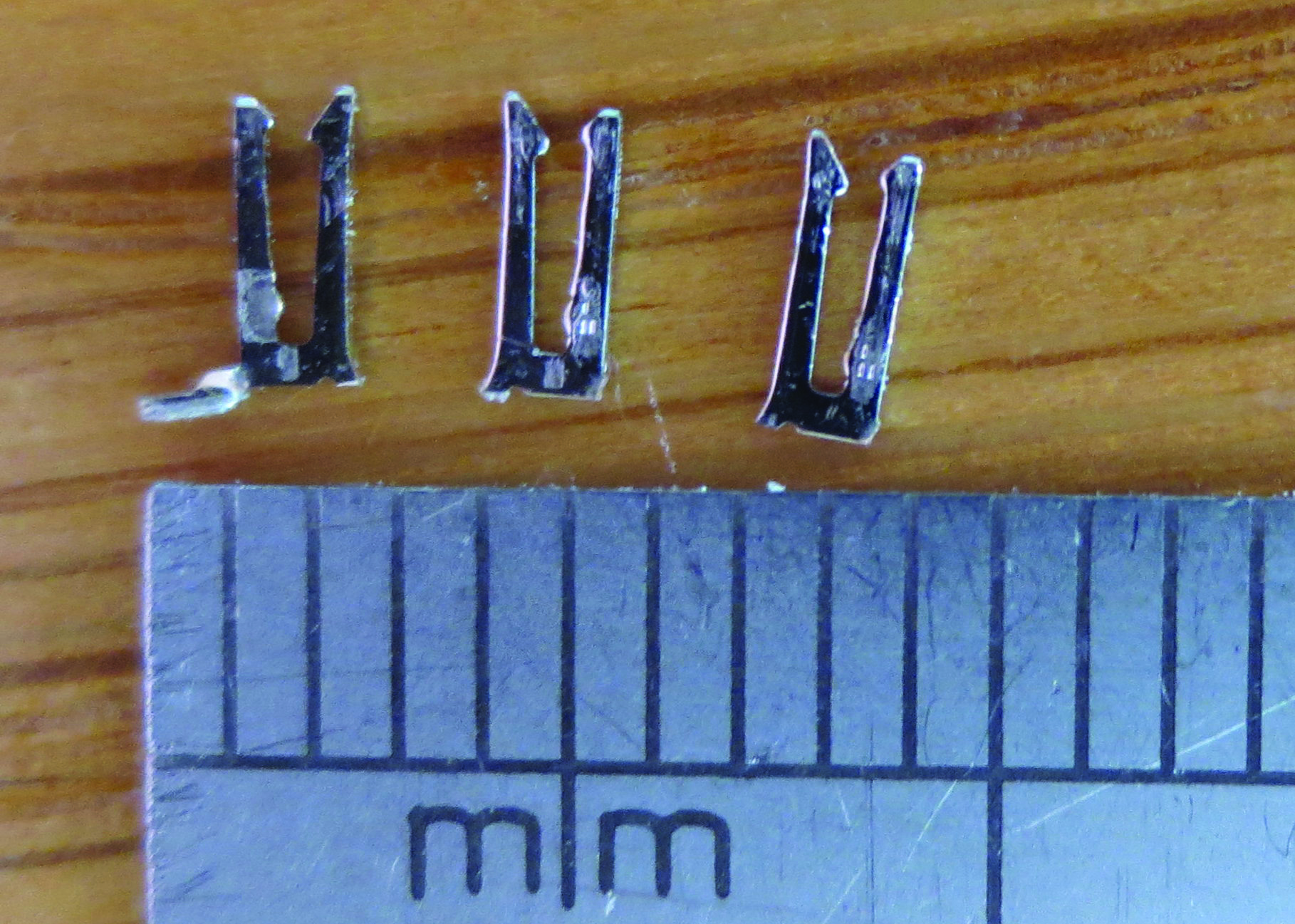
The photos below show just how small the pins are. I snapped off the remaining 3 and the pin on the left has the solder leg still attached, whereas the other 2 snapped in the same place as the one in Wales. Compared to the millimetre marks on the ruler, the actual area of metal holding the pins to the solder tag is probably less than an eighth of 1 square millimetre. No wonder they bent over and then snapped!

There wasn’t even any support along the base of the rest of the tag either. It makes me wonder if this design was to ensure they get sent back for repair.

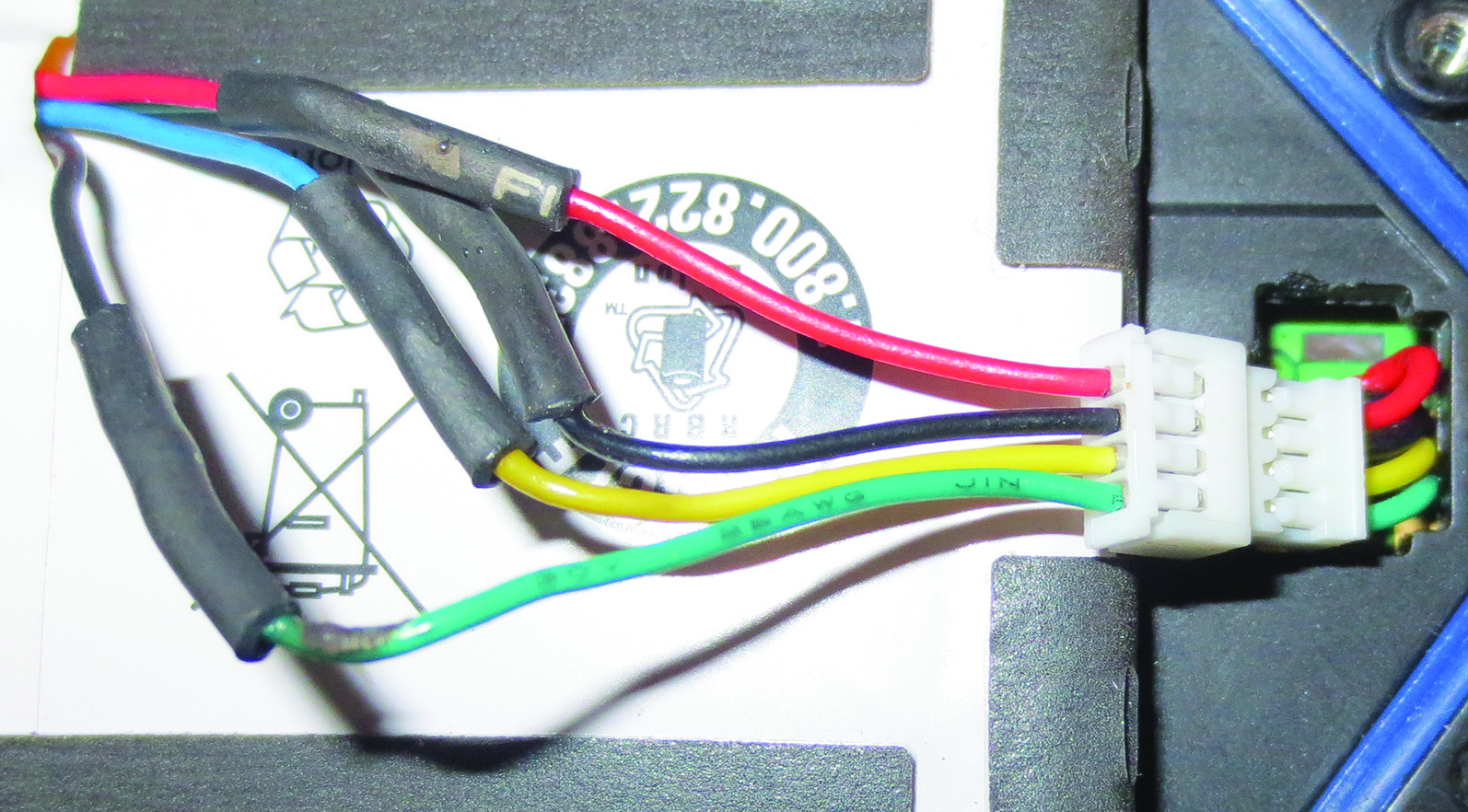
The fix involved going on to Ebay and finding 4 pin Micro JST connectors. £1.82 got me 2 pairs, and I set about soldering the new connectors on.

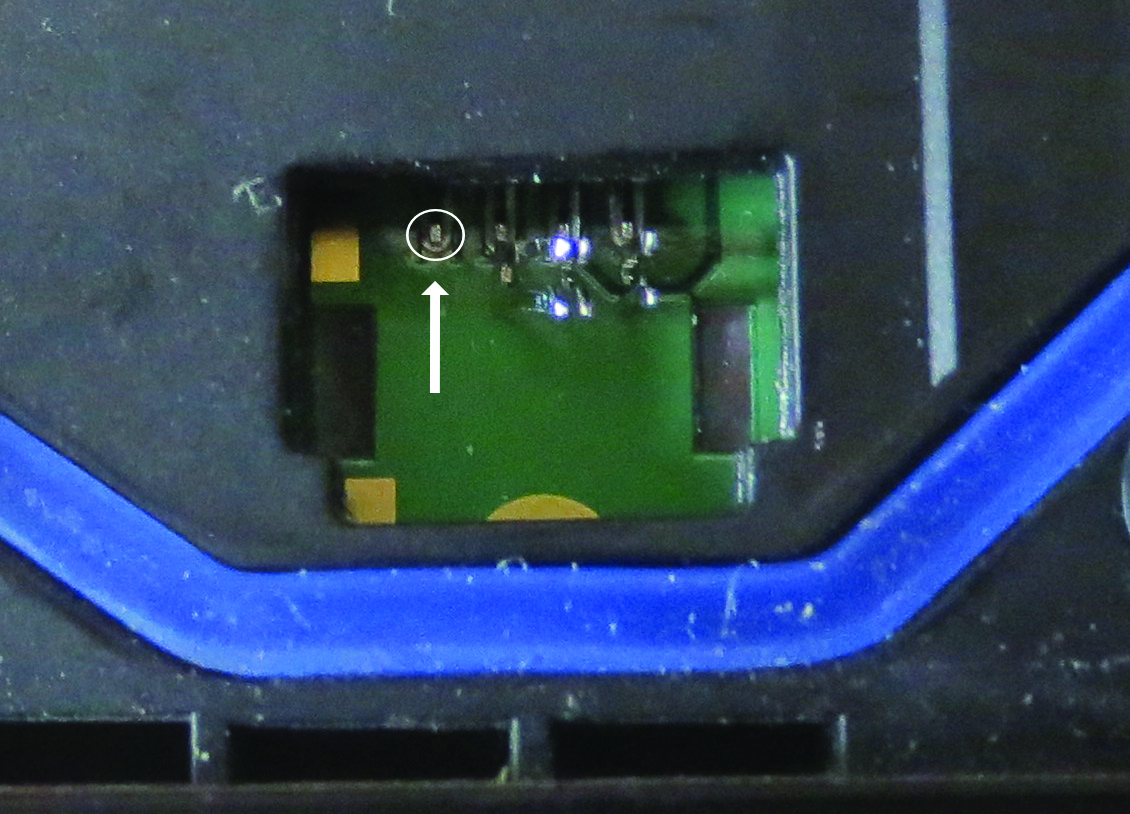
You can just make out the remains of the tag of the pin that snapped in Wales. It’s the rectangular bit inside the white circle.

The other 3 pins are still in place before I pulled them out. The new connector’s wires were soldered onto the circuit board and battery. Now, when I have to disconnect the battery due to gremlins, I can disconnect at the connector block and not have to worry about pins the size of bees’ antennae.

The actual soldering was tricky, as I had to get the tip of the iron in the hole where the original connector block resided, while holding the wire in place with needle-nose tweezers. How robust it’ll be is yet to be determined, but reinforcing the solder connections with epoxy might be needed. Only time will tell. At least the £600 poorly designed device is now working again.

Gaz

First published in Slipstream August 2019

Full English, -ish


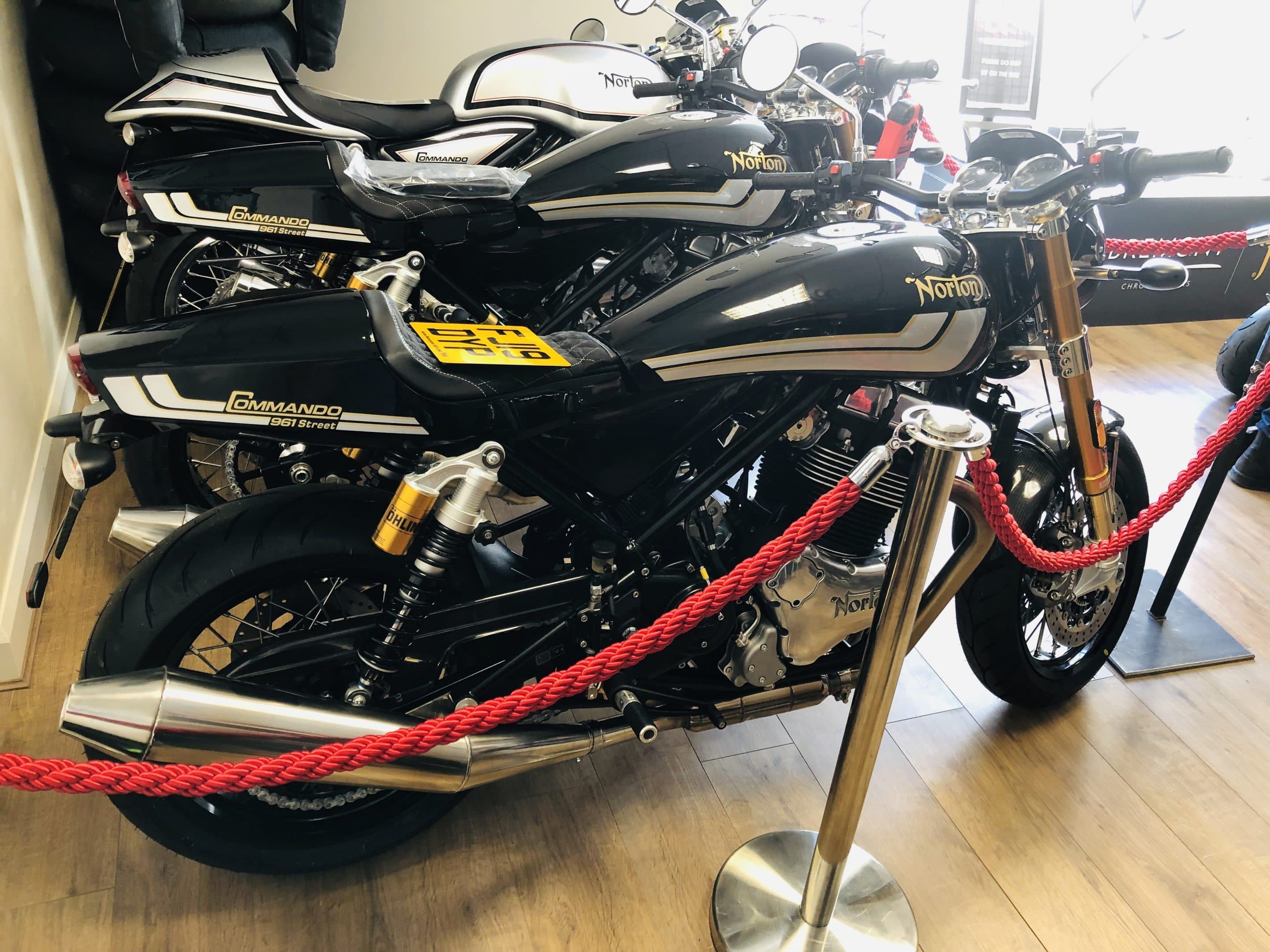
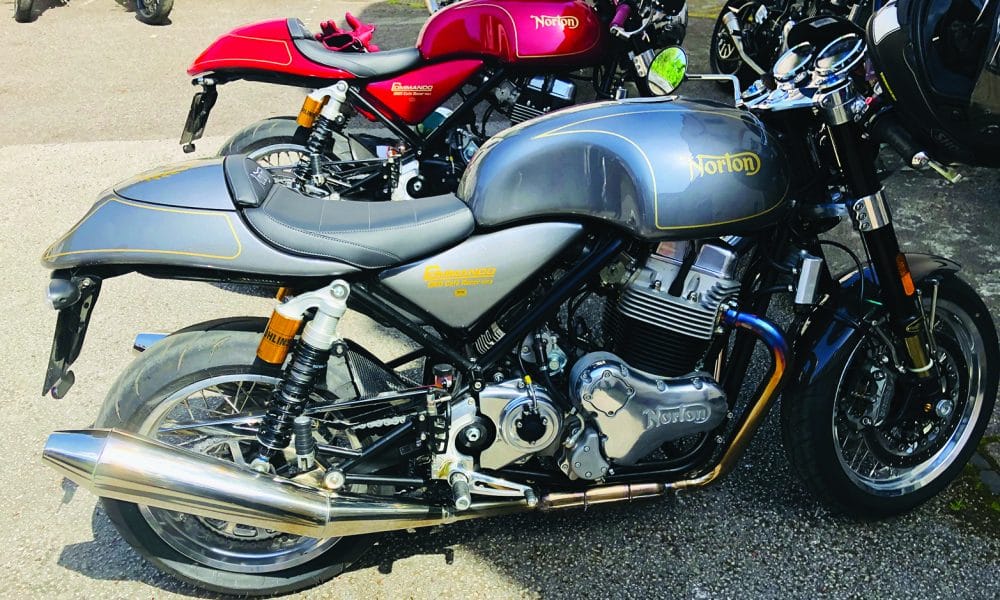
A trip to the Norton factory meant arriving early at Beaconsfield Services for a full English – Norton’s surely nothing if not the full English? Park up, wander in, burgers, sushi and chicken galore; but egg, bacon, black pud and the rest, in grease with a crisp fried slice? No chance – unless the well-hidden ‘spoons could provide, but by the time I’d spotted it I’d plumped for a McBacon bap. Looked good, but a bit pricey and didn’t quite hit the spot.

There must have been 10 of us there by 8.15am and already it was warm. As we scoffed, more turned up, amongst them run leader Phil Donovan. Troughing complete he gave us a briefing and new TVAM run arm-bands, complete with insert for my ICE contact details (my brother, who’d kill me if he got the call), phone PIN code and little else – who knows their blood type and would the medics trust what was scribbled there anyway? Then it was just a question of herding some 20 bikers into a shape suitable for the ride to Castle Donington, a tricky exercise made all the more so by Phil instructing us to form a line along the Costa car park then vanishing. Once we’d worked out it must be the Starbucks car park things sped up and I doubt we waited more than 10 minutes before Phil swooped past and led us on our way.

A fair old way it was too, and on a Friday not exactly traffic free. Phil had sorted a good route with a fine selection of A’s and B’s, no motorways and a couple of comfort breaks. First of which was the Super Sausage café, where there was no time for their splendid looking full English, though Robin, who met us there on his venerable Falco (he’s adopted a Trigger’s Broom maintenance regime) had had time to indulge. Then to a converted barn for (mostly, ahem) pre-booked lunches, followed by more herding to get us away in good time for factory arrival by 2.30pm.


As the afternoon progressed the traffic did the opposite and overtake hunting became necessary and frequent, as did queuing at lights and junctions. All of which, plus more time than expected waiting with Phil for markers, started to threaten our ETA. I’m not that well up on TVAM ride etiquette but couldn’t help thinking that watching the rider in front ignoring overtakes you’d take is less helpful than being waved past and getting a move on. And queuing two abreast to pull away in pairs would be a good way to keep the group moving along apace. Bikes toppling at fuel stops rather holds things up too… But we didn’t get lost and made there it intact just in time for the 3pm tour – bravo the marker system!
Parked up we walked down the drive to the magnificent Regency pile that is the Norton factory, through a tastefully manicured country park under the gaze of a very glossy and languid-looking peacock. Directed by friendly staff to the showroom we were signed in and given permission to drool – close up the bikes look very, very tasty indeed; poised, purposeful and beautifully presented.

Dragged from the showroom by our two guides, first up was a stroll through the grounds to the fabrication unit for an entertaining chat and the opportunity to get our hands on some bits. Blimey they take their time building stuff. First a tank, brushed alloy and achingly pretty but at least three full days to hand bash, weld and polish (which was why we only got to handle a previously dropped and cross-sectioned example). A clutch cover, milled from billet with ‘Norton’ proudly hewn into it – strewth, that’s heavy, no wonder the 961 engine is such a lump. A polished alloy single-sided swingarm, a thing of beauty and no little weight either. A front fairing spider (the intricate assembly of narrow alloy tubes connecting fairing to frame), all hand welded and polished too; OK, starting to see why these bikes cost so much. Robotic assembly would work much better for that job, as it would for the pipe bending – apparently there’s a guy who just does that, all day.

The scope to customise is truly astonishing…

Next up it’s the factory itself. Disappointingly we weren’t allowed to view engines being built as ‘that happens on the first floor’. Eh? What we could see was less factory more open-plan office, desks and chairs replaced by ramps, stands, tool chests and, yes, bikes. At one end an ancient belt drive Norton, scattered around the floor a mostly touch-accessible selection of newer machinery, including very handsome V4’s, one of which was started for us, oh wow! Plus 961 and Atlas variants alongside ex-race bikes in glorious, unwashed, post-TT condition. All fantastic looking, though no photos allowed and a ‘development’ section I was chased out of!
Each bike is hand built by two mechanics in its own bay to the specification of the buyer whose details are included on the build sheets. Virtually unlimited buyer bespoking is available and encouraged, the parts department picking the bits, all double-checked by the mechanics as they bolt them together over a couple of days. Apparently Euro 4 compliance means there’s not a huge variation for different markets which must simplify things a lot.

Beautiful bikes all, but the 961’s have pushrod operated valves, make about 80bhp and cost somewhere around £15,000. The new 650cc Atlas motor is more up to date with overhead cams and, err, that’s about it. The Ranger version’s a stylish-looking twin, sporting hipster vibes and off-road pretensions (hard to see how a vertical gear linkage half the height of the bike could survive a close encounter with anything solid), a tad more power than the 961 and cheaper too – though still north of £11,000. But fancy triple figure horsepower and a pose quotient to die for? That’ll be the 200bhp V4 SS then, a snip at £44,000. Gulp…

Great trip and pleased I went (well done again to Phil for making it happen), the bikes are gorgeous, but their price clearly pertains more to the craftsmanship than its practical upshot. When the owner of Rolex was asked about the state of the watch market he said he had no idea as Rolex wasn’t in the watch market: something similar’s going on here. I’d love to own one, but, given my dining room feels a more appropriate place to keep it than my garage, I can’t help feeling their peacock best sums up Norton for me. Though I suspect that, were I to win the lottery, the McBacon bap would run it close.

Nick Vale

First published in Slipstream August 2019

Europe for Beginners

Top Tips for First-Time Travellers

Since returning from a European motorcycling adventure last year, I’ve been trying to figure out how to turn my experiences into an interesting article for the magazine. A straight-up ride report (“…and then we carved through yet another dozen hairpins…”) doesn’t make for terribly engaging reading in my opinion. And as readers of my scribblings will know, I prefer to try to educate while I entertain, and there’s always something new for all of us to learn.

So let’s consider this a review of sorts; a short(ish) summary of an unconventional motorcycling adventure, where I challenge conventional wisdom and somehow convince my first-time touring partner into coming along for a non-stop, full-speed dash through the European countryside.

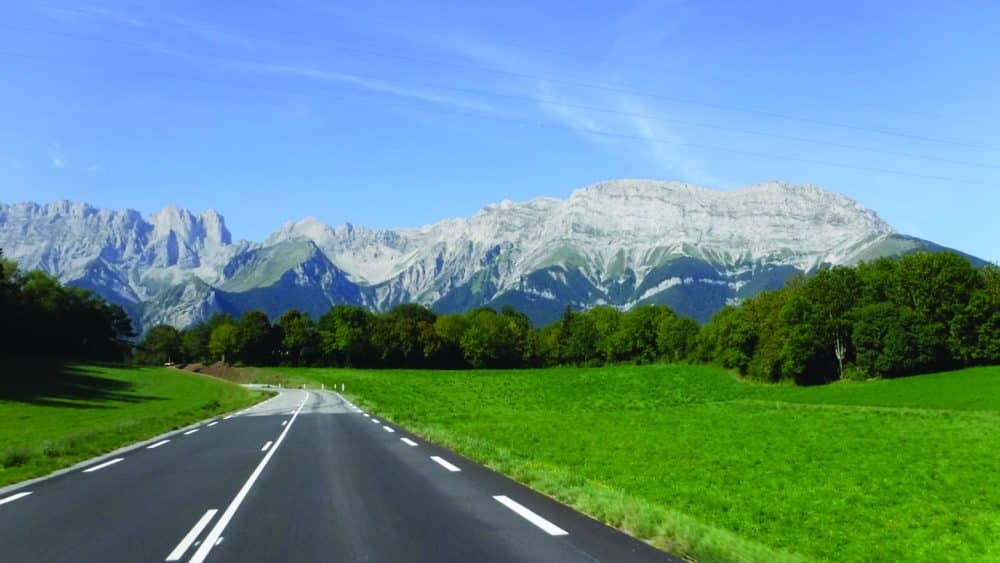
To give you an overview, this was a 3,500-mile, two-week all-inclusive sampler of European motorcycle touring, an opportunity for me to show my partner what she had been missing all these years during which her riding had been constrained to our rainy little island. This included French motorways, Belgian forests, the valleys of the Mosel, forests of Bavaria, derestricted German Autobahns, Austrian food, Swiss Alpine passes, Italian roadworks, French lakes, Spanish mountain gorges and a lot of McDonalds restaurants.

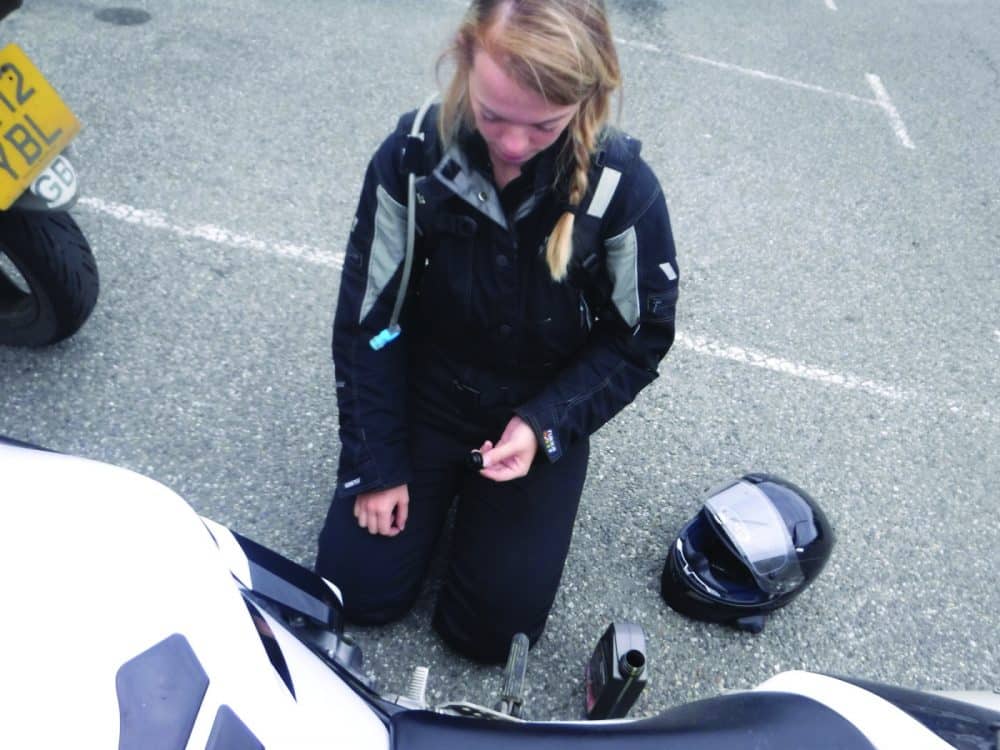
Cramming my favourite bits of Europe and the entire Pyrenees mountain range into a 14-day vacation that included my own brother’s wedding was a little ambitious. 300-400 miles a day quickly proved impossible, with an average of 250 more realistic, despite my creative interpretations of continental traffic regulations. Rural road maintenance crews love to dig up (and then abandon) the only route out of town with maddening regularity, but empty sidewalks will work at a pinch. We also learned that Honda Fireblades consume around a litre of oil per thousand miles, and had ample opportunity to discover that 10W40 is pretty much the same in any language.

Pay at the Pump is one of the greatest inventions of the current century, and our continental cousins have embraced it wholeheartedly. So have McDonalds, with their restaurants now featuring multi-lingual touch-screens alongside table service. This means that meal stops can be short and your interaction with the locals can be reduced to an absolute minimum.

The more sociable among you may be horrified at the idea of travelling thousands of miles to computer-order the same bland-tasting American hamburgers for lunch, day after day, but the truth is that rural Europe really leaves you no choice. The Spanish and the French seem to compete for who amongst them can shut down the longest during the afternoon and, if you are somehow fortunate enough to discover some dingy roadside café willing to feed a pair of strangely-dressed foreigners with a limited grasp of the language, they do so only with extreme reluctance.

My purpose for travelling is to ride motorcycles on entertaining roads through spectacular scenery and the routes I chose clearly did not coincide with the European Good Food Guide. Google proved no help either, as outside of major cities what little information is available on the platform is inaccurate and incomplete, making the task of reliably locating any functioning establishment beyond multinational chain restaurants impossible.

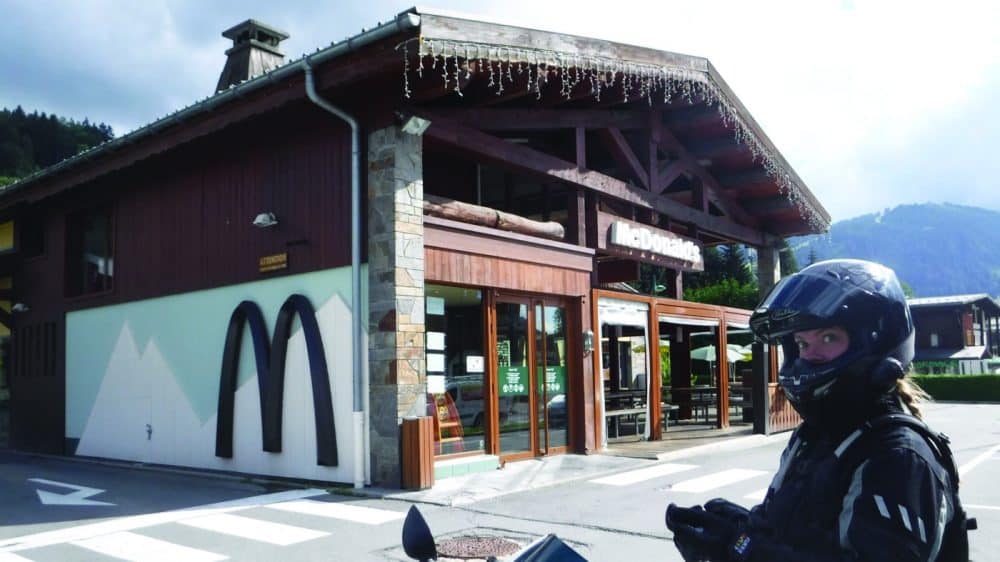
And you know what? McDonalds isn’t so bad. The architects appear to have been competing with one another for the most interesting interpretation of the American fast-food staple, with regional variations in menus providing a modicum of culinary variation. The food is fine, the toilets are clean, the WiFi is good, and the air conditioning is extremely welcome. But most importantly, they’re open. And they have parking. And you can find them, easily, without having to detour to some traffic-clogged capital and traipse around baking city streets in a vain attempt to find somewhere that offers the bare-minimum of celiac-friendly menu options.

The Booking.com app means that you can pick your daily end-point during your afternoon coffee break, although first-time travellers should be aware of a few peculiarities. The French interpretation of the word Hotel is fairly broad and it is only after booking that it is possible to discover the latest allowable check-in time. This might be far earlier than you would expect and supremely unhelpful if you’re running late and still an hour away from the room you just paid for.

The following day we left Mandawa and headed for Bikaner, covering another good mix of road types and avoiding herds of camels. We were now really loving the Bullets, the big 500cc single, thumping away, exhaust burbling, plus the popping and banging on the overrun. We stopped off for a tour of the Fort of Junagarh then on to Bikaner, where we stayed in an ancient palace which now served as a 5 star hotel.

After a good breakfast of traditional Indian or European fare, we were back on our Bullets heading for the golden city of Jaisalmer, on the edge of the Thar desert. Dinner in the open roof-top restaurant watching the sun set on Jaisalmer Fort was spectacular. The fort looks like a giant sand castle rising from the sandy plains.

Breakfast Included is also subjective. In some places it’s a multi-menu banquet from 7am onwards, while in others you delay your departure only to discover you’d have been better off saving your money and opting for a petrol-station coffee & croissant instead. Our last hosts informed us upon check-in that breakfast wasn’t served until 9am – a full half-hour after our latest realistic departure time, should we still wish to catch our ferry. We left the room keys at an abandoned reception desk when we left. They’re just lucky I’d paid in advance before arriving as there was no-one awake to check us out either.

I do recommend picking somewhere that has an on-site restaurant, however. The couple of times we chose more characterful bed & breakfast options we got badly burnt when no alternative meal options were available in any nearby towns. The hotel’s own restaurant might not be the last word in quality or value but it’s better than cereal bars and bathroom tap water. I’ve decided to pack a can of baked beans and a tin-opener next time, just in case.

As for routes and riding, Europe certainly offers plenty of surprises. The observant number-plate spotter will note that while the British do not seem to venture much further east than France, the Dutch seem to have fled their own country en mass, with bikes and cars alike strewn across the entirety of German-speaking Europe. Petrol stations rarely sell anything other than E10, the 10% ethanol-fortified fuel that the continent switched to some years back. Those of you running newer bikes might notice a slight drop in fuel economy, while those running older machinery might notice it eating holes in your petrol tank and associated piping.

The Italians have an interesting way of discouraging speeding with, what I could only deduce were, speed-sensitive traffic lights. No junctions, no pedestrian crossings and they’d turn green again as soon as you’d stopped but if you approached them more slowly, they wouldn’t change in the first place – an interesting tactic, for sure. Speed cameras themselves are slowly spreading across the French countryside like an infectious disease, usually concealed and on otherwise perfectly safe roads. Fortunately the locals seem as unimpressed as I was, with the overwhelming majority having been comprehensively disabled through the generous application of spray paint.

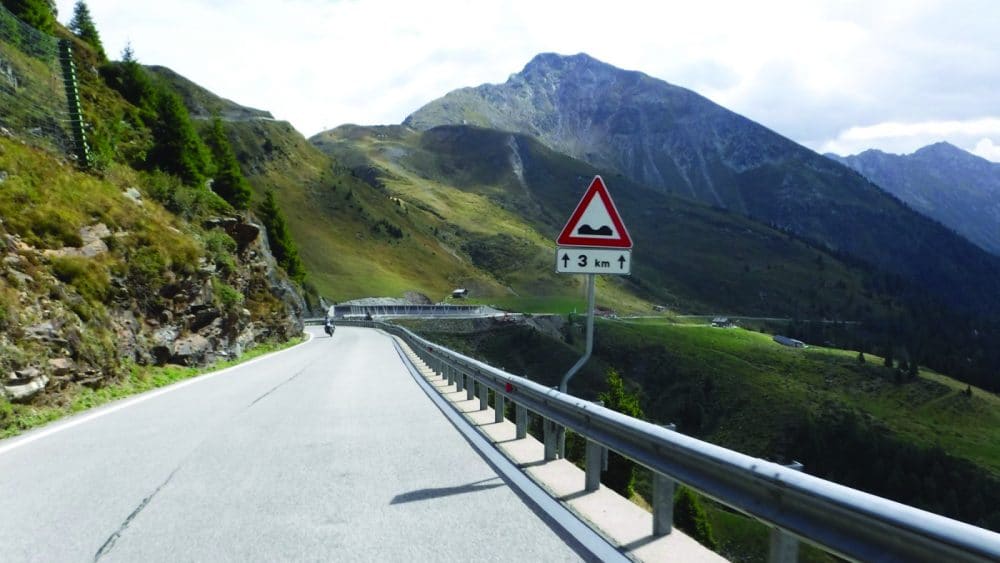
Mountain passes, both in the Alps and Pyrenees, can vary tremendously in terms of traffic, road surface, severity of corners and width of carriageway. If a pass crosses a border, then you can often tell when you’ve moved into a new sovereign land not merely by noting the abandoned check-points, but from the sudden change in tarmac quality. Italy – I’m looking at you.

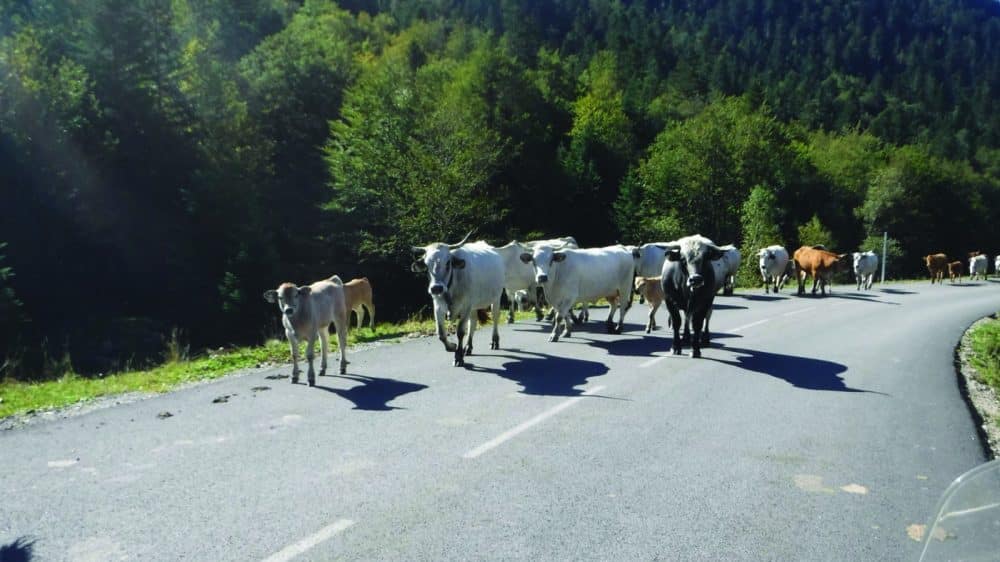
You might also find that a pass that was all flowing, well-telegraphed bends on smooth, wide, empty tarmac on one side of the mountain becomes a treacherous, single-width goat path with, in many cases, actual goats waiting for you on the other side of a blind hairpin. Cows, too, are frequently to be found enjoying the tarmac and evidently doing their best to cover every square inch in dung as they move up the mountain.

Tunnels are frequent and sometimes many miles long, offering a welcome respite from hot or wet weather. But beware – the smaller ones sometimes feature unexpected livestock seeking shelter from the rain, whilst the larger tunnels often sport surprise toll booths on the other side. The remote operators of these booths apparently subscribe to the very American idea that getting a foreigner to understand you is merely a matter of shouting more loudly at them, in this case through a tiny little speaker. It’s ok though; after a while they seem to give up and let you through anyway.

Choice of bike is important for a trip like this. A 100-mile tank range is insufficient, as taking the scenic route can easily mean fuel stops are necessarily further apart. Sportsbikes – even those with raised bars – simply aren’t comfortable for consecutive 10-hour riding days, and the rest of Europe seems to agree. We saw just two fairing-clad travellers in two whole weeks on the road. BMW has half the market sewn up with R1200GS’s littering the slopes and K1600’s and S1000XR’s dotted around liberally to break up the monotony. Harley-Davidson is clearly doing very well in Europe, with an easy third of our fellow bikers having chosen the bar-and-shield brand for their twisty, mountain adventures. Honestly, it was impressive to watch – limited ground clearance simply means your lines through the hairpins have to be spot-on.

But adventure bikes of all shapes and sizes are clearly the weapon of choice for travellers of all stripes. I finally discovered where all of Suzuki’s European V-Strom 650’s have been hiding – they’re all in the Alps, making the absolute most of their modest horsepower to embarrass their better-heeled brothers and sisters. More than once I wished I could hand out TVAM business cards as I overtook well-financed yet dangerously-unskilled riders on my way up a mountain. With cornering lines like that, they may well find their ride back down the mountain takes considerably less time than they might have previously expected.

No matter what you ride, make sure that you have a firm set of low-speed riding skills under your belt before you venture into these mountains. Some hairpins are closer to uphill u-turns than any of the bends you’ll encounter on our comparably flat little island. Also, ensure you have enough power and confidence to execute overtakes on relatively short pieces of road, or you may find a wonderful stretch utterly ruined by the maddeningly slow Fiat or Citroen blocking the view ahead.

Being comfortable on loose surfaces would be advantageous too. More than once we found the Spanish mountain roads strewn with gravel and at one point the racetrack-smooth tarmac simply stopped mid-way through a fast right-hander, becoming a genuine hard-core gravel track. My V-Strom took it all in its stride, but Jasmine on board her Fireblade was unamused.

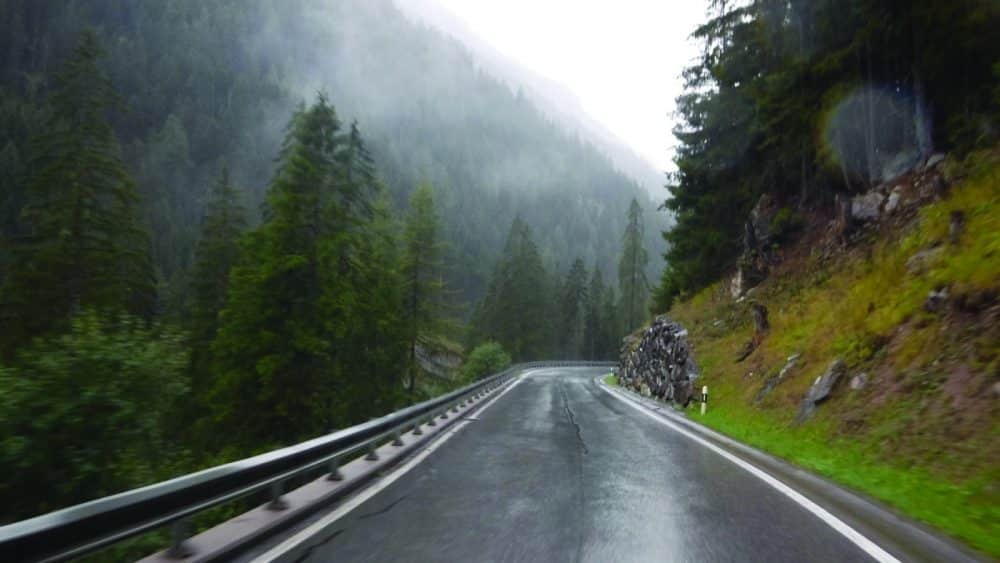
Others may disagree, but I also recommend that you stick to a full waterproof textile suit for a trip like this. Leathers and waterproofs may be your preference for an unavoidable shower, but up in the mountains it’s easy to be caught by surprise. In the space of ten miles we went from sitting outside a café drinking hot chocolate in the sunshine to peering through dark clouds at flooded roads on the side of a mountain. If your default gear is already waterproof you can just ride on but anyone who needs to stop to get changed will already be soaked by the time they find somewhere safe to pull over. Heated grips can be most welcome, even in September.

Down in the foothills of Spain however, you’ll wish they were electrically cooled as well. Even in mid-September, and even in the hilly north of the country, we were consistently suffering high 20’s, with a genuine 33ºC predicted for the day after we set sail from Bilbao. A friend from Portugal had previously advised me that, should I wish to venture any further south, I should restrict my plans to early spring at the latest, and I think I can see why.

If you’ve never travelled in Europe, you’ve really got to get out there. TVAM runs a number of trips each year, with several specifically designed for first-timers to get their first taste of riding on the right. And it’s really very easy, and relatively inexpensive – the Eurotunnel is around £80 return for bikes and even less if you’re going for five days or fewer. Weekend trips are doable and your range only increases if you can get a Friday or a Monday off work too.

Travel light, take a toolkit, keep your smartphone charged up and enjoy Europe before they decide they don’t want us difficult Brits visiting anymore.

Nick Tasker

First published in Slipstream July 2019

Hot Weather Riding Tips

  •  Make sure all your helmet vents are open. The forehead is a major site of sweat glands (along with hands and feet). Take your lid and gloves off immediately when you stop.
  • Airflow next to the skin is critical, so lots of vents and a loose fit works best. This is why textile kit will keep you cooler than leathers (take the lining out, obviously). Leathers can create a boil in bag effect unless vented.
  • If you’re wearing loose textile kit, wear a specialist sports t-shirt underneath to wick away sweat and maximise cooling.
  • If you really suffer, wear a cool vest like BMW’s Hyperkewl, or Revit’s Cooling Liquid Vest.
  • If you’ve got a Camelbak system, drink little and often. If you’re wearing leathers it won’t stop your temperature rising because your sweat is not able to evaporate, but it will delay the onset of dehydration.
  • On trackdays, drink a lot between sessions; on road, at every petrol stop or break.
  • Don’t drink strong coffee. It’s a diuretic, which means it causes you to lose body fluid. Weak coffee and tea probably has a net benefit, but water is much, much better.

First published in Slipstream July 2019

Welsh Frolics

Well, despite the discouraging forecast, 8 hardy souls set out from the H Café in the drizzle to brave the Welsh hills.  Upland roads were avoided as these would have taken us into the cloud, so we stuck to the valleys and enjoyed practising smooth riding skills all the way to our hotel.

The next morning was dry in defiance of the forecast, and regrets about abandoning the Dawn Raid were expressed by some. A lovely ride along the Elan Valley and even a dry(ish) run on the famous Newtown to Crossgates road.

A picnic in the garden of the still-closed Radnorshire Arms, then a race to get home before the next bank of rain came in all added to a great few days on the bikes.

Ken Jeddere Fisher

First published in Slipstream July 2019

Sammy Miller’s aka “Cake Heaven”

The Sammy Miller Motorcycle Museum is probably “one of the premier bike museums in the country in terms of the quality and provenance of the exhibits.”

I wouldn’t know, I didn’t go in. I was very happy looking at the array of cute animals in the car park, and the birds as you walked into the compound. I was even happier when I turned right and found some of the most amazing cakes I’ve ever seen.

The outside tables were full of half eaten cake; it was a cake graveyard, so upsetting. Being a cake lover, I didn’t understand why there were so much wasted cake. Until I spent 10 minutes choosing my cake, 20 minutes attempting to eat it all, only to fail and put the rest in my tank bag, covered up in a takeout box.

If anyone wants to know what the museum is like, you’re going to have to ask someone else. I honestly have no idea.

Now the important part is down, let me get onto some of the details of the Steve Harris, Sammy Miller B run. We met up at Blackbushe airport, and had a pit stop at Little Nellie’s Diner in Kingsclere to collect a few more. With a total of 15 riders we headed for the New Forest via the twisty route. It was my first time through the New Forest; I didn’t expect to have to stop to allow cows to cross the road.

Anyway, we headed for our lunch stop, The Cliffhanger Café in Christchurch. The food was amazing. I would highly recommend their mussels. The view was stunning and the roads were fantastic.

Once we were fuelled with food we actually headed for the museum, or for me – dessert. The boys and girls got to play with old bikes, whilst I had cake and a nap.

The ride back to Reading had much more pace to it, albeit still stunning roads. The ride was respectful to others abilities and it was a pleasure to ride with everyone. I would definitely go there again –the cake was that good.

Oh, if anyone is wondering what happened to the rest of the cake, it thankfully survived the journey home and was very much enjoyed the next day.

Paula Nash

First published in Slipstream June 2019

Sunshine, Marshmallows & Chocolate*

It seemed like a good idea at the time, volunteering to help man the TVAM stand at the MCN Festival in Peterborough, with free camping thrown in. Kelly and I met up with Cheryl for the ride up to Peterborough, with Kelly agreeing to lead the way, as I can’t navigate to save my life!  After an uneventful ride up, we arrived at the showground, found our spot in the Clubs area and pitched tents.

We were soon joined by Phil, in the car and towing a trailer. The car and trailer turned out to have been previously owned by Dr Who as out came a tent, then another, then a marquee, then a gazebo, then a windbreak, then the TVAM sail flags. These were soon followed by enough camping equipment to support a Scout jamboree (tables, cooker, air mattresses, cool boxes, sleeping bags). Once all this was pitched/ raised/ setup, the Tardis then produced a BMW S1000 XR which Phil had picked up only a few days before. “I have some bits to fit onto this over the weekend,” he said smugly. With everything set up, we retired to the Moose Bar where we were later joined by Tony who had left Reading after work.

On Saturday morning, we set up our stand and waited for the crowds to flock to us, all eager to sign up. That was the idea, anyway. The weather was against us with rain putting off the hordes and we just talked bikes with the people who did stop. Phil decided it was the ideal opportunity to start “fettling”, oil cooler and radiator guards first. After 5 hours, much laughter and p**s taking, he had finally got them fitted – R&G have a lot to answer for!

There were fleets of demonstration bikes from all major manufacturers just waiting to be rid

den. Cheryl went off to test ride a Monster 797 (“totally different to my Hornet, would need more time to get used to”), Kelly rode a Zero electric bike and Tony rode an Indian Chieftain (“very nice ride, light feel into corners, great look, nice sound but very jerky in corners”).

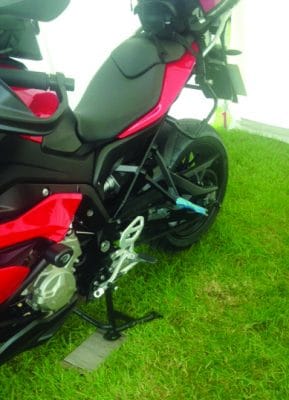
Whilst they were away, Phil decided that he would fit his new levers next. Unfortunately, he didn’t offer them up first and, having fitted the clutch lever, he realised that it wouldn’t clear some of the switches and dials on the bars, so every time he pulled the clutch in, his headlight would flash – back on with the old one! It was about then that I noticed that he was missing a pillion peg and mentioned it to him. He then proceeded to blame either Tony or me and thought we were holding it to ransom**. The banter lasted all weekend and I ended up making one for him out of twigs and Duct tape so he would feel better (see photo). ***

We were joined then by Andy, Ness and Andy’s son, Sam. They went to pitch their tent near ours, only to realise they had left the poles behind! One trip to Argos later, one new tent.

We all took turns to man the stand whilst others went off to visit the various trade stands (clothing, tools, manufacturers, moto jumble, usual show fare) and the club stands (mainly owner clubs, Honda, Ducati, 2-stroke, sidecars, Valkyries, etc) and Cheryl test rode a Honda CB1000R (“loved this bike, definitely one I’d consider in the future”) with Andy and Ness booking test rides for the next day. Phil fitted a fender extender and crash bungs and we all went for some light refreshment then turned in for the night.

On the Sunday, I got up early to book some test rides, but, being an advanced rider, I soon decided that someone else’s brand new bikes and a raging hangover do not mix! We again set up our stand, welcomed by glorious sunshine and bacon sandwiches. There seemed to be more people around. We also met Ross, who was up for the day, and who had just signed up for TVAM’s RideUp scheme. Andy and Ness went out on their rides and Cheryl came back infuriated (apparently the test ride she had booked with Honda had left 10 minutes earlier than scheduled).

During the morning, we all helped each other pack up and, with the show closing, we left about 3pm for the ride home. I got back around three hours later, tired but very contented. I think I can safely sum the weekend up with Tony and Cheryl’s comments: “great company, new friends, laughter and fun,” and I think we are all up for it next year!

*Yes, I know, I didn’t mention the marshmallows and chocolate, but they were in the mix somewhere

**Phil’s BMW dealer has since apologised for leaving the footpeg off and is sending it to him

***BMW have now offered me a job designing the foot pegs for their new range of bikes

PS: Not all of this necessarily happened in the order stated as it’s all a bit of a blur, to tell the truth, but it did all happen at some stage as did a lot more besides! Come and join us at one of our future promotional events.

Ian ”Orc” Christopherson (who may or may not return the footpeg next year)

First published in Slipstream June 2019

3Rs go to the Yorkshire Dales (May 2019)

Say Cheese!  Maybe a little bit of Wensleydale?


Fantastic roads & scenery. Perfect amount of stops. The group I was allocated to was brilliant……lovely and thoughtful riders. Pleasure to be riding with them all.

The best days riding I have had in a long time, did not know these roads existed.

We were very lucky to have a group that bonded well, rode responsibly, respecting one another.

Fab roads…..amazing scenery. Plenty of stops. No pressure, very relaxed. Great day ….. considering I get a little anxious on technical roads, I loved it and it has helped my confidence massively.

Excellent routes, well led runs, spectacular scenery and riding challenges.

It was awesome. Challenging but rewarding.

Excellent, a surreal trip around some of the most beautiful and challenging countryside.

This was my first 3Rs trip so I didn’t really know what to expect but I had a fantastic few days and picked up some good advice to improve my riding skills.

As an Observer who doesn’t get to do much social riding I found the trip immensely rewarding and it reignited my love of riding.

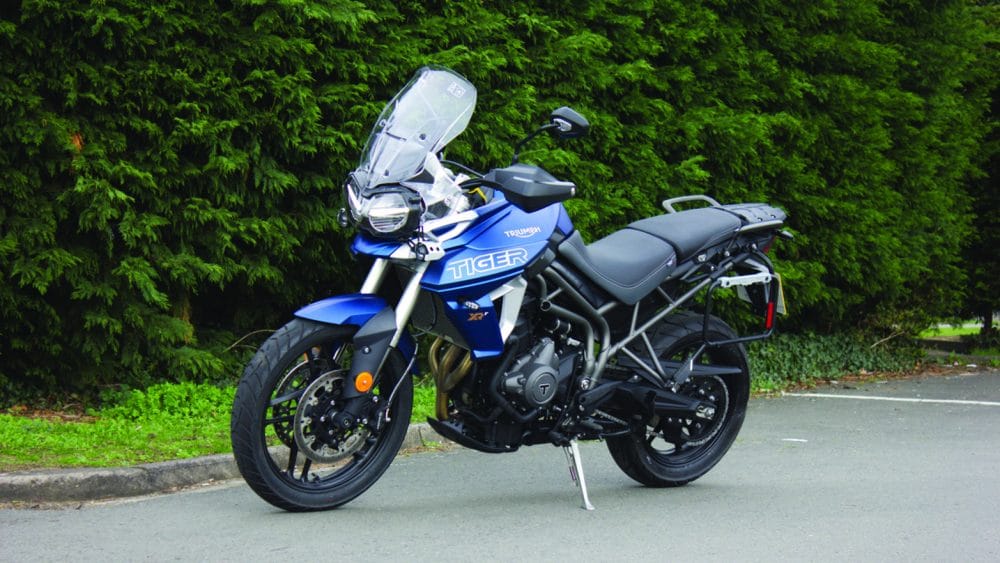
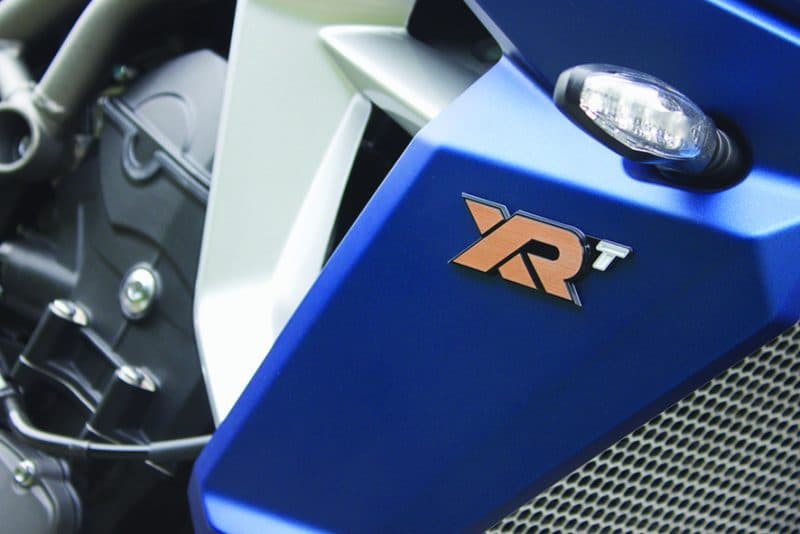
Triumph Tiger 800 XRT

It’s safe to say that Triumph and I have had our differences over the years. My 2013 Street Triple R is the only motorcycle I’ve ever bought brand new, and the brand’s response to my textiles scuffing the paint on the tank within a few hundred miles was that it was my own fault for not paying extra for the paint protection.  I paid many hundreds of pounds on maintenance to maintain the official service history during the first two years, and when I began to experience a hot-starting issue as the warranty drew to a close they refused to even investigate until I’d paid another £1,000 for the 24k service, 3,000 miles early. I gave my dealer the finger and did the work myself.

Beyond that, I’ve reviewed a number of Triumph‘s bikes in the years since, with mixed results. Still, time moves on and Triumph has been working as hard upgrading their Tiger 800 as I have upgrading my own V-Strom 650. Strange as it may sound, there are some things you can achieve with an entire engineering department, a couple of factories and hundreds of thousands of pounds that I can’t match with my meagre resources.

What’s more, contrary to the impression I may have given with the likes of my BMW R1250GS review, I’m not a complete technophobe. My disdain for the integrated electronic gadgetry increasingly infesting modern motorcycles is based on my overwhelming impression that they are primarily intended to improve manufacturer profit margins rather than the rider experience. In some cases, they actually seem designed to fix self-inflicted problems. For example, user-selectable engine or throttle modes (too much power), electronically-adjustable suspension (too much weight) and full-colour TFT dashboards (too many of the aforementioned throttle and suspension modes). It’s little wonder that many people are favourably comparing the genuinely old-school Royal Enfield Himalayan with bikes four times the price.

As a result, it was with mixed feelings that I took note of the newly-updated Triumph Tiger 800 at EICMA in 2017. In showrooms last year, it demonstrated that Triumph had spent the eight years since the launch of the original 2010 model nipping and tucking, rather than completely redesigning the bike. Some changes, such as the fashionable new TFT dashboard, I regarded with suspicion. Others, such as the new LED headlights, cruise control and upgraded front brakes were very welcome indeed, and I’ve been meaning to arrange a ride ever since.


But which one would I buy, in theory? Like many of their European competitors, you cannot simply walk into a Triumph dealership and select a bike anymore; you also need to choose a trim level and then pick from a list of optional dealer-fit accessories. A lot of glowing reviews from professional journalists fail to mention that the version they enjoyed on the press launch would cost a paying customer thousands and thousands of pounds more than the advertised retail price.

A base-model Tiger 800 XR can technically be bought for £9,200 but this is a price-point model so poorly equiped that even Triumph doesn’t expect anyone to actually buy it. Choosing the XRX version instead adds another £1,500 to the price tag and the XRT you actually want is almost £13k with a set of crash bars fitted. Adding the three-box luggage set means you’ll be riding home with a £14,000-sized dent in your wallet. Given my well-documented history of criticising the likes of BMW and KTM for similarly inflated pricing, why would I even entertain such an expensive motorcycle?

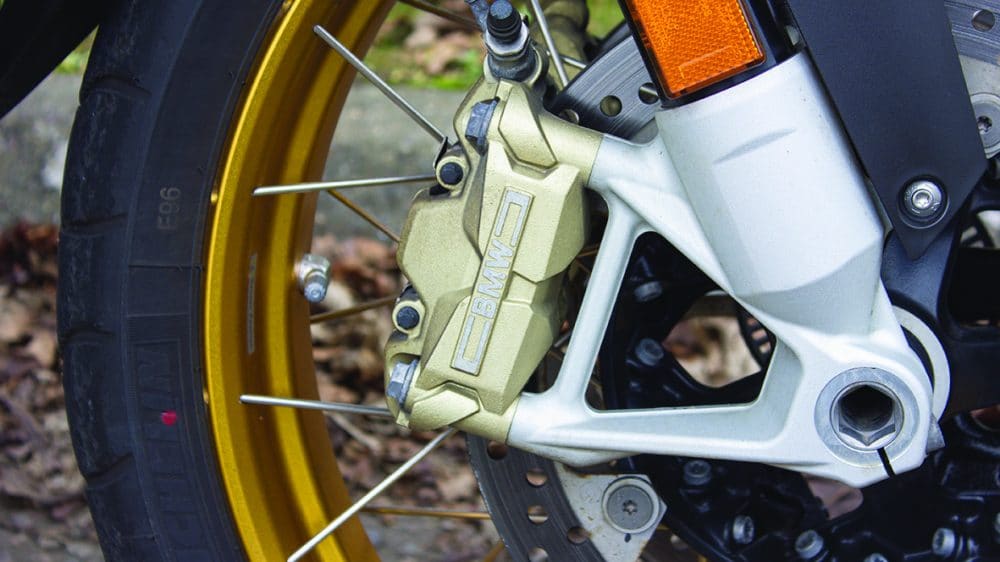
Setting aside the substantial price tag for a moment, we could have a perfect V-Strom replacement on our hands here. Regardless of trim level, you get very similar weight and dimensions as the Suzuki, the same cast 19″ / 17″ wheel combination, good weather protection, and a comfortable, upright riding position. Assuming you ignore the bare-bones XR trim level you get higher-spec Brembo brakes on the front wheel, solving one of my main criticisms of the original bike by dramatically improving braking performance. The suspension is also of higher quality, and Triumph claim to have improved the fuel economy through internal friction reduction and throttle management.

Spend enough money to get the top-of-the-range XRT model and you and your passenger are treated to heated seats, with the rider enjoying heated grips and full LED lighting. Many of the upgrades I made to my own V-Strom 650 (and would make to a new V-Strom 1000) are now standard-fit on the Triumph with other niceties such as cruise control, back-lit switchgear, tyre-pressure monitoring, self-cancelling indicators and traction-control thrown in for good measure. What the Tiger 800 lacks compared to its German, Austrian and Italian rivals is electronically-adjustable suspension, keyless ignition, hill-hold assist, a quick-shifter and an electric screen. For me, at least, that means it offers everything I want, and nothing I don’t.

Of course, if you’re of the 21″ wired-wheel persuasion there’s a mirrored set of trim levels available for you with the XCX and XCA versions. You also get slightly higher bars, a skid plate and taller, softer WP suspension.

Personally, I wouldn’t bother; the bigger wheels are heavier, blunting braking and handling considerably, with the only advantage being greater resistance to damage from high impacts off-road. But let’s be honest, here – if you’re taking a 230kg motorcycle out where that sort of situation is likely, then dented wheels are the least of your worries. Buy a Honda CRF250L instead.

Before I hit the road, I had the Triumph salesman take me through the new full-colour onboard computer – it took nearly twenty minutes. There are four riding modes, each of which can be customised with varying levels of traction control, ABS, several throttle maps and even three different dashboard layouts. While tachometer, speedometer, current gear, air temperature and time of day are ever-present, a small joystick underneath the indicator switch allows you to toggle between two trip meters, each with average and real-time fuel economy and range, coolant temperature and more. Separate buttons switch through the various heat levels for heated grips and seats, riding lights can be switched on and off, and cruise control can be enabled and adjusted in 1mph increments all the way down to 30mph.

I strongly recommend anyone buying one of these to set aside an afternoon with the owner’s manual to learn how to access all the various pieces of information, but it’s certainly true that you could simply hop on and ride the bike as-is. The default Road engine mode, unlike on many bikes, is just fine and the factory suspension settings are well judged across a variety of surfaces, something that can’t be said for many, far more expensive, systems. The brakes are good, if not quite as sharp as a set of four-piston calipers would be, but are nonetheless a far cry from the wooden, squishy mess that most two-piston systems offer.

The touring windshield fitted to the XRT is adjustable by grabbing it with one hand and then pulling it up or down and in the highest position is almost tall enough to push turbulent air right over my helmet. A clever arrangement of winglets, designed to work in conjunction with the mirrors and handguards, means that there is zero buffeting around the sides, suggesting that we finally have a maker who is paying attention to something the aftermarket has been fixing for years.

Throttle response is much improved over the first-generation Tiger 800, the new ride-by-wire system smoothing out the off-idle throttle transition extremely well. Even Sport mode is not as snatchy as the previous cable throttle and there’s noticeably more bite to the power delivery as you climb up the rev range. One downside of a fully electronic throttle manifests itself as a slight dip below 4k, as though the computers are just taking the edge off my inputs in order to satisfy noise and emissions requirements.

A look at a dyno chart reveals something else interesting however: a horizontal line as soon as the output hits the 94 horsepower mark. That is the maximum allowed if you want to be able to restrict a bike for 47 horsepower A2 license holders and the ECU is clearly holding power steady from this point on, even as the revs rise the rest of the way to the redline. It honestly looks like there’s another 5-10 horsepower waiting at the top-end for someone who’s willing to visit their local tuner and have such restrictions removed.

Beyond that, the riding experience is rather unremarkable, which can be taken as a compliment or a criticism, depending on your point of view. A snarling, roaring beast of raw fury and adrenaline the Tiger 800 is not, though there’s significantly more character than there was in previous models. Build quality on modern Triumphs is generally very impressive; fasteners are stainless steel by default and metal finishes are tough and should shrug off a salty winter with aplomb. Painted plastics still scratch like any others so it will be interesting to see how the optional matt blue paint would stand up to daily use.

Fuel economy was mid-50’s on my relatively conservative ride. My father was able to average better than that over two years on his 2012 example and Triumph claims that significant improvements have been made since. Controls are of good quality and satisfying to use, with the possible exception of the indicator switch; the fashionable modern microswitch design means that it barely moves when you press it, much like on modern BMWs. In thick gloves, it might be hard to tell whether you hit it or not. Another odd move is that both heated seats are now adjusted via the handlebars, which means that your pillion will have to tap you on the shoulder if their bum gets cold.

Ergonomics are good, although with my short arms I’d ask my dealer to fit a set of risers to the handlebars. Lower seats are available for the short of leg, although you’d lose the heating option, and all seats have two different height settings that can be switched without tools. For the truly vertically challenged, you can even order a version of the Tiger 800 XRX with lowered suspension, although ground clearance suffers and a centre stand can no longer be fitted. I’d encourage interested parties to try the low seat first – it makes a big difference. With my 30″ inseam I actually found the standard seat in the high position to be perfectly manageable, with the added benefit of reducing the bend in my knees.

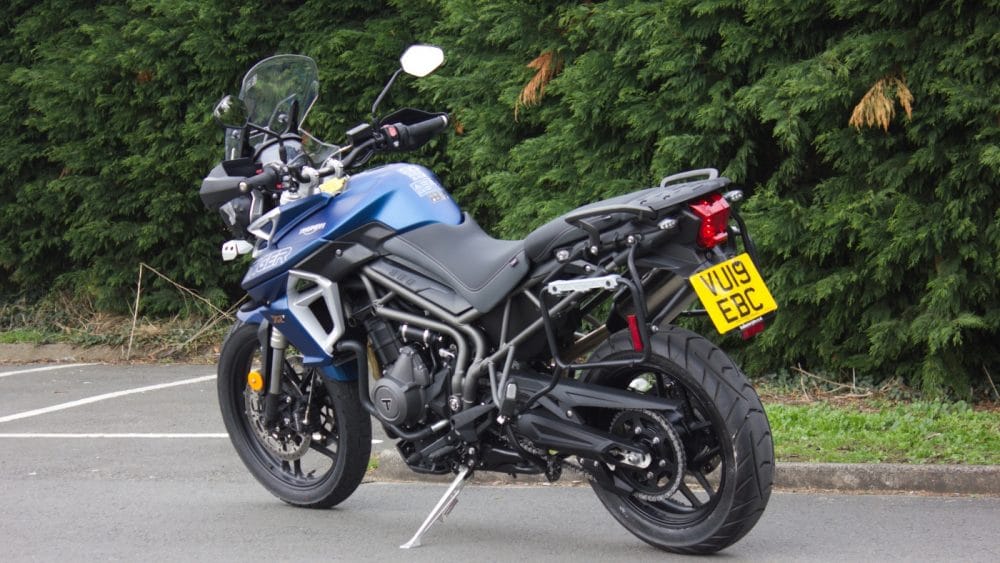
Aesthetics? Well, adventure-tourers are never going to be the prettiest of motorcycles; upright riding positions and tall fairings/screens can make for ungainly proportions, although Triumph‘s designers have done their best to build a very angry, angular structure into the front end. The matt blue paint on my tester looked even better in the flesh, and the metallic silver or white, which are the other two options at this trim level, look suitably sparkly in the sunshine.

Behind the tank, things quickly descend into a mess of scaffolding and black plastic, with the seat floating on top as though the designers just sort of gave up half-way through. What’s more, choosing your colour has no effect on any part of the rear half of the motorcycle. Still, I’ve seen worse, and there’s no denying the practicality of having so many bungee points available. I’m sure the Italians would be horrified at the focus of function over form, but I could probably learn to live with it.

At the end of the day, I find myself rather taken by the Triumph Tiger 800 XRT. Sure, it’s expensive – a full £2,000 more than a Suzuki V-Strom 1000, which is a closer match in terms of power, suspension and braking performance. But I have to say, you do get quite a bit for your money – the materials and construction on current Triumphs simply ooze quality.

As for me? Well, I’d have to make a choice. The base-spec XR model almost achieves price parity with Suzuki’s V-Strom 1000, though with its more basic brakes and suspension it can’t quite match it for performance and loses much of the electronic gadgets that would make the Tiger 800 such a nice bike to live with. Where the Suzuki really wins, however, is simplicity and reliability.

The last chinks in the Triumph‘s armour are the running costs. The official maintenance schedule dictates minor services at 6,000 miles, with prices between £300-400 for each visit. At 12,000 miles the checklist for the mechanic is extensive, and includes an extremely time-consuming check of the engine’s valve clearances. Assuming everything is in spec, you can expect a bill of around £800, and it gets far worse if any of those valves actually need adjusting.

I suspect that most Tiger 800 owners cover more than the UK-average 4,000 miles per year, so it’s worth doing some calculations to determine just how expensive things could get for you before signing on the dotted line. At my rate of 25,000 miles per year, I’d be looking at paying my local dealer a hefty £2,400 annually just to maintain the warranty. I’m sure you can see why I tend to do my own servicing these days.

Like my own V-Strom 650, a new V-Strom 1000, or any of the other 800cc road-focused Adventure-Tourers, the Tiger 800 XRT is an effective way of crossing countries quickly. The top speed won’t make headlines, but the focus on rider comfort and compliant suspension matched with a real-world fuel range approaching 250 miles per tank means that the miles just fly by.

Cruise control takes the stress out of the motorway stretches, and the wide bars and light handling make easy work of curvier roads. By focusing on genuine, practical improvements rather than flashy but marketable gimmicks, Triumph have succeeded in turning the previously disappointing Tiger 800 into a motorcycle I can wholeheartedly recommend. I can give no higher praise.

Nick Tasker

First published in Slipstream June 2019

Triumph to BMW – What was I thinking?

I have been riding Triumph Tigers of various descriptions for 25 years. I have covered many thousands of miles on my various Tigers, and every time I have changed, I have used the opportunity to try other similar bikes and to be happy in my own mind that I was still happy with my choice of ride. I also had a very good relationship with Bulldog Triumph and their chief mechanic, Chris Powers, who has been looking after my Tigers for all that time.

So now I have switched to an R1250GS Adventure. For a start, my last two Tigers were Explorers and they are really nice bikes, and plenty powerful enough, handle well, brakes are ok, and good fun solo, but a bit top heavy with a pillion on board. So I have a new girlfriend who likes riding pillion, therefore my new ride had to be more pillion friendly. I tried the new Tiger 1200 which didn’t feel a great deal different to the older Explorer. Yes it had a fancy digital display, better brakes, semi-active suspension and a reworked version of that lovely triple engine, but it still felt the same.

I then tried the new R1250GS Adventure. That also has a fancy digital display, active suspension, a reworked engine, brilliant brakes etc. etc., but it feels very different to the Tiger. The biggest difference is the weight. Yes, on paper, with a full tank of fuel (30+ litres) it is physically heavier than the Tiger (which is now lighter than the Explorer), but it doesn’t feel it. Not even pushing it around. Riding the BMW, it feels even more balanced, especially with my girlfriend on board.

It also has that wonderful tele lever front suspension, and linked brakes that I really like, and a better mounting for the GPS (the new Tiger has the mount on the handle bars which precludes the use of a tank bag).

So I bought one.

I have now done 1500 miles in all conditions, and do I still think I made the right move?

The BMW is a very comfortable bike to ride, very comfortable for my pillion as well. It is more economical than I was expecting, the suspension is brilliant, and the gearbox is very smooth (much better than the BMW’s of old.  I haven’t felt the need to change too much other than fit a taller screen. The Triumph engine is more exciting and doesn’t shake you from side to side, but the 1250 engine on the GS is more exciting than that on the 1200 – it has those few extra ponies in there.

I am not sure that there is much in it from the rider information. The Triumph display is adjustable, and you can change the display.  It is also getting connectivity like that on the BMW (but hasn’t been released yet), and the Triumph’s illuminated switchgear is neat, and an electric screen which is probably a bit of a gimmick (the BMW’s adjustable screen can be easily controlled on the move, by hand).

The only big downside of the BMW that I can see at the moment is the reduced service intervals (6,000 mile to Triumph’s 20,000) and that the dealer isn’t quite as close Bulldog.

Simon Whatley

First published in Slipstream June 2019

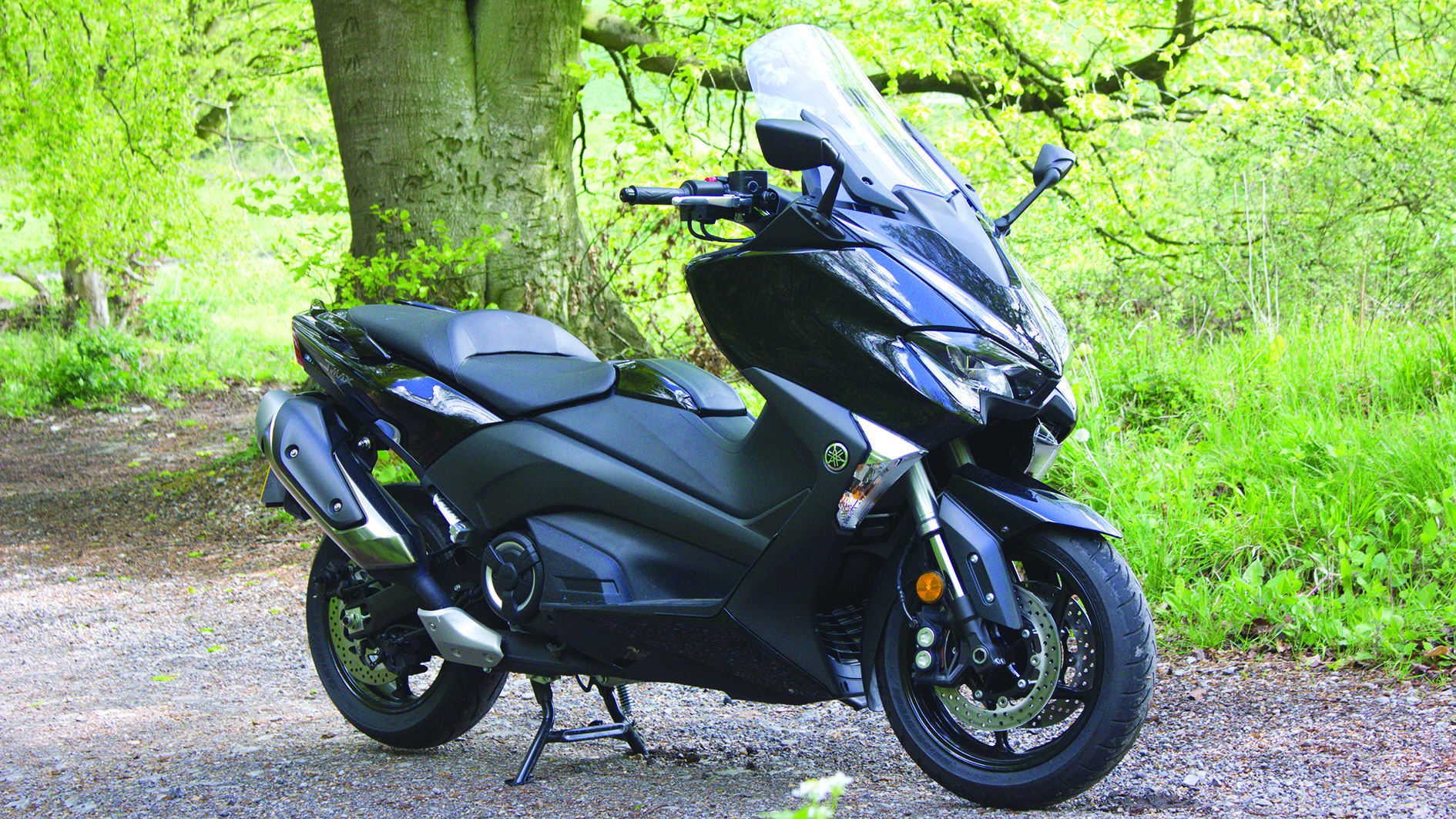
A Different Type of Riding (Part 4: 2019 Yamaha T-Max)

It’s been a little while since I test-rode any new motorcycles as part of my search for a comfortable, relaxing, low-speed, two-up touring bike. I wanted something with a feet-forward riding position, that could carry two in relative comfort while being sufficiently engaging that I wouldn’t mind the slower, more relaxed sort of riding that typifies my family tours. Frustratingly, it seems that motorcycle design has become extremely polarised, with manufacturers pushing their designs into increasingly narrow genres, and finding the right mix of price and features was proving increasingly difficult.

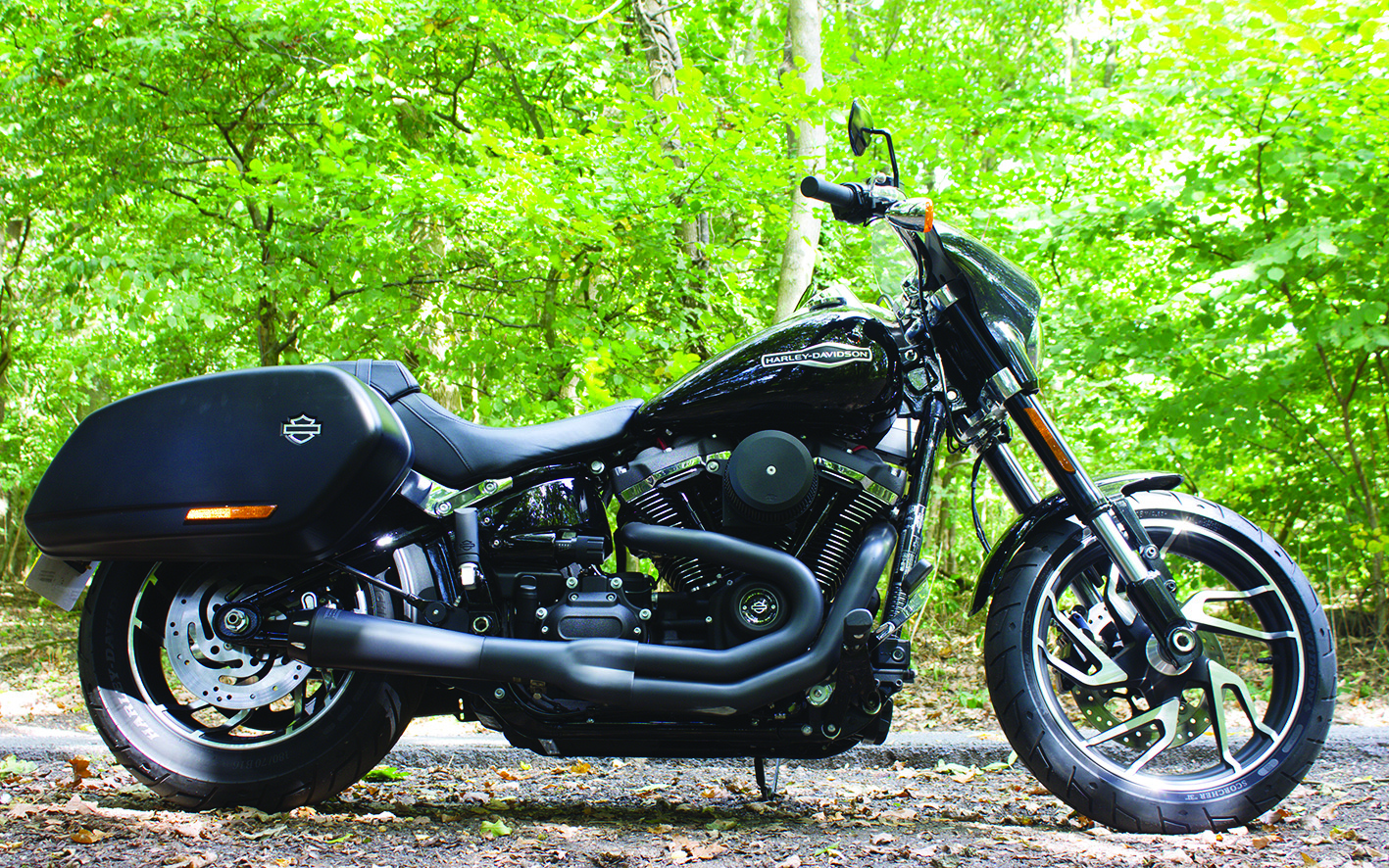
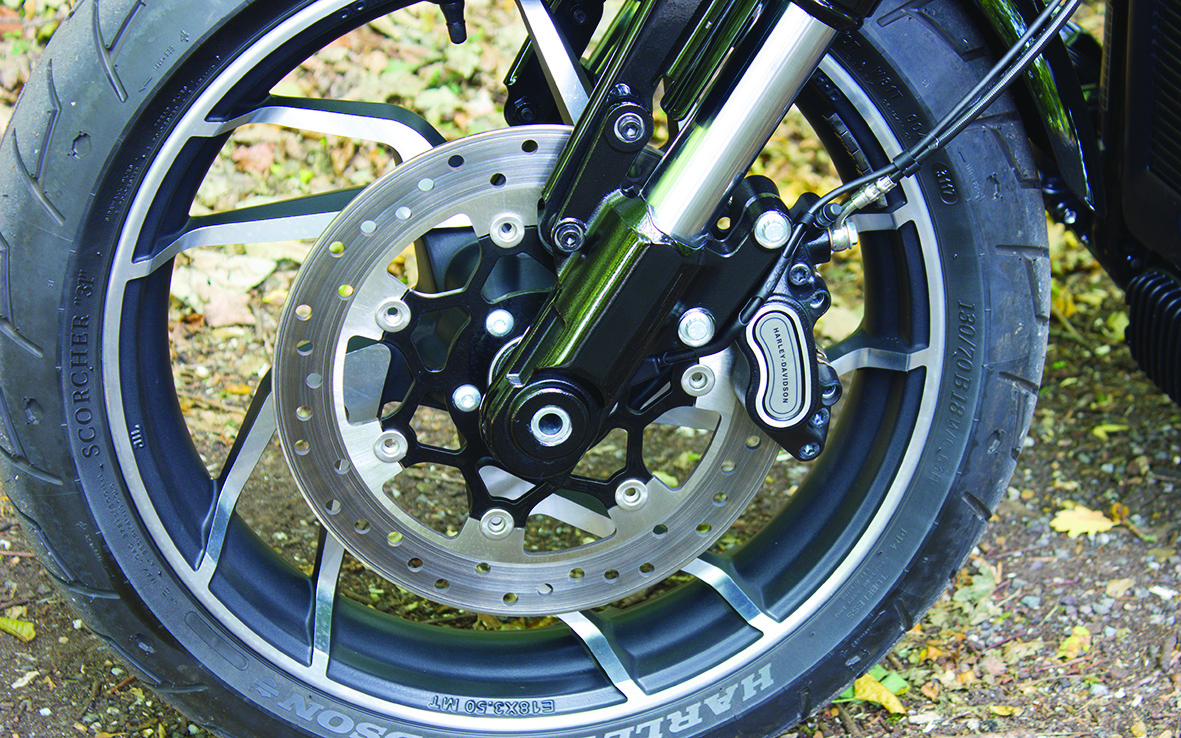
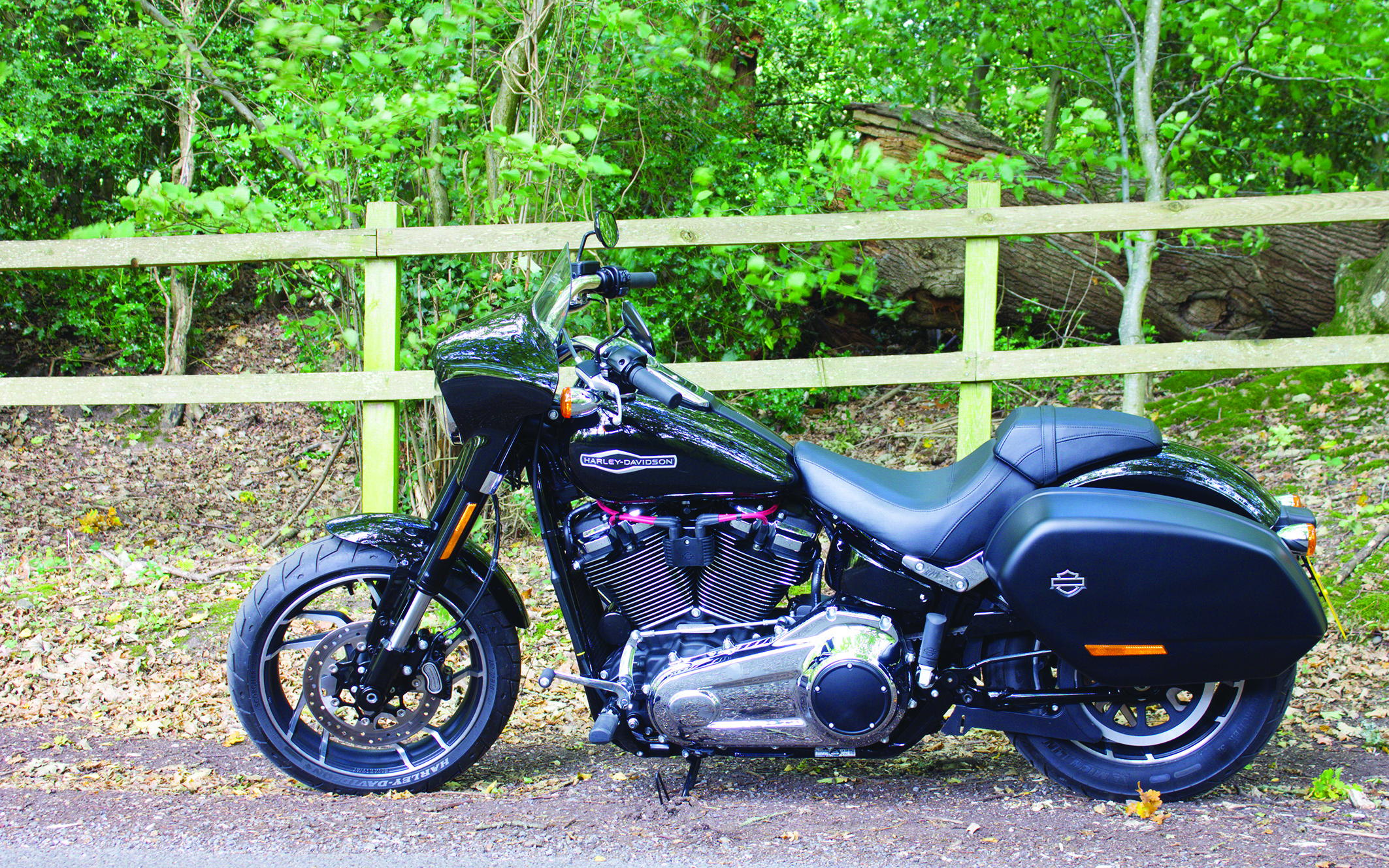
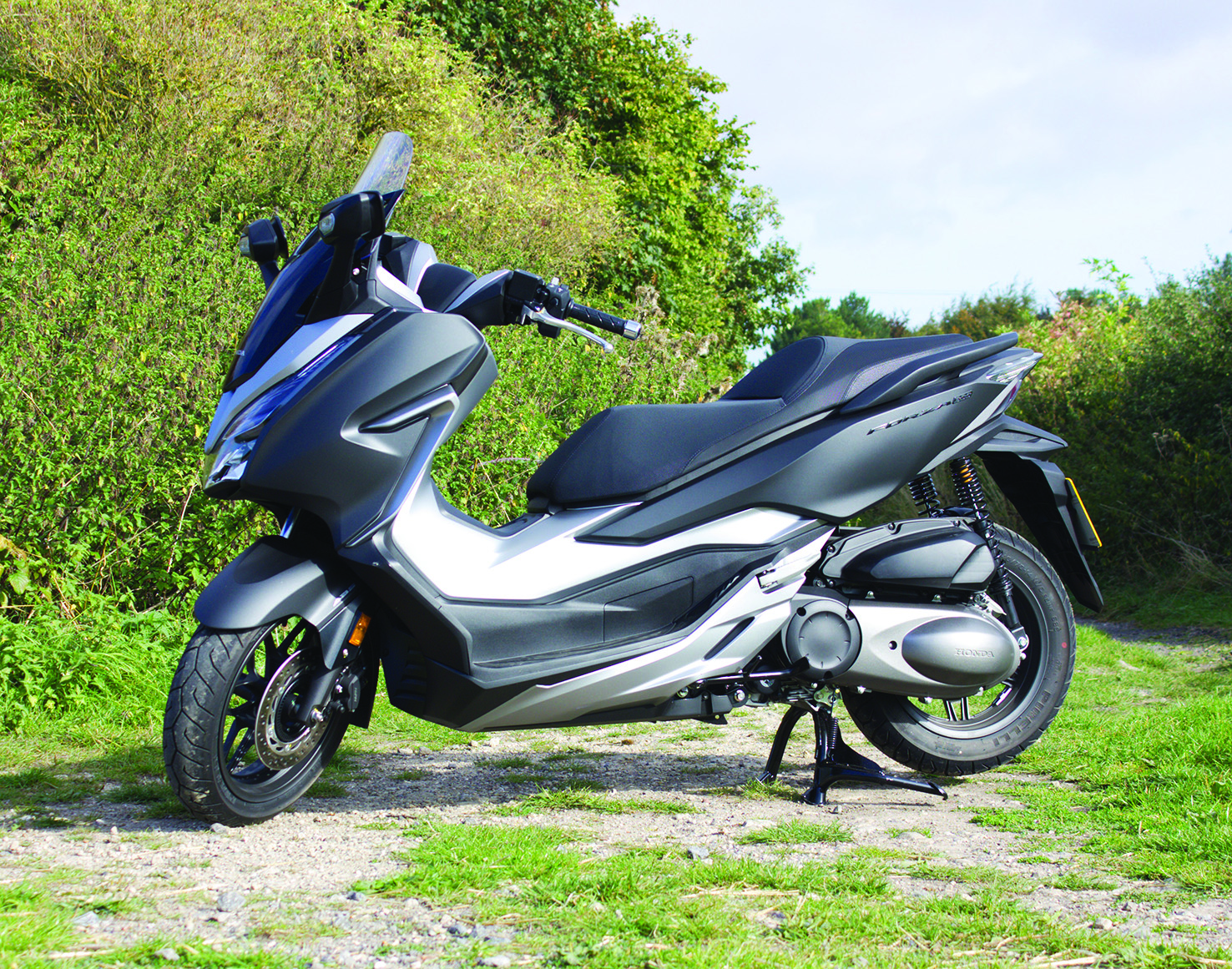
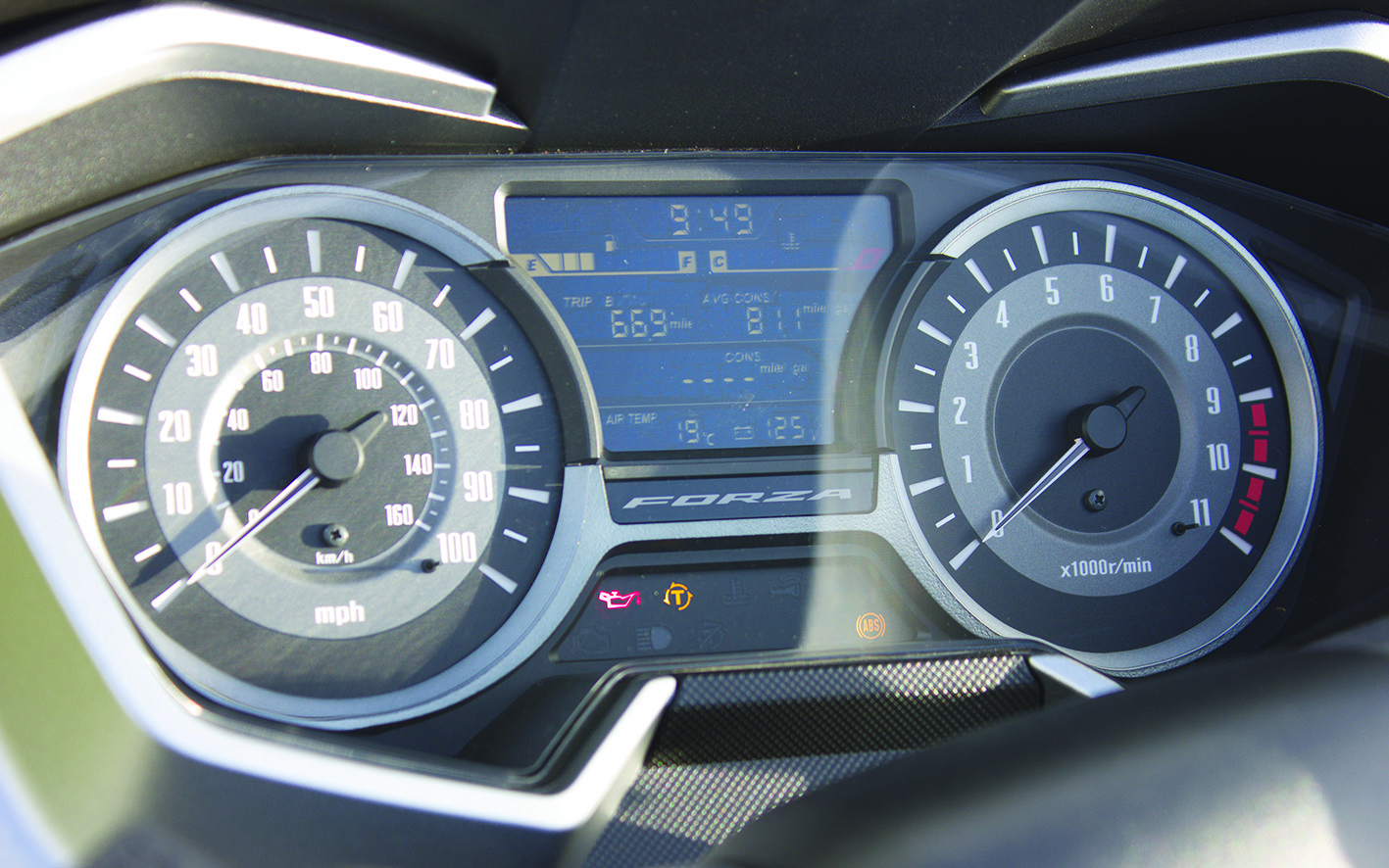
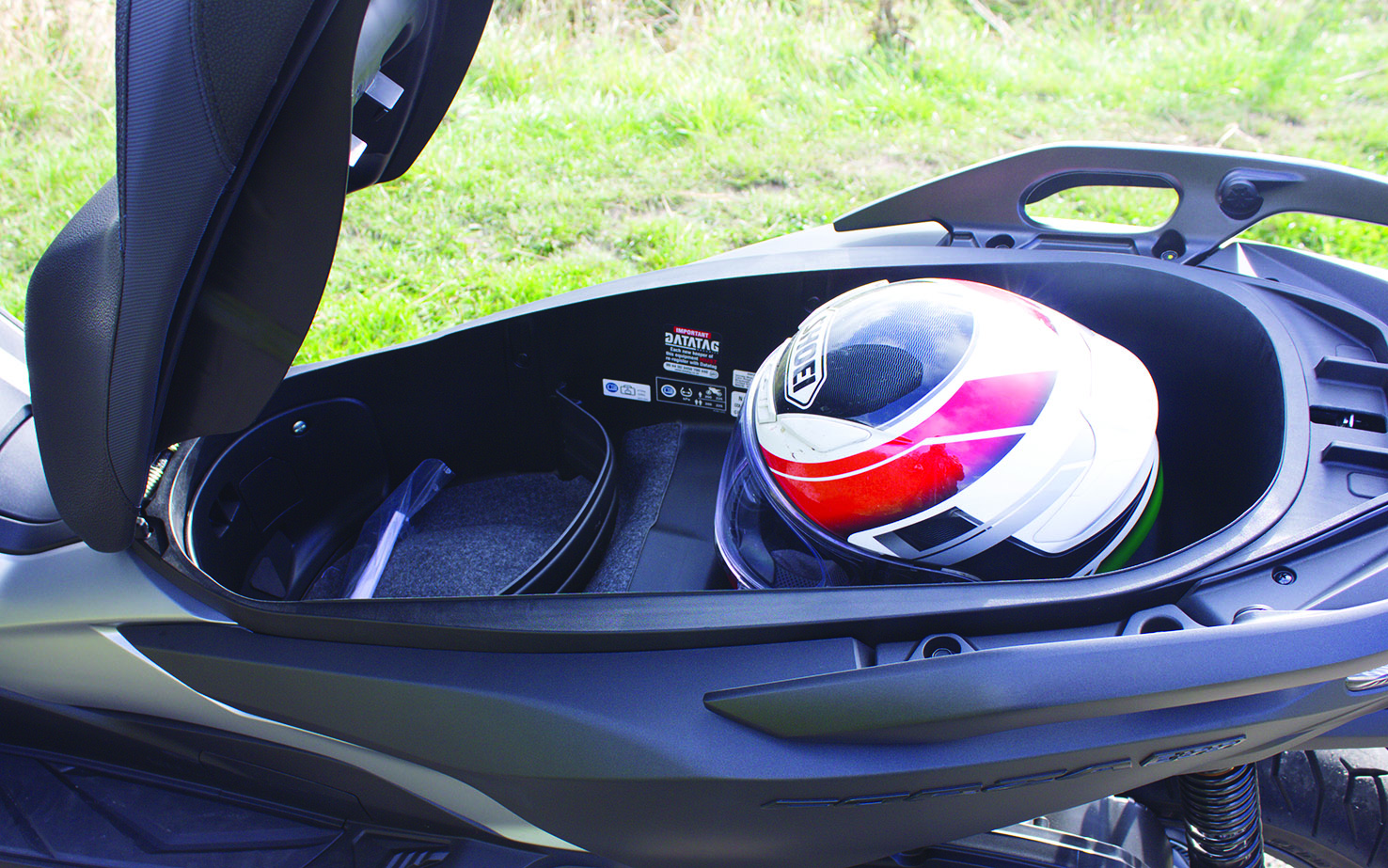
I started by giving scooters a go in the shape of Honda’s new Forza 300. Perfect on paper, the reality was a disappointment, largely due to the forgettable riding experience and unpleasant buffeting at speed. The next obvious contender for riders seeking a feet-in-the-wind stance were cruisers, exemplified in my case by the Harley-Davidson Sport-Glide. There was an awful lot to like – an engaging engine, comfortable ride, and lockable hard luggage, but a starting price of £15,000 proved too bitter a pill for me to swallow.

Other, cheaper cruisers are available, but pillion accommodations on smaller and cheaper models are clearly an afterthought. The attitude of both Harley-Davidson and Indian is that riders intending to bring company along on their adventures should be looking to their respective full-price, full-dress tourer ranges. Triumph is no better; I had high hopes for their new Speedmaster, but the brick-like pillion perch was vetoed by my partner after just a few moments’ seat time.

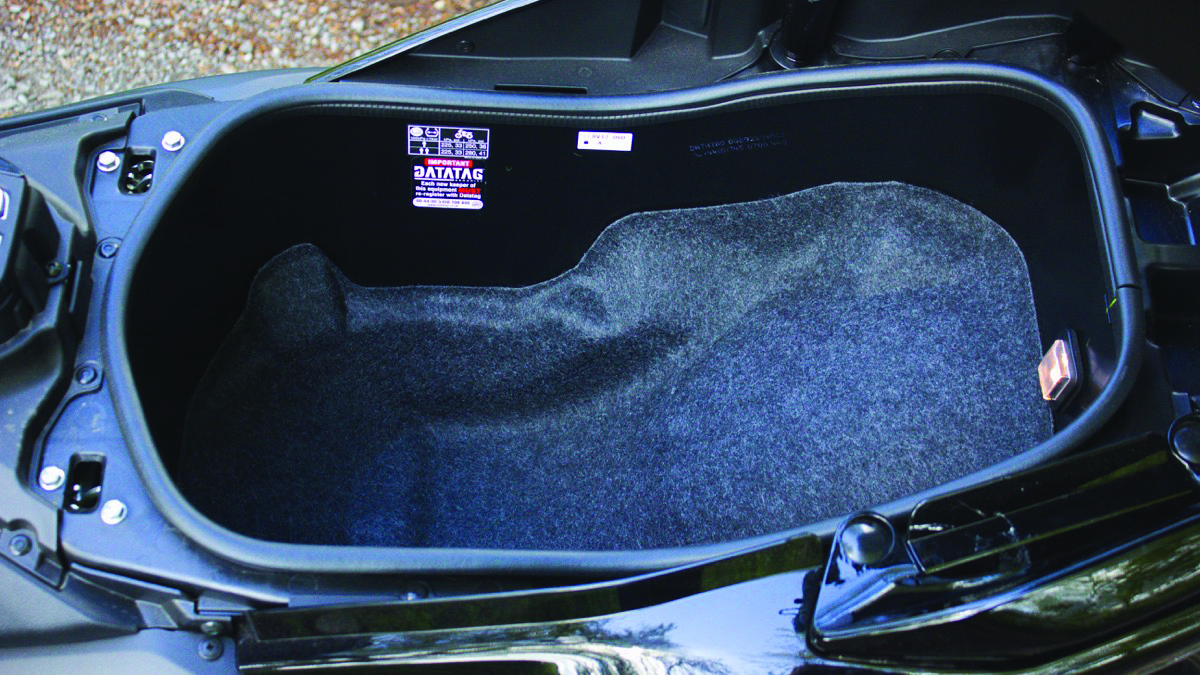
Yet even as I was forced to give up on cruisers, scooters kept pulling me back. I’d previously dismissed the larger Suzuki Burgman 650 and Yamaha T-Max thanks to their circa £10,000 price tags, but on paper, they really did tick almost every box. The bigger the scooter, the bigger the under-seat storage, with enough legroom to let you really stretch out. Top speeds north of 100mph as well as features such as cruise control, heated seats, and electrically-adjustable screens mean that these scooters begin to look more like half-price tourers rather than oversized city runabouts. Considered thus, the £10,000 asking price starts to look a lot more reasonable.

So, could a maxi-scooter do everything for me that a £15,000 Harley-Davidson Sport-Glide offered, but for several thousand pounds less? I zeroed in on the Yamaha T-Max first, its reputation as the better-handling of the big scooters giving it a better chance of meeting my exacting requirements. Confirming this proved a real challenge; none of the five Yamaha dealers I contacted kept a demonstrator on their fleet, the last finally suggesting I call the brand’s head office to track one down.

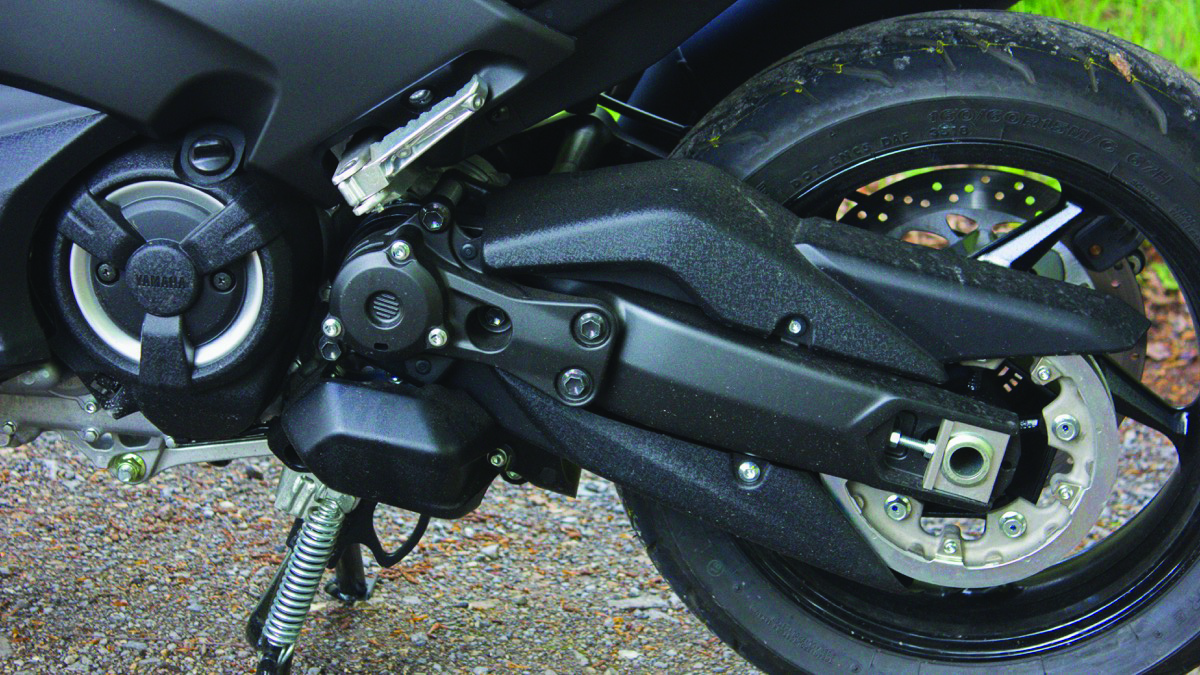
So what does your £10,000 buy you compared to, say, a Honda Forza 300? The extra 251cc of displacement doesn’t tell the whole story – it’s an under-square parallel twin rather than a single-cylinder engine, almost doubling the power output to an A2-compliant 45 horsepower. What you can’t tell without stripping away the bodywork is that, unlike smaller scooters, the T-Max’s engine is bolted to the frame, independently of the wheel and swinging arm. This arrangement matches conventional motorcycles, where the larger engines make the idea of mounting the entire powerplant as unsprung weight unpalatable.

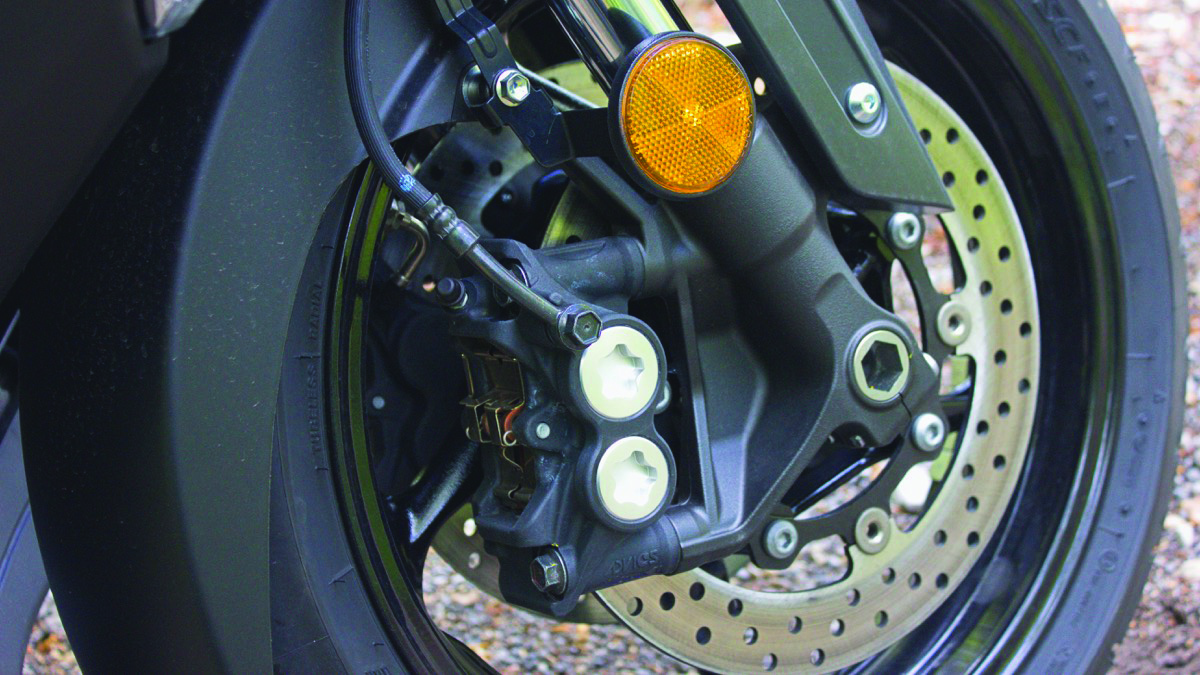
Yamaha has pushed the T-Max’s parallel twin up near the front of the bike and the entire powertrain lies completely flat under the floorboards for a kerb-scrapingly-low centre of gravity. A cruiser-style belt handles final-drive duties, and a stout monoshock is tucked up underneath. Front suspension is by way of a pair of upside-down forks with twin radial 4-piston brake calipers hanging off the bottom. And lest you think that Yamaha needed R1-spec stopping power to handle the excessive mass that maxi-scooters are famous for, the advertised wet weight is a mere 216kg – only 16kg more than the R1.

Weight, incidentally, that Yamaha claim is perfectly balanced fore and aft, in sharp contrast to most notoriously rear-heavy scooters. The result of this is that while the T-Max doesn’t handle quite like a traditional motorcycle, it comes incredibly close. The scooter feels light to turn in, holds a line with poise and doesn’t fight back if you need to push harder in decreasing-radius corners. Lean angle is an impressive 50 degrees, which is just as well given that there’s nothing to grip your knees against, so hanging off isn’t really an option. As such, you can take curves with significant speed and confidence.

Driving out of corners is easy too, because the smooth, torquey engine works with its continuously-variable transmission, rather than seeming to be endlessly straining against it. Certainly, when pulling away from a stop or requesting a sudden burst of extra speed, the engine revs jump quickly and seem to hang in place, disconnected from the bike’s own rate of acceleration. But a couple of seconds later things seem to sync up again, with the engine speeds rising in conjunction with the speedometer, rather than droning listlessly regardless of the situation.

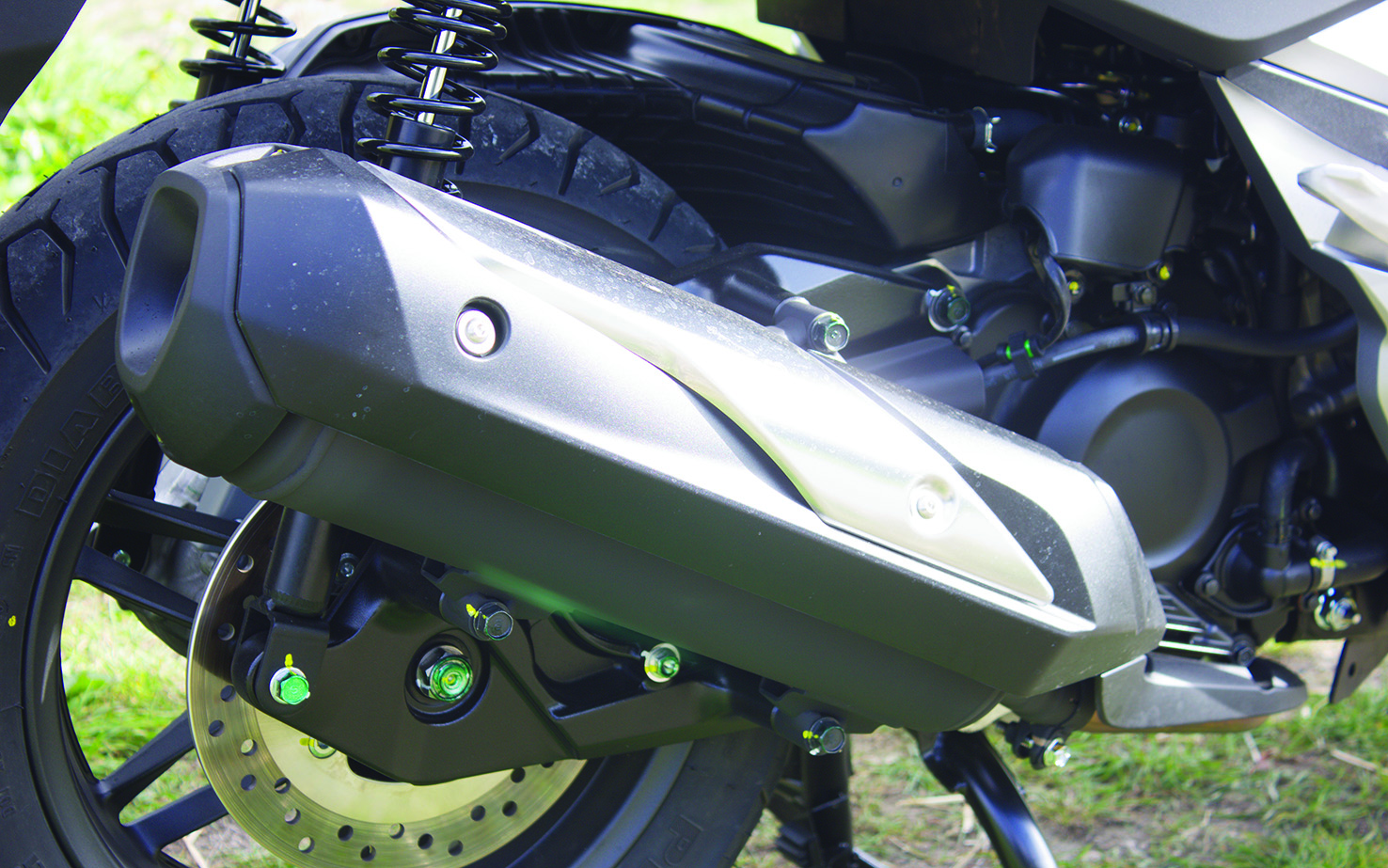
You never quite escape that drone, however. YouTube shows us how these scooters can actually sound fairly entertaining, popping and crackling on overrun as part of an enjoyable sonic accompaniment to more spirited riding – but only if you shell out for an aftermarket exhaust system. Yamaha wants more than £1,000 for the official Akrapovic option, and the T-Max definitely loses points for a stock system that is so quiet and devoid of character as to be quickly (and mercifully) drowned out by wind noise.

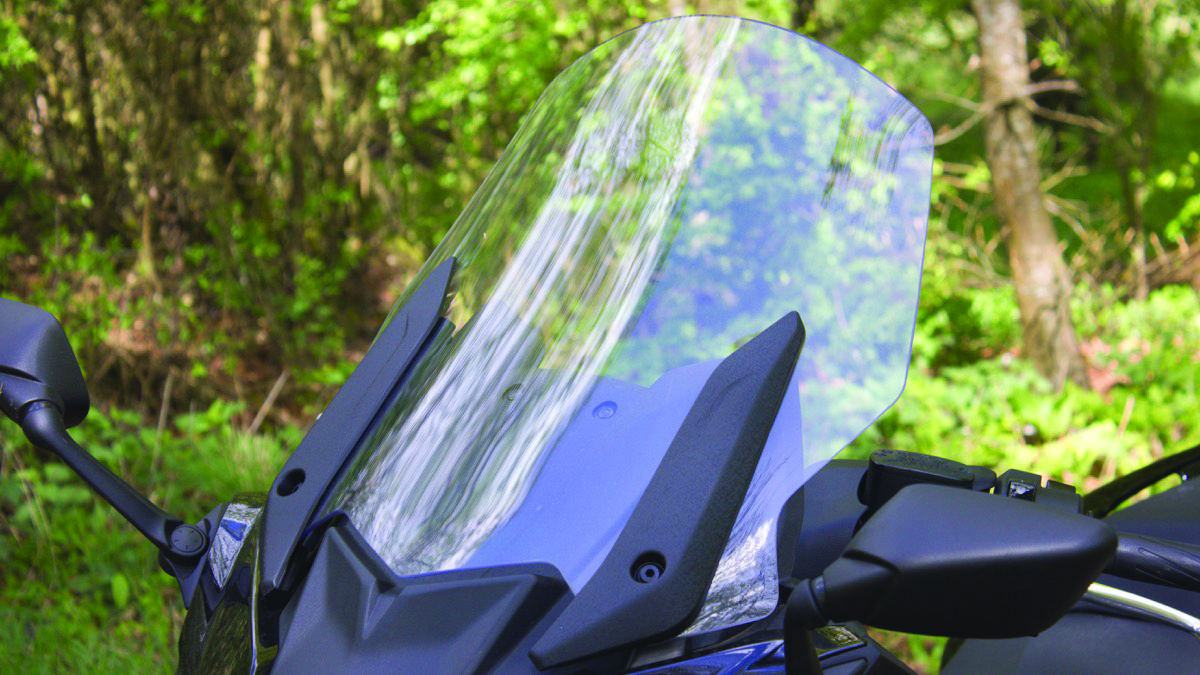
Which is a shame, because I’ve been racking my brains since I handed the keys back, trying to think of any other reasons to subtract points from the T-Max’s score. Yamaha’s designers did their best in wrapping an attractive body around a naturally bulbous layout, but I’d appreciate a more interesting selection of colours than varying shades of black and grey. The stock windshield is good, if not great – wind hits me right in the helmet and can cause a bit of noise at higher speeds, but it’s mostly smooth flow – no buffeting.

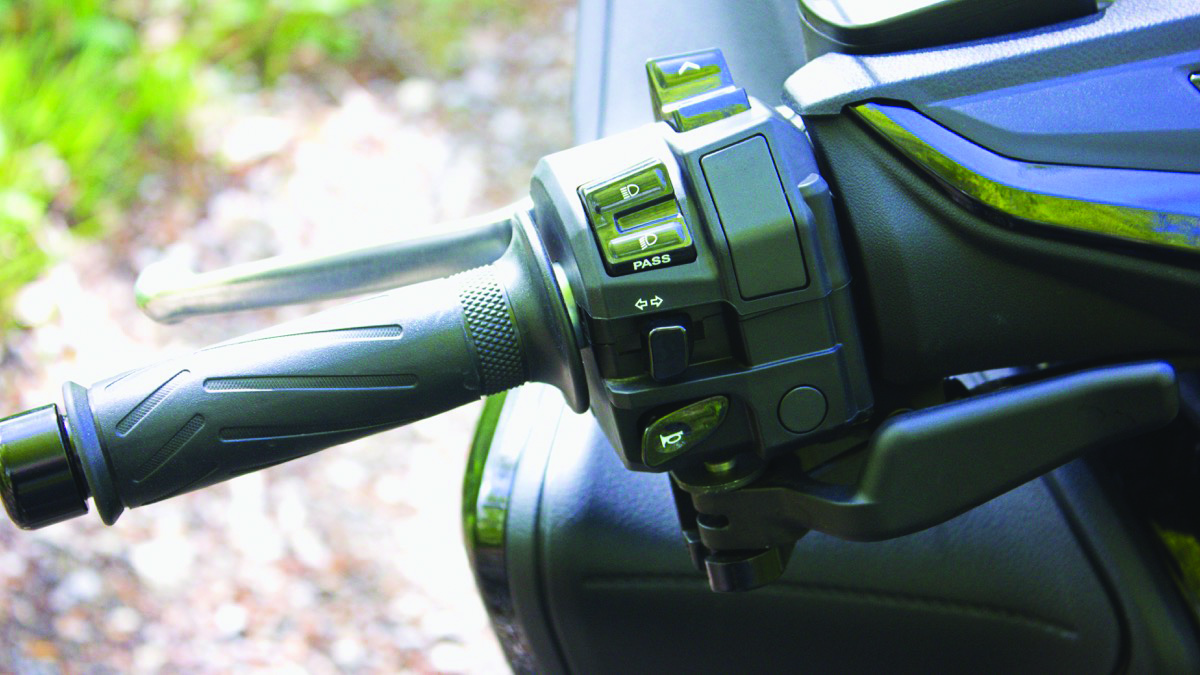
The £1,500 extra you pay for the DX version of the T-Max gives you a couple of extra buttons that raise the height of that windshield a considerable amount, theoretically solving that problem at a stroke. It also gives you electronic cruise control, heated grips and even a heated rider’s seat. There’s also a clever telematics system that allows you to remotely track your bike in case of theft, and view statistics about where you’ve ridden and how fast you were going – the latter not necessarily a benefit, perhaps. But that’s it – the rest are minor cosmetic differences, and if it weren’t for the blanking plates on the left-hand switchgear you’d never know you’d skimped and ordered the cheaper model.

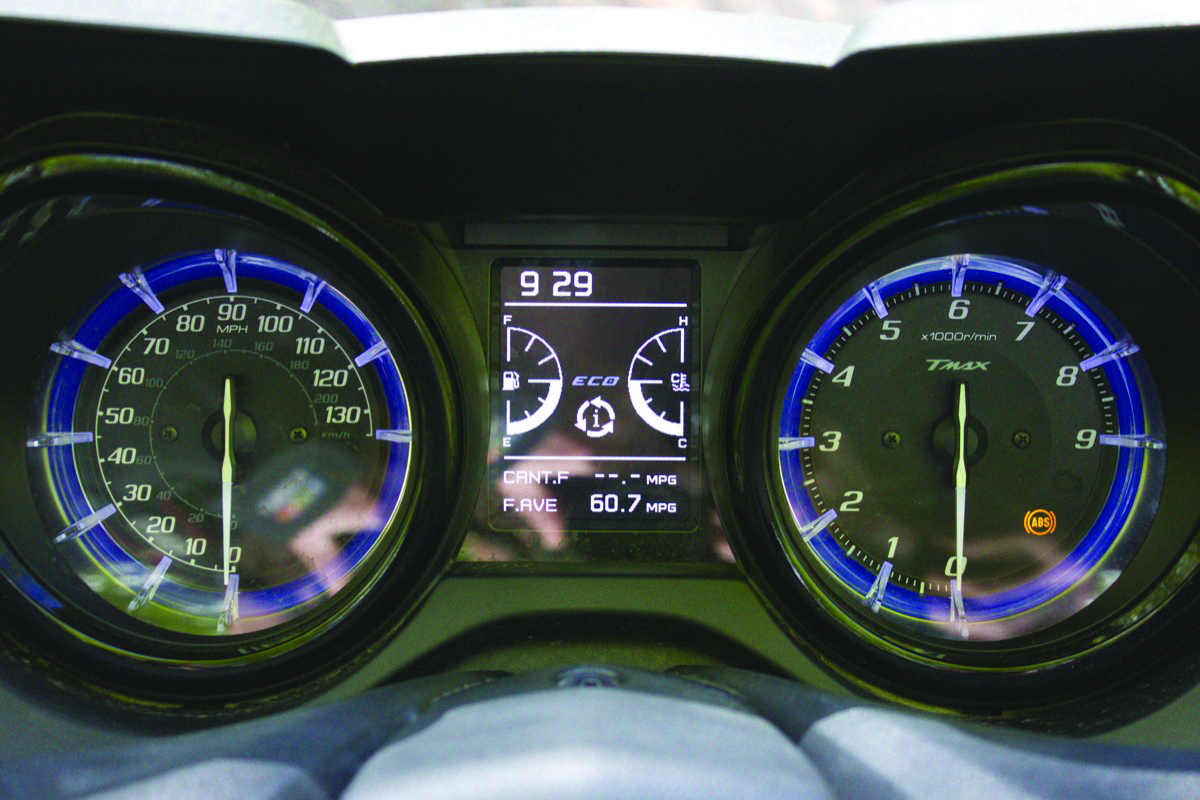
All flavours get large twin dials for speed and revs, both chosen more to make four-wheeled converts feel comfortable rather than provide any real benefit to the rider. Digital speedos are always easier to read, and on an automatic transmission the tachometer only serves as a distraction from the road ahead. And it really is surprisingly easy to get distracted; I frequently found myself looking around and admiring the scenery, so easy was the T-Max to ride.

That should have meant that the experience was boring – I wasn’t being called upon to focus every fibre of my being on the task at hand, yet I was somehow enjoying the ride all the same. If anything, I worry that my riding standard might suffer when I’m not trying to hone my skills to a point with each ride, in every corner. And I would definitely need to decrease my speed further still if I’m going to start admiring distant mountains instead of watching for hazards ahead. But isn’t that what I’m looking for here? I really struggled to figure out what my opinion of the T-Max was, something tangible and objective that I could pin down in writing. But the overriding point is simply that I’d really quite like to ride it some more.

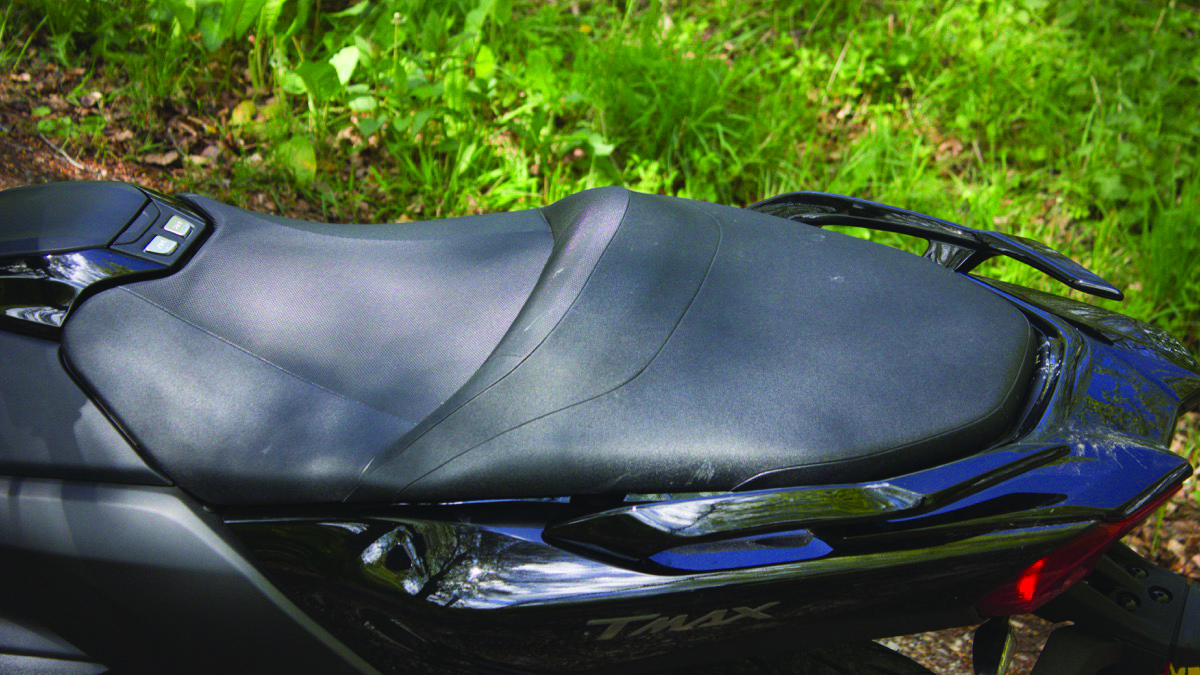
It’s not thrilling or raw, and doesn’t offer any kind of visceral riding experience. It’s not spectacularly efficient for its engine size, the Continuously-Variable-Transmission and barn-door windshield conspiring to push fuel economy down to about 60. Yet, like my V-Strom 650 it’s pretty good at everything while adding a wealth of practical functionality. You can rarely exploit the massive horsepower of a modern sports-tourer in the real world, but you can make use of the T-Max’s genuinely comfortable seat for every second of every ride.

The price of admission will be an issue for some, although a quick scan of the classifieds reveals that there are bargains to be had on nearly-new models. Oil changes are every 6,000 miles, with 12k major services including replacement of the transmission v-belt. Pay a workshop to remove all that plastic and the labour rate can really add up, but my research shows that it’s nothing that a patient home mechanic should be scared of. And being a Yamaha, valve clearance checks aren’t necessary until 24,000 miles, something I feel other manufacturers could learn from.

There’s no oily chain to maintain, thanks to the belt final-drive, headlights are modern LEDs and the massive fairing will keep you warm and dry in conditions when most motorcyclists would be huddling for shelter under bridges. The T-Max genuinely seems to offer all the advantages of the much-maligned scooter format, without suffering from many of the issues that gave rise to that battered reputation. And if you want to tweak the format, the T-Max has one of the most extensive after-market followings I’ve ever seen – at least, once you reach outside of our insular British bubble.

Don’t knock it until you’ve tried it. It may well be that the best low-intensity touring motorcycle is, in fact, a scooter.

Nick Tasker

First published in Slipstream June 2019

Go to Part 2

Dedicated Follower of Fashion?

BMW R1250GS Review

Henry Ford is said to have opined that, should he have asked people what they wanted from a future transport solution they would have simply requested a faster horse. Apple famously made its fortune delivering products that nobody knew they wanted, and it’s arguable that the original BMW R80GS did the same thing. Journalists at the time were baffled, complaining that it was too heavy to compete with dirt bikes, and that more traditional touring bikes had it beat on paved roads. Yet a combination of genuine everyday capability, iterative improvement and a healthy dose of clever marketing mean that the modern-day iteration sold more than 4,000 examples in the UK in 2017.

Almost 40 years of development brings plenty of improvements and refinements, as engineers try to satisfy marketing’s desire to appeal to wider and wider demographics. Lower seat heights entice the short of leg to join the fun, while better brakes and suspension as well as a power output 270% of the original bring in those of a more sporting persuasion. Stronger chassis and subframes provide the passenger and luggage requirements of the touring set and an ever-more sophisticated electronics suite rounds off the package for tech fetishists. The latest revision, the new R1250GS, really should be all things to all people.

Every major manufacturer is working hard to constantly broaden the appeal of every bike in their range. The main problem with iterative development arises when you keep moving the goalposts, when your target keeps shifting. Before you know it, you have lost sight of the original purpose of the thing you were building, and have created something that is a caricature of itself. But going backwards, aiming for less weight, less power, and more control would be unthinkable! It would surely be commercial suicide, as no-one would buy a bike that had lower numbers than the competition!

This story isn’t unique to the R1250GS or even to BMW; consumers have never been good at separating what we ‘want’ from what we ‘need’, and the people in charge of selling us stuff have zero incentive to discourage our appetites. Marketing, journalists and consumers all demand more power, but riders can’t actually handle that, so electronic aids are brought in to compensate. The chassis and suspension can’t handle it either, so they are both beefed up and yet more electronics added to shocks and forks in a desperate attempt to keep the rising mass of modern motorcycles under control at ever-higher speeds on fast-degrading roads.

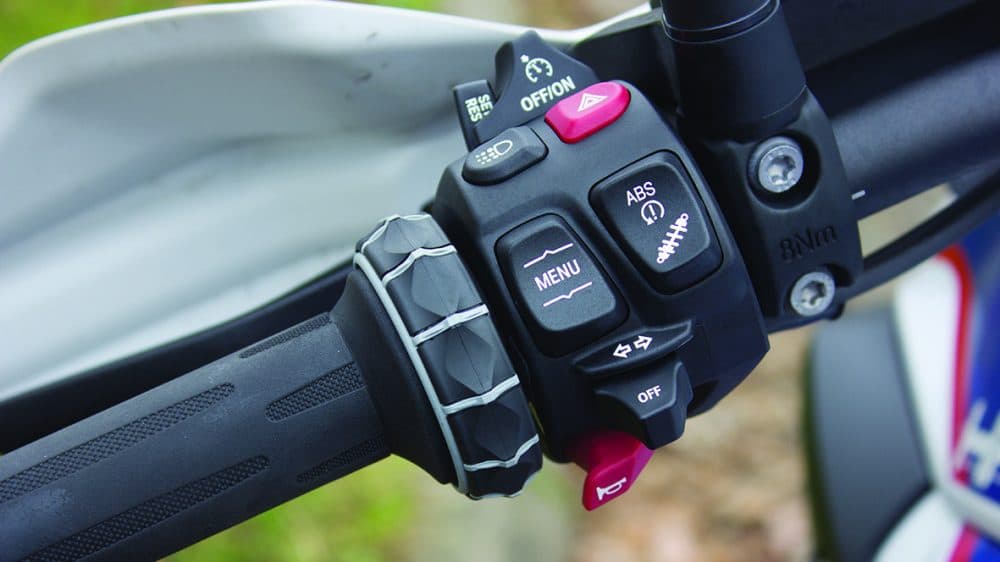
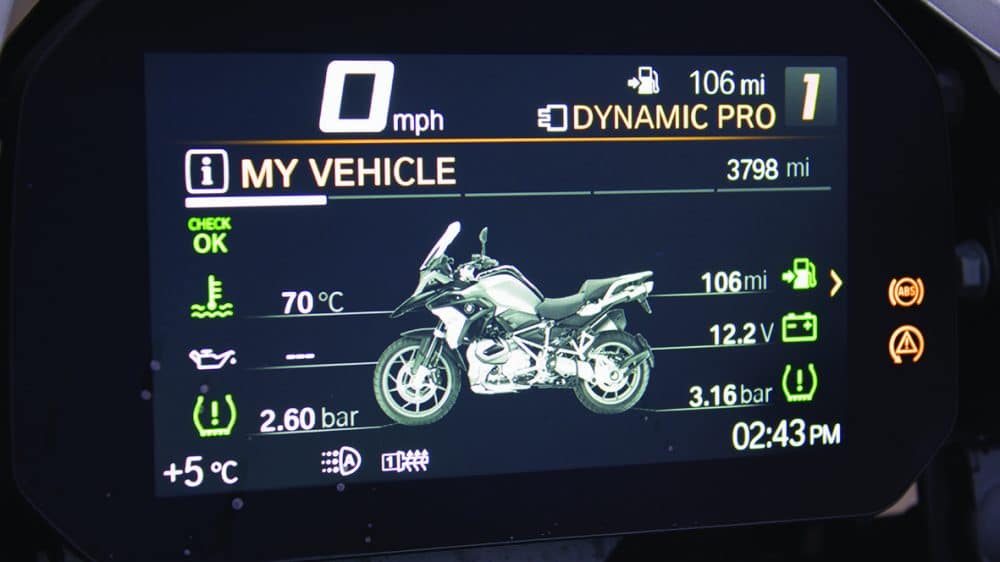
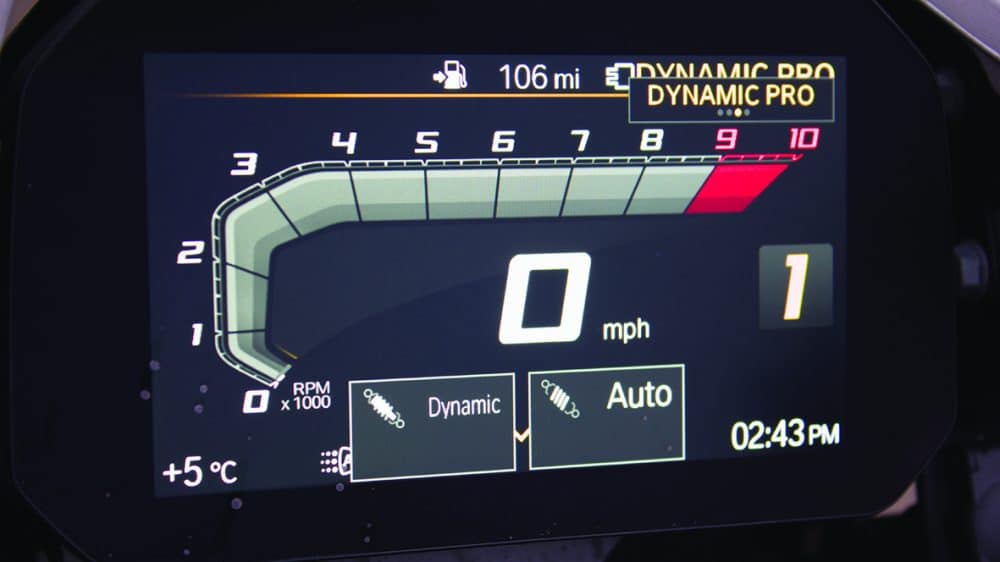
All those electronics now mean that handlebar switchgear has begun to resemble video game controllers, so manufacturers are sticking with the theme and adding full-colour computer screens where the dashboards used to be. You need a half hour with the instruction manual to get the bike ready to go, and piloting a modern motorcycle at speed is now like flying a modern-day jet aircraft, the laws of physics kept barely in check by an overlapping network of electronic safety nets.

I rode the first-generation water-cooled R1200GS back when it first launched, and found it to be extraordinary. The tremendous capability of the machine far exceeded what I could make use of at the time, and while my riding has continued to develop in the intervening years I suspect that the 2013 machine still has more performance than the average rider can safely use on public roads.

BMW hasn’t been idle either, making nips and tucks throughout the life of the water-GS, with premium features becoming standard-fit and new tech introduced almost every year to tempt well-heeled buyers into adding more ticks to their options list. In fact, the only really notable change over last year’s version is the extra 80cc’s of displacement that give the R1250GS its name. As such this new BMW is simply an example of the culture of excess that has spread throughout mainstream motorcycling; let’s see if we can identify the straw that broke the camel’s back.

Figures show that mass has increased over time, with the latest GS now weighing in at a shade over 250kg with a full tank of petrol. The optional spoked wheels add a few more kilos, as will the crash bars, luggage and other accessories that owners will undoubtedly bolt on (or more likely have their dealer install). Styling tweaks have served to add a fair bit of visual bulk over the years, and the German flagship is now a truly imposing beast.

Switchgear is of high quality, with a satisfying feel that is a joy to use – with the sole exception of the indicator and cruise-control switches. There’s so little movement that you find yourself looking down to confirm you’ve definitely pressed them. Despite adding an actual scroll-wheel (which itself contains an additional two tilt buttons) many of the dozen or so buttons have different functions depending on how long you hold them down. Outside of the basic riding functions, the bike is impossible to operate without looking down at the gloriously animated full-colour high-resolution digital dashboard.

The new BMW computer screen is far better than anything Triumph, Ducati or KTM have on offer at the moment, and feels like a genuine functional improvement over existing analogue or LCD units. It’s large, clear and easy to read even in direct sunlight, uses colour to enhance rather than distract, and provides all the information you need at a glance. Triumph’s units have fascias so large they remind me of old CRT televisions, and reading a Ducati TFT is like trying to decipher a detailed spreadsheet.

And yet, as I alluded to earlier, I strongly suspect that BMW’s primary motivator was not to one-up the competition, but simply to make all their technology manageable through a graphical user interface. It’s already a bit like using a digital watch, with multiple functions attached to each button, and navigating the various menus via the left-hand scroll wheel is probably something that gets easier with familiarity. There are main menus and sub-menus, with screens hidden behind other screens. At one point I resorted to turning the bike off and on again as the fastest way to get back to the regular dashboard layout.

The R1250GS has all the hallmarks of a bike designed through exhaustive focus testing. It has loads of power – 135bhp and 143Nm of torque. The levers, screen and seat are all adjustable, and the suspension can not only be adjusted electronically on the move, it’s now self-levelling depending on load and passengers, and even adjusts the damping in real-time to manage whatever surprises the road surface can throw at it. The brakes, despite no longer sporting the ultra-fashionable Brembo logo, are stupendous; how quickly you can stop is solely dependent on how much g-force your upper body can handle.

You can attach loads of luggage, and even remove the pillion seat for more space to strap stuff to. The lighting is now full LED, and fully automatic. It has cruise control for long motorway trips, the seat is comfortable and the windshield height-adjustable from the cockpit. It even gets acceptable fuel economy, and only very aggressive riding managed to push the average mpg down below 50. Everyone wants multiple riding modes now, so it has those too. Good grief, it even has a quick-shifter, something originally designed for racing and now this season’s must-have accessory. As I said earlier, this bike has been designed to be all things to all people, the formula polished until it gleams – this should be the perfect motorcycle.

And yet, there are serious issues. Every review of the R1200GS inexplicably complained that it was underpowered compared to the competition, and so an incredibly clever new variable-valve timing system was developed that boosts torque and power across the entire rev range. Despite the 80cc more cubic capacity this enormous engine revs up more like an inline four-litre bike engine than a big, torquey twin. I’m used to the snatchy aftermarket quick-action throttle on my Triumph Street Triple, and in Dynamic mode the R1250GS was far twitchier.

BMW know this, which is why you have to pay extra to even get access to that particular riding mode. ‘Road’ and ‘Rain’ dampen response considerably, but also add a woolly feel and even hesitation that made smooth gear changes extremely difficult. The new quick-shifter suggests that BMW spotted this issue as well, allowing fully hands-free gear shifts. Unfortunately, in almost all circumstances it works very poorly, resulting in jerky upshifts and even worse downshifts. It was so bad that I was prompted to ask the BMW rep if the system was disabled on my example, and I was condescendingly told that I merely needed to get used to it. Perhaps having your pillion’s helmet crashing into the back of your own is an acquired taste?

Similarly ferocious sportsbikes are normally equipped with extremely stiff suspension to counteract the squatting and diving forces caused by accelerating and braking. Matters are complicated somewhat when you’re carrying around 50kg of reinforced subframes, and probably another 100kg of luggage and passenger. But touring riders want a soft, comfortable ride, so computer-controlled suspension is available to try and provide the best of both worlds. It’s a testament to BMW’s engineers that it almost succeeds. The trick, it seems, is to keep the shock absorbers soft most of the time, and then firm them up quickly in response to large, sudden inputs to control excessive movement.

In practice it seems that the on-board computers just can’t cope, at least on Northamptonshire’s rutted tarmac. Small surface undulations are absorbed well enough in ‘Road’ mode, making for a comfortable ride and allowing you to maintain the rapid pace that the engine enables. But hit a patch of rougher asphalt and the dampers seem to lock up, transmitting the shock into the chassis and causing the entire bike to shudder and flex. I’m afraid it’s not what I’d expect from a brand new £16,000 flagship.

Switching the suspension over to ‘Dynamic’ simply made matters worse, delivering a ride so firm that both wheels were frequently bouncing off the ground and triggering the ABS and traction control. The only solution was to ride more slowly, rendering all that power utterly pointless.

Perhaps a beefier rider might better suit the spring rates that BMW have chosen for their shocks, and if you only stick to smooth, open roads you may find the suspension to be perfectly adequate. But surely the whole point of adventure bikes is that they allow us to continue enjoying our roads even as they continue to fall apart? Perhaps that fast-revving engine would be blunted somewhat were I to weigh more than my meagre 70kg, and the bike further loaded down with a pillion and full complement of hard luggage. And perhaps the steep inclines and high altitudes of the Swiss Alps would smooth things out the rest of the way. But unless I just described your sole use-case of a purportedly ultra-versatile machine, I think there are less compromised solutions out there.

I really wanted to like this new GS, I really did. I have tremendous respect for the bike and the BMW brand, and I think that they’re one of the few manufacturers actively trying to solve the marketing and dealership problems that threaten to strangle the motorcycle industry. But I’m afraid that their product has fallen victim to fashion, and the demand for more power and gadgets has resulted in a demonstrably compromised motorcycle. I’d love to see what a 900cc version would look like – 100bhp and a 30kg diet might be the sweet spot, and more of the bike could be enjoyed without computer interference at every turn. It’s a shame the road-oriented F750GS has been so badly neutered to give the off-road focused F850GS room to breathe.

Unfortunately, from my perspective, the iconic motorcycle that kick-started the entire adventure segment has now become just like the company’s cars: overweight, overcomplicated and overpriced. An impressive technical showcase whose electronic faculties are less of a testament to innovation and more of a desperate attempt to win the ultimate game of motorcycle Top Trumps. It’s a little bit like my cooking, in fact: all the right ingredients, yet somehow the result just leaves a bad taste in your mouth.

Nick Tasker

First published in Slipstream May 2019

A Different Type of Riding (Part 3: 2018 Harley Davidson Sport Glide)

Those of you who have been following this mini-series will have discovered that while mid-capacity scooters tick a lot of practical boxes, they don’t provide a visceral low-speed experience to augment a sight-seeing tour through Scandinavia. Given that a feet-forward riding position is on my checklist this time around my next area of exploration was obvious: I needed to look at cruisers.

The thing is, cruisers are surprisingly hard to find in the UK market. The reality is that we’re a nation of recovering sports-bike addicts, shifting to adventure bikes as we and our road network suffer the ravages of age and abuse. Those still looking for their low-tech, low-speed, hair-in-the-wind experience go to the player everyone else gave up competing with; they go to Harley-Davidson.

And yet, my riding experience of previous Harleys was underwhelming in the extreme. Weak brakes, scrunched-up riding positions, minuscule fuel tanks and non-existent suspension led me to conclude that Harley-Davidson were rolling art, and nothing more. Based on conversations with Harley owners over the last few years, my mistake had been riding the “small” Harleys, rather than the “full-sized” ones. They assured me that the build quality and riding experience on the big-twin models was in another league, and that I should stop using their 300kg+ kerb weights as a reason to avoid them.

One of the latest of these new Softail models was the Harley-Davidson Sport-Glide. I was intrigued; blacked-out engine with a minimum of chrome, hard, lockable quick-release luggage as standard and even a nifty removable mini-fairing. Black & polished alloy cast wheels and a comfy-looking bucket seat completed the image of a relaxed, light-duty tourer, clearly designed as a stepping stone for those not yet ready to commit to a fully-faired bagger from the Touring range.

The first surprise was the lack of an ignition key. Like the little Honda scooter, all Harleys now use proximity keys instead. The kill switch toggles the ignition state if the fob is nearby, allowing you to start the engine without fishing through your pockets, although locking the luggage still requires an old-fashioned key. Harley also has a typically low-tech solution to the question of opening the petrol tank – they simply don’t make it lockable.

Tucked away on the left instrument cluster is another surprise – a cruise control switch. Further up is the control for the multi-function trip computer, represented by a small LCD screen tucked away underneath the analogue speedometer. You can scroll through a couple of trip meters, the clock, fuel range and even current engine RPM, with a digital segmented fuel gauge running along the top of the display. A single number on the right indicates the current gear, although generally you’ll only need it for confirming when you’re in sixth on motorways.

That enormous clutch-lever is a two-finger pull, and the rumbling engine responds smoothly and easily to the feather-light throttle. I’ve ridden 125’s that were more difficult to set off on, although I did later discover some slight hesitation on initial throttle openings that my salesman attributed to the upgraded camshaft & associated fuelling changes. I would have to ride a stock example to be sure, but it was no worse than any other modern bike I’ve ridden lately.

Harley’s new engines are now fully counter-balanced, leaving just enough of a throb to remind you it’s there without causing your glasses to rattle off your nose at stop lights. Turning onto the road demonstrated that low-speed manoeuvres would be a little tricky with that large rear-brake pedal, but I had already forgotten that this machine weighed a full 100kg more than the bike I’d arrived on – it certainly didn’t feel like it.

Rolling down the first stretch of road demonstrated a compliant and controlled suspension system at work, communicating the details of the road surface whilst softening their impact. As I approached the first junction I braced myself to begin the process of slowing down 317kg of steel using a single front disk. Imagine my surprise then when I had to ease off the front brake entirely to avoid stopping a dozen metres short of the lights, such was the bite and power of that single four-pot calliper. Harley now out-sources their braking components to Brembo, and the Harley-Davidson Sport Glide stops impressively quickly despite its considerable weight.

Taking a stop to look up some specs online revealed more interesting facts. Thanks to the low-revving engine (redline is somewhere around 5,000RPM) Harley valve trains use hydraulic lifters, meaning that they will never need their clearances adjusting – ever. The kevlar final drive belt means there’s no chain to oil, and anecdotally have been known to last 70,000 miles and beyond without replacement. That new eight-valve engine is also more frugal than the previous generation, thanks in part to twin spark plugs per cylinder, and averages of 50-55mpg are to be expected in normal riding.

Submitting to the inevitable and introducing small oil coolers to keep the exhaust valve temperatures down also means that there was no more heat spilling off the power plant than from any other bike I have ridden. And this was no ordinary engine; the previous owner had dug into the performance section of Harley’s famous parts catalogue and equipped this bike with a higher-lift ‘Torque’ camshaft, a freer-flowing exhaust and intake and a full dyno remap to match. According to the Harley salesman, horsepower was up 30bhp over the original 75, with a matching jump in torque.

Those may not sound like earth-shattering numbers from what is essentially a 1.8litre engine, but the area under the torque curve is immense, delivering more thrust at 3,000RPM than a KTM SuperDuke does anywhere in the rev range. While acceleration is of course a factor of mass, there’s simply no ignoring that much sheer thrust. Let the engine climb up to 3-4k and you’ll be holding on for dear life, with no signs of the engine letting up. Admittedly I would expect an unmodified engine to reign things in somewhat, but all of those upgrades were fully warrantied and fitted by Harley themselves for around £2,000 extra. Think of it as a Sport Glide”R”, then.

So; the engine and brakes impress, in a way that I genuinely didn’t expect. What about the handling? The aforementioned low-speed manners are faultless, and while I daresay that tighter roads might require a lower pace than from a modern super-naked it handled the sweeping curves of Oxford with aplomb. Twice metal met tarmac despite my caution, although I later discovered it to be the after-market exhaust system that was grounding out, not the considerably higher forward-set footpegs. I’m quite certain I would not recommend a Harley-Davidson to someone plotting to chase down sports bikes through the Pyrenees, but then I already have my V-Strom for that.

Which brings us to the raison d’être for this test; I didn’t need or want another fast sports-tourer – I needed something that would be just as much fun when ridden in convoy behind a Belgian camper van as it would chasing down empty tarmac. And I’m extremely pleased to report that the truly characterful engine, a joy to use at any speed in any gear, made for a fantastic low-intensity journey. Motorway riding was a little less relaxed thanks to the minimal windshield. My example was equipped with the optional taller screen, but I do wonder if removing it entirely might net less buffeting.

The integrated panniers solve the luggage problem; the 19-litre tank and (relatively) impressive economy makes 200 miles between fill-ups possible, and the wide, plush seat means I could happily empty that tank multiple times in a single day. I’d personally want to bring the handlebars a little further back to compensate for my stubby T-Rex arms and add a luggage rack to increase carrying capacity further, but the beauty of that Harley parts catalogue is that there are fully-warrantied options available for every taste and requirement.

Dipping too heavily into that catalogue can prove expensive, however, which is a problem when the Sport Glide – one of the cheapest bikes in the Softail range – starts just shy of £15,000. Add an exhaust, a couple of replacement trim pieces to dispatch the remaining chrome and we’re quickly approaching BMW K1600GT territory. Many people will find those prices somewhat difficult to justify when a similar sum thrown at the BMW salesman will see you rewarded with a much lighter, much faster, and genuinely capable motorcycle.

But if we accept for a moment (and I’m still struggling with this myself) that in 2019 big bikes cost big money and start to look closely at Harley’s offerings, you can start to see where all that cash goes. There’s no electronic suspension, but then there’s barely any wiring to speak of – at least, not that you can see, with cables routed internally and hiding inside the handlebars and frame. There’s no forum-argument-winning top-end power to be found, but while an inline-four or 90-degree twin is a more efficient way to go fast, that big Harley engine is simply more enjoyable to use. It’s satisfying in the same way that power tools and food processors are – you find yourself doing odd jobs around the house or making smoothies just for an excuse to use them.

That headline price is going to prove the biggest challenge for me, however. The build quality is incredible, the paint deep and mirror-perfect, and Harley residuals are famously good, although I suspect that’s because many owners barely ride the things. But having met a few who do pile on the miles without a single complaint or mechanical malady it’s clear that an under-stressed, proven formula can make for a reliable motorcycle. I also appreciate the fact that Harley make it easy for those of less average proportions to swap out handlebars, footpegs and seats, although I wish that such items could be fitted at the factory rather than expensive dealer-fit extras.

I’m not done shopping just yet- and I’d very much like to try out an Indian Scout to see if I can find a lower-priced alternative, but the fact of the matter is that the Harley-Davidson Sport Glide has set the bar very high indeed. The search continues…


Nick Tasker

First published in Slipstream May 2019

A Different Type of Riding (Part 2: The Honda Forza 300)

Feet-forward riding position? Low-speed comfort, lockable luggage and epic fuel range? Surely there can be but one solution – a mid-capacity scooter!

Scooters are much-maligned here in the UK, our past obsession with sports bikes often pointed to as the reason why we are apparently the sole nation on this continent not to whole-heartedly embrace this most practical form of two-wheeled transport. Visit a major European city and they’re absolutely everywhere, complete with massive windshields, huge top-boxes and leg-covering scooter skirts. Unfashionable? You may think so, but the Italians seem to disagree, and fashion is kind of their thing.

Cost could be a factor. The example frequently held up is the Yamaha T-Max, which starts at more than £11,000. Admittedly this isn’t exactly a pizza-delivery vehicle, with a spec list that includes 500cc twin-cylinder engine, radial brakes, upside-down forks, heated grips & seat and even cruise control. It’s less of an oversized Vespa, more of a two-wheeled luxury sedan, with performance to match.And other scooters are available. If you don’t need or want motorcycle-grade top speeds then there’s new growth in the 300cc scooter segment. Yamaha revamped its X-Max last year, Kymco and Kawasaki have been swapping badges and paint on their respective offerings and Honda’s latest 300cc Forza has just landed here in the UK. It’s a perfect opportunity to test out the concept and see if a 20-30bhp automatic could meet my needs as a low-speed tourer.

First impressions are good, but probably depend on your own aesthetic preferences. I happen to like the angular spaceship-with-wheels styling, but I’m sure it isn’t for everyone. The wheels are well-proportioned, although at fifteen inches are still considerably smaller than what most of us will be used to. Where the Forza begins to really impress is when you take a closer look and start to dig in to the spec sheet & features lists.

To start with you get full LED lighting from stem to stern – no incandescent bulbs to fail unexpectedly while on tour, which means no need to carry spares. They’re also a damn sight brighter, and do a great job of attracting the attention of perennially distracted car drivers. Next up, a centre stand comes included, something that – with fitting – often adds close to £400 to your average adventure-tourer’s price tag.  Unfortunately, it turns out the real reason for this is that the Honda refuses to start or run while the side-stand is extended, a safety feature necessitated by the automatic twist-and-go gearbox on the Forza.

At the back we have a secure cavernous under-seat storage area, easily matching the capacity of an average top-box, while simultaneously keeping any luggage weight low to the ground. A top-box is available if yet more storage is required, with the added benefit of being linked to the same keyless access system the ignition uses.

That’s right – up front, there’s nowhere to insert a key, a proximity fob similar to many high-spec cars is provided instead. As long as this key is somewhere about your person, you can push the ignition knob to activate the system and then twist it to the relevant position. Setting the ignition to On wakes up the comprehensive dashboard tucked away inside the fairing. Road & engine speed are represented by large dials with easy-to-read numbers either side of an inverted LCD display. Here a bored rider could monitor air temperature, charging system voltage and instantaneous fuel consumption, alongside the usual twin trip meters and multi-segment fuel-gauge and coolant temperature.

Settings can be scrolled through using the left-hand switch-gear, which also includes the controls for disabling the traction control system (not really necessary with just 25bhp) and raising and lowering the electronically-adjustable screen. This last piece of equipment sounds great on paper, reacting quickly to the controls and allowing you to keep your view clear around town and dial in more wind protection on the motorway.

Unfortunately, in practice the windshield is at best ineffective and at worst downright awful. I’m 5 foot 10, and my choices were limited to where on my helmet I wanted the turbulent air directed. In the low setting I got a whistling noise and an amplified amount of air forced through the tiniest gaps in my visor’s seal. In the highest setting my head was batted around like a tethered ping-pong ball at anything above 50mph. A new shape and possibly a much taller screen are desperately needed. Either that, or a hacksaw to remove it entirely and let my Shoei’s aerodynamics do their job in a clear air stream.More useful is the small fairing cubbyhole on the left-hand side of the front fairing. Neatly integrated and otherwise invisible so as to avoid tempting casual thieves, it’s surprisingly spacious, large enough to hold a water bottle. It also contains a 12V power socket, although this will be limited to charging smartphones. Heated gear will draw more power than the meagre 24 Watts on offer, and would require leaving the cubby open to allow the cables to exit.

It’s very telling that we’re almost 1,000 words into this review and I have yet to mention the brakes, suspension or engine at all. Unfortunately, this where it all falls apart for me. None of those components do a bad job, per se. There’s just nothing remarkable or memorable about the experience they offer. The suspension, basic as it is with old-fashioned twin-shocks hanging off the end of the swing-arm, works fine, absorbing the undulations of our pock-marked road surface without too much difficulty. Pot-holes are to be avoided, especially with those smaller wheels, but given the superior quality of tarmac available on the continent shouldn’t present a problem while on tour.

The brakes are odd. Both operated by levers on the bars, the front brake is relatively tame and squishy, the rear biting so hard that it the ABS system can be triggered at will. I quickly reverted to my usual scooter tactic of squeezing both levers hard and genuinely wonder why a single linked lever couldn’t be offered instead. The rear is too sharp to be used for slow-speed manoeuvres, and the smooth engagement of the constantly-variable transmission and automatic clutch mean that U-turns can be executed using throttle alone.

The whole drivetrain, in fact, is utterly unremarkable. If it weren’t for the very faint vibration and low buzz at the edge of earplug-dampened-hearing you could believe that this was Honda’s first electric motorcycle. Torque off the line is smooth and plentiful, tapering off quickly as speeds rise towards the national limit. An indicated 90 is possible, or so I’ve heard from a friend, and if it weren’t for the atrocious windshield the Forza would be perfectly capable of crossing the empty expanses of northern France during the opening salvos of a longer tour.

At lower speeds the throttle response is perfectly judged and the added headroom over lower-capacity scooters means that overtakes are perfectly achievable, albeit with a little more forward planning than is necessary on the 150+bhp monsters many of us are used to. On the other hand, at an impressive 80mpg during mixed riding, as well as cheaper consumables and servicing, it will cost an awful lot less to run than such powerful machines.

While trundling along at 30-40mph is utterly effortless, it’s also utterly forgettable. Riding a bicycle would deliver a more memorable experience than this, and means that what I remember most about those stretches of road is the podcast I was listening to at the time. And that, I’m afraid, means that the Forza 300 fails a critical litmus test in my search for a family touring bike. In its attempts to create a two-wheeler to tempt bored commuters out of their anodyne four-wheeled boxes, Honda has succeeded too well. Even the colour options – mostly various shades of grey – match the soulless identikit cars clogging up our nation’s cities each morning.

All the practical stuff is accomplished with the usual efficiency, and as a way to get to work cheaply and easily I cannot fault it. But I don’t need a commuter. I need a fun-to-use low-speed tourer that will galvanise rather than homogenise every mile ridden, that will add flavour to my travels and become a memorable part of those future adventures. And I’m afraid the Honda Forza 300 fails hard here. My search continues…

Nick Tasker

First published in Slipstream April 2019

Yamaha Tracer 900GT

Do expectations always deliver? And just what is the true potential of the new Yamaha Tracer 900GT? Keith Yallop reports on his bike purchase of May 2018. After over 9,000 miles he asks, “Is this the ultimate jack-of-all-trades?”

I have been biking for many decades having ridden about 1/2 million miles – or to the moon and back – on over 50 different machines of various sizes and capabilities.. My last few bikes have all been high-performance sport tourers with the emphasis on ‘sports’. I do quite a lot of touring in this country and across Europe with my riding buddy, Paul Ruden. We quite often do over 500 miles a day. In 2017 we did a European trip with me on my Kawasaki Z1000SX, which is a great bike, but the riding position was starting to take its toll on my ageing joints. At the end of a day’s ride I was glad to get off it. I came to the conclusion that my biking requirements needed some major reassessment.

So over Christmas 2017 I drew up a list of what I wanted from my motorcycling, taking into account that I was entering into my twilight years and my ageing joints were not as flexible as they used to be. High on my list was comfort, ease of handling, light-weight, narrow (to aid filtering), panniers which were not too large and could be easily removed. Low on the list was dropped bars, big cc, massive horsepower and MotoGP acceleration. Don’t get me wrong, I appreciate a bike with low down punch but over 100mph top speed was definitely moving off my radar and comfort was becoming a priority.

So what fitted these requirements? I started to look at a range of bikes all in the upright adventure touring position. During December 2017/January 2018 I visited BMW, Triumph, Honda, Ducati, Suzuki, Kawasaki and Yamaha. All the dealers offered great sports tourers, all with good points and some not so good. However at The Motorbike Shop in Farnborough I was invited to take out a Yamaha MT-09 Tracer. This bike was not on my list but I thought why not give it a try? After an extended 50 mile ride I felt that this machine and I could have a long and happy relationship. It all seemed to gel for me, this was probably helped by the fact that I have owned a number of Yamahas.

The throttle response was very lively, especially when in sports (A) mode, where with its short wheelbase it would easily lift its front wheel if you left traffic lights too energetically. On my return to the shop I was informed that a brand new model called the Tracer 900GT would be launched in early summer 2018. It would have an extended swing arm to reduce front wheel lift and make the bike more stable with panniers fitted. It would have a host of extras as standard, including panniers, touring screen, narrower bars, better seat, quick-shifter, updated suspension, cruise control and the list went on. It would be sub £11k. They offered me an excellent part-exchange price for my Z1000SX so I made an instant decision to place an order, one I hoped I would not regret.

I spent a nervous 5 months wondering if I had made the right decision and found myself asking if it was going to be anywhere near as much fun as the demo MT-09 on which I had ridden. Or had the practical additions to the GT changed this new model for the worse?

On the 21st of May I was the first rider in the UK to take delivery of the Tracer 900GT, or so I was told. The first thing that struck me was just how impressive the bike feels. It has the same grand presence as an adventure bike, but obviously with the road-focused bias. Sitting on the machine allows for a good view over the traffic ahead and the large screen appears to provide good protection (more on that later).

The bike feels tall with an 850mm seat height, but despite this I’m still able to flat-foot pretty easily when sat on it (I’m 5’ 11”). For those who might be a little more vertically challenged this could be more of a problem, however there is a lowering kit available.

It’s all well and good babbling on about the GT’s finer details but unless it rides well on the roads and operates well in real situations then it doesn’t mean diddly squat. So how does it ride?

Well the suspension was not one of the best points of the MT-09 based models of old. I was therefore pleased to discover that the revised suspension immediately puts to rest any previous questions over the earlier model. The suspension has been uprated using Kayaba units featuring dual springs and adjustability of both high and low speed compression damping, as well as preload and rebound damping. The rear shock preload is easily changed thanks to a side-mounted adjuster, perfect for those who are looking to travel with a pillion and/or lots of luggage. Yamaha have obviously been listening carefully to their customers, which is certainly refreshing in the motorcycle industry. Through corners it is probably one of the most ‘flickable’ bikes I have had the pleasure to ride.

Yamaha have also gone to town on reprogramming the MT-09 ECU mapping. Renowned for being a little snatchy on the power, the old map has been updated to give a much smoother delivery and also make the bike much more manageable when sat at a higher revs.

After riding over 9,000 miles on the bike in this country and across Europe, I must say it is a very pleasurable bike to be sat on for long distance cruising. It is very responsive and agile even though it weighs in at 227kg fully kitted out with panniers and fuel. Combining the excellent chassis with the brilliant 847cc triple power unit makes for an engaging ride that doesn’t leave me feeling disappointed or achy.

It would be pretty easy to think of these rather significant updates being the end of the story, but it is in fact just the beginning. Yamaha have seemingly thrown most of their accessories catalogue at the GT to make it into a machine that you could pick up tomorrow and set straight off on a European tour.

The most notable of the accessories is of course the hard luggage, which offers a mediocre 44-litres of storage. As the silencer is tucked away under the engine this allows both panniers to be of equal size. However the panniers will not take a full-face helmet. I have modified a soft bag of similar capacity to clip onto the rear seat thereby giving me close on 90-litres total luggage for touring. I replace this large bag with a smaller bag of 15 litres for weekends away. A plus point is that the paniers are very easy to remove using the ignition key and there is no scaffolding left behind.

Alongside the panniers the GT also comes with a centre stand, hand guards and heated grips where all 3 settings can be programmed individually to allow 10 different heat choices for each setting (30 in total), this makes winter riding a far less disconcerting prospect.

The rest of the electronics package is also very impressive with three selectable engine modes and traction control settings. There’s also cruise control, which definitely makes long range touring much more pleasurable. The coloured TFT instrument panel is from the R1 dash and although it is a bit on the small size it can be programmed with just about any information you would like the bike to give you, including gear indicator.

Impressively, the Tracer 900GT also comes with a slipper clutch down and quick-shifter up. The quick-shifter certainly makes for a smooth and simple affair when kicking up through the gearbox, it’s very easy to get used to clutchless upshifting. However I have to say that I still often prefer to use the old way and change gear with the clutch. But the choice is yours.

With panniers removed the bike is fairly light at 205kg and with the ECU programmed to give low down torque it is no slouch. For those of you who are interested in the tech figures, the bike has a triple cylinder 847cc engine producing 115bhp at the crank, has a top speed of 140mph, does 0-60 in 2.7 seconds and quarter mile in 10.6 seconds. But what about stopping? Well the rear brake is ok but not super efficient, the front brakes come from the R1 and are very positive having ample stopping power with very little effort even when the bike’s fully loaded.

However it is not all honey and roses – I do have a few gripes. The first is with the original tyres. The Tracer 900GT came with Dunlop Sportsmax D222 as standard and I was not at all impressed with them. I think Yamaha must have got a bulk cheap deal from Dunlop! Driving hard out of bends the back end seemed to be a little skittish and lively which took me back to my old days of scrambling. It also seemed to grab at every crack or seam in the tarmac. Not quite what I wanted on my new touring bike. So at sub 2,000 miles I visited Mel and he advised fitting a pair of Bridgestone Battlax T31’s. The difference in handling was amazing, the skittish feel had gone and the line grabbing was vastly reduced. What a difference a good tyre can make!

Secondly, I don’t personally like the fuel gauge. It only starts reducing after you’ve dropped to lower than half of the tank’s 18 litre capacity, then it shoots down and hangs around for a long time at 1/8 of a tank. It’s not a big deal and to most of you it won’t make any big difference at all, it’s just what I prefer. So I have set the TFT screen to show how much fuel I am consuming. When it gets near 4 gallons (18 litres) I know I need to look for a petrol station pretty quickly. The fuel consumption indicator is showing 55mpg and on tours I have managed to push a full tank to over 200 miles, the warning light comes on at around 185 miles. That makes it one of the most economical bikes I have owned, other than a BSA Bantam and a Triumph Tiger Cub!

My other major gripe is the screen. I seem to be in good company with this moan as nearly all magazine and online testers say the same. At higher speeds the wind coming around the screen is noisy and seems to buffer me around, especially on motorways travelling behind vehicles. Before my tour to Europe I purchased an MRA touring screen with an aerofoil on top and that has made a lot of difference. The screen is manually pinch and adjust with one hand which was useful in Alps when we came out of a tunnel straight into a tremendous rainstorm. Yamaha do offer their own larger touring screen but it costs a lot more and I am not sure how good it is.

Another minor moan is that you cannot fully put your toes on the foot pegs without hitting your heels on the pillion foot-peg mounts. However I have learnt to come off my toes and use the balls of my feet, seems to work just fine and is probably a little more comfortable.

My final moan is the position of the ignition key. If the handlebars are straight ahead then it is difficult to get your hand in, if they are turned to the right it’s impossible to reach. So steering needs to be turned left to get to the key. Why could they not mount the key in a more accessible position?

I have to be honest though, what I’m most impressed with is the price. While on paper the £10,649 price tag may seem like quite a lot, what you get for the money is nothing short of incredible value. I could not find another comparable motorcycle in this price bracket that even comes close to the specification of the GT as standard and it really makes this motorcycle very hard to fault.

So what extras have I deemed necessary apart from the MRA screen (£108)? Well I have fitted a radiator guard (£40) along with a front mudguard extender (£22). I have also fitted twin horns (£15), a Yamaha larger side-stand foot (£48), a pair of R&G bar ends (£23) and Givi engine crash bars (£126) – just in case I feel the need to gently lay the bike down.

So did the Tracer 900GT tick all my boxes from my Christmas 2017 ‘nice to have’ list? I think it has and probably more. I believe the hard fact about the Tracer 900GT is that you’ll grin like a Cheshire cat whenever you ride it, despite the weather, season or journey. Cold or hot, rain or shine, commuting or charging; the GT will be everything you could ever need and be lots of fun whilst doing it. It’s definitely a bike that has been designed to be a little easier to live with and, importantly, you don’t need to remortgage the house to buy it. The Tracer 900GT is definitely going to appeal to those who want just one bike that will comfortably do a bit of everything and do it well. And finally, to quote MCN, ‘a seriously good bike at a seriously great price’.

Keith Yallop

First published in Slipstream March 2019

A Different Type of Riding (Part 1)

It may come as no surprise to many of you that not everyone wants to ride everywhere as fast as possible. It certainly puzzled me for quite some time.

My entire riding career has been spent in the pursuit of optimising, improving and developing both my skills and the tools I use in an effort to become an ever safer, smoother and faster motorcyclist. I approach everything I do in this manner, always seeking to improve on previous efforts, iterating on designs and techniques in a rewarding, yet ultimately futile attempt to achieve perfection. It’s probably something to do with growing up in Germany.

When my rudimentary skills proved too limited, I joined TVAM. When my bikes held me back, I upgraded and modified them to increase their performance envelopes. I daresay my V-Strom 650 is the most over-developed example in the world, and I’d like to think I could keep up with most of you just fine through any alpine pass of your choice. But I’ve also come to the realisation that for many motorcyclists this might just be missing the point.

Where I find satisfaction and enjoyment from a series of perfectly-executed mountain hairpins, my parents are quite content to trundle along in the middle of their lane, gazing around at the surrounding scenery, often at a considerable amount below the posted limit. When returning from our last trip they enthused at length about the villages, towns and countryside monuments they had seen on our travels. I mostly recalled a series of apexes amongst a green blur in my peripheral vision. Everyone had a great time, in their own fashion.

For a number of years we toured together, with myself and often my brother waiting at junctions and the top of passes for parents, aunts and uncles to catch up. But as time has gone by the performance delta has increased; myself and my bikes have become faster, while they have preferred to dawdle at a decreasing pace. Last year the frustration this caused became too much and we resolved to no longer ride together, parting ways each morning and meeting again at the evening’s hotel to eat, drink and swap stories.

While this initially appeared to be an ideal arrangement, the truth is that in practice it strongly resembles two parallel vacations. We aren’t really on holiday together and there would be precious little difference should the two trips happen in series, rather than parallel. From my perspective nothing would change if they swapped out their bikes for a minivan; either way, we weren’t really touring together anymore.

And so a new solution is needed. Encouraging my family to join their respective IAM-affiliated clubs and learn to keep up has been unsuccessful, because they’re not actually interested in getting any quicker. They have the skills, forged over decades of riding, but aren’t interested in using them to cross countries at speed. And if they won’t go faster, and if I want to get back to riding as a family, then I’m going to have to slow down.

That sounds easy; just use less throttle, right? Except that it’s not. Everyone has their own stride, their own pace – walking down the street with someone who’s gait is considerably shorter than your own offers a similarly frustrating experience. You speed up and slow down, see-sawing back and forth as you attempt to force your own pace to match theirs and, while this is of course possible with considerable restraint, on many motorcycles it can make for uncomfortable and even painful riding.

Both of my own bikes are built to go fast. They’re fun to ride quickly, satisfying tools designed for the purpose of covering distance at speed, regardless of how twisty the route. But sat upright at half their usual speed they are uncomfortable to ride, with engines, brakes and suspension that are ill-suited for this unfamiliar task. With their smaller engines, they demand higher revs for smooth operation, which does not make for a peaceful ride at lower speeds. This results in bikes that are fun when ridden hard, but supremely dull and unmemorable when reigned in for a gentle cruise.

Which is a very long-winded way of saying that I need a new bike! Not a replacement for either of my existing steeds – each serves a very particular purpose and fills a considerable niche of my motorcycling world. There’s still a large gap where a proper dirt-bike should be (watch this space…!) but for now it’s time to fill the newly-created slot designated “Family Touring Bike”.

This means I will be shopping for a motorcycle using radically different requirements than I have ever considered in the past. Horsepower isn’t important. Cornering ability is secondary. As a touring mount items such as hard luggage, wind protection and a 200-mile tank range are minimums, but experience has also taught me to value compliant suspension, low maintenance engineering and seats and handlebar configurations that are all-day comfortable.

New to the list is a feet-forward riding position. Despite my best efforts with foot-peg relocation, my knees still ache after long days on the V-Strom, never mind my Street Triple. That discounts your usual suspects – most tourers have your knees at a 90-degree angle at most and I am really aiming for much more than that. Highway pegs are one suggestion, but as the name suggests they don’t work terribly well on winding roads where the rear brake and gearshift might be required at any moment.

But more than anything, whatever I choose absolutely, positively must be enjoyable – rather than frustrating – to ride at low speeds. It’s time to go shopping…

Nick Tasker

First published in Slipstream March 2019

Through Northern Europe & The Balkans to Athens

The usual winter time discussion over a beer: where can we go this year that would be memorable and that we haven’t been before? How about Athens?

International trips are easy to plan with Booking.com, magazine articles, Google maps distances, talking with mates and “bestbikingroads.com”. We aim to stay in reasonably-priced and characterful hotels, arrive at night stays between 5pm and 6pm, shower, beer, dinner. We ride 150-250 miles per day allowing for coffee stops, photograph stops and not racing the clock, unless it’s a schlep through Germany of 450 miles… which doesn’t take long on their motorways.

What could possibly go wrong?  Well, pretty well nothing much through the easy northern countries, across the fabulous Dolomites and into lovely Slovenia. It’s a lot like Austria, with mountains, a beautiful lake and world heritage site at Bled, and an attractive lively capital in Ljubljana. We find Germany, Austria and Switzerland fantastic biking but a bit sterile (or are we just jealous of the obvious wealth) and ……have BMW really made so many GSs?

The Mostar Bridge, Bosnia and Herzegovina.

Riding through Croatia is terrific; beautiful and on good-condition coastal and inland roads.  It’s in the EU but not in the Schengen customs area, so border crossings can be slow at peak summer times, but not on this trip or others I’ve done. We went in mid-September and crossed at a quiet crossing, so there was no problem. Even though credit cards and Euros are “widely accepted” this is not universal so having some of the local currency (Kuna) is worthwhile. You can get Kuna in the UK.

Looking at the Foreign Office website, Kosovo seemed a bad idea. They advise against all but essential travel in the north and there are all sorts of problems trying to get from Kosovo into Serbia. Serbia looks easy and our bike insurance covered it, but the roads look OK rather than great and it sent us further east into Greece than we wanted.

So, Bosnia, Montenegro and Albania it was. No problems with hotel booking anywhere, so that’s easy. You need to get bike insurance at each of these borders, unless you can find a more helpful UK insurance company than we could. The currencies for Bosnia and Albania are also obtained at the borders. Credit cards are usually OK in hotels. Montenegro uses the Euro but is not in the EU and of course Greece is in the Euro Zone. Health insurance is a must of course.

In practice all of this worked smoothly with no crossing taking more than 45 minutes. The only delay was at the Montenegro/Albania border where the non-English speaking insurance man was so excited to have people who had ridden all the way from the UK in his office, that he made us speak to his son in London on Facetime. Typical of the lovely people we met everywhere.

Albania seemed a bit scary on the Foreign Office website: “Over 80,000 Brits visit Albania each year, mostly trouble free……you are advised not to get into arguments about traffic incidents since arms ownership is high”. That’s in addition to the warnings about landmines and unexploded munitions….and aggressive driving.

The roads in Bosnia are brilliant, curving through mountain ranges with little traffic. Mostar with its famous, religious and culturally significant rebuilt bridge, is now a major tourist destination.  It still has buildings with shell holes in the side and a conspicuous mix of churches and mosques with, what looks like, a competition to build the highest minaret/spire. The hotel put me in a noisy room near a rooftop club thinking that we were there for a cliff jumping competition and would be at the closing party. An easy mistake to make for two recently retired British guests! Maybe next year. We saw no Brits and heard no English spoken, a real adventure.

Montenegro is beautiful with the most amazing bay, the Bay of Kotor, which is more dramatic and unspoilt than anything in Spain, France, Italy or Croatia. It is becoming a playground of the rich, with some prices to match. There were loads of police with radar guns, which apparently is a feature of the Montenegrin coast; or so we were told by a keen motorcyclist on the reception at our slightly inland hotel. He advised us to head for the north of the country with quiet and police-free roads. Unfortunately, our itinerary did not allow for this but we still found some fabulous and empty roads.

Aetolia. Northern Greece.

South Albanian Coast

These former Yugoslavian countries are on the up, especially those on the sea or able to chase the tourist dollar (or Euro). There are some Soviet-era buildings which have often been nicely upgraded…formerly hotels for the workers. On the other hand, there are massive new graveyards, both Christian and Muslim, a reminder of the recent horrendous civil wars. The Mostar bridge was destroyed in 1993 after standing for over 400 years. This is one reason why these countries are keen members, or aspiring members, of the EU: to protect sovereignty and borders.


Peacekeepers in Albania for Kosovo

We should have looked at “bestbikingroads.com” more closely for Albania. The ride down the northern half was horrible. It is a minor oil-producing country with unattractive industry.  There are queues on its one motorway, as well as people selling produce on the hard shoulder. Every type of European four-legged animal is wandering about. In one town we found that all the man-hole covers were missing. I don’t remember that hazard in the advanced riding preparation!

The one central resort looked very Soviet with miles of identical blocks of flats perpendicular to the sea. Horrible! In contrast, further south, Vlore and Sarande were smart and sophisticated with a legendary coast road between them which was probably the motorcycling highlight of the trip: a euphoric mix of sweeping bends and tight corners, across a mountain pass, hugging the steep-sided hills that dropped off to the Mediterranean with views across to Corfu.

Northern Greece, again beautiful, but typical of Greece just now, ill-maintained and dispirited, with empty shops and cracked paving slabs. This was true of Ioannina a pretty lakeside town. Having said that, most towns have a lively area, especially if they have a Uni.  We were drawn into a café by Pink Floyd and Led Zeppelin, joining the young crowd with two nostalgic Brits of a certain age. Next stop was Delphi, home of the Oracle (named after a shopping centre in Reading).

Southern Albanian Coast

Leaving Jablanica in Bosnia and Herzegovina

Bled, Slovenia

Our final bike destination was a transport depot on the outskirts of Athens thanks to the final fling of the suicide-inducing Garmins which sent us all over an industrial estate. Mapping is not so good in these countries and so sat-nav has a free range to send you all over the place. You need to have an idea in your head of where you are going.

Athens of course looked beautiful for the last night of the trip. A bus to Athens airport and EasyJet home and that was it.

Having done eleven countries in ten days we entrusted the return of the bikes to Kamikaze Motorcycles. I hope they didn’t pay consultants for the name because it gave mates a great chance to explain to us that our bikes would be dismantled and the bits sent to the Ukraine.  However, a week later they were in the depot in Essex. We would not have been able to get so far without them.

So any regrets? Absolutely none. Looking back even the horrible northern Albania added texture and contrast to the trip. Otherwise we experienced great roads and met great people. As always, one more day would have been nice to explore northern Montenegro and Albania for instance: same with any great trip.

So where this year…..places ending in ‘stan’ or Istanbul?

Roger McDonald

First published in Slipstream February 2019

Motorcycle Live 2018 Part 2

Continuing Nick Tasker’s review of the Motorcycle Live event held last November at the NEC…

Ducati

We had all the big reveals last year so, for 2018, the Italian firm have tried to make as big a deal as possible about mid-cycle refreshes to their existing models. Their hilariously silly Diavel cruiser and monstrously oversized Multistrada Enduro got the new 1260cc DVT engine, resulting in smoother running and a more civilised low-speed response. The Multistrada 950 is joined by an ’S’ model, with electronic suspension and a few other goodies, raising both the price and a number of questions.

The attraction of the smaller-capacity Multistrada for me was that it was a simpler, cheaper bike for real-world riding where the bigger brother was more of a car-priced technical showcase. So how many people really want the toys from the bigger bike, yet shun the extra power, given that the weight and seat height figures are so similar? If you wanted something much lighter you could always treat yourself to the new Hypermotard, which now sports the smaller Multistrada’s engine and restyled bodywork, but loses any semblance of practicality. I bet it’s utterly hilarious to ride.

A lot of people have been expecting a new Streetfighter with the V4 powerplant, but instead we were given the Panigale V4R. Available with either 221bhp or 234bhp with the optional Akrapovic exhaust system and featuring winglets on the front fairing to keep the even-lighter bike on the road, I’m honestly not sure what to say. I haven’t ridden the previous V4, but I’m told that it’s terrifying and exhausting in equal measure. I’m not sure how increasing horsepower by 15% is going to help things in that regard.

Ducati Diaval 1260S

Triumph

Triumph are increasingly fond of announcing their new bikes at dedicated events throughout the year rather than saving them up for show season and those shopping at their local dealer next year have a breadth of updated models to choose from. The Street Twin is now quite a bit more powerful, making it an interesting choice for solo retro motoring rather than simply a castrated, beginners-only Bonneville. The Bobber has spawned so many new variants that I’ve lost track, although the more practical Speedmaster version does stand out. Even so, someone should tell Triumph that adding a pillion seat only helps matters if said seat is large enough for an actual human backside.

The T120’s have gained a couple of rather pretty special editions to celebrate the 60th anniversary of the original Bonneville for 2019, but they’re entirely styling exercises with no real changes. The only genuinely new model was the Scrambler 1200, a bike that the company claims has genuine off-road capability when compared to the more style-oriented alternatives on the market. The inclusion of a bluetooth-connected dash with GPS functionality leads me to suspect that we’re actually seeing the genesis of the retro adventure bike. Big and powerful enough to haul you and your luggage across the country and with just enough off-road capability to handle the gravel road to the campsite. It would solve the one problem that even those of us who like, and ride, adventure bikes generally agree on – they’re all pretty ugly motorcycles.

Triumph Scrambler 1200

Moto Guzzi

Speaking of retro adventure bikes, that’s possibly what Moto Guzzi is pinning its future on. The V9’s continue to be ignored in favour of the cheaper and more entertaining V7s, but at least the styling department has recognised this and is churning out new variants faster than even Harley-Davidson can manage. With their older 1200cc-engined bikes all killed off by Euro 4, Moto Guzzi would surely have folded were they not sustained by owners Piaggio. I bet an awful lot of jobs depend on the success of the new V85TT, and so they’re keeping their cards close to their chest with no solid details available.

It’s interesting that the bike was showcased with Metzeler Tourance tyres rather than some semi-knobbly treads, suggesting that the Italians are very aware that this is going to be a road bike rather than something aimed at serious off-roaders. All the other boxes are checked – metal panniers, raised mudguard, spoked wheels – so it remains to be seen whether a charismatic but overweight and underpowered air-cooled engine can compete in a world where even Triumph’s classic bikes sport secretly modern, powerful liquid-cooled engines.

Moto Guzzi V85TT

Honda

I feel that Honda have been on a roll lately. None of their models have shattered segments or set sales charts alight, but every single one of their models seems to be really rather good. Traditionally one of the more conservative manufacturers, and frequently late to the party on any new trend or fad, they’ve been showing and then releasing some interesting new interpretations of their old staples lately.

Their CBR650F has morphed into the upgraded CBR650R, with more power, less weight, upside-down forks, radial four-piston brakes, lower clip-ons, an all-new fairing with LED lighting styled on the new Fireblade, and a very cool LCD dashboard. Despite all this, you can still take one home for less than £8,000 and enjoy a genuinely usable road bike that doesn’t need revving to the stratosphere to pull away from the lights. For sporty riders, who mostly ride on the road and don’t need to win forum arguments with power figures, this could be a fantastic choice.

If you like the 650cc inline-four but prefer the style of the larger Neo-Café CB1000R, that combination will be available to order in 2019. Even A2 licence holders can get in on the fun with the CB300R. Going back up a capacity step, the three 500cc twins have had a styling revamp, and the X version even gains more ground clearance and a 19” front wheel to bring it more in line with other road-focused adventure bikes.

The only genuinely all-new bike for 2019 is the return of the legendary Super Cub. A glorious re-imagining of the original, it oozes quality and style and is a far more practical nostalgia trip than last year’s MSX-based Monkey. Complete with a semi-automatic gearbox, solo seat, luggage rack and even a fully-enclosed chain, this would be a brilliant way to get around town while making every other scooter look dull by comparison.

Honda CBR500R

Honda CB650R

KTM

KTM have teased us with their 790cc twin-cylinder concept for years, finally delivering their new middleweight Duke last year. Riotously fun to ride, journalists and early adopters were nonetheless concerned with what seemed like a rather cheap, flimsy feel to many of the components. I’m concerned that this new platform may end up sharing the reputation for build quality that the Indian-made 125 and 390’s suffer from, which would be a real black mark against the new 790 Adventure.

KTM 790 Adventure

Like its 1090 and 1290 stablemates, the smallest Adventure can be optioned in either base or R trim, depending on how much of your riding is likely to be away from tarmac. This, itself, raises the ongoing debate for our age, which is how much off-roading you can really do on a motorcycle that weighs more than 210kg wet. I daresay Lyndon Poskitt or the like could make any of the 800cc/210kg adventure-bike crowd positively fly, along even the very worst terrain, but he’d be far more likely to take something that weighed half that much for such an excursion.

KTM have a reputation for building genuinely capable faux-roaders, and the 21/18” wheel combos on offer along with the novelty engine-hugging fuel tank means the 790 adventure certainly has the right ingredients. The R model comes with an extra 2” of ground clearance and all the electronic gadgets that are expected these days and, of course, there are plenty of accessories available for those looking to spend even more.

Everyone Else…

Shall we start with Watsonian-Squire? You might have missed them at previous shows but they were always there, usually as part of the small Royal Enfield stand with a Bullet 500 clamped to one of their sidecars. Things must be looking up, as their marketing department found the budget for a much larger dedicated stand. Personal favourites were the bright-orange Vespa GT200 and the previous-generation Triumph Bonneville, both with beautifully matching sidecars. I’m not sure they work in the UK as anything but a novelty and, without proper fork conversions, they will be absolutely pigs to steer, but I want one all the same.

Watsonian Squire Vespa

Kymco were there as usual, their stand growing in strength and stature each year as their market share in mainland Europe continues to expand. This time they were showing off a beautiful 55th anniversary edition of their AK550 max-scooter. What? You didn’t know that Taiwanese Kymco have been making motorcycles since 1963? Or that they make a pretty cool swingarm-equipped sport-scooter that’s a bit like a cheaper, better-specced Yamaha T-Max? We don’t really buy scooters here in the UK, possibly because there seems to be a hard divide between those who commute into and around big cities and those that ride for pleasure. That doesn’t seem to be stopping Kymco from trying though.

Kymco AK550 55th Anniversary Edition

Indian trotted out a tweaked and varied range of Scouts (small, 1200cc water-cooled cruisers) and Chieftains (enormous air-cooled cruisers), but also announced their intention to be taken seriously by the rest of the motorcycling world by showing off their new FTR1200 naked. Although lightweight and powerful compared to anything else in their lineup, 120bhp and 235kg wet could be a tough sell in what is an incredibly competitive segment. At £12k for the base model it’s outgunned by pretty much everything until you start looking at bikes with a third less capacity. I’m glad they’re branching out, but I’m going to need someone to explain to me exactly why I should walk past every other bike in the segment and choose one of these instead.

Indian FTR1200

Vespa had a rather reduced showing this year, normally showing up with enough scooters to seriously worry a cafe full of Rockers. More disappointingly was that their new electric scooter was up on a plinth with Do Not Touch signs stuck to it. It’ll probably disappear without a trace here in the UK, but this thing could be a game-changer in the likes of Milan or Rome. When everyone rides scooters to work, people default to Vespa. That means that until Vespa make an electric scooter, you’re not even going to entertain the idea of buying one. The performance is about equivalent to a 50cc petrol scooter, maxing out at around 30mph, and range shouldn’t be an issue given the application. I’d certainly like to try one, but if my commute were that short, I’d probably just cycle…

CCM Spitfire

I was genuinely worried that CCM were going out of business after their stands shrunk dramatically over the last couple of years. Their clever 450cc single-cylinder adventure/enduro bikes were great on paper, and were much loved by everyone who bought one. But the old Rotax engine couldn’t pass Euro 4, and so CCM had to go back to the drawing board. They made a couple of lightweight tube-frame roadsters, mostly as an internal experiment and now they can’t keep up with demand for variants thereof. Every bike at the stand was either sold out or taking pre-orders, each one customised according to its buyer’s preferences, and all of them hilariously light weight and beautifully made. With no plans to make more than 200-300 per model but with new variants each year it seems that the only way to get on the list is to take a chance and put down a deposit!

Norton Ranger

Norton have been parading their V4-based race bike for what seems like forever, but that also means that a lot of people will have missed the other carbon-fibre-faired race bike they debuted at Motorcycle Live. Effectively their V4 engine with the rear bank of cylinders chopped off and bored out to meet the 650cc class limit for the super twins race series, the nearly £20,000 bike is unlikely to sell in huge numbers. It is road-legal though, as required for homologation purposes and weighs around 180kg wet in that form, but race kits are available to shave several kilos off that number. The bike will also be available in presumably cheaper naked form, with a variety of concepts shown off at the show. Think of them like really upmarket Yamaha XSR700’s.

There were at least a dozen other players present – mostly Chinese makes that had acquired existing historical nameplates in an effort to buy credibility, such as Benelli and AJS. While the former would probably resent association with the latter, any Chinese manufacturer has an uphill struggle convincing British buyers that their bikes are a worthwhile investment. Lexmoto continue to fly the flag for recognisably Chinese imports, but I have inside information that suggests the build quality and after-sales support is still nowhere near minimum acceptable levels. Building trust takes time and I’m not sure that the meagre sales available in our car-dominated part of the world will ever really be worth the effort for companies used to selling millions of units a year back home.

Didn’t make it to the show this year and fancy doing some speculative shopping without being bothered by dealership sales staff? The London Motorcycle Show runs this coming weekend from the 15th-17th of February at the Excel Centre in London. See you there!

Nick Tasker

First published in Slipstream February 2019